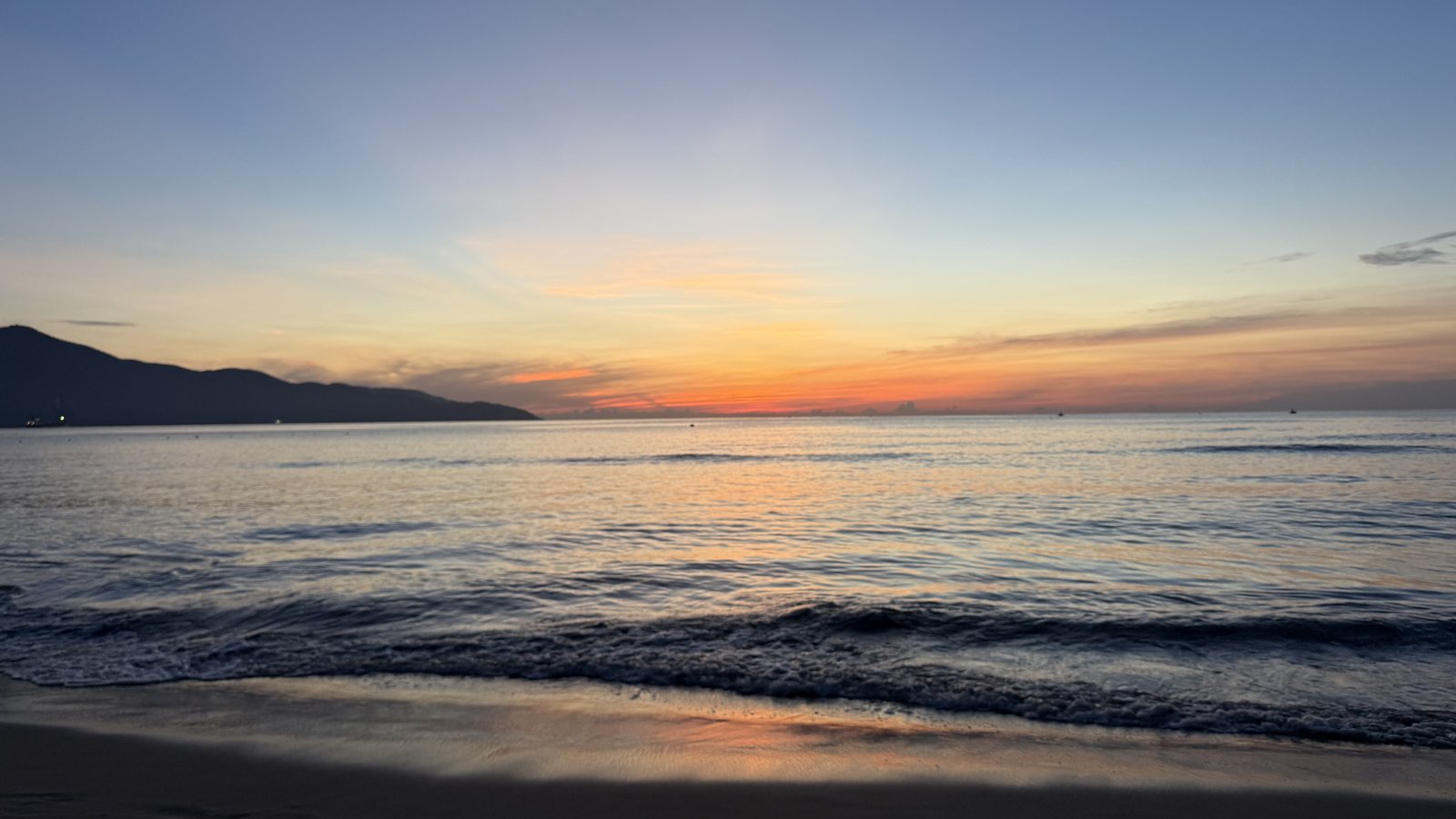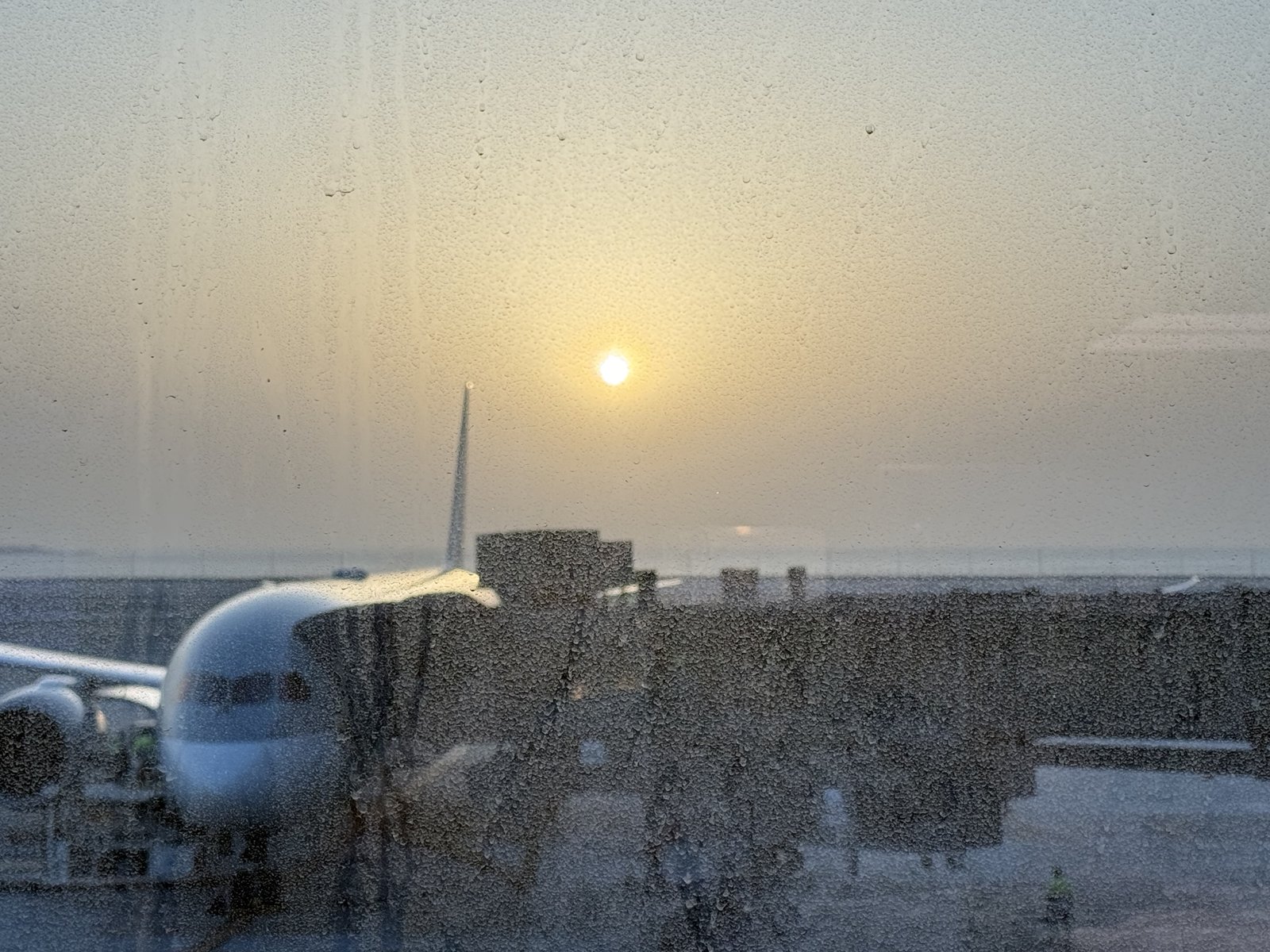
By the time we hauled our bags into the terminal at Da Nang on Thursday morning, we had been on the move for over two weeks. Saigon to An Lão on a sleeper bus. An Lão to Da Nang in Trieu Vi's van. Nine days of Da Nang and Hội An. Now it was back to Saigon, where this trip began, for the last few days before the long journey home.
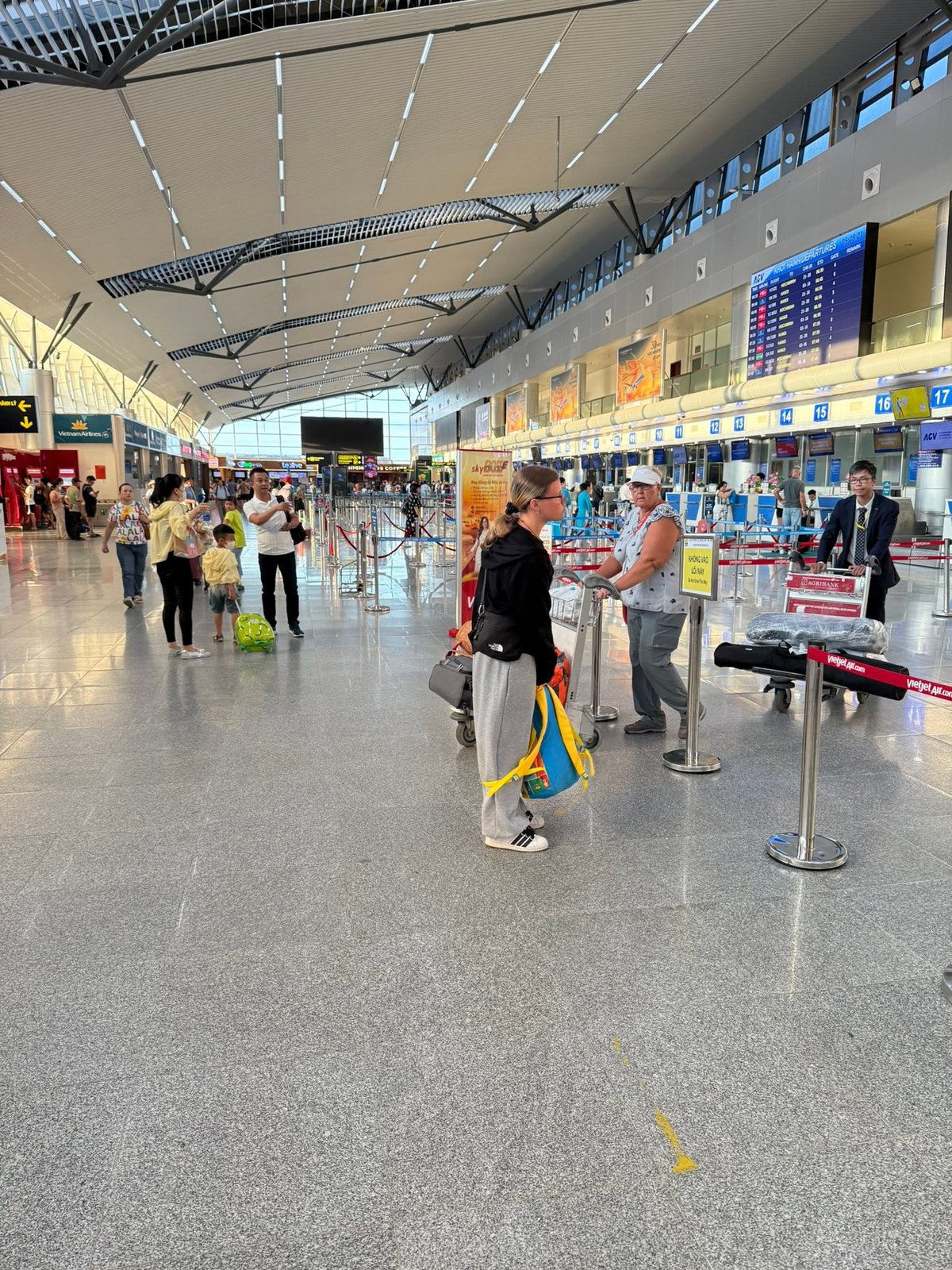
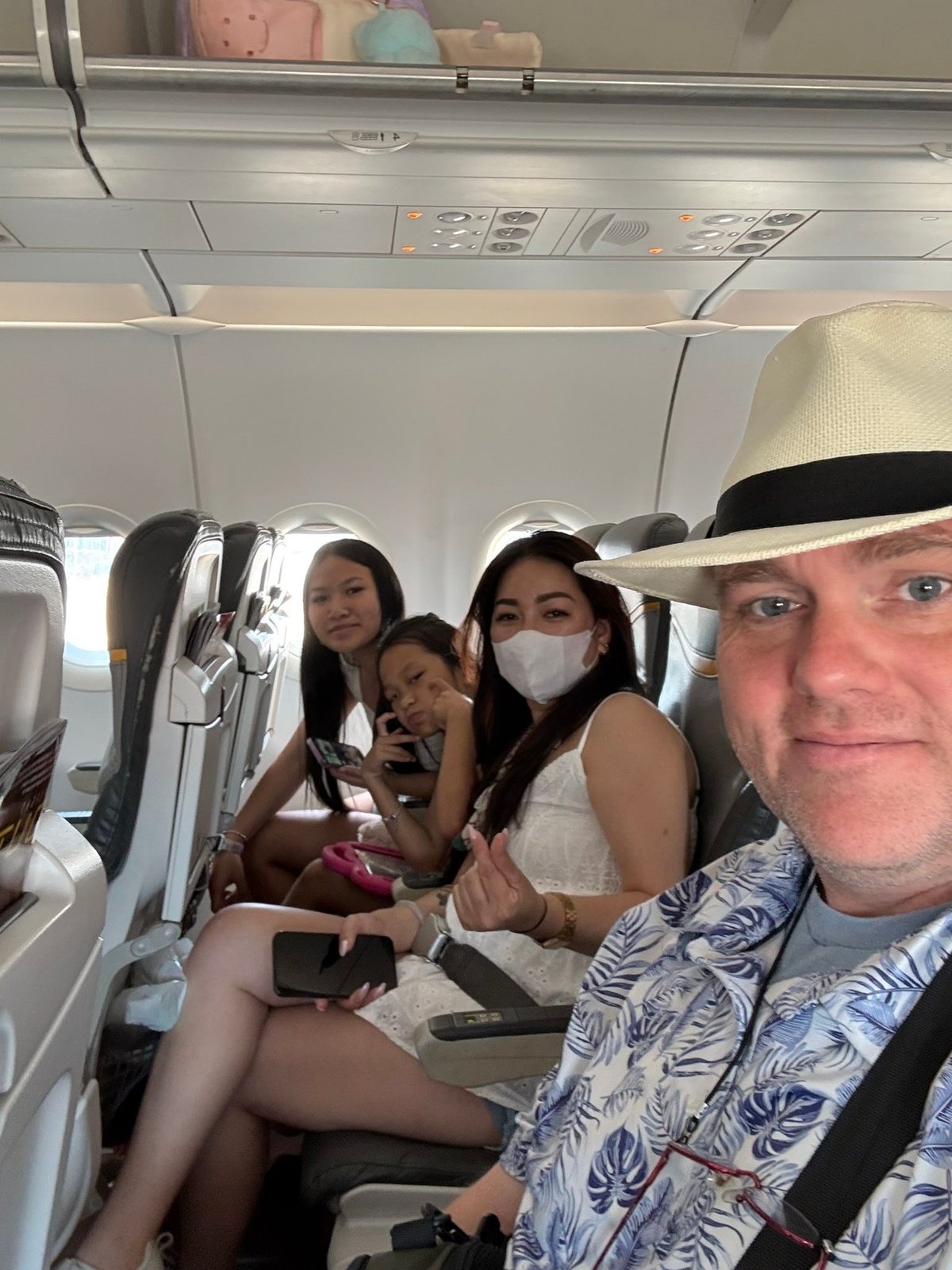
The flight was delayed by about an hour, which is not unusual flying domestically in Vietnam. Unpredictable weather patterns, older equipment. The plane we were flying had a 60 percent delay average. We were on Vietjet, which has been flying since Christmas Day of 2011, when its first flight left Ho Chi Minh City for Hanoi. It was founded in 2007, one of the first privately owned airlines in the country, and it flies mostly Airbus A320s and A321s. It had also had a rough spring. After a change in its ground handling at Tân Sơn Nhất in April, hundreds of its flights ran late.
One thing I do enjoy about flying domestically is the much more relaxed security. Liquids are not an issue. The only problem we had was a pair of children's scissors I had to relinquish. The plane was a tight Airbus fitted for Vietjet, and I had to sit a bit sideways because my knees could not sit straight between the seats. That was not a big deal either. No destination in Vietnam is very far away, and it was an uneventful hour from Da Nang to Saigon.
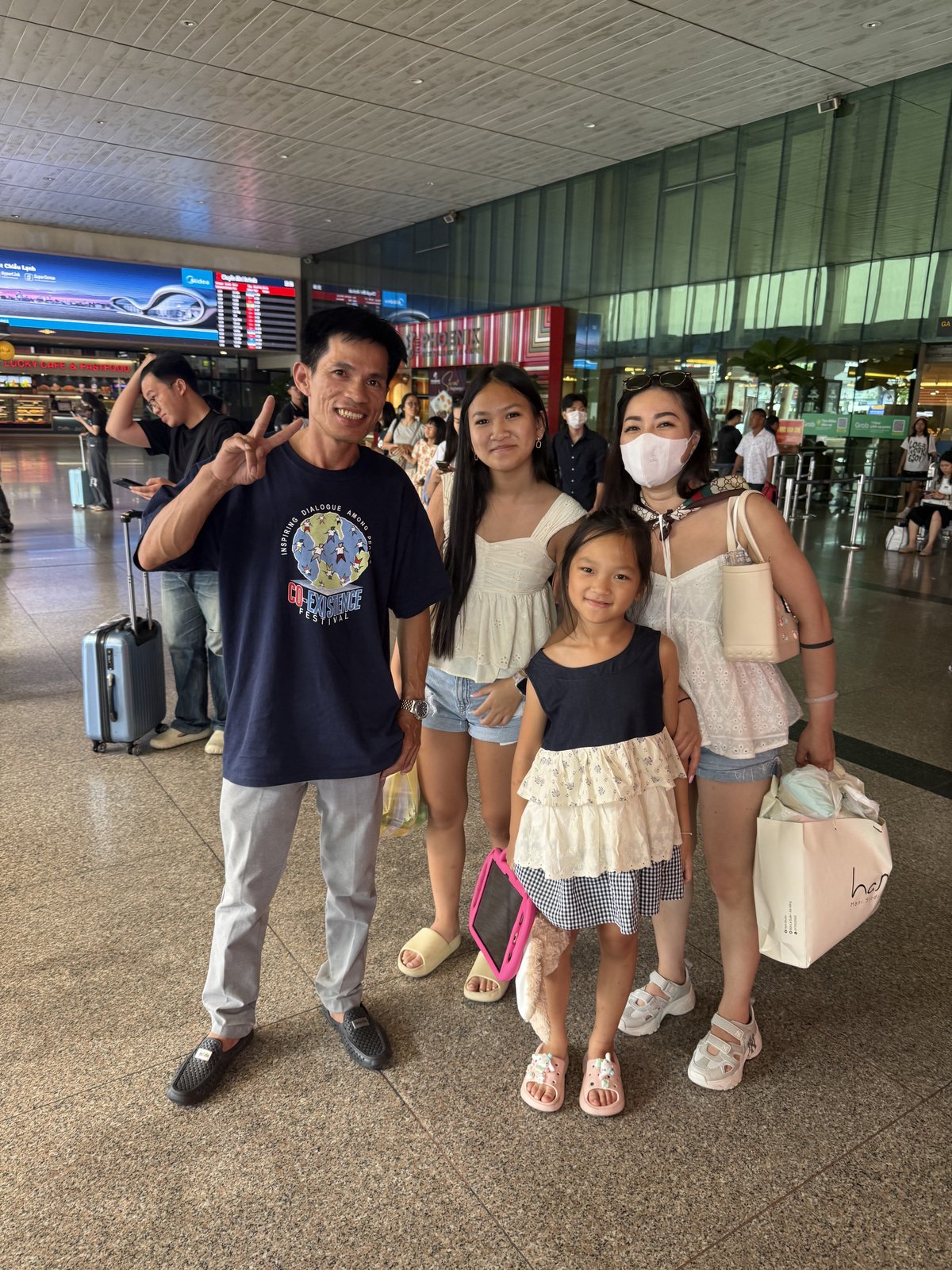
By ten in the morning we were standing in the arrivals hall at Tân Sơn Nhất. Officially it is Ho Chi Minh City. But as I wrote years ago, the country's biggest airport still goes by the code SGN, and almost nobody here has stopped calling it Saigon.
Brick & Barrel
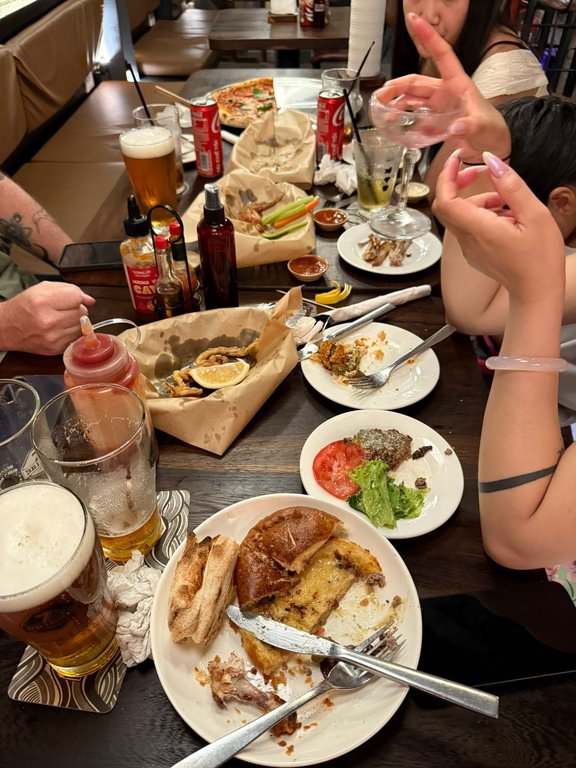
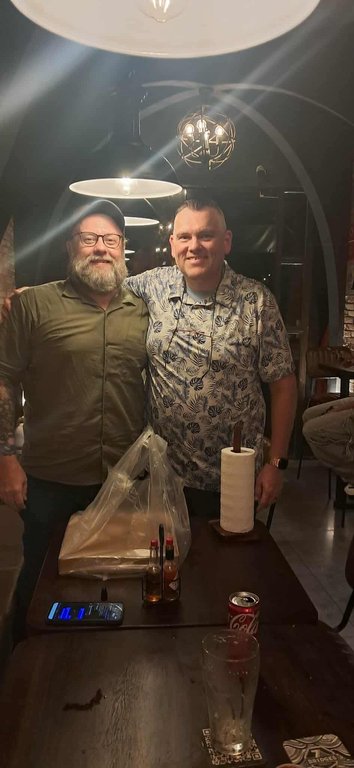
That night we had dinner at my friend James's Brick & Barrel. Earlier in the trip I had told him it had been too long, that I couldn't wait to see what he had created, and I called him the restaurant mogul of Saigon. It was nice to have some great American fare. Cold beer in tall glasses, a roast chicken split down the middle, salads, a lineup of sauces, and hands coming in from every direction. I was so caught up with meeting up with my old friend that I didn't get any good pictures. These are the ones I got.
It was a rainy night back in Saigon, a city that sees a substantial amount of the stuff. Through a wet window, Landmark 81 glowed purple over the rooftops. Down on the streets the motorbikes kept on coming anyway, a rider in a red poncho, fruit stalls lit up under their umbrellas, the pavement shining under the shop signs.
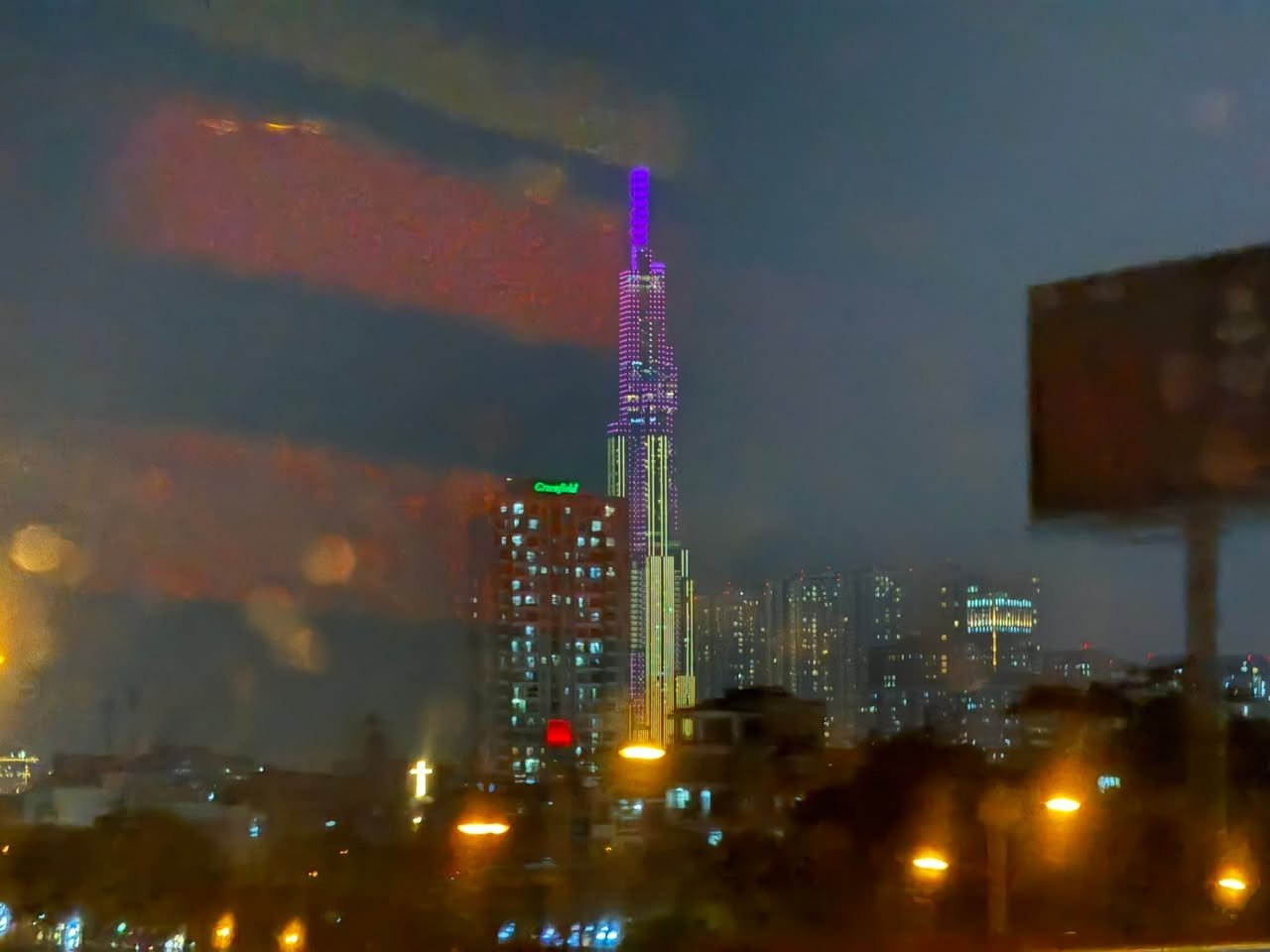
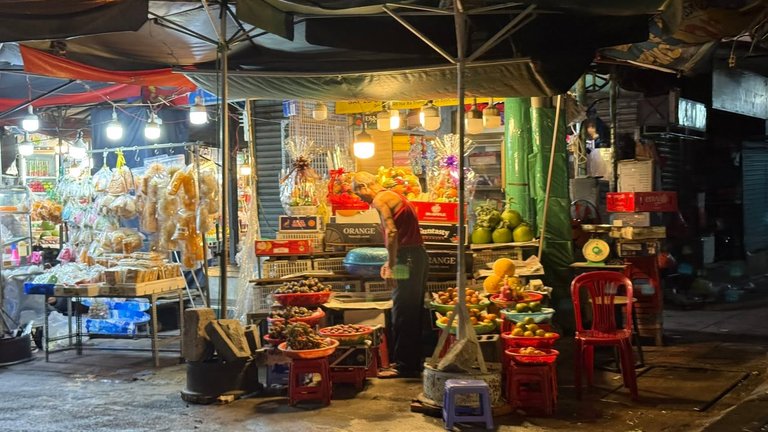
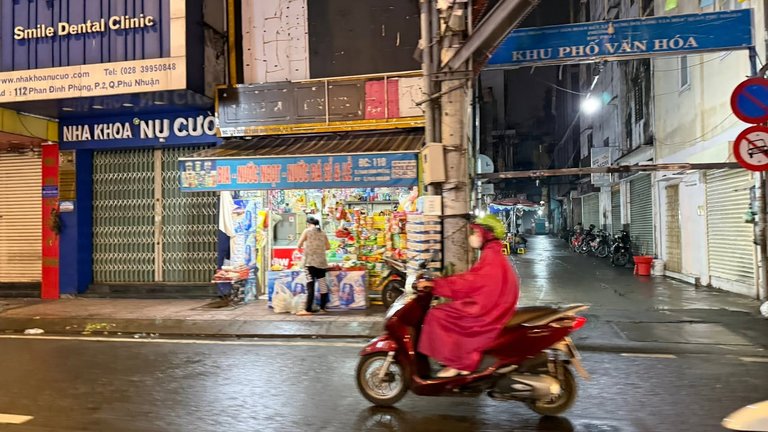
We were exhausted from over two weeks of being on the move. After dinner it was a long hibernation, until the warm, humid day finally coaxed us out of a deep, much needed sleep. Three more days until the long journey home would begin. I told a friend back home that, if all things went as planned, I would be back in the office on Wednesday. What can I say? I miss the office.
Along the Vàm Thuật
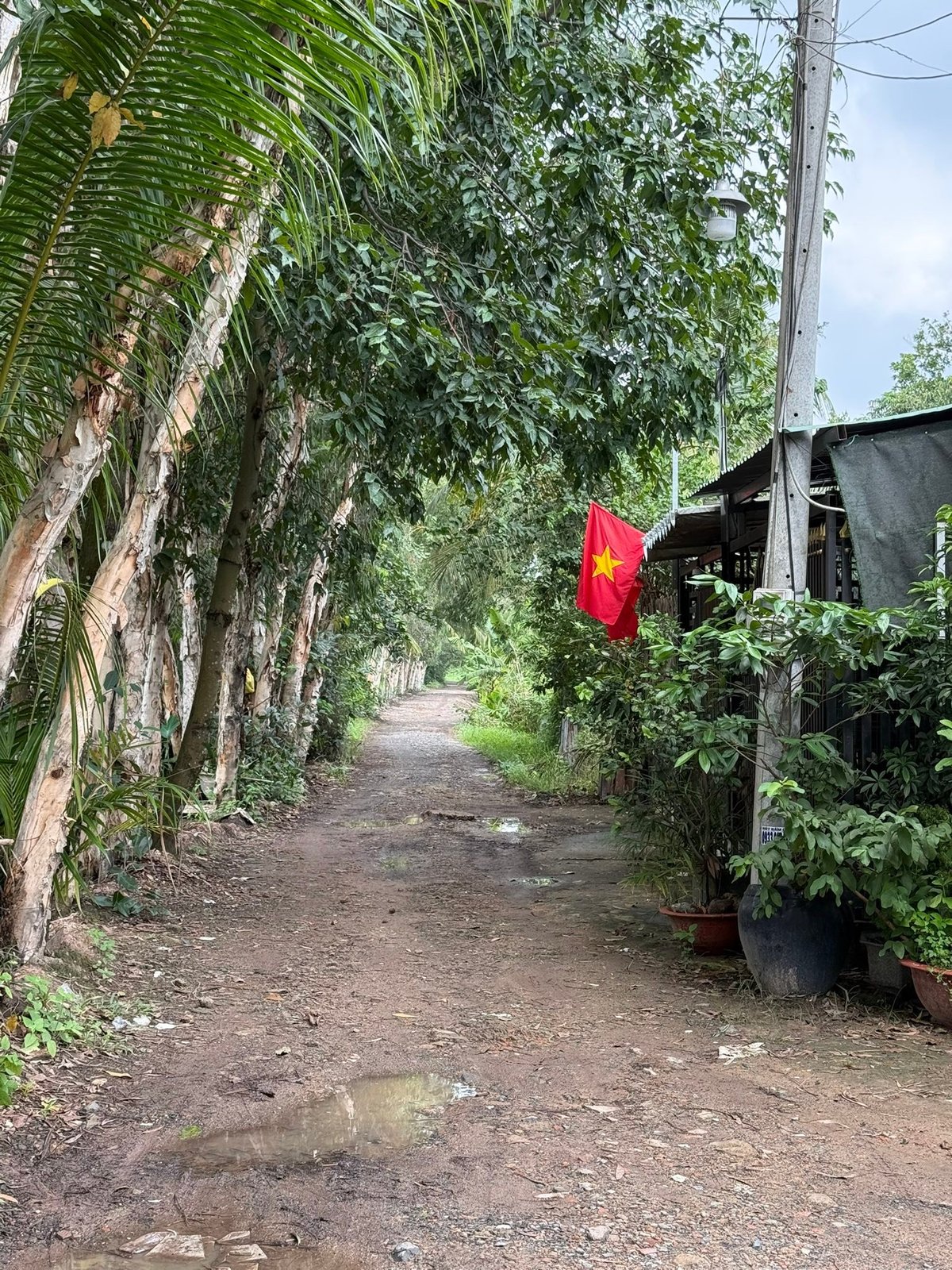
Friday morning I took a stroll around my brother-in-law's neighborhood in District 12. The last time we stayed with Luan, I described his house sitting below a dirt lane built up like a levee, across from a canal, with a steep little footbridge at the end of the street. I also wrote that it was only 11 miles from the center of a megacity of 10 million people. The megacity has grown some since then. It still amazes me that his neighborhood sits in a district, in a city, at the heart of a metropolitan region of something like 21 million people. But here, on the edge of the Vàm Thuật River, it feels like a world away from the glitz and glam of District 1.
District 12 covers about 53 square kilometers, a little over 20 square miles, out in what I called the northern suburbs years ago. The Saigon River runs along its eastern side, and across the water lies Thuận An, in Bình Dương. Its southern edge follows the Tham Lương, Bến Cát and Vàm Thuật river, the same slow water Luan's neighborhood sits beside. More than 400,000 people lived here as far back as 2010. And as of July 1, District 12 no longer exists, at least not on paper. That day Vietnam abolished its districts altogether, and the old district was regrouped into new wards.
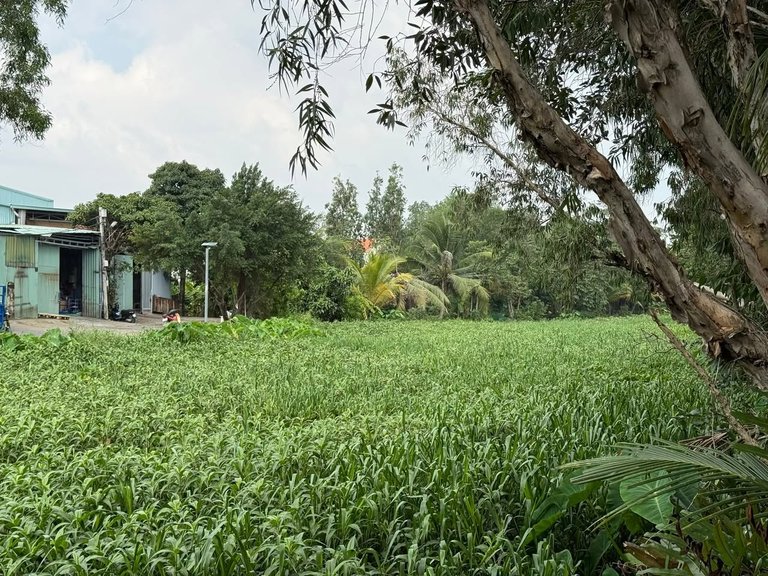
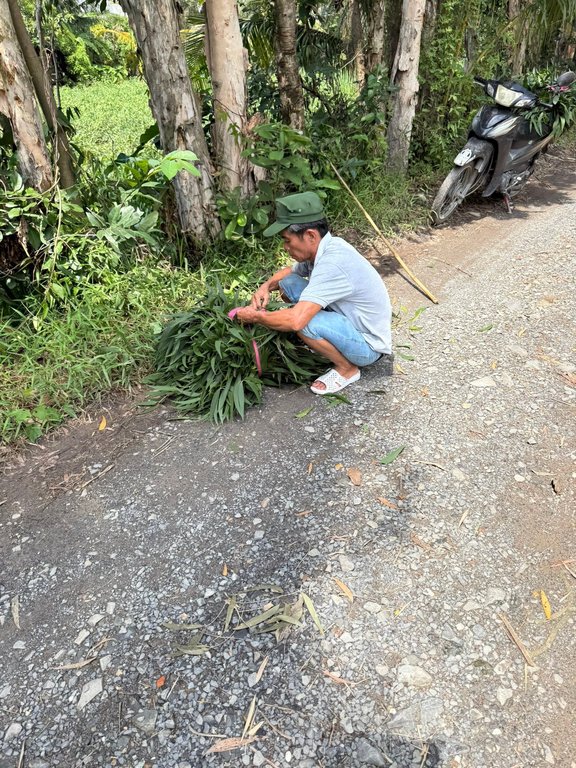
This part of the river has a very slow flow, and so it is filled with an abundance of water vegetation. Small, rural-like farms dot the neighborhood, and I always find it a fascinating walk. There were fields of tall, green, leafy crops with low blue buildings beyond them. A man in a cap crouched beside the gravel path bundling cut greens, his motorbike parked behind him. Narrow channels ran between the garden beds, and coconut palms leaned over all of it.
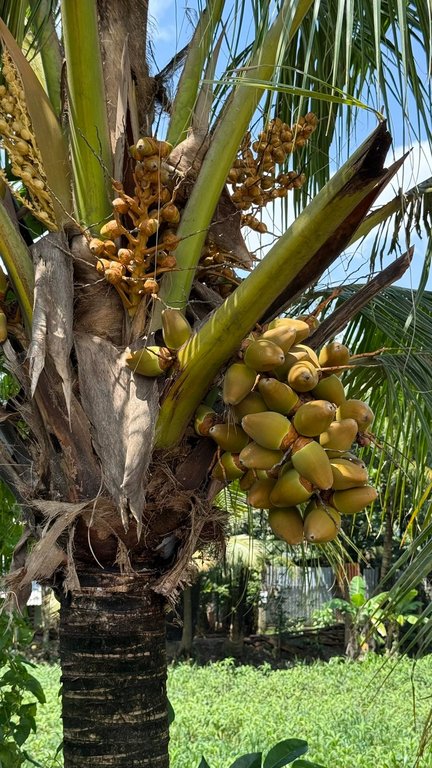
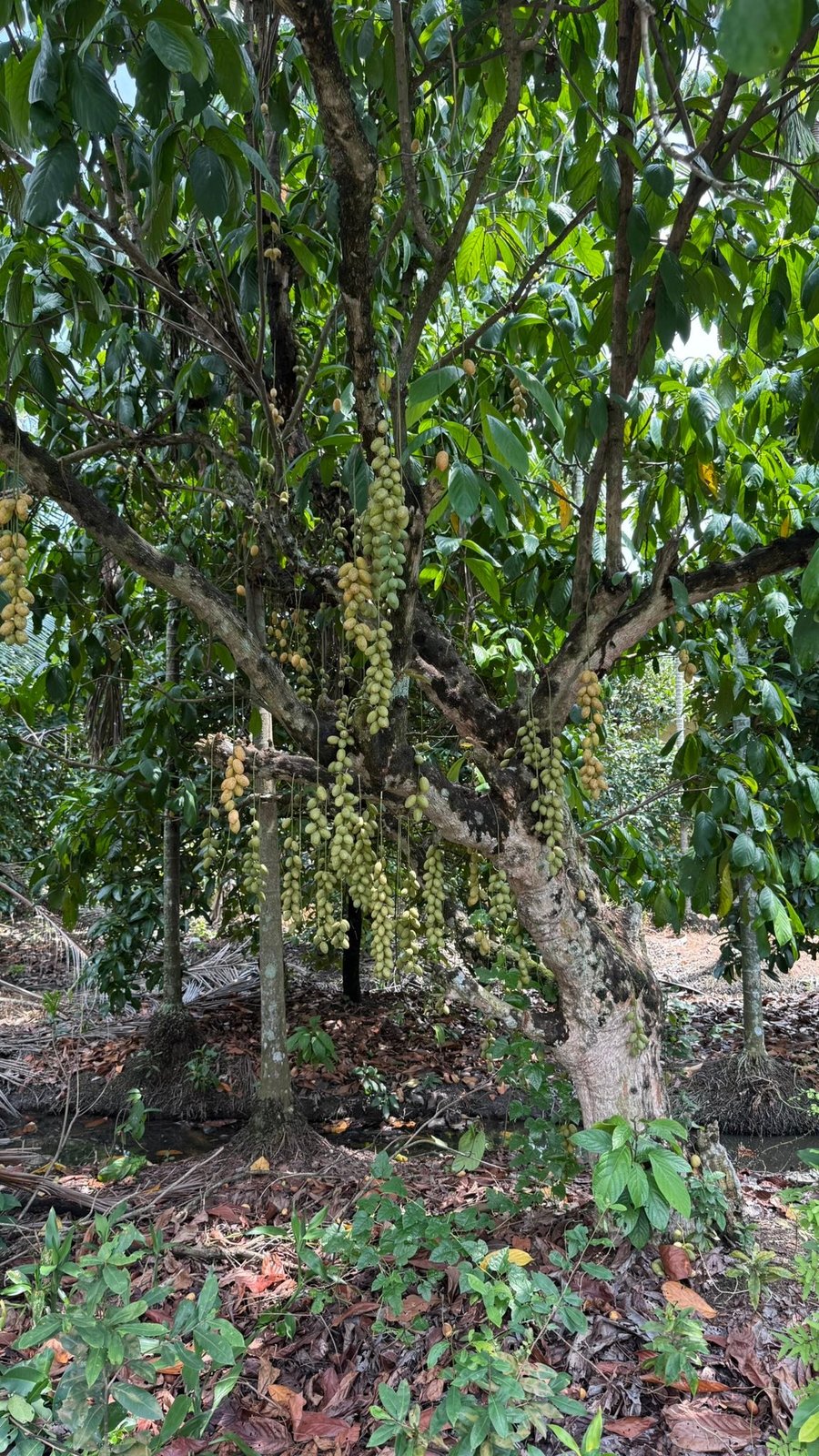
The world seems to exist in abundance here. Simply walking down the dirt lane, one can find everything from coconuts and bananas to lychee and langsat. Langsat is one of those fruits most Americans have never heard of. It is native to Southeast Asia, from peninsular Thailand and Malaysia through Indonesia to the Philippines, and it grows in clusters like grapes, hanging right off the trunk and the big branches. Under the thin, yellow, slightly fuzzy skin are about five translucent white segments that look like cloves of garlic. They taste sweet and sour, something like a grape crossed with a grapefruit.
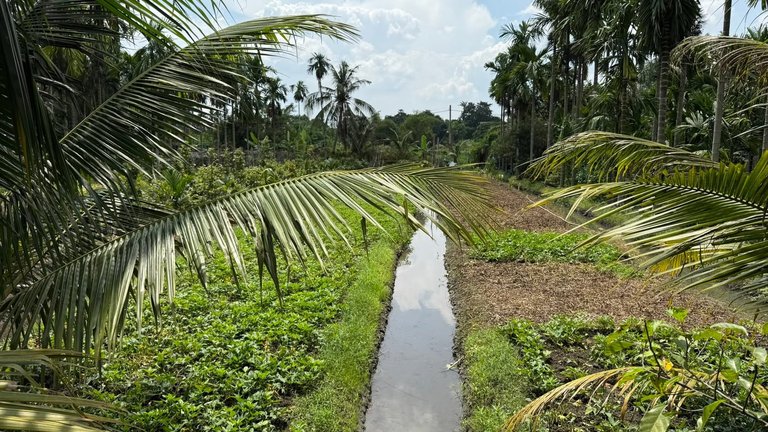
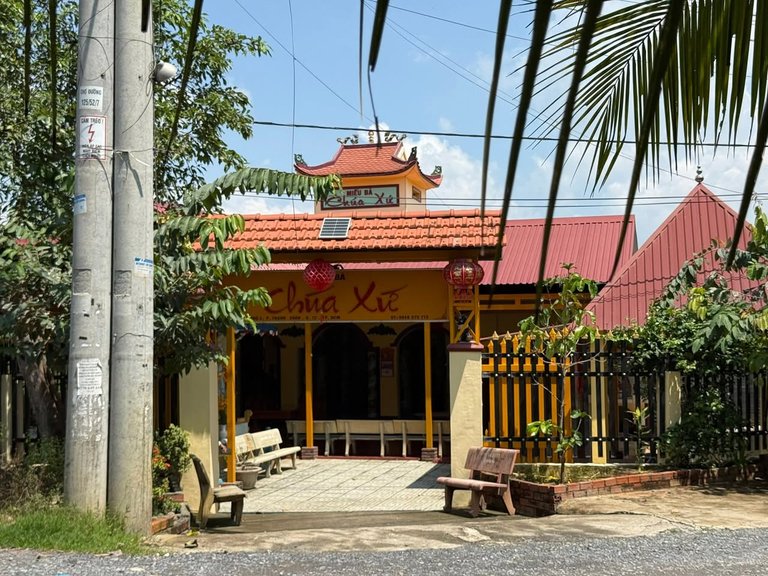
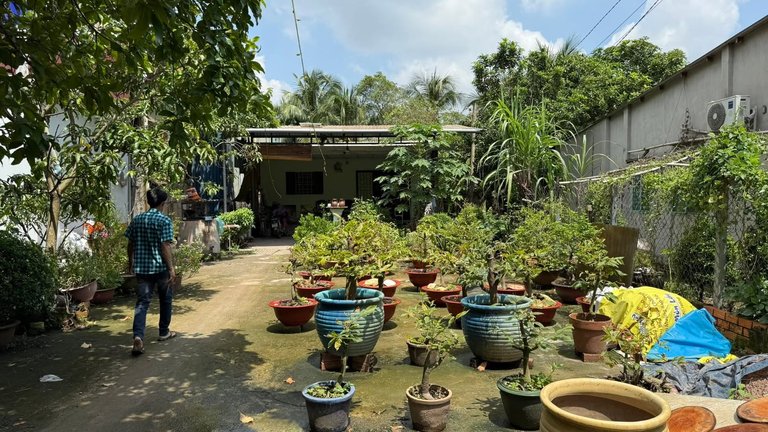
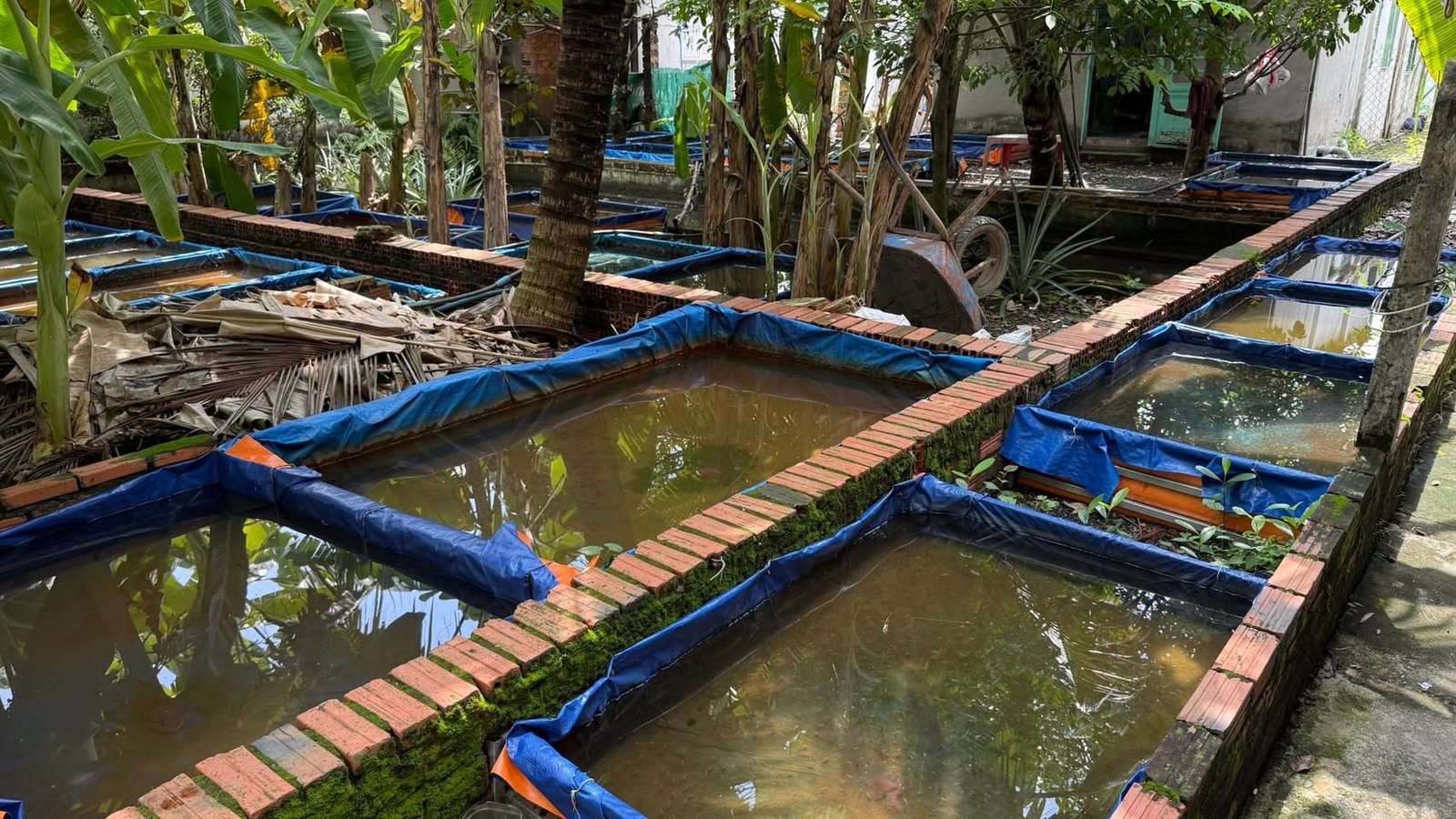
Along the way there was a small temple with a red tile roof and benches out front, and a courtyard full of bonsai and potted plants in big glazed pots. The last time we were here, my brother Luan was operating a kiln and firing ceramics in co-op with his neighbors. It is a trade with roots nearby. Lái Thiêu, the old center of Thuận An just across the river, is known for its ceramics and its fruit. But Luan and his neighbors have moved on. Today they have transitioned to growing plants and raising fish, in a rather impressive aquaculture operation between the houses. Rows of rectangular brick tanks lined with blue tarp sat under the trees, and small fish swam in the murky yellow-brown water.
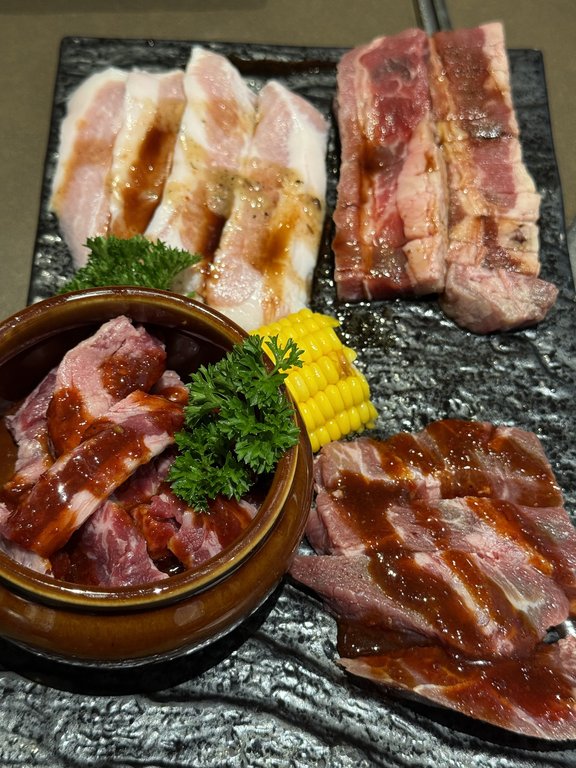
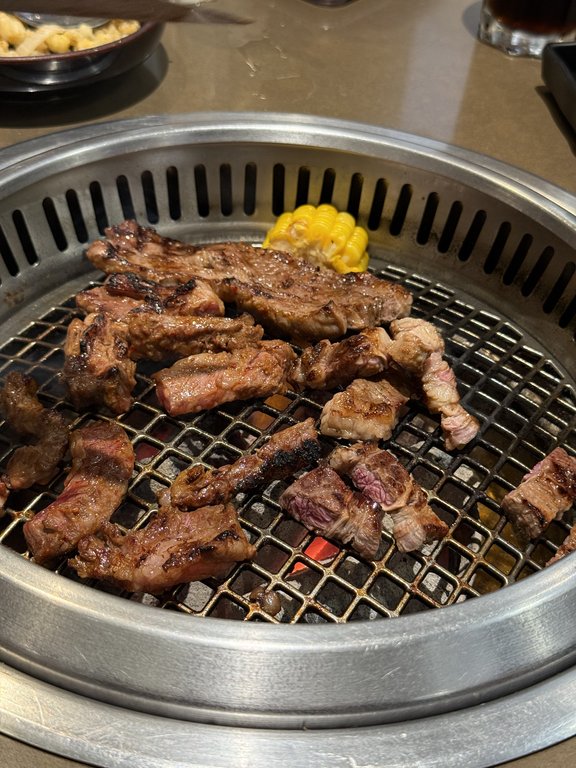
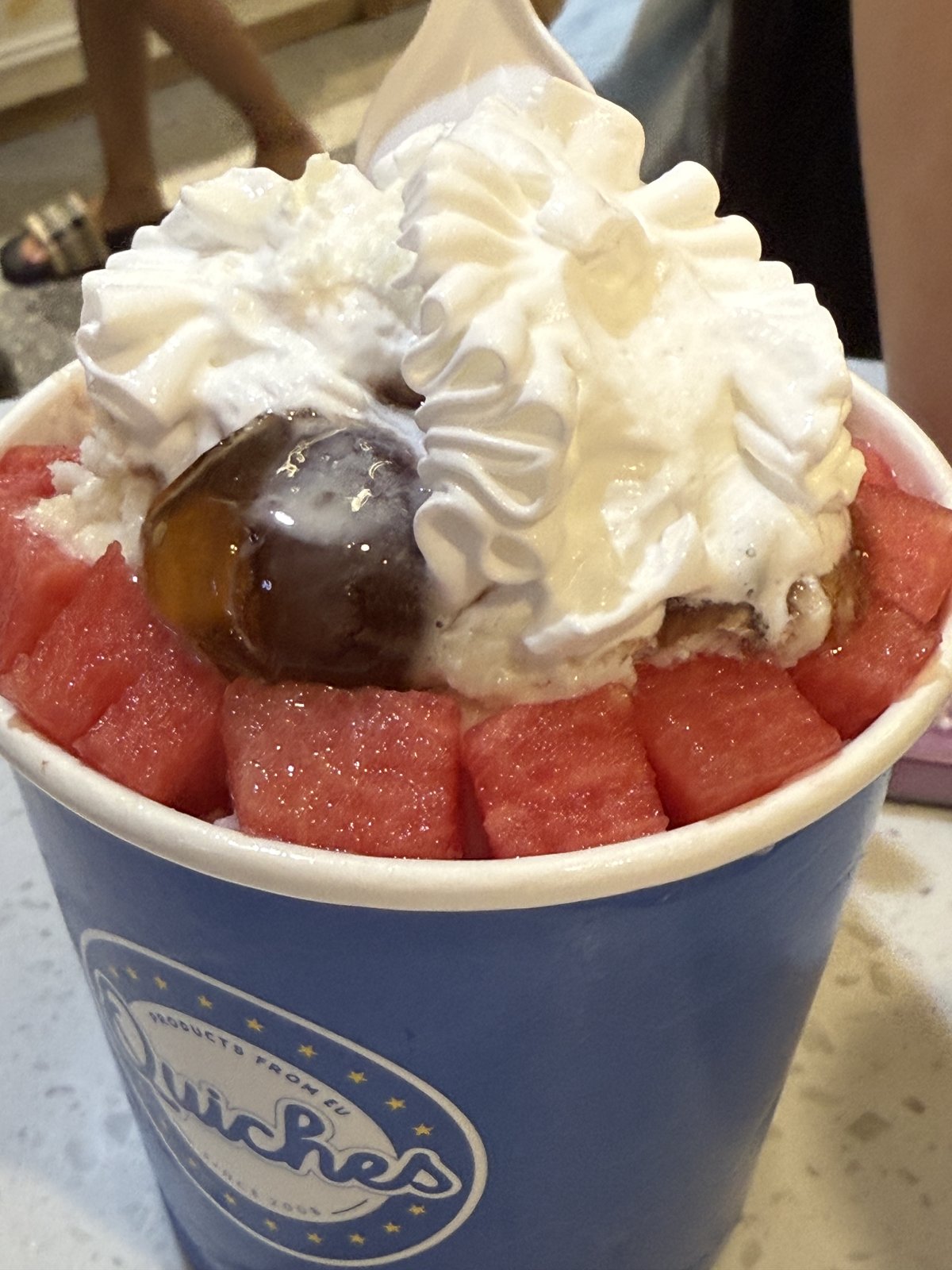
That evening we sat down to a tabletop charcoal grill, Korean style, with a slate platter of marinated pork belly and beef, corn and parsley. There was kimchi and cucumber kimchi, a green salad, and a stone bowl of rice topped with orange roe. Then ice cream at a shop called Quiches in a mall over in Bình Dương, where one cup came heaped with whipped cream over cubes of watermelon. The receipt says 133,000 dong for the lot, rung up at 9:11 pm.
Bún Bò and Big Numbers
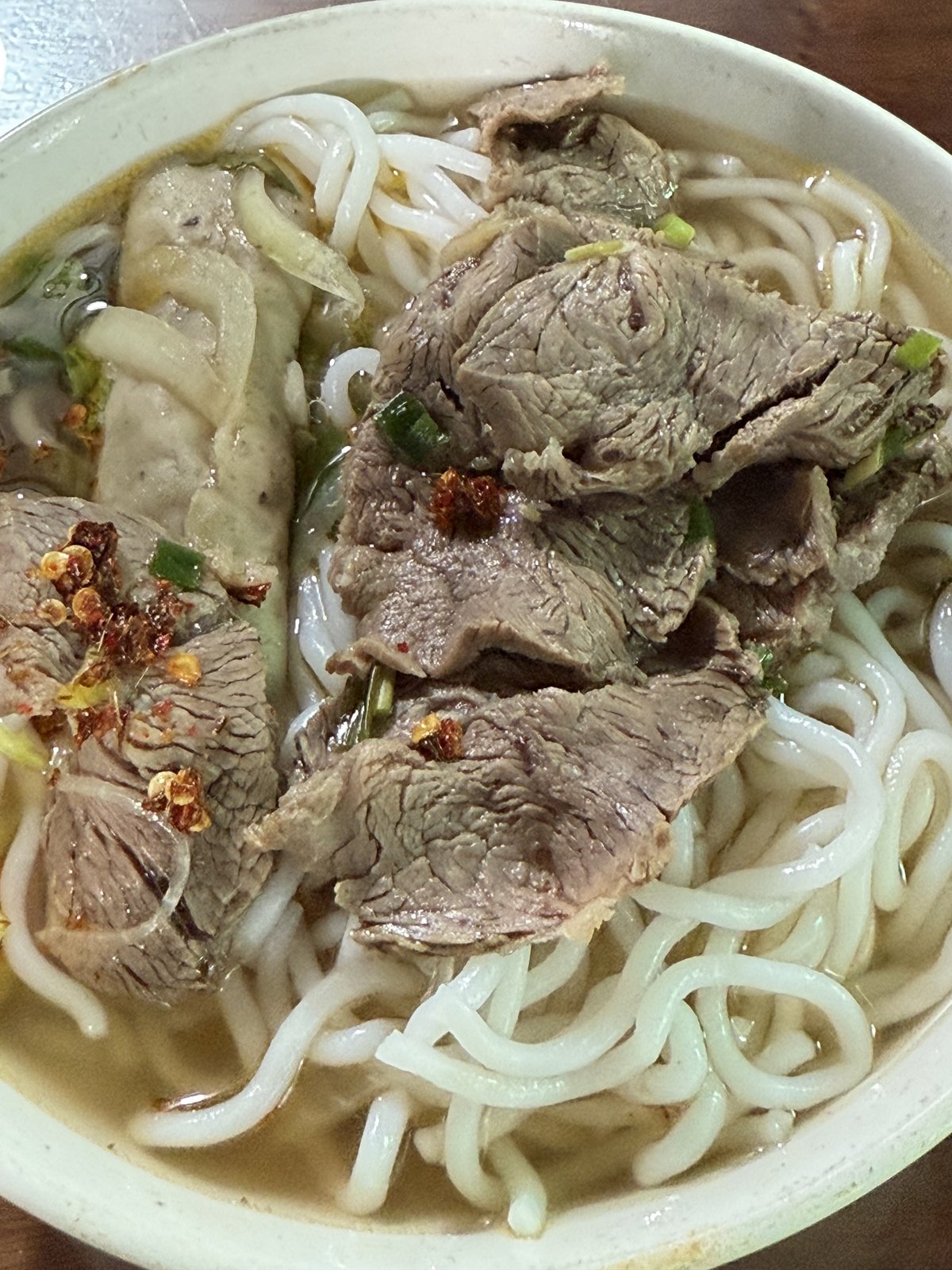
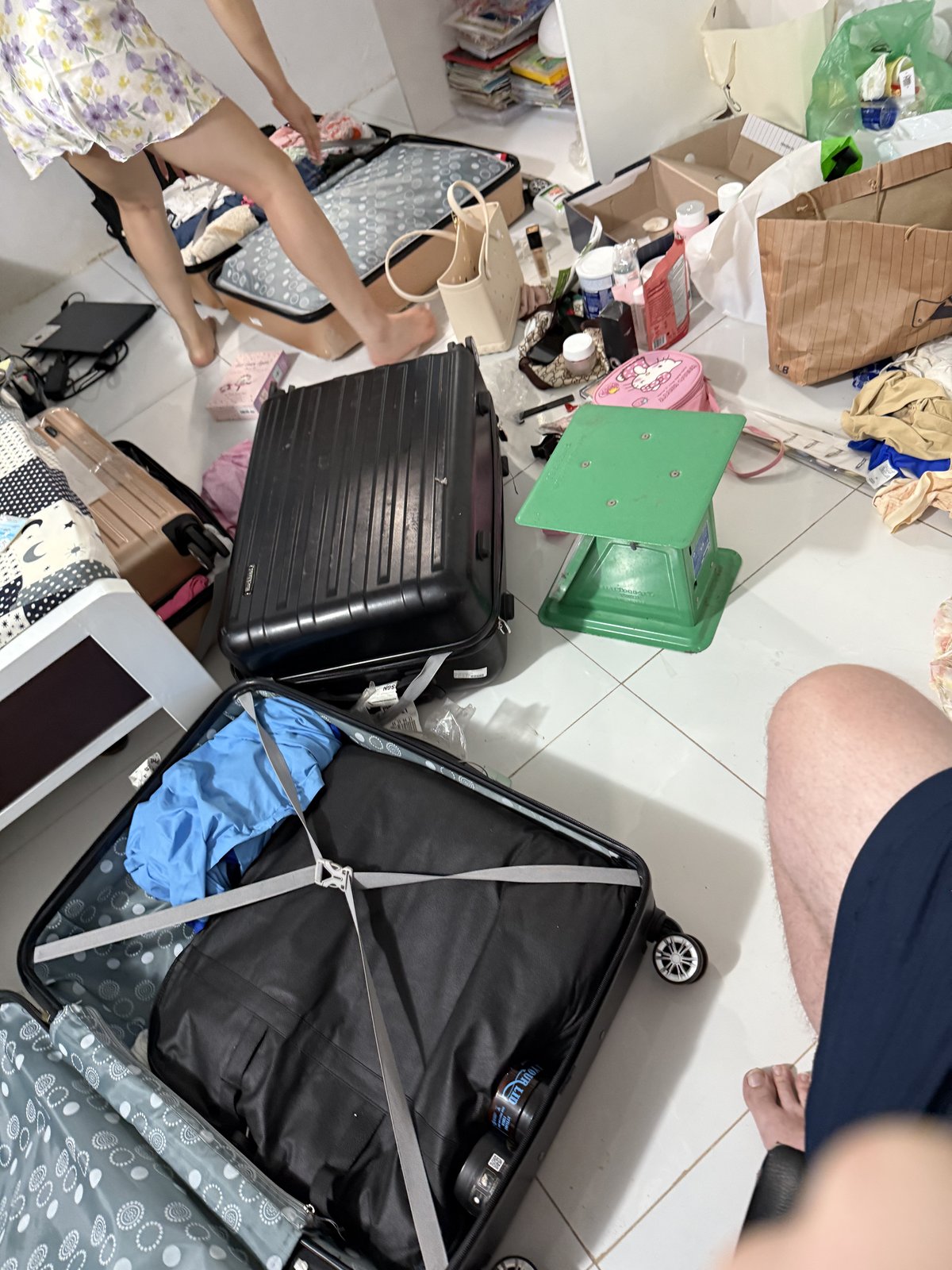
Saturday's food adventures began with breakfast, a delicious, yet simple dish of bún bò. Rice vermicelli with beef. Thick, round rice noodles in a clear broth with thin slices of beef and a sprinkle of chili flakes, then bean sprouts, basil and green onion piled on top. By half past nine the suitcases were open on the floor.
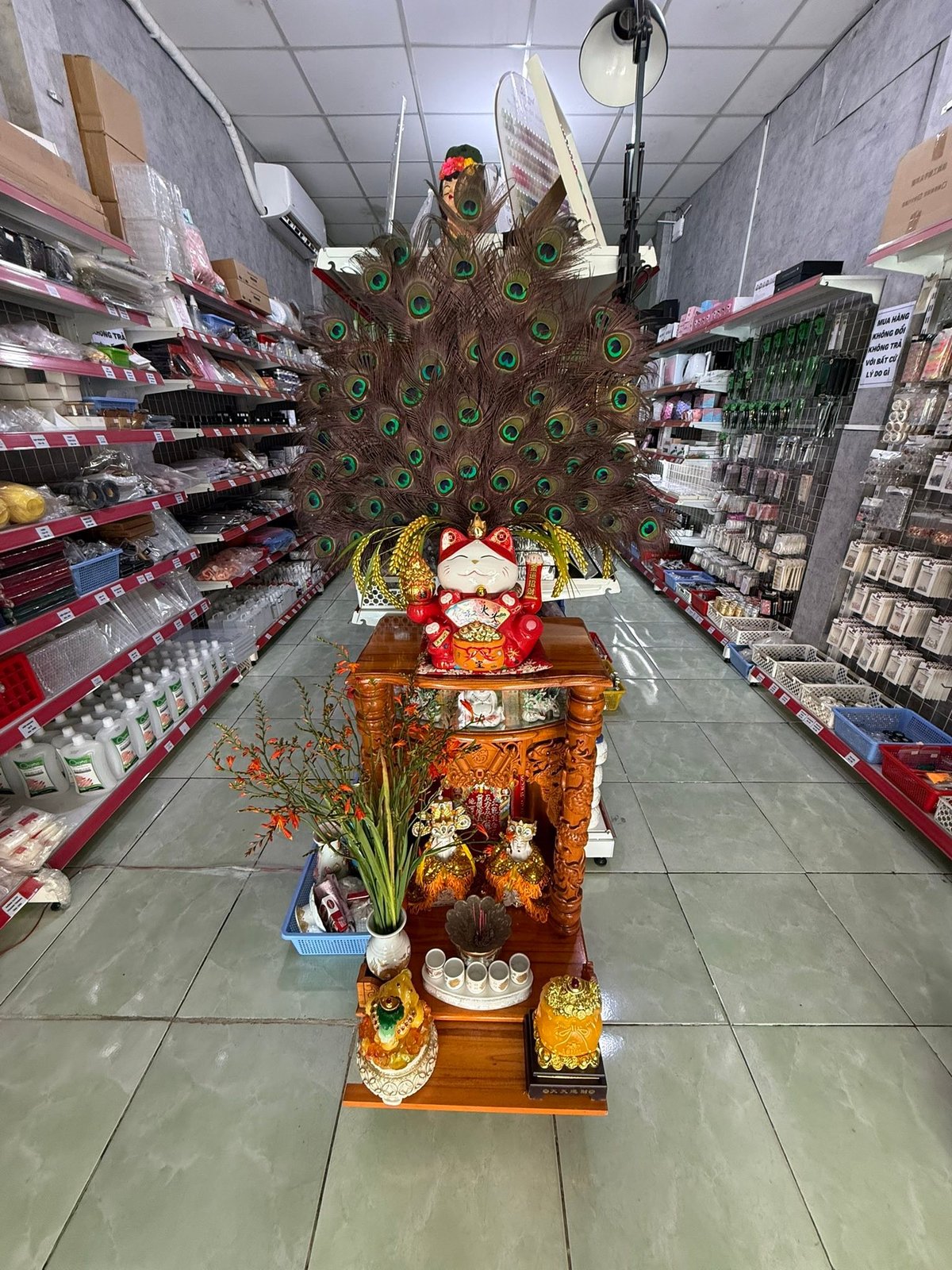
Diem wanted to shop for nail supplies at a few spots around the city, and everywhere we stopped, I set out on foot. One shop had its altar right in the middle of the aisle, a fan of peacock feathers rising behind a lucky cat.
I grew up in and around Atlanta and have spent most of my adult life working there, so I will use it as our reference point. If you have never been to an Asian megacity, there are larger, there are cleaner, hell, there are much dirtier cities, but I challenge you to find one more vibrant, more complex, and more exciting than Ho Chi Minh City.
And it was about to get bigger. The restructuring of the Vietnamese map was recent, and I mean recent: the National Assembly voted it through on June 12. On July 1, the provinces of Bình Dương and Bà Rịa-Vũng Tàu would be merged into the city. The new Ho Chi Minh City would cover 6,772.59 square kilometers, roughly 2,615 square miles, with a population of 14,002,598, the most populous place in Vietnam. Atlanta, Georgia, the city itself, has just over 520,000 people on about 136 square miles. Seems insane.
Even if you take the whole eleven-county Atlanta region, from Cherokee and Forsyth down to Henry and Fayette, against Ho Chi Minh City proper, the numbers are hard to believe. Those eleven counties cover about 3,200 square miles of land and hold around 5.3 million people, about 1,650 people per square mile. The new Ho Chi Minh City covers less ground than that and holds more than two and a half times as many people, around 5,350 per square mile. It is truly mind-boggling. And that is just the city. The metropolitan region around it is home to something like 21 million. You can drive for hours and never find its end. Inside its new limits are the pottery town of Lái Thiêu, the beaches of Vũng Tàu, and even the islands of Côn Đảo, about 185 kilometers off Vũng Tàu.
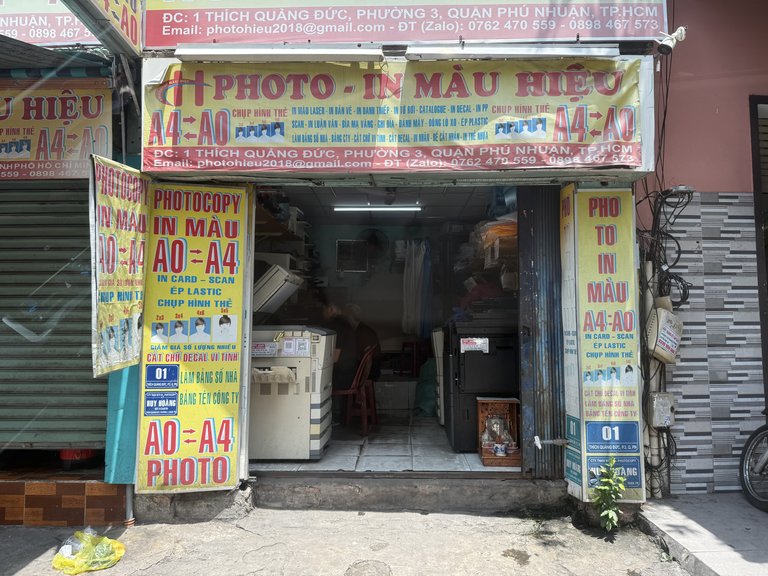
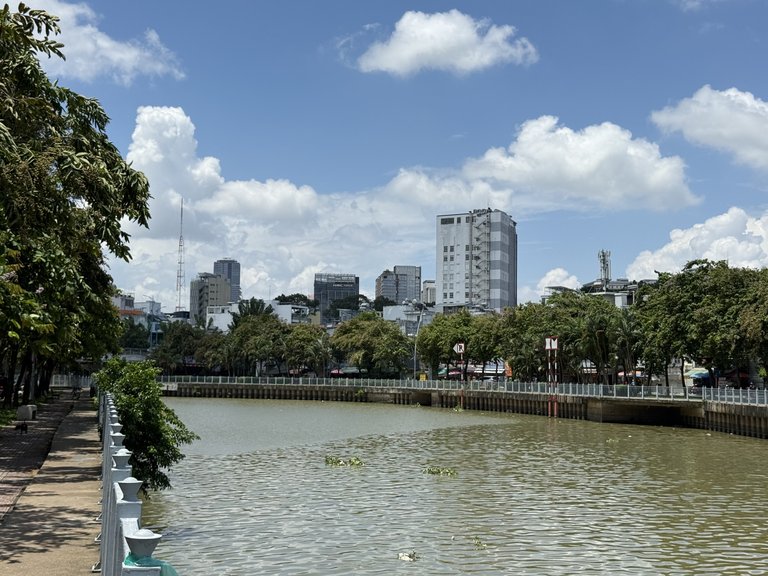
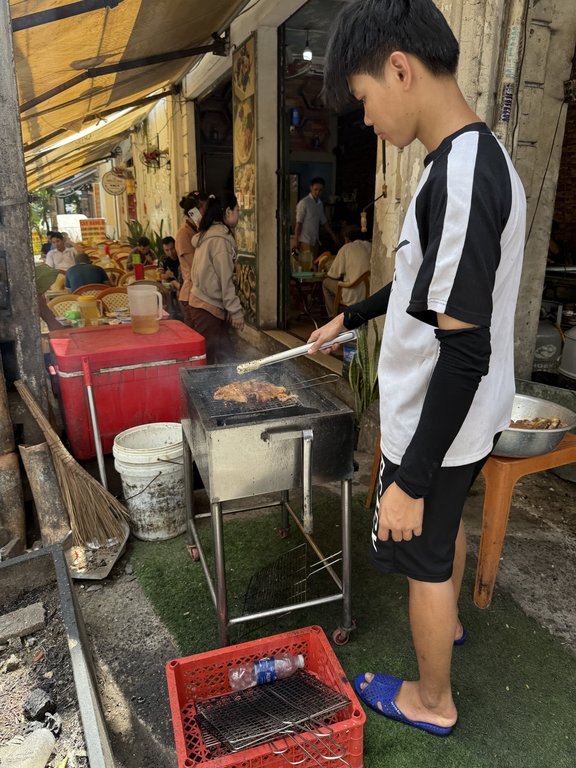
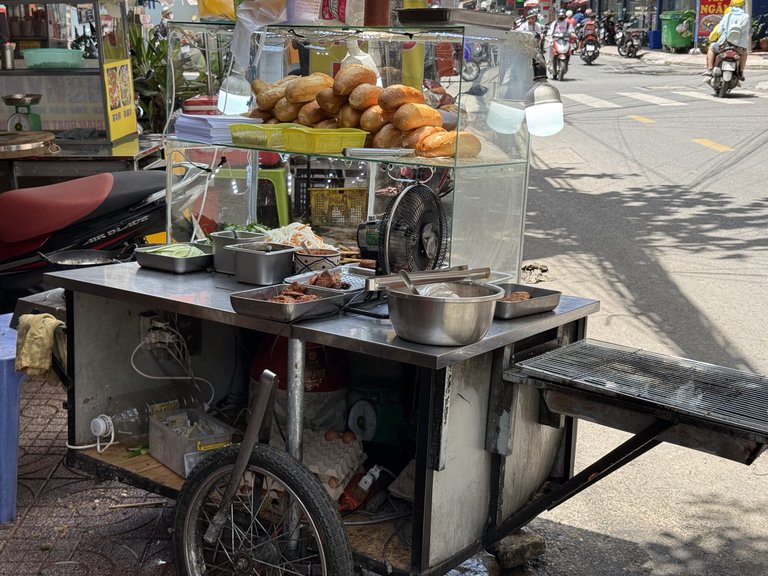
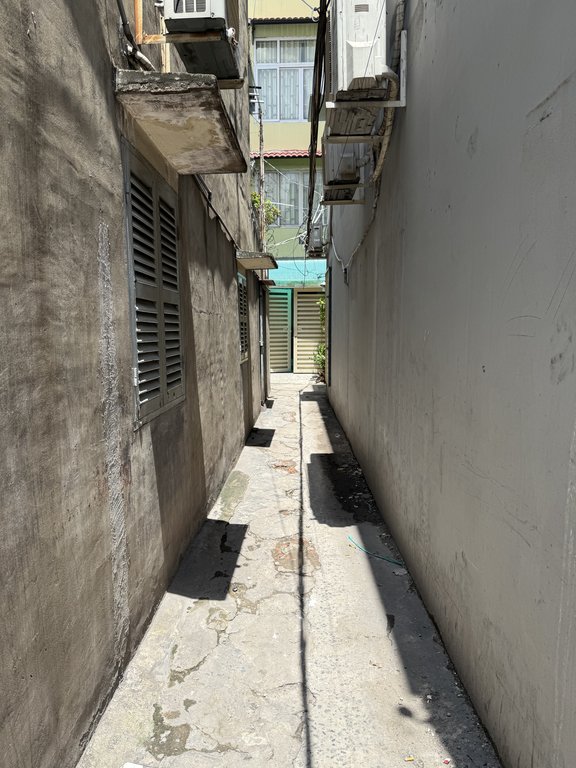
The walk starts big. Wide streets lined with old trees and tall, narrow shophouses, motorbikes pouring through the intersections. Then it narrows. Under an awning a boy stood over a little grill, a red crate at his feet. A bánh mì cart sat on the sunny sidewalk, its glass case full of bread. The side streets split off into alleys, and the alleys into narrower ones still, between tall, plain walls.
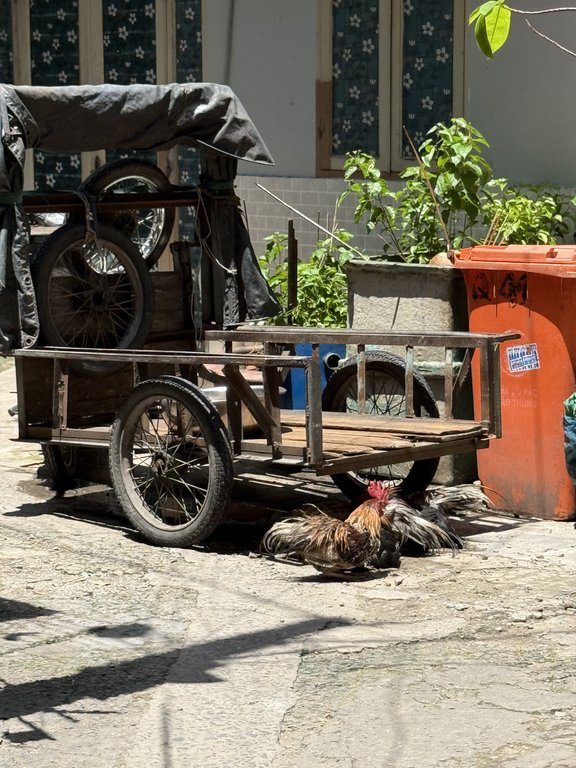
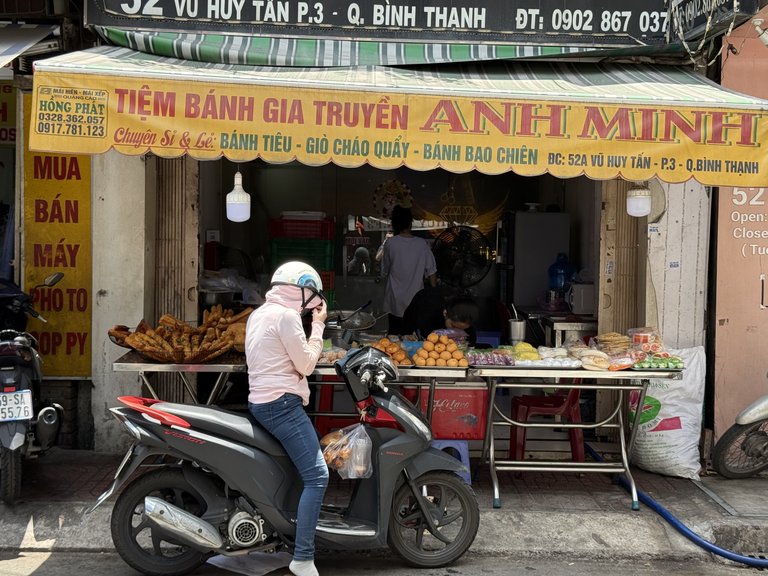
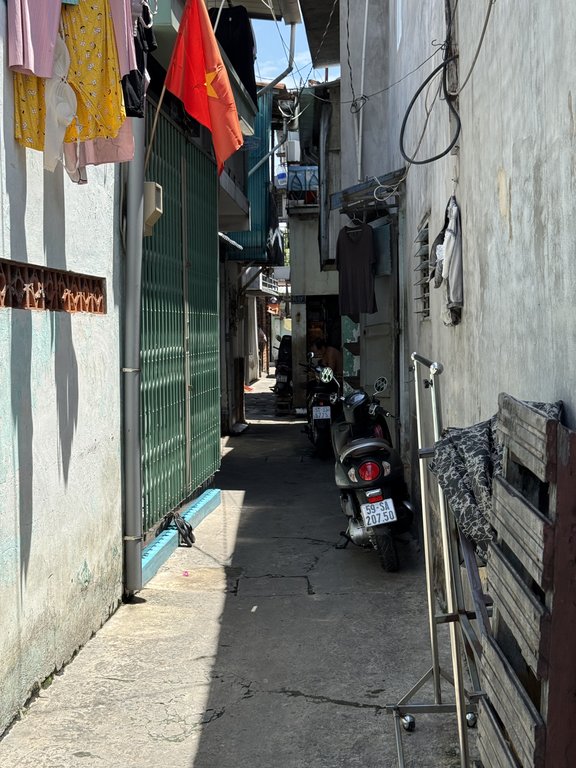
More than once an alley simply dead-ended. A locked gate. A sleeping dog. In one courtyard, a rooster beside an old wooden cart. Nothing to do but turn around. A few steps on was a family bakery, Tiệm Bánh Gia Truyền Anh Minh on Vũ Huy Tấn in Bình Thạnh, its yellow sign advertising bánh tiêu, giò cháo quẩy and bánh bao chiên, fried breads of every description. Further on, laundry and a red flag hung over a narrow alley lined with green doors.
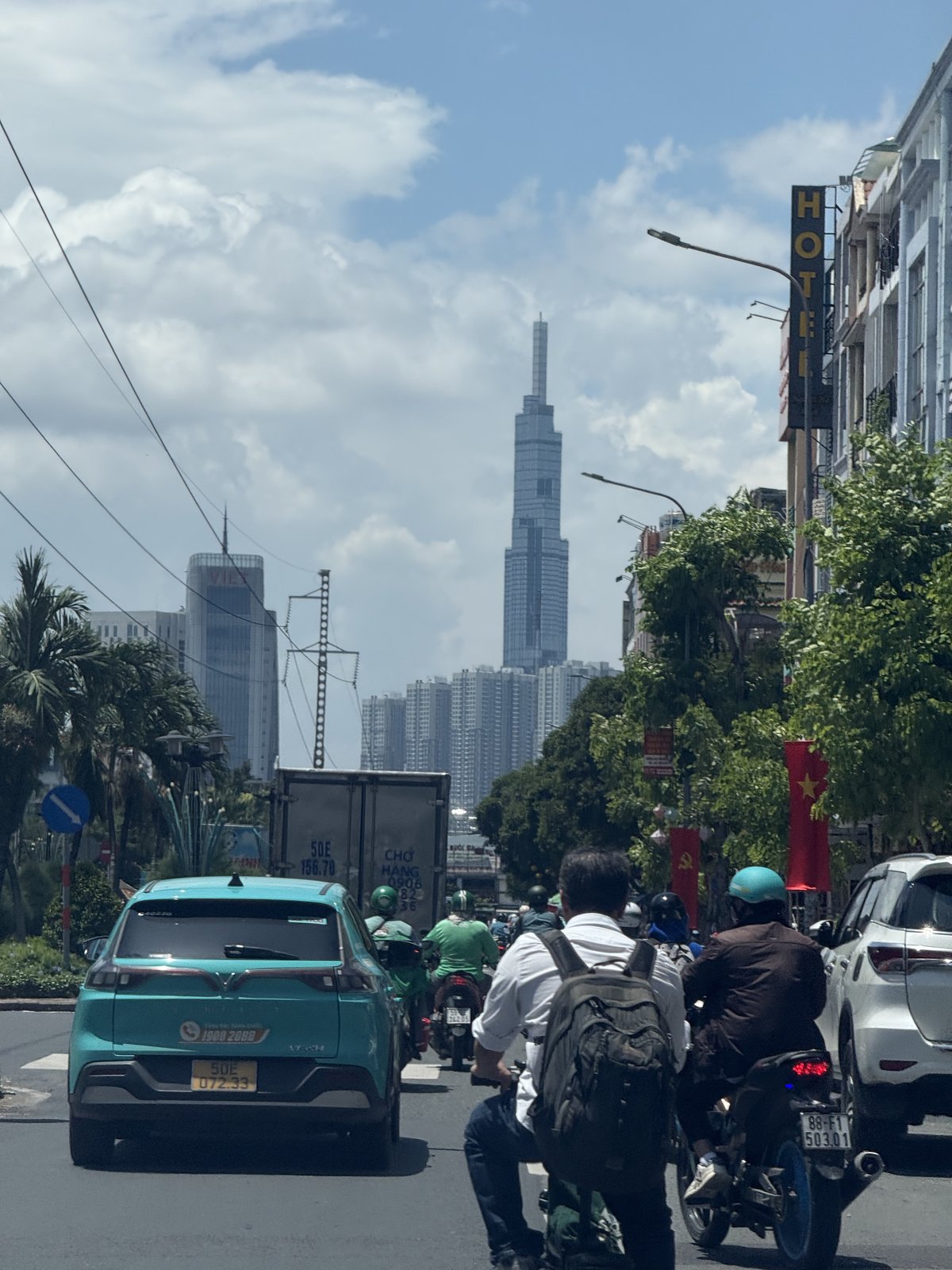
I got turned around more than once. By noon the heat was intense, and I was sweating buckets. Too many pictures, and my phone overheated. A text came asking where I was, and I honestly could not say. Eventually I came out onto a wider street, and there at the far end of it stood the one landmark that sets you straight in this city.
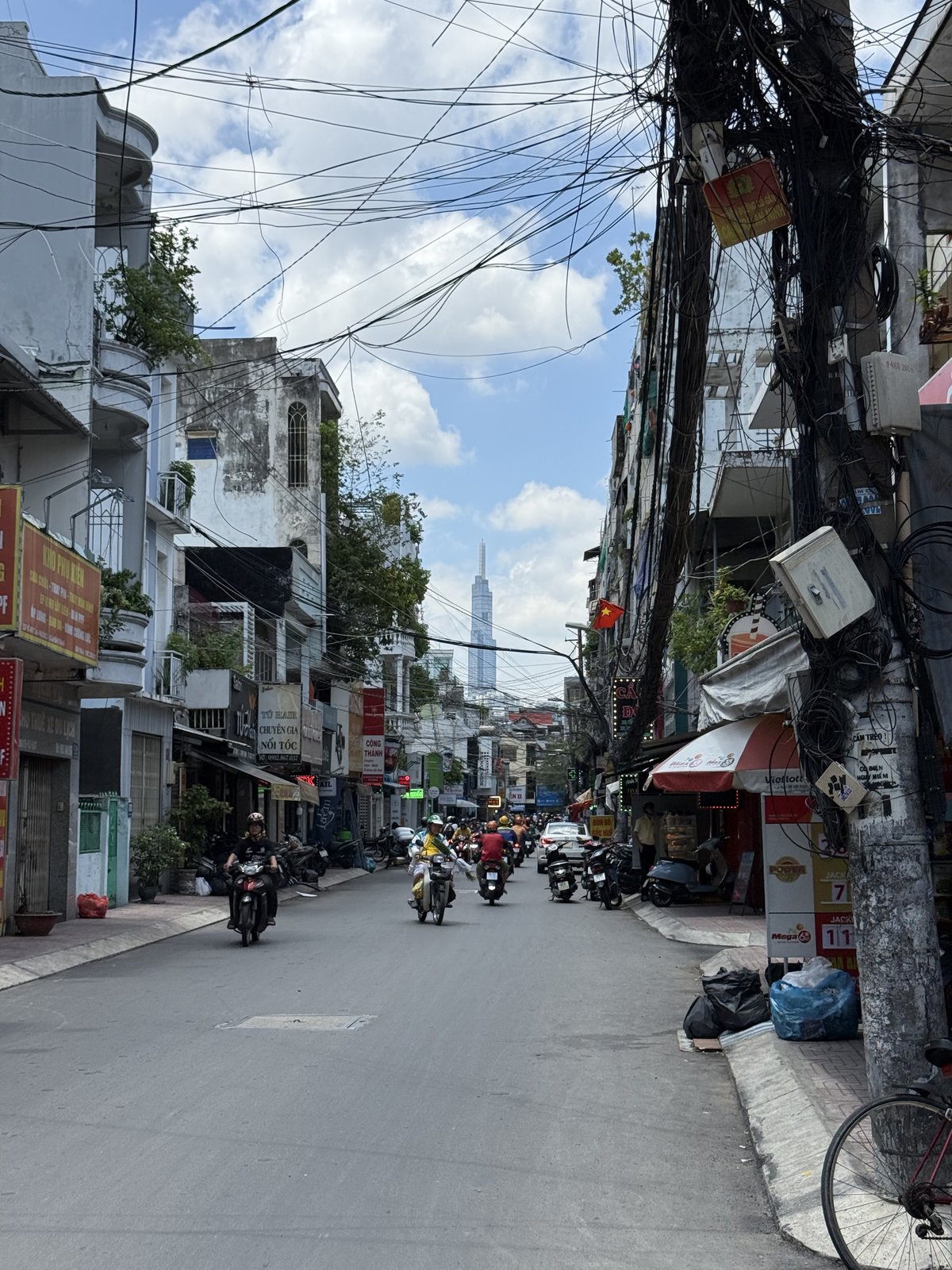
You can see Landmark 81 from nearly anywhere in Saigon. It stands 461 meters, 1,513 feet, on the west bank of the Saigon River, 81 floors, finished in 2018. When Diem and I rode the elevator to its 81st floor on our long stay, it was the tallest building in all of Southeast Asia. It has since lost that title to Merdeka 118 in Kuala Lumpur, but it is still the tallest building in Vietnam. Nothing else on this skyline comes close.
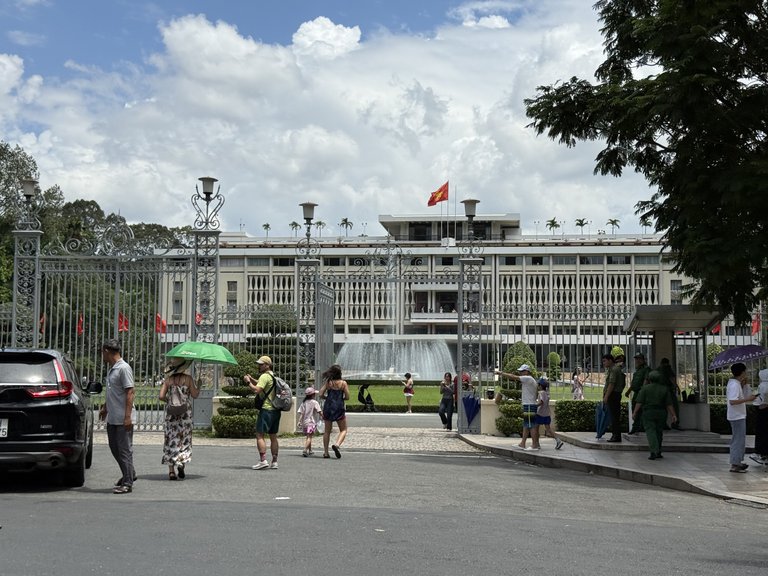
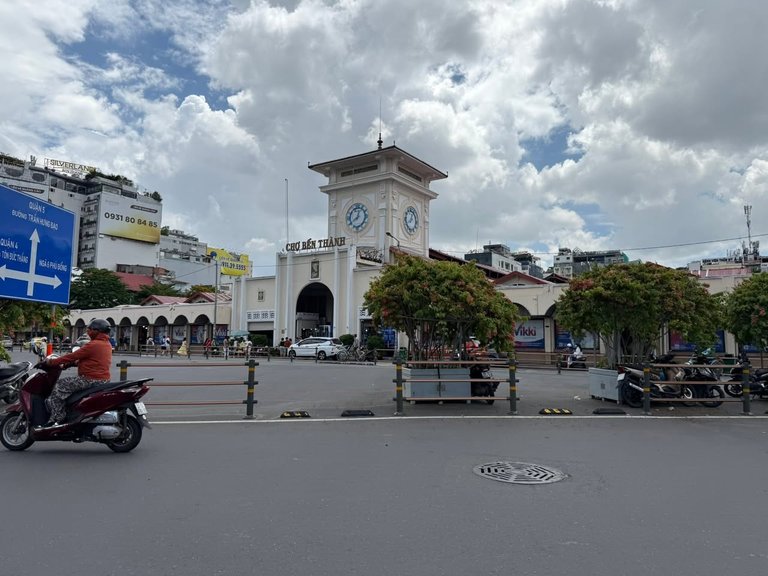
On the drive into District 1 we passed the Independence Palace, the long white modernist hall the architect Ngô Viết Thụ designed as South Vietnam's presidential palace, finished in 1966. On April 30, 1975, a North Vietnamese tank crashed through its gate, and with that the war was effectively over. Today a red flag flies over the roof, and people stroll the plaza out front. We passed Bến Thành Market too, its clock tower over the traffic. The market building, tower and all, dates to 1914.
Big Boss Bistro
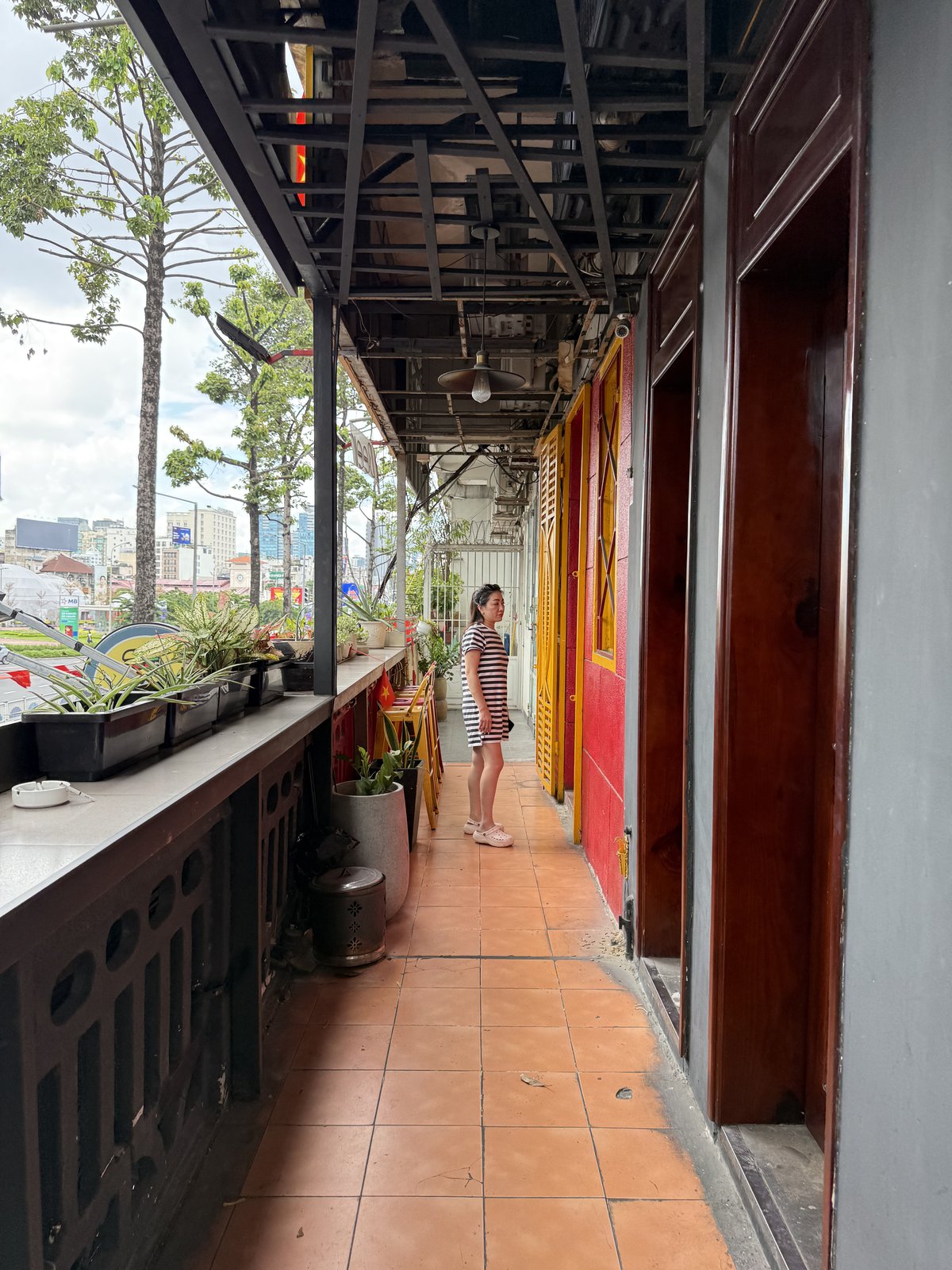
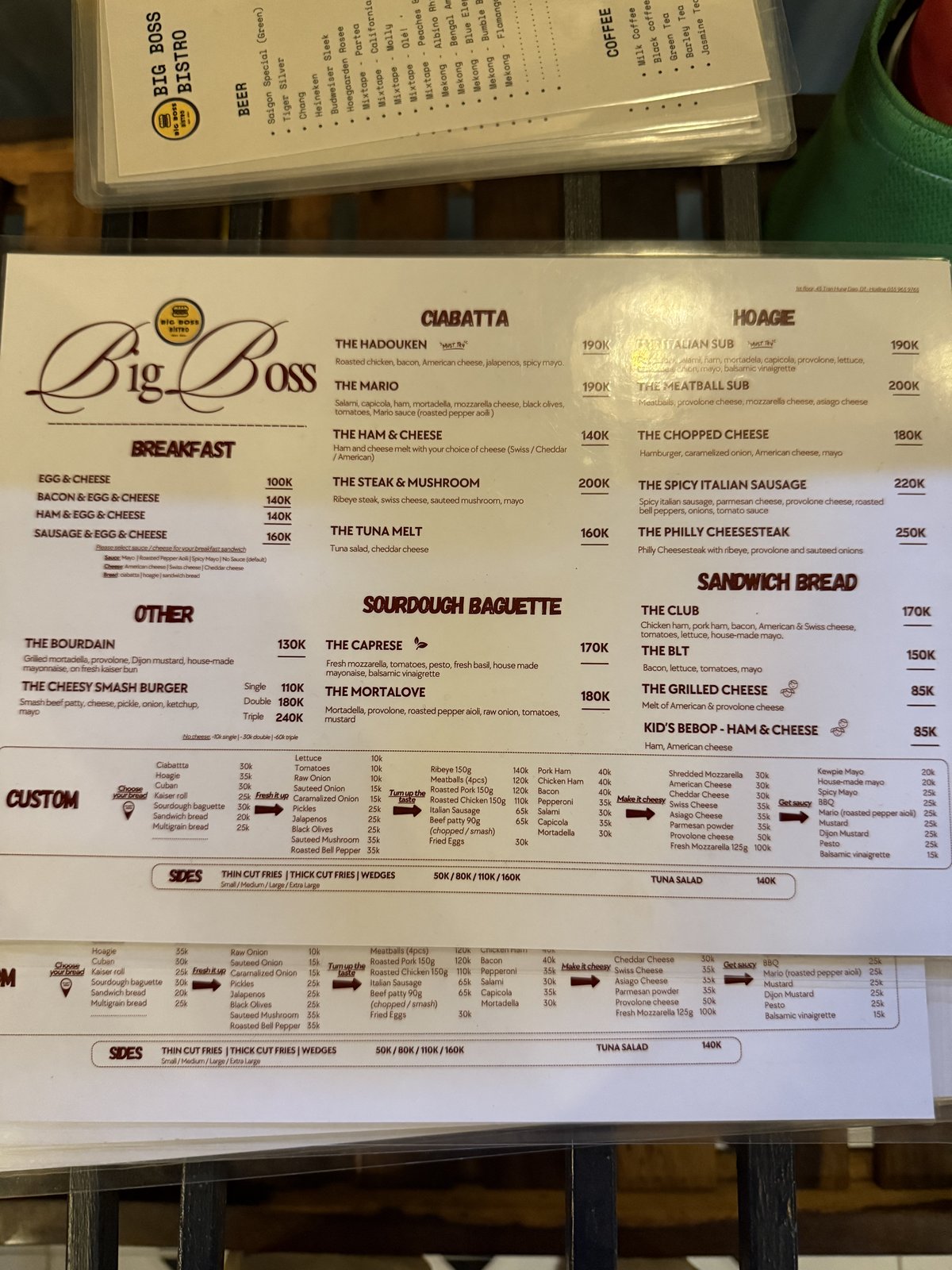
First lunch was an Italian sub from Big Boss Bistro in District 1, one of James Jolokia's spots. It is up a flight of stairs in an older building, along a tiled open-air corridor with red doors, potted plants, and a row of red flags on the railing over the boulevard below. The menu runs from ciabatta and sourdough baguettes to sandwich bread and a build-your-own section, with breakfast on the side.
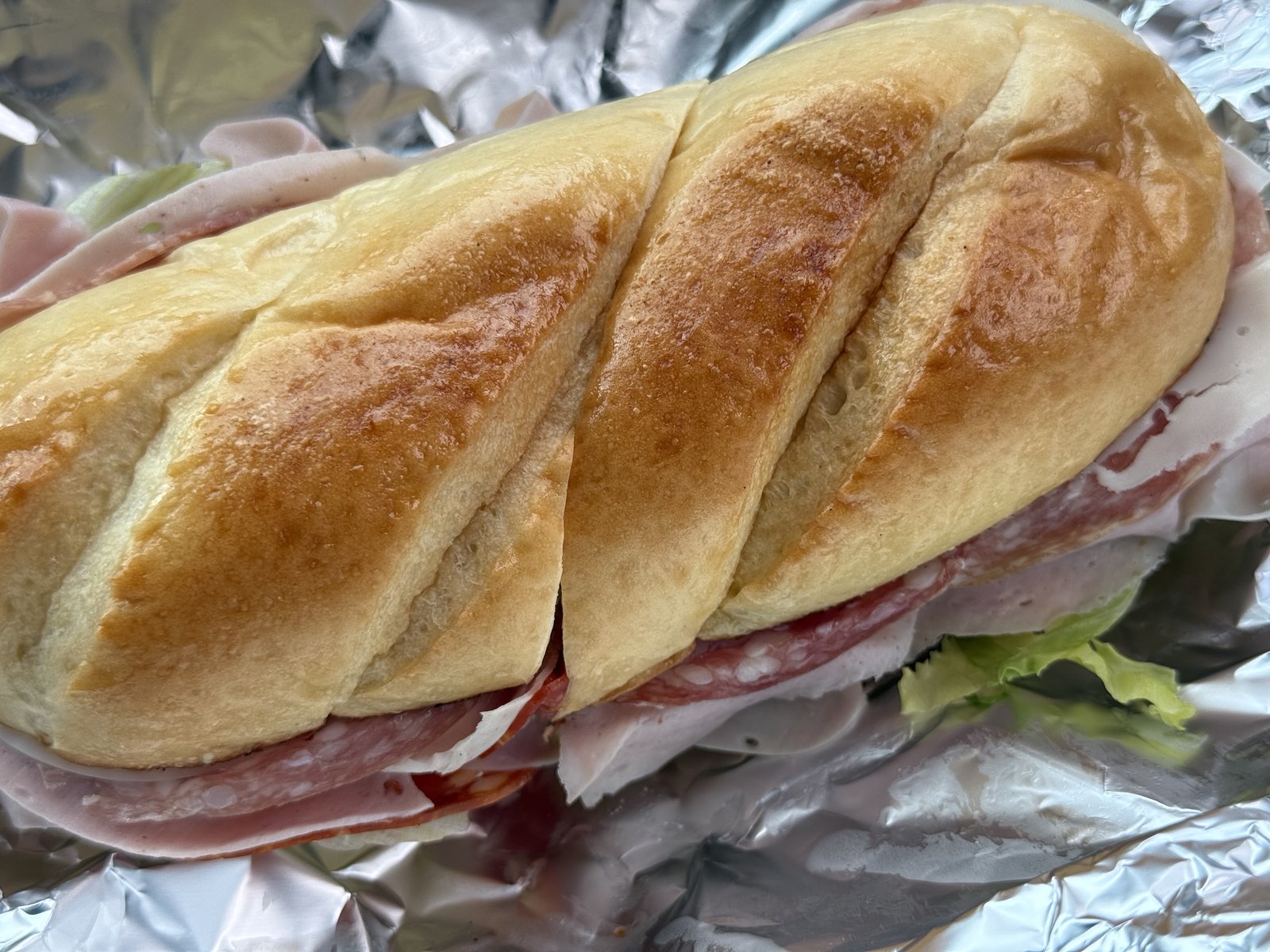
The sub came wrapped in foil, a long roll scored and toasted golden on top, layered with cold cuts and shredded lettuce. I ate it on the move. If you are ever in Saigon looking to satisfy an itch for western food, and it happens, Brick & Barrel and Big Boss Bistro are a must.
Second Lunch at Chợ Phạm Văn Hai
Second lunch was at Chợ Phạm Văn Hai, the market in Tân Bình where, on our first full day of the trip, I had spring rolls with mắm nêm. This time we came in past the rows of motorbikes and into the aisles, which were lined with luggage and clothing and more luggage.
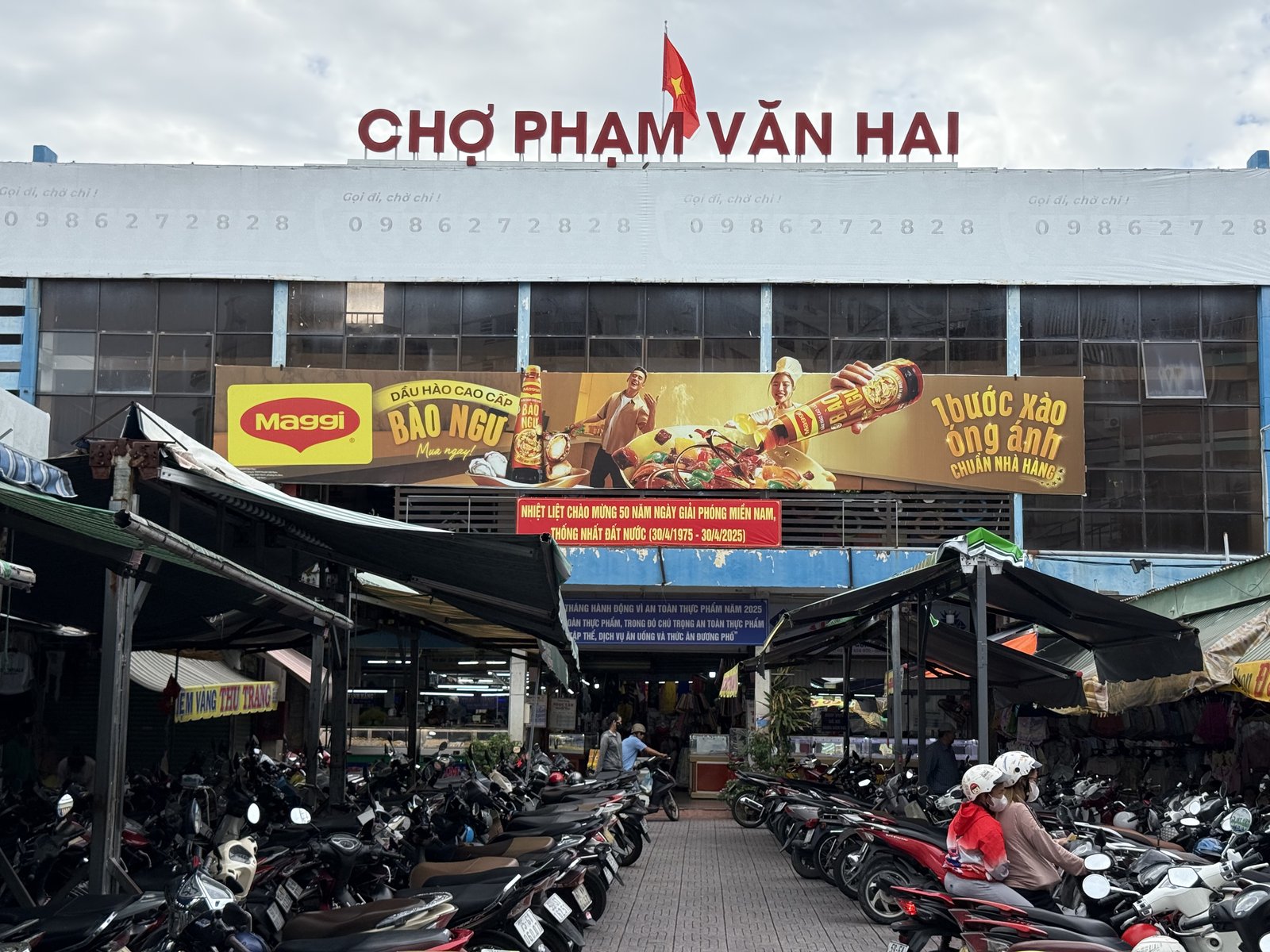
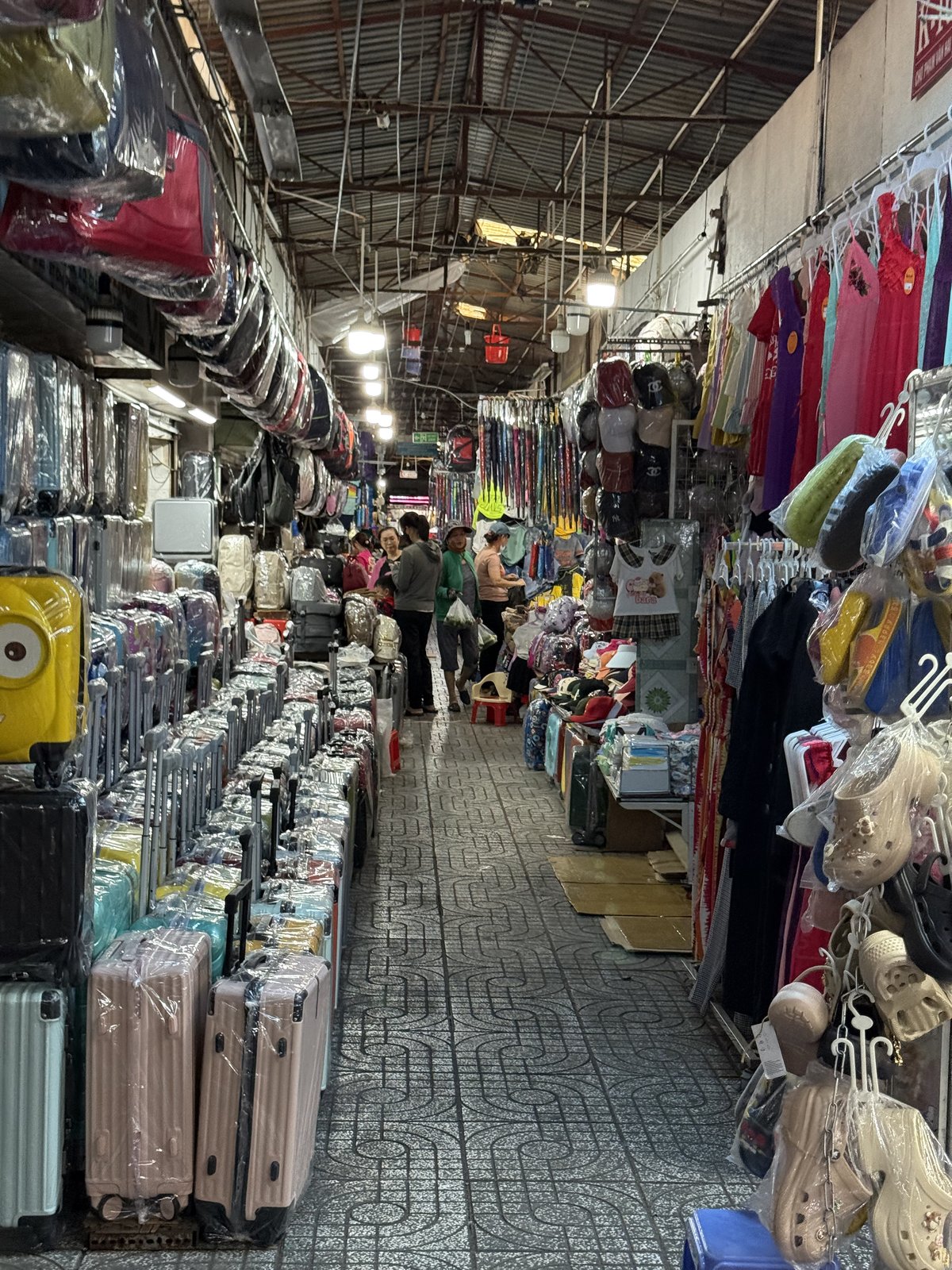
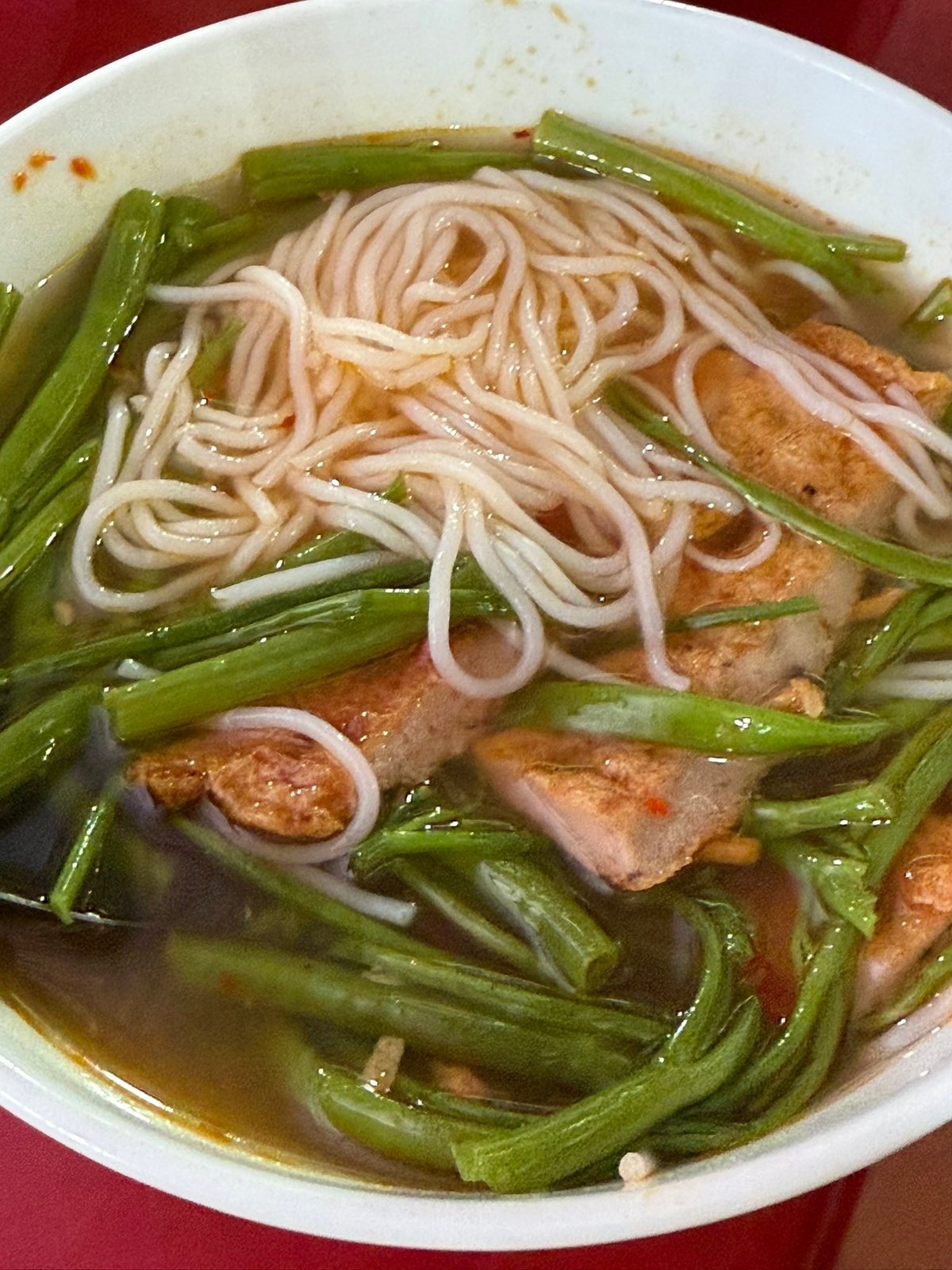
We had an incredible bowl of bún chả cá, fried fish cake noodle soup. It is a dish of the South Central Coast, rice vermicelli in broth with slices of fried fish cake. This one had a slightly sweet broth, rich, with lots of spring onions, long green stems tangled through the noodles. It was a highlight of the trip, weirdly enough, as we ate at a low red table in the market surrounded by clothing for sale.
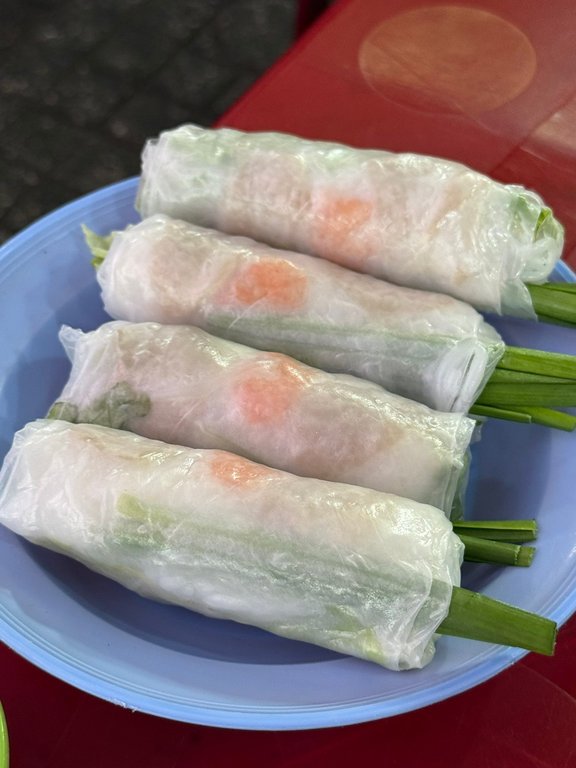
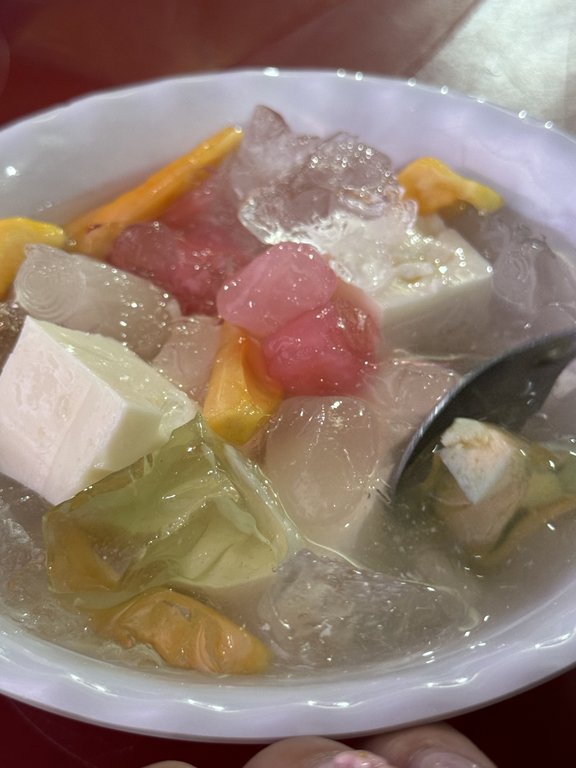
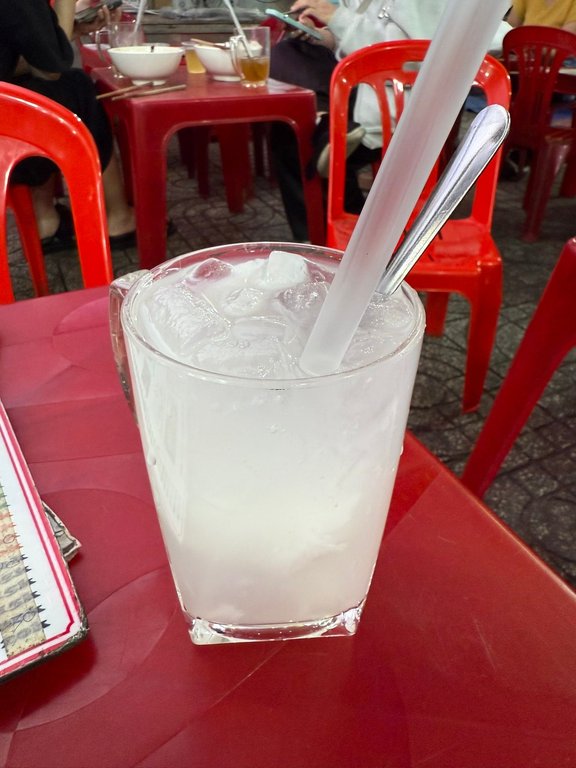
We also had spring rolls, fresh ones, shrimp and chives showing through the rice paper, a wonderful, light chè with lychee, jackfruit and squares of coconut pudding over ice, and a refreshing glass of coconut water to wash it all down. Chè is the catchall word for Vietnam's sweet dessert soups and puddings, and there are more versions of it than I will ever get through. I am trying.
Chúc Mừng!
What an amazing day for the family. It wasn't supposed to happen until we were back in the States, but we had one last grand adventure. Back on our first day in Saigon this June, Luan and Duyên's house had a new baby girl in it, and a boy on the way. That Saturday morning, the boy arrived.
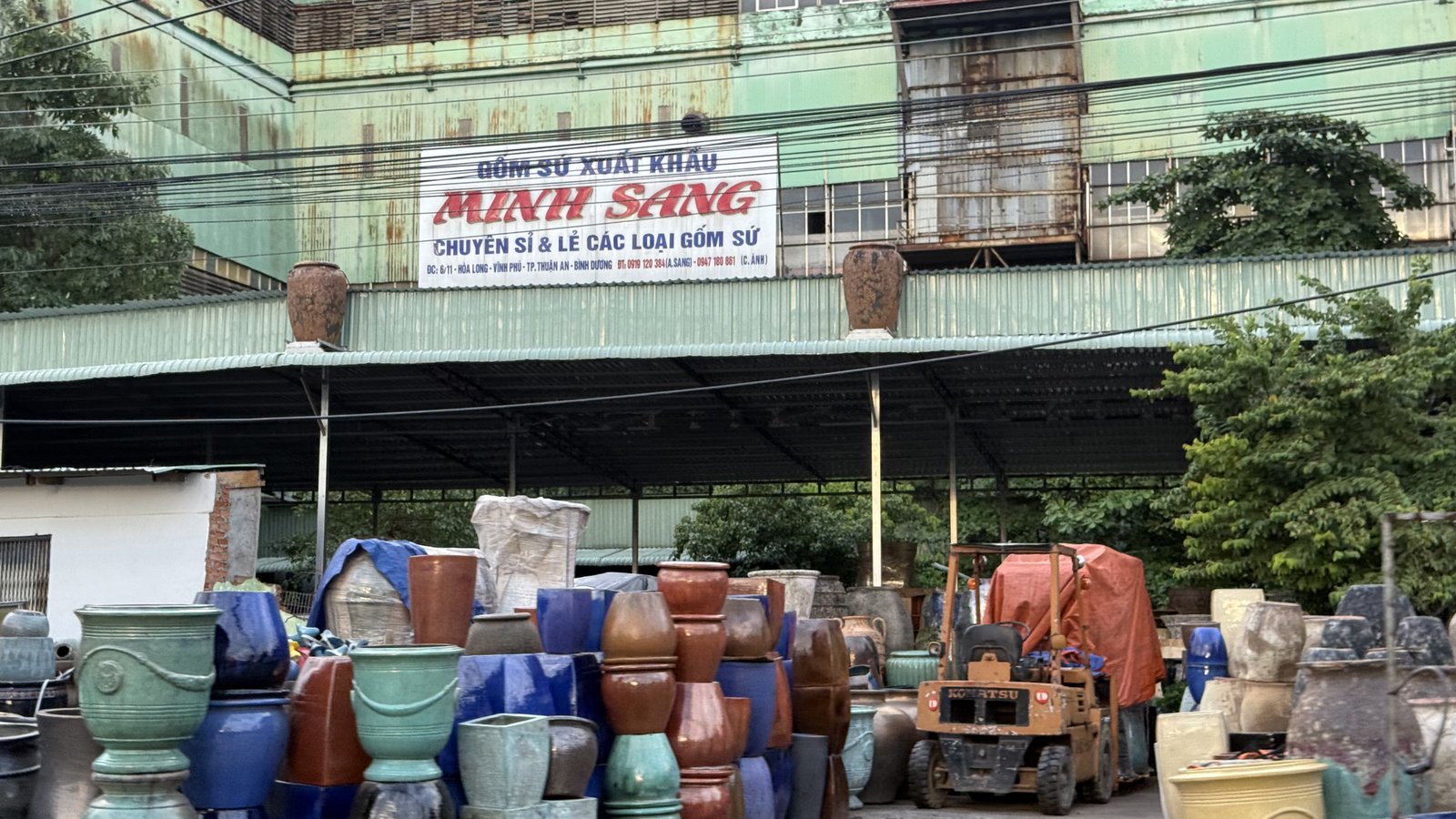
Late that afternoon we drove out to the hospital. At the lights the motorbikes packed in by the hundreds, a sea of helmets waiting on the red. Along the way we passed a yard stacked high with glazed pots under a sign for Gốm Sứ Xuất Khẩu Minh Sang, export ceramics, wholesale and retail, and more than one shop window full of roast duck and roast chicken.
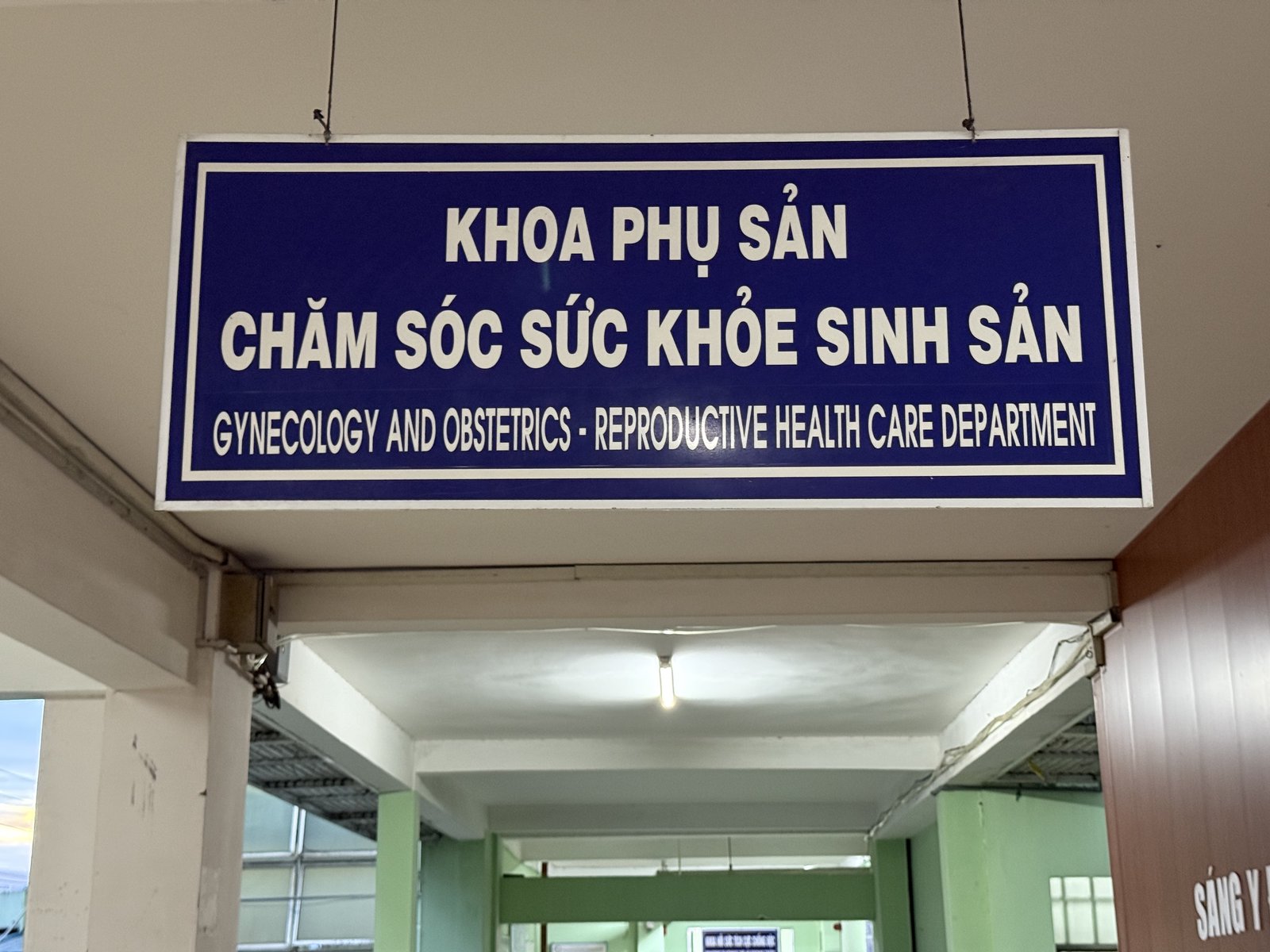
The sign over the corridor read Khoa Phụ Sản, Chăm Sóc Sức Khỏe Sinh Sản, with the English underneath: Gynecology and Obstetrics, Reproductive Health Care Department. Down the hall another sign read Phòng Sanh, Cấp Cứu Sản, the delivery room and obstetric emergency.
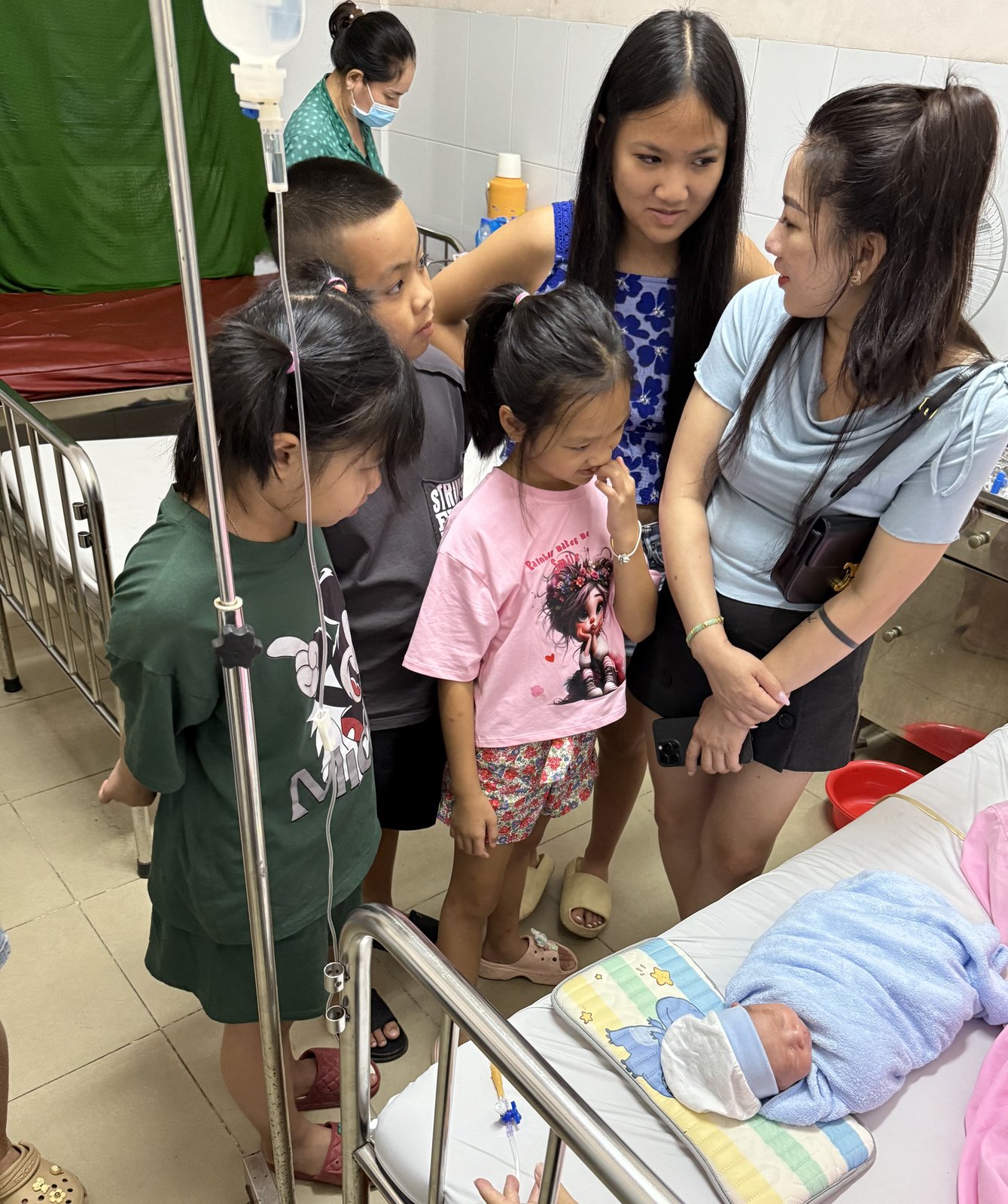
Congratulations to my brother Luan and his wife Duyên on the birth of their third child and first boy. Nguyễn Trần Đăng Khoa came into the world that morning right at 3 kilograms, a little over six and a half pounds. Pretty standard for a Vietnamese birth weight, I'm told. Both mother and baby were doing well. The birth of a new member of any family is always a great cause for celebration, and it was such an honor to be here to experience it together with the family.
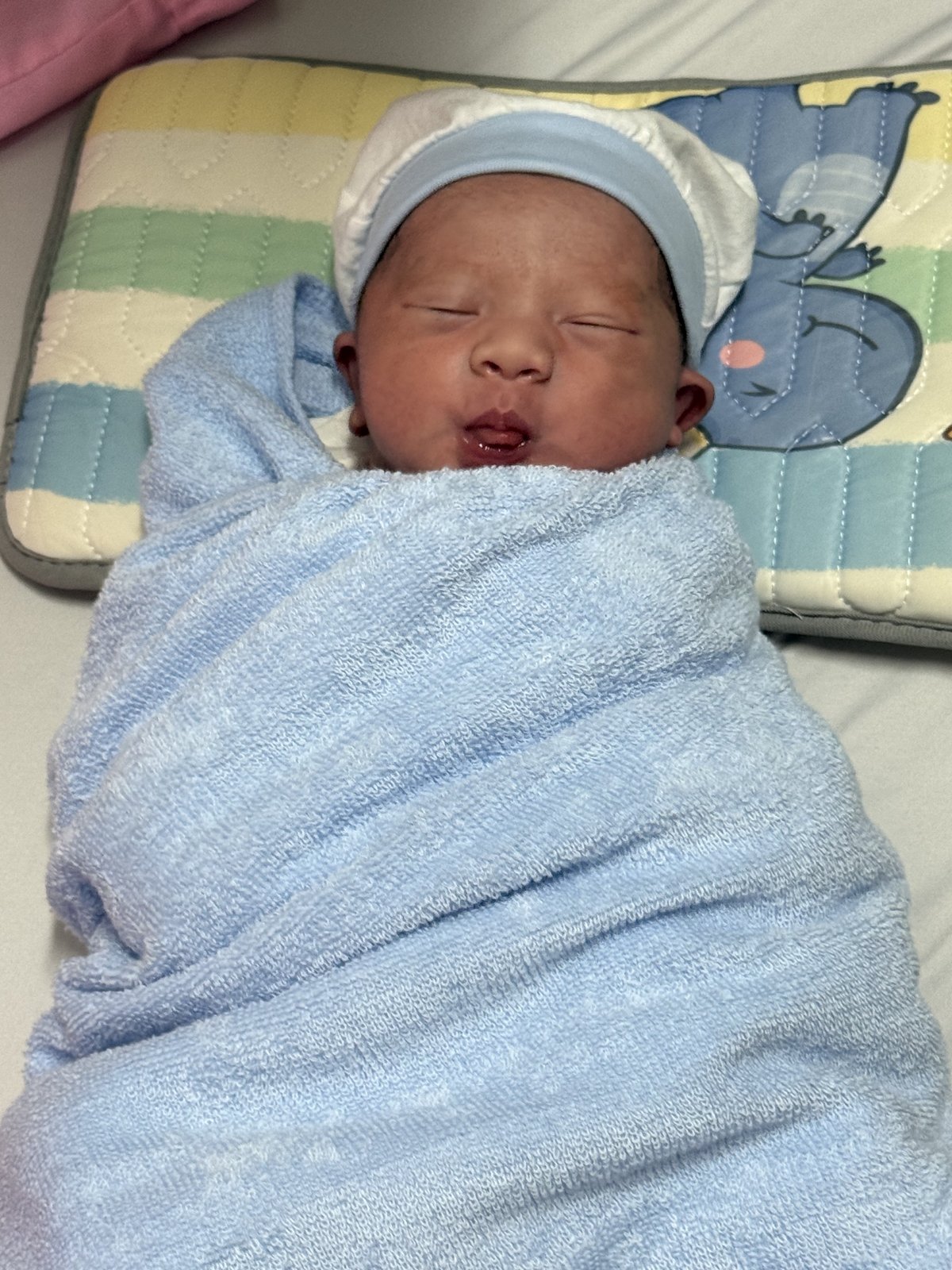
The kids crowded around the bed to get a look at him, wrapped up tight in a light blue blanket with a little knit cap on his head. In Vietnam the weeks after a birth come with rules of their own. A new mother is kept warm, away from drafts and cold water, and fed warming foods, out of an old belief that gió, wind, can get into the body and bring on headaches, aching joints and other ailments for years to come. The newest member of the family did not look worried about any of it. He slept through nearly every picture we took.
Vịt Quay
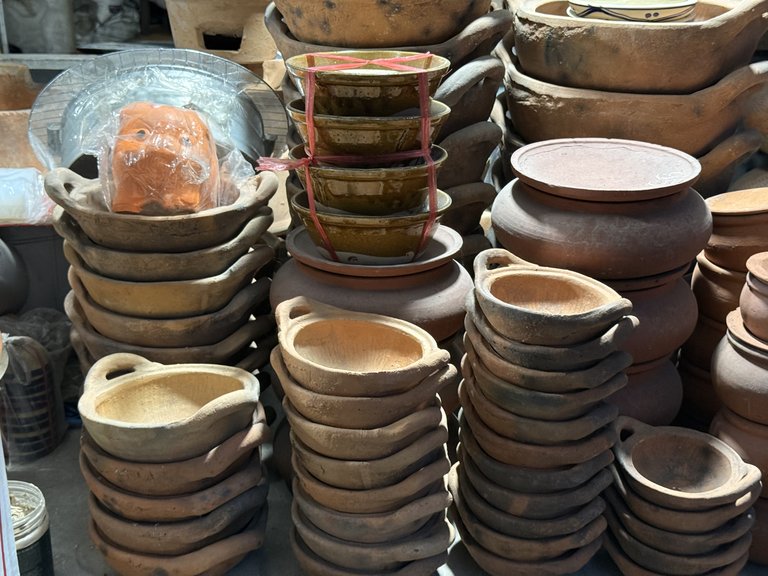
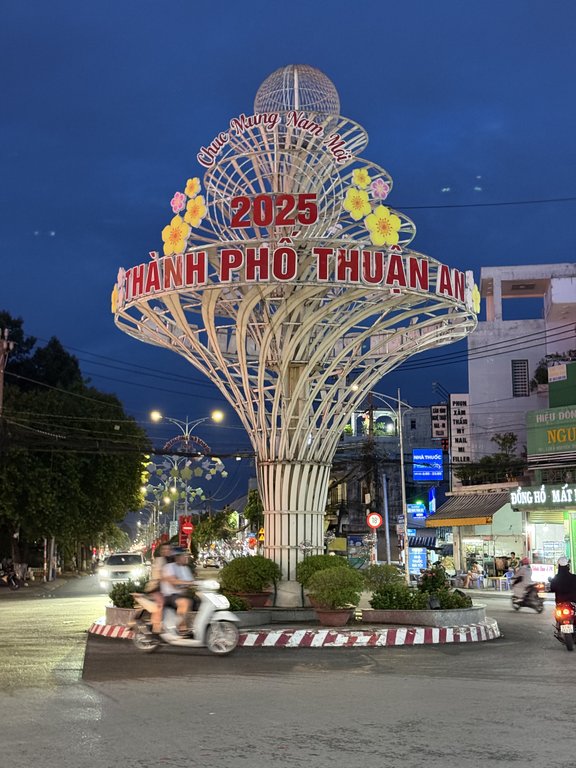
Dusk was falling when we left. A little later we were walking an evening market, stalls stacked with clay cooking pots and little charcoal braziers, baskets of fruit under bare bulbs, the pavement still wet. Then came a big lighted sign on a traffic island: Thành Phố Thuận An, 2025. We were in Thuận An, just across the Saigon River from District 12. Down the road, a lit arch left over from Tết still spanned the street, celebrating the glorious Party and the spring of Ất Tỵ, the Year of the Snake, at the end of June. Three days later Thuận An, like the rest of Bình Dương, would be part of Ho Chi Minh City.
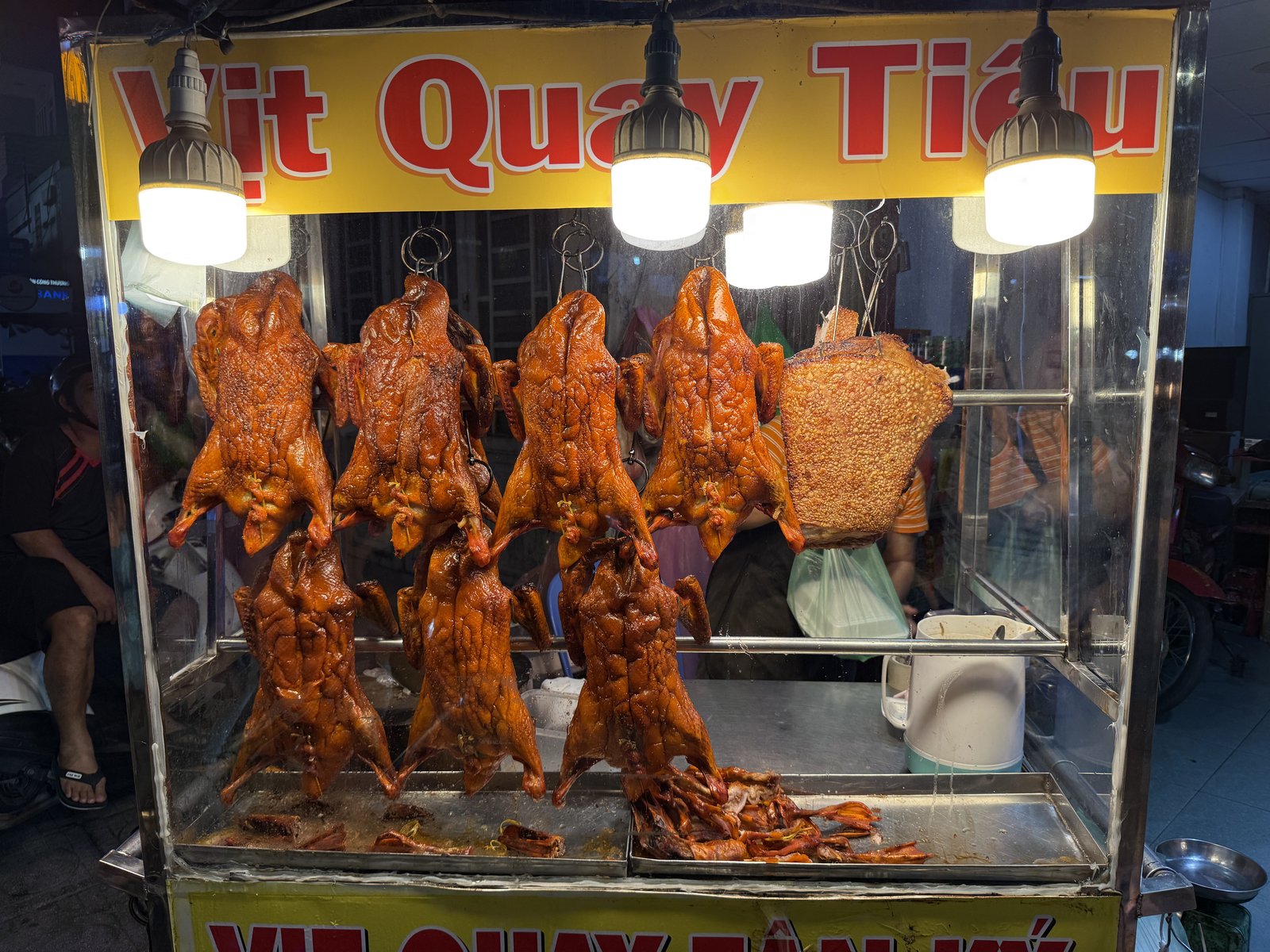
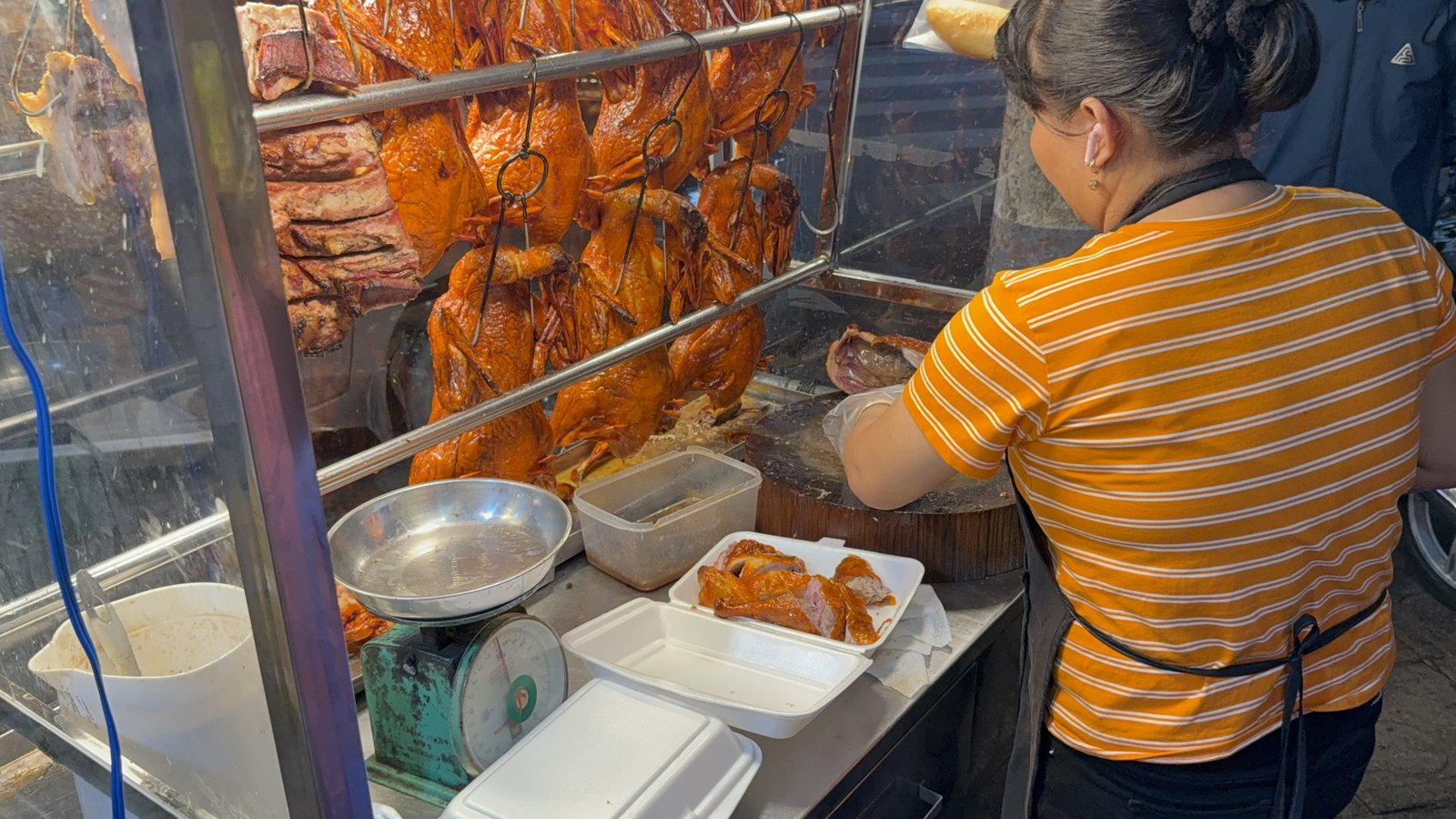
Vịt quay heo! We picked up dinner on the way home. I have a real weakness for crispy roasted pork and duck. The cart was a glass case under a row of bright bulbs, Vịt Quay Tiều across the top and Vịt Quay Tân Ký along the bottom. Lacquered red-brown ducks hung in two rows, a slab of crackling pork belly beside them. A woman in an orange striped shirt worked behind the glass with a cleaver and a scale, chopping and weighing and packing it all into foam boxes.
Anyone who has eaten in a Cantonese barbecue shop will recognize the spread. Siu mei is the Cantonese name for meats roasted on spits or in big rotisserie ovens, each brushed with its own sauce before it goes in. The duck is siu aap, and the pork with the crisp skin is siu yuk. Saigon has long been home to a large ethnic Chinese community, the Hoa, whose commercial heartland was Chợ Lớn and whose common tongue among themselves is Cantonese.
Saigon has long been home to a large ethnic Chinese community, the Hoa, whose commercial heartland was Chợ Lớn and whose common tongue among themselves is Cantonese.
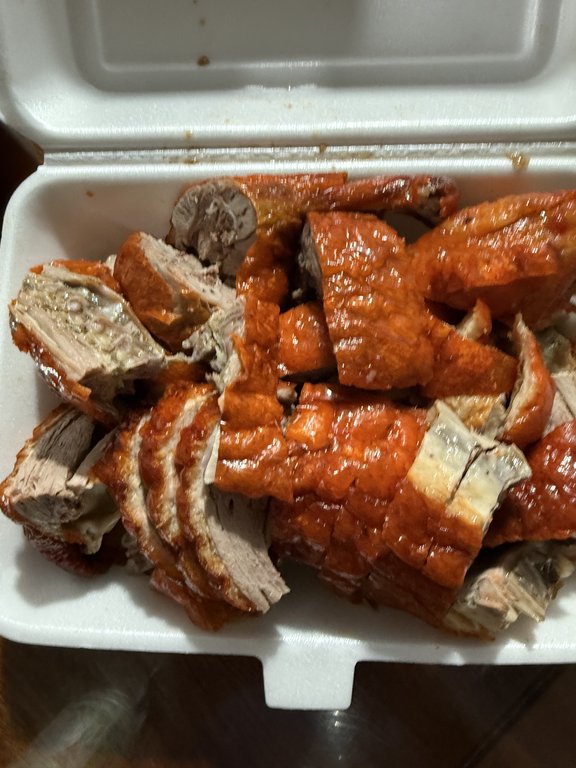
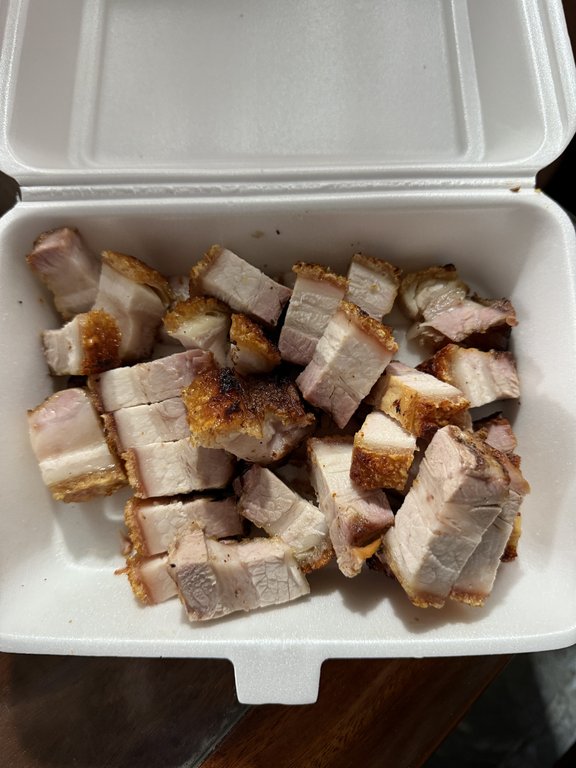
Dinner was a pile of roasted duck and pork, sliced cucumber, and black sticky rice with yogurt. It was a good day.
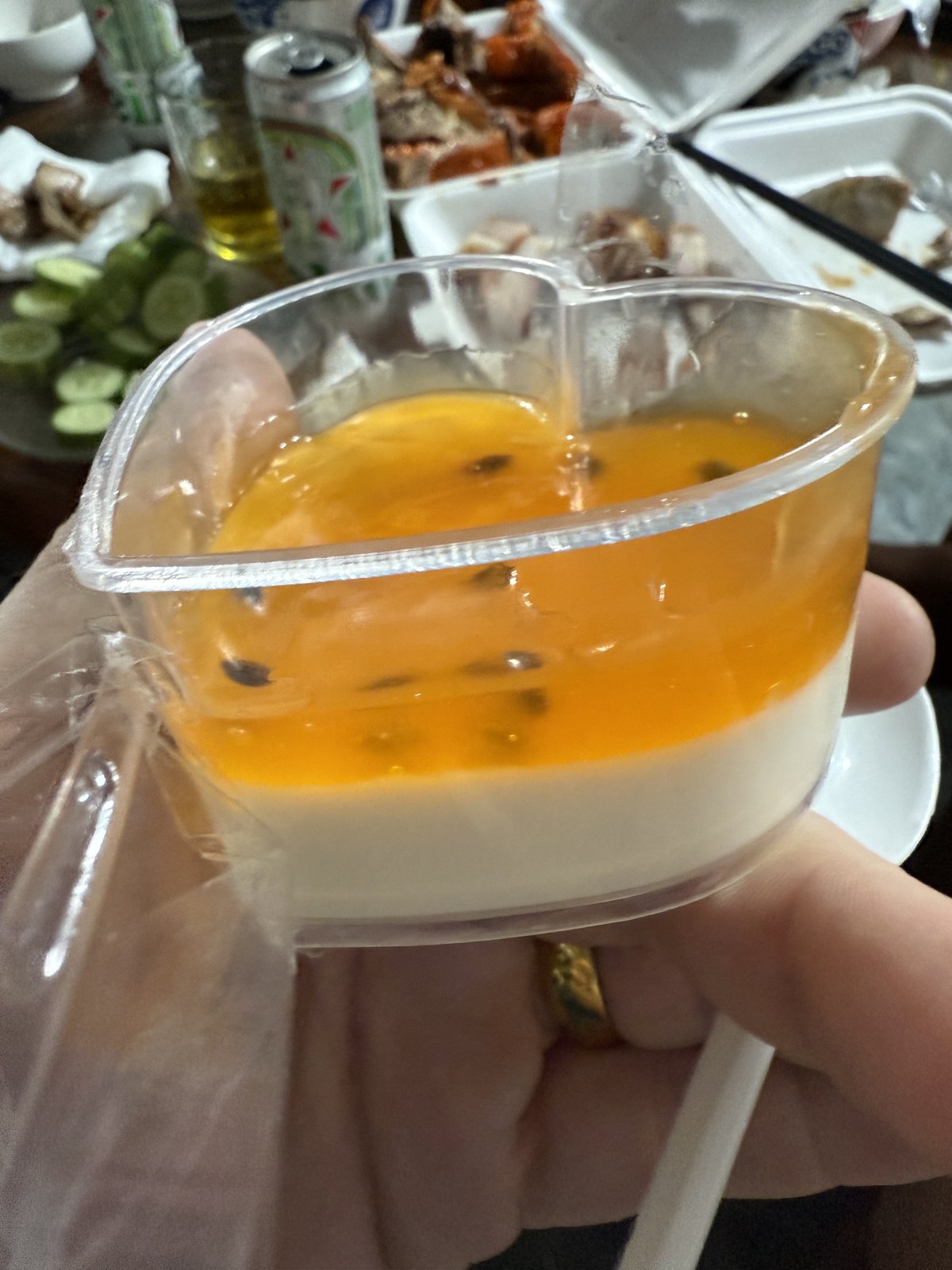
Tomorrow we would go back to the hospital to see our new nephew one more time. The long way home was getting closer.
Previously: Farewell, Dragon City
More from Saigon: Saigon - The City of Two Names, The Last Days Of Saigon and The Dog Days of Saigon