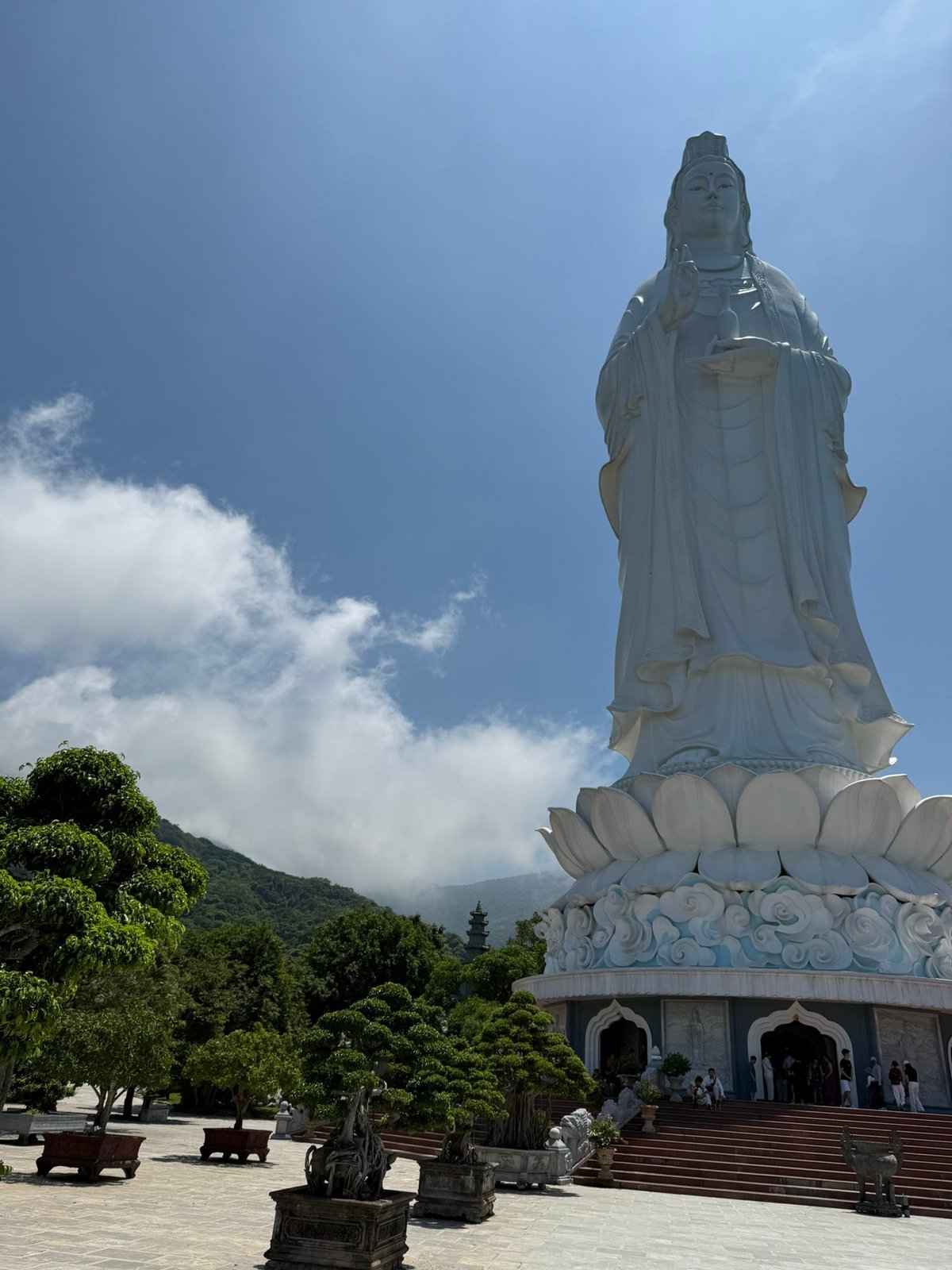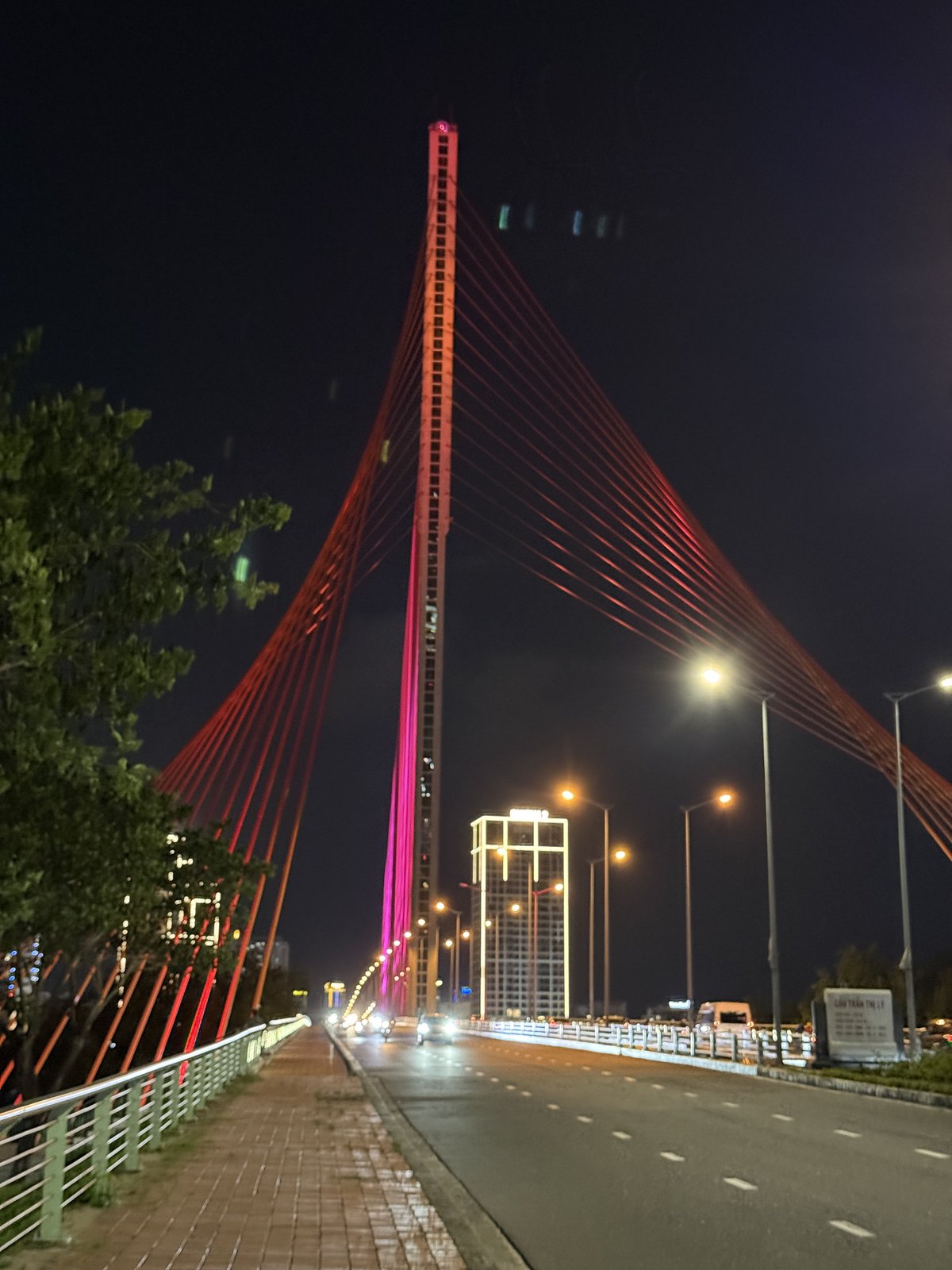
Living in Da Nang was always so much fun. There was always something spectacular to do. That has not changed. What has changed is the crowds.
Every summer Da Nang hosts a six-week international fireworks competition, with teams from around the world. On Saturday night Portugal and England were up. We tried to get close enough to see them. The show was only a few miles from our house. It might as well have been a thousand. The streets were closed, packed, and it was pandemonium.
The Fireworks We Didn't See
The Da Nang International Fireworks Festival, DIFF to everyone in town, was first held in 2008, and it has only grown since. The 2025 season was billed as the longest and largest yet. Ten teams from nine countries, two of them from Vietnam for the first time, fired over the Hàn River on Saturday nights from May 31 to the final on July 12, under the banner "Da Nang, the New Rising Era." The main stage and the grandstands sit along Trần Hưng Đạo Street on the east bank of the river, and each team gets twenty minutes of sky.
Our Saturday was themed Sustainable Development. Portugal sent Macedos Pirotecnia, a company with close to a century in the business, making its first appearance at DIFF. The British team, Pyrotex Fireworx, came back for another round with a show built from about 8,000 custom-made fireworks and a soundtrack that, the papers reported, included a James Bond theme and two Vietnamese songs the crowd sang along to. More than ten thousand fireworks went up that night. Tuổi Trẻ put the crowd along the river in the hundreds of thousands. I have no reason to doubt them.
For the record, neither of our teams took the title. On July 12 a Chinese team, Jiangxi Yangfeng, was crowned champion, with Vietnam's Z121 Vina Pyrotech, the team from the Ministry of National Defense, in second. Macedos went home with the prize for creativity.
Saturday was also one of the last nights of the LED kite show. As part of the city's Enjoy Đà Nẵng festival, giant kites shaped like whales, octopuses and sea turtles flew over Phạm Văn Đồng Beach from late morning until six, then went back up after dark, strung with LED lights, from seven to nine. We caught some of the kites earlier in the day, up in the daylight. But again, after dark, it was impossible to get near them. Two of the biggest shows in the city on one Saturday night, and the closest we got to either was the back of the crowd.
Back to Hội An
Sunday I needed a nap, so I skipped lunch. After seeing the pictures of what I missed, maybe I shouldn't have.
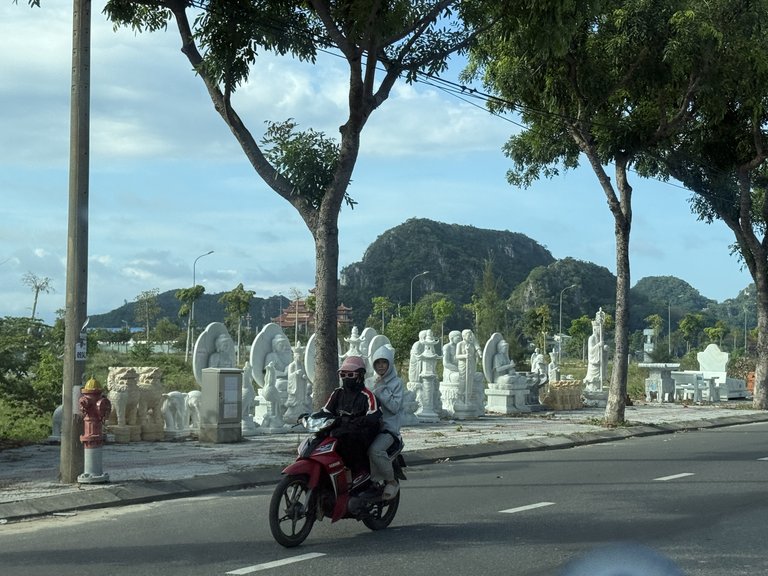
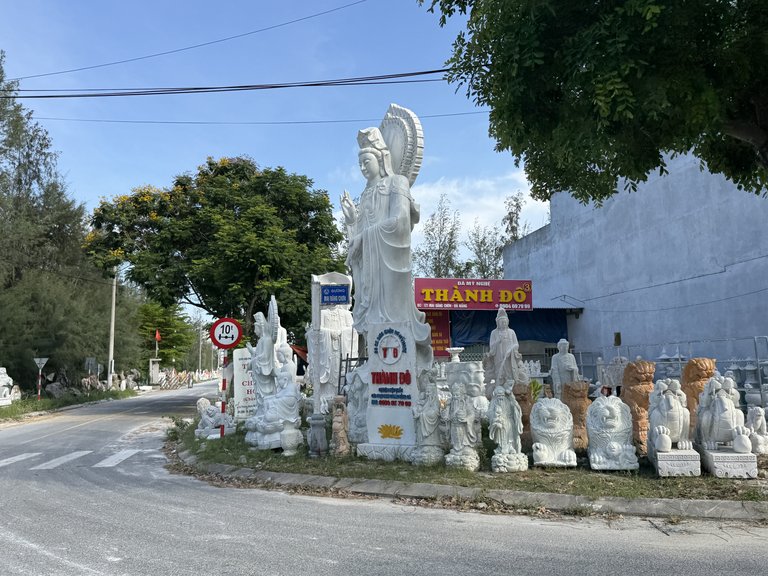
In the afternoon we had to return to Hội An. A few nights earlier I had been fitted for some bespoke three-piece summer suits, and they were ready for their final adjustments. The drive south is about forty-five minutes, down past the Marble Mountains. The stone carvers there line the road with their work, rank after rank of white figures and animals, a Lady Buddha taller than a man standing over them, and the jungle-covered marble peaks rising behind. I wrote about those mountains years ago, and about the carvers, who will sell you anything from a statue that towers overhead to the smallest bracelet.
Hội An has been dressing people for a long time. The town has hundreds of tailor shops, most of them packed along a handful of streets in and around the old town. You bring an idea, a photo or just a vague notion. You pick your fabric off the wall. They measure you head to toe, and then you come back for fittings while they refine it, until you sign off on the final adjustments. Many pieces are done in a day or two. Years ago I noted you could have a hand-tailored silk suit made from scratch here for under $200. Da Nang's tourism office notes that Time magazine was praising Hội An's tailors for speed and value as far back as 2006.
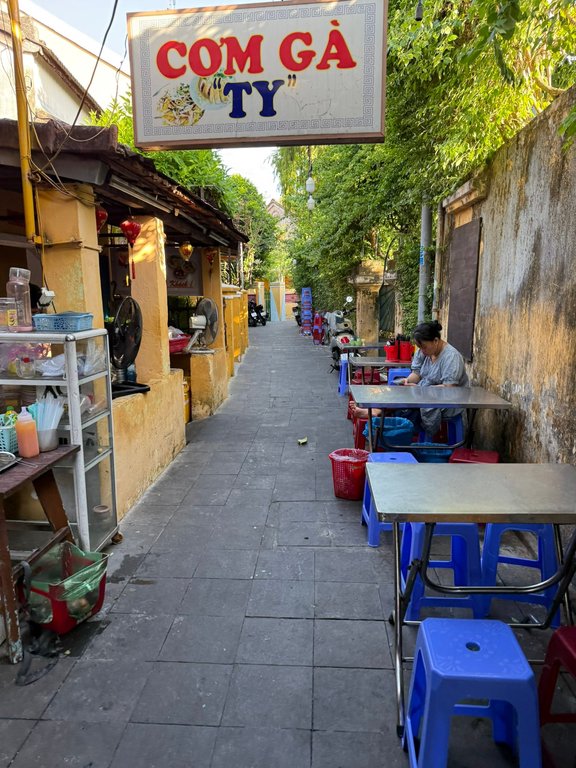
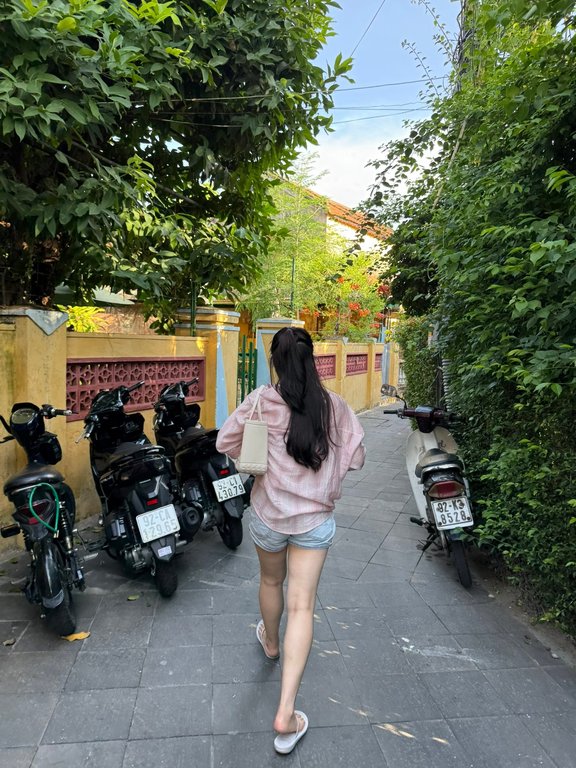
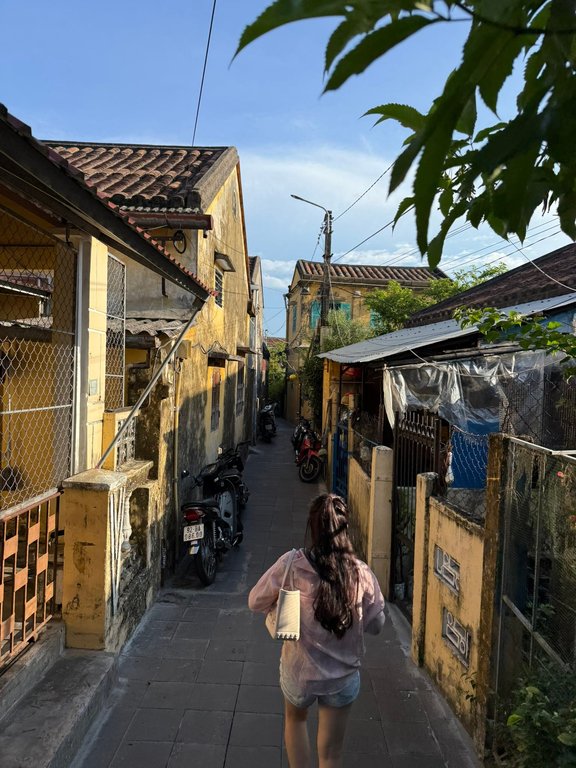
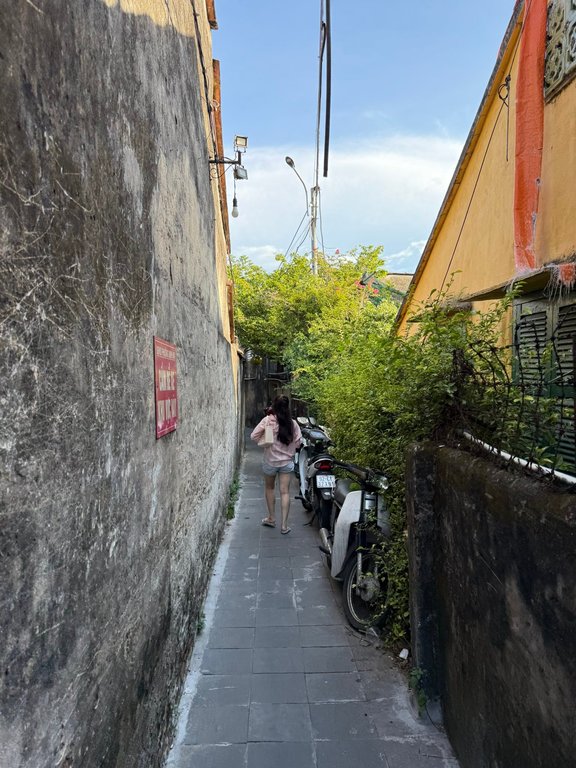
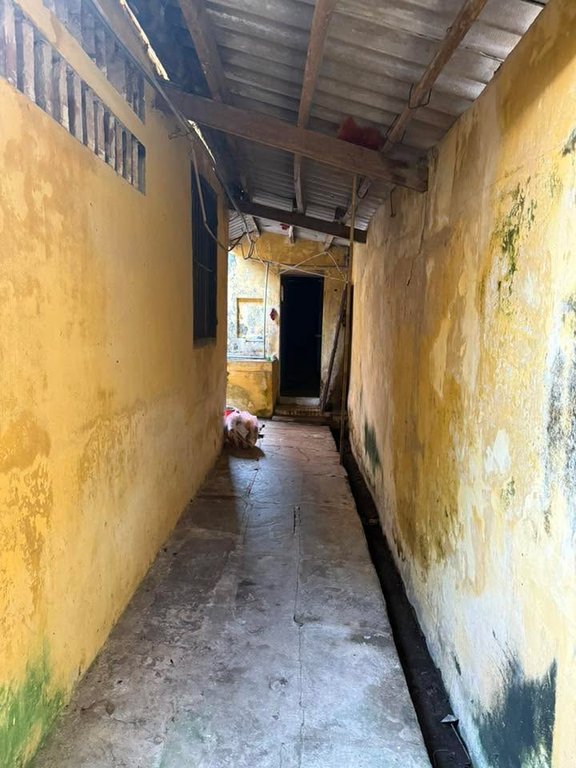
So we just enjoyed the stroll through the city to the tailor. Our walk took us through the back lanes. Yellow walls gone soft and mottled with age, tile roofs, motorbikes parked nose to tail, and potted plants along the walls. Down one alley a row of blue plastic stools and tables waited under a sign for Cơm Gà Ty. Cơm gà, chicken rice, is one of Hội An's own specialties.
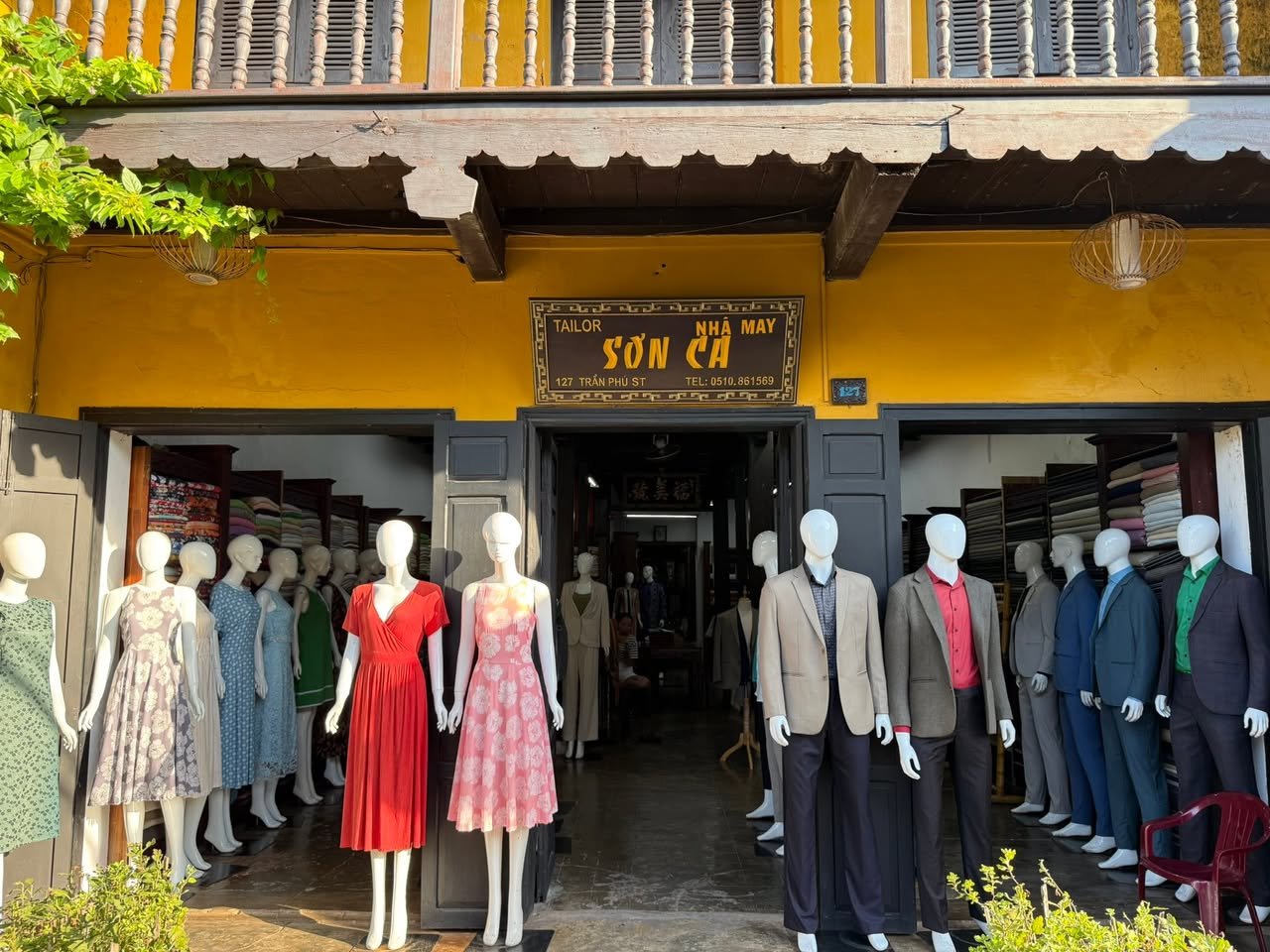
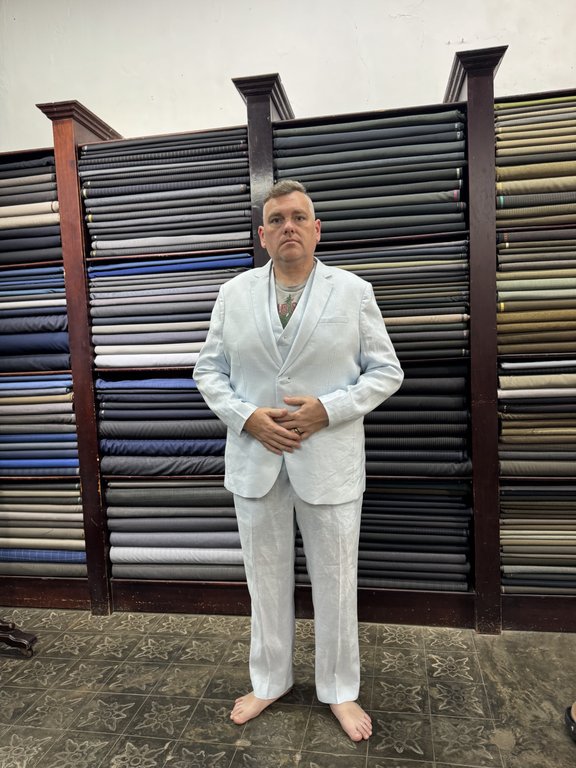
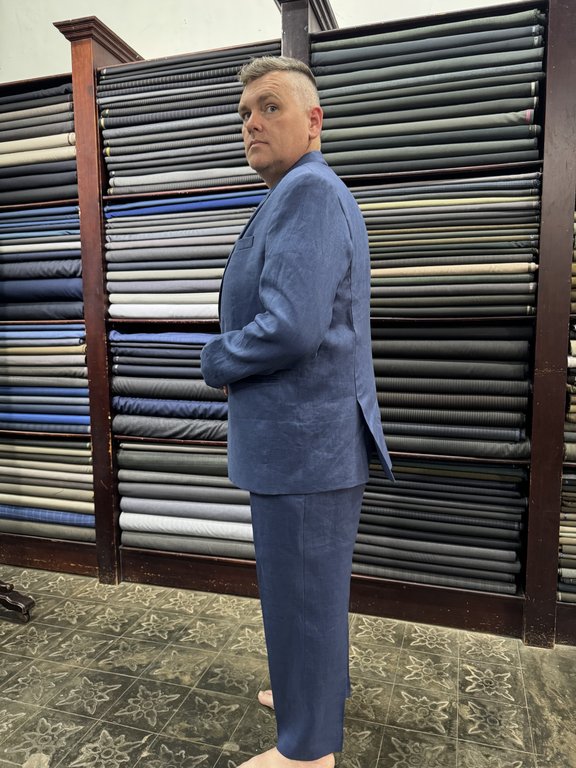
Along the way we passed shopfronts where the mannequins stood in rows, sundresses on one side and suits on the other. Then the tailor's. The walls were stacked floor to ceiling with bolts of fabric, every shade of gray, navy and stone. I stood barefoot on the tile while they checked their work. First the white suit. Then the blue one.

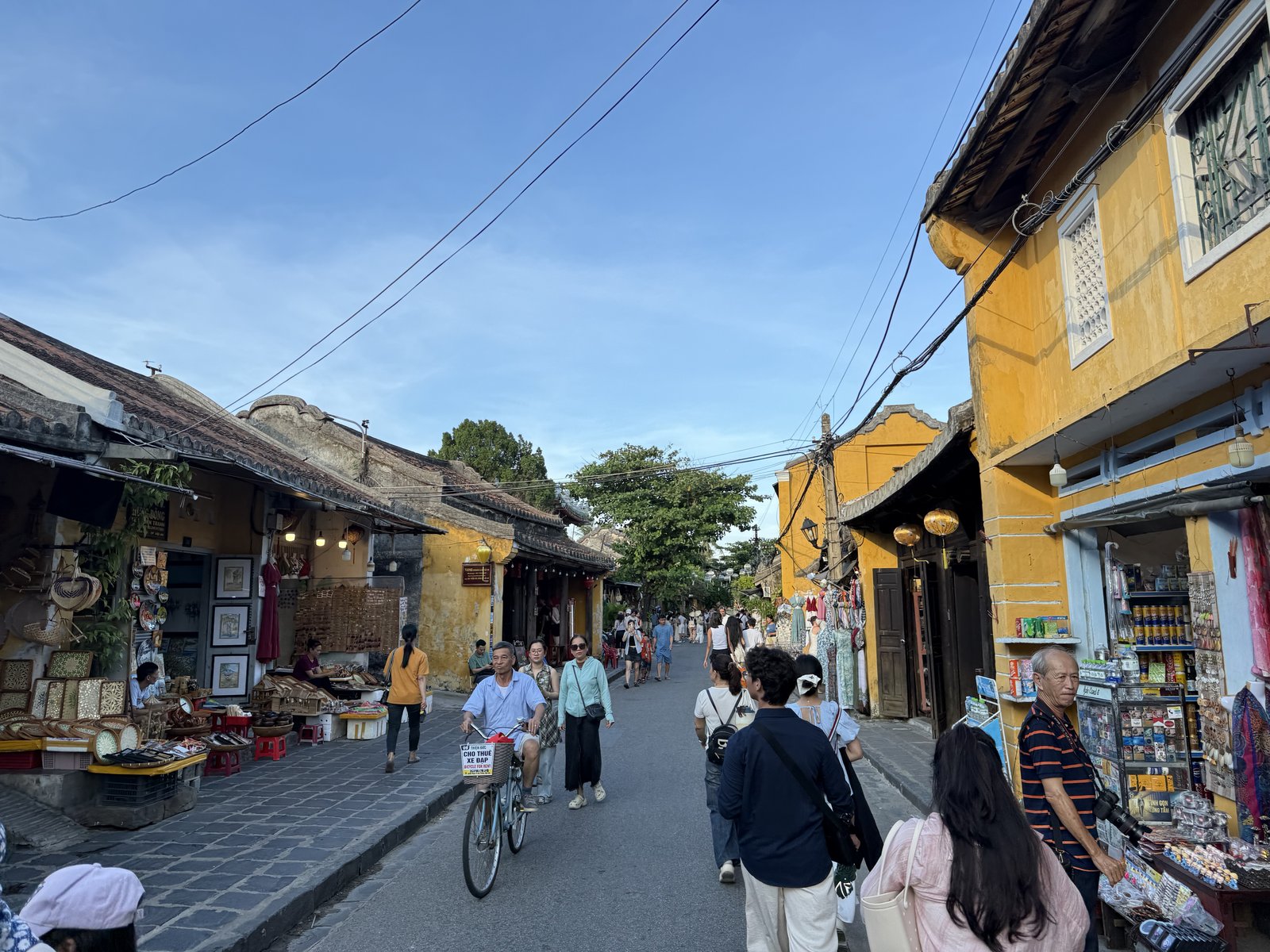
Then we wandered back out into the old town. By late afternoon the light goes gold on the yellow walls, and the streets fill up. Red lanterns were strung overhead from one side of the street to the other. A cyclo driver in a blue shirt pedaled a passenger past the crowds. Clothing racks spilled out of the shops onto the sidewalk.
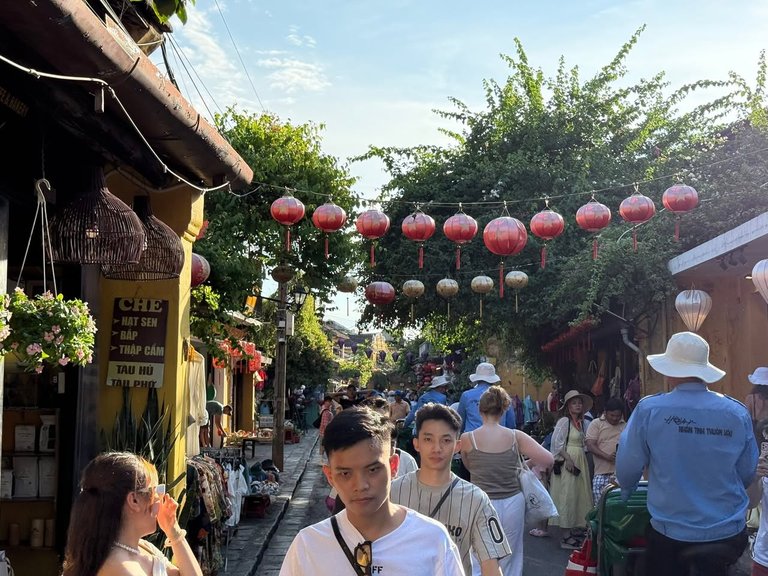
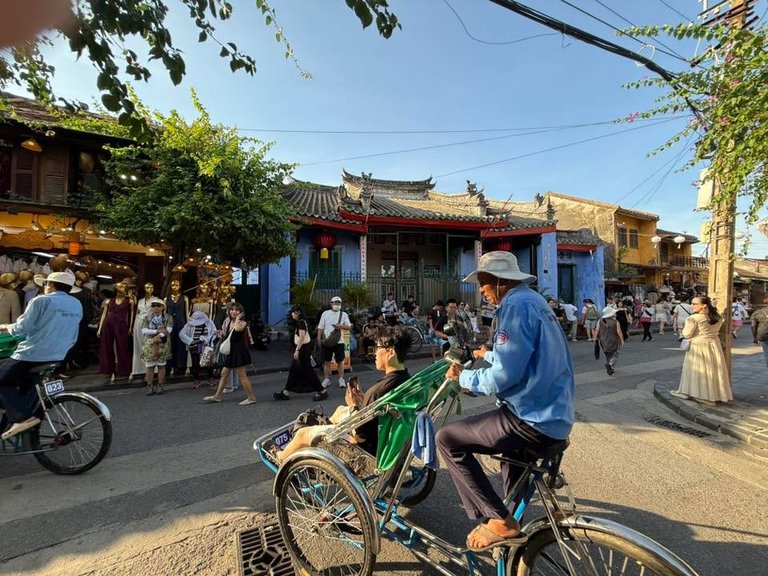
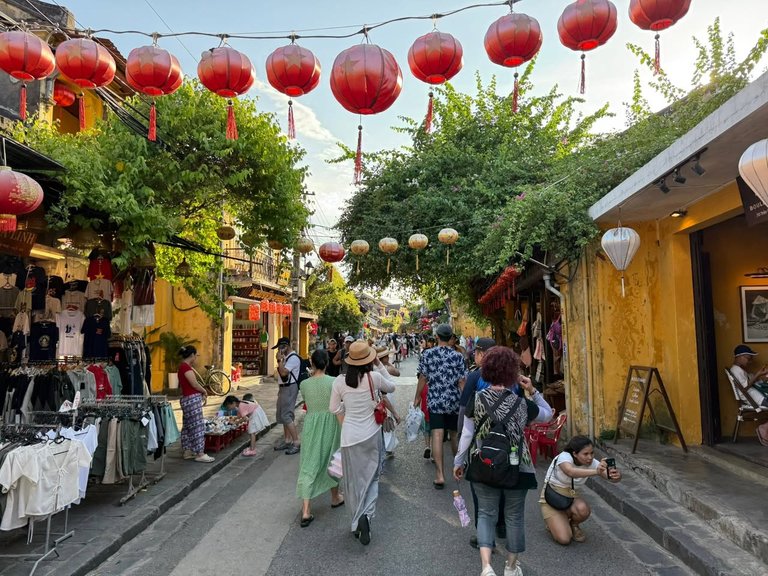
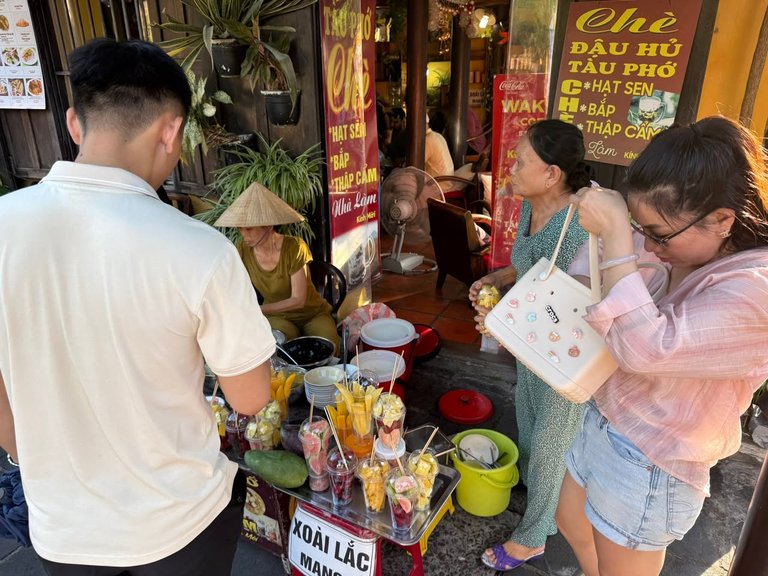
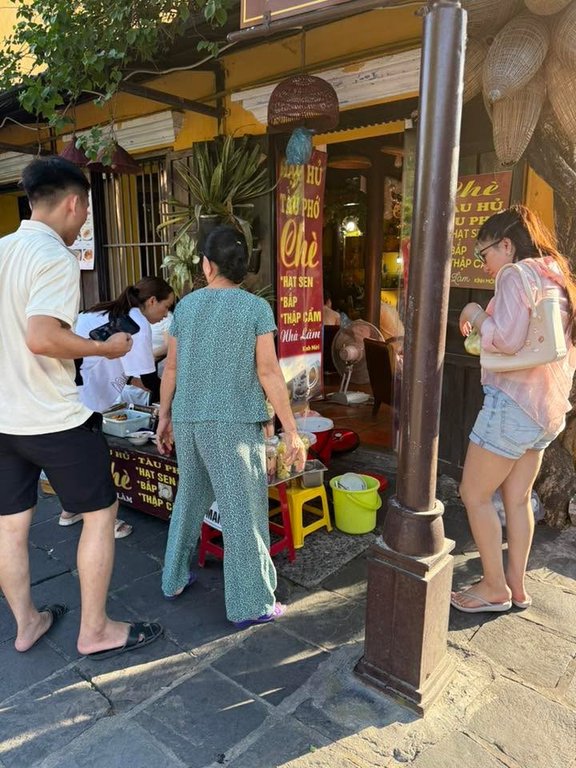
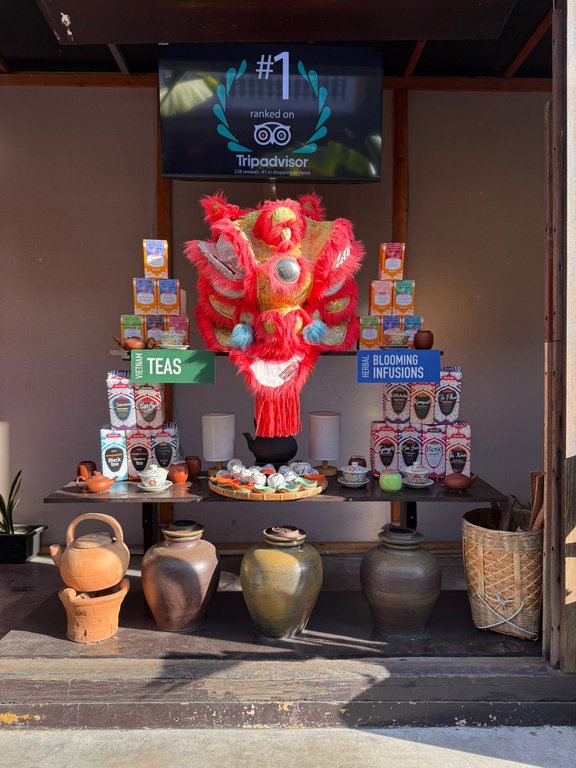
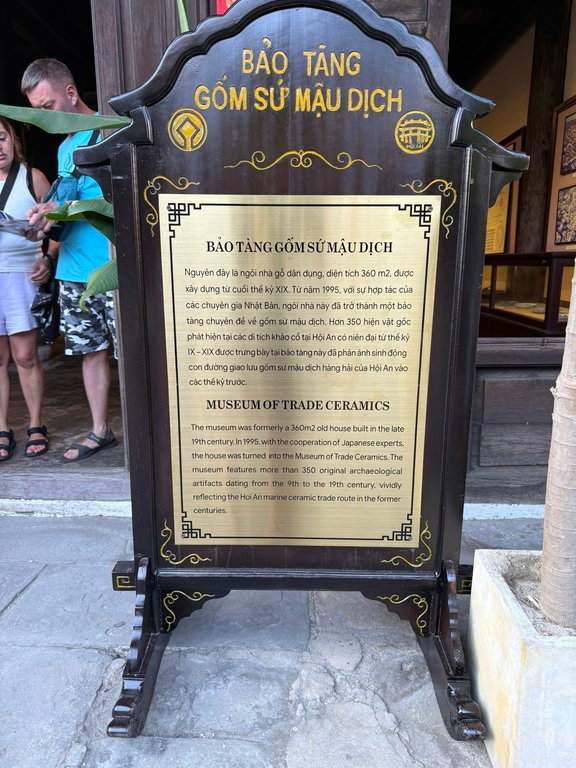
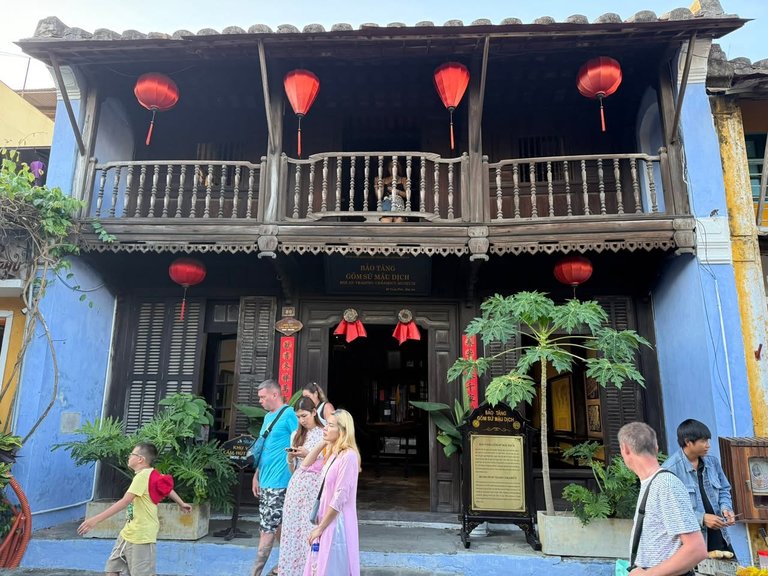
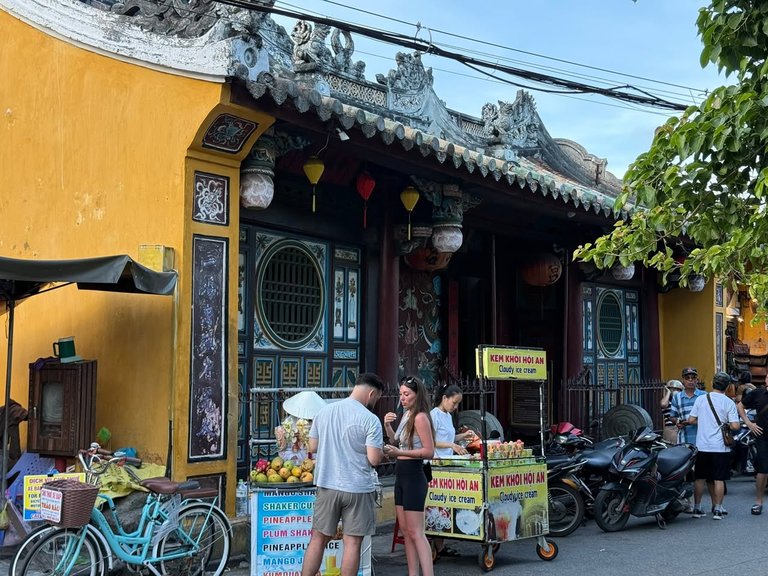
At one corner a woman in a nón lá sat behind a cart of cut fruit in plastic cups, mango spears standing up in them like pencils, under a hand-lettered sign for xoài lắc, shaken mango. Next door, a sign advertised chè, the sweet soups, and đậu hũ tàu phớ, the silky tofu pudding. We walked past a tea shop that had built its whole window display around a red lion dance head, with tins of tea stacked on either side and old clay jars on the floor, under a screen announcing it was number one on Tripadvisor. We passed the sign for the Museum of Trade Ceramics, then an old two-story wooden house with red lanterns hung along its balcony, and a yellow temple front with an ornate tiled roof, a vendor's cart and a few bicycles parked out front.
Chợ Hội An
Since we were in Hội An anyway, I took full advantage. We hit their little downtown food market for a late lunch, or early dinner. I'm losing count at this point.
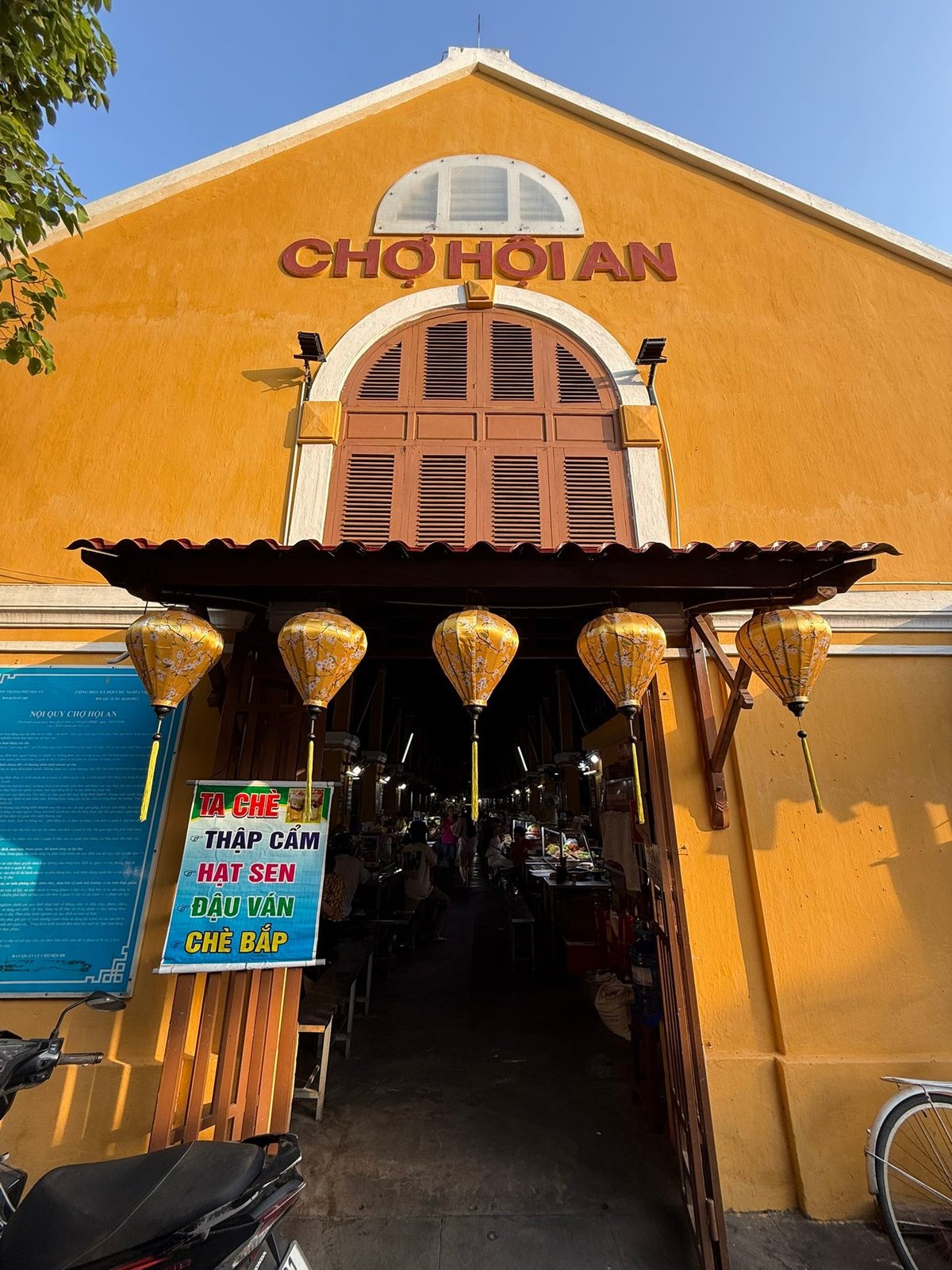
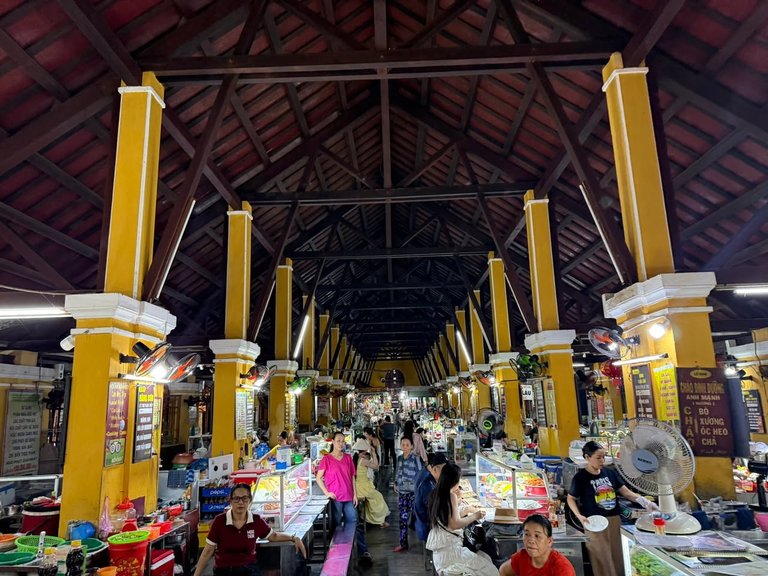
The market is Chợ Hội An, the town's central market, at the corner of Trần Phú and Nguyễn Huệ Streets. You cannot miss it. It is a big ochre-yellow hall with CHỢ HỘI AN in red letters across the gable and a row of yellow lanterns hanging over the door. A sign by the entrance listed the chè on offer: thập cẩm, the everything-in-it version, hạt sen, lotus seed, and chè bắp, sweet corn. The hall that stands there now went up in the 2000s, built to replace an older market building and to look like it belonged in the old town, which it does.
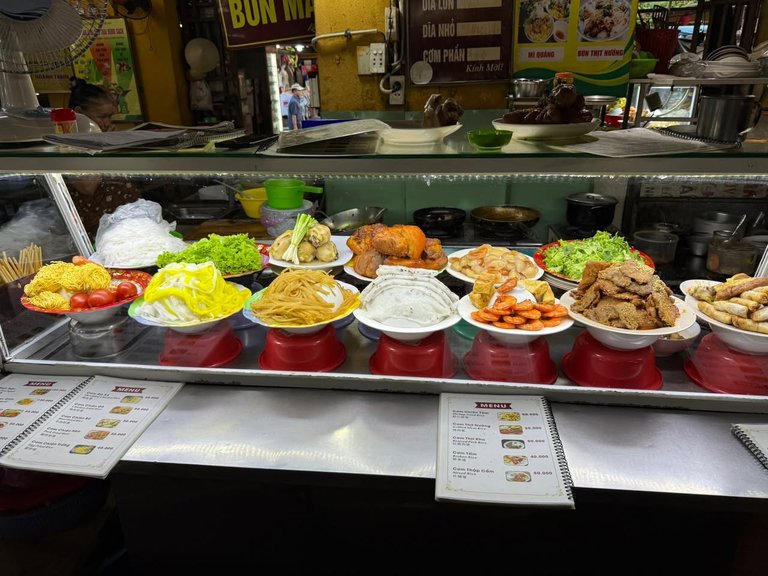
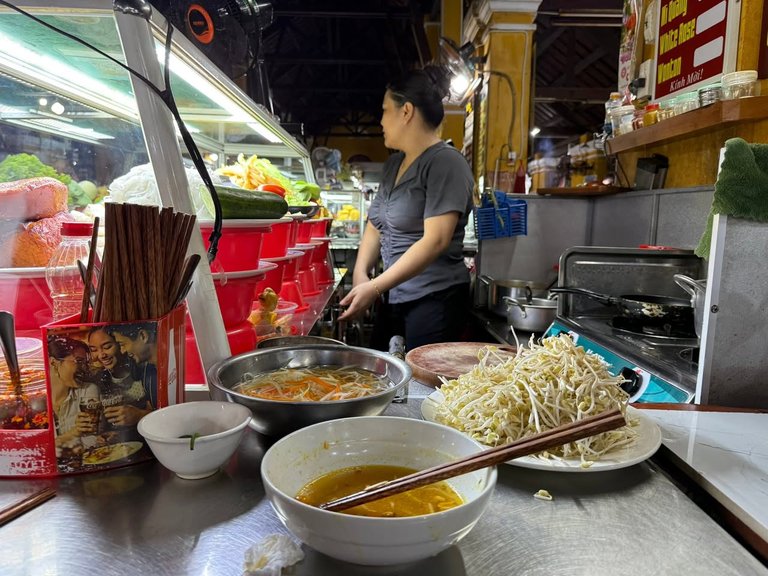
Inside, the roof climbs up into dark rafters over rows of tall yellow columns, and the floor is lined with food stalls, each with its own counter, its own stools, and its own cook. The prices are low, and the choices are not. The stalls sell cao lầu and Mì Quảng, bánh xèo, the little white rose dumplings, bánh mì, and the sweet soups, with fresh fruit and juice stalls nearby. One counter had its whole menu laid out behind the glass, plate by plate, bowls of noodles, herbs, fried rolls and grilled meats on little red stands, so you could simply point.
At one stall a woman in a gray shirt was working a gas stove, a great plate of bean sprouts and a basin of broth at her elbow.
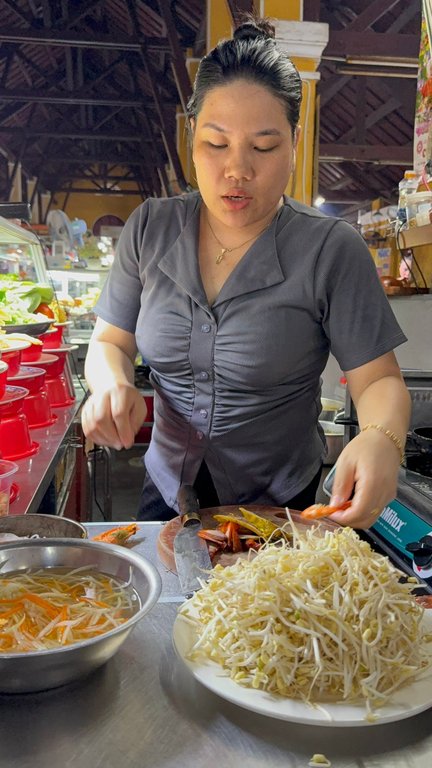
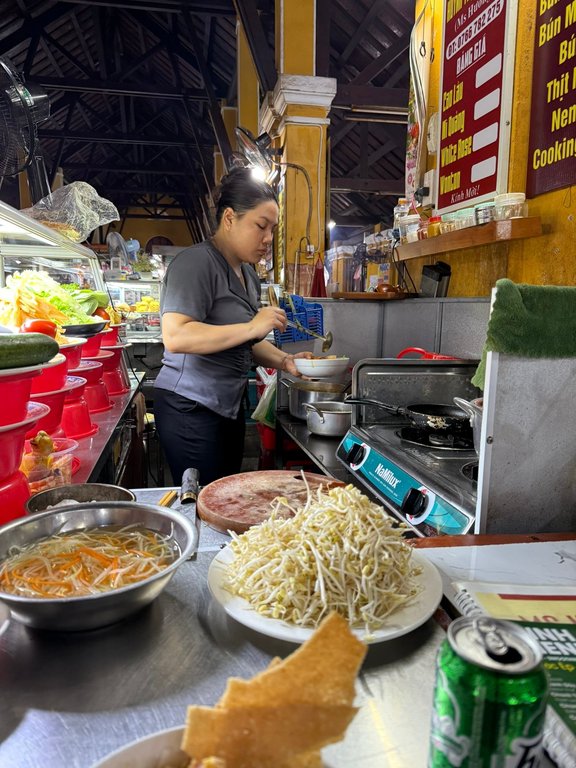
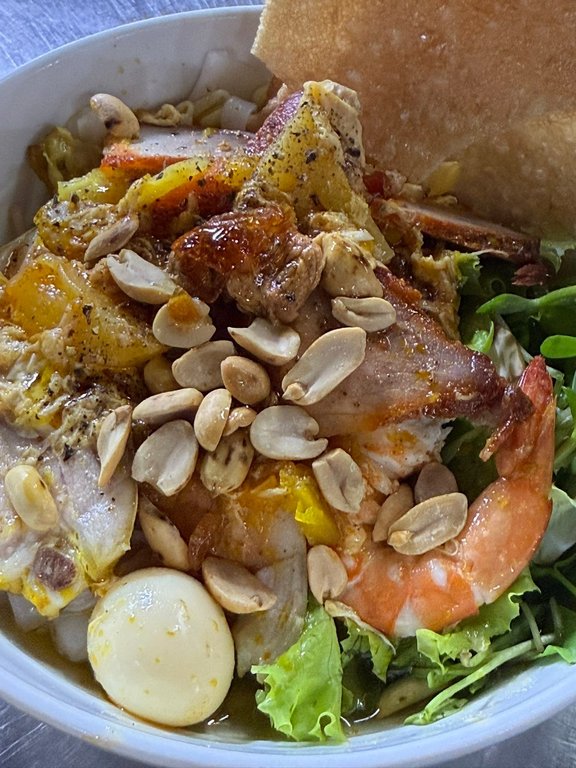
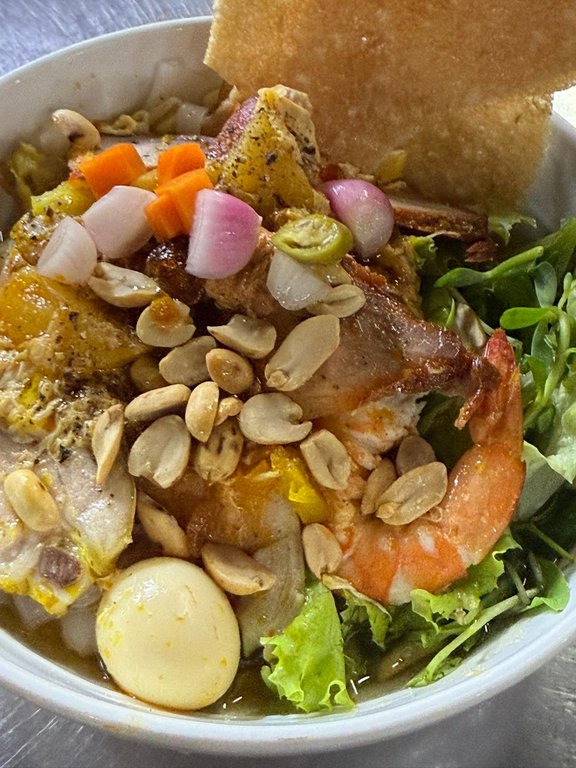
I enjoyed a very delicious bowl of Mì Quảng. It is, as I have said a hundred times, one of my favorite Vietnamese dishes, the noodle of Quảng Nam, and in a way the most Da Nang of dishes, since Da Nang was the capital of the old Quảng Nam-Đà Nẵng province until the city was split off on its own in 1997. Wide rice noodles go into the bowl over a bed of greens and herbs, and then just enough rich, heavily seasoned broth to wet them, colored yellow with turmeric. Mine came loaded: whole shrimp, slices of pork, a boiled quail egg, a heavy shower of roasted peanuts, a few rings of chili and onion, and a big toasted sesame rice cracker, bánh tráng mè, planted on top like a sail. You break the cracker over the bowl, toss everything together, and dig in. In 2024 Vietnam's Ministry of Culture added Mì Quảng to the national list of intangible cultural heritage. I would like to think I contributed to that in my own small way.
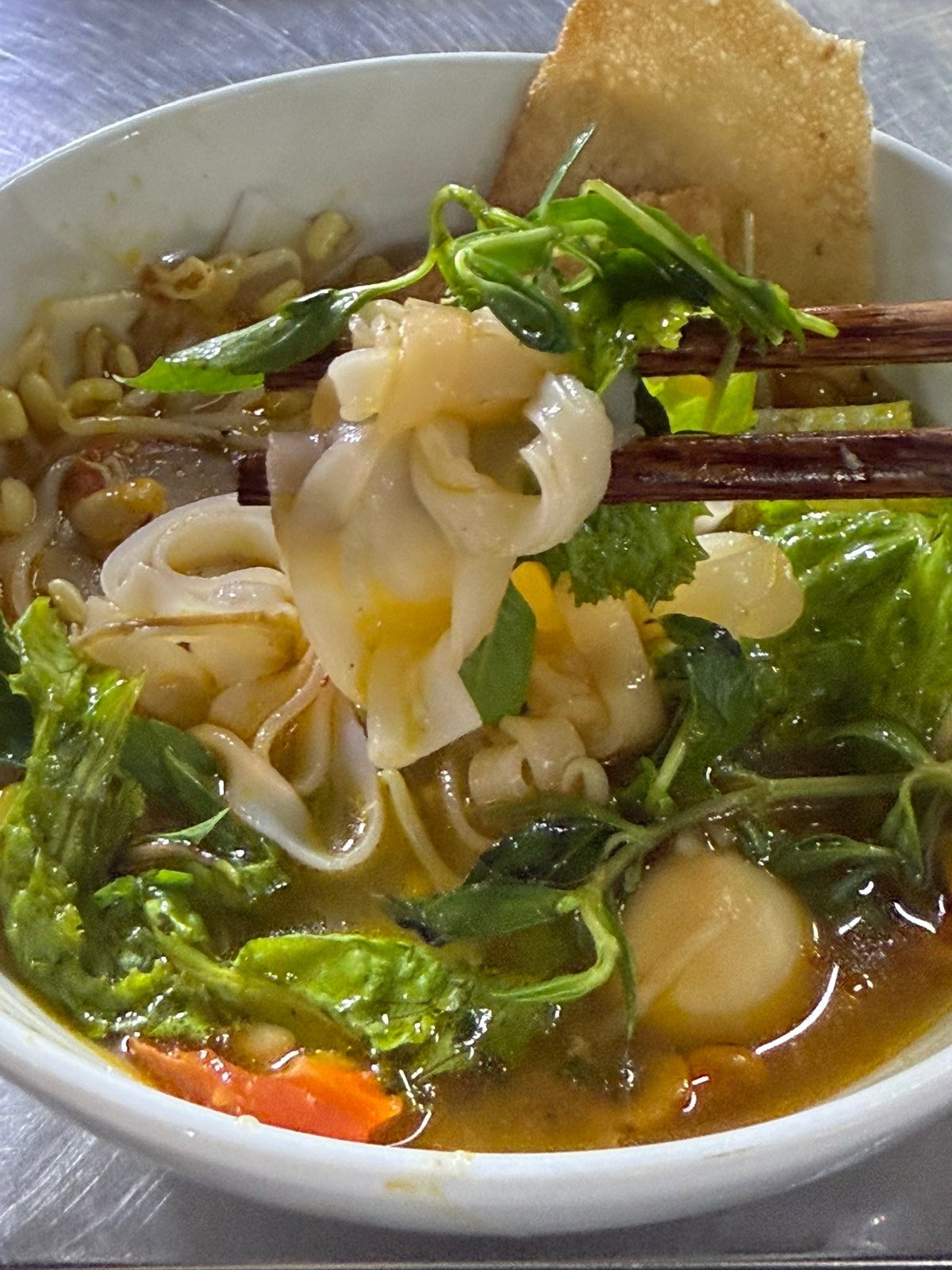
Diem enjoyed the Hội An special, cao lầu. I went on at length about cao lầu after our first visit to Hội An this trip, so I will keep it short here. The noodles are made from rice soaked in lye water, which turns them a grayish brown and gives them a chew unlike any other rice noodle in Vietnam. Legend says the lye has to come from the ash of certain trees on the Cù Lao Chàm islands offshore, and the water from the old Bá Lễ well in town. A bowl comes with slices of roast pork, crisp squares of fried noodle dough, a pile of greens and herbs, and only a splash of broth. Whether or not the legends hold up, you will not find the real thing far outside Hội An.
The Road Home
Headed home from Hội An to Da Nang, we came upon a herd of cattle on a major highway. A dozen or so brown cows ambled down the middle of the road in the last of the light, past the red and white bollards, past the streetlights, in no hurry at all, while we waited behind them. I guess cows need a vacation too.
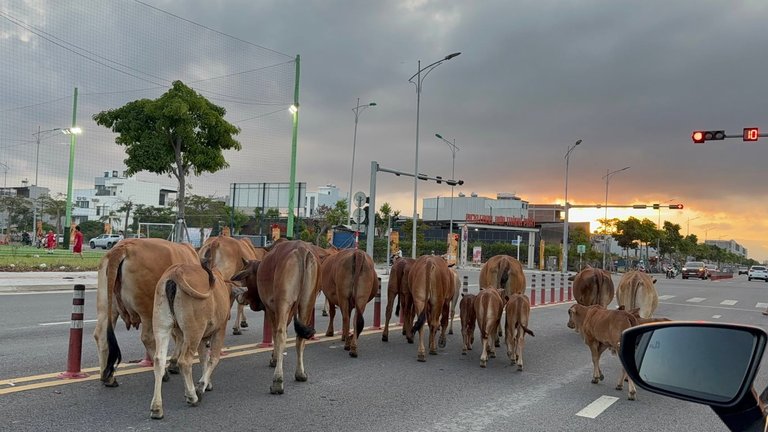
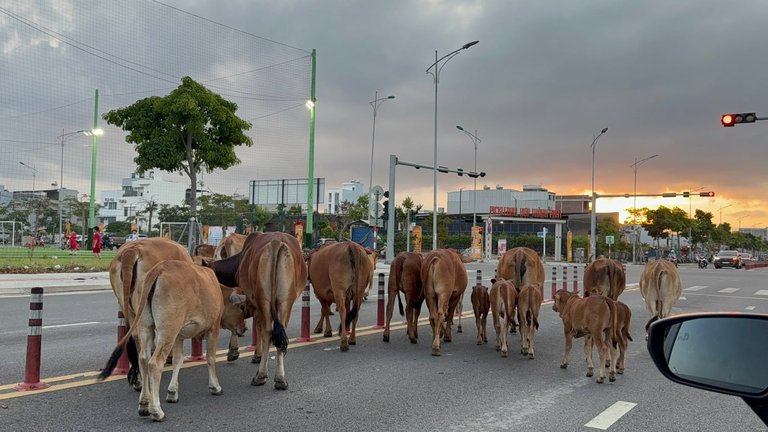
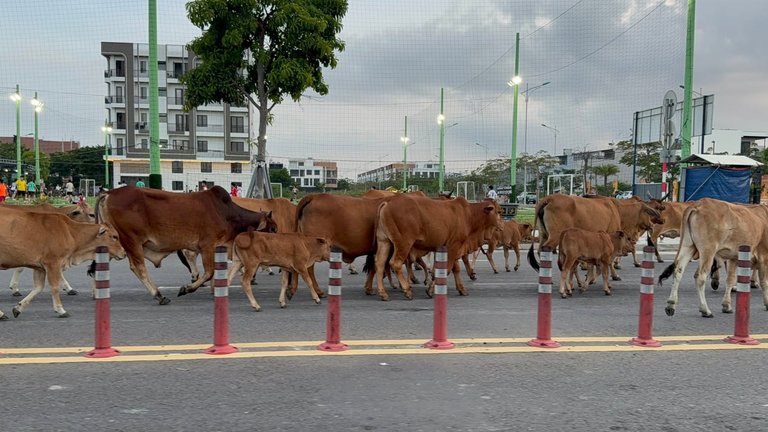
It is a reminder of how close the country still is to the city here. Years ago, on a drive home from Hội An, I noticed the neatly plotted rice paddies and the buffalo-drawn equipment between the two towns. The road home is lined with streetlights now, but nobody seems to have told the cows.
And the line between the two places is about to disappear altogether. We drove home that evening from Quảng Nam province to the city of Da Nang. Nine days later, on July 1, Vietnam's provincial merger took effect, and Quảng Nam was folded into Da Nang. The new city covers almost 11,900 square kilometers and about three million people. Hội An is now a part of Da Nang. After twenty-eight years apart, the old province and its former capital are back together, this time under Da Nang's name.
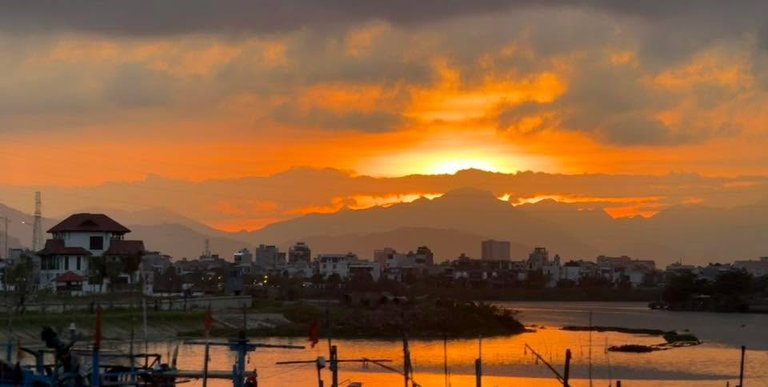
I caught a beautiful sunset over the Sông Cổ Cò, or Cổ Cò River, that evening. The sun set over the mountains in the distance, with a cloud formation just right for a nice color burst. The fishing boats sat at their moorings under it, and the whole sky over the water went orange.
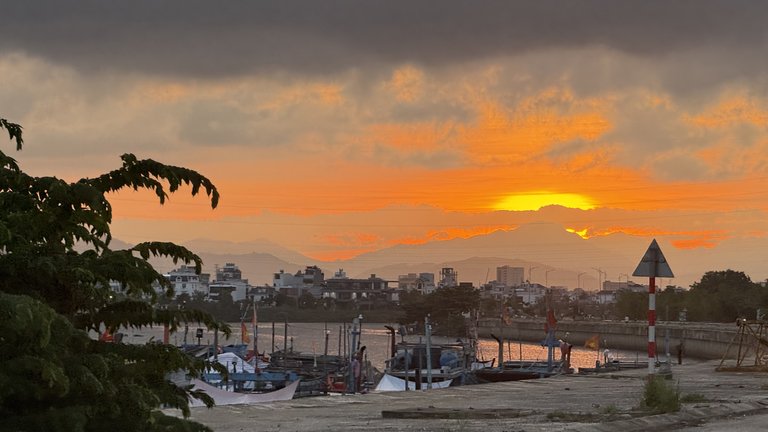
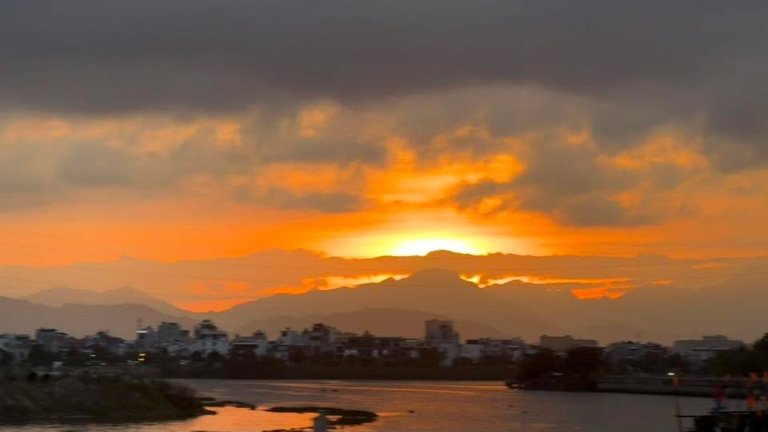
The Cổ Cò is a quiet stretch of water now, but it was once the road between Hội An and Da Nang. In the sixteenth century, when it was known as the Lộ Giang, it linked the Thu Bồn River at Hội An with the Hàn River at Da Nang, and from the sixteenth to the eighteenth century it was a busy trade route between the two ports, especially for boats that could not manage the open sea. Then, in the eighteenth century, the sand moved in. The river silted up, the Vĩnh Điện River took over as the main channel, and by the end of the nineteenth century the Cổ Cò was too shallow for shipping.
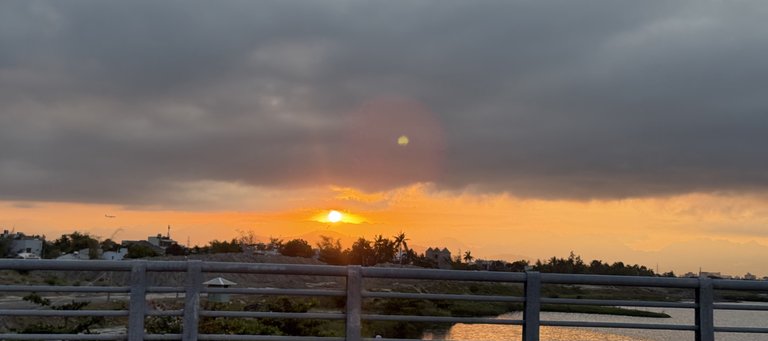
The two sides have been talking about reviving it since 1994. Work finally began in 2019 on a plan to dredge about 28 kilometers of river and open a tourist waterway between Hội An and Da Nang, with docks, bridges and boats. It has run years behind schedule, held up mostly by land clearance and resettlement. A new bridge on the Da Nang side, the Nguyễn Duy Hiệu bridge, opened to traffic on June 10, twelve days before our sunset. Someday, if it all comes together, you may be able to ride a boat from Da Nang to Hội An the way the merchants once did.
Năm Rảnh Quán
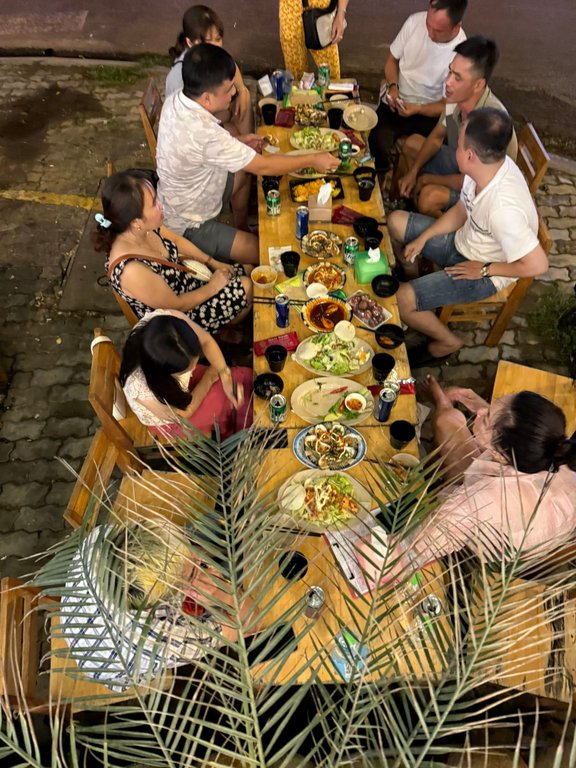
We enjoyed it so much the night before, we brought the entire family. On Saturday, Diem, her brother Vũ and I had found a seafood restaurant called Năm Rảnh Quán, overlooking the Trần Thị Lý Bridge, and did some pretty obscene things to a lot of seafood. On Sunday we came back with everyone.
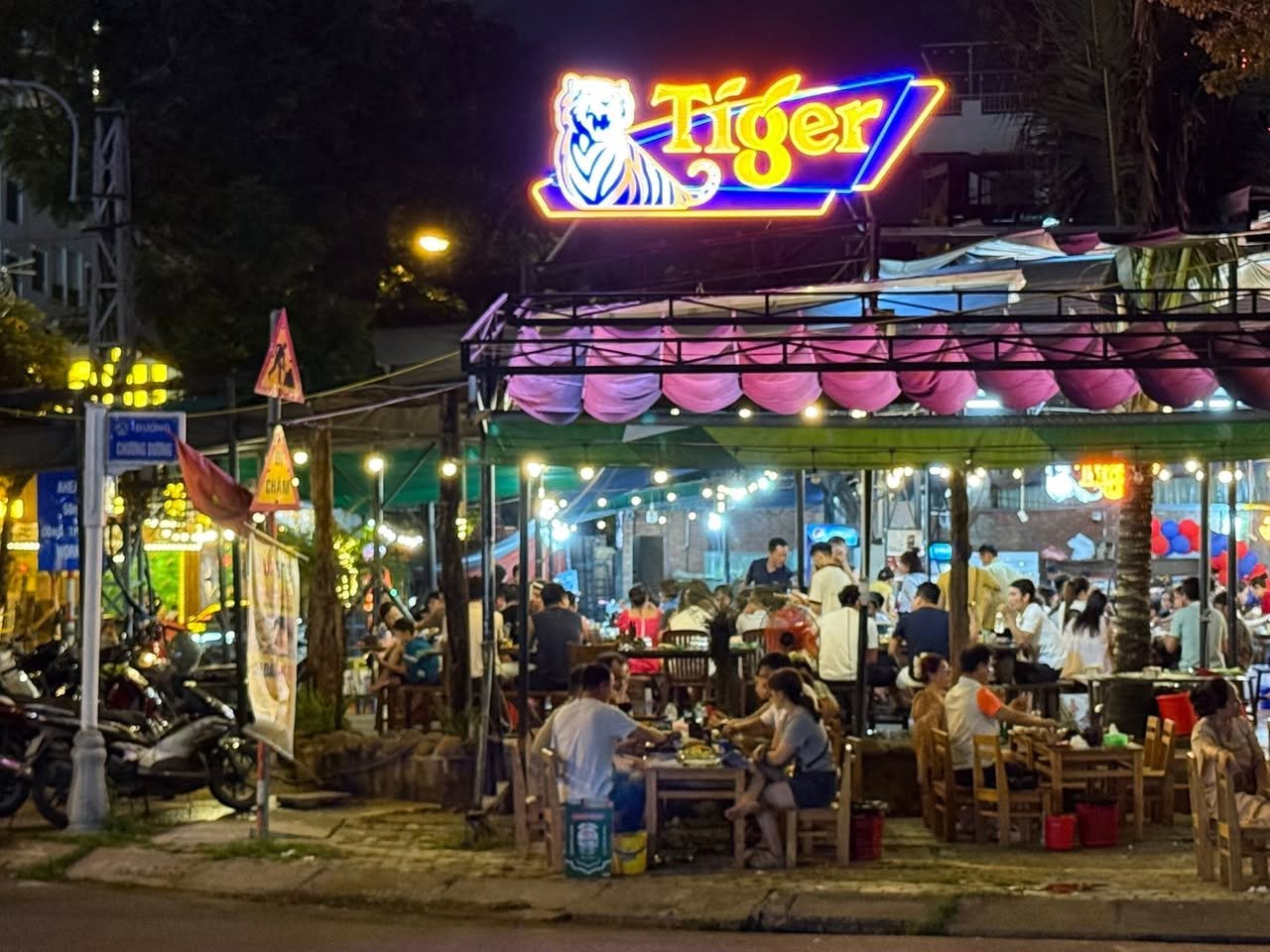
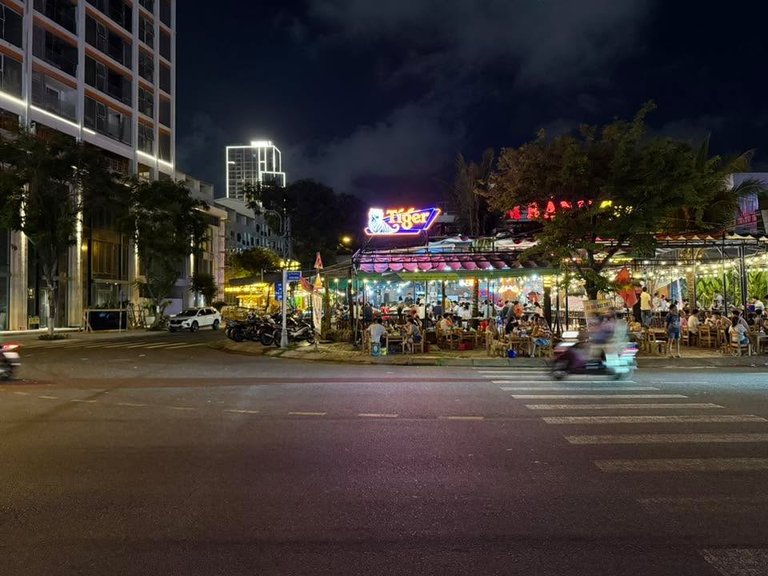
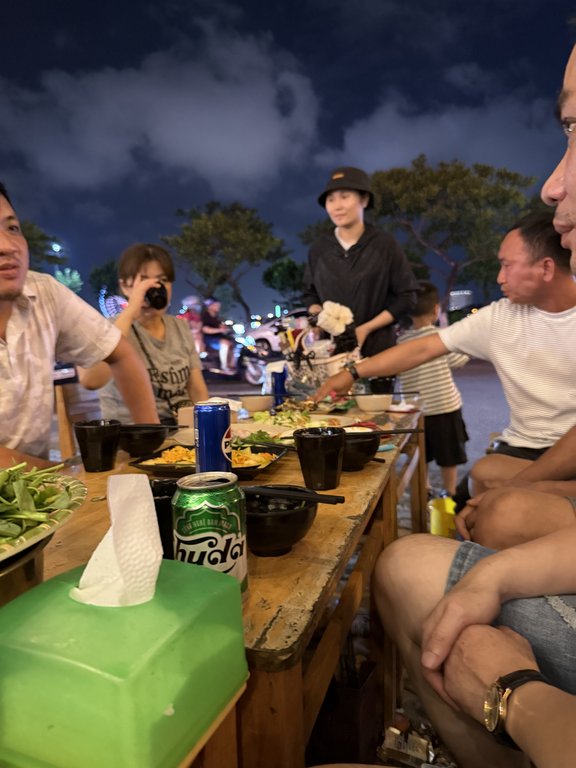
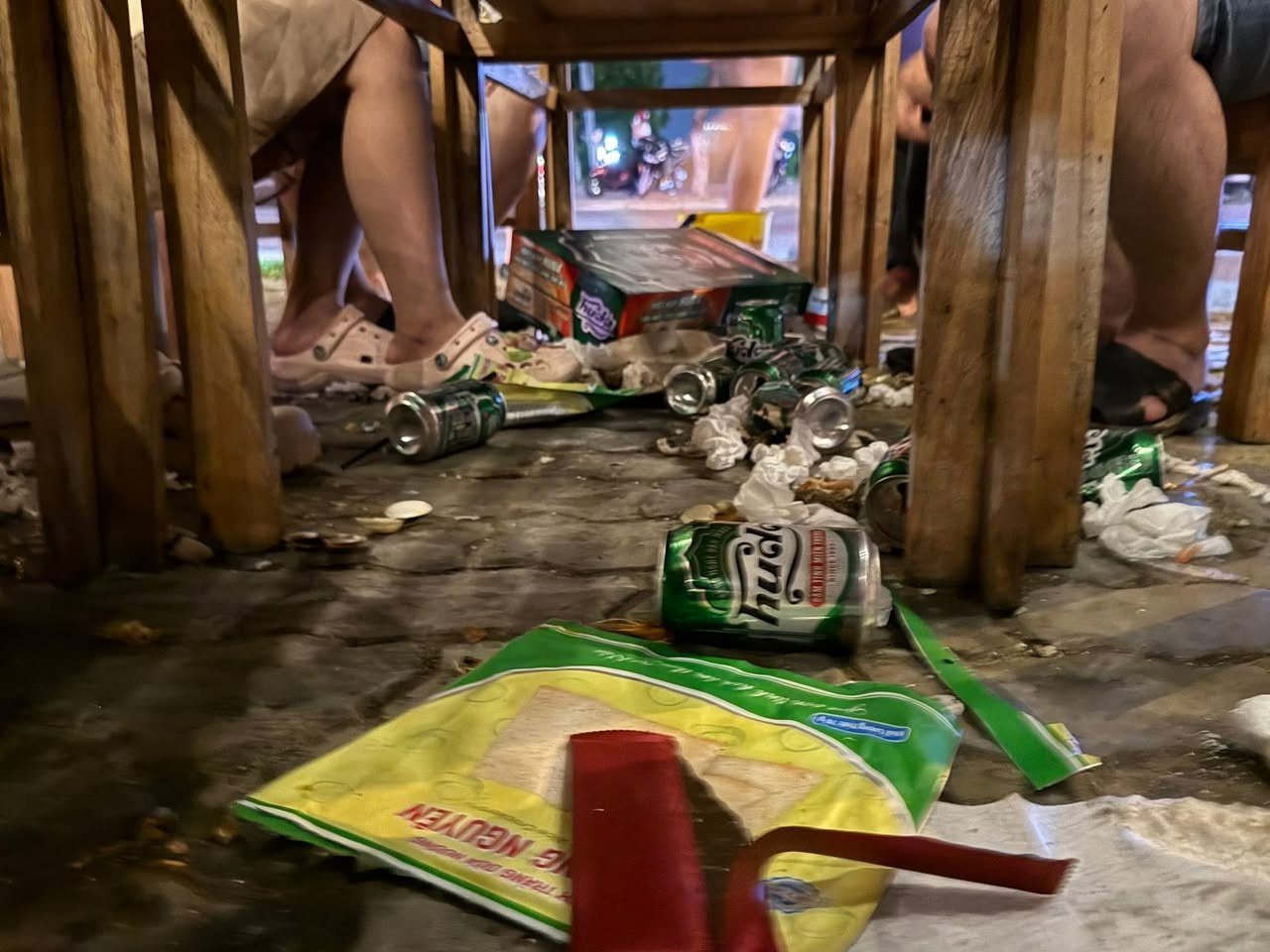
It is one of the big open-air seafood places that Da Nang does so well. A big covered pavilion strung with lights, a giant neon Tiger beer sign over the top, wooden tables and chairs packed in under it, and a pool of live seafood waiting to be chosen. We posted right on the corner of the street in true Vietnamese fashion. One must be in the middle of the action. Our long wooden tables ran right out to the edge of the intersection, the motorbikes and the city lights going by a few feet away.
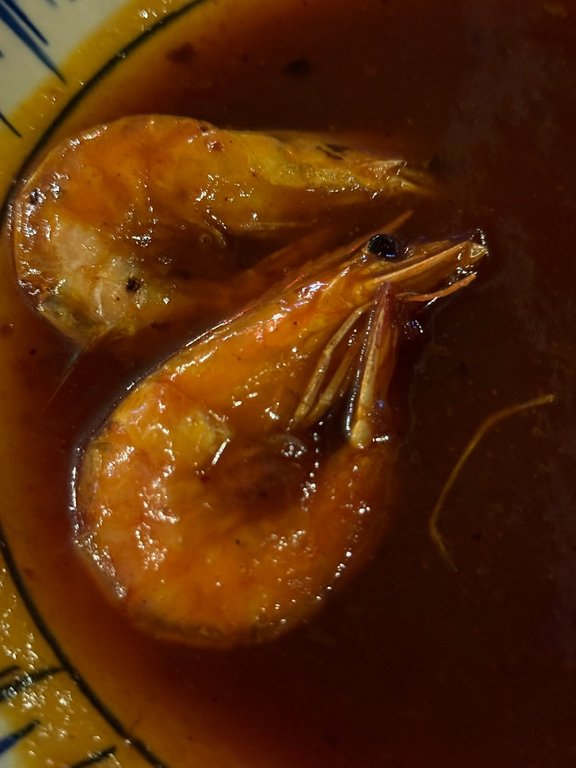
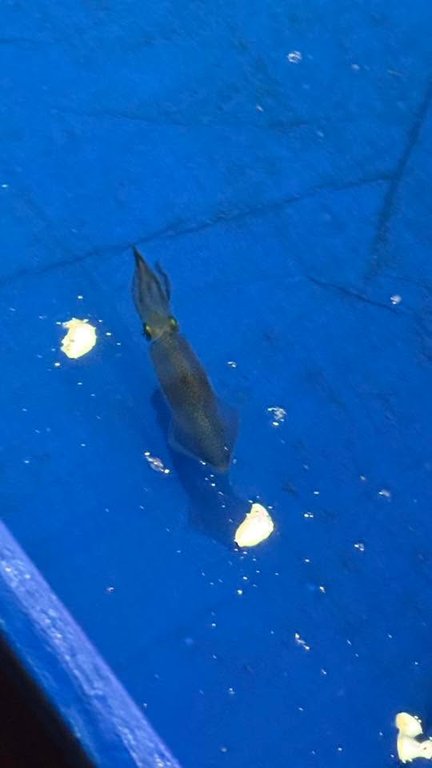
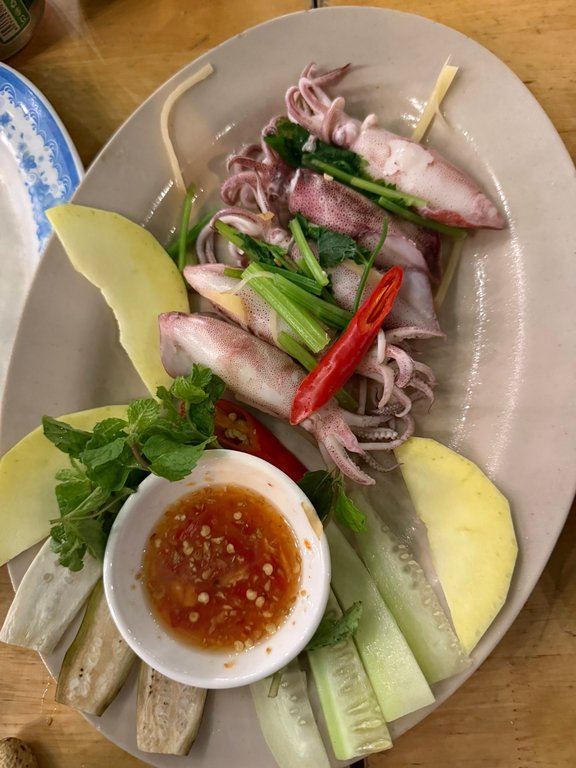
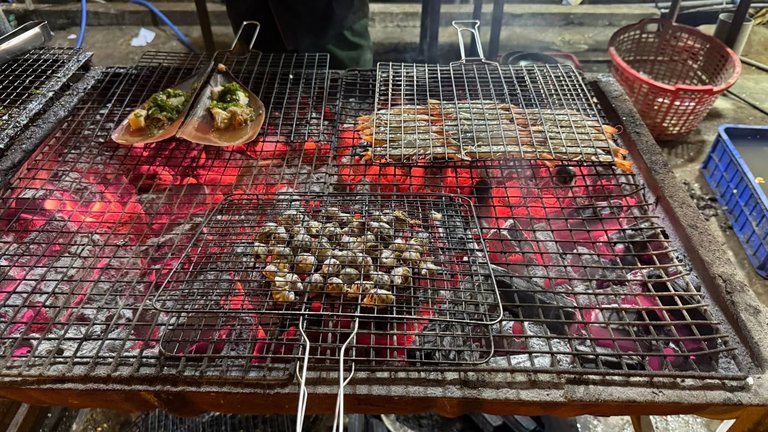
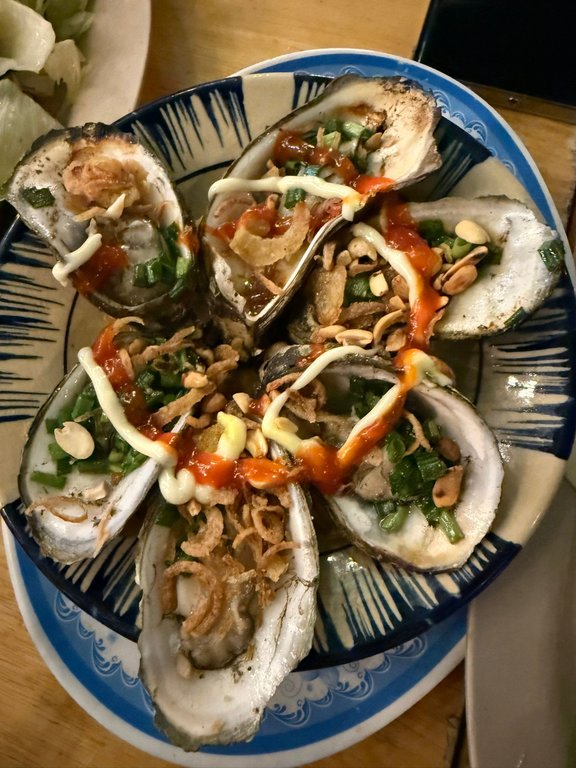
Braised tamarind shrimp, tôm rim me, two big shrimp glistening in a red-orange tamarind sauce. Then Da Nang style oysters. The cooks grill them on the half shell over a wire rack of glowing charcoal, and they come to the table under scallion oil, crushed peanuts, a drizzle of mayonnaise and a streak of chili sauce. Squid, steamed, fresh from the pool. They swim in a blue tank until somebody orders them. On the plate they came with fresh herbs, sliced cucumber, green mango, a few red chilies and a little bowl of chili dipping sauce.
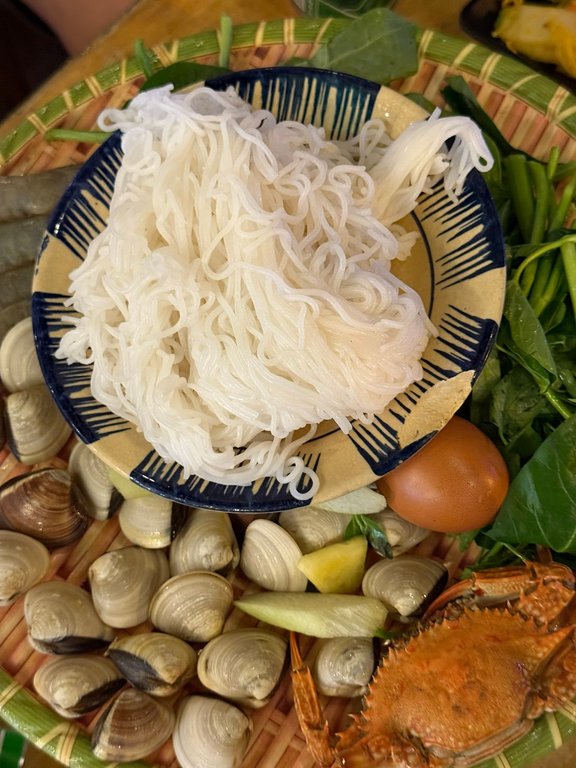
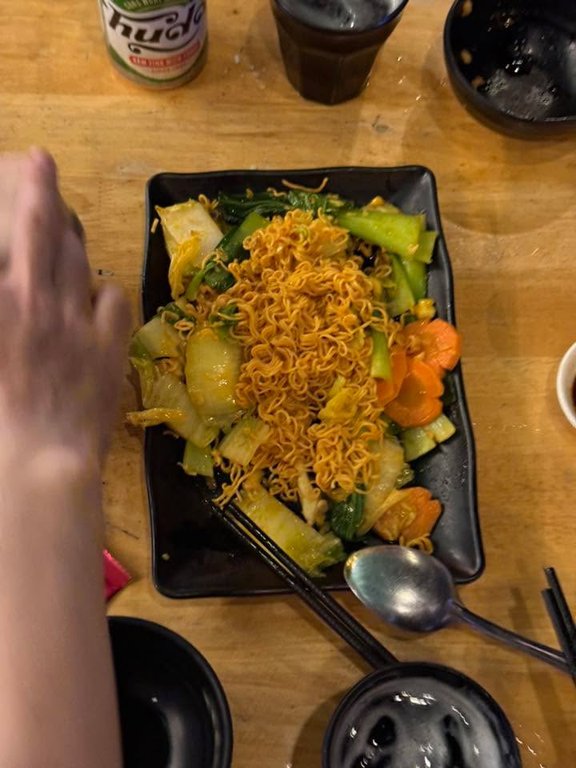
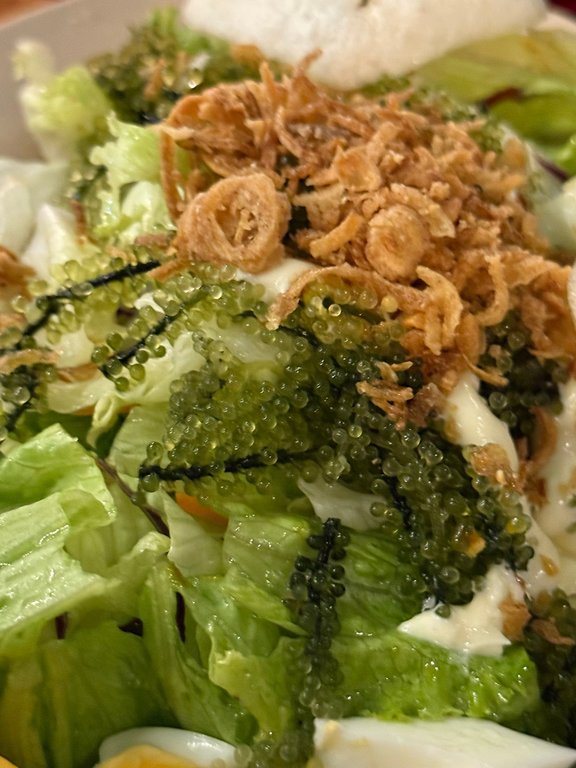
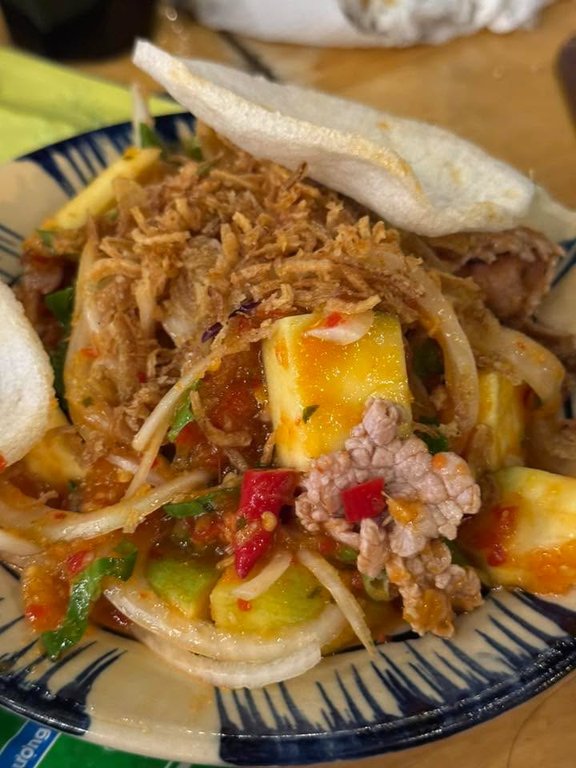
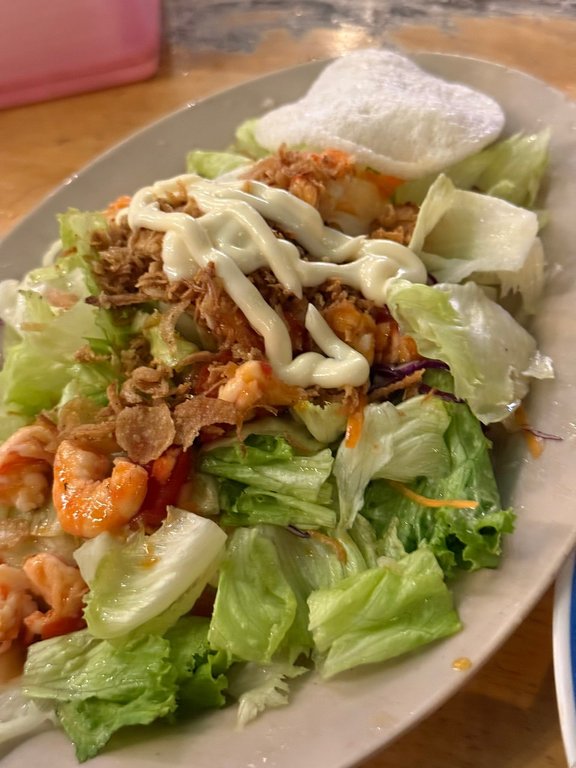
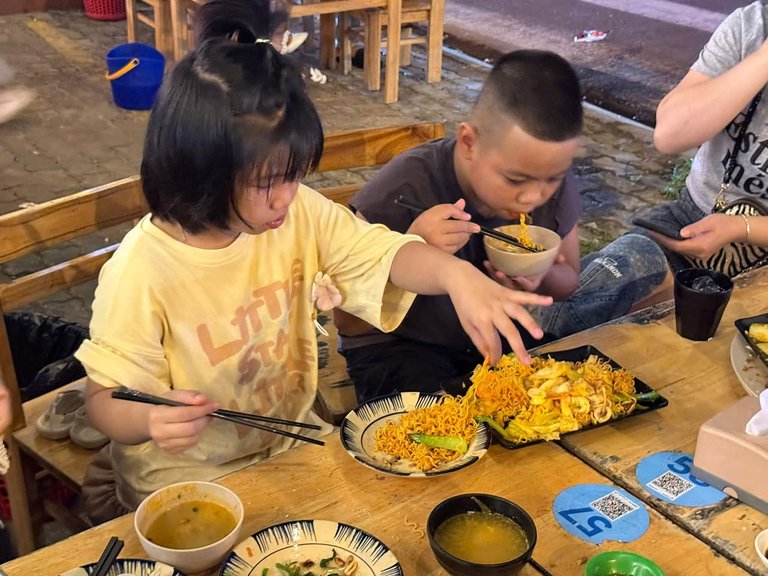
Then beef stir-fry noodles, seafood stir-fry noodles, a mixed seafood hotpot, and clams. One woven basket platter came heaped with rice vermicelli, clams, a whole crab, shrimp and greens. There were salads too, a plate of lettuce and sea grapes, rong nho, under a heap of fried shallots, another with pineapple and minced pork, and a shrimp salad with a squiggle of mayonnaise and a rice cracker on the side. And stuff I forgot. It was a crazy dinner.
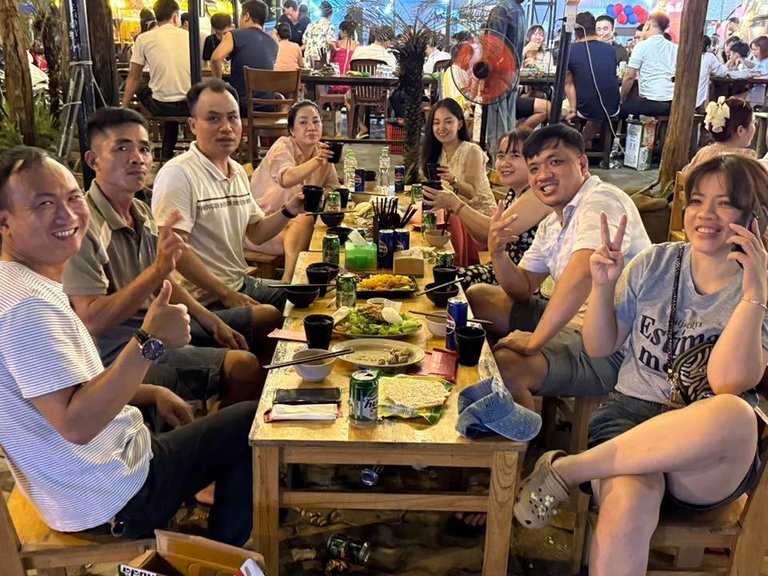
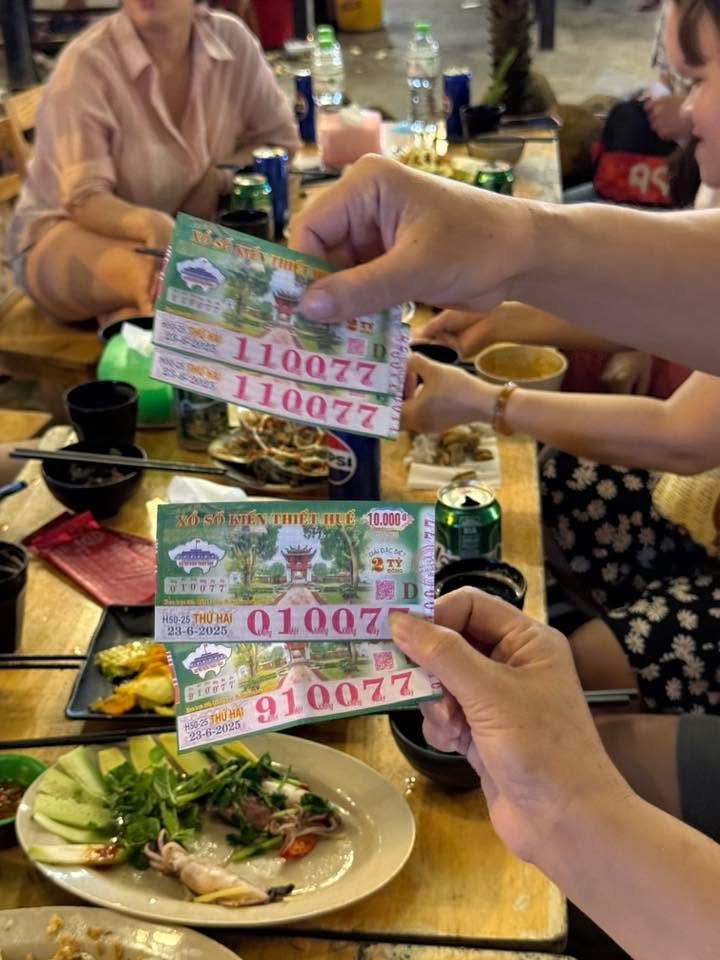
We picked up a few lottery tickets. Lottery tickets, vé số, are a part of street life here. They are sold by hundreds of thousands of informal vendors, workers buy them with their morning coffee, and crowds gather at the kiosks at dusk to check the numbers. The lottery is a state business, and the traditional lottery companies hand their earnings to the provinces where they are based. It is also enormous. By one estimate, from the Vietnamese magazine Luật Khoa, Vietnamese spent about $6.5 billion on lottery tickets in 2024. Our contribution was a few green tickets, each with a six-digit number printed across it in pink.
They are sold by hundreds of thousands of informal vendors, workers buy them with their morning coffee, and crowds gather at the kiosks at dusk to check the numbers.
I may have pulled my back out lifting my swollen stomach (not really), and we had another wonderful dinner in the warm Da Nang evening. Final bill, $70 US equivalent, for the entire family. As I told a friend in the comments that night, I'm walking enough steps to burn off all this healthy eating. At least I keep telling myself that.
The Dragon Breathes
No trip to Da Nang would be complete without watching the Dragon Bridge come to life and breathe fire and water over a packed crowd. Diem and I snuck away from dinner for a little time, just the two of us, to watch the bridge's iconic show.
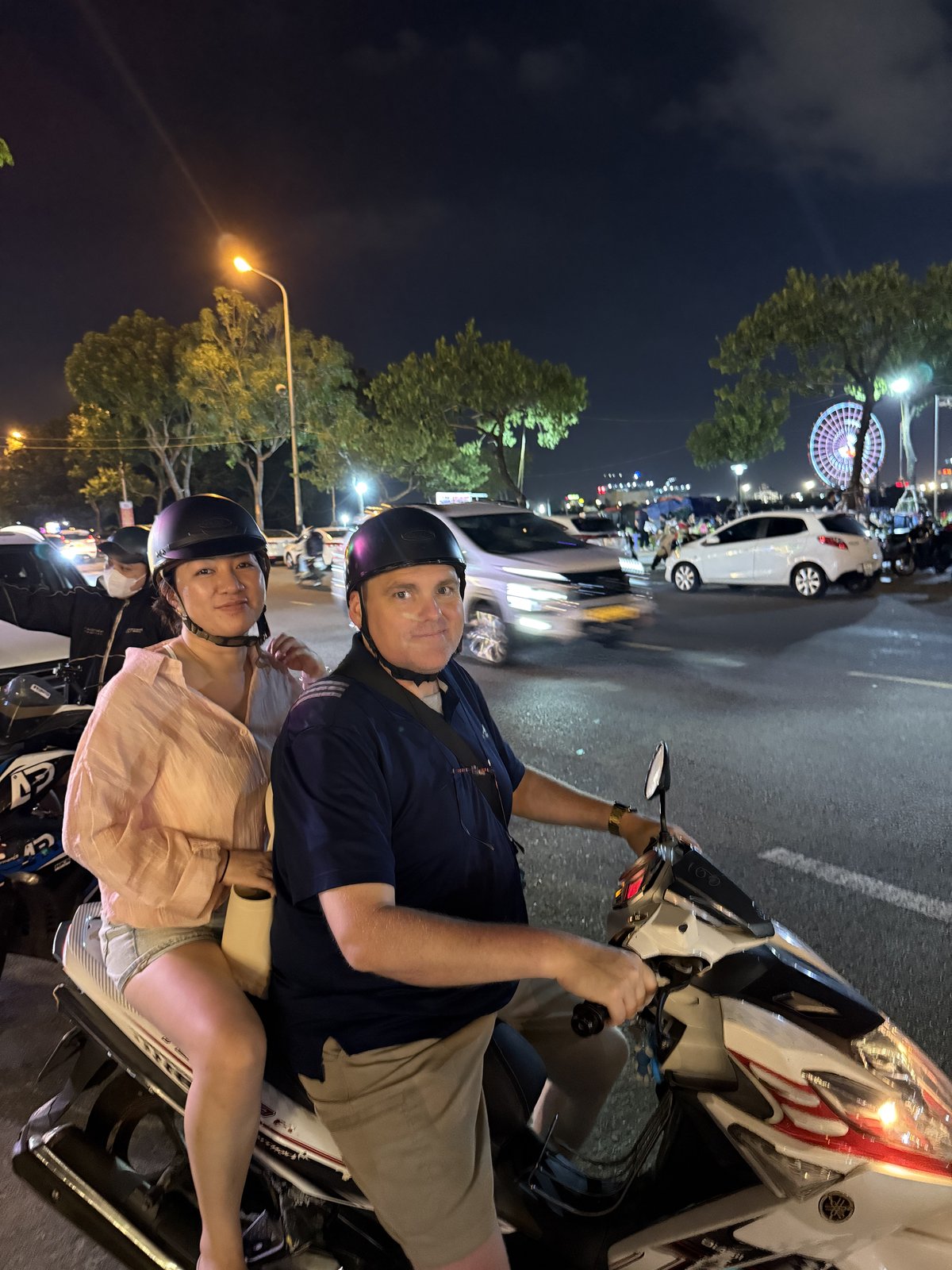
I wrote a few weeks back about what this bridge means to us: our first date, our first picture together, the cover of Dragon Diaries. Tonight was about the other thing it does. On Friday, Saturday and Sunday nights, and on holidays, at nine o'clock, the bridge closes to traffic and the dragon becomes the show.
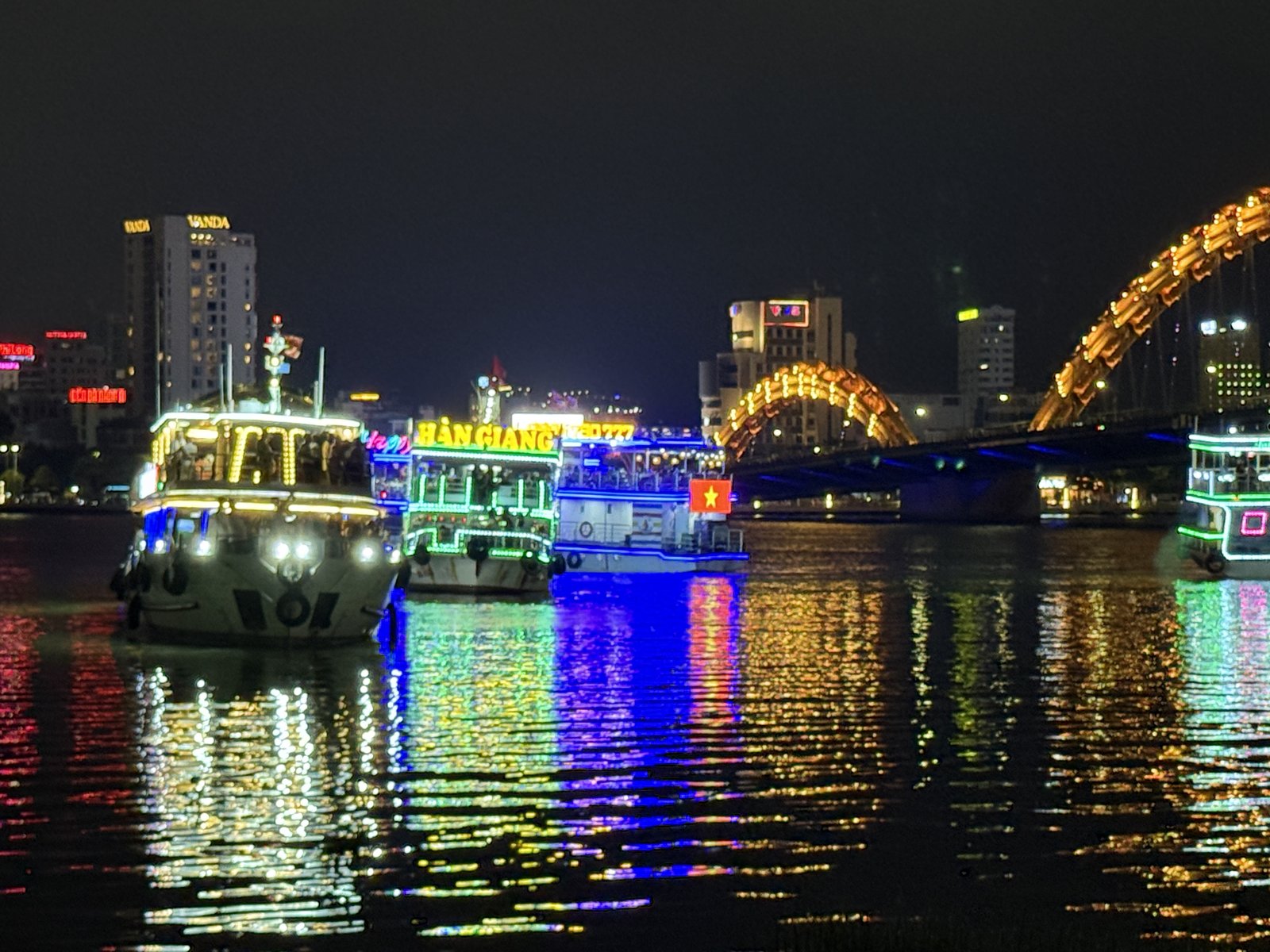
The riverbank was packed for a mile in every direction, but we got lucky and found two chairs against the river wall, and ordered a few snacks and drinks to secure the chairs. As the hour drew nearer, the riverwalk began to swell with onlookers, and the river began to fill with Da Nang's famous neon dinner cruises, jockeying for position to give their diners the best view.
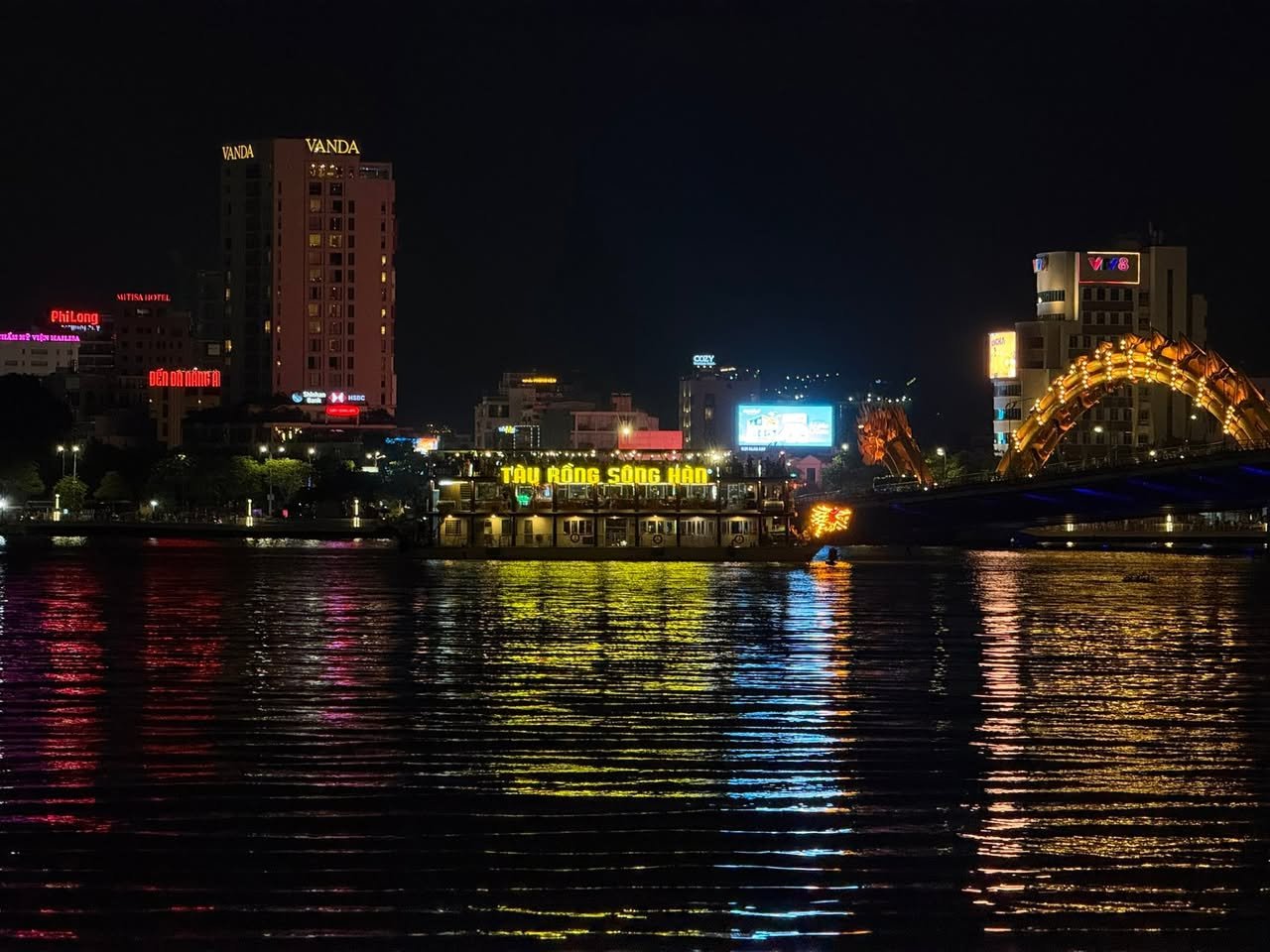
At nine o'clock, right on cue, a small flame began to sparkle in the dragon's mouth, and with little warning or fanfare, the dragon breathed massive plumes of fire over the crowd gathered on the bridge. Fire first, in rounds, great balls of it rolling out from the head over the people below. Then water, sprayed high and wide in a mist that drenched those in the direct line of fire. As quickly, and as abruptly, as it began, the show was over. The dragon's eyes went dark, and it returned to its quiet slumber.
The first time I saw it, years ago, we walked down the river walk through a Sunday night carnival to get there, and stood near the foot of the dragon with people from all over the world. This time we had two chairs on the river wall, and the boats lit up like Christmas on the water.
Then we slipped back to the family. The next morning, I would be paying a visit to the pharmacist. But that is a story for next time.
Previously: The Lady of Sơn Trà
More from Da Nang and Hội An: The River Dragon Breathes Tonight, Da Nang - City of Bridges, The Village Of Lanterns - Sunset In Hoi An and Ngũ Hành Sơn - The Marble Mountains