By Thursday morning I had declared victory over the jet lag. Early that morning I told a friend the truth. If I haven't suffered it yet, it's not happening. My serotonin and melatonin have officially flipped. Going back, I am sure, will be hell. We should slow down here in the next couple of days, I said. I think I just burned straight through it.
We did not slow down.
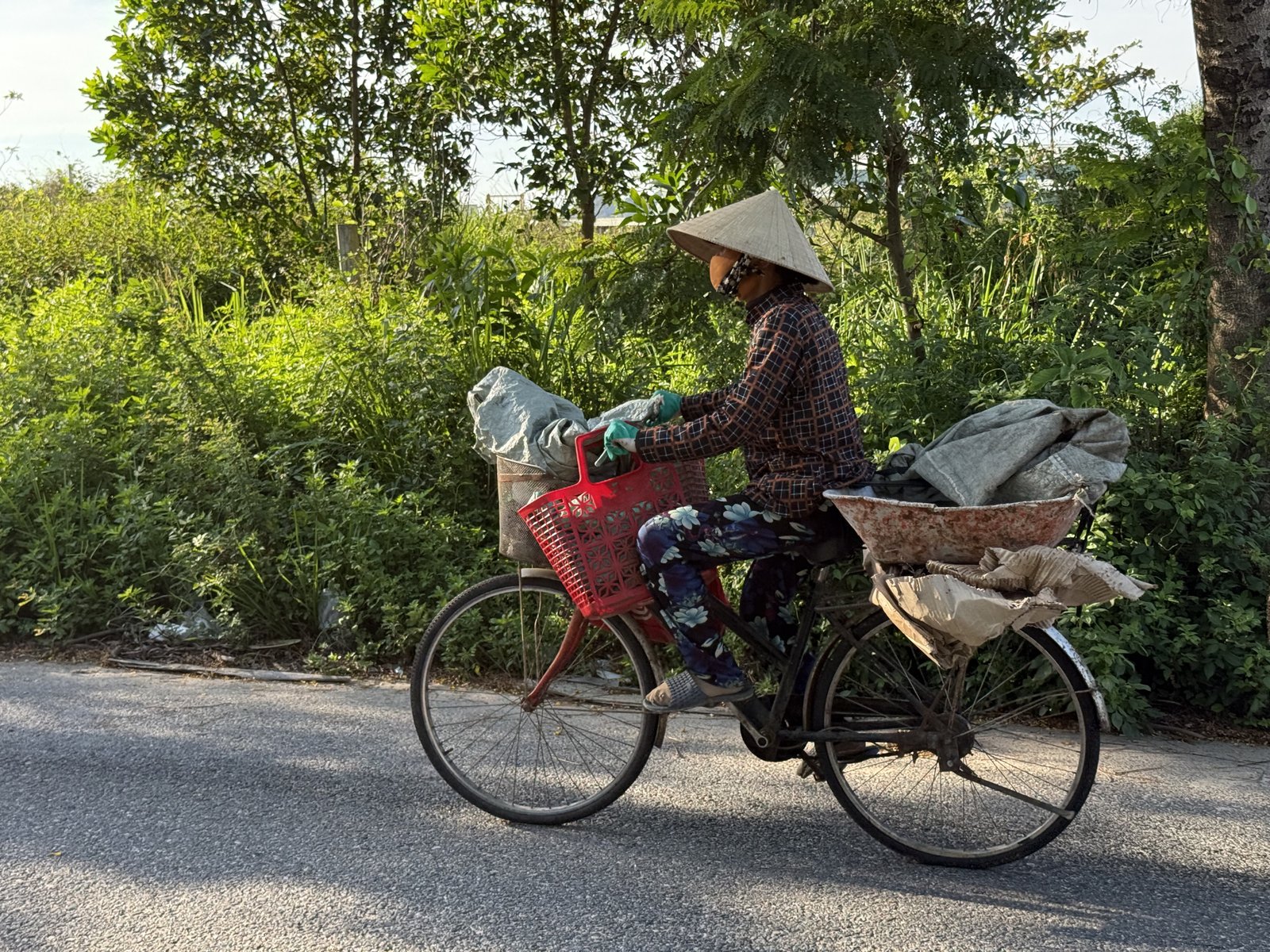
One of my favorite things to do in Vietnam is just walk. Walk, then walk some more. You never know what you might come across. So I was out on the streets by seven, and the city was already at work. A woman in a nón lá pedaled past on a bicycle loaded down front and back, the roadside behind her a wall of green.
A Temple Before Seven
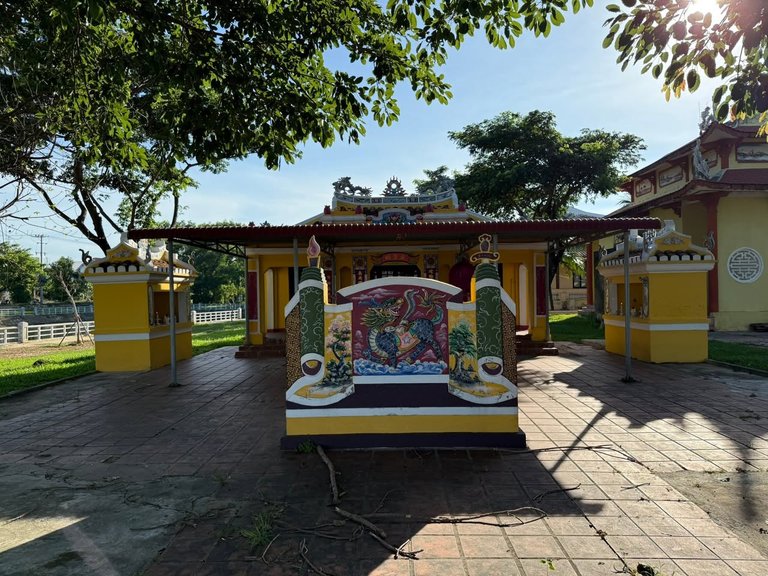
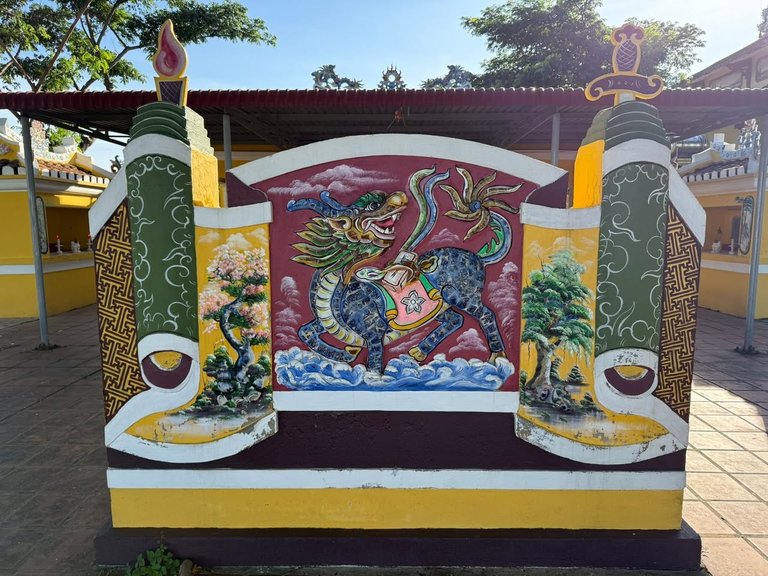
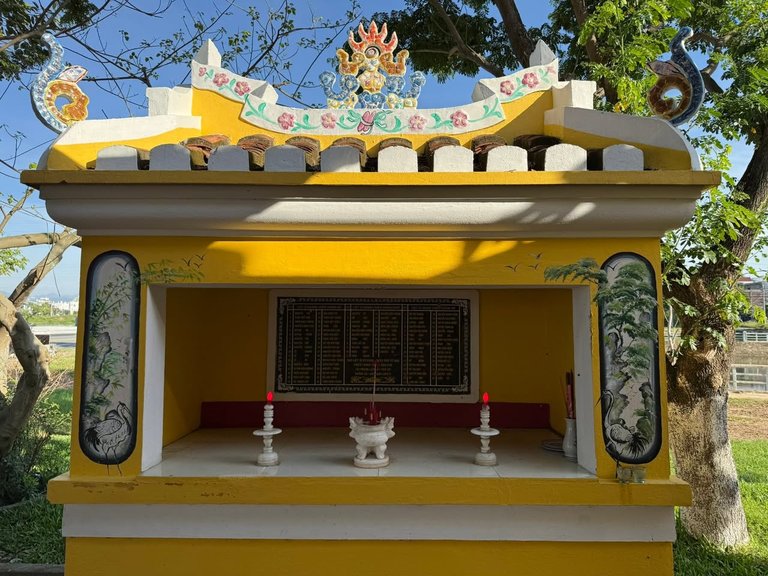
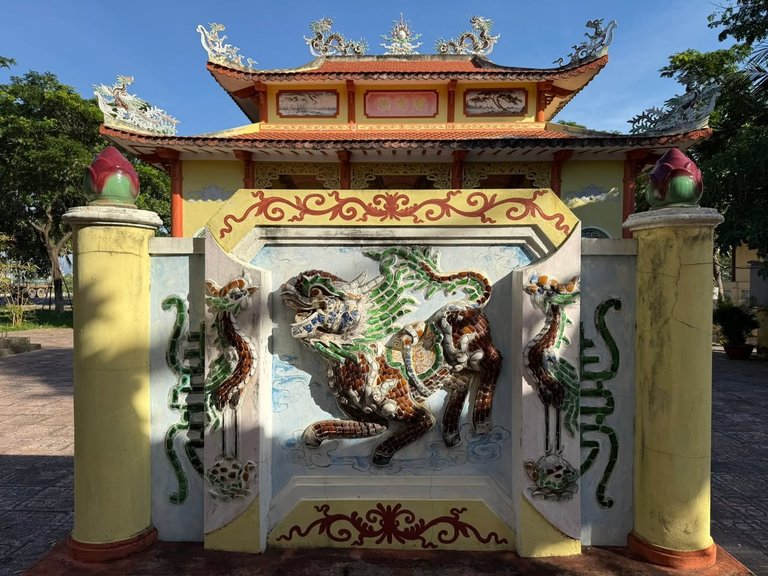
I also love exploring temple sites, and Vietnam has no shortage. It didn't take long before I came across one. It was barely 7 am, and the main temple structure was still locked, but the grounds were open. A broad courtyard of yellow walls sat in the shade of big old trees. At its center stood a screen wall painted with a scaled and whiskered beast in blues and greens, flanked by pillars. Small yellow shrines stood around the courtyard, each with its candlesticks and incense burner set out on the altar, and ornaments marching along the roof ridges.
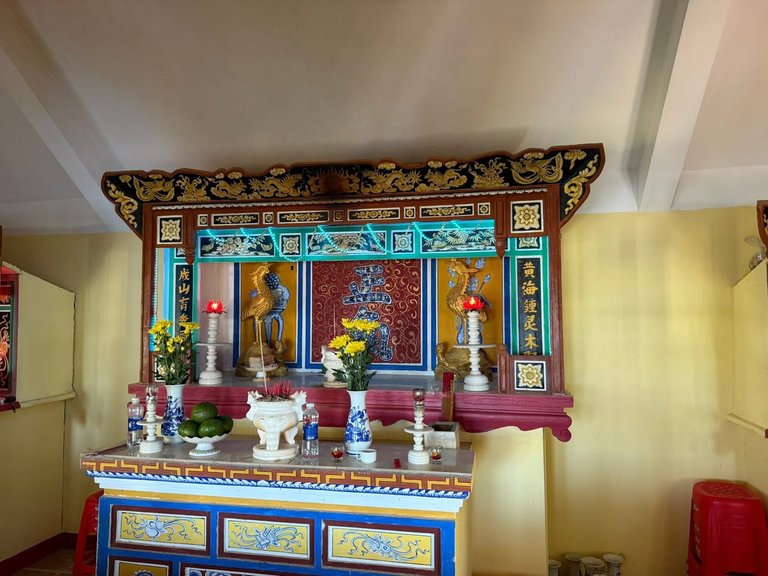
Though the majority of Vietnamese practice a form of ancestor worship, with altars in most homes dedicated to the deceased parents of the homeowner, Buddhism is the most influential of the major world religions here. Counting the faithful is famously difficult. One set of estimates for 2010 put Vietnamese folk religion at about 45 percent of the population and Buddhism at about 16. The 2009 census counted about 6.8 million Buddhists and the 2019 census fewer than 5 million, while other surveys put the number at 45 to 50 million, in part because no one agrees on who counts as a Buddhist. The altar is the common thread. Whatever a family calls itself, the house and very often the business has one, and the prayers go up on death anniversaries, when a shop opens its doors, and whenever someone in the family needs guidance.
The old temple structures carry the characters of the pre-colonial scripts, and there are two of them to know. Chữ Hán is the classical Chinese of the old imperial court and its examinations. Chữ Nôm is the script Vietnamese scholars built out of Chinese characters, borrowing some for their sound and some for their meaning and inventing others, to write their own language. The oldest surviving Nôm dates to the 13th century, though it may be older. It was never easy. You had to know Chinese characters to read it, and its character set swelled to as many as 37,000. Both faded under the French, and by 1910 the Latin alphabet of quốc ngữ, worked out by Catholic missionaries back in the 17th century, was part of compulsory education.
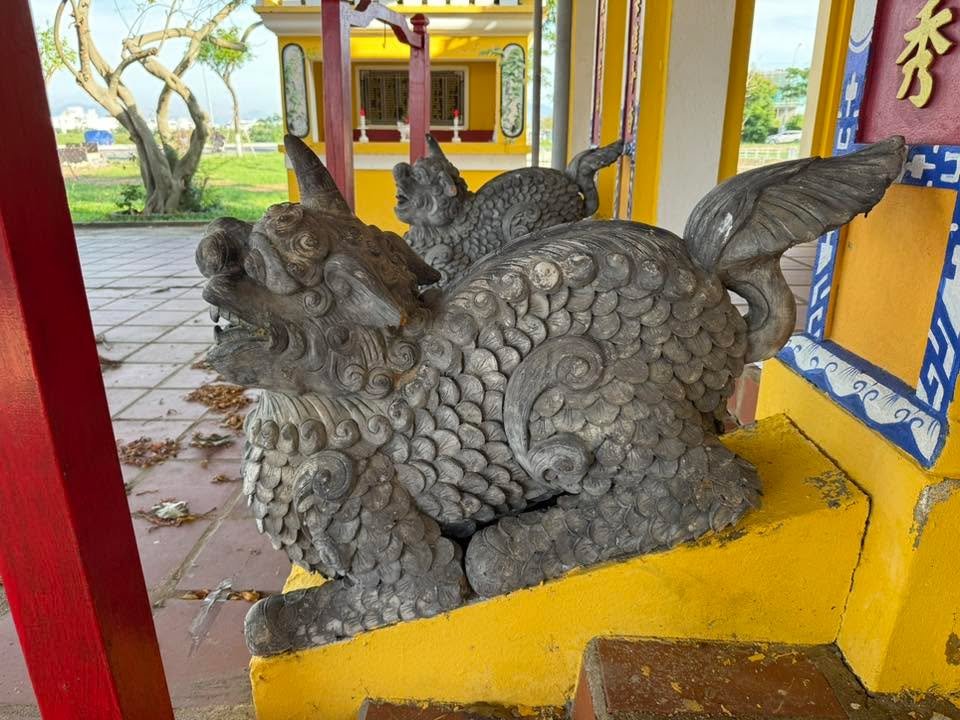
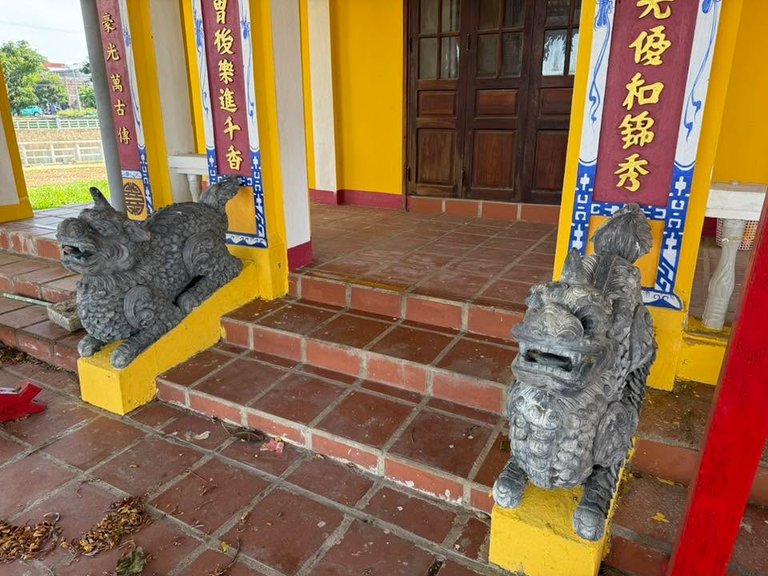
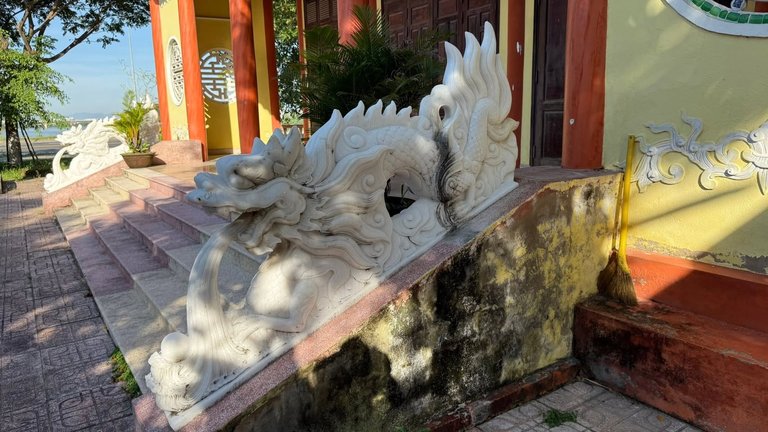
The old temple structures are often adorned with images of the dragon and the phoenix, believed to protect the site from evil spirits. The stairs, no matter how few, are always lined with some sort of protector. In most cases it is a dragon, but sometimes I've seen the Asian unicorn, and here I even found a pair of dragon dogs. Two gray stone beasts sat at the foot of the steps, curly maned and pop-eyed, guarding a pair of wooden doors hung with red couplet banners. Another sat alone by a red pillar. A long white dragon ran down the side of another stair. The Vietnamese call these dragon dogs nghê, sacred guardians of temples and communal houses that may have come to Vietnam with merchants and monks as early as the 1st century AD, and were especially popular under the Lý dynasty, from 1009 to 1225. Every village carver seems to have had his own idea of what they looked like. This one looked like he had just been told a very bad joke.
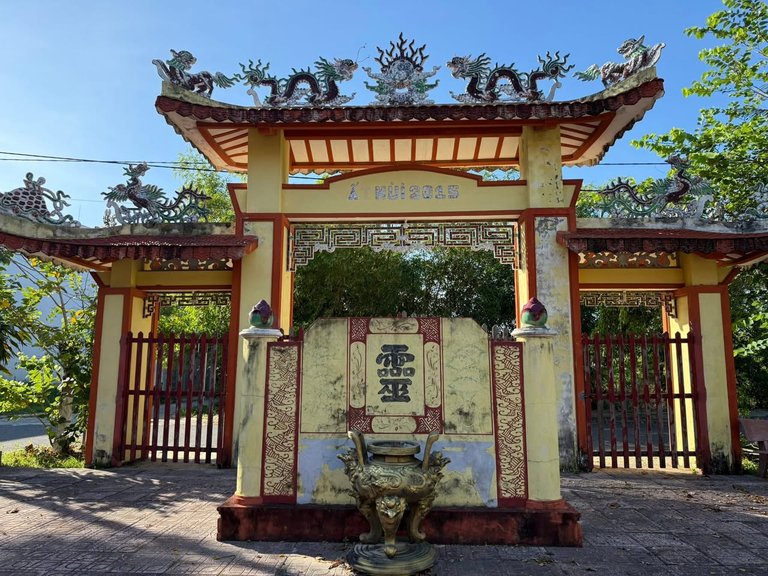
And then there were the gates. One carried a tiger in relief on its screen, coiled and snarling under a curved tile roof. Another, red and yellow, had dragons writhing along its ridge, and behind it a stone screen with a single great character and an incense urn.
The K20 Base
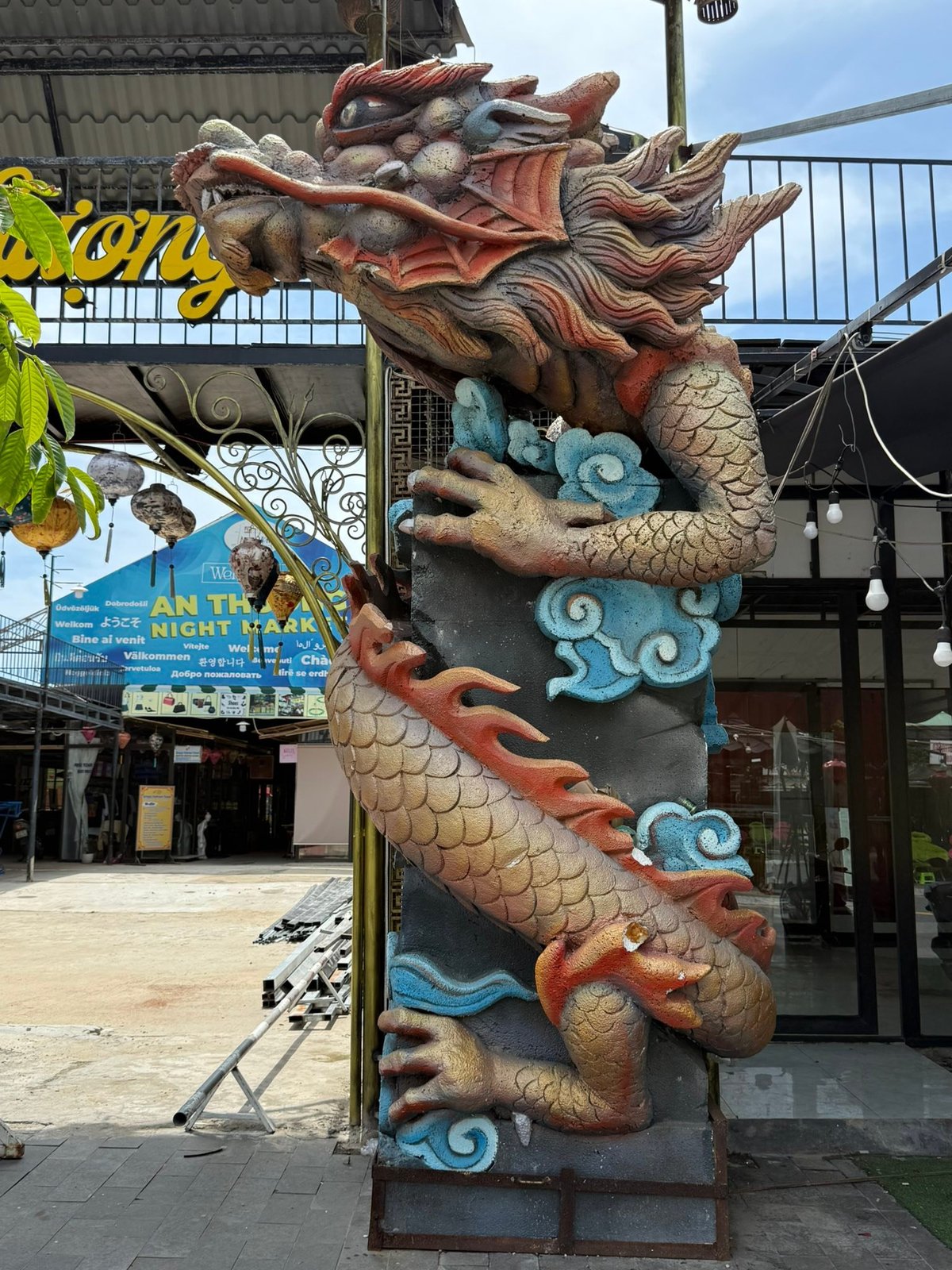
Beyond the temple I stumbled across a historical site that told of its part in the resistance against the great French and American empires. A blue sign at the roadside pointed the way: Khu Căn Cứ Cách Mạng K20, K20 Historical Relic. Farther on, a yellow arch over the road announced it again.
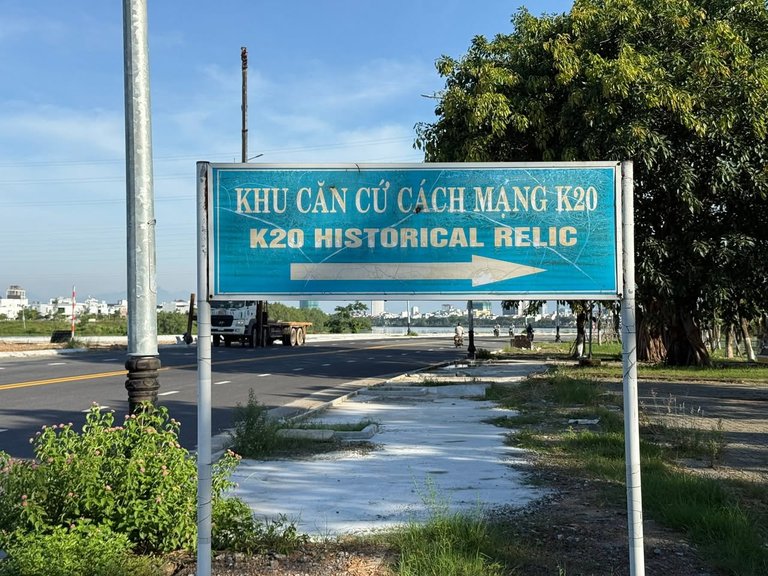
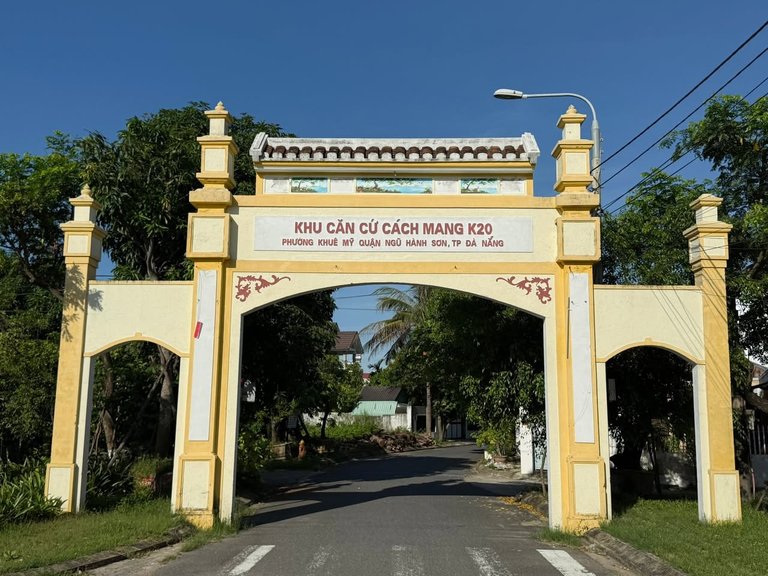
The K20 Revolutionary Base covers about four square kilometers of sandy ground between the river and the sea, the old villages of Đa Mặn, Mỹ Thị and Bà Đa and their hamlets, now part of the city. The local Party committee set it up in 1964, and between then and 1975 the villagers built more than 150 secret bunkers and a system of tunnels under their own land. In them they hid cadres and moved weapons and documents, in the middle of territory the Saigon government and its American allies held. By 1971 it carried the code name K20. One of the hamlets inside the base was called Nước Mặn, salt water, and a street sign on my walk still carries the name. It was also the other name of the airfield the Americans built for the Marines in August of 1965, on the beach between China Beach and the Marble Mountains, which they called Marble Mountain Air Facility. The guerrillas, in other words, were living under the floorboards next door. During the uprising of March 29, 1975, at 9 in the morning, the flag of the National Liberation Front went up over the Nước Mặn airfield. In 2010 the base was ranked a national historic site.
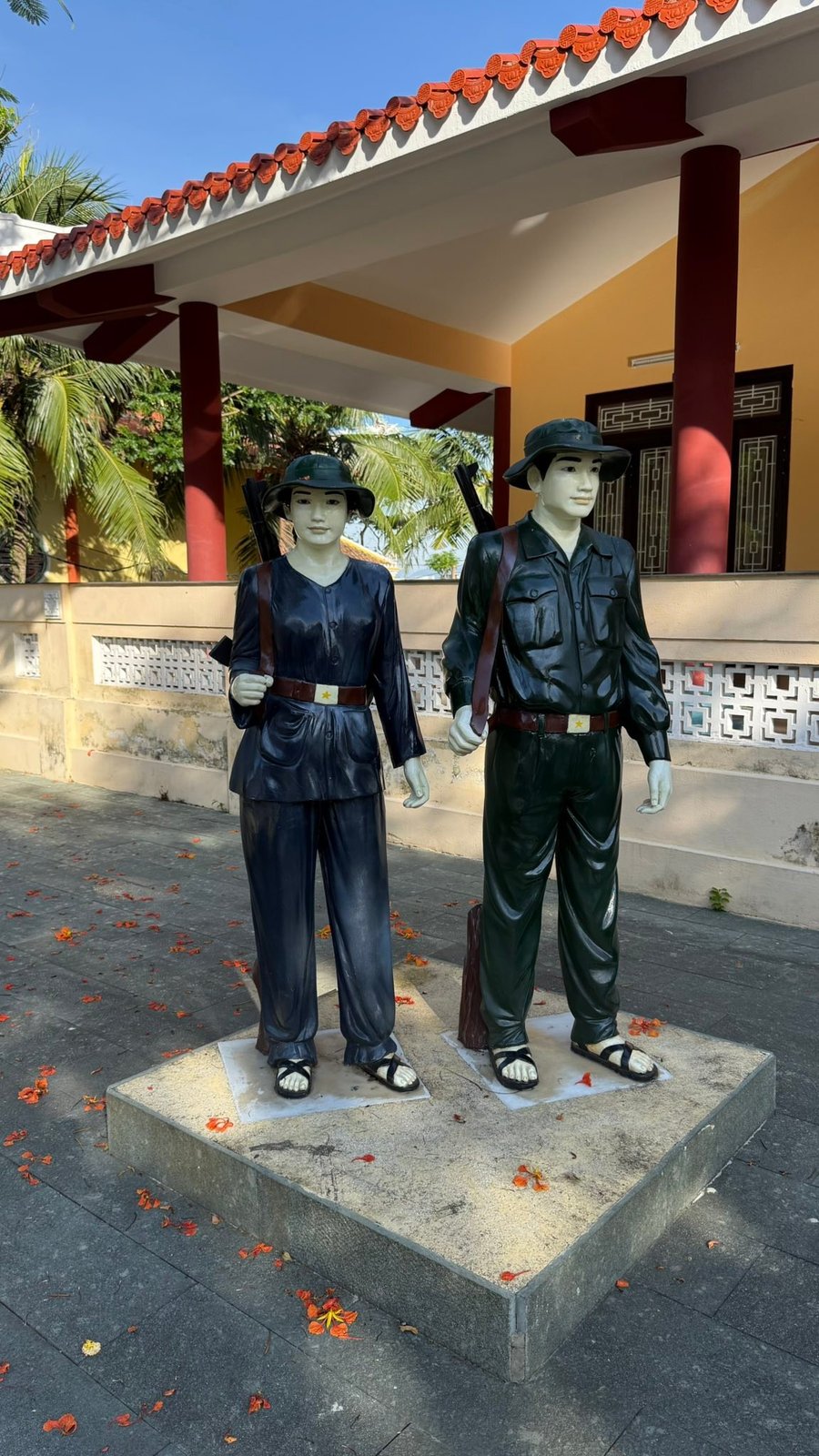
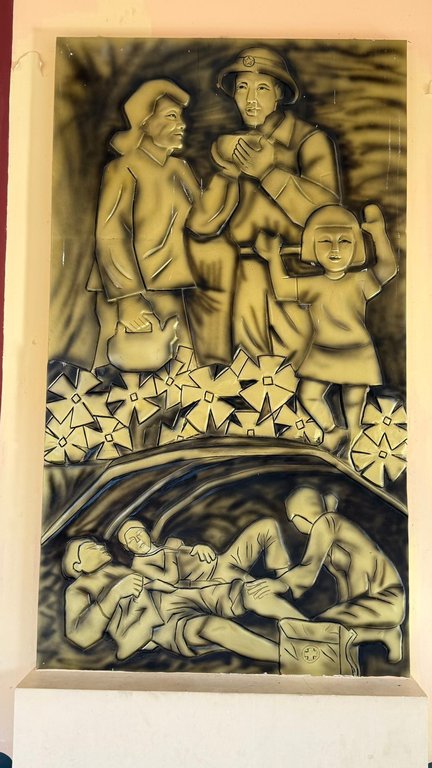
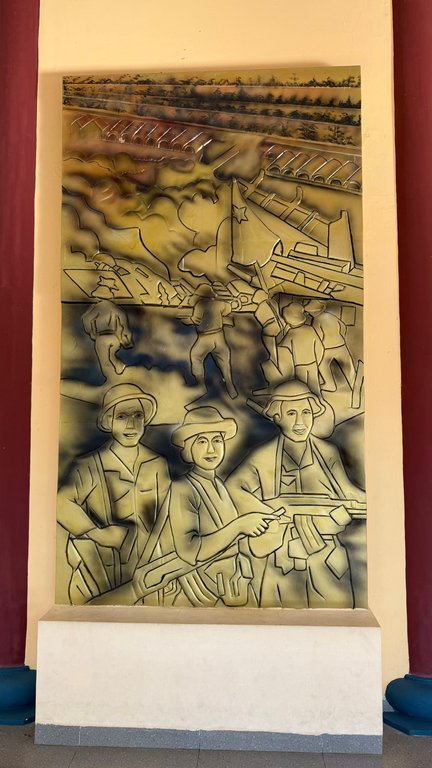
A pair of statues stood on a plinth in front of the memorial building, figures in dark uniforms and hats. Carved panels told the rest. In one, people stand above ground while below them people crouch and work in a tunnel. In another, soldiers hold their rifles beneath a battle scene. Today the ground they defended is new houses, wide roads and high-rises, and since the July reorganization it sits in the new Ngũ Hành Sơn ward. You would never guess its history.
Bananas and an Old Temple Consumed by Nature
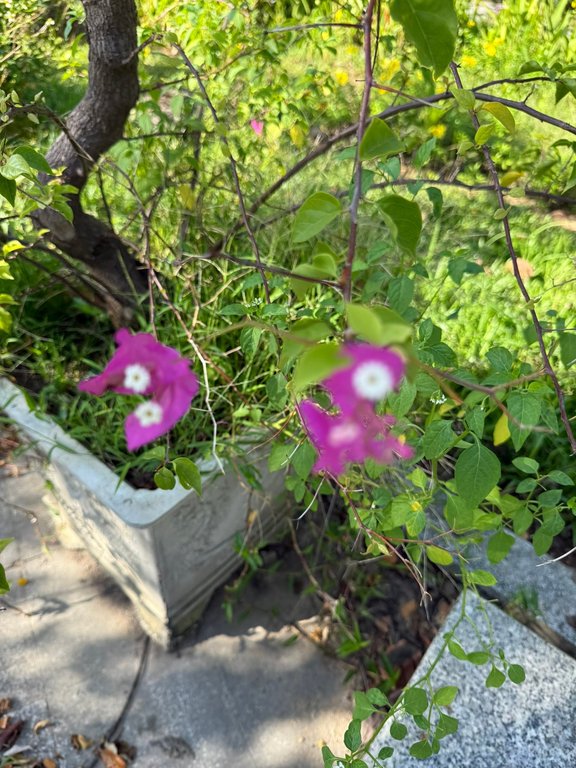
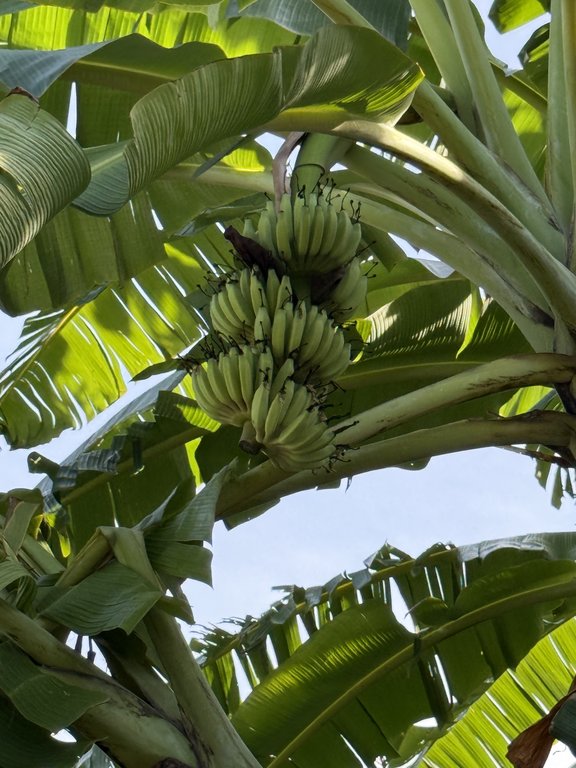
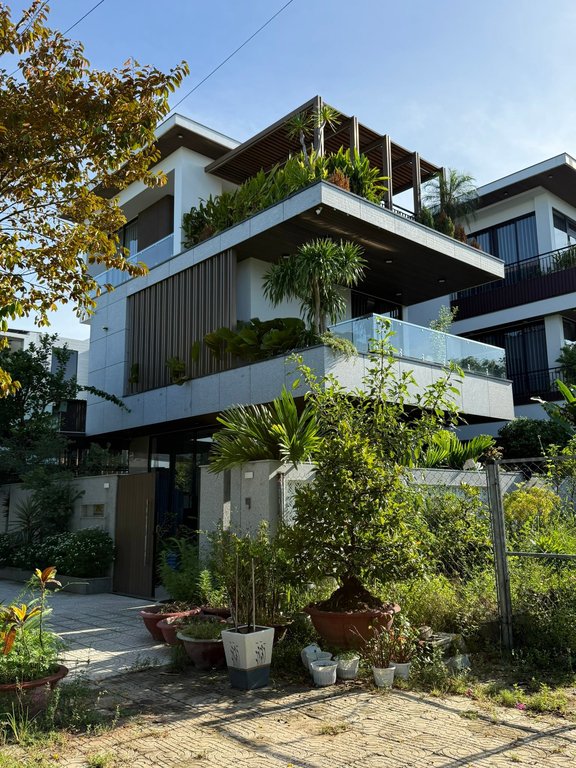
The rest of the walk was the kind I love. A garden park with some beautiful flowers, pink bougainvillea spilling out of stone planters and a path lined with potted trees. Several bunches of bananas close to harvest, hanging green among the leaves. Some beautiful modern homes, all clean lines and plant-filled terraces.
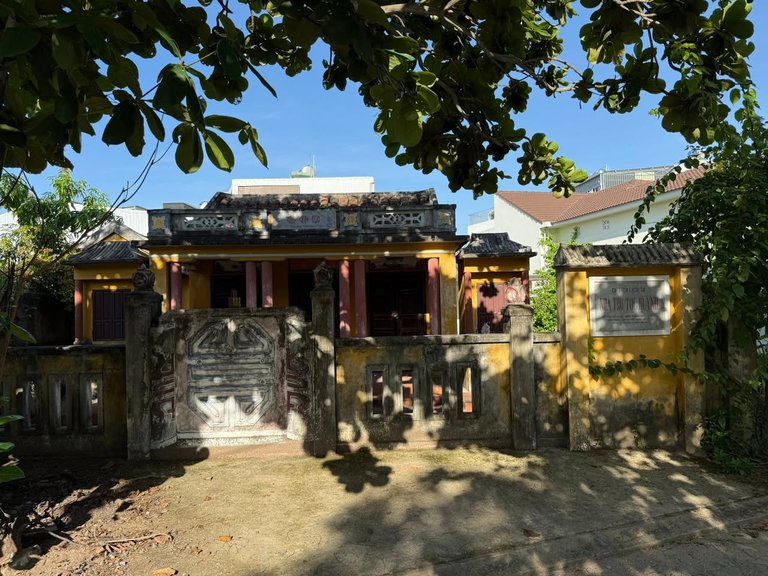
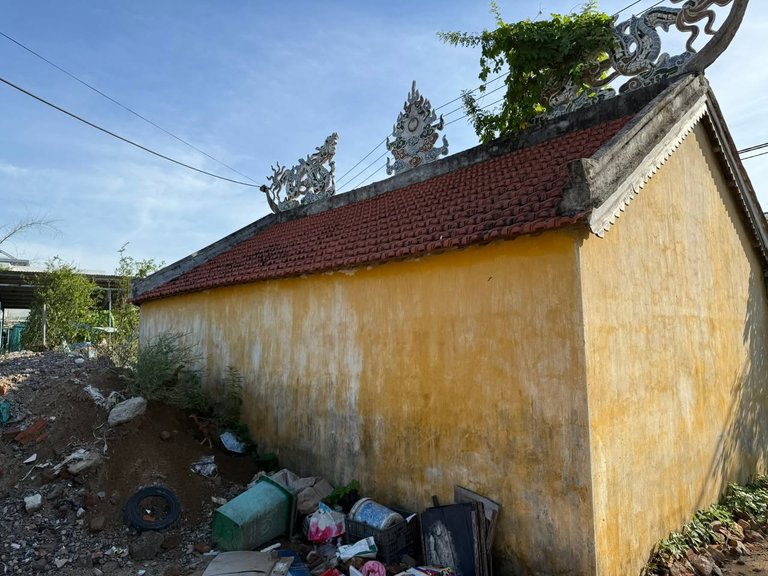
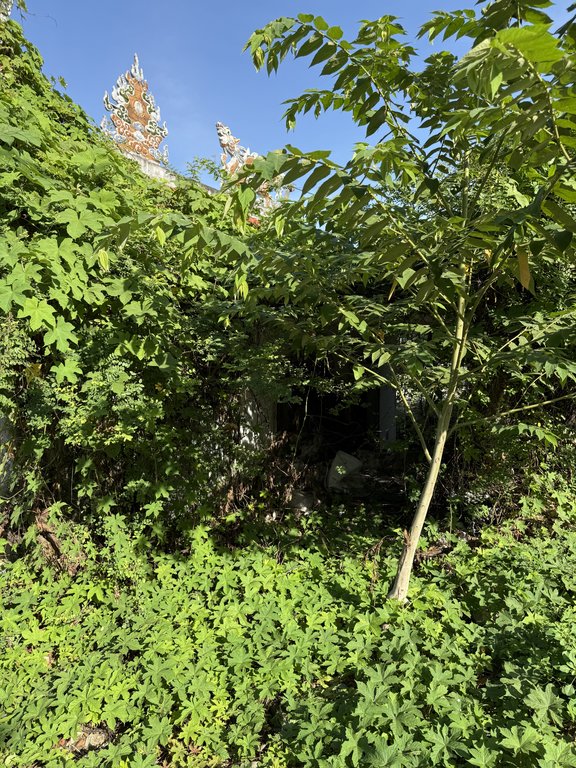
And then, a very old temple consumed by nature. A shrine with a dark tiled roof and a stone screen sat back among the trees. Along the lane, an old yellow wall under a tiled roof and its ornaments was disappearing behind vines and a young tree, with rubble piled at its foot. In places, all you could see of the old rooflines were the ornate peaks poking up over the brush.
Otherwise, it was just a nice morning walk.
Breakfast at Bếp Ngon Việt
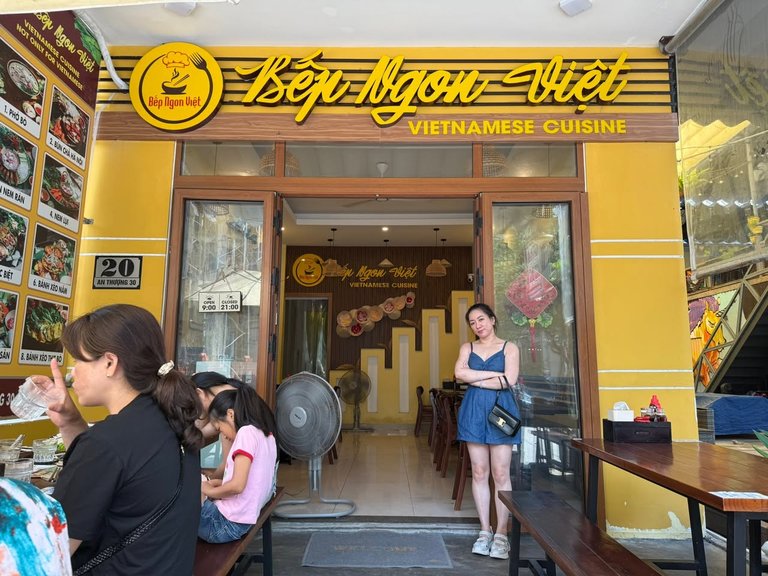
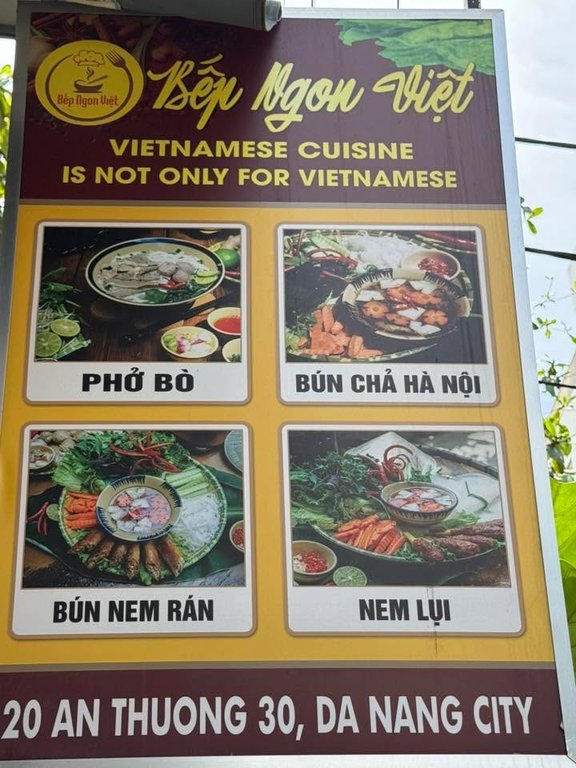
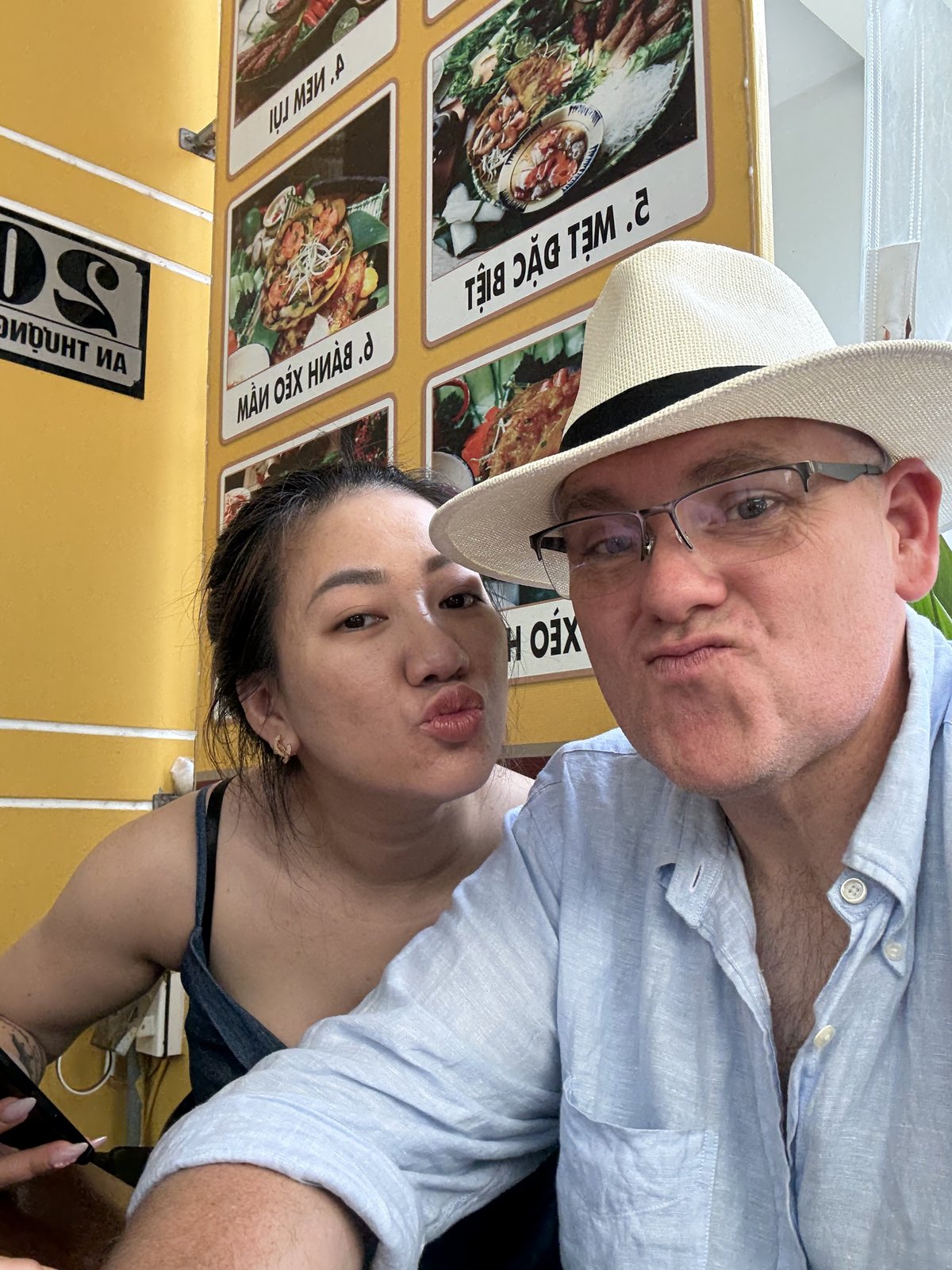
We had a wonderful breakfast out with the family at Bếp Ngon Việt, a bright yellow storefront at 20 An Thượng 30. The menu board out front offered phở bò, bún chả Hà Nội, bún nem rán and nem lụi, and across the top it carried the restaurant's motto: Vietnamese cuisine is not only for Vietnamese. In case you were wondering. Consider it today's public service announcement.
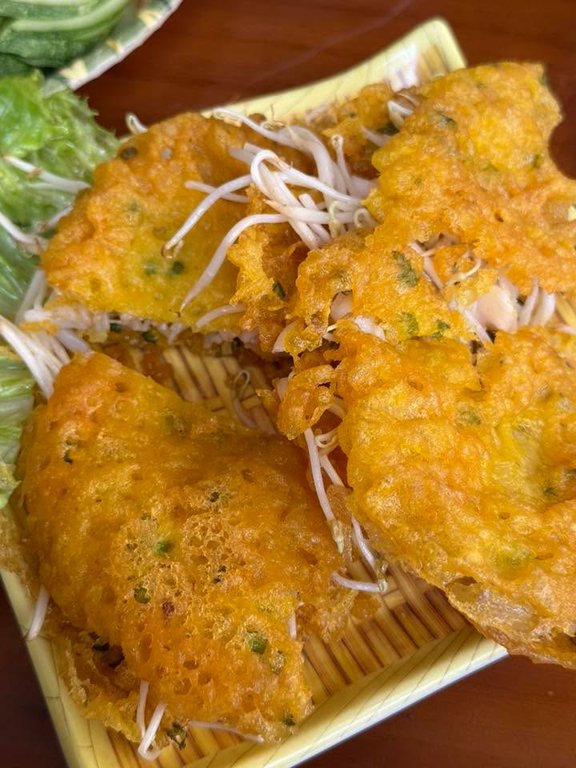
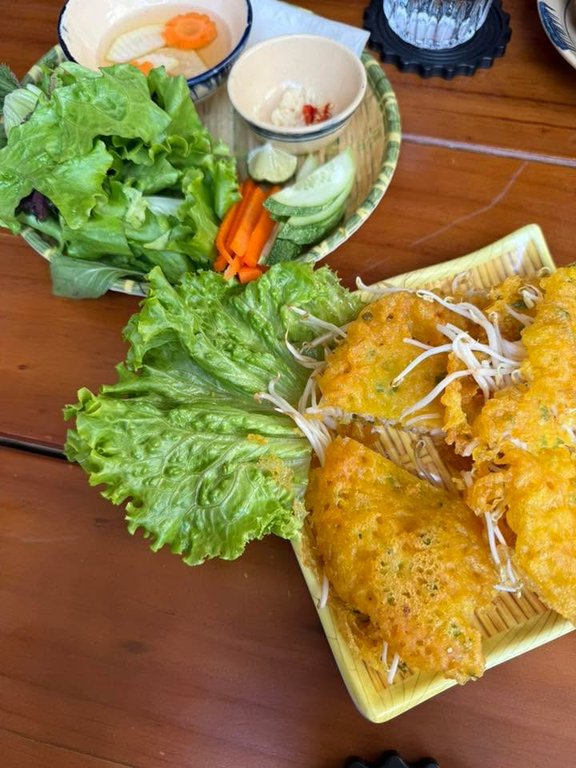
We ordered bánh xèo, the crisp turmeric-yellow pancakes, stuffed with bean sprouts and served on a woven plate with a pile of lettuce and herbs and little bowls of dipping sauce for wrapping. There was phở bò, the beef noodle soup, the broth topped with sliced beef and a snowfall of green onion. There was a seafood stir-fry, yellow noodles tossed with shrimp, bok choy, tomato and cucumber. There was seafood fried rice, studded with shrimp and herbs, with sliced chilies on the side. And there was stewed beef with fresh rice noodles, chunks of beef and carrot cut into flowers in a deep broth, with a nest of noodles and a pile of lettuce alongside.
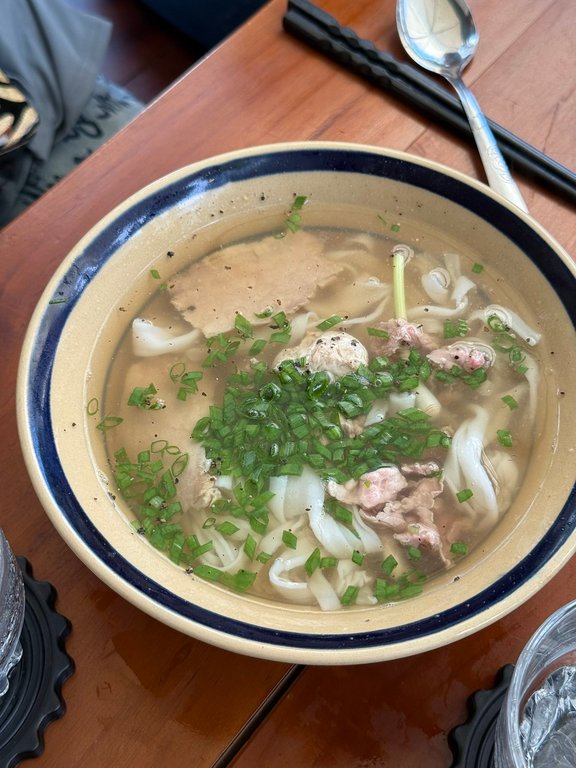
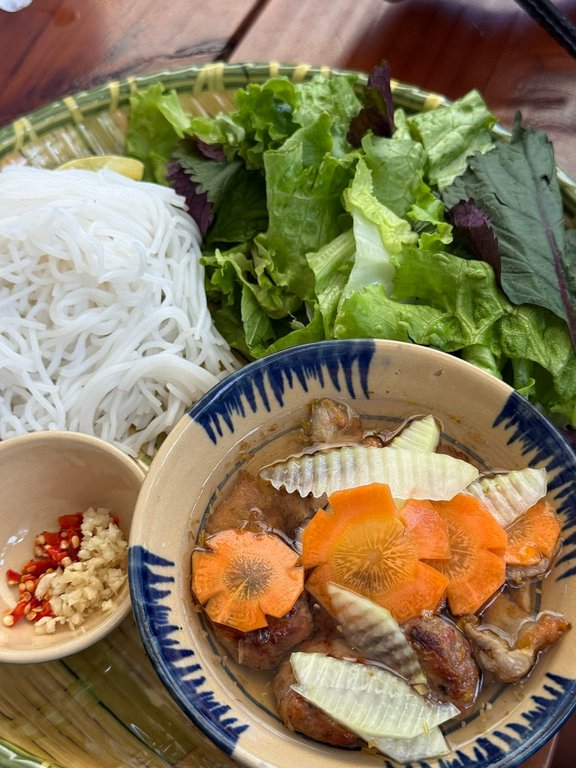
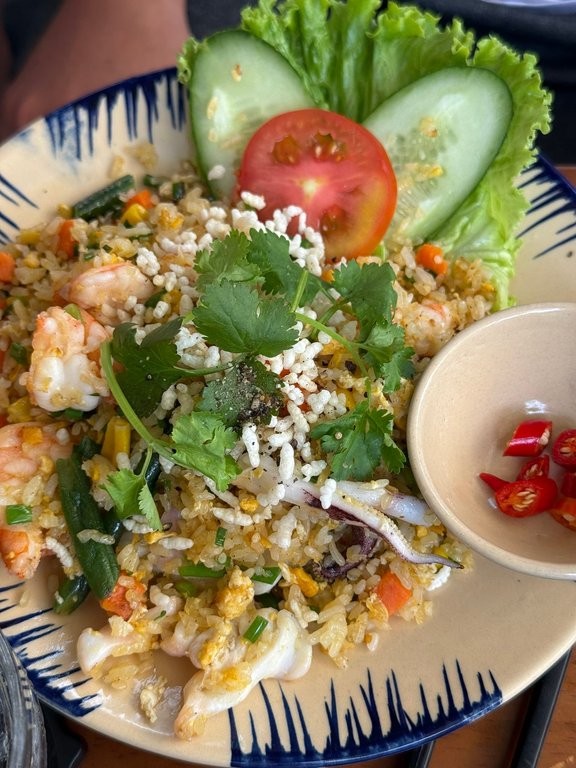
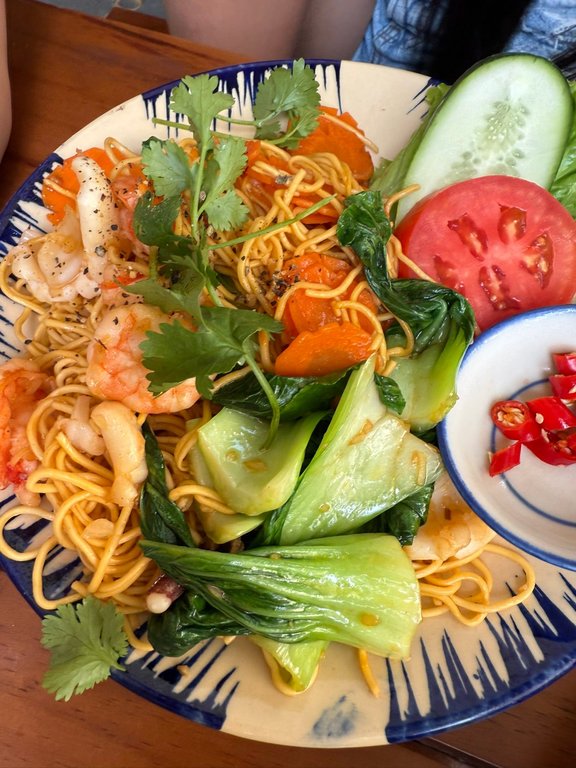
It doesn't help that it's all so cheap. A bowl of anything around here is usually less than two dollars. We spend less than $40 US feeding the entire family on a night out. I am trying real hard to burn off as much as I consume.
Summertime on Mỹ Khê
It's summertime in Da Nang. That can only mean that half of Asia is vacationing in Dragon City. The beaches have been absolutely packed at midday, a key indicator that the city has swollen with tourists. By the city's count, Da Nang's hotels and guesthouses served about 5.8 million guests in the first half of 2025, up almost 19 percent on the year before, and about 2.6 million of them came from abroad, up 31 percent. Koreans lead the pack and have since 2016. By 2025 a dozen airlines were flying 150 flights a week between Korea and Da Nang, and on the first of August the city threw a ceremony at East Sea Park for its one millionth Korean visitor of the year.
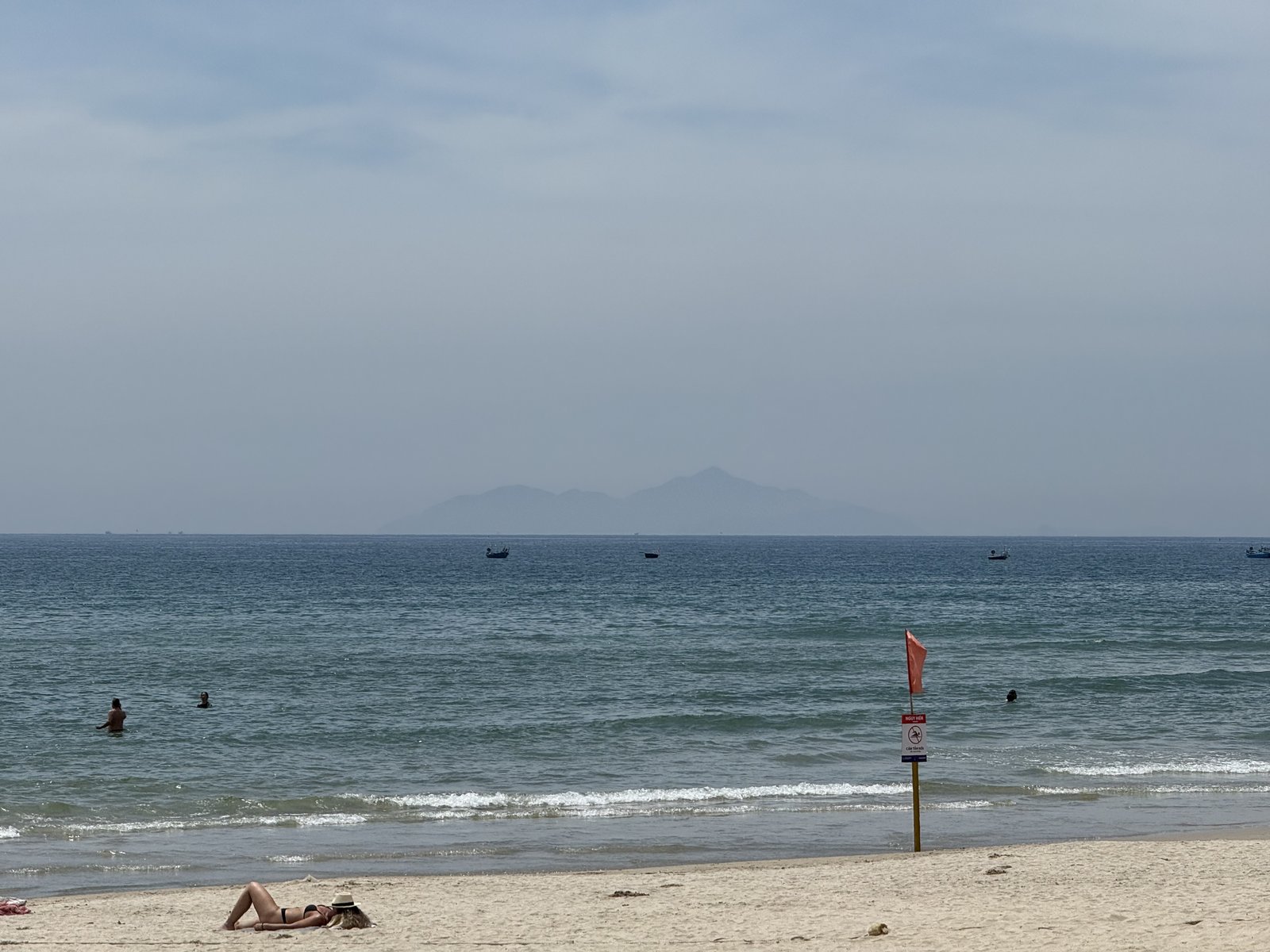
Any self-respecting local doesn't venture onto the beach unless it's between the hours of sunset and sunrise. You will often find locals doing yoga in the predawn hours, or walking the beach in the cool evening breeze, but rarely in the heat and intensity of the midday sun. If the beach is packed in the middle of the day, they aren't from around here.
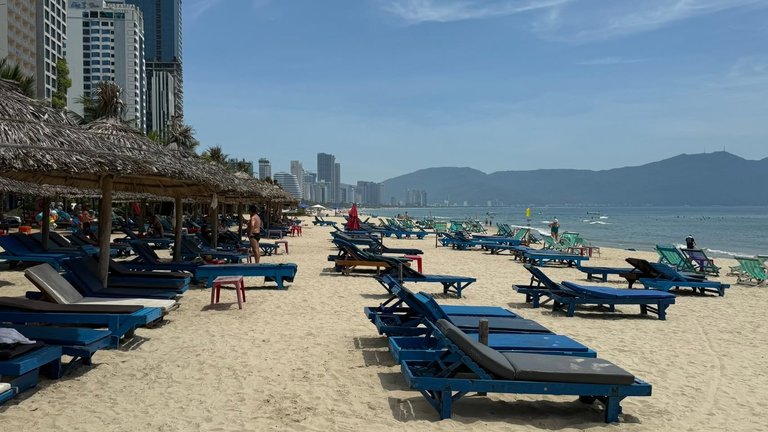
I was a bit spoiled when we lived here. Vietnam closed its borders to international tourists on March 22, 2020, and did not open them again until March 15, 2022. For about 18 months of that, while we were still here, the beaches were empty. Looking back, we were incredibly lucky to have experienced the city in a state that seemed as if it was all just for us. Now it's a competition with everyone.
Date Night at Làng Cá
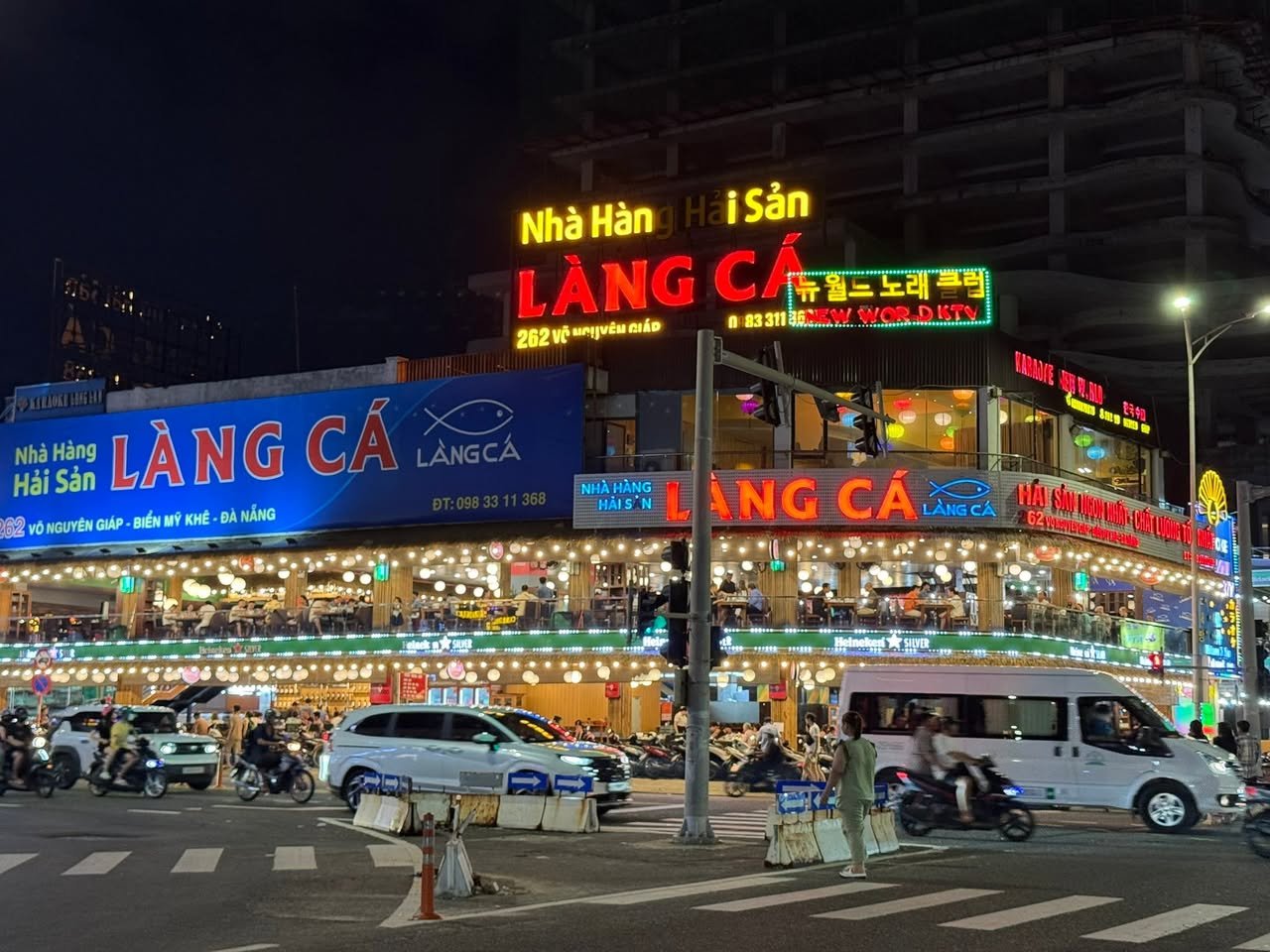
That evening Diem and I had a nice little date night. We hit some of our old date spots, though our favorite restaurants, the ones we ate at regularly, have all closed. So we started with a Da Nang must: one of the massive seafood restaurants that line the main beach road. That road is Võ Nguyên Giáp, the city's most scenic drive, about seven kilometers along the sea. Da Nang named it in December of 2013 for General Võ Nguyên Giáp, who had died that October. Along its length you will find a long run of seafood houses facing the sand, many of them with tanks where you pick your dinner while it is still swimming.
Ours was called Làng Cá, fishing village. The building was lit up like a casino, LÀNG CÁ in big lit letters on every face of it, and the sign promised Nhà Hàng Hải Sản, seafood restaurant, in case there was any doubt.
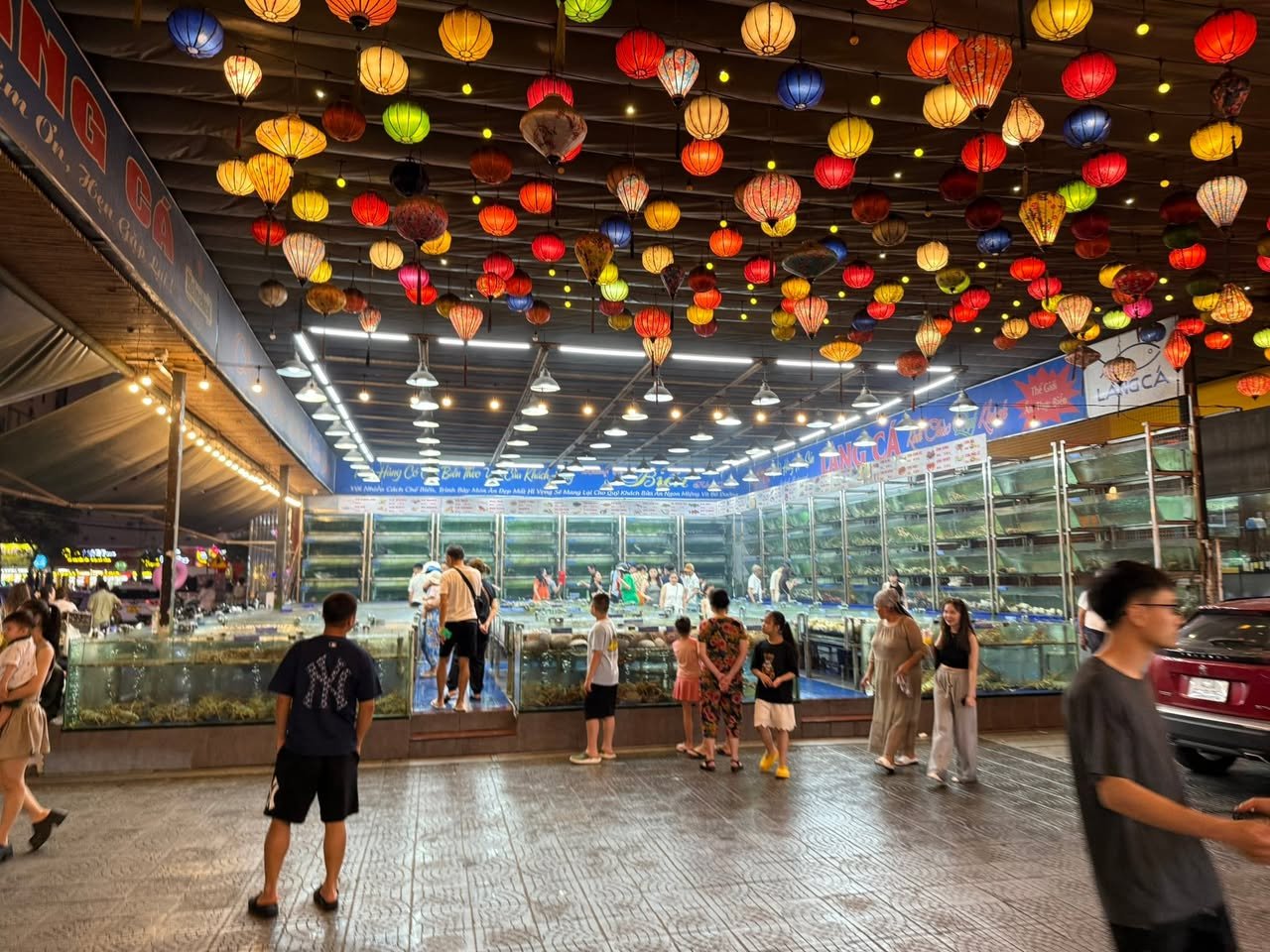
Inside, it had a massive tank section, filled with every known delicacy pulled from the sea, row after row of lit glass tanks under a ceiling hung with colored lanterns. One of the things that is unparalleled in Da Nang is that you can go to eat, and everything you order is alive when you order it. You are taken to a table, given a corresponding table card, and urged to go to the tanks to pick out your dinner. And we did just that. It's one of those things where if you go hungry, you will spend a small fortune. And again, we did just that.
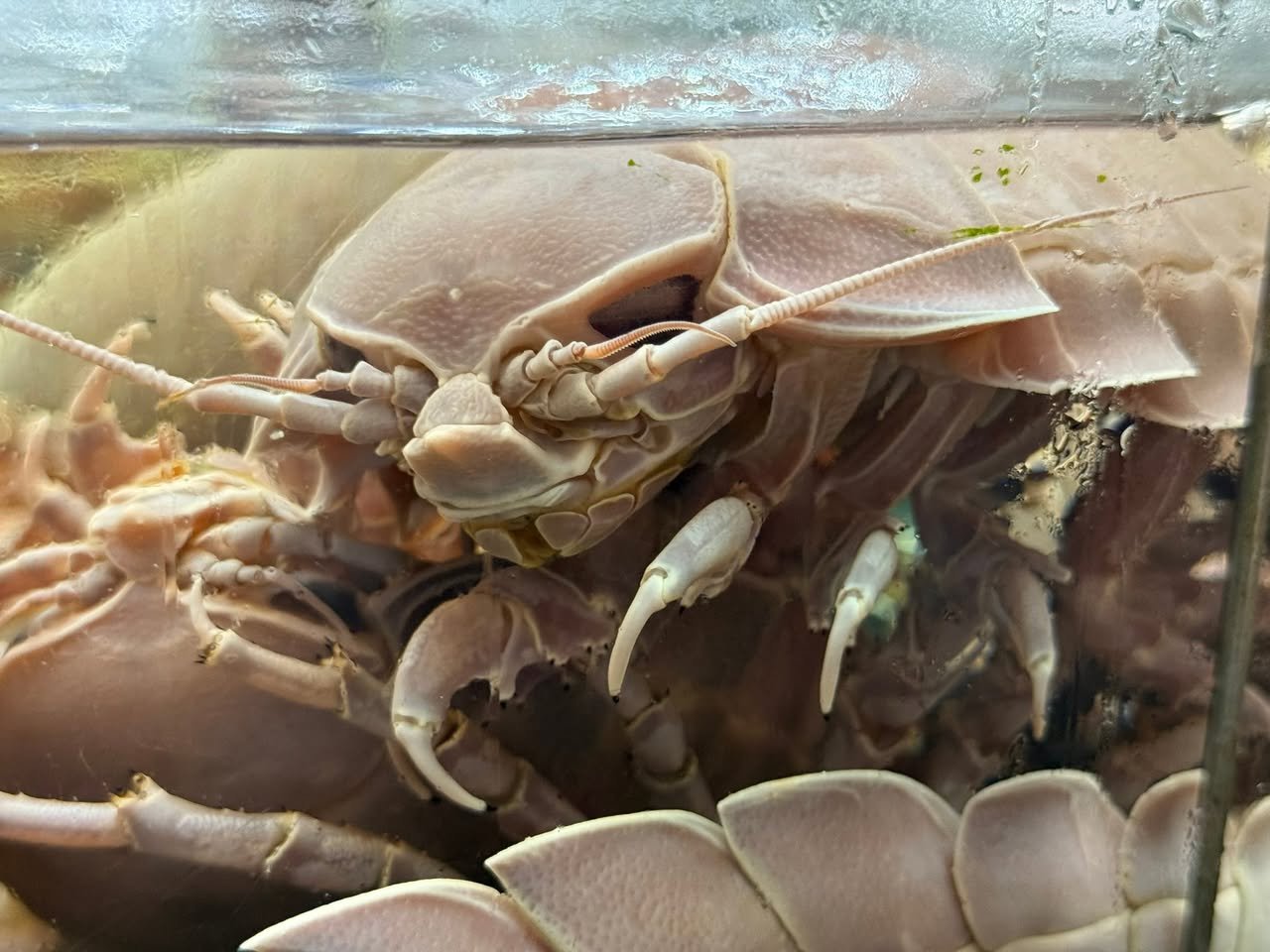
The selection of still living seafood is insane, and we spent a good 30 minutes picking out our food. There were giant, alien-looking isopods pressed against the glass. The Vietnamese call them bọ biển, sea bugs. They come up from the deep water off Vietnam's coast, and they are prized here as an expensive delicacy that tastes something like lobster. Scientists, it turns out, have been shopping for them too. A new species, Bathynomus vaderi, made the news in January of 2025, described from specimens bought from restaurants and fishermen in Quy Nhơn. They named it for its head, which looks like Darth Vader's helmet. I can't argue with them.
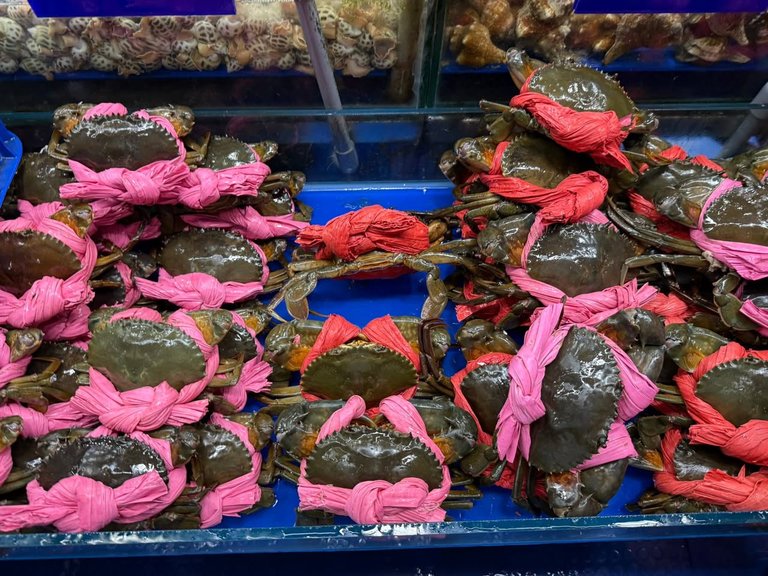
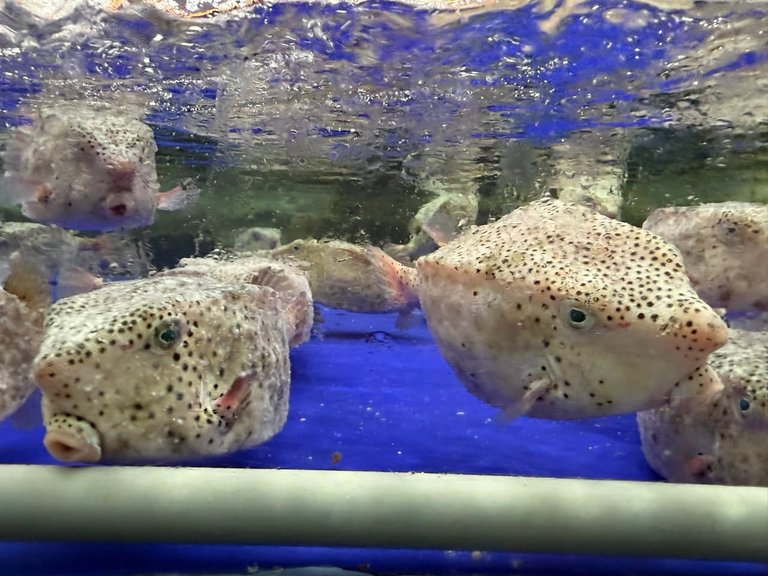
There were sea snails trying to climb out of their doomsday habitat. A dozen types of lobster, even more crab, grouper, sharks, cuttlefish and squid. Pufferfish drifted in a blue-bottomed tank, and crabs sat stacked in piles with their legs tied up in pink and red string. And they even had giant mantis shrimp, each one secured in its own plastic water bottle so it couldn't knock the monger out when he pulled it from the water.
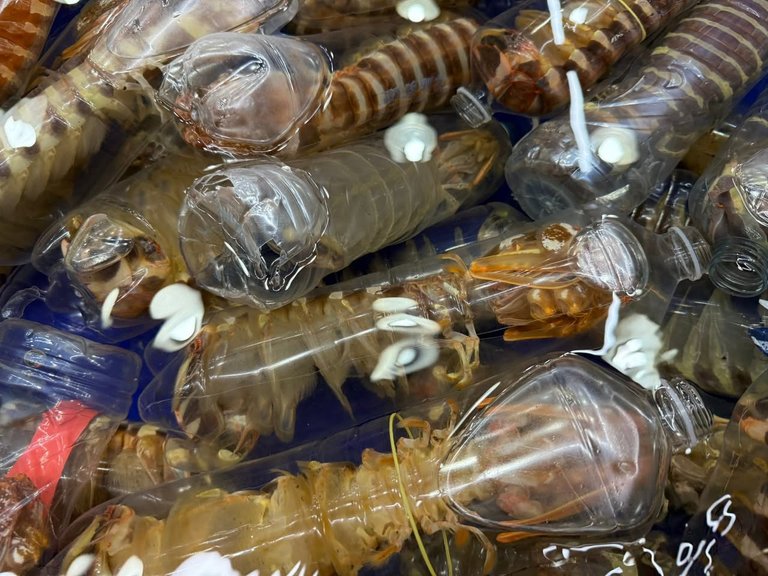
That is less of a joke than it sounds. The mantis shrimp, tôm tít, is a little armored fighter. Some kinds spear their prey, and the smashing kind swings a club that moves at about 50 miles an hour and finishes its strike in under three thousandths of a second, accelerating at up to 10,000 times the force of gravity. The blow hits with roughly the force of a rifle bullet. In 1998 a four-inch mantis shrimp named Tyson broke through a quarter inch of aquarium glass. A plastic bottle seems like the very least you can do.
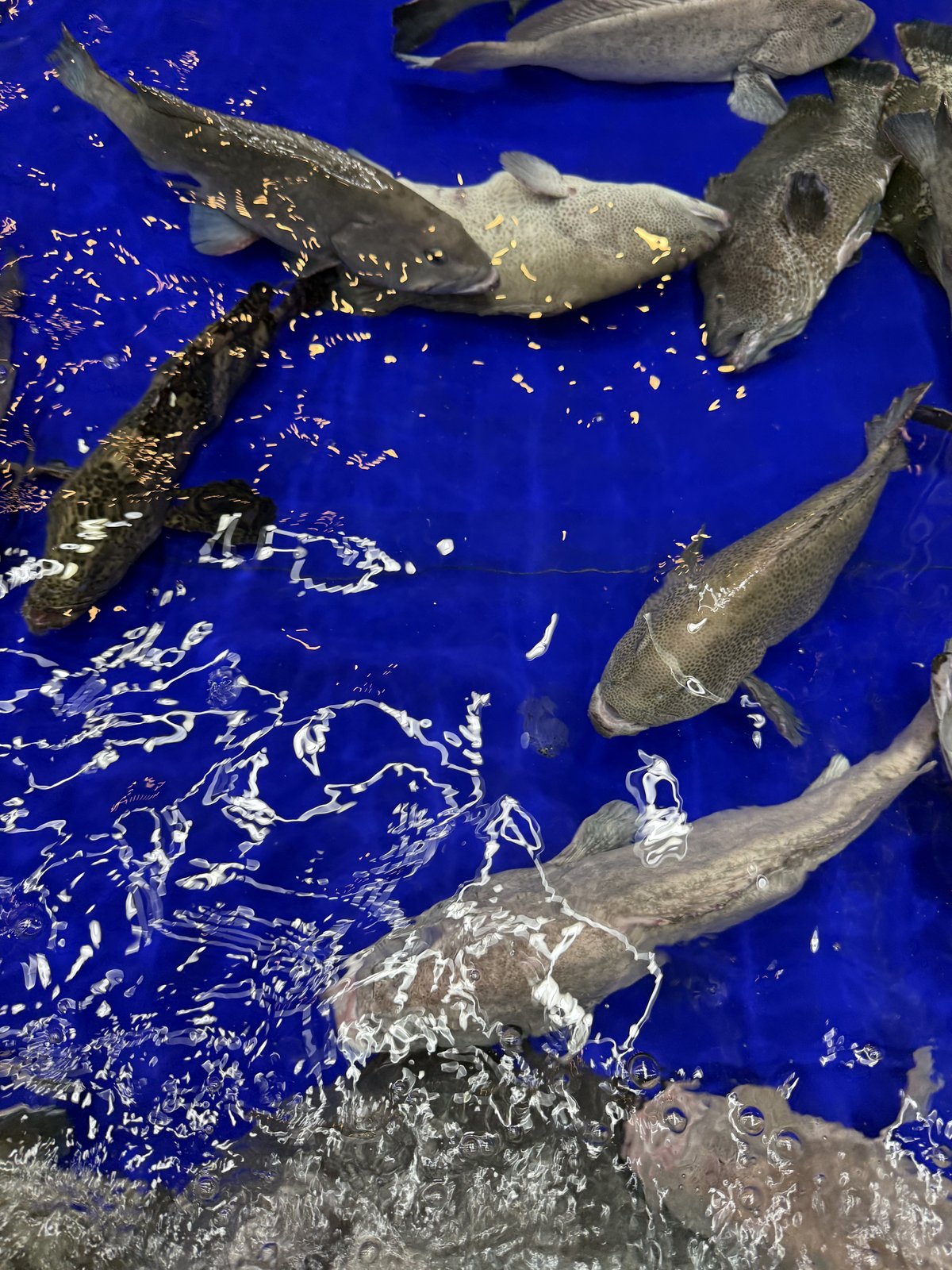
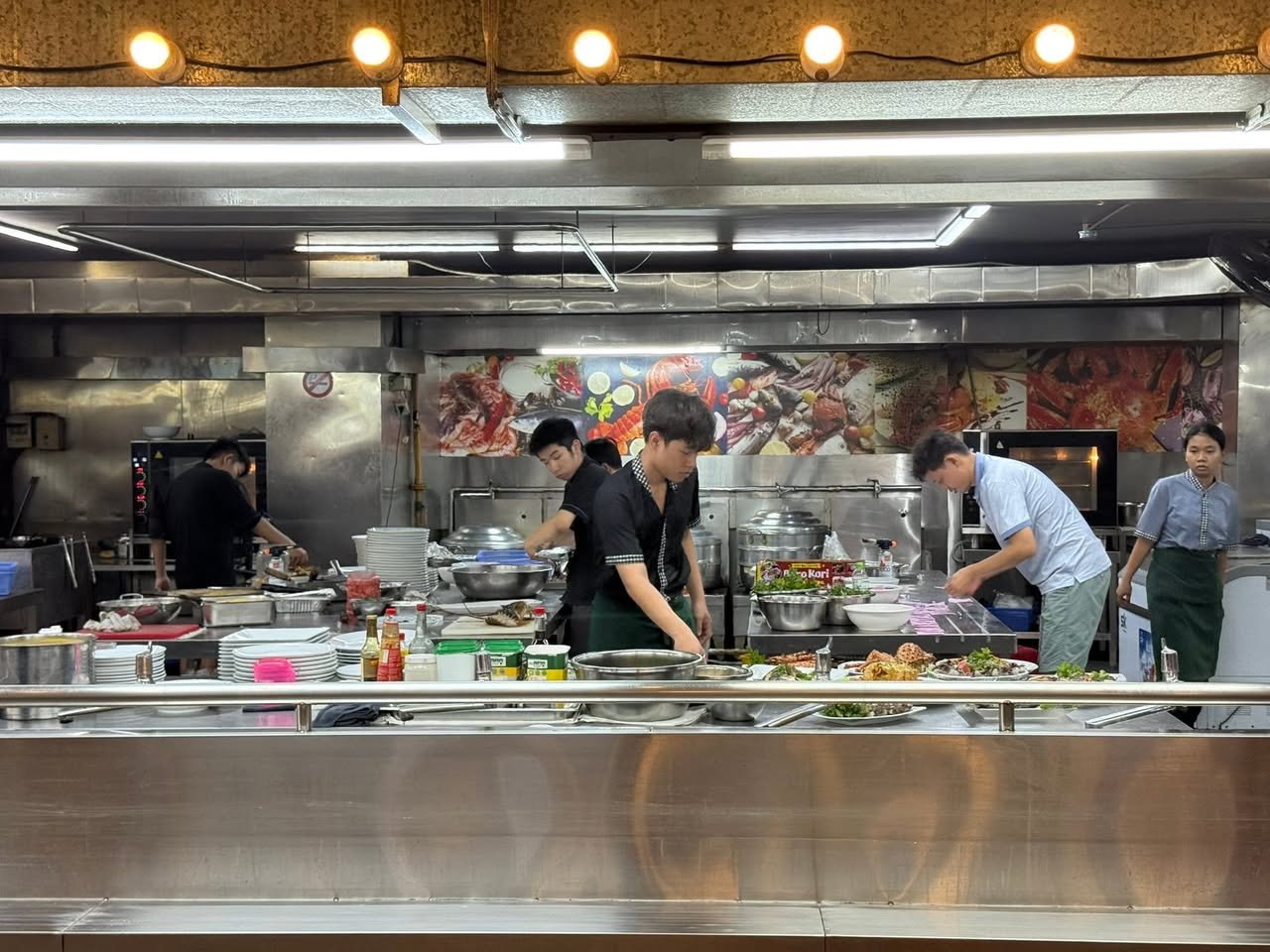
Everything is weighed at the tank and sold by the kilo. A ticket is produced with your table card, and your freshly picked dinner is whisked away to the kitchen to be prepared to your request. Behind a long steel counter under strings of lights, a whole line of cooks was at work.
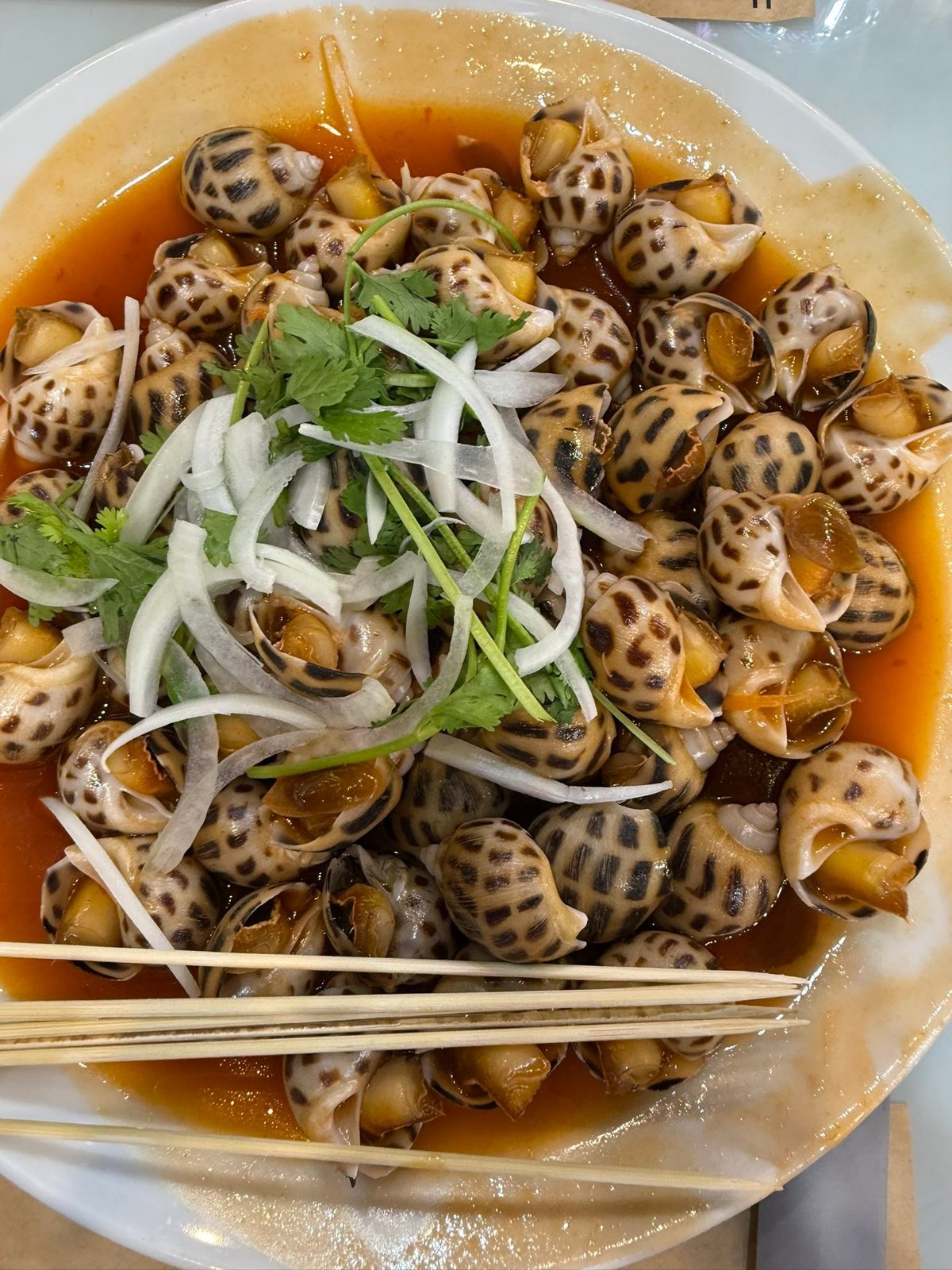
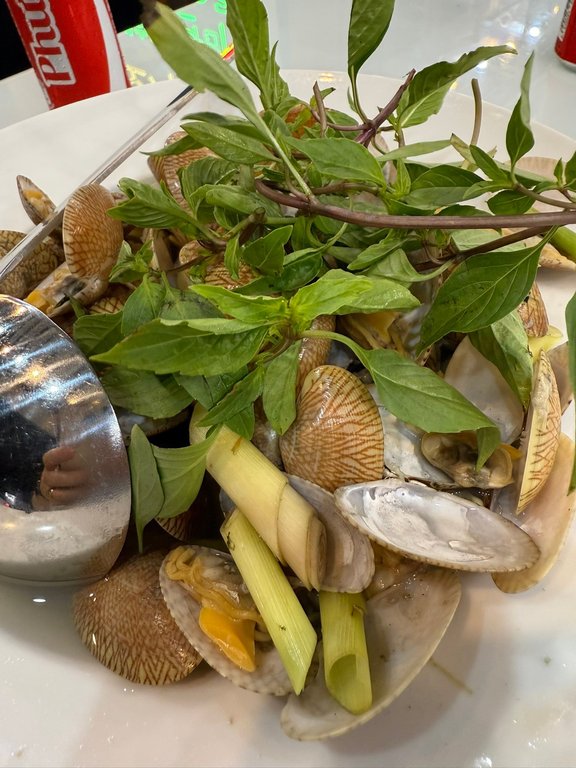
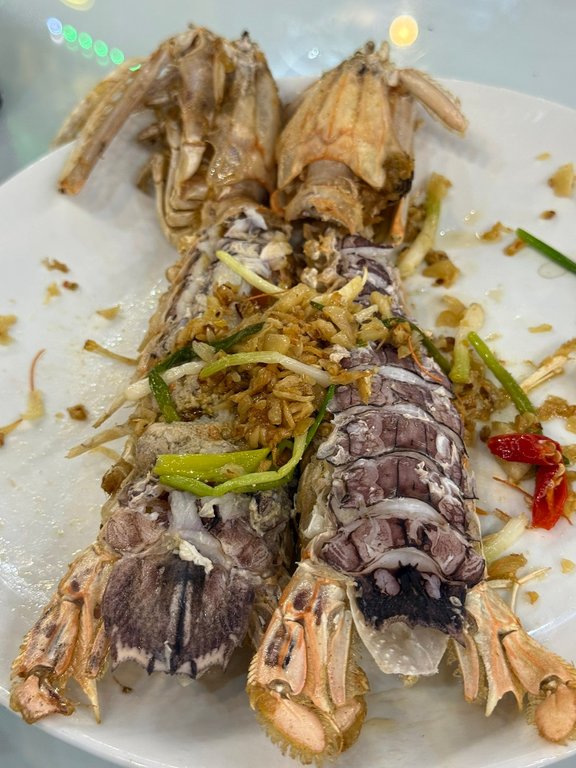
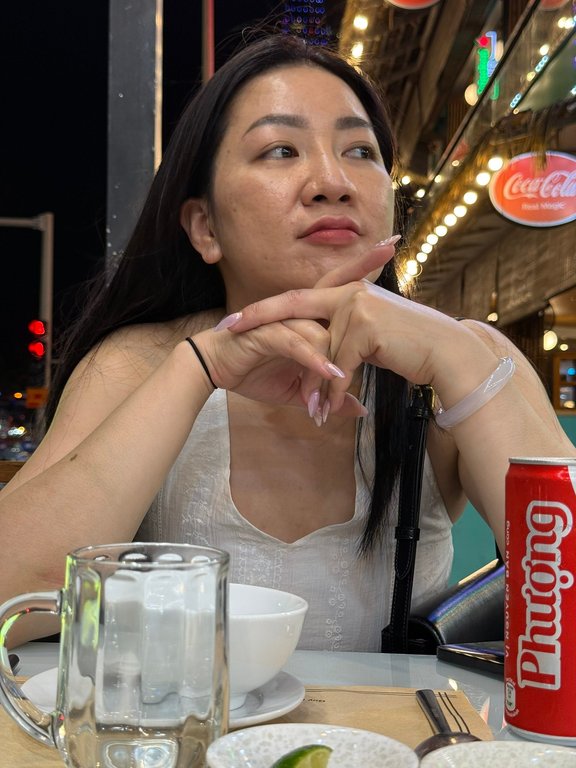
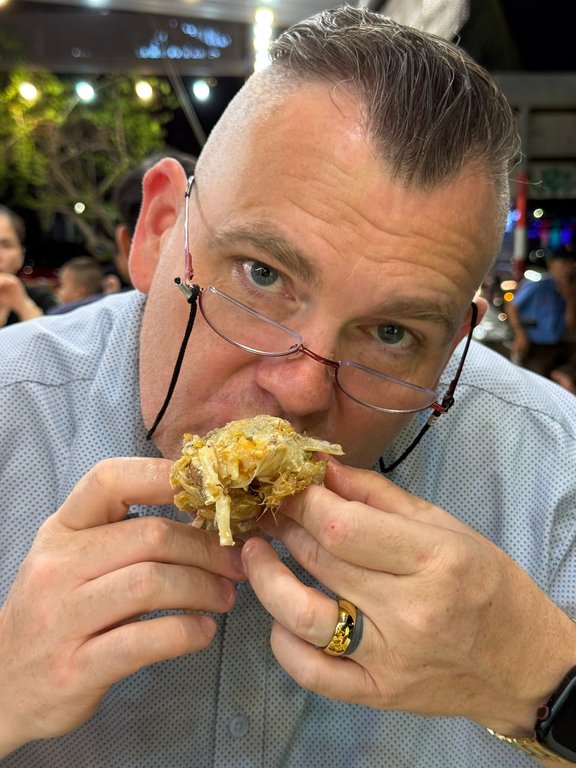
We enjoyed sea snails in a sweet tomato broth, piled high and spotted like leopards, with onion, herbs and a fistful of toothpicks for winkling them out, and a little dish of seasoning for dipping. By the look of those spotted shells, they were ốc hương, the spotted Babylon snail, the most sought-after snail on menus in Vietnam. We had clams with lemongrass, the stalks cut long and the bowl buried in fresh herbs. And then the main event: two of the biggest mantis shrimp I'd ever seen, one with a heavy sack of roe, deep fried and buried under caramelized shallots, garlic and green onion. Mantis shrimp breed around the third and fourth months of the lunar calendar, and one carrying ripe roe is considered a delicacy.
A dinner fit for a king.
A Walk on China Beach
After dinner we walked across the street to enjoy a walk along Mỹ Khê, the main beach of Da Nang. American and Australian servicemen nicknamed it China Beach during the war. Its closeness to the city made it a rest and recreation spot for U.S. troops, with a snack bar and a surf shack, and in July of 1968 the Army's 95th Evacuation Hospital moved onto the sand there, between Camp Tiên Sa and the Marble Mountain airfield. That hospital later inspired the American television series China Beach. Vietnam prefers Mỹ Khê, in no small part because the sea it faces is the one Vietnam calls the East Sea and would rather not call the South China Sea.
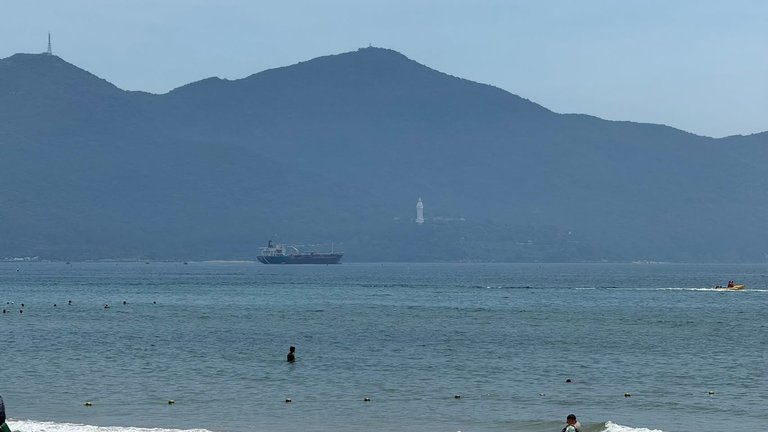
Mỹ Khê is flanked by the imposing Sơn Trà Mountain, or Monkey Mountain, again a nickname given to the mountain by servicemen for its large population of monkeys. The peninsula has been a nature reserve since 1977. The reserve covers about 4,370 hectares and rises to 696 meters at Ốc Peak, and in a 2017 count it held 366 species of animals. The most famous are the red-shanked doucs, voọc chà vá chân nâu, long, slender monkeys with red lower legs like stockings, black hands and feet, and white tails. The IUCN moved them from endangered to critically endangered in 2020. Sơn Trà holds the largest population in Vietnam. A survey by the local conservation group GreenViet counted 1,335 of them in 237 groups.
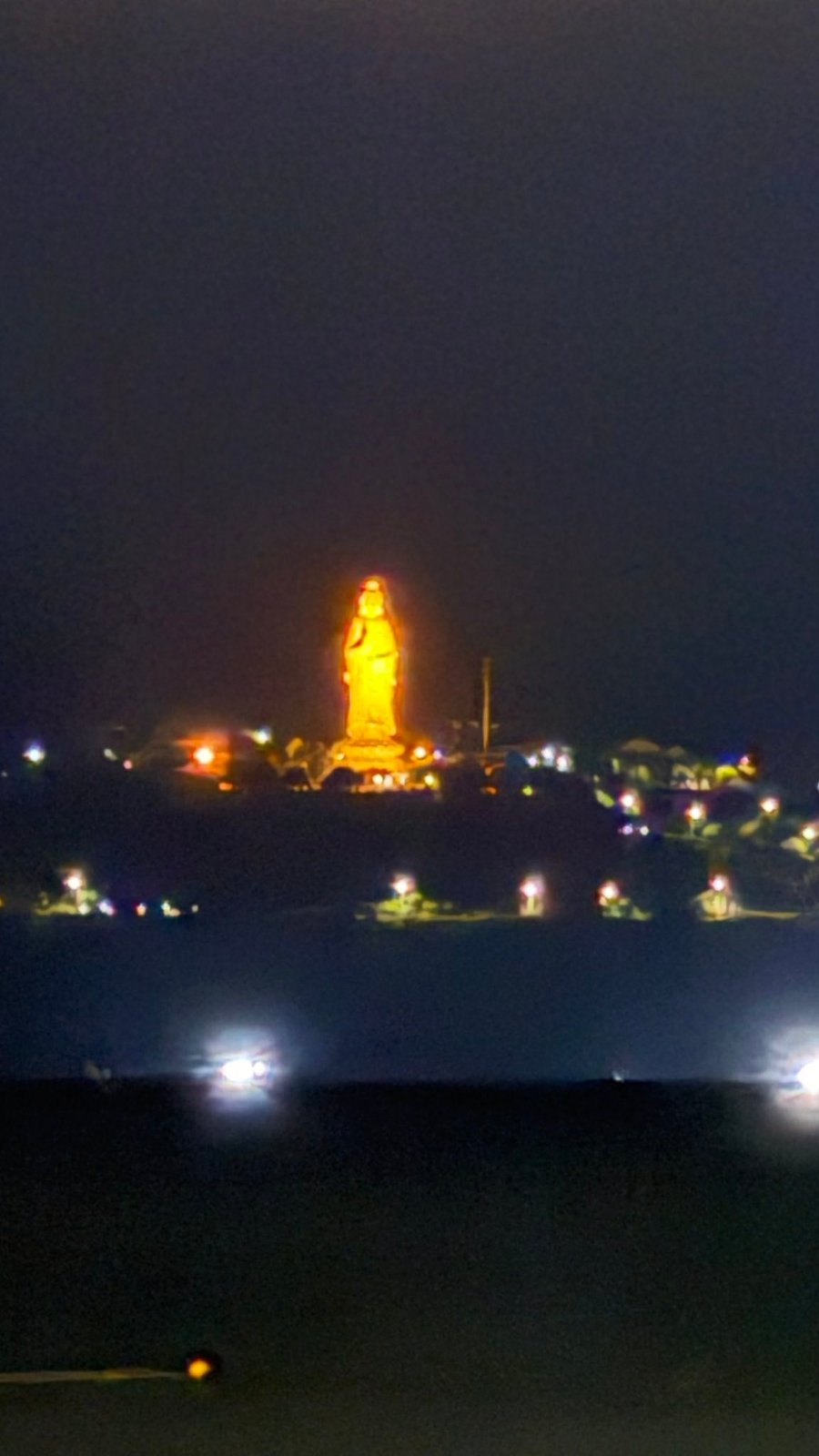
The Lady Buddha, the massive female representation of the Buddha, sits on the side of Monkey Mountain, observing her beaches. She is Quan Âm, the Goddess of Mercy, and she stands 67 meters tall at Linh Ứng Pagoda at Bãi Bụt, with 17 floors inside her. She took six years to build and was finished in 2010. She faces out to sea, and she is believed to cast a protective spell over the beach and the city. At night she is lit gold, and from the beach she floats above the dark water like a candle.
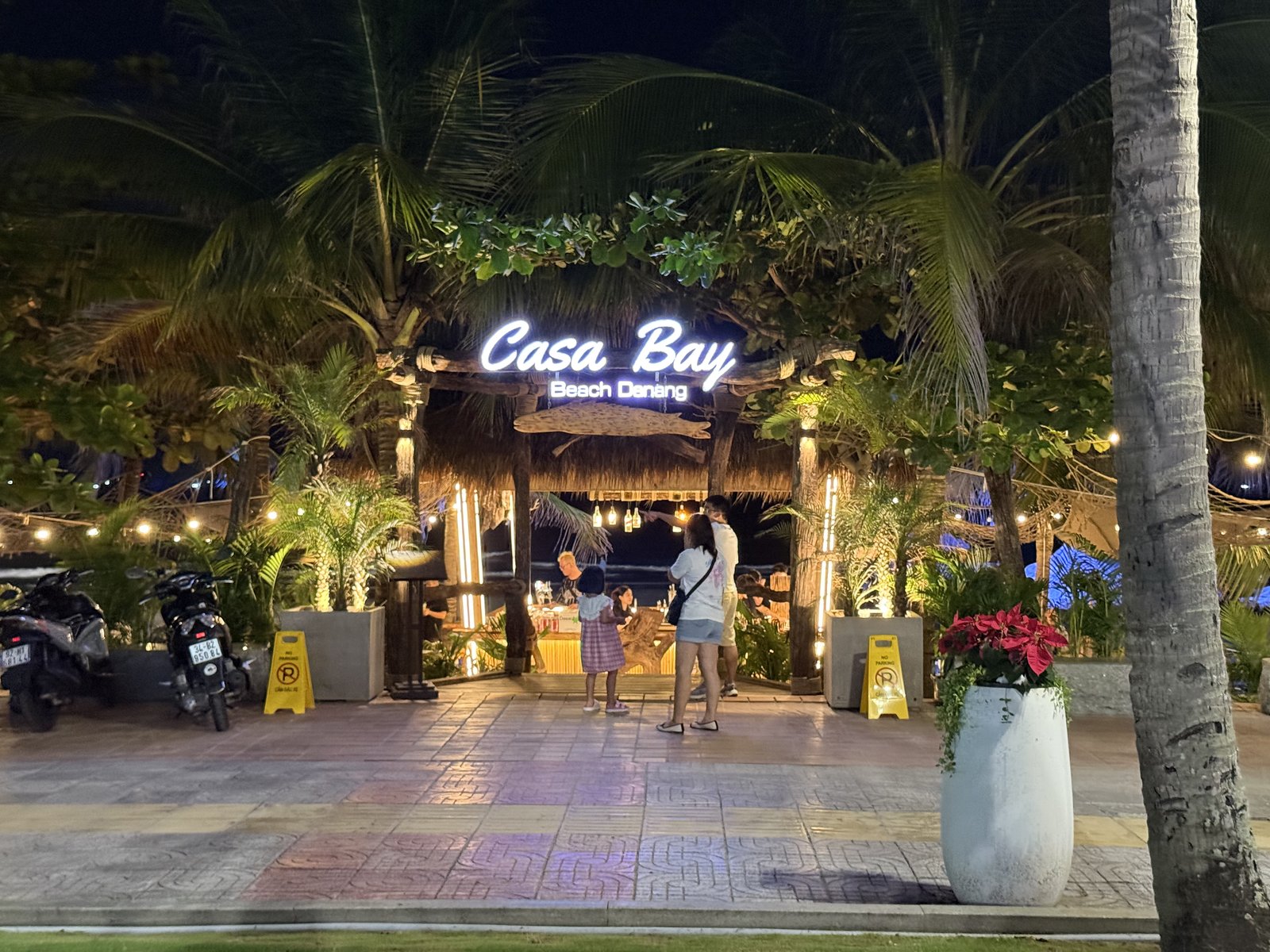
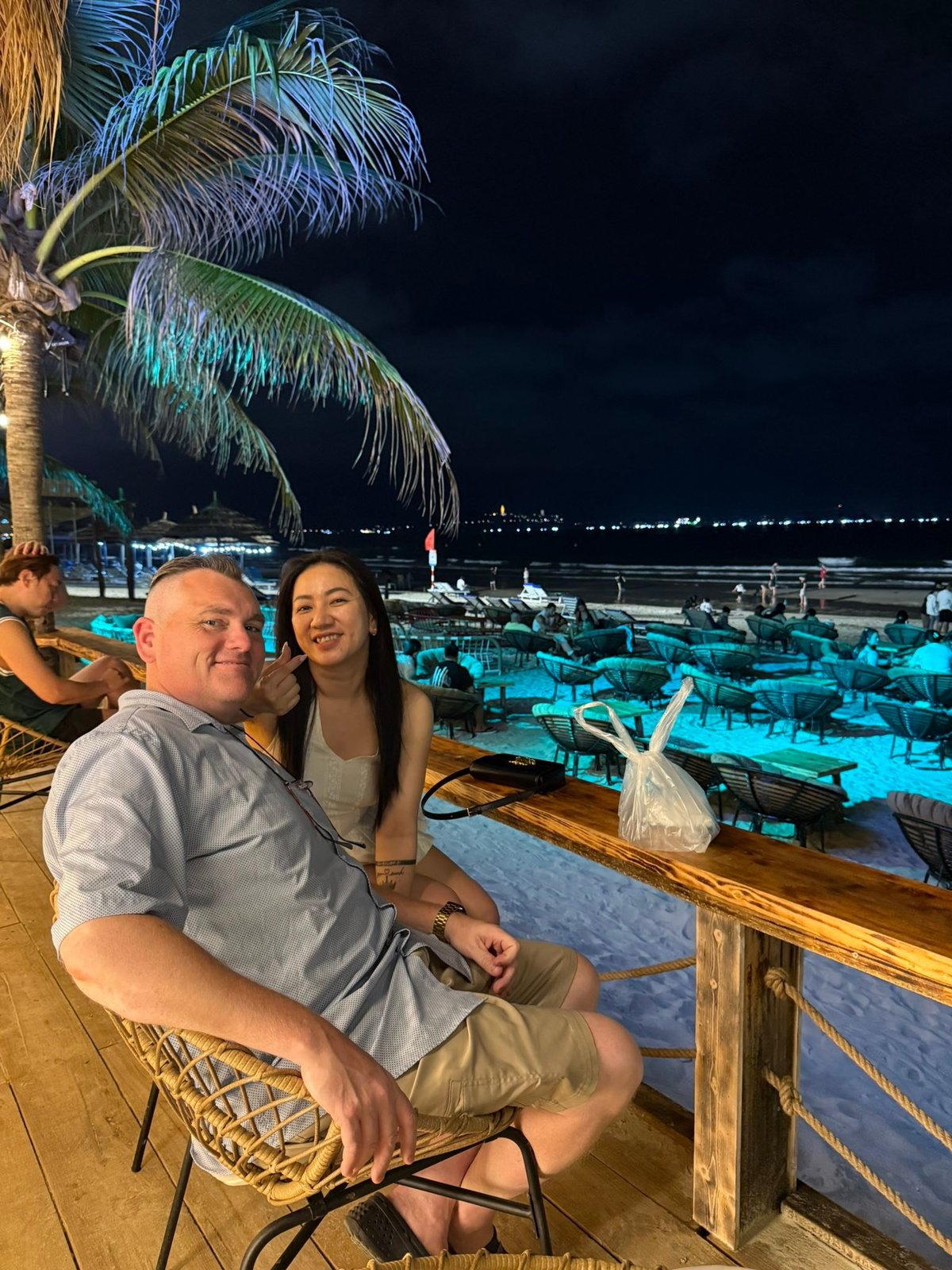
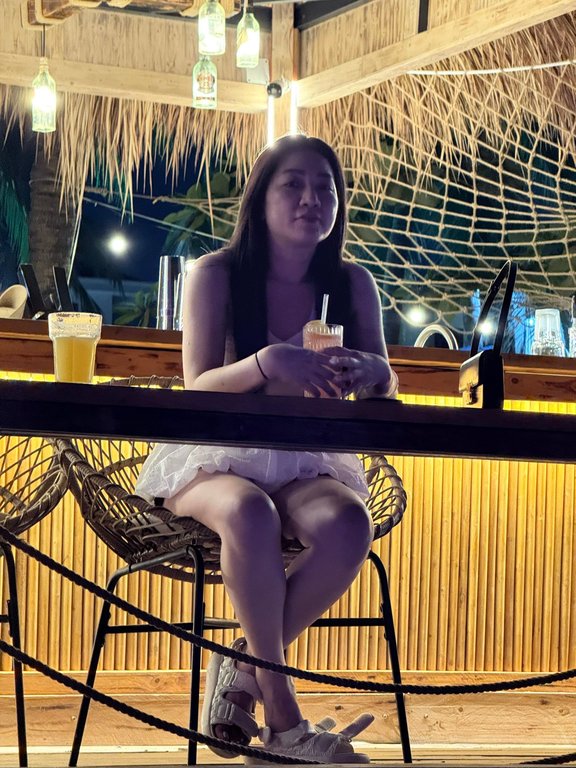
We tucked in at a small seaside bar called Casa Bay, a thatched roof over a wooden counter, wicker stools, and a chandelier hung in the rafters for good measure. I enjoyed a refreshing Hoegaarden, and Diem had a cocktail. There were locals and vacationers alike enjoying the cool breeze and the beauty the beach at night has to offer.
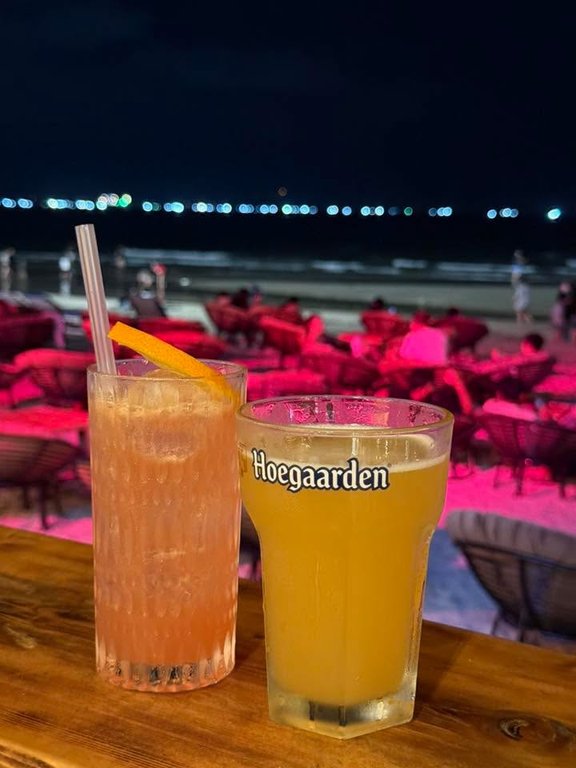
We did not linger, however. There was a place I'd had in mind to visit since we arrived.
The Night Market at Sơn Trà
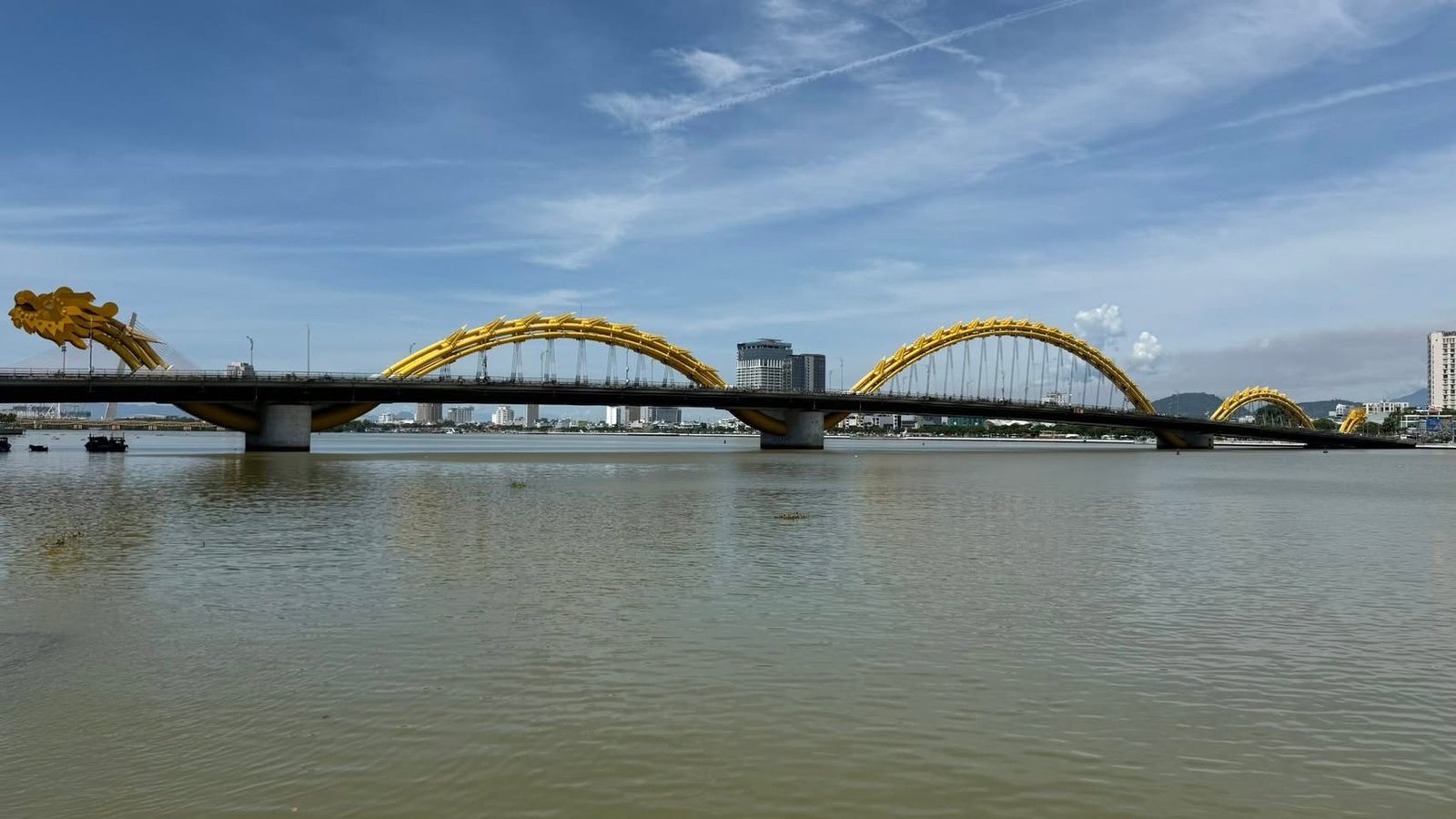
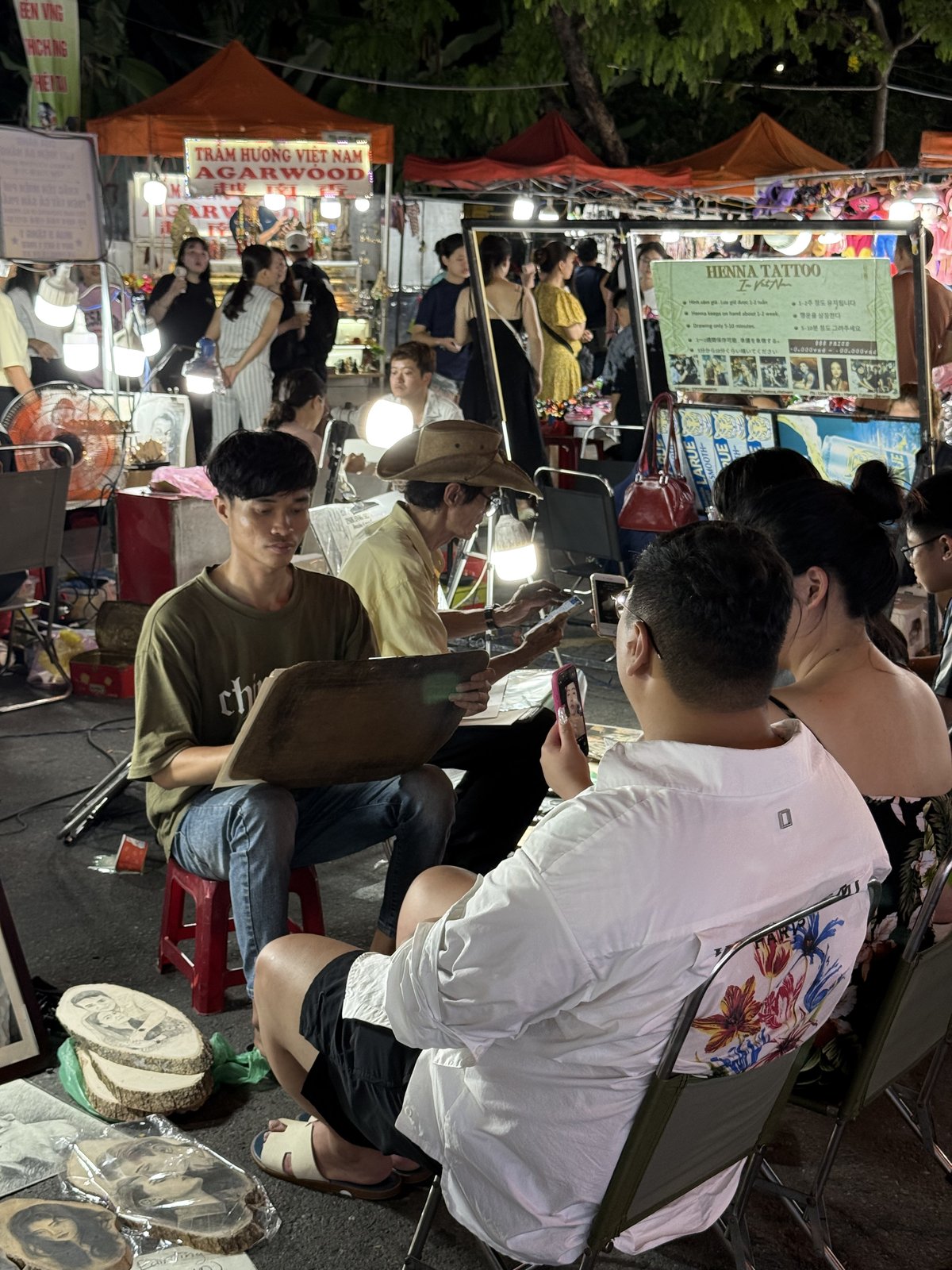
What can I say? If you are ever in a major Vietnamese city, from Hà Nội to Hội An and everywhere in between, you must seek out their night markets. Each is unique to its region. In Da Nang it's filled with seafood vendors and shoes, as well as the universal stalls of toys, souvenirs and countless other items to separate you from your money. They are busy, electric, and just a fun way to waste an evening. The Sơn Trà night market is the largest in Da Nang, and another Da Nang must. It sits in the shadow of the Dragon Bridge, on the east bank of the Hàn River.
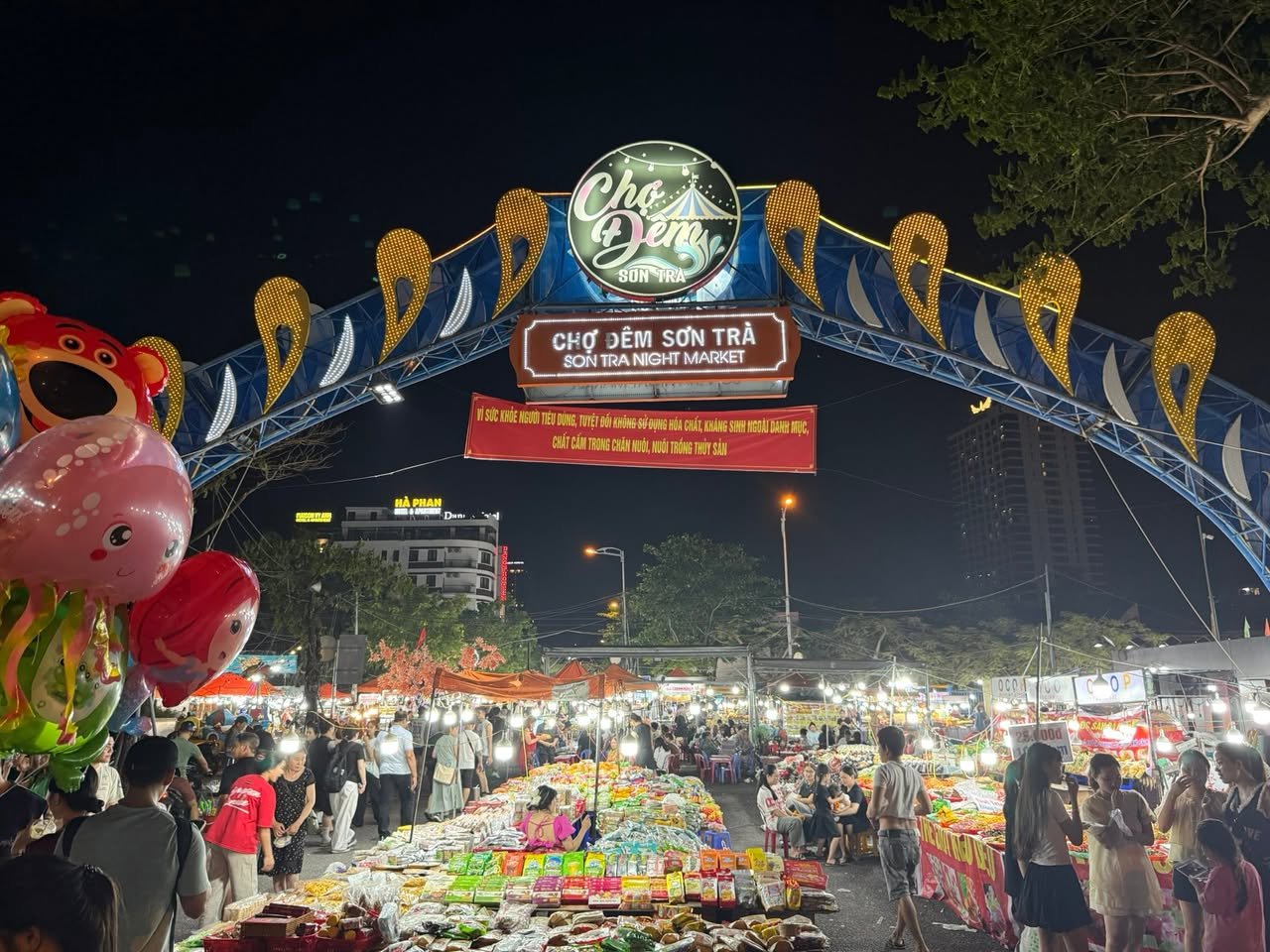
The market opened in September of 2018 on Mai Hắc Đế and Lý Nam Đế streets, at the eastern end of the bridge, with about 150 stalls open from six in the evening to midnight. On a typical night it draws five to eight thousand people. It was meant as a pilot, and when the first phase ran out in 2024 the city set about moving it, partly because of the traffic jams around the bridge on the weekend nights when the dragon breathes fire and water. In the spring of 2025 the city leased a new plot about 200 meters away, on the approach to the bridge, for a bigger market of around 250 stalls. Wherever it stands, it is still amazingly wonderful.
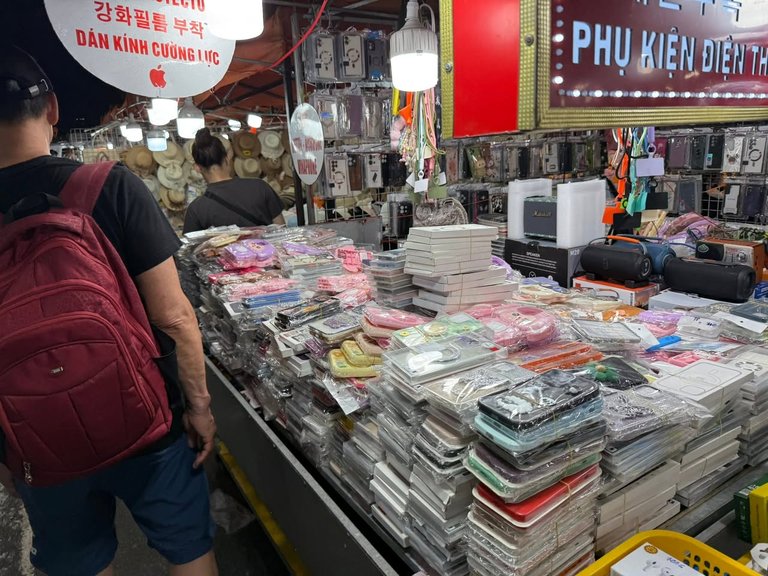
We used to bring the girls here to play carnival games, eat all kinds of sugary delights, and paint plaster figurines, a popular Vietnamese activity for children. This time it was just the two of us. Phone cases by the thousand. Woven sun hats and racks of shirts. Earrings on white cards, beaded bracelets by the tray, block sets, and an army of anime action figures.
We used to bring the girls here to play carnival games, eat all kinds of sugary delights, and paint plaster figurines, a popular Vietnamese activity for children.
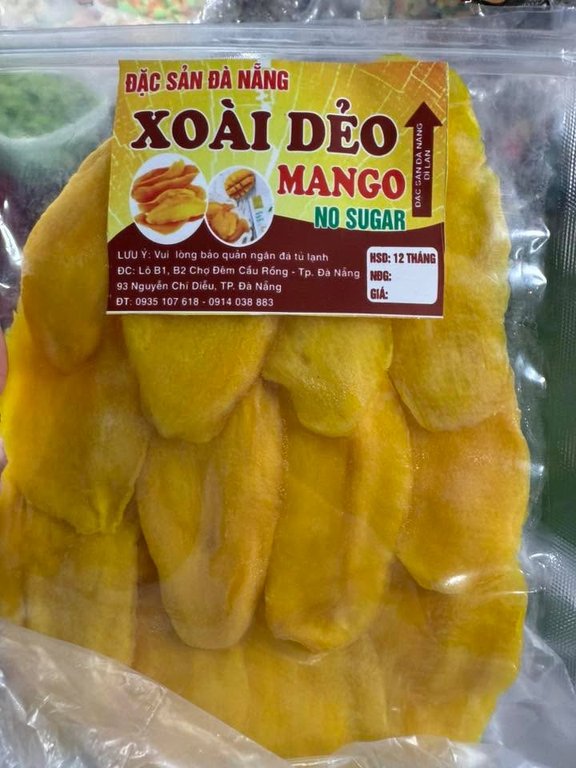
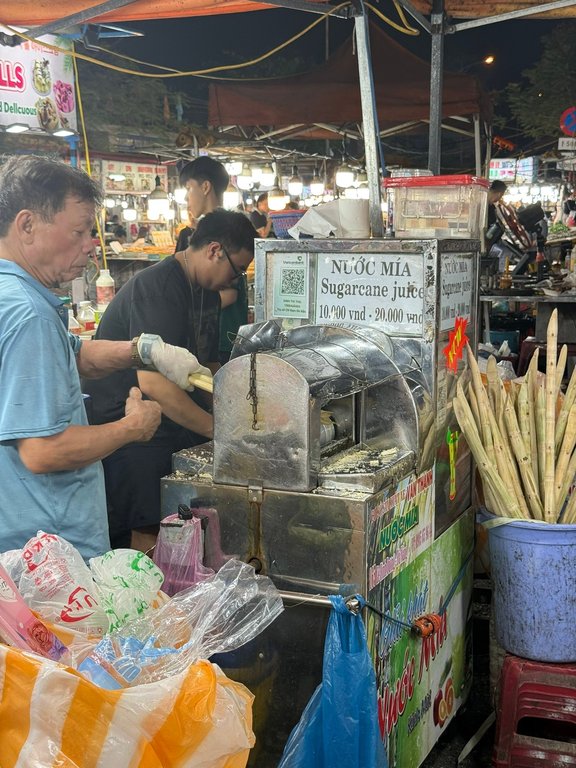
I broke my phone case, so I picked up a new one for $4 US. I snagged a bag of dried mango, xoài dẻo, a personal favorite, for less than $2. And a cup of nước mía, fresh sugar cane juice, for less than $1. Vendors feed peeled cane through a pair of heavy steel rollers, usually twice, often with a couple of kumquats folded into the second pass, and pour it over ice. You drink it straight away, before it loses its cloudy, milky richness.
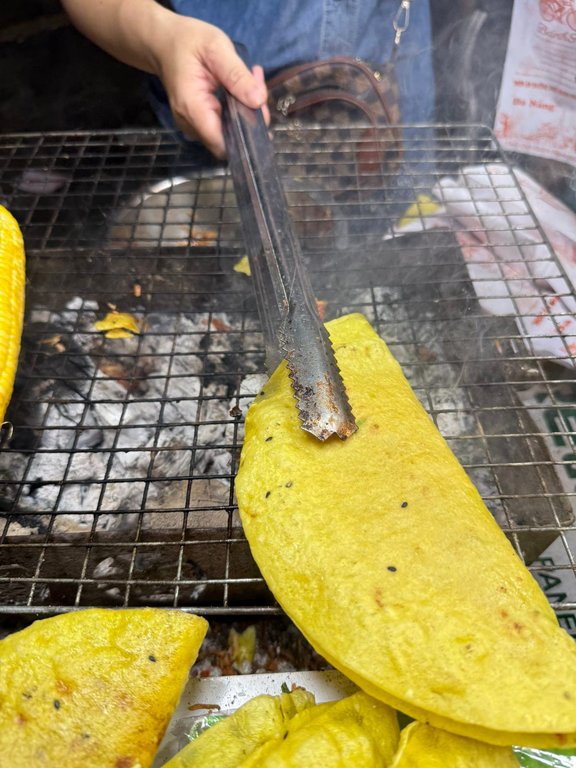
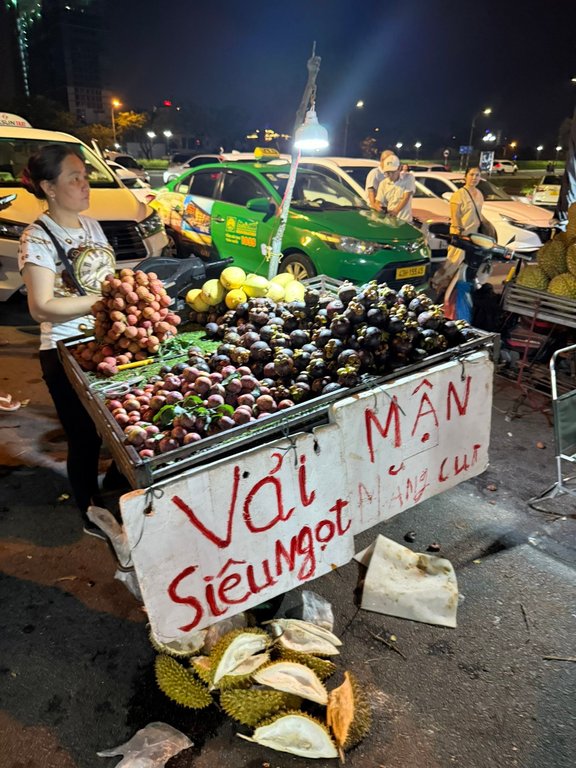
Then there was the food. Grilled corn and sweet potatoes. Glazed skewers over charcoal. Small clay braziers holding pans of shellfish. A stall under a sign for bánh tráng nướng Đà Lạt, the grilled rice paper of the highlands, its vendor flipping yellow rounds with a pair of tongs. And at the edge of it all, a fruit cart with a hand-lettered sign promising vải siêu ngọt, super sweet lychees, alongside mận and mangosteens, with a pile of spent durian husks underneath.
Diem negotiated her way to some new shoes, and a bag of souvenirs for some of the kids back home. It was after ten when we climbed in the cab to make our way home. Another beautiful day in Vietnam.
The Flight to Doha
At 5:30 the next morning I passed along the news. American Airlines had suspended its flights to Doha. Doha had been our first leg to Vietnam, and it was our way home. Israel had begun striking Iran on June 13, the U.S. Embassy in Qatar had told Americans to keep a low profile, and American pulled its Doha service, the last flight leaving Doha early on the 19th. Within days the cancellations were extended into July. On June 21 the United States struck three Iranian nuclear sites, and on Monday the 23rd, Iran fired missiles at the American air base at Al Udeid, outside Doha. Qatar closed its airspace that day and reopened it within hours.
The American strikes and the closed airspace were still days away that morning. I wrote that I hoped this wasn't the beginning of a larger shutdown. I had everything I needed to keep working, so I didn't have any worries about an extended stay. But we did have to get back through Doha to get home in ten days. We will see.
In the meantime, there was more of Vietnam to eat.
Previously: Chợ Cồn and the Dragon
More from Da Nang: Da Nang - City of Bridges, Dining Out - Da Nang and The Night Markets and Returning To Hội An