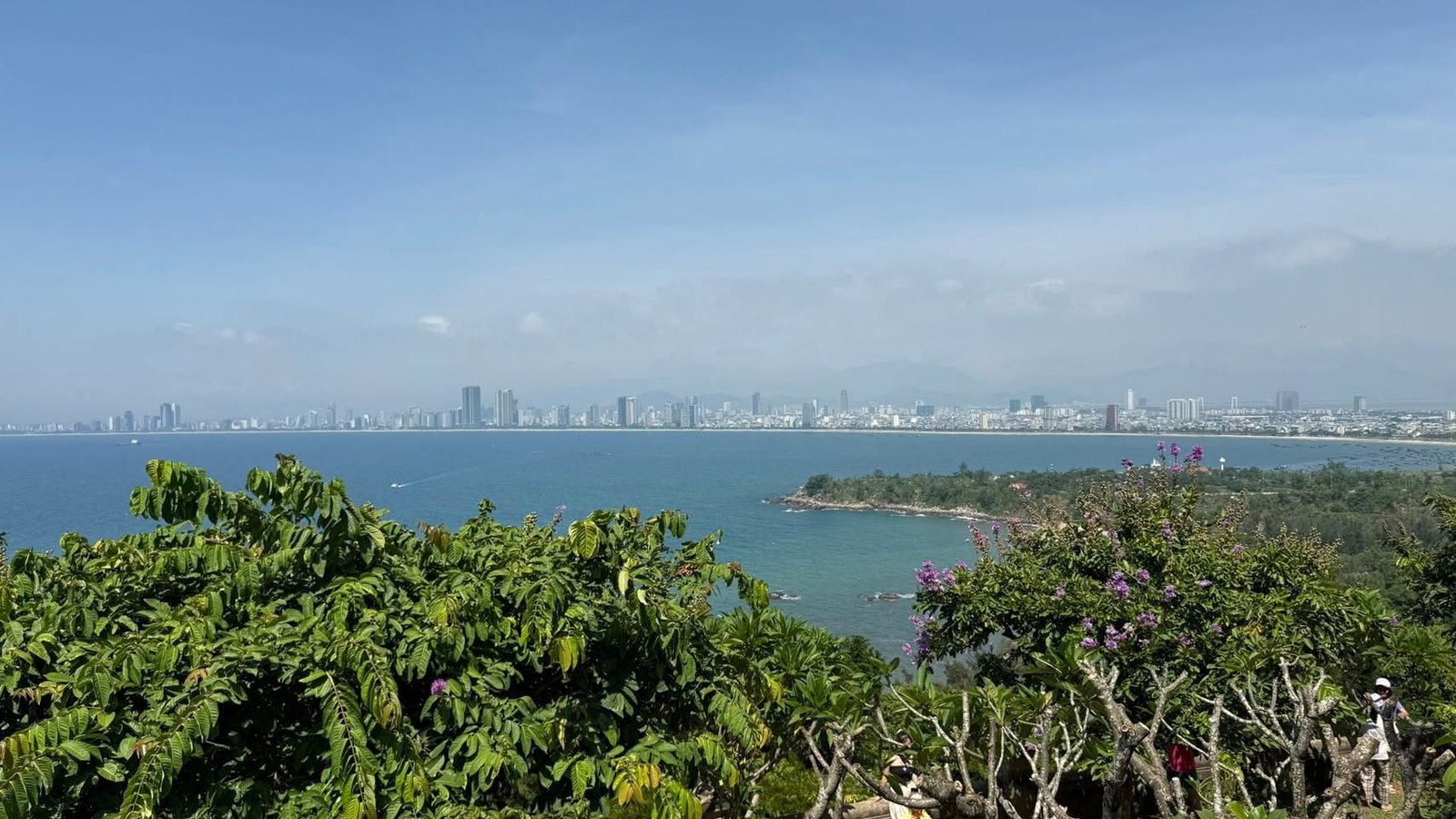
You cannot spend a day in Da Nang without seeing her. Stand anywhere on Mỹ Khê beach and look north, and there she is, a white figure on the green flank of Sơn Trà mountain, looking out over the sea. When we lived here I could see the mountain from our patio. I wrote back then that the Lady Buddha and her pagoda sit ever watchful on the mountainside. She is believed to cast a protective spell over the beaches and the city. Four years and an ocean later, she had not moved an inch.
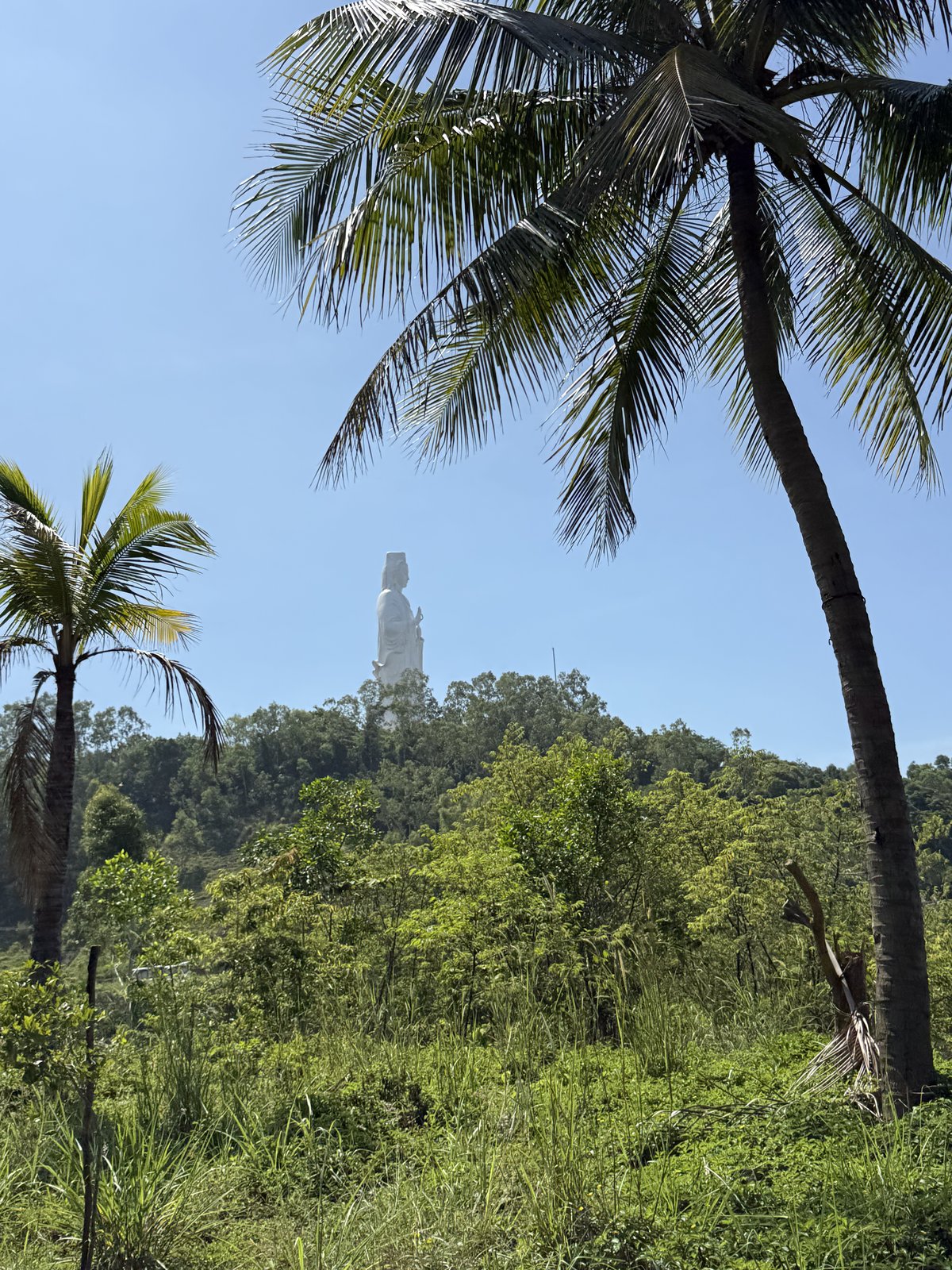
On Saturday morning we went to pay her a visit. By half past nine we were on the peninsula, palms on the slopes above us and the city spread out across the water behind us.
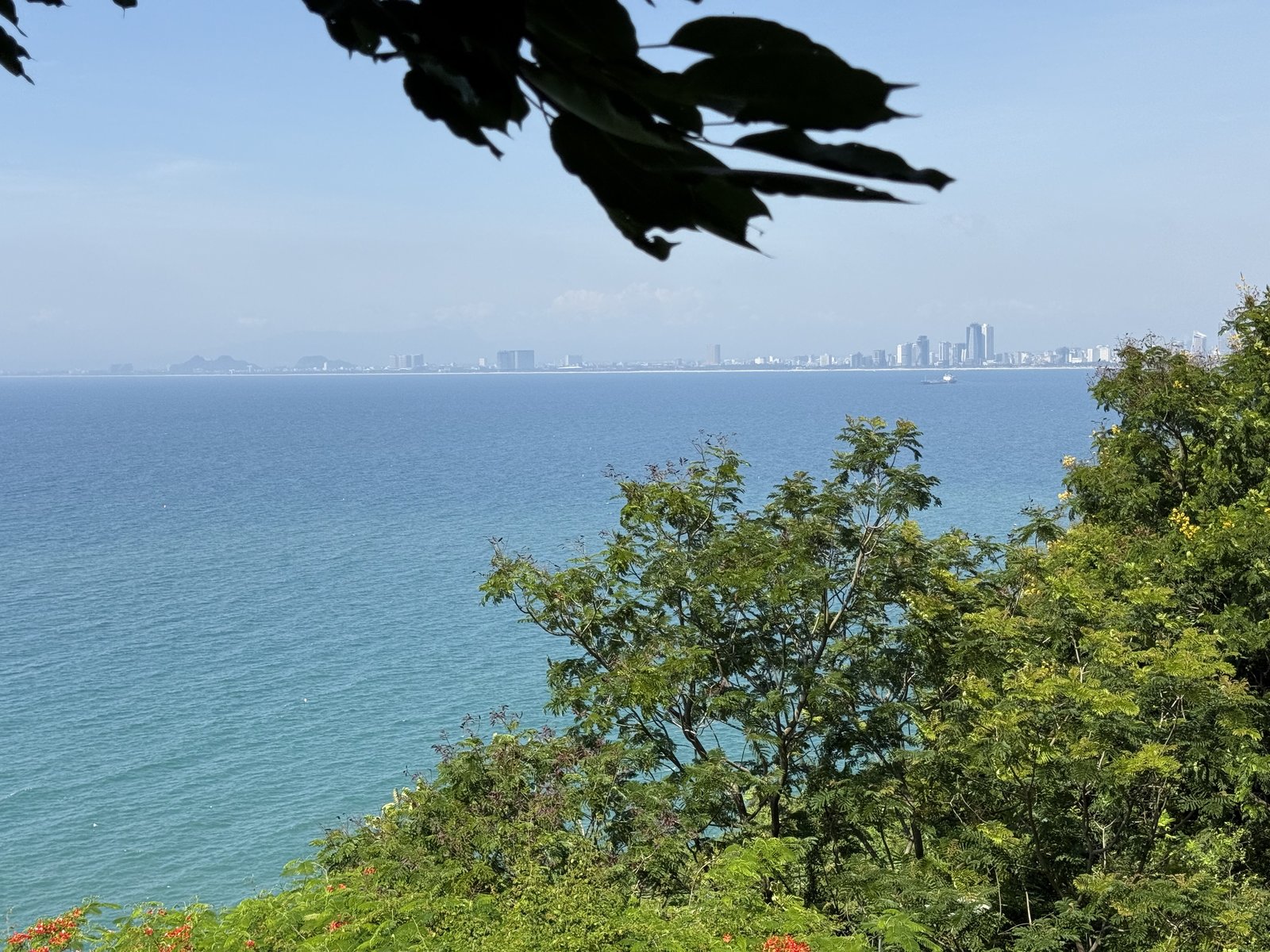
The Mountain the Marines Named
A little background is in order. Sơn Trà is the mountain at the northern tip of the peninsula that separates Da Nang Bay from the long run of beaches to the south. The Americans called it Monkey Mountain. The Marines charged with securing it gave it the name, thanks to the troops of macaques that live there. The mountain is also home to Vietnam's largest population of red-shanked doucs, a critically endangered monkey. The name stuck. Foreigners and English speakers still call it Monkey Mountain today.
It was valuable real estate during the war. In 1962 the U.S. Navy directed the construction of an air control radar station on the north peak, overlooking the harbor, the bay and the Da Nang airfield. Within a few years the mountain held a signals intelligence base listening in on North Vietnamese radio traffic, a Control and Reporting Center with the call sign Panama, the operations center for the Marines' Hawk anti-aircraft missiles, barracks and shops, and a road built up and around the mountain to serve them. From late 1966, the controllers on Monkey Mountain directed all air operations over North Vietnam. The Marines withdrew their units in 1969 and 1971, and the Air Force closed its listening post in March of 1971. When we lived here, you could still see the old radar and communication arrays on the peak from our patio. The road is still in use.
After the war, the new government made most of the mountain a protected forest in 1977, and in 1992 it became a nature reserve. These days it is forest and monkeys on top, a deep water port at its foot on the bay side, resorts and a pagoda along its shores, and fishing villages at its base.
Linh Ứng Bãi Bụt
The pagoda sits on the southern face of the mountain, about ten kilometers northeast of the city center, on some twenty hectares with the mountain at its back and the sea at its feet. I wrote about it at length in 2021, in The Long Road to Buôn Ma Thuột. It is not a quick read. I will spare you most of it here, along with my long detour through the three doors of liberation, the eight pillars of joy, and Bill Bryson's atoms.
As far as historical significance goes, the monastery offers little more than a few legends of its founding, but it is symbolic for a much more important reason. When I wrote about it in 2021, I called it the youngest temple site in Da Nang. Ground was broken in 2004, and it opened on July 30, 2010, or by the Vietnamese calendar the 19th day of the sixth month in the year of the Tiger. Communist regimes are not known to coexist very well with religion, and in the early years of the unified nation that was true here too. Linh Ứng was a sign of how much that had changed.
The stories surrounding the site are much older than the buildings. It is said that during the reign of Emperor Minh Mạng, who ruled from 1820 to 1841, local fishermen found a statue of the Buddha on the sand directly below the modern site. Whether it washed in from the sea or rose out of the beach depends on who is telling it. When I wrote about it in 2021, I asked and did a great deal of research, and never could find the statue itself. What I do know is that the fishermen took it as a good omen. They built a small temple to it, the sea was kind to them, and the beach came to be called Bãi Bụt. Bụt is the old folk word for the Buddha, and the name is usually explained as the Buddha's realm here among men. And then, some two hundred years later, the new monastery opened above the old shrine.
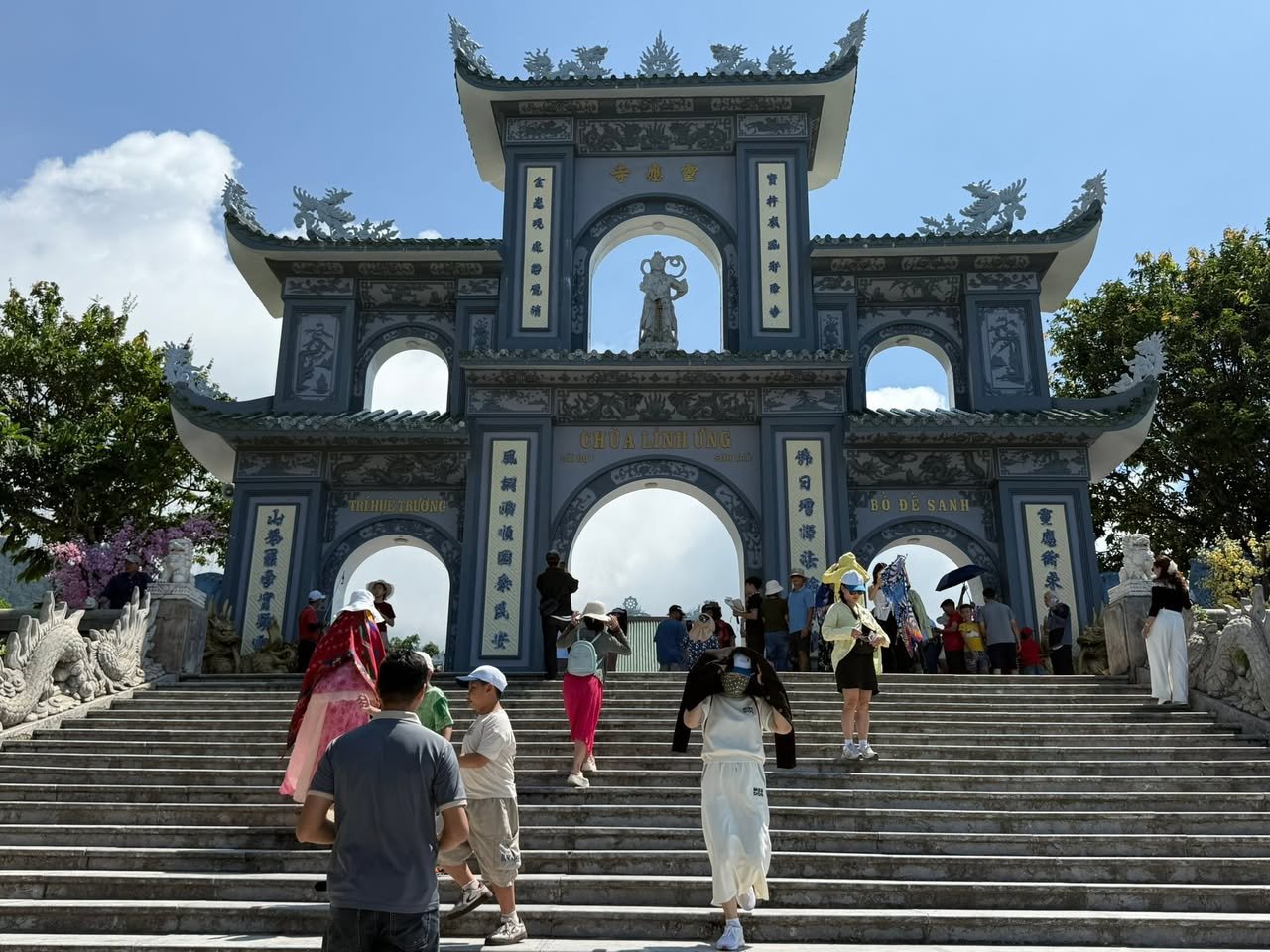
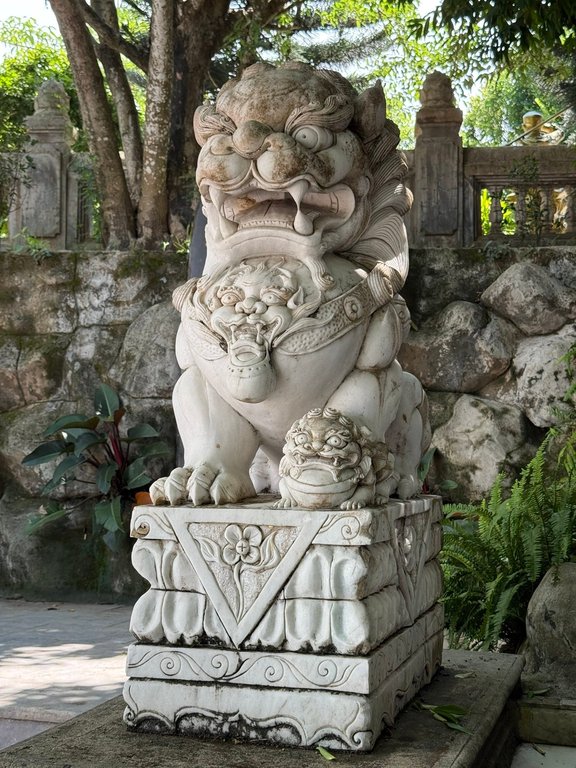
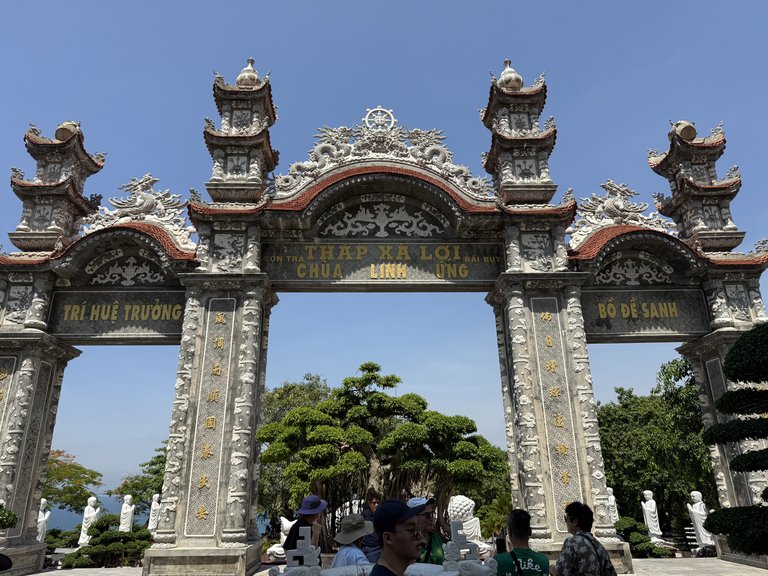
You arrive at the bottom of a long, wide flight of stone steps leading up to the main gate. Buddhist gates always have three entrances, the three doors of liberation, and Linh Ứng is no exception. The stairs are lined with dragons, as they are at most holy sites in Vietnam, long stone bodies running down the balustrades with their heads reared up at the bottom. White marble guardian lions stand watch. It is an incredibly impressive thing to walk through. And no matter what you believe, when you step into the grounds through the gates, you can feel the presence of the Divine.
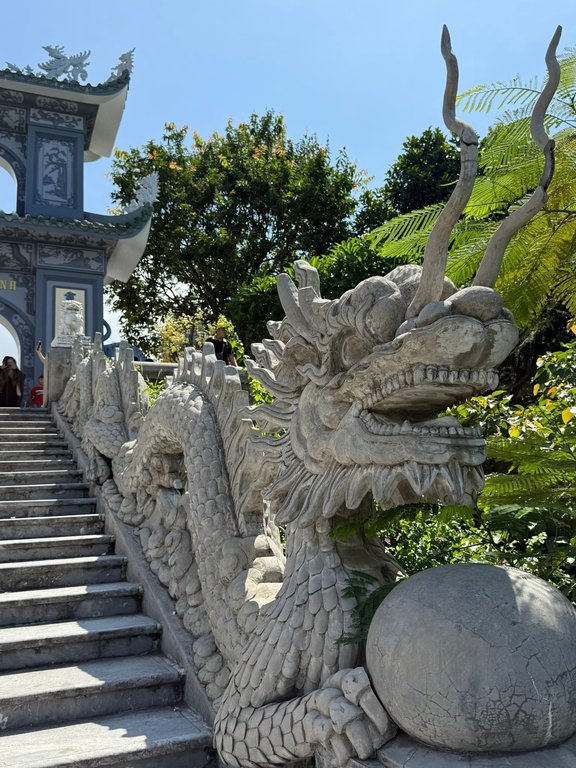
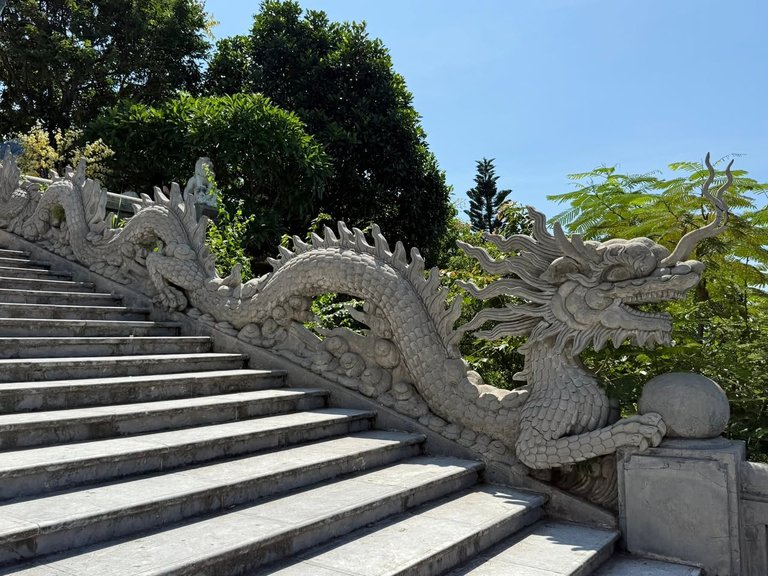
When I wrote about it in 2021, tourism had ground to a halt, and the upper levels of the tower were closed for lack of visitors. This time there were people on the steps, in the gardens, and under umbrellas against the sun.
The Lady
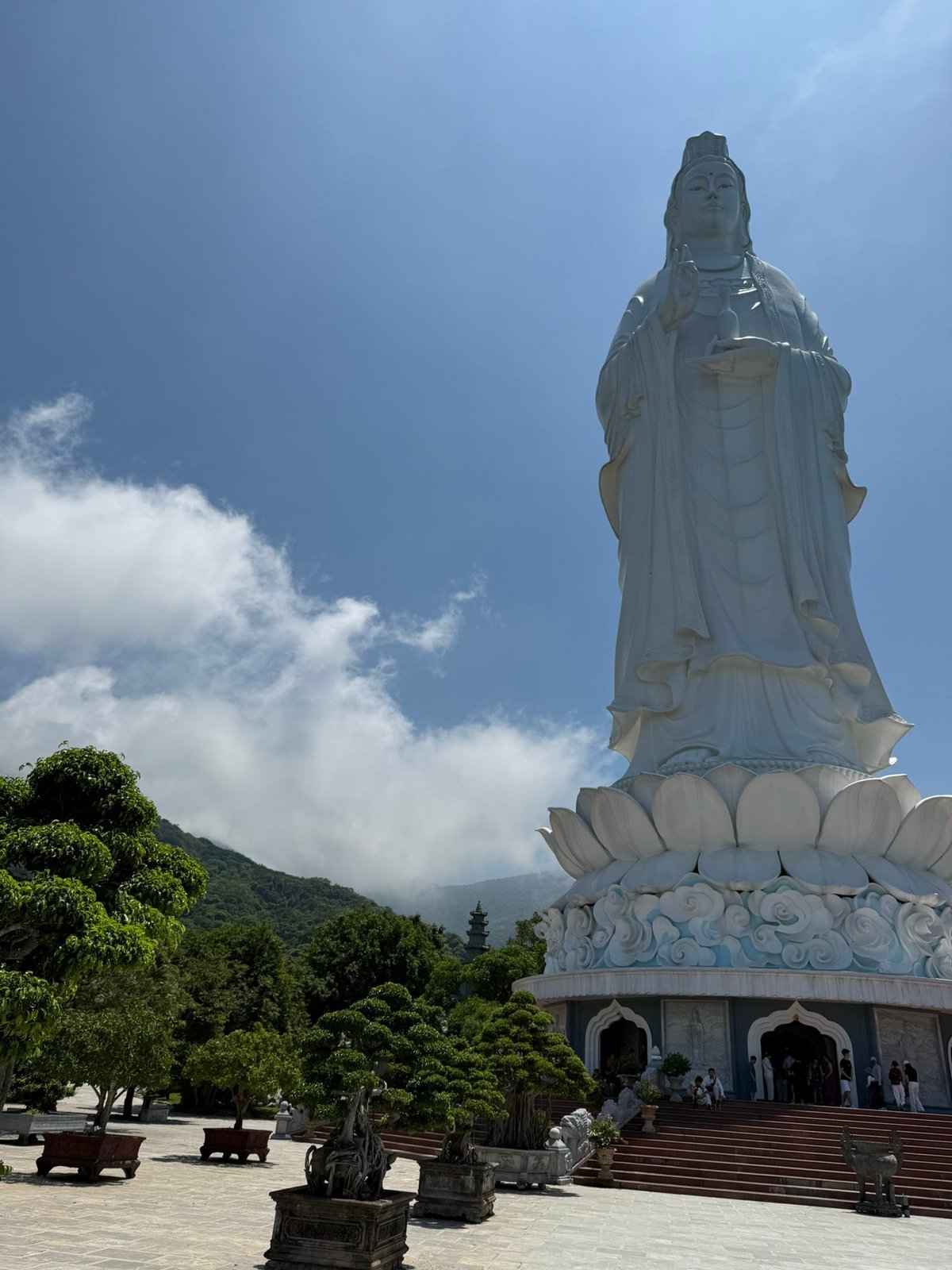
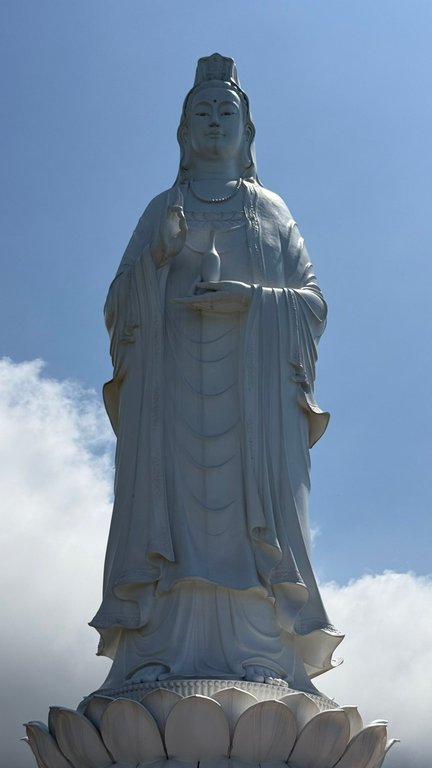
Through the gate, to the left, majestic and overshadowing everything around her, stands the Lady Buddha. Her proper name is Quán Thế Âm, Avalokiteśvara, the bodhisattva of compassion, who here takes the form of a woman. She is 67 meters tall, about the height of a thirty-story building, and she stands on a lotus 35 meters across. When she was finished in 2010, she was the tallest statue in Vietnam. She is hollow, with altars on floor after floor inside.
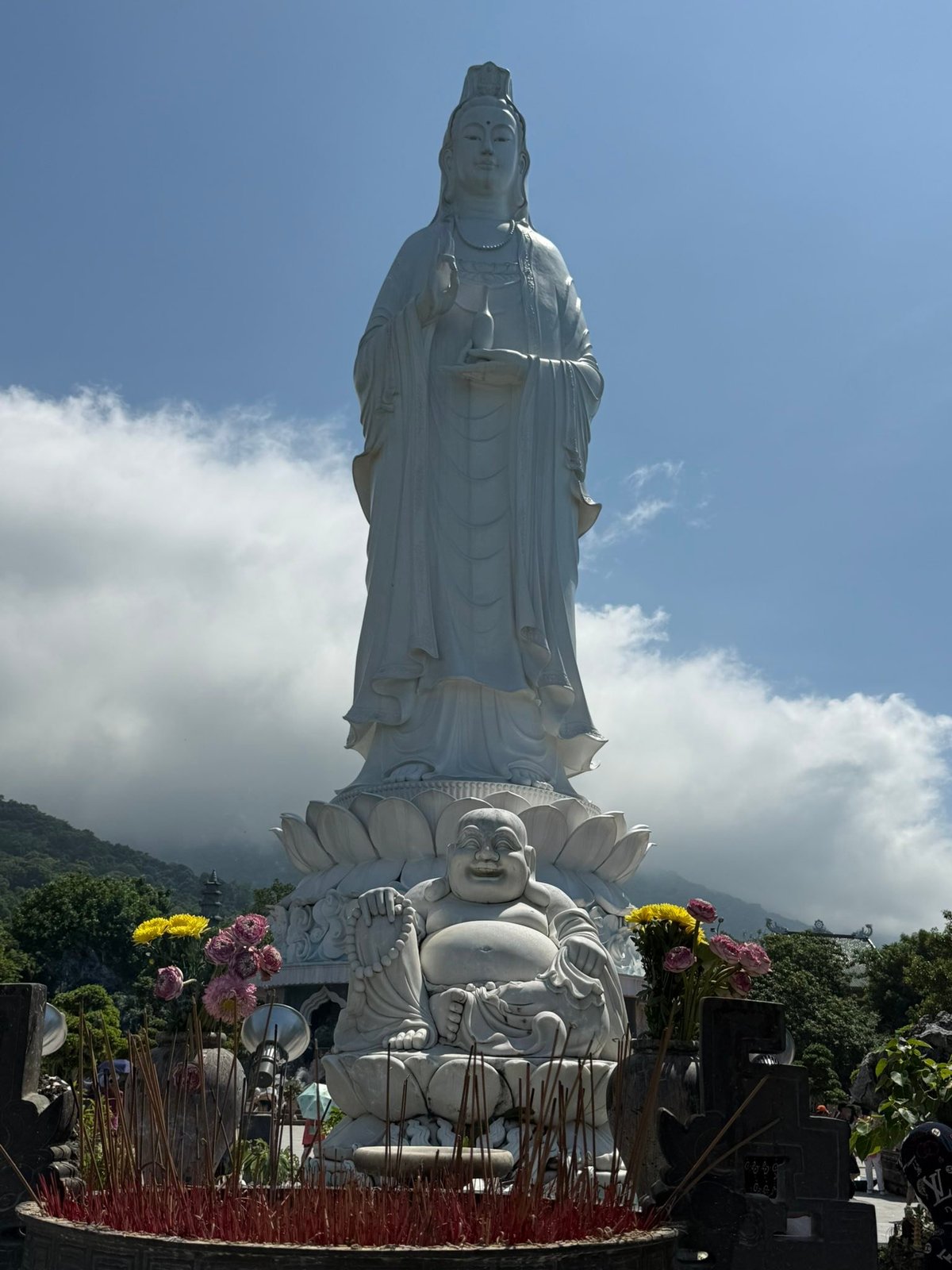
She gazes out over the fishermen's beach, one hand held in meditative prayer and, in the other, a jar of holy water, believed to be sprinkled over the fishing boats at night to bring them good fortune. A laughing Budai sits at her feet among the flowers. Behind her, that morning, the clouds were piling up against the mountain, which is what the clouds do here, when the warm sea air runs into the cool heights of Sơn Trà.
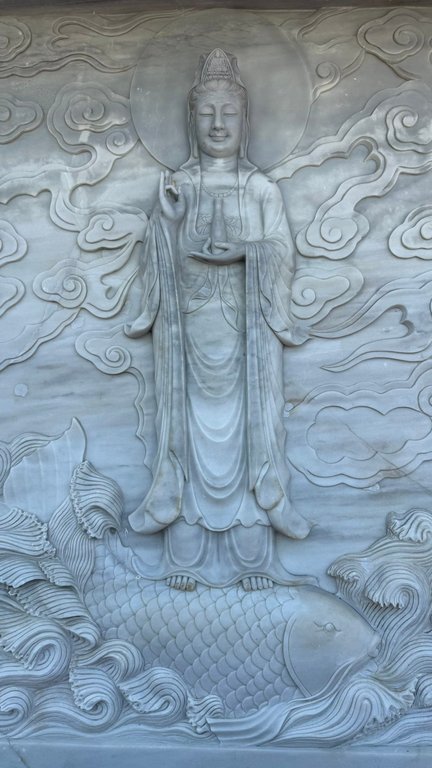
Nearby, a carved stone panel shows her again, standing on a great fish above the waves. From the grounds you can look straight down the coast to the city.
The Arhats and the Main Hall
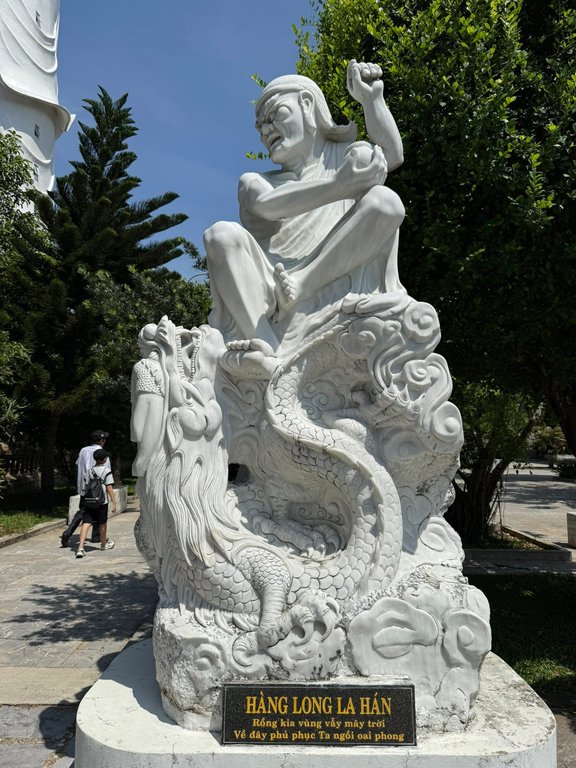
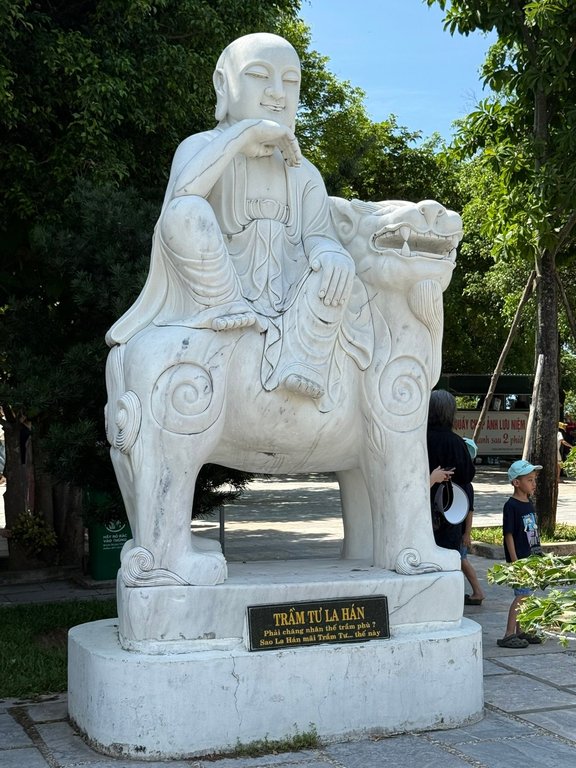
The approach to the main hall is lined with white stone statues. These are the Eighteen Arhats, the La Hán, the disciples charged with guarding the Buddhist faith on earth until the coming of Maitreya, the Buddha of the future. Each is carved from white stone, each in his own pose, and many carry a plaque. Hàng Long La Hán sits on a coiled dragon, the arhat who tamed it. Trầm Tư La Hán rides a beast, the arhat lost in thought.
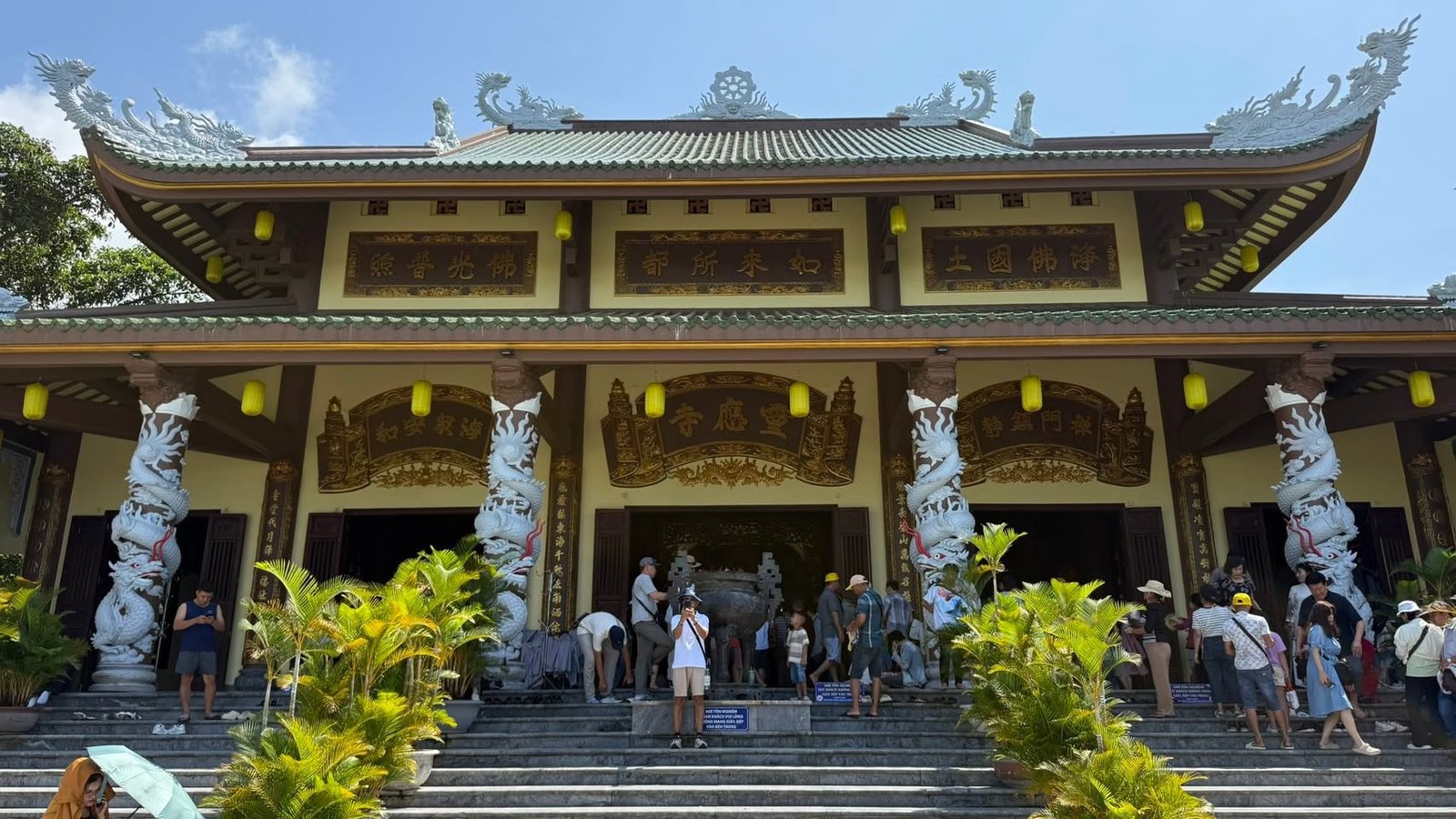
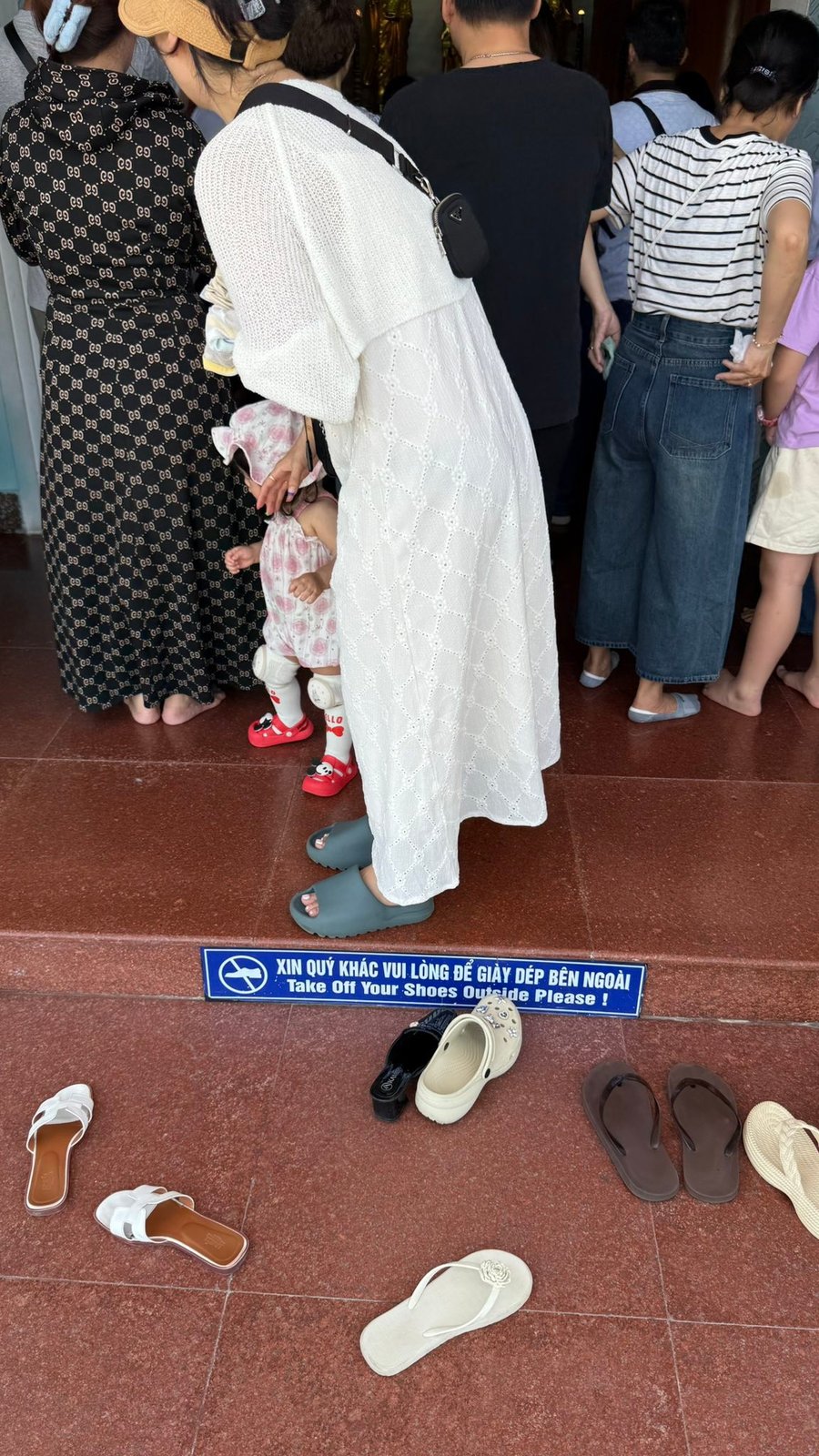
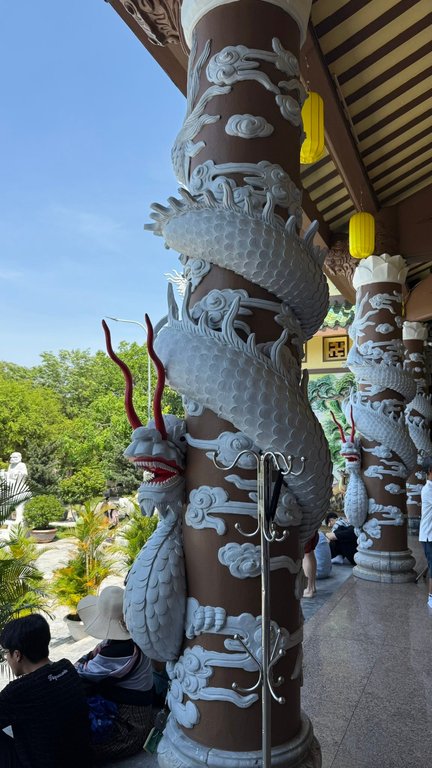
The main hall is an absolutely magnificent piece of both building and art. Tiered roofs, columns wrapped in carved dragons, and a garden of sculpted bonsai out front, all of it backed by the green wall of the mountain. A sign on the floor at the door asks, in Vietnamese and English, that you leave your shoes outside, and the shoes were left on the red tile.
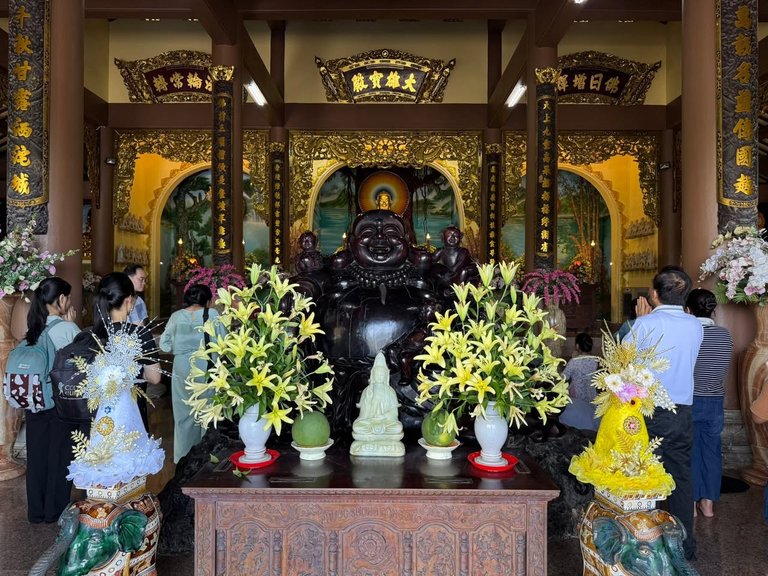
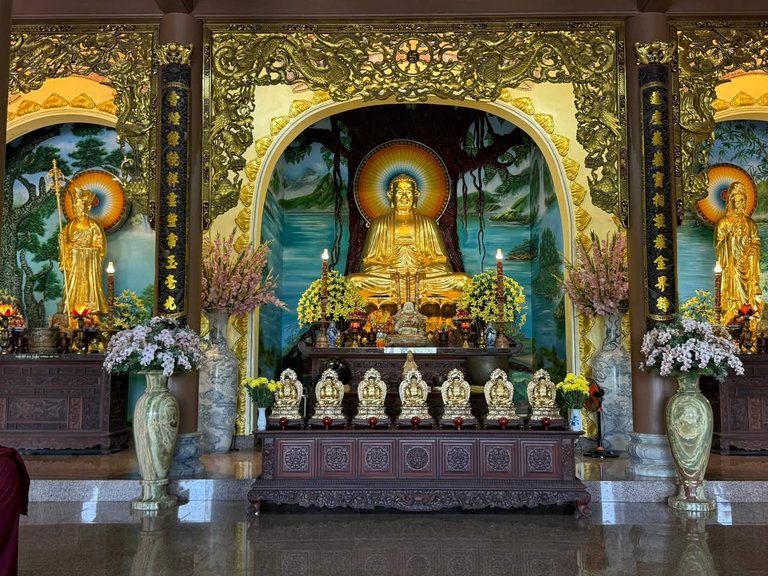
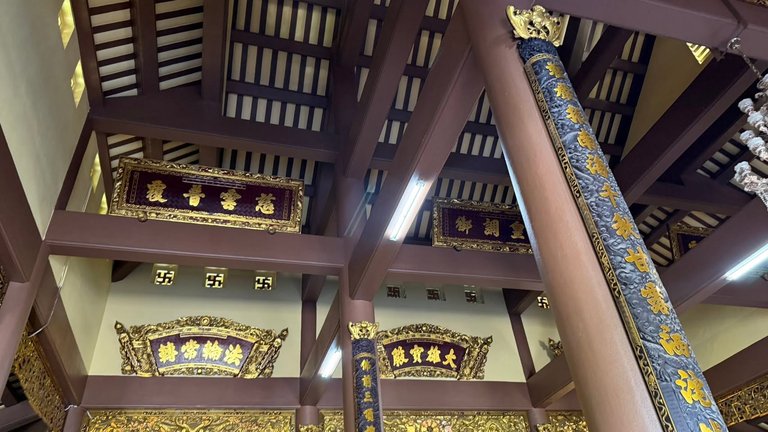
Inside, dark wooden beams cross the ceiling, with gold plaques hung between them. A dark seated figure sits on the first altar, surrounded by flowers. Beyond it, under an arch of gold, the Buddha sits in a glowing niche. As I wrote in 2021, at the center is Shakyamuni, the historical Buddha, with Avalokiteśvara on one side and Kṣitigarbha, the bodhisattva who protects the beings of the six realms, on the other. It was one of the first Buddhist monasteries I ever visited. After countless others since, its craftsmanship still draws me in. As the world moves to automate everything, here in Vietnam it is still done the old fashioned way. With two hands and simple tools.
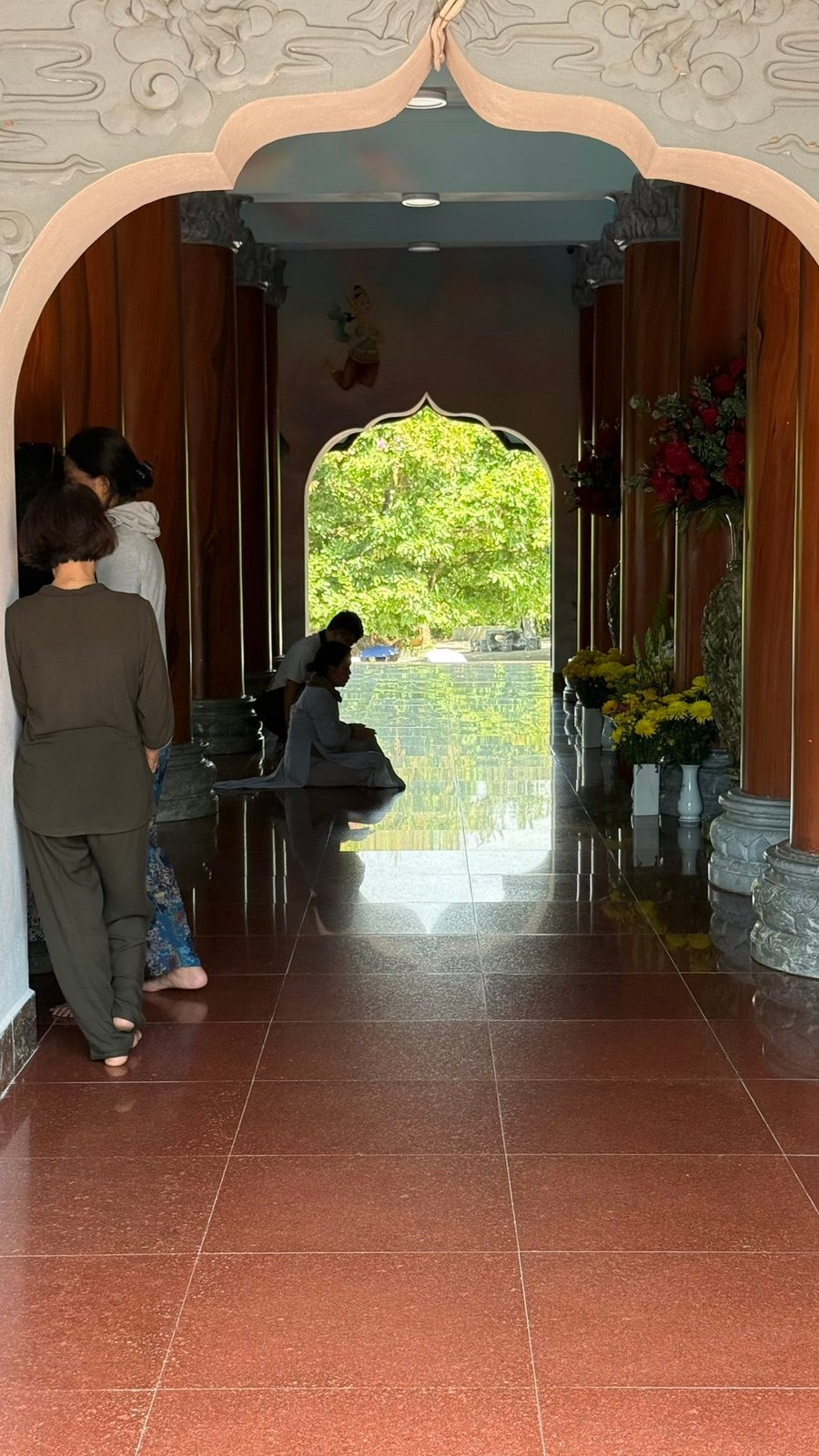
Covered walkways run off the back of the hall, arched doorways one after another down a long, reflective floor.
The Gardens and the Tower
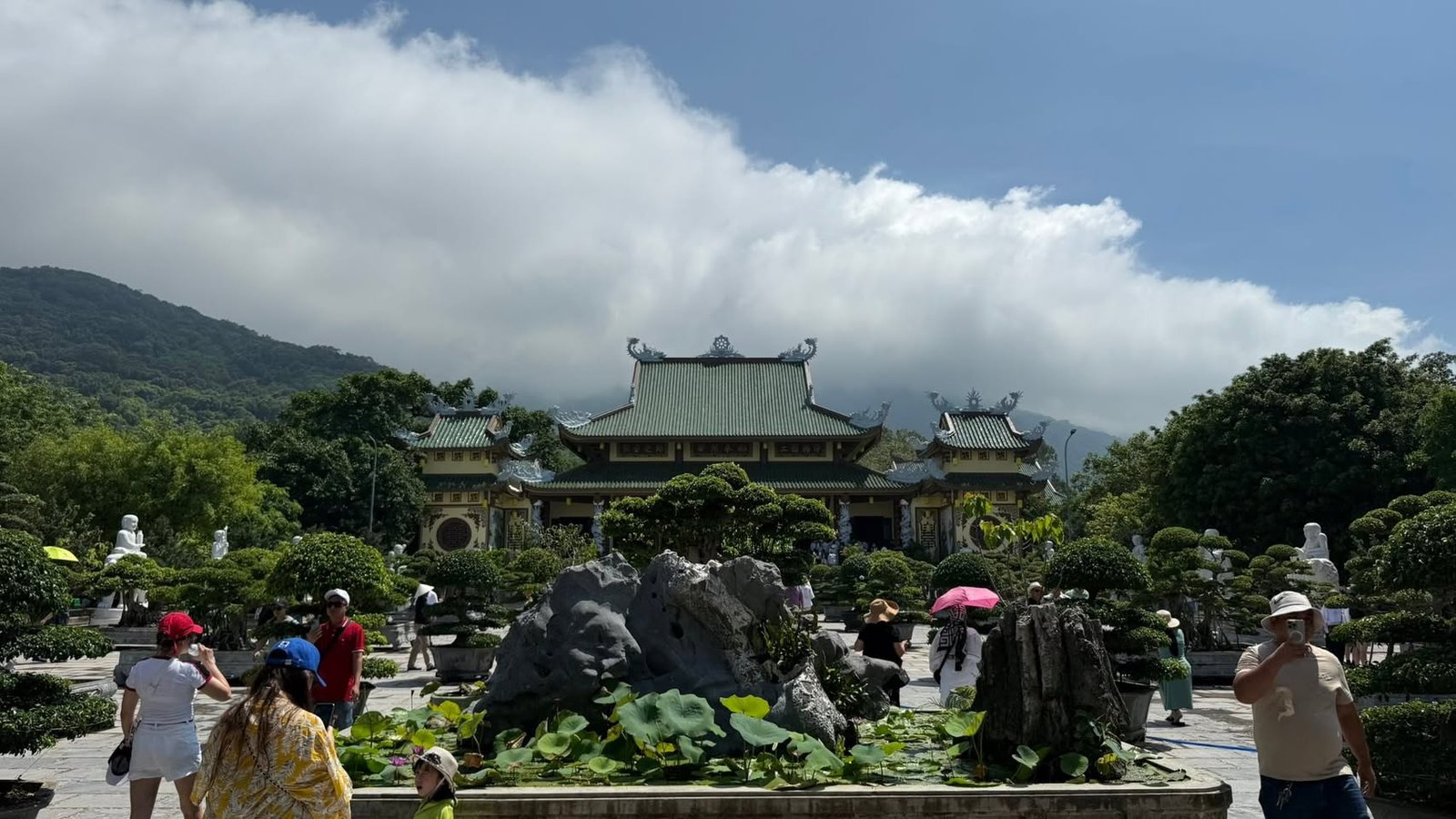
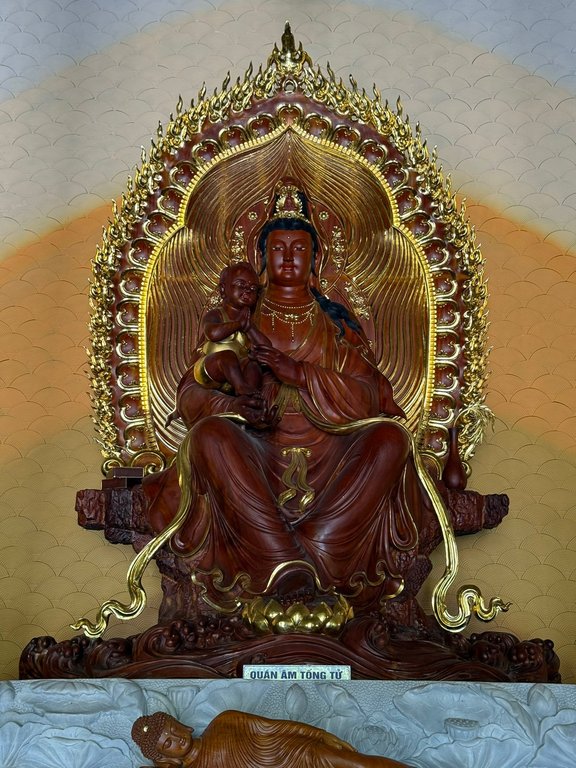
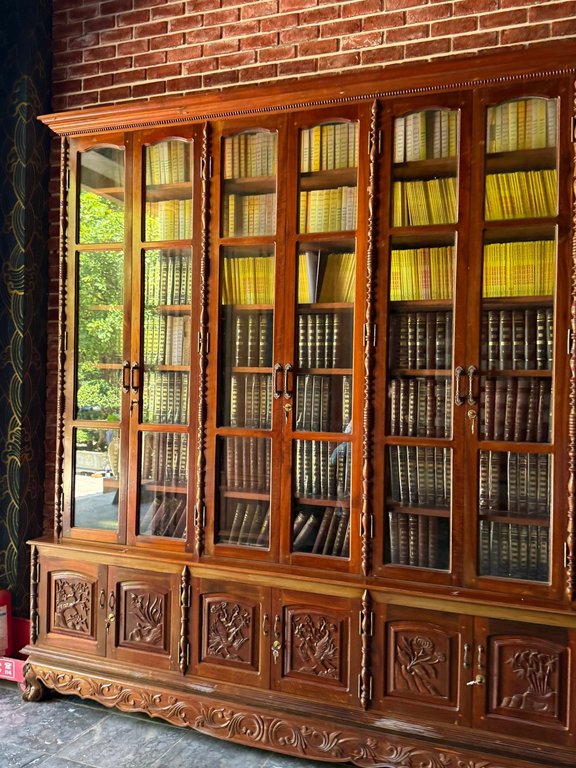
Every bit of the grounds is tended. Sculpted bonsai sit in rows on the rock gardens, pruned and coaxed into shape over years. Elsewhere there are more surprises. A dark carved wooden figure holding a child, framed in a golden halo. Carved wooden bookcases behind glass, filled with books. I wrote in 2021 that one thing I've noticed in my time wandering Buddhist temples in Vietnam is that they are, if nothing else, well educated.
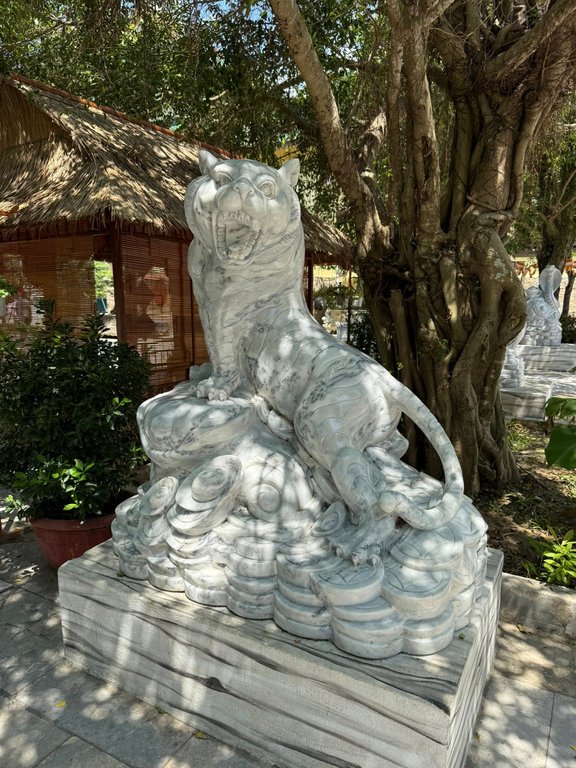
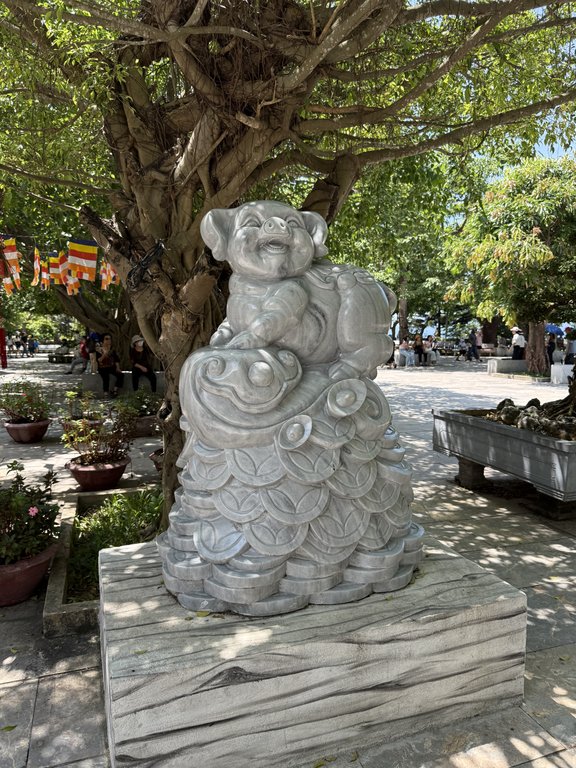
Scattered through the gardens are white marble animals on carved pedestals. A tiger, crouched under a tree. A monkey, appropriately enough for this mountain, on a pedestal of carved stone.
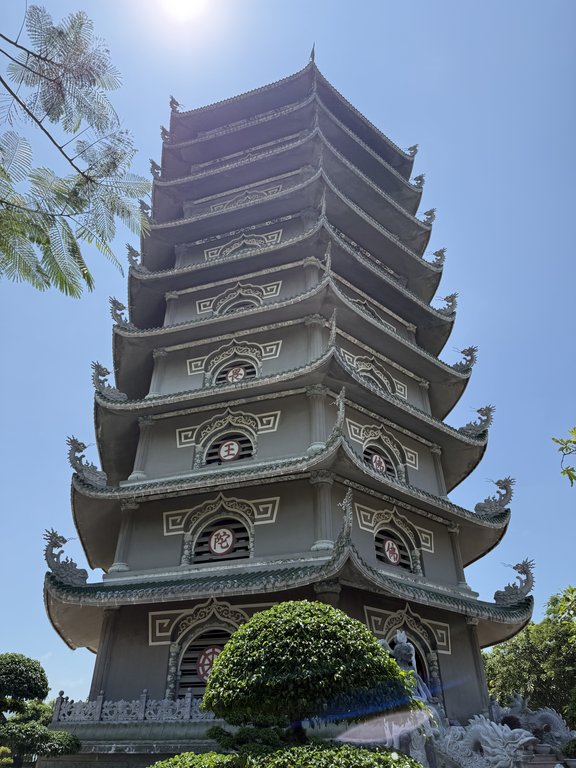
Then there is the tower. In 2021 I called the Xá Lợi Tower the second most noticeable feature of the site, after the Lady herself. It is a tall, gray, many-tiered stupa, each level ringed with eaves and carved windows, and, as I wrote then, there is another gateway of three doors before it.
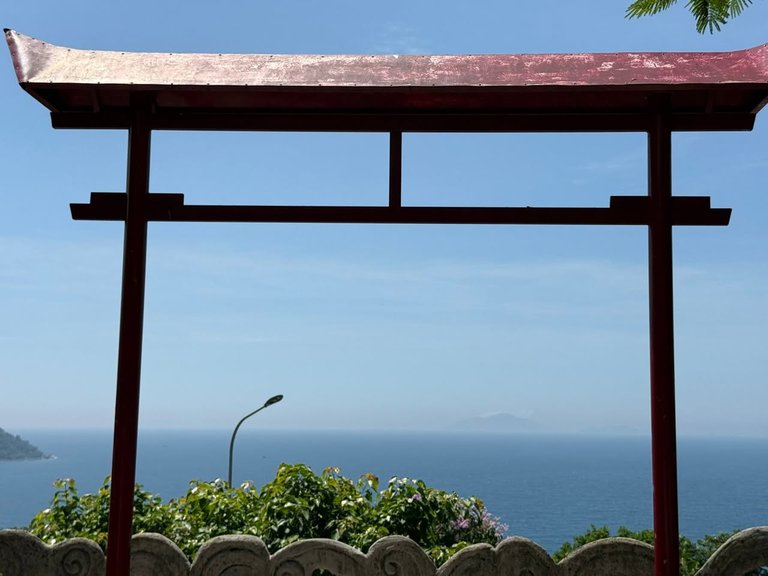
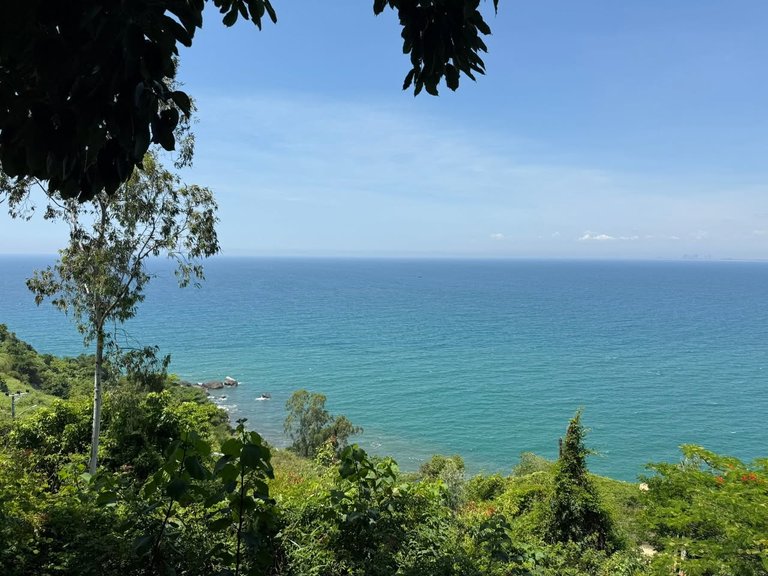
On the seaward side of the grounds, a plain red gate frames the sea and a faint island on the horizon. Through the gate the water ran out blue to the horizon, and through the leaves on the slope below it was a deep turquoise.
Coffee Up the Mountain
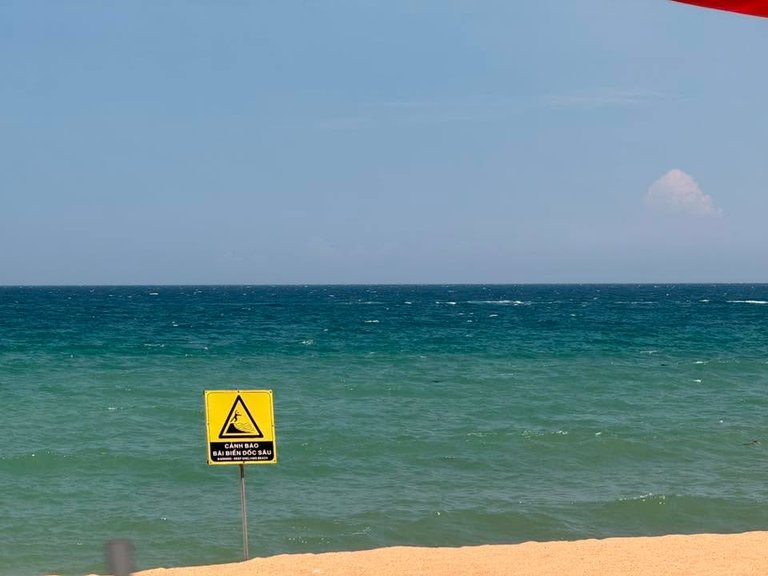
After we explored the pagoda, we found a coffee shop further up Sơn Trà mountain, out of view of most of Da Nang. It was secluded, and the water was an incredible mix of turquoise and deep blue. We took a metal table on the sand under a red umbrella. A beer with a wedge of lime in its neck, two drinks in plastic cups, and a couple of plates of snacks.
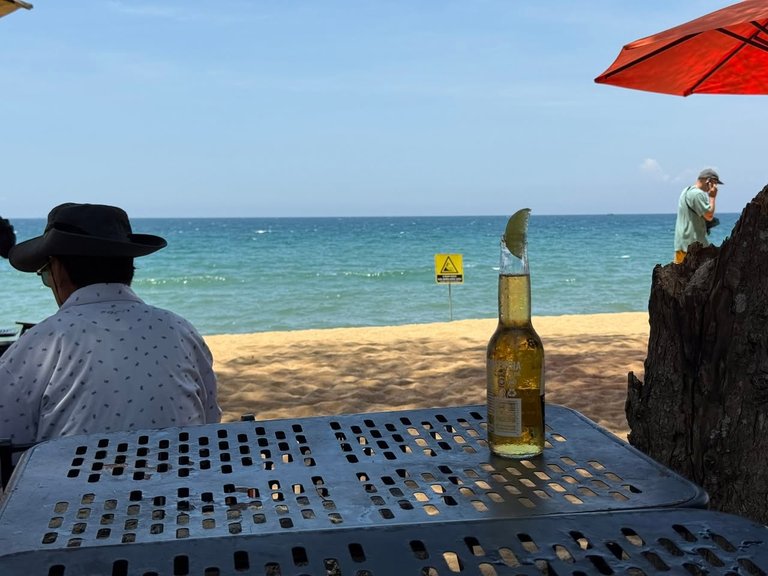
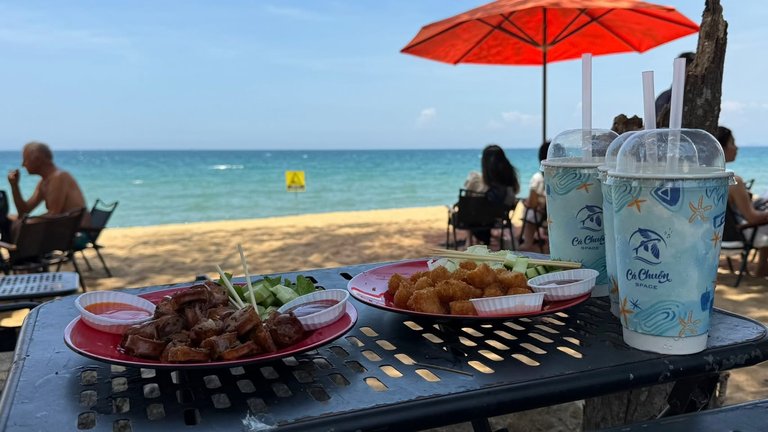
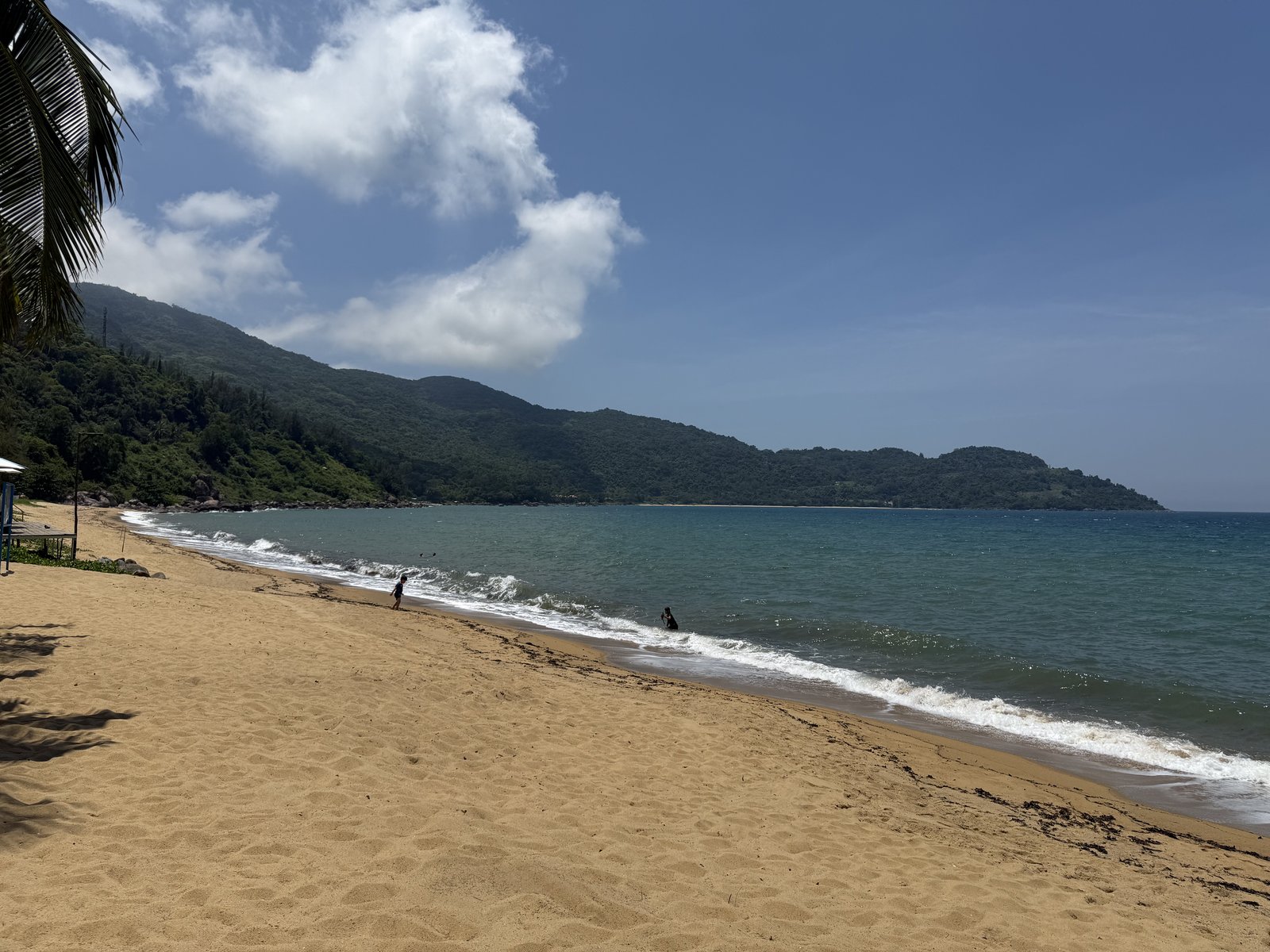
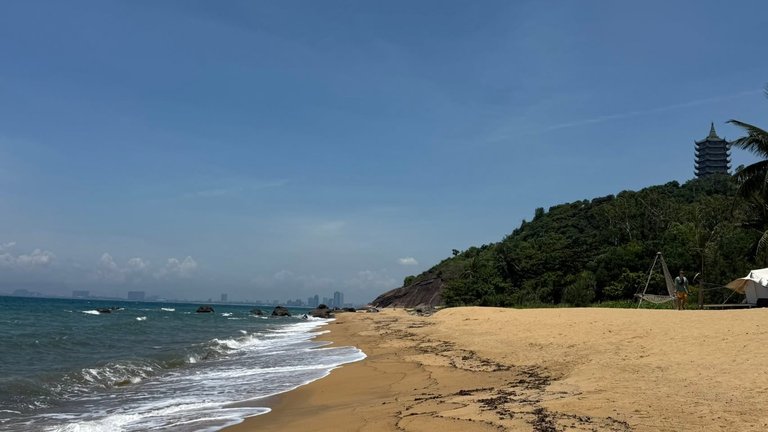
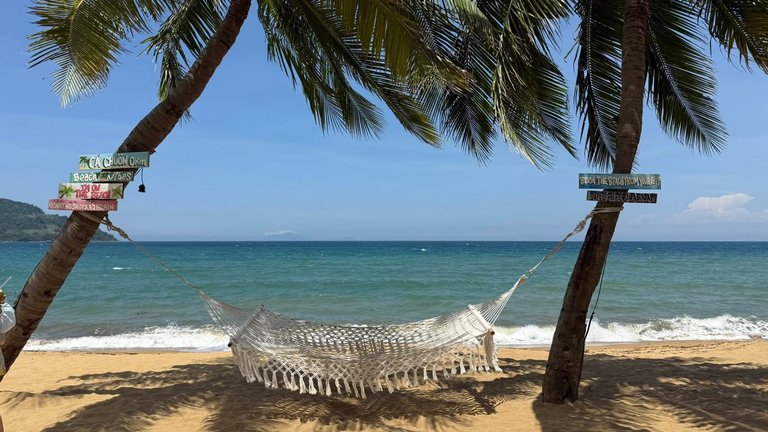
The beach curved away under the forested ridges of the mountain, and back the other way you could pick out a tiered tower up on the headland. There was a hammock strung between two palms, and a yellow warning sign standing at the water's edge. It is a different world from the crowds on Mỹ Khê.
The Fishermen
I also grabbed a few shots of the fishing village at the base of the peninsula, where the small boats were moored by the dozen in the bay, with the high rises of the beach lined up behind them.
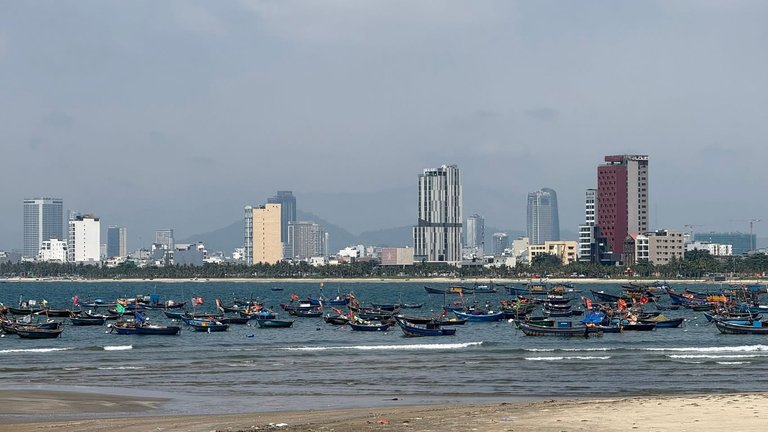
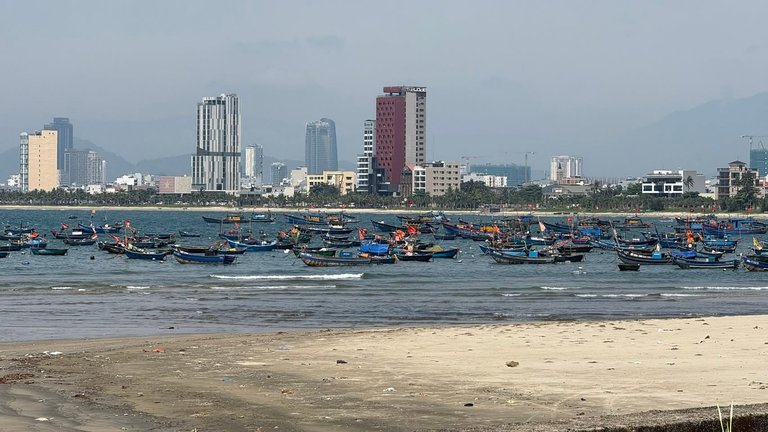
In 2021 I wrote that the fishermen who still work the waters where the beach meets the mountain are of the same lineage as the ones who found the Buddha on the sand. The fishing villages along this shore are old. One of them, Mân Thái, has been a fishing village since 1735, and its people still hold their ceremony to the Sea God every year, praying for peace and a good catch. But the city has grown up around them. The resorts and towers have pushed the old villages back from the water, and today only a small fraction of Mân Thái's people still fish. A few years ago the city drew up plans to keep a piece of it as a fishing preservation area, with homestays and eco tours.
Seafood with Vũ
That evening, we dropped the girls and Diem's sisters at a little riverside kids' market, a sort of mini carnival by the Hàn River. We were the only ones hungry, so we walked with Diem's brother, who I have always called Hai.
Wrong! Diem corrected me the day before. After many years of calling him Hai, I was informed it is Vũ. I digress.
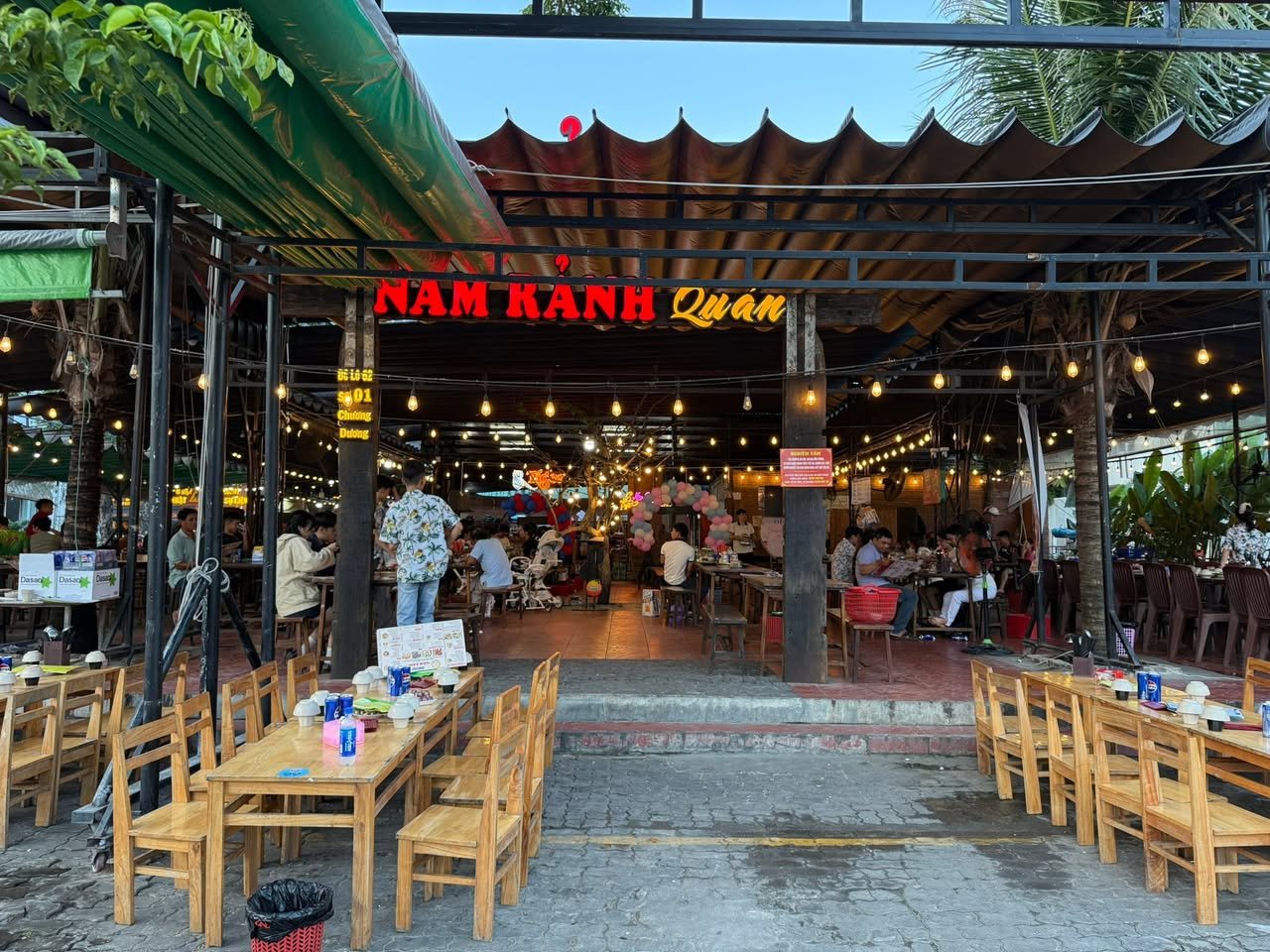
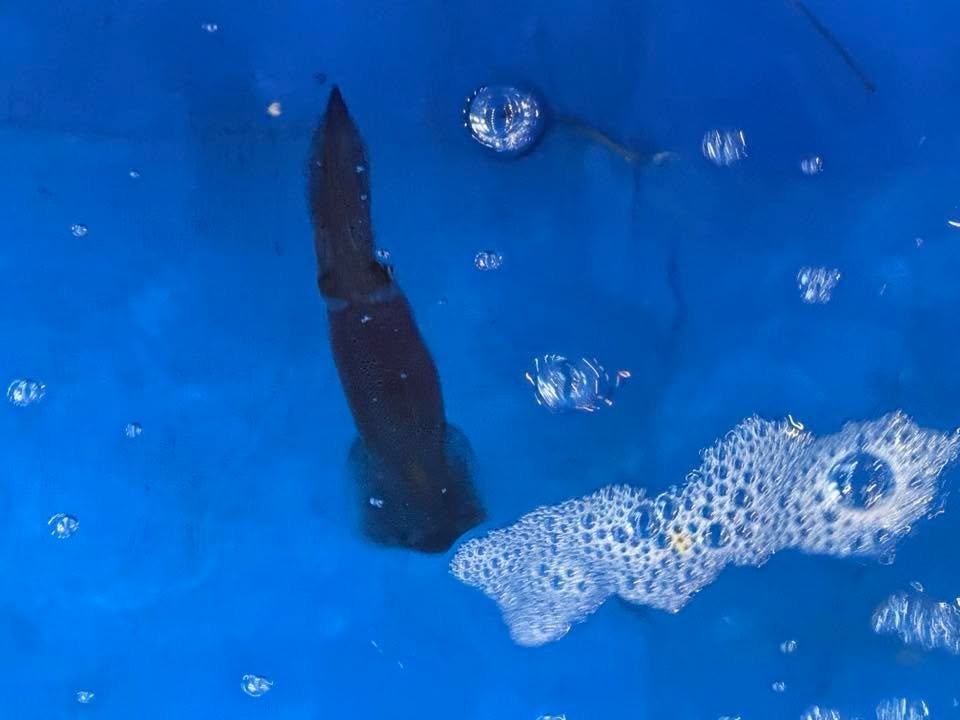
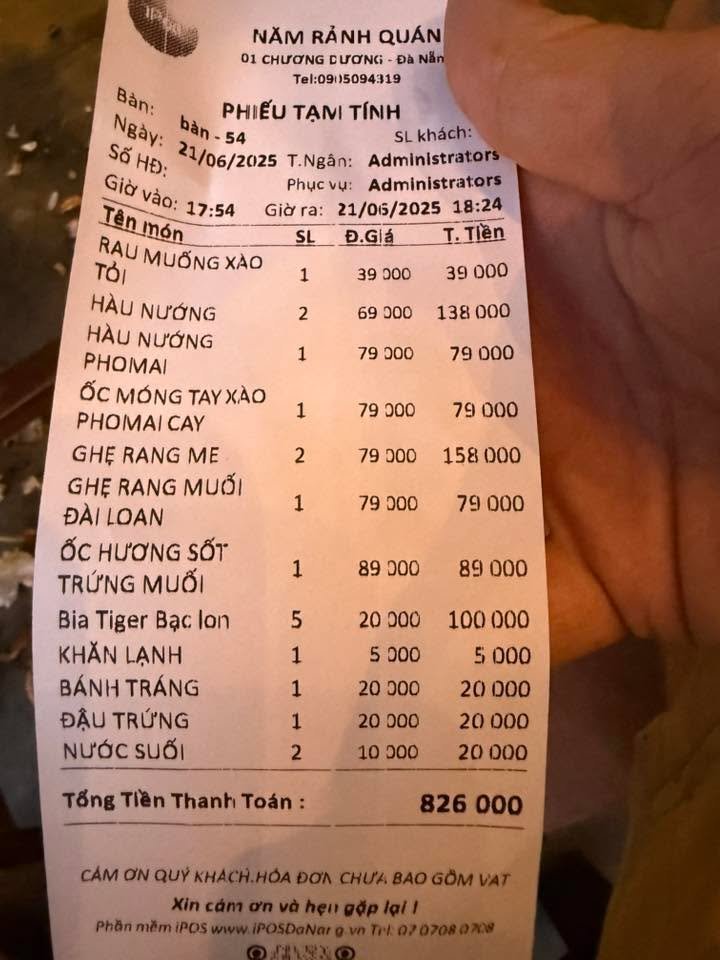
We found a table at a seafood restaurant overlooking the Trần Thị Lý Bridge, a big open-air place called Năm Rảnh Quán, with wooden tables under strings of lights. Like most seafood places in Da Nang, the dinner was still swimming when we arrived, squid circling in a blue tank and fish in a tub of aerated water. We sat down at 5:54 pm. I know this because the receipt says so.
And then we did some pretty obscene things to a lot of seafood.
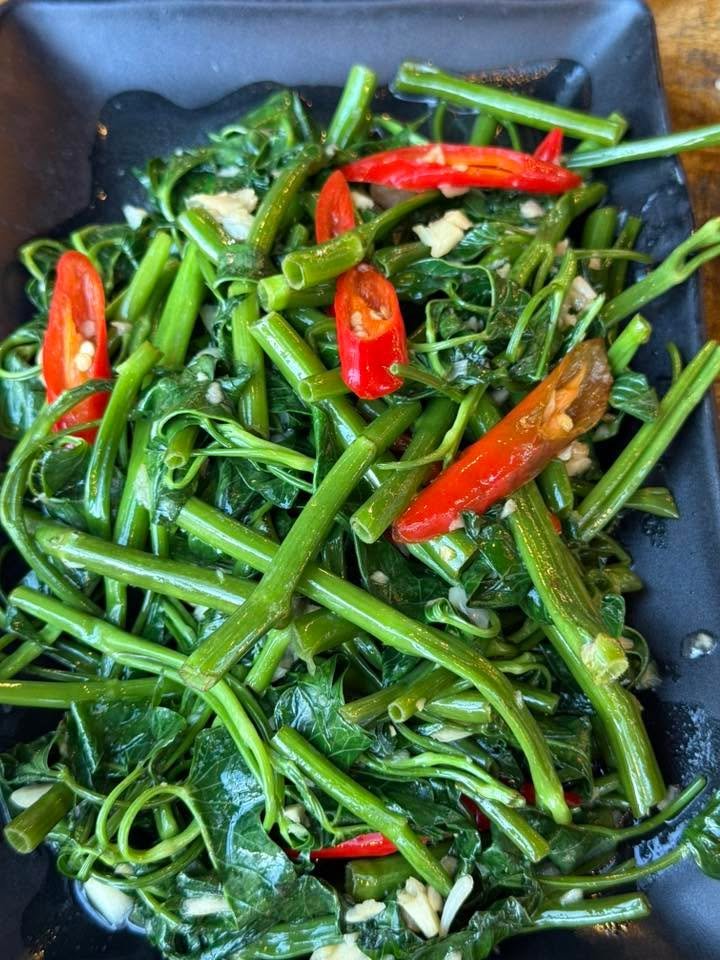
The greens came first: rau muống xào tỏi, water spinach, or morning glory, stir-fried with garlic, with a few red chilies thrown in. It is a fixture of the Vietnamese table, and in March TasteAtlas ranked it 24th on its list of the world's top 100 vegetable dishes.
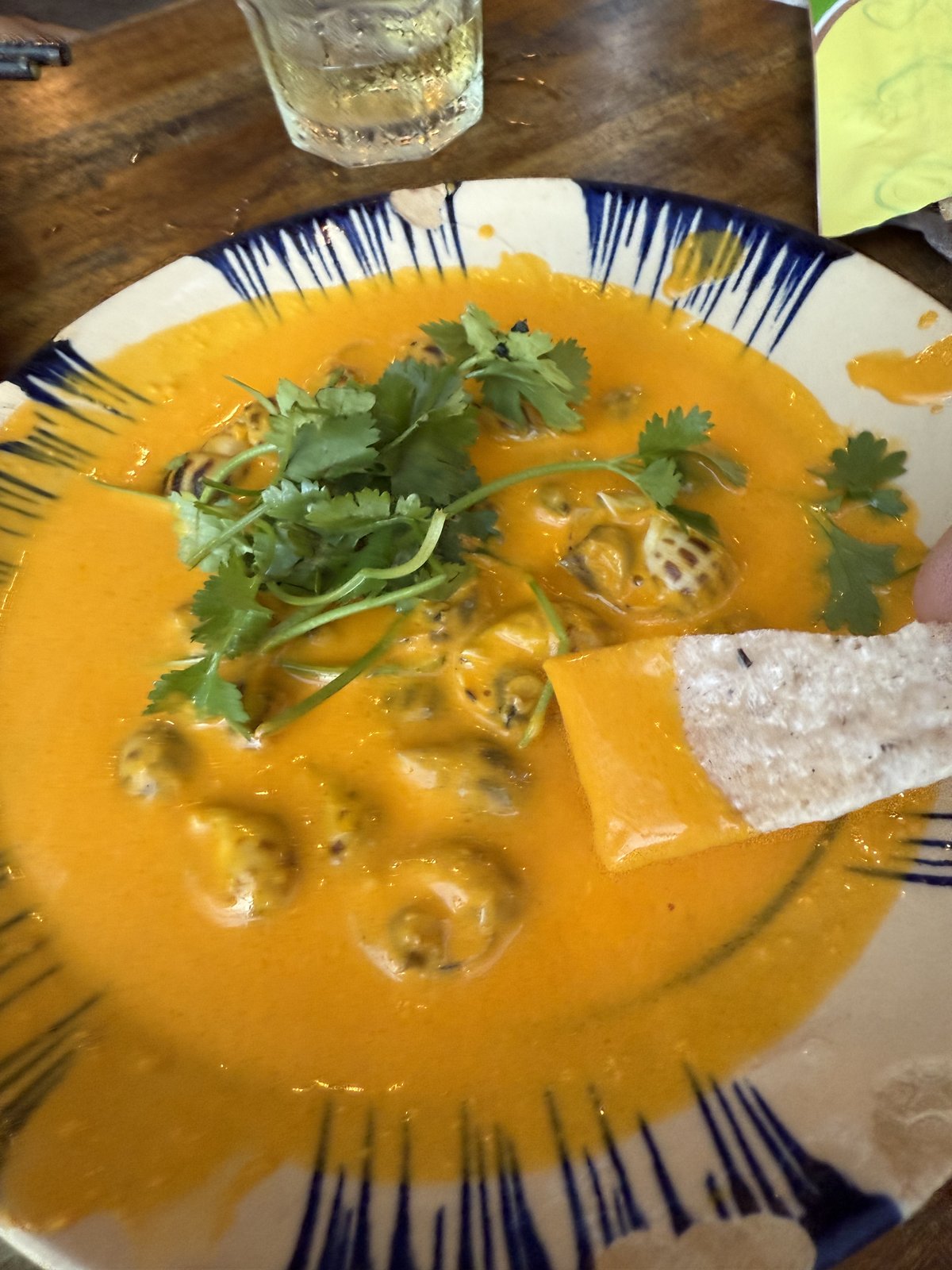
Then the sea snails and razor clams. The snails were ốc hương, the spotted babylon snail, one of the most prized snails on a Vietnamese menu, in a rich orange sauce topped with a tangle of cilantro, with a rice cracker on the rim of the bowl. The razor clams go by ốc móng tay, fingernail snails, though they are not snails at all, and they came in a cheese sauce.
In Da Nang, ốc is an evening ritual. On weekends especially, the sidewalk stalls fill with friends and families and couples around plates of snails stir-fried with lemongrass and chili. A local favorite is ốc hút, which you eat by sucking the snail straight out of the shell rather than picking it out with a toothpick. It is cheap, and it is social.
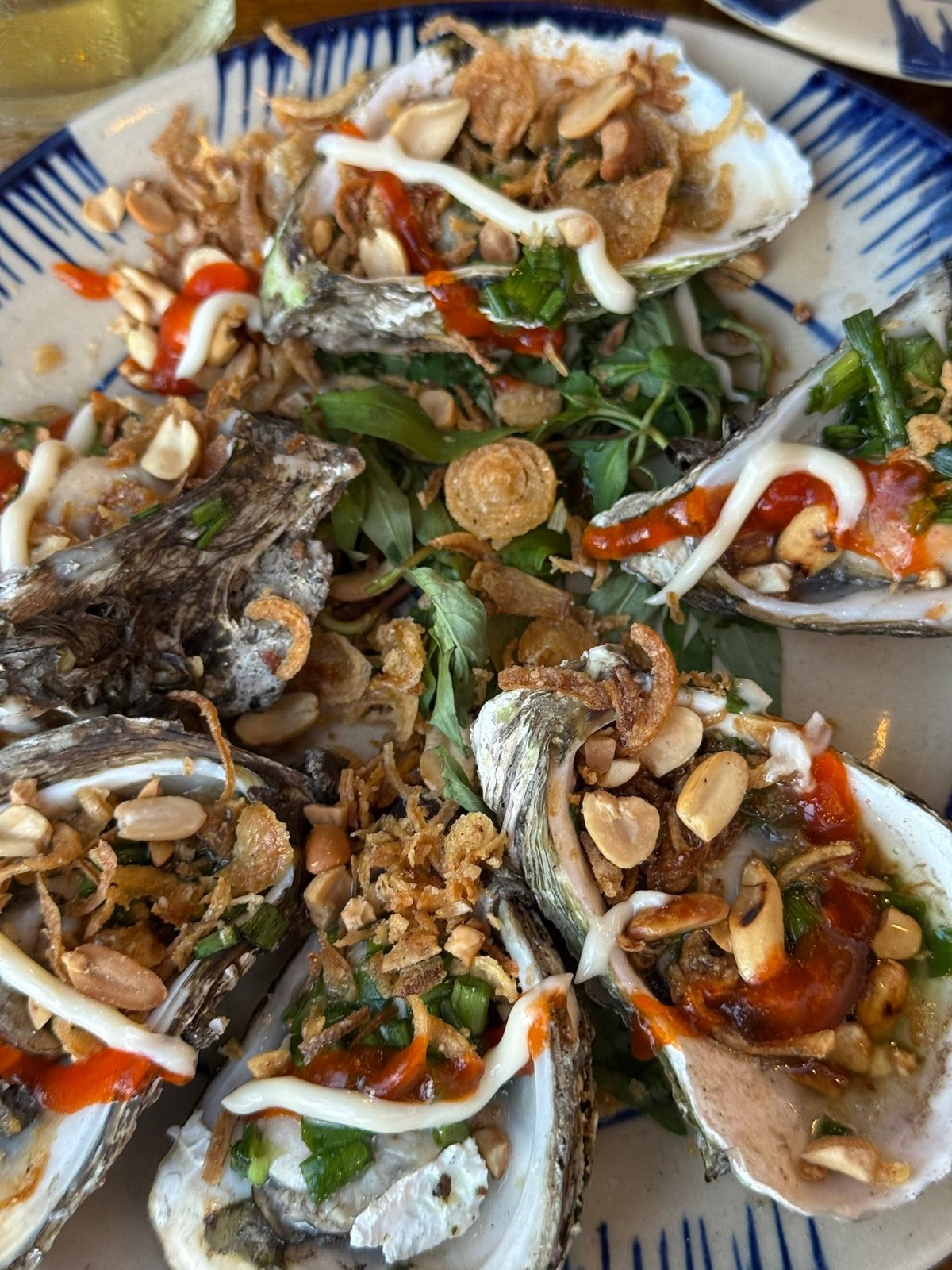
Then the oysters, hàu nướng, grilled on the half shell. Some came heaped with crushed peanuts, fried shallots, cilantro, a dab of chili sauce and a squiggle of something creamy. The rest came grilled under cheese.
And then the crab. Six blue crabs, ghẹ, the blue swimming crab of the Vietnamese coast. Some came fried, ghẹ rang muối Đài Loan, Taiwanese salt-roasted crab, in a salty golden crust and topped with a nest of fine fried strands. The rest came in a sweet, sticky sauce, glossy and red, with a sprig of cilantro on top. Very addictive.
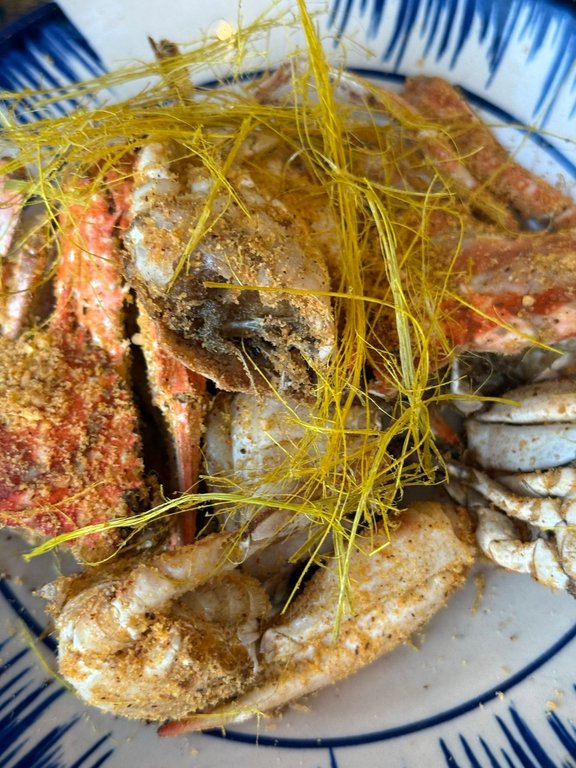
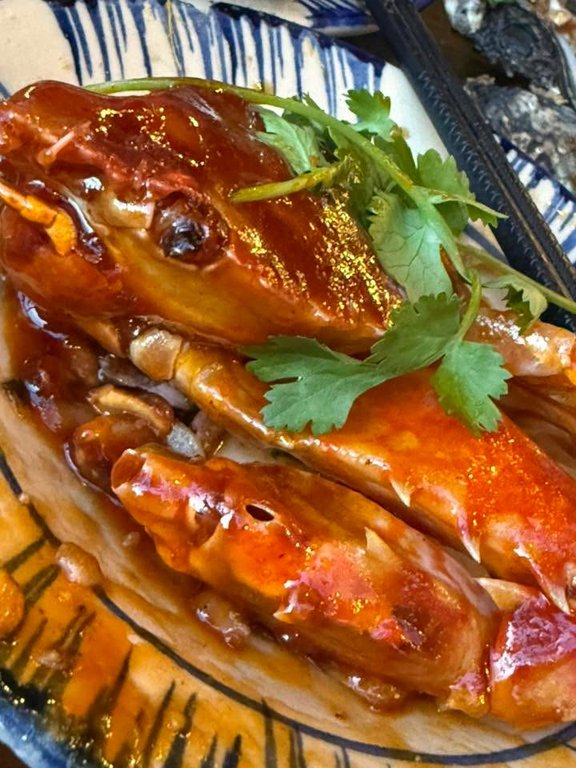
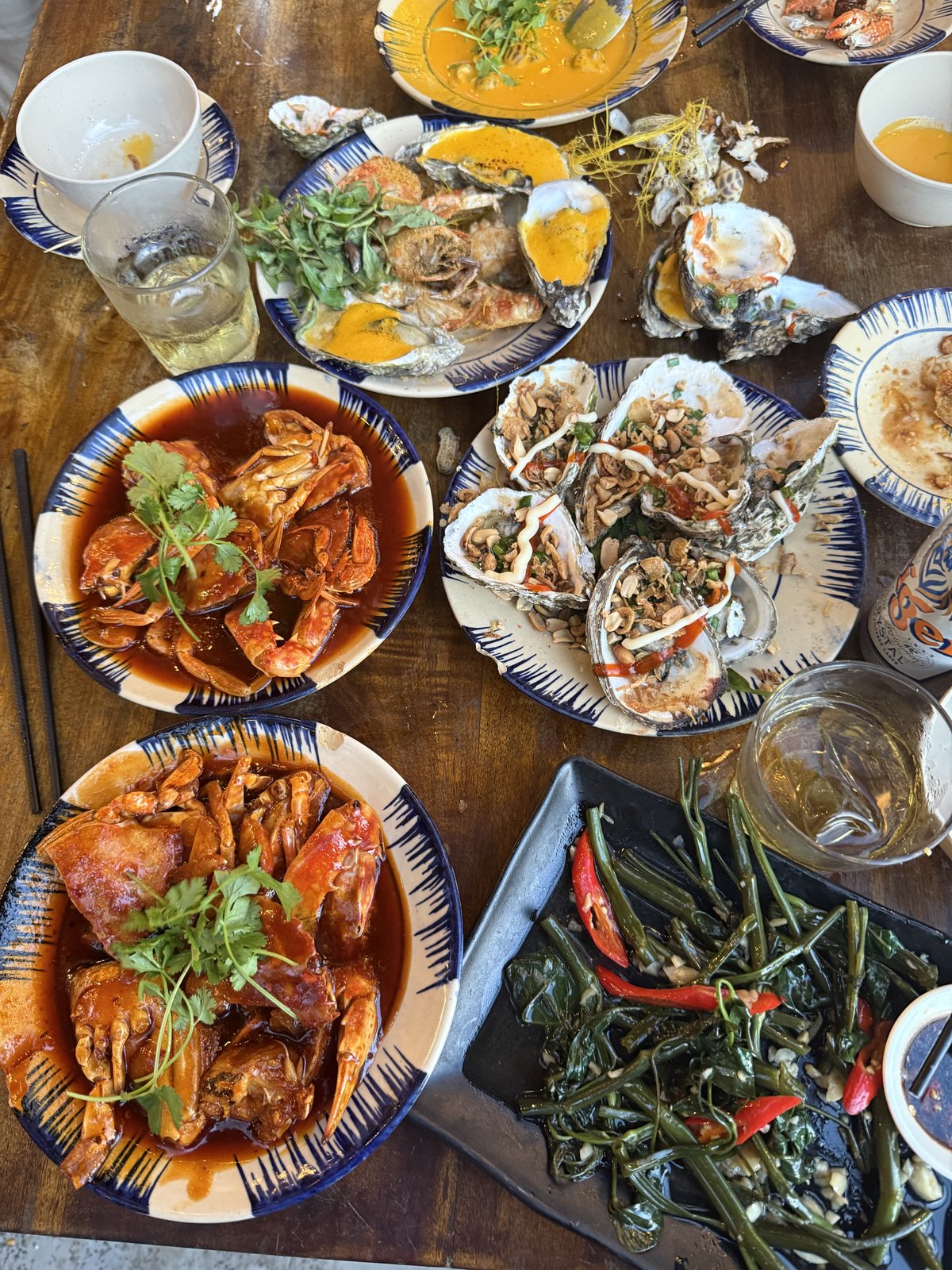
A few beers, five cans of Tiger to be exact, and a trashed table later, we were done. The bill, every item of it, came to 826,000 dong. That included 5,000 dong for the cold towel, an order of egg-coated peanuts, two bottles of water and the rice crackers. My wallet was less than $35 lighter. It really is crazy like that.
The Bridge and the Plaster Statues
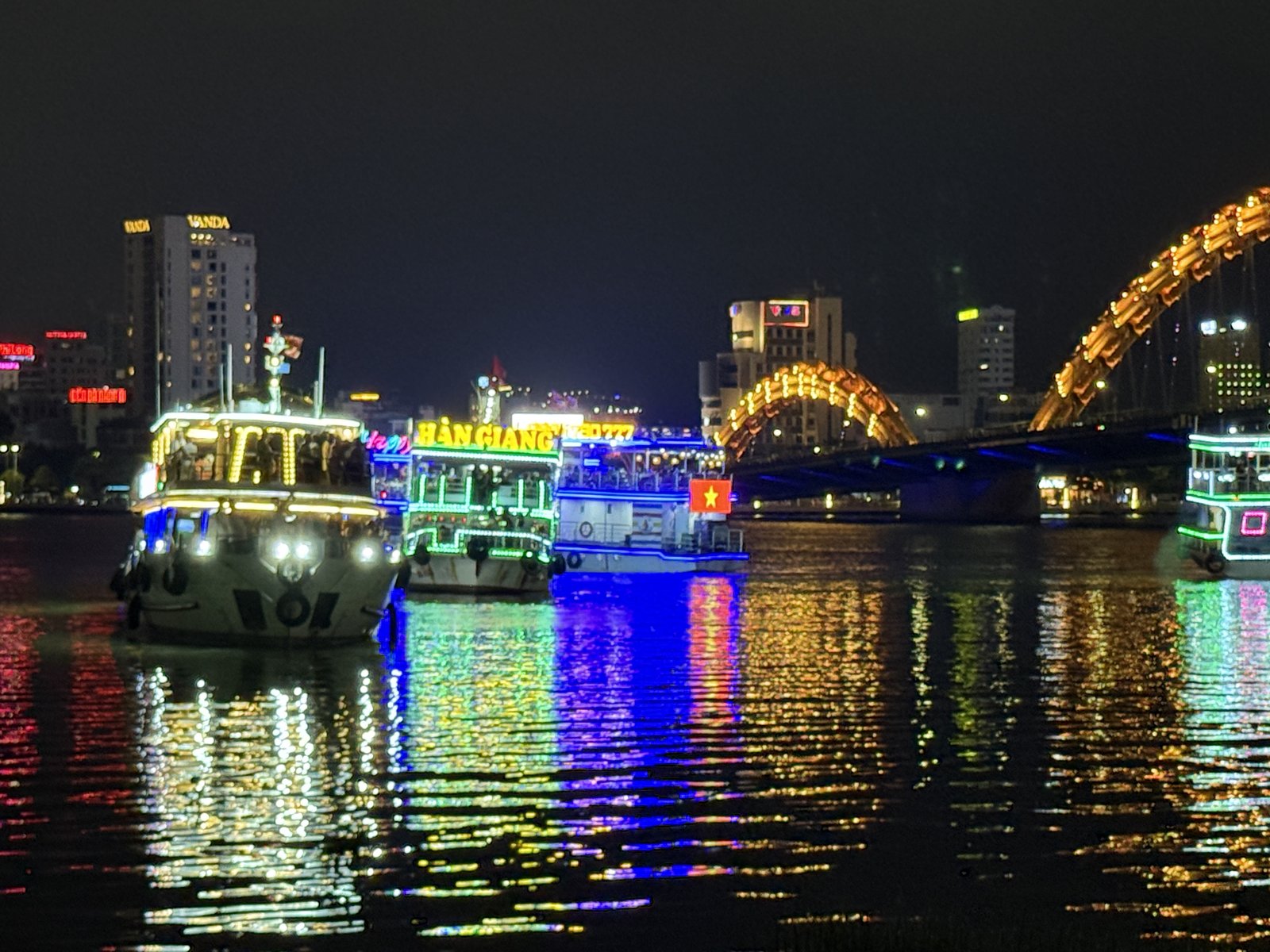
Dusk was coming on as we came out, and the Trần Thị Lý Bridge was lit up over the river. It is probably Da Nang's most interesting bridge from a structural and architectural standpoint, a cable-stayed bridge with a leaning pylon, its back cables fanning out in a twist, and it stands 145 meters tall. It opened on March 29, 2013, the anniversary of the city's liberation, and is 731 meters long. After dark the pylon changes color. We caught it in green and then in pink.
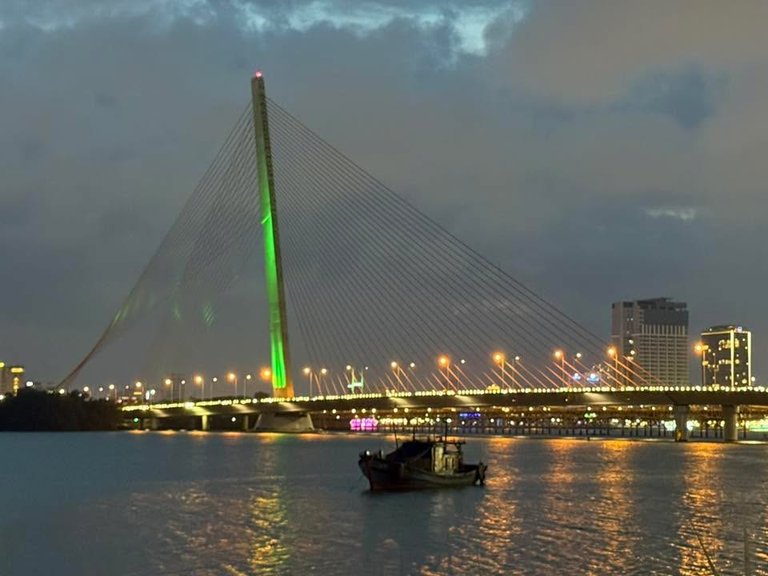
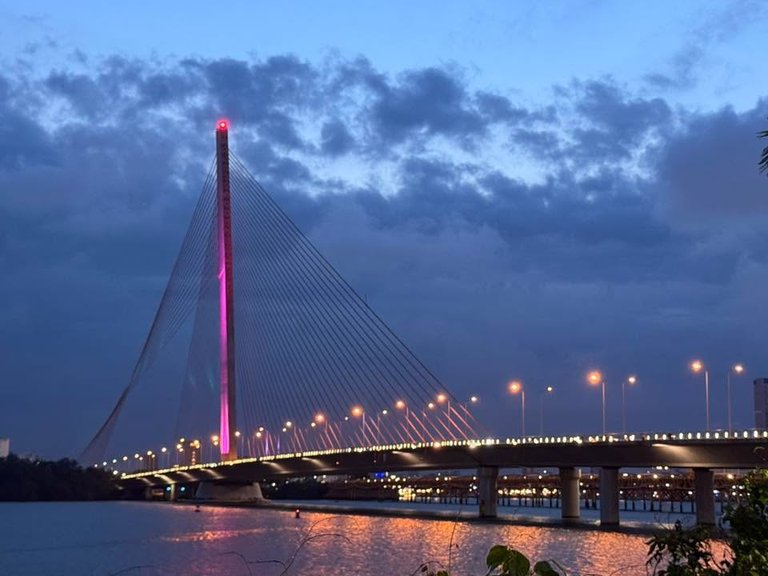
It replaced the older crossings here, and its namesake is worth knowing. Trần Thị Lý was born in 1933 in Điện Bàn, just south of Da Nang, and served as a liaison for the communist forces. She was arrested and tortured for two years by South Vietnamese authorities, and left for dead. When she was flown to a hospital in Hà Nội she weighed 26 kilograms, with more than forty wounds. She survived, was named a Hero of the People's Armed Forces in 1992, and died that same year in Da Nang. As I wrote when we lived here, the old bridge beside it, the Nguyễn Văn Trỗi, built in 1965, is now for people on foot.
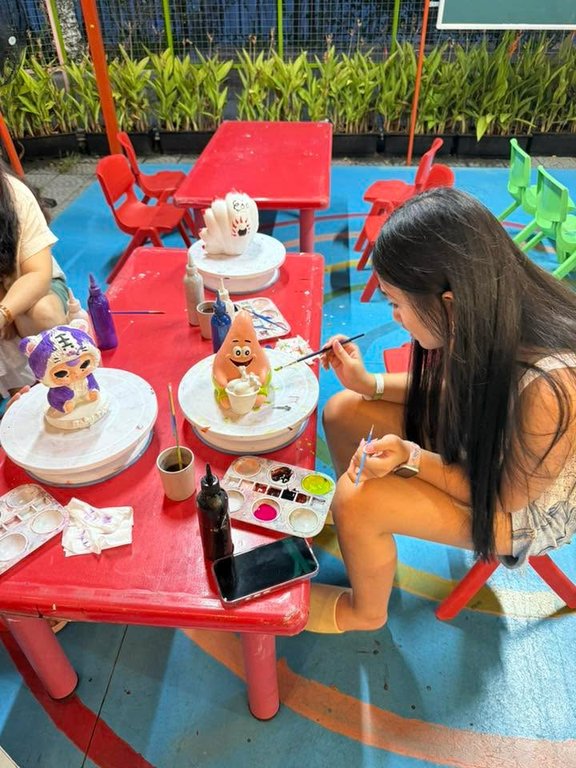
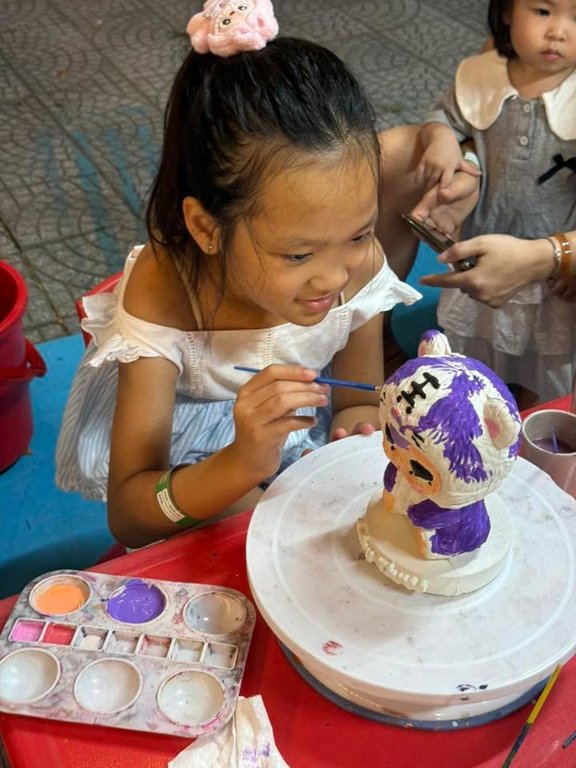
After dinner we walked back across the street to find the girls. The kids' market was a riverside playground called Fantasy Land Kids Club, with a peaked gate, a set of big I ♥ DANANG letters out front, and an oversized cartoon rabbit in a hat and overalls by the entrance. Inside, under the lights, little ride-on cars waited for drivers, and shelves of unpainted white plaster figures waited for painters. Superheroes and cartoon characters, all of them stark white.
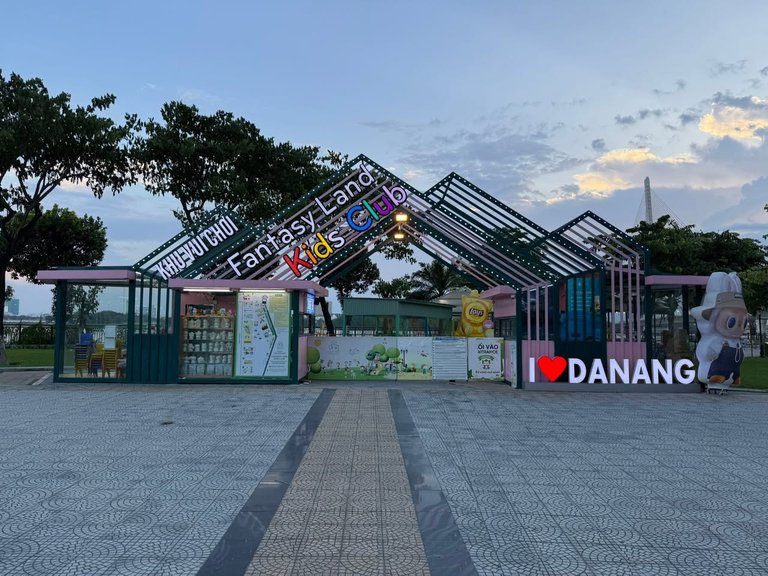
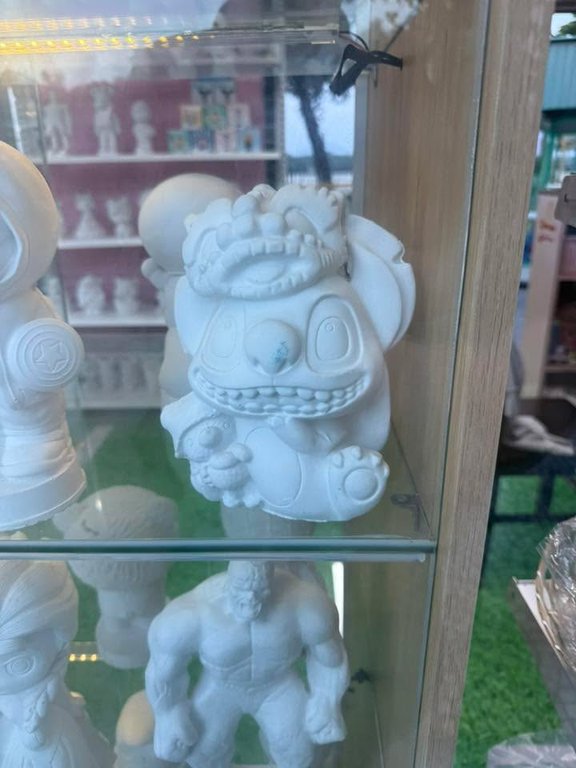
The girls were painting little plaster statues and enjoying the cool evening breeze. Statue painting, tô tượng, is a popular Vietnamese activity for children. You pick a figure off the shelf, take a palette of paints and a brush, and sit down at a low table to make it your own. When we lived here, we used to bring the girls to the night market to play carnival games, eat all kinds of sugary delights, and paint plaster sculptures. These days the plaster painting cafés in the big cities are drawing young adults too.
The Second Dinner
I was lying in the bed back at the house, talking to one of our adult children who did not make the trip with us, when Diem casually came in and said we were about to eat.
Huh? We ate like an hour ago.
"You don't have to," she said, in her pragmatic, matter of fact manner. Now I was curious.
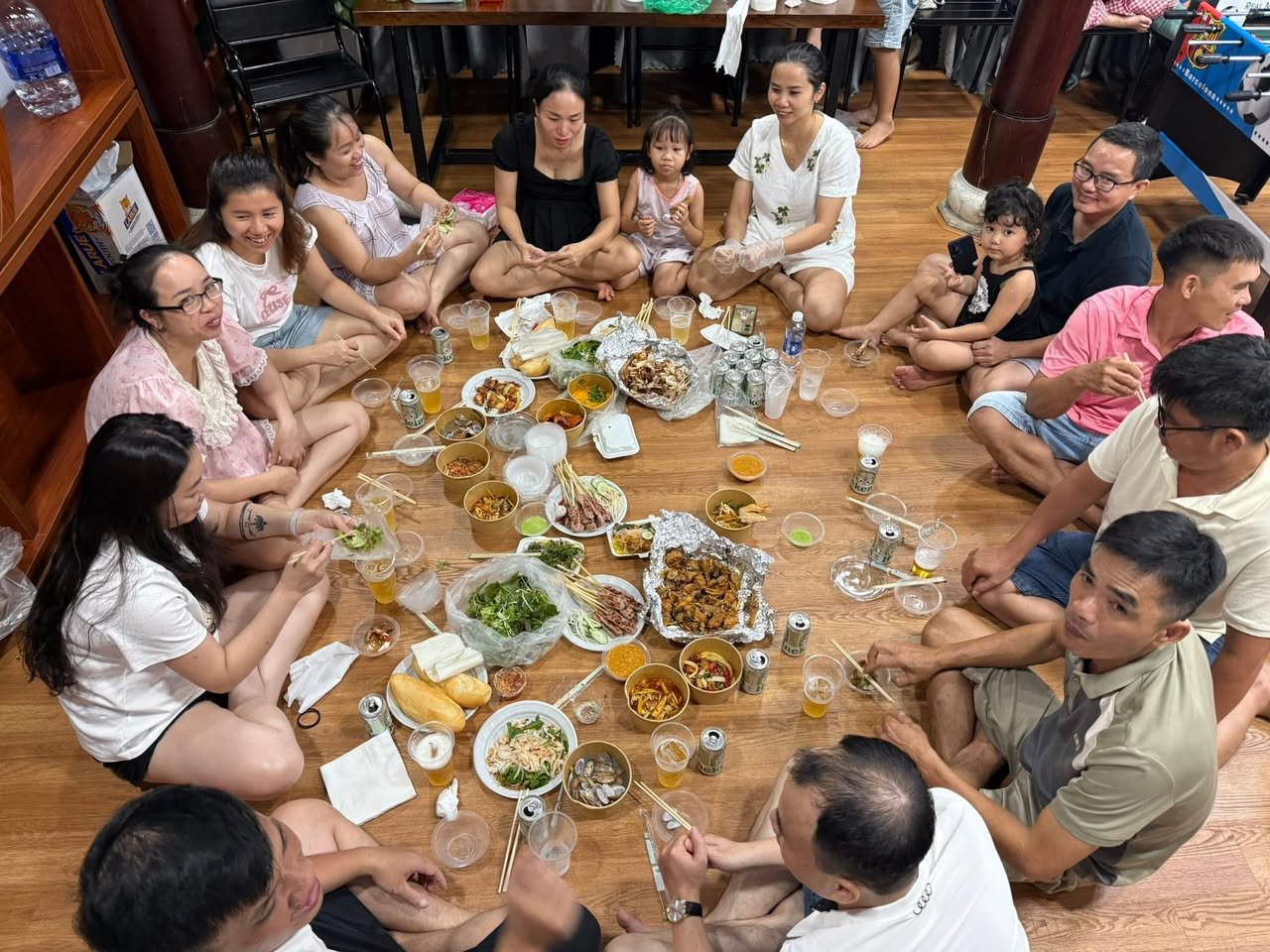
I stepped out into the living area of the house, and the entire village of Thuận An, An Lão, it seemed, was doing a very Vietnamese thing. Sitting in a circle on the floor around a ton of food. There were cans and cups everywhere. If you read about our days in An Lão, you know this scene. Everything goes in the middle, and you reach for what you want.
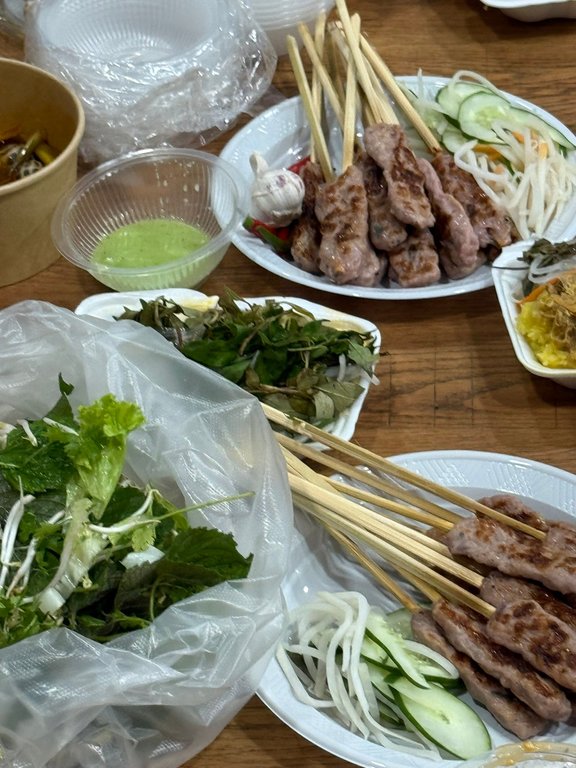
There was nem lụi, seasoned ground pork skewers. It is a signature dish of Huế, just over the Hải Vân Pass, traditionally made from minced pork wrapped around a stalk of lemongrass and grilled over charcoal. You lay a sheet of rice paper in your palm, pile on the lettuce, herbs and cucumber, set the skewer on top, fold the paper to grip the meat and pull the skewer out, then roll it all up neatly and dip. There was grilled chicken. Sea snails. Fried chicken. Clams in lemongrass, in a red broth. Sticky rice. Crab salad. Fried crab. The garden, the classic bag of fresh herbs and greens that accompanies any respectable Vietnamese table. And fresh baguette.
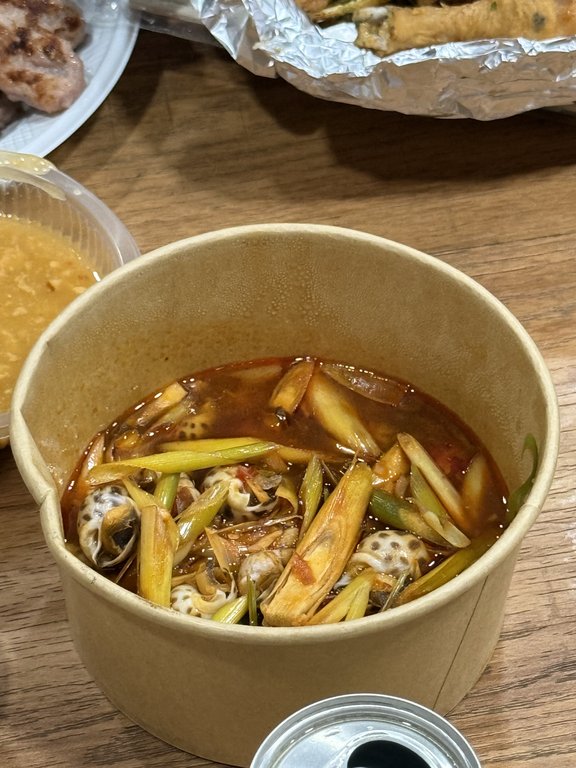
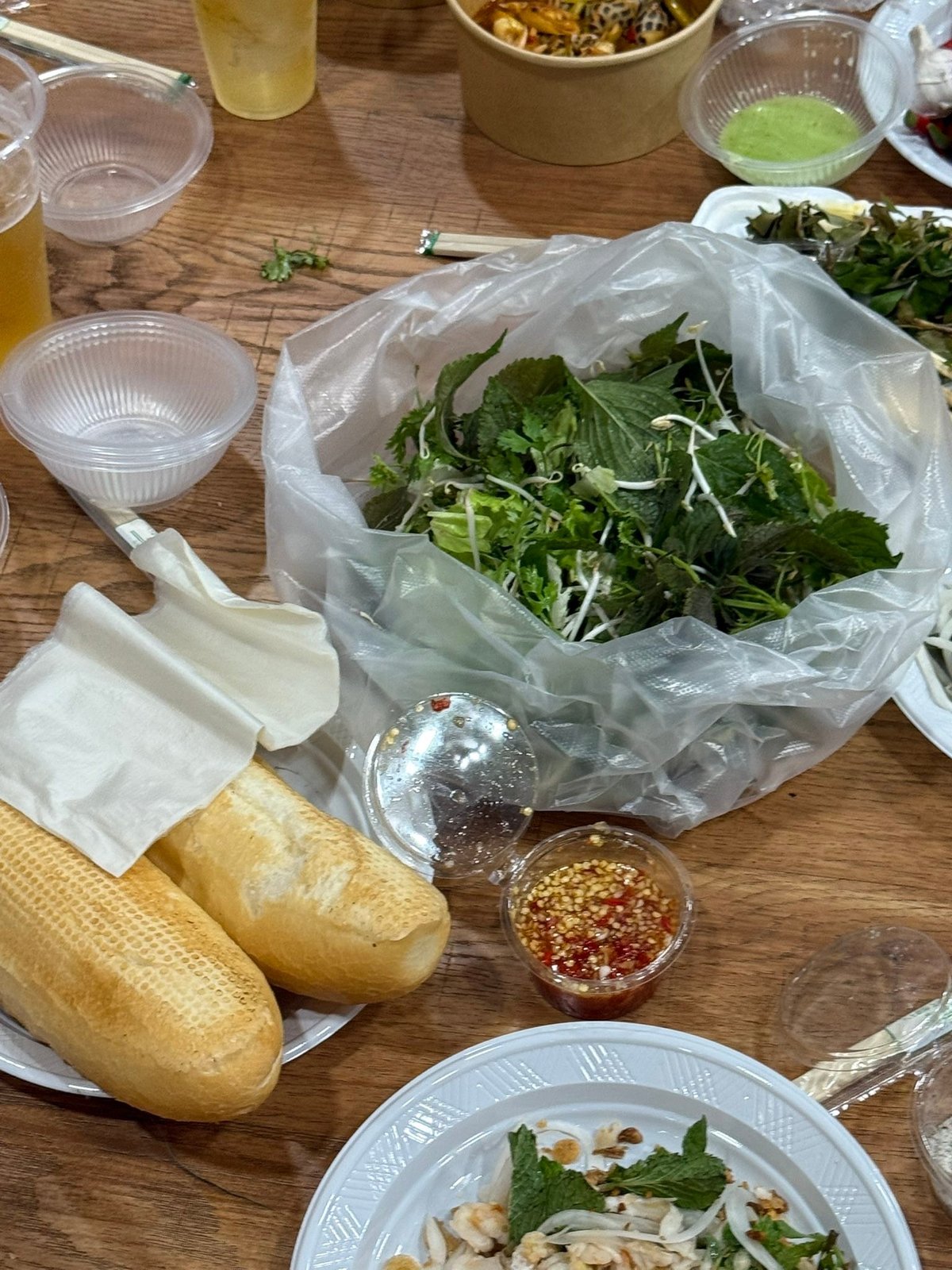
Four years has been a long time. It was visibly clear that Diem was having a wonderful time. I, as usual, was only a passenger on this wonderfully beautiful ride. I enjoyed a few snacks so as not to be rude, and otherwise enjoyed the enjoyment of my wife being home and surrounded by friends and family.
I enjoyed a few snacks so as not to be rude, and otherwise enjoyed the enjoyment of my wife being home and surrounded by friends and family.
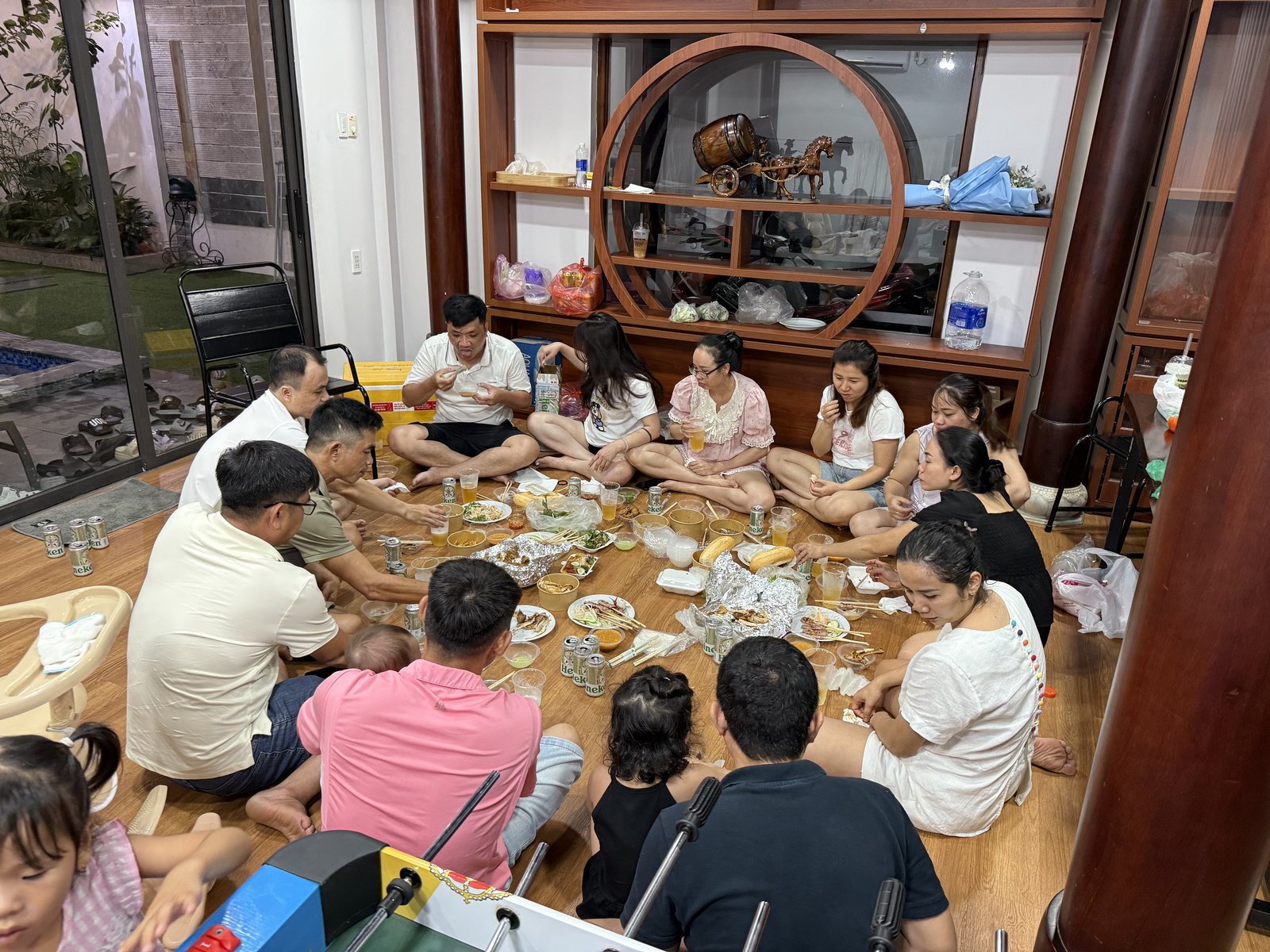

It had been a full day. A legend from the days of Minh Mạng, a 67-meter Lady, a quiet beach, a table of crabs, a bridge named for a heroine, and a floor full of family. The Lady was up there on the mountain the whole time, of course, keeping an eye on things. We enjoyed Năm Rảnh so much that the very next night we would bring the entire family back. But that is a story for next time.
Previously: Return to the Village of Lanterns
More from Da Nang: Da Nang - City of Bridges, The River Dragon Breathes Tonight and The Long Road to Buôn Ma Thuột