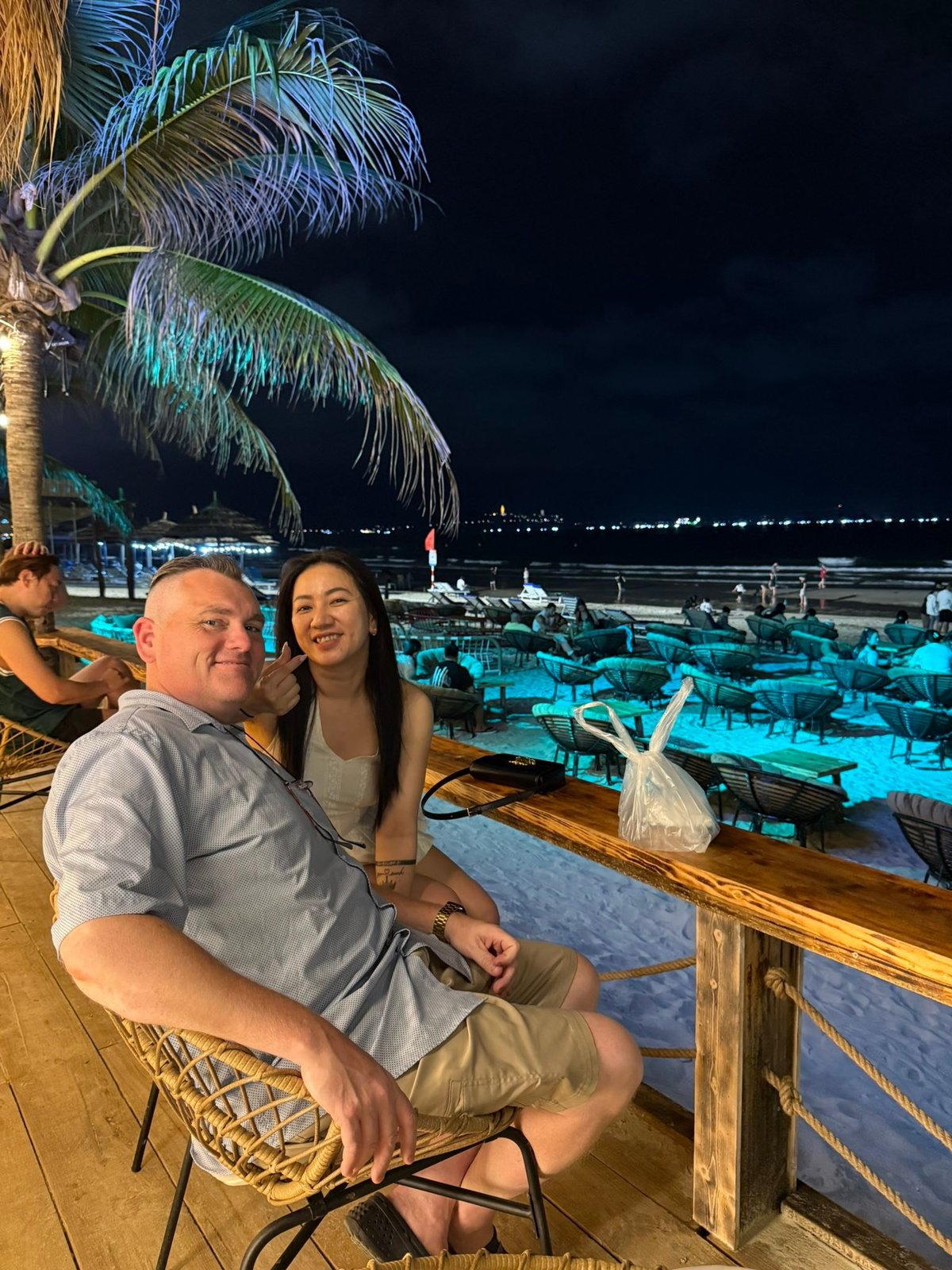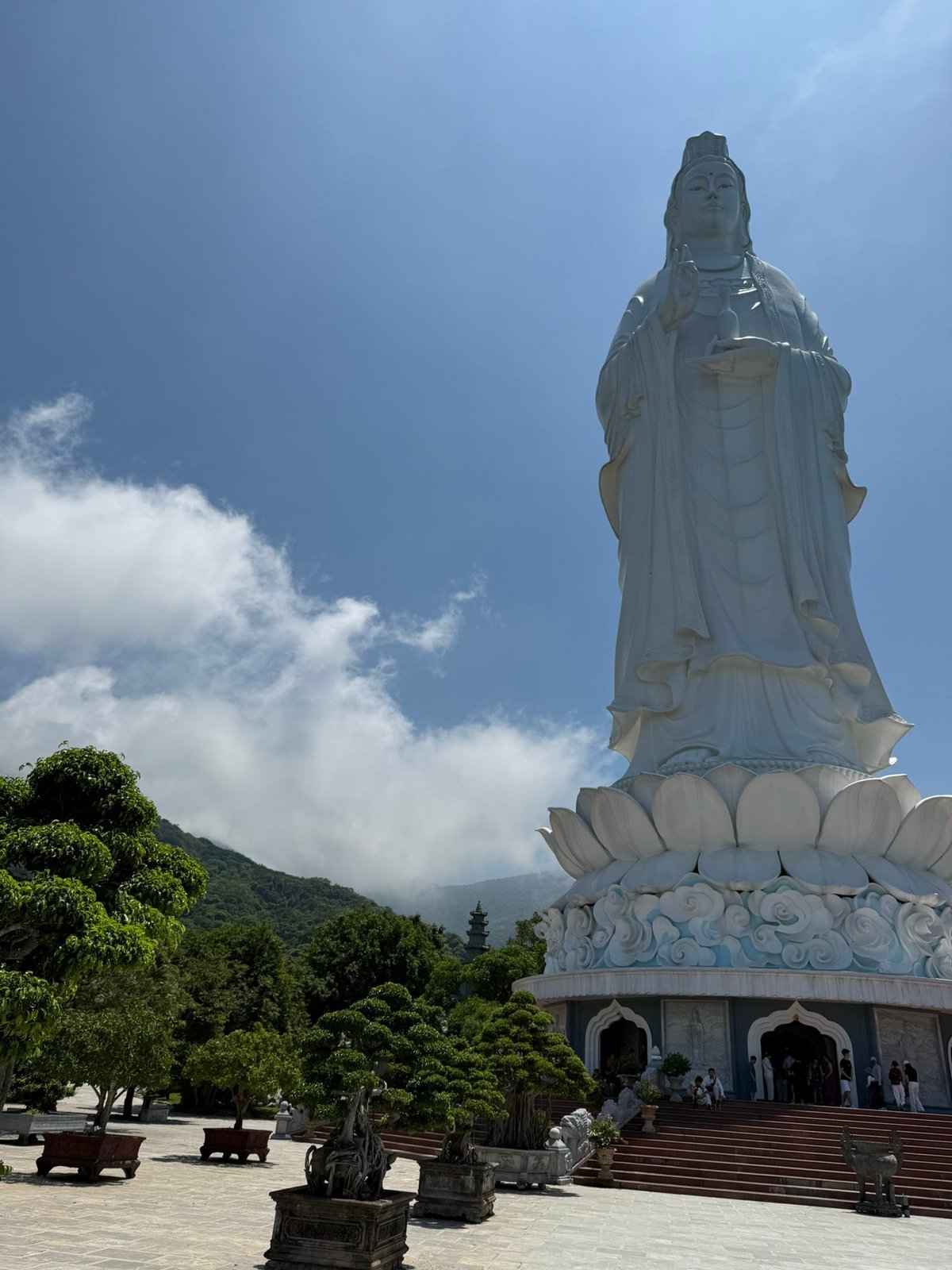
We spent Friday in the ancient trading town of Hội An. A true treasure of Vietnam, I called it when I wrote home the next morning, and I stand by it. It also keeps a sandwich that used to bring me down from Da Nang a couple of times a month. We will get to the sandwich.
But first, lunch. The old town draws a crowd at any hour, and to avoid the downtown crush we started somewhere the locals eat.
Four Dishes on Cẩm Nam
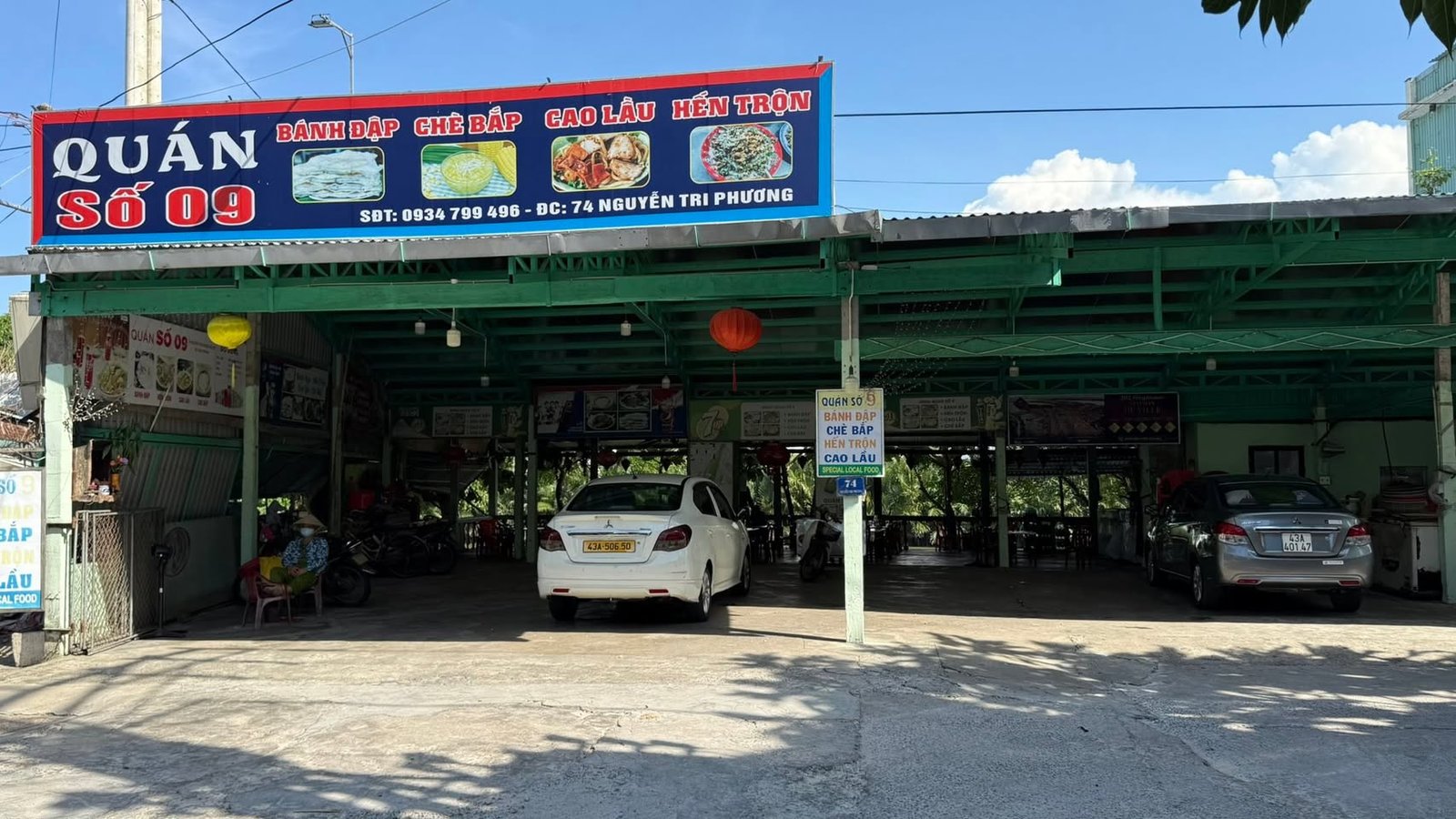
Across the river from the old town sits Cẩm Nam, a small island wrapped in the lower branches of the Thu Bồn. It has long been known for its corn and its clams, and along Nguyễn Tri Phương street there is a strip of open-air restaurants that specialize in some of the most traditional of the city's local fare. They mostly serve locals. Ours was Quán Bánh Đập Số 9, at the edge of a channel that cuts off the river. The sign out front read Quán Số 09, with four pictures across the top: bánh đập, chè bắp, cao lầu, hến trộn. That is the entire menu.
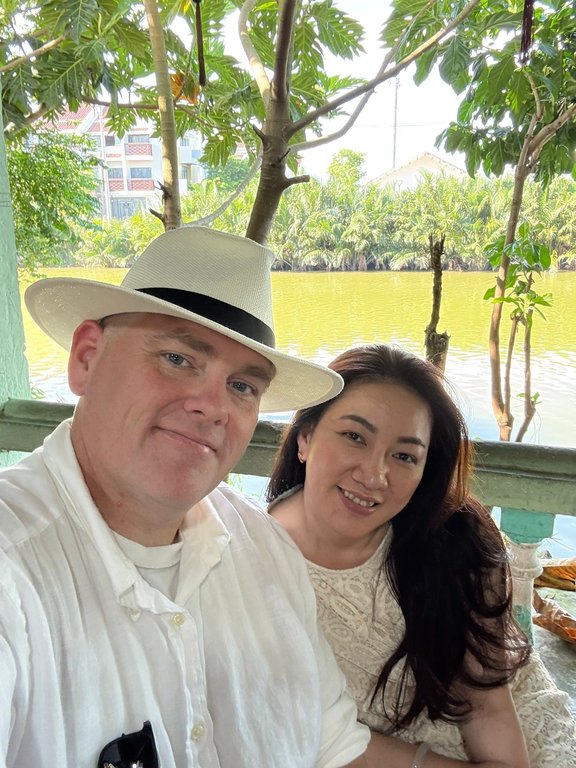
Diem, the girls and I ate here some years ago. That time, I had a chance to talk to the family that owns it. They had been dishing out and refining their menu for generations. So long, in fact, that no one there knew when the family began, and three generations were running it. By my reckoning it is easily over a hundred years old. With only four dishes to choose from, we did the sensible thing and ordered multiple plates of each.
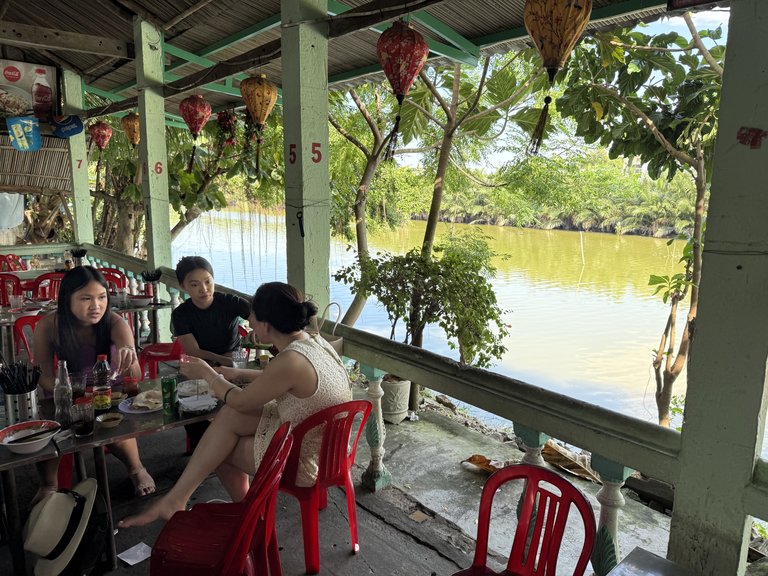
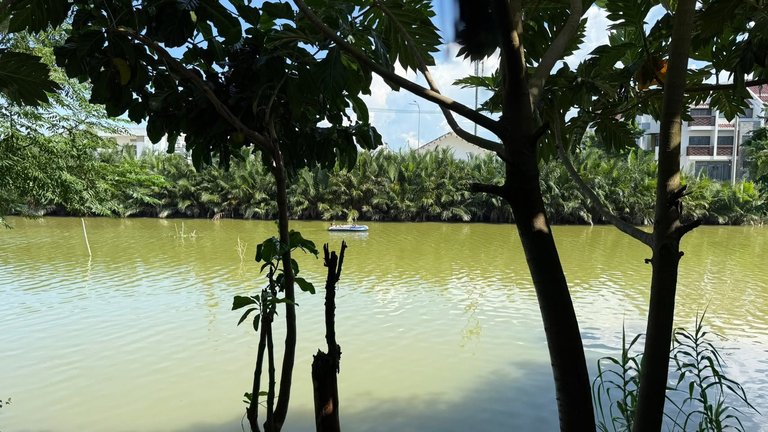
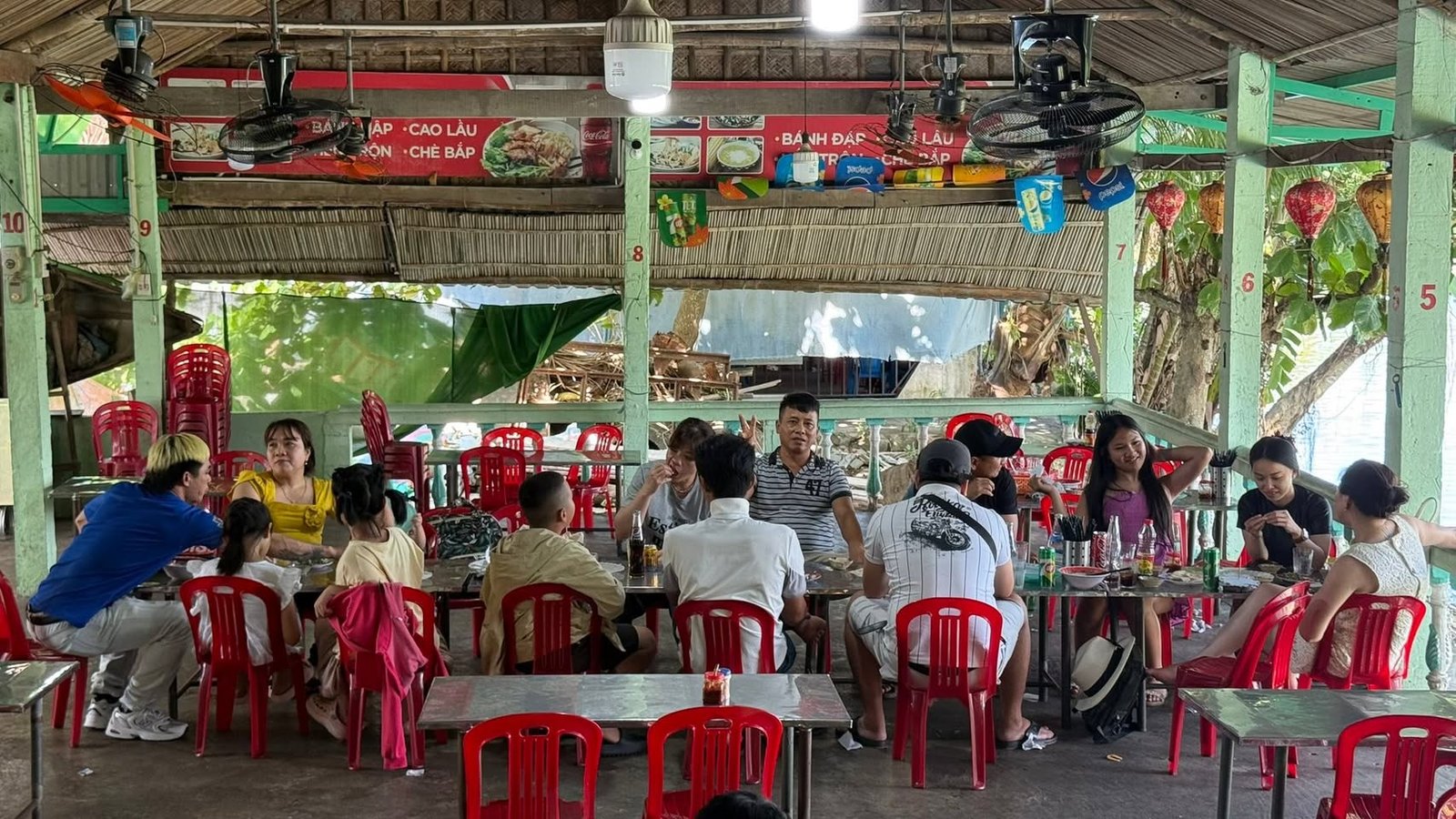
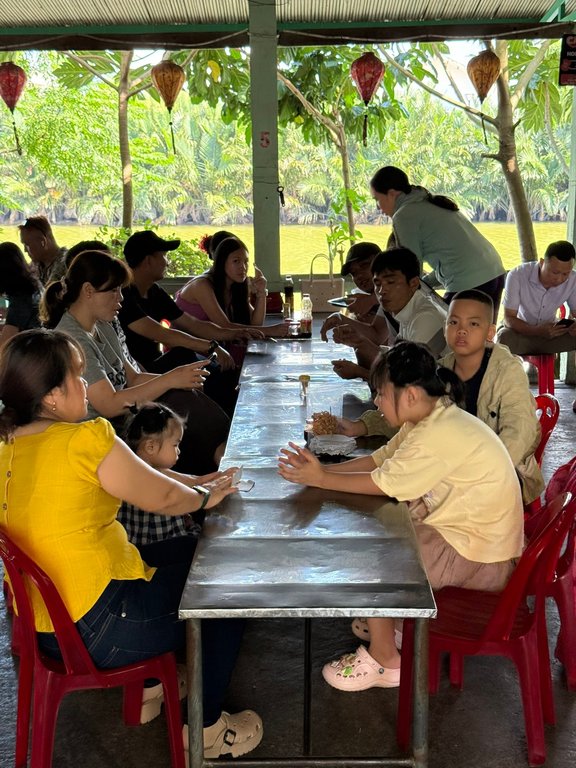
The dining room is really a long open shed. A tin roof on green steel posts, paper lanterns in the rafters, steel tables, and red plastic chairs as far as you can see. It was a little after three in the afternoon on a Friday, and the place was packed with locals. That is the sign you want.
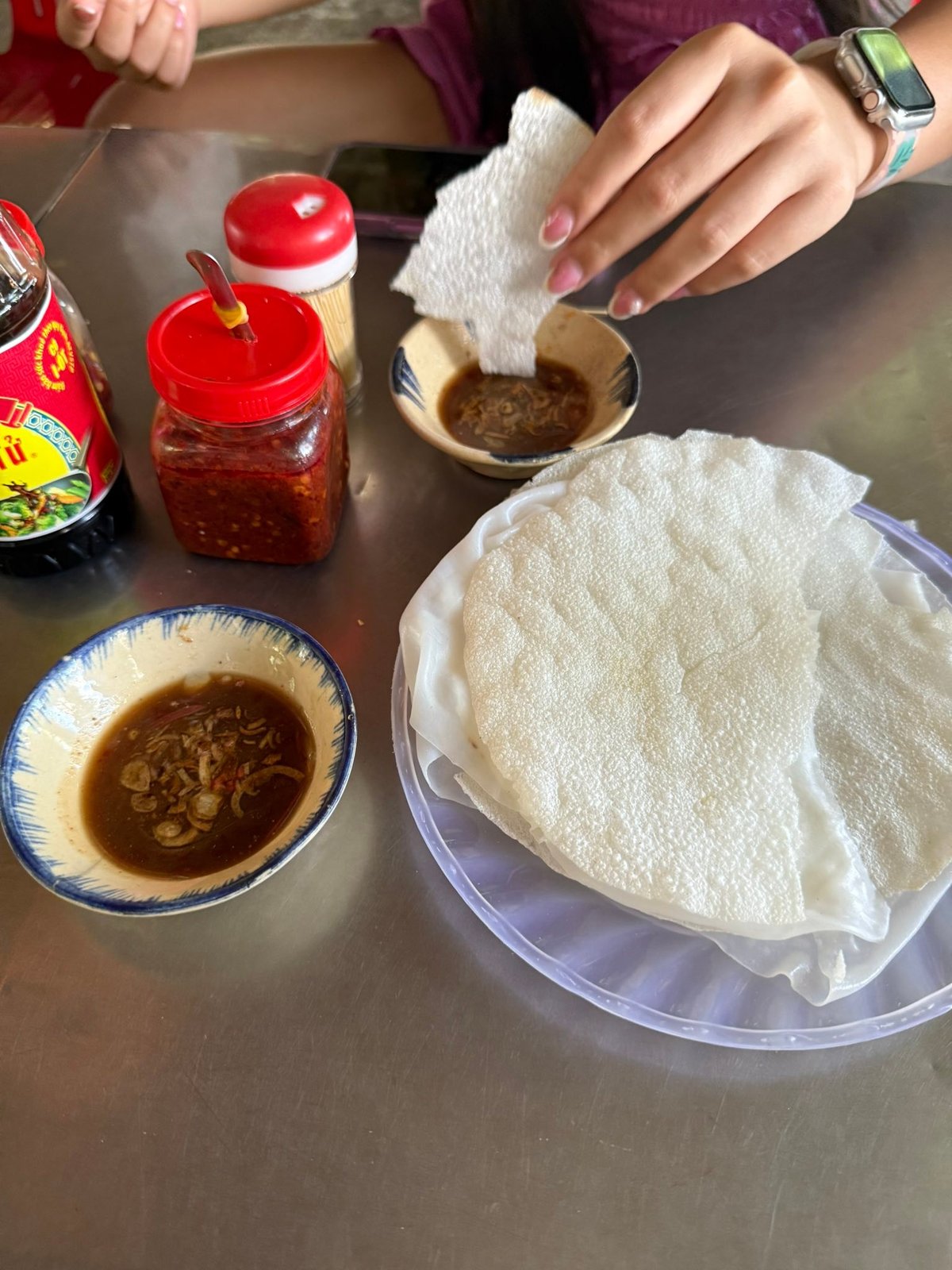
The bánh đập came out first. The name means, more or less, smashed cake, and the smashing is your job. A sheet of soft steamed rice paper is pressed between crisp rice crackers into a layered round that arrives whole. You set it on the plate, smash it with your fist, tear it into pieces and dip them in nước chấm, in soy and chili, or in a sweet chili jam. It comes from right here on Cẩm Nam. One telling has it starting life as a way to rescue Quảng noodle sheets that came out too thin or tore, rolled up and eaten instead of wasted. The crackers came later. I like a dish that begins as a refusal to waste anything.
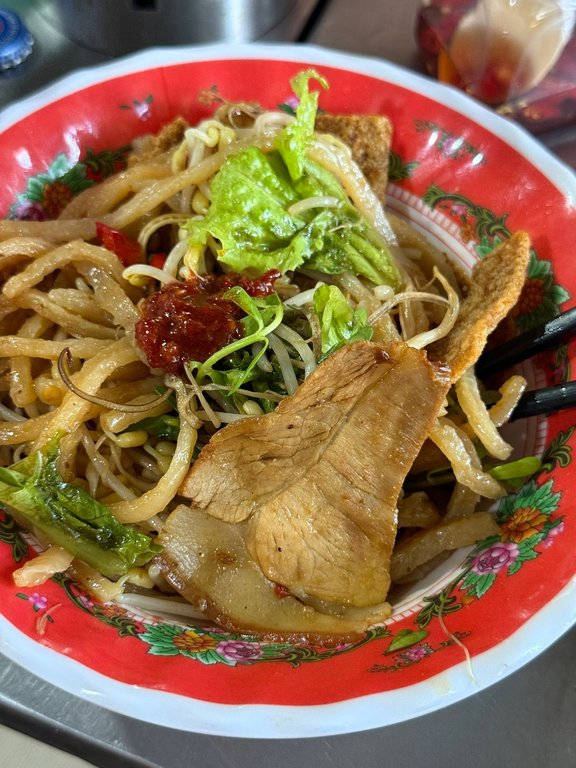
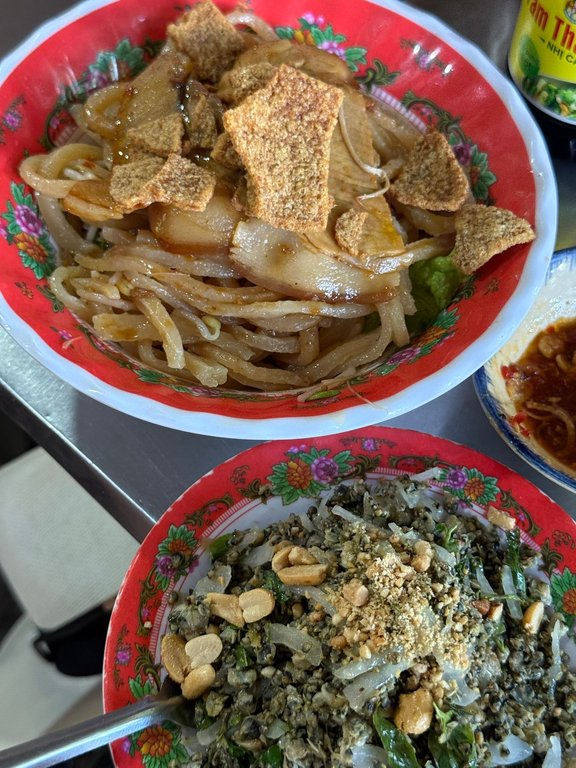
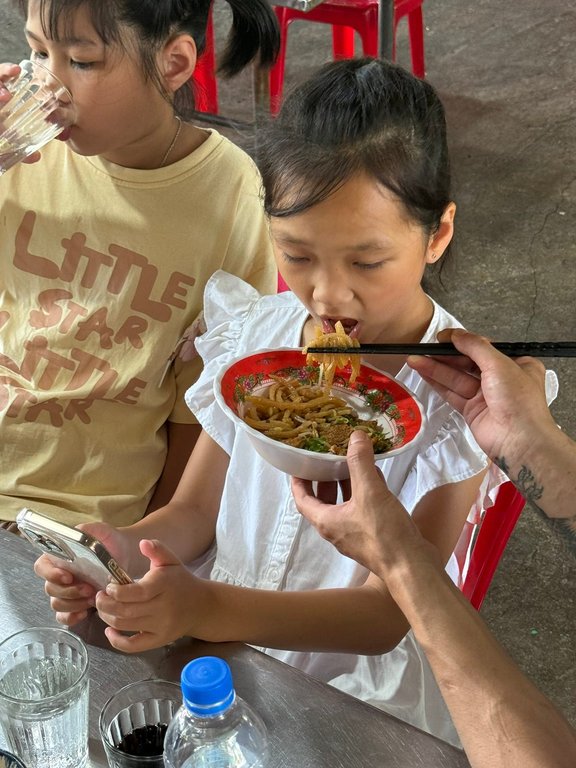
And the cao lầu. It is an incredibly unique noodle dish made from a set of ingredients specific to Hội An, and I have never seen it served any farther away than Da Nang. The noodles are made from rice soaked in lye water. Much like the nixtamalization of corn in Mesoamerica, it changes the grain, and the result is a grayish brown noodle with a springiness and firmness unlike any other rice noodle. It chews like al dente wheat pasta. Instead of a bowl of broth there is just a splash of dark pork gravy, seasoned with soy where most Vietnamese broths lean on fish sauce. On top go slices of roasted pork, fried pork skin croutons, and squares of the noodle dough, cut and deep fried until crisp. All of it sits on a bed of bean sprouts, mint, chives, perilla and lettuce.
What makes it Hội An's alone is the noodle. Tradition holds that the ash for the lye must come from the wood of the tràm trees on Cù Lao Chàm, the islands off the mouth of the Thu Bồn, and that the water must be drawn from the Bá Lễ well, the ancient well in the heart of town. Whether either is still true today is up for debate, and some writers call the well story apocryphal. Some trace the dish itself to the Japanese and Chinese traders of the 1600s. Either way, the legend does its job. You will rarely find real cao lầu far from Hội An.
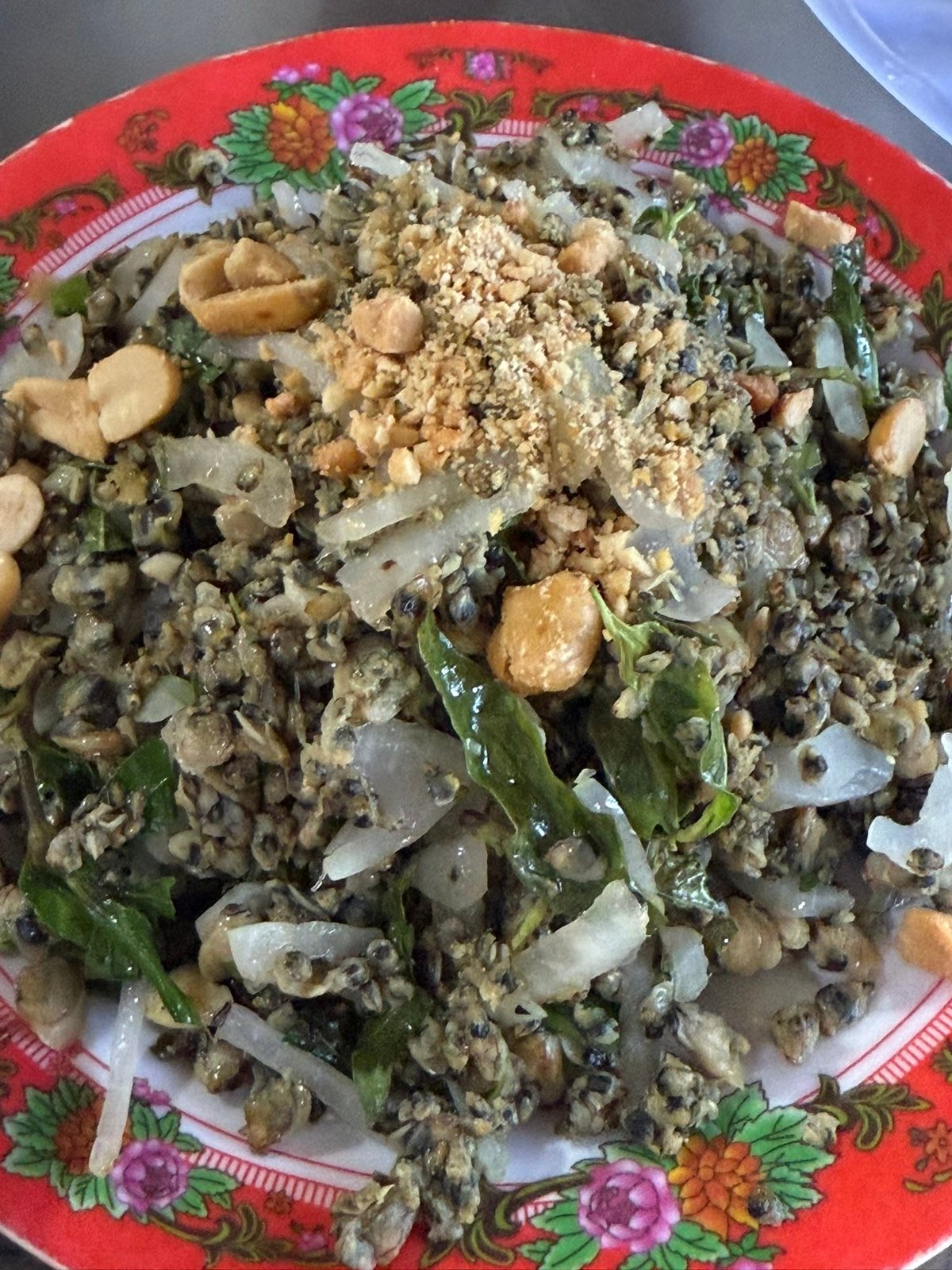
There was also hến trộn bánh tráng, a baby clam salad served with rice crackers, another uniquely Hội An dish. It is incredibly simple. Tiny river clams harvested that morning, sautéed and tossed with shallot, a touch of garlic, fresh herbs and nước mắm, with peanuts and crackling over the top. You scoop it up with the crackers. It is one of Diem's favorites. The clams come from the river right around Cẩm Nam.
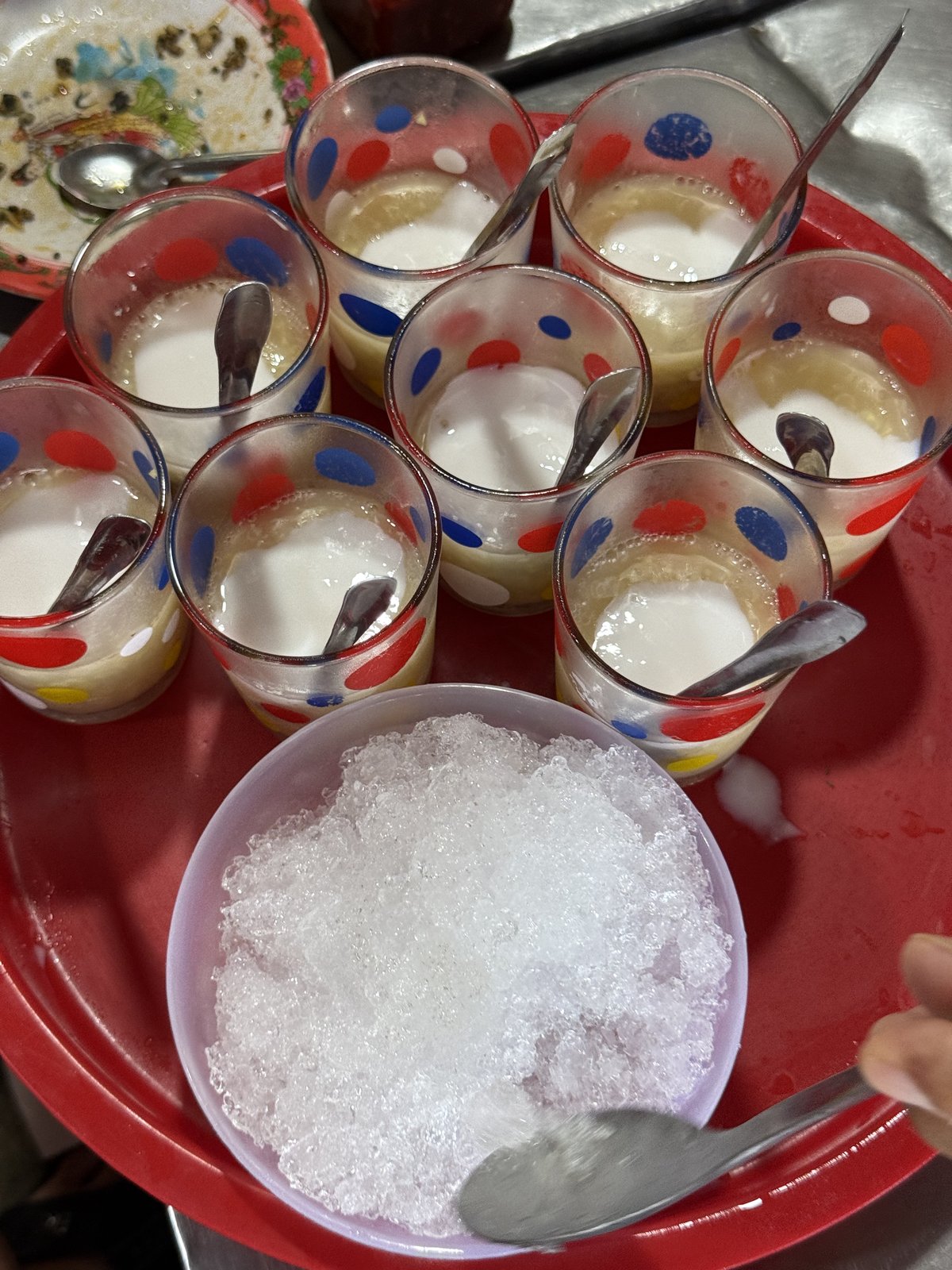
Finally, chè bắp. Chè is the great Vietnamese family of sweet soups and puddings, and this one is a pudding-like chè made with sweet corn, topped with coconut cream and crushed ice. The corn is local too. Cẩm Nam grows it in the rich silt of the lower Thu Bồn, and Cẩm Nam chè bắp has a reputation of its own. It came in little polka dot glasses with a bowl of shaved ice to spoon over the top.
We sat at the river's edge eating our fill before heading into the chaos that is Hội An. Total bill: about $30.
The Basket Boats of Cẩm Thanh
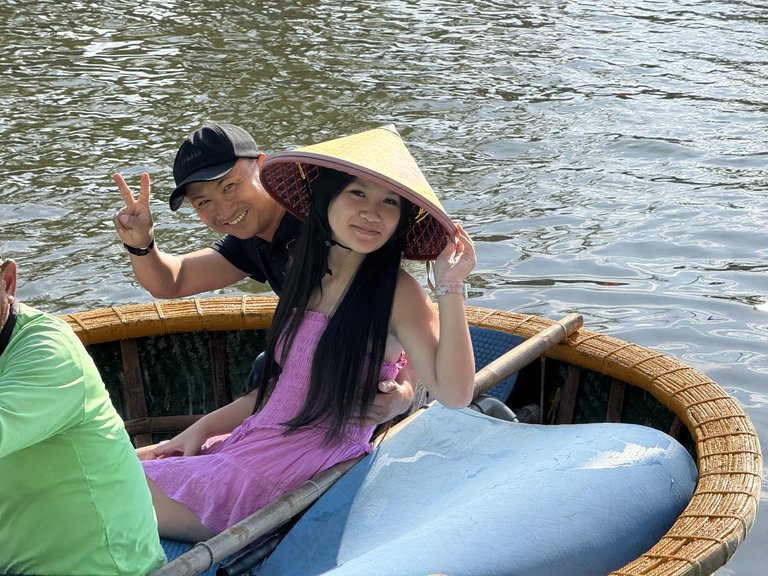
After lunch we went to take part in one of Hội An's more unusual attractions, the famous basket boats, known here as thúng chai or thuyền thúng. They are round, woven from bamboo, and sealed against the water with resin, coconut oil or tar. They are known for their circular shape and their ability to work shallow water, and they are a part of the culture and history of the whole central coast. From lifeguards on the local beaches to fishermen working their nets from shore, you will see them put to many different uses.
There is very little official record of where they came from. The story most people tell goes back to the French colonial era, when a tax on boats weighed heavily on poor fishermen. The fishermen, it is said, built round ones and argued that these were not boats at all. They were baskets. And baskets were not taxed. That is the story, anyway.
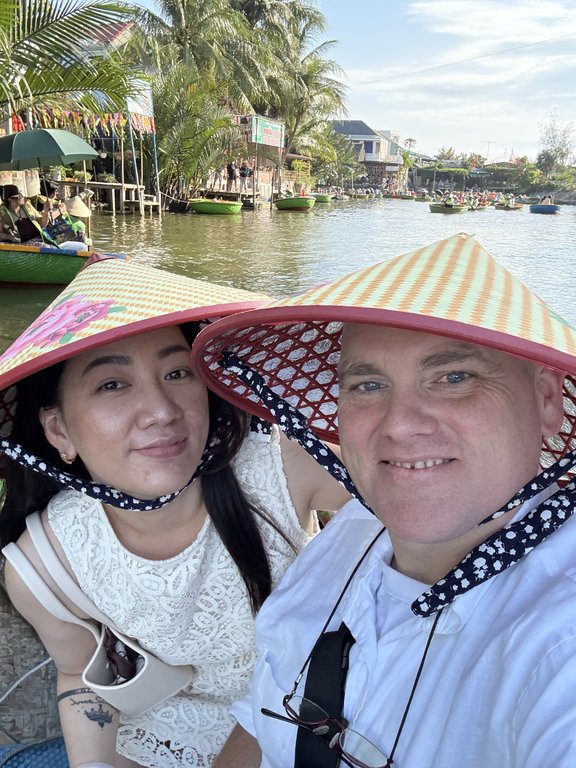
The rides run through the Cẩm Thanh water coconut forest, about four kilometers from the center of town, where the Thu Bồn spreads out into creeks and wetland on its way to the sea. The "coconut" is the nipa palm, a water palm that grows here in dense green walls along the creeks. The forest goes by Rừng dừa Bảy Mẫu, the seven mẫu coconut forest, after its original size, measured in mẫu, an old Vietnamese unit of land. Settlers from the Mekong Delta are said to have brought the first seedlings some two hundred years ago, and the palms took to the place. Today it covers close to a hundred hectares. During the wars against the French and then the Americans, the dense palms sheltered local guerrilla fighters, and the forest was listed as a provincial historical relic in 2007. Ticketed tourism started in late 2017. In 2024 the basket boat rides were named among the top 25 water-based tourism experiences in the world. That is the polite way of saying everyone has heard about it.
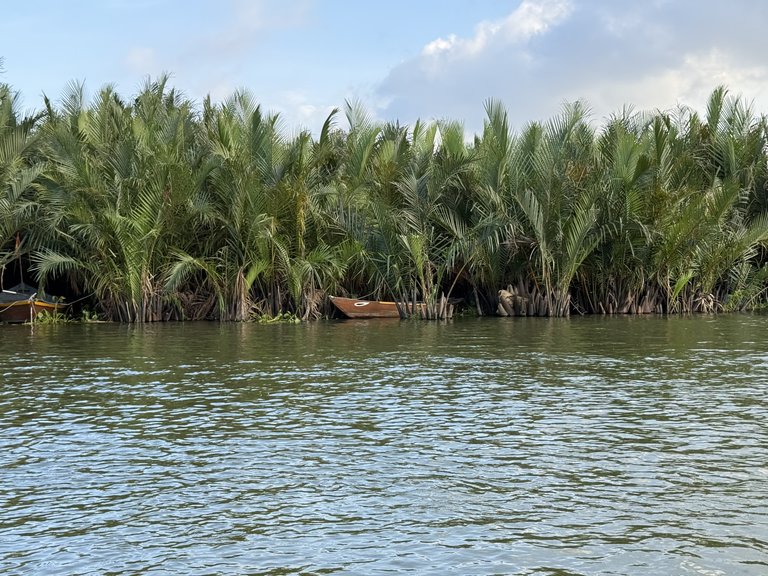
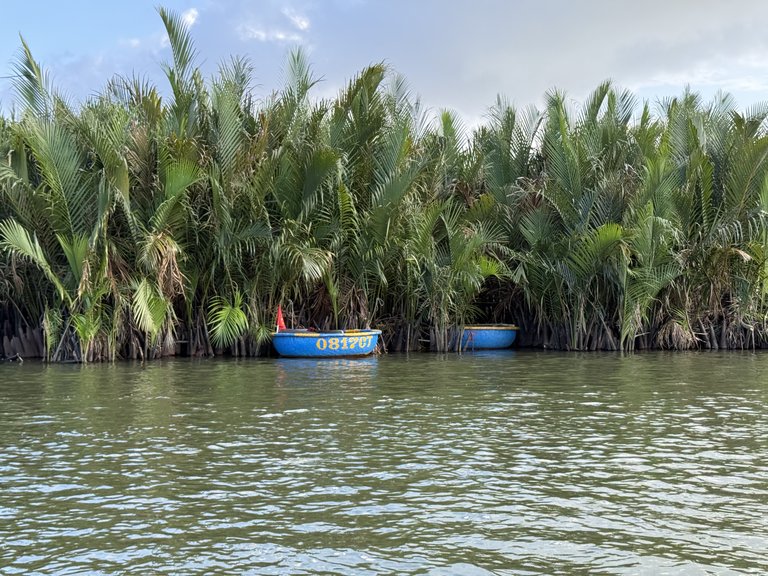
We loaded into several boats, only a few of us could fit in each, and our rowers in their green shirts, each with a flag patch on the shirt, pushed us out into the river. It is a wild time. The boats become a sea of baskets, at times bouncing off of each other. Umbrellas and nón lá everywhere you looked.
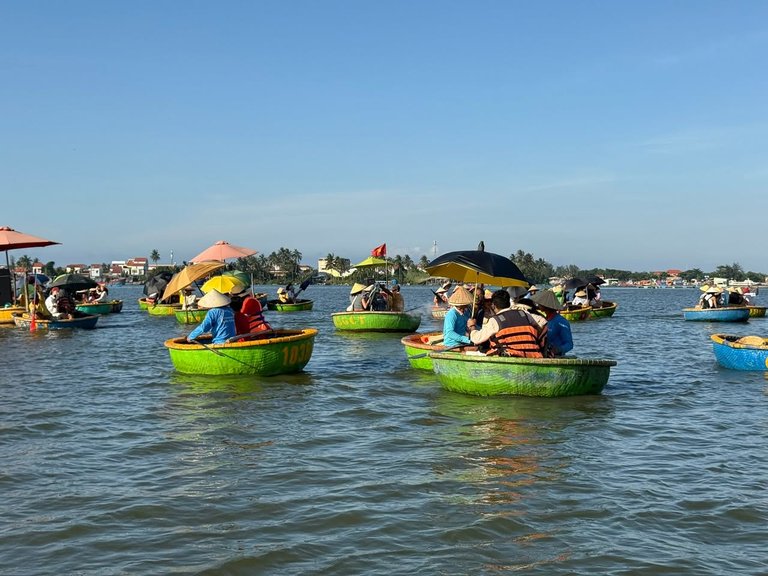
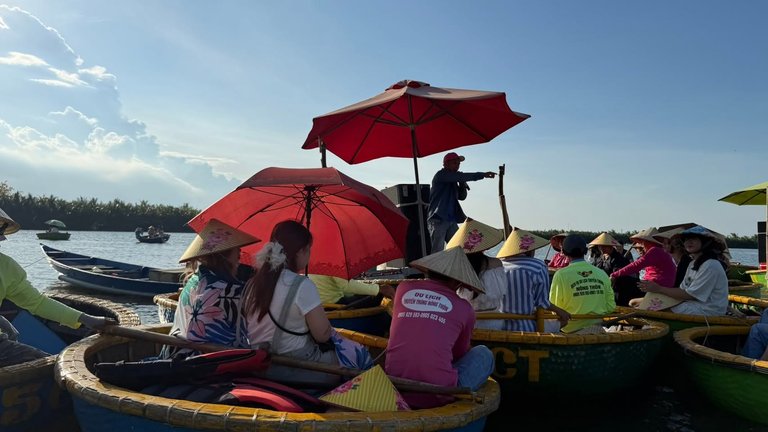
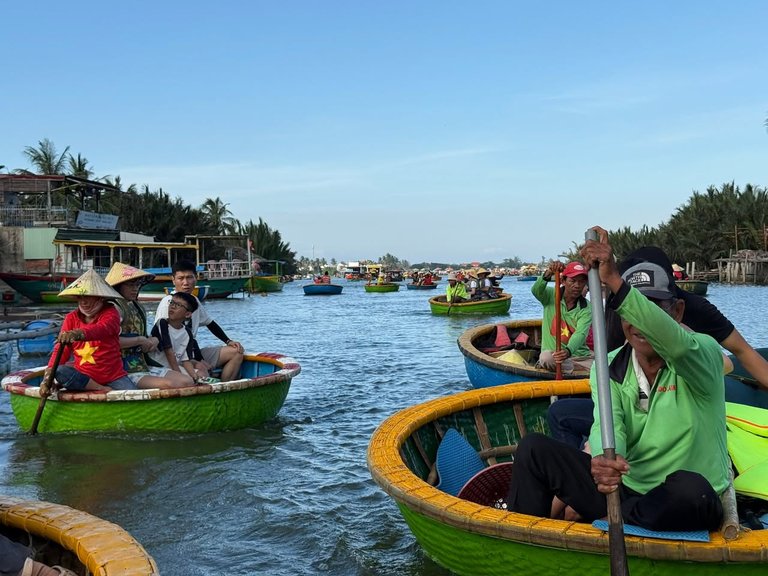
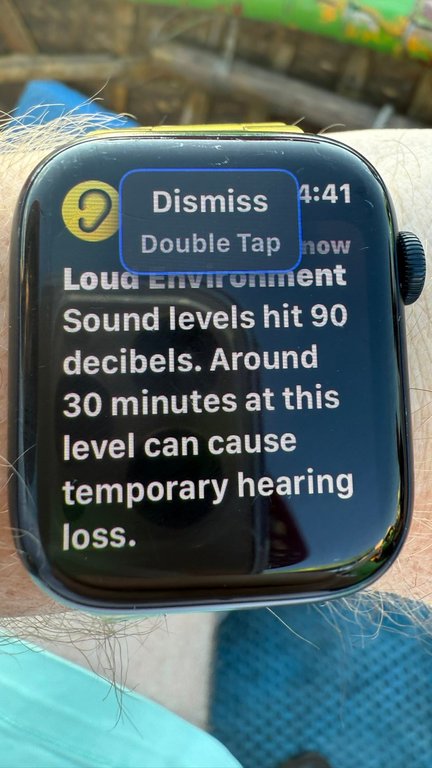
The Vietnamese are masters of adaptation, and the basket boats were being put to every use you could imagine. Mobile karaoke stations. Floating photography studios. Carnival rides, where a rower spins you in your basket until you vomit. At one point my watch interrupted the fun to inform me that sound levels had hit 90 decibels, and that around thirty minutes at that level could cause temporary hearing loss. It was not wrong.
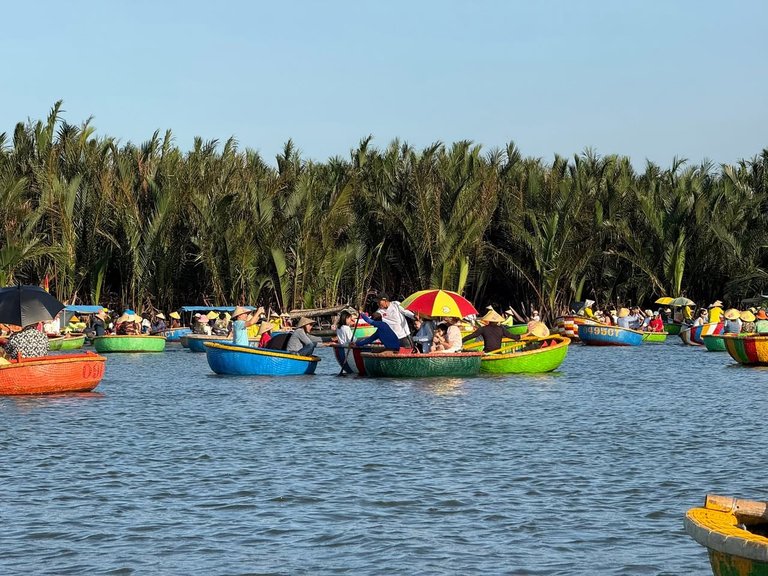
Diem and I took a ride here on our honeymoon, and it was nice to come back and experience it again.
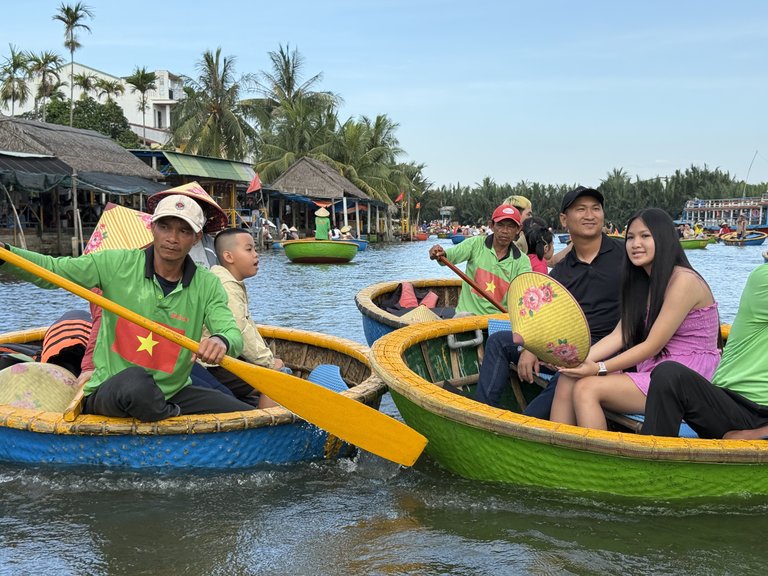
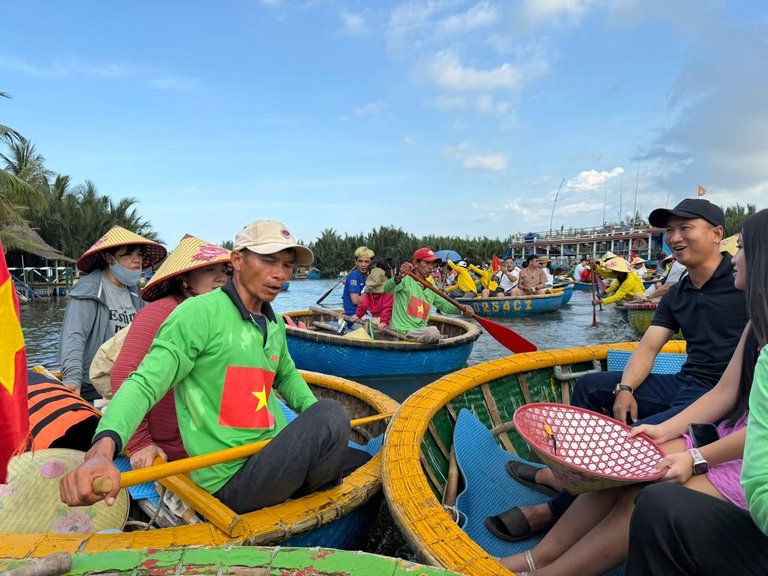
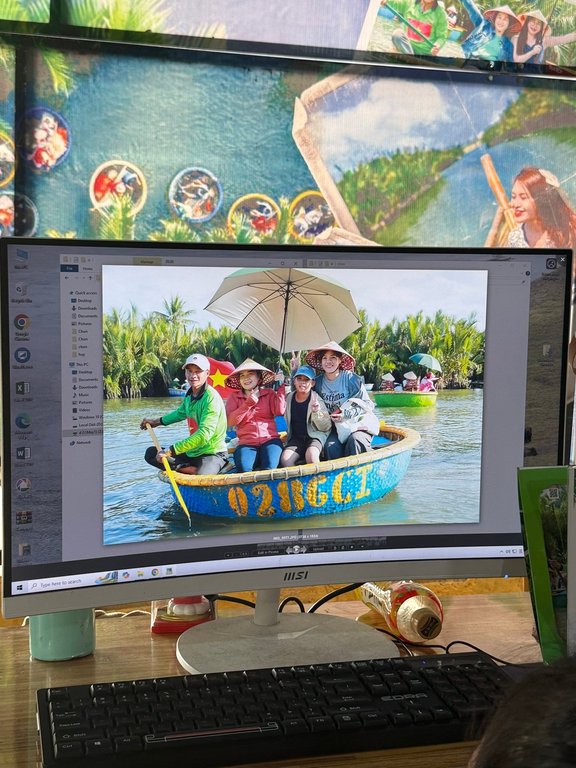
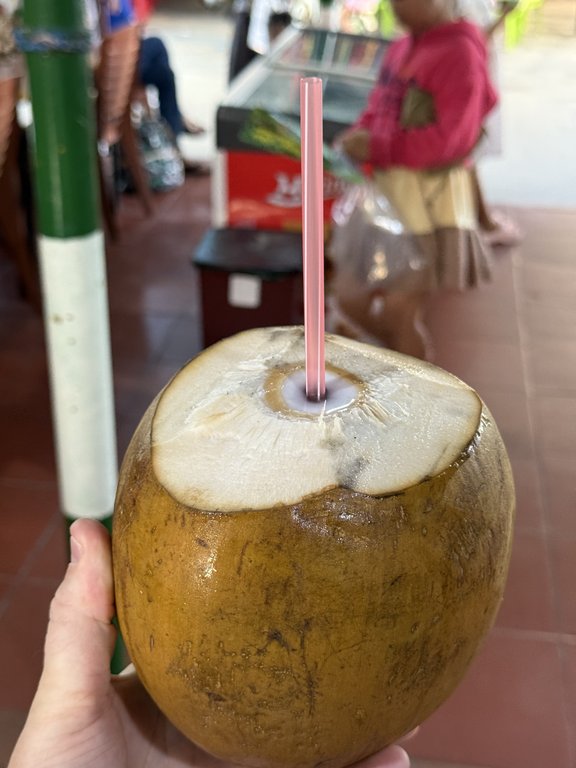
On the way out, the photos from the river were up on a computer screen, and there was a green coconut with a pink straw. Over all, a wild and fun time.
Bánh Mì Phượng
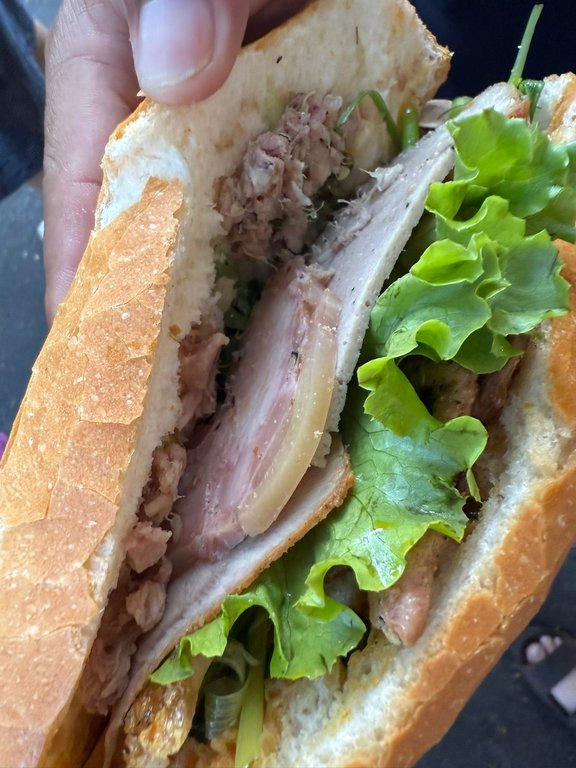
No trip to Hội An would be complete without stopping at Bánh Mì Phượng. Anthony Bourdain's proclaimed best sandwich in the world. As usual the line was long, but the wait was worth it.
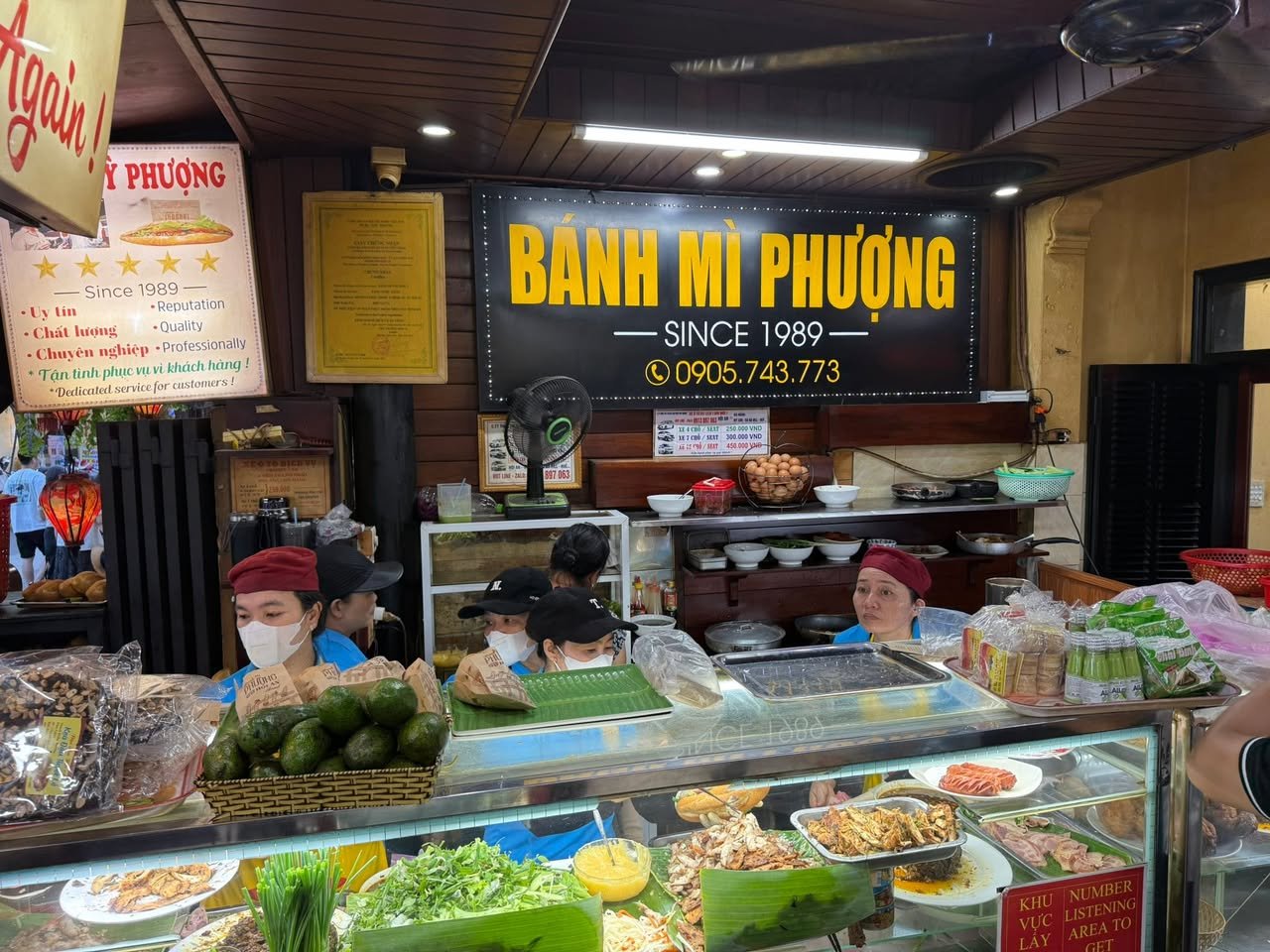
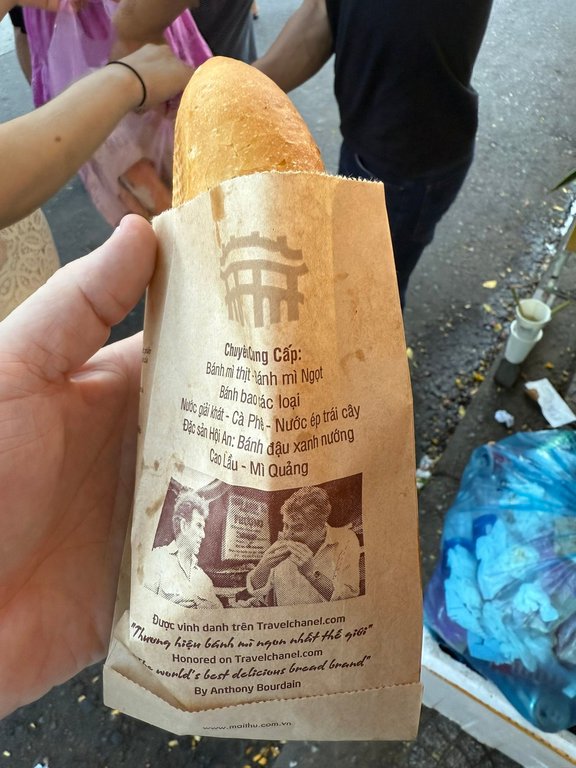
The story is famous now. Trương Thị Phượng sold her sandwiches from a stall at the Hội An market and was already well known to the locals when Bourdain first ate there on a trip in 2007. About two years later he came back with his crew and the restaurateur Philippe Lajaunie and put her on No Reservations, in an episode that aired in 2009. It was a two-minute segment. A year later her stall was full of foreigners who wanted their picture taken with her. She has since moved to a bigger shop on Phan Châu Trinh street, opened a franchise in Seoul in 2019, and hung a photo of Bourdain and Lajaunie eating her bánh mì at the door. Bourdain died in 2018. The line is as long as ever.
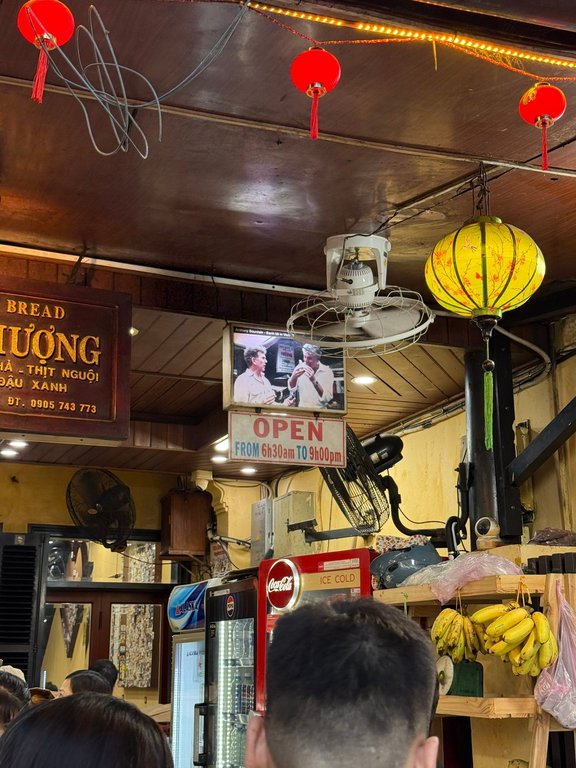
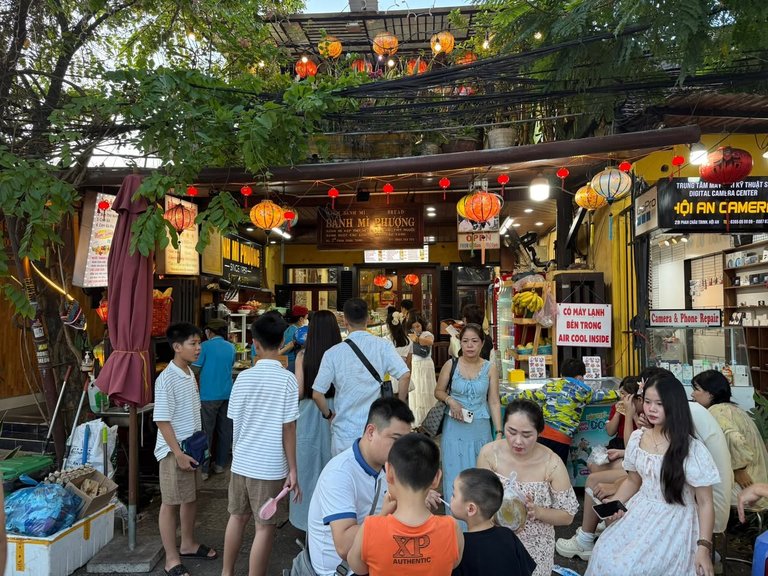
It is a sandwich unlike anything else. Tender pork, chunks of forcemeat, an amazing version of pork liver pâté, lettuce, chives, basil, sweet and sour cucumber, carrots, a special secret sauce, and what is recognized locally as one of the best baguettes out there. A crispy shell with a soft, light interior. When we lived in Da Nang, I drove down here a couple of times a month for one of the world's best sandwiches. Someone asked if I would ever try making them myself. Probably not. I'd have to master the bread and figure out all the different meats and sauces. There's probably things in there I've never heard of.
Faifo
It is worth a moment on how a sandwich shop in a small river town ended up on American television, because Hội An has been receiving visitors for a very long time.
It is worth a moment on how a sandwich shop in a small river town ended up on American television, because Hội An has been receiving visitors for a very long time.
Long before it was Vietnamese, this was a Cham port. Between roughly the 7th and 10th centuries the Champa kingdom controlled the spice trade along this coast, and the harbor at the mouth of the Thu Bồn was its commercial heart. In 1471 the Vietnamese emperor Lê Thánh Tông conquered Champa, and the port changed hands. It truly flourished under the Nguyễn lords, who ruled the south from 1570 and needed foreign trade, and foreign bronze and gunpowder, for their wars. They passed laws protecting foreign merchants, and in the 1600s Hội An became the busiest international port in Southeast Asia. Europeans called it Faifo. A Japanese quarter had formed by 1617. Between 1604 and 1635, 75 of the Japanese merchant ships sailing for Southeast Asia docked here. The Chinese quarter lay across a small creek.
Then Japan closed its doors. As the Tokugawa shogunate turned inward and persecuted Christians, the Japanese community dwindled, and the Chinese took over the trade. After the fall of the Ming, many more Chinese came and formed Minh Hương communities. Their Quan Công temple, built with their Vietnamese neighbors, dates to 1653. In 1775 the Trịnh army took Quảng Nam and destroyed much of the commercial district, sparing only the religious buildings. The town recovered, but the sea was already leaving it. In the 19th century the estuary narrowed and the Cổ Cò River silted up until large ships could no longer reach the town. When the French took Da Nang as a concession in 1888, many of the Chinese merchants relocated there, and Hội An quietly fell asleep.
That long sleep is why the old houses survived. In the 1990s a Polish architect named Kazimierz Kwiatkowski championed its restoration, and there is a statue of him in town today. Japan's Agency for Cultural Affairs began sending technical teams in 1993. In 1999 UNESCO inscribed the old town as a World Heritage Site, a well-preserved Southeast Asian trading port of the 15th to 19th centuries. A count in 2000 found 1,068 ancient houses among some 1,360 listed relics.
As for what is happening today, the city of Hội An no longer exists. On paper, at least. On July 1, eleven days after our visit, Vietnam's new map took effect, and Quảng Nam province was merged into the city of Da Nang. The city of Hội An was dissolved, and the old town ward of Minh An, along with Cẩm Phô, Sơn Phong, Cẩm Nam and Cẩm Kim, was folded into a single ward of Da Nang named, sensibly, Hội An. Da Nang inherited two World Heritage Sites in one stroke, Hội An and the Cham temples of Mỹ Sơn, and the Japanese Bridge has been described as the new symbol of the city. When we lived in Da Nang, I drove down to Hội An for a sandwich. Now I would not even have to leave town.
The Bridge
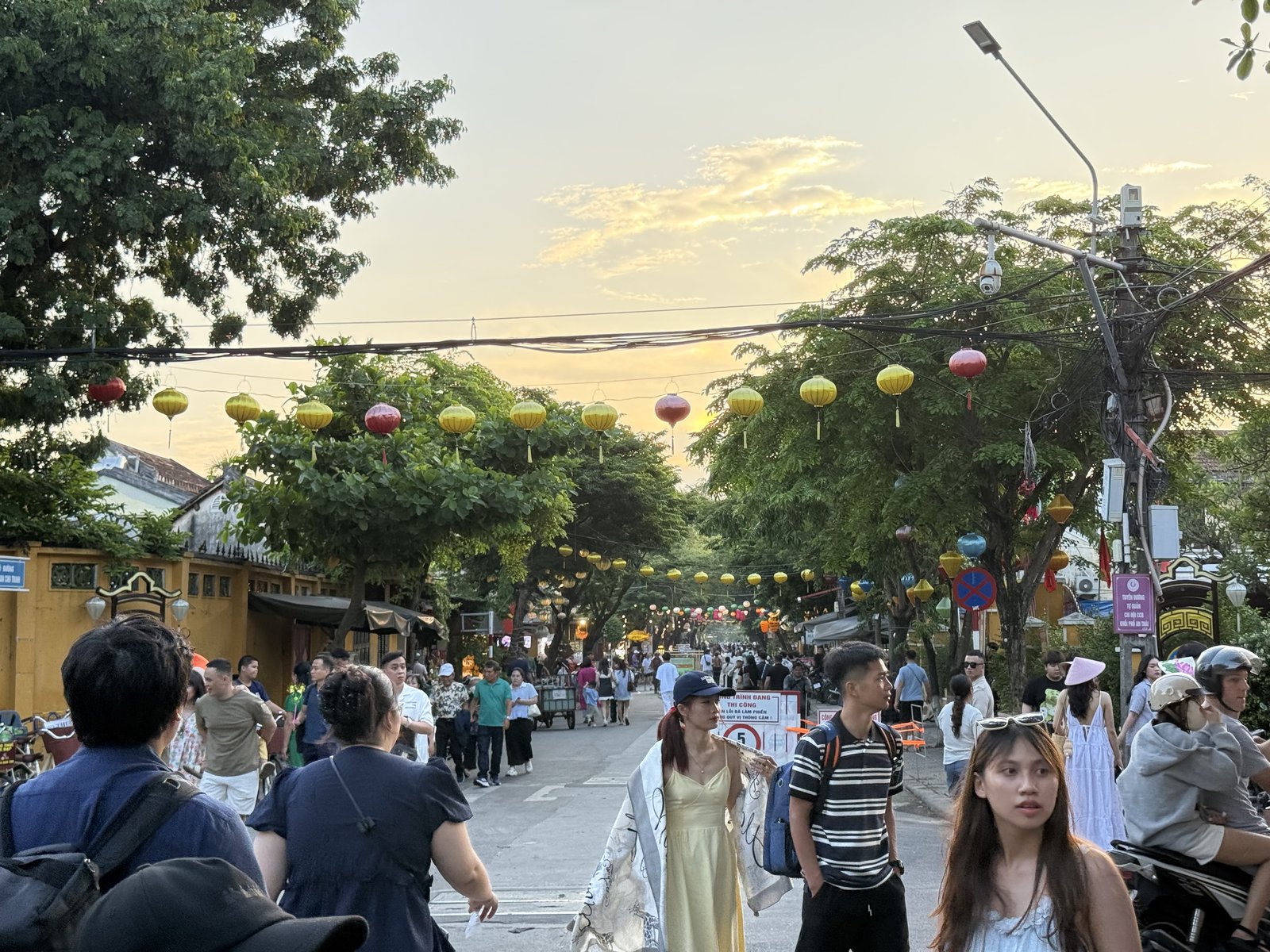
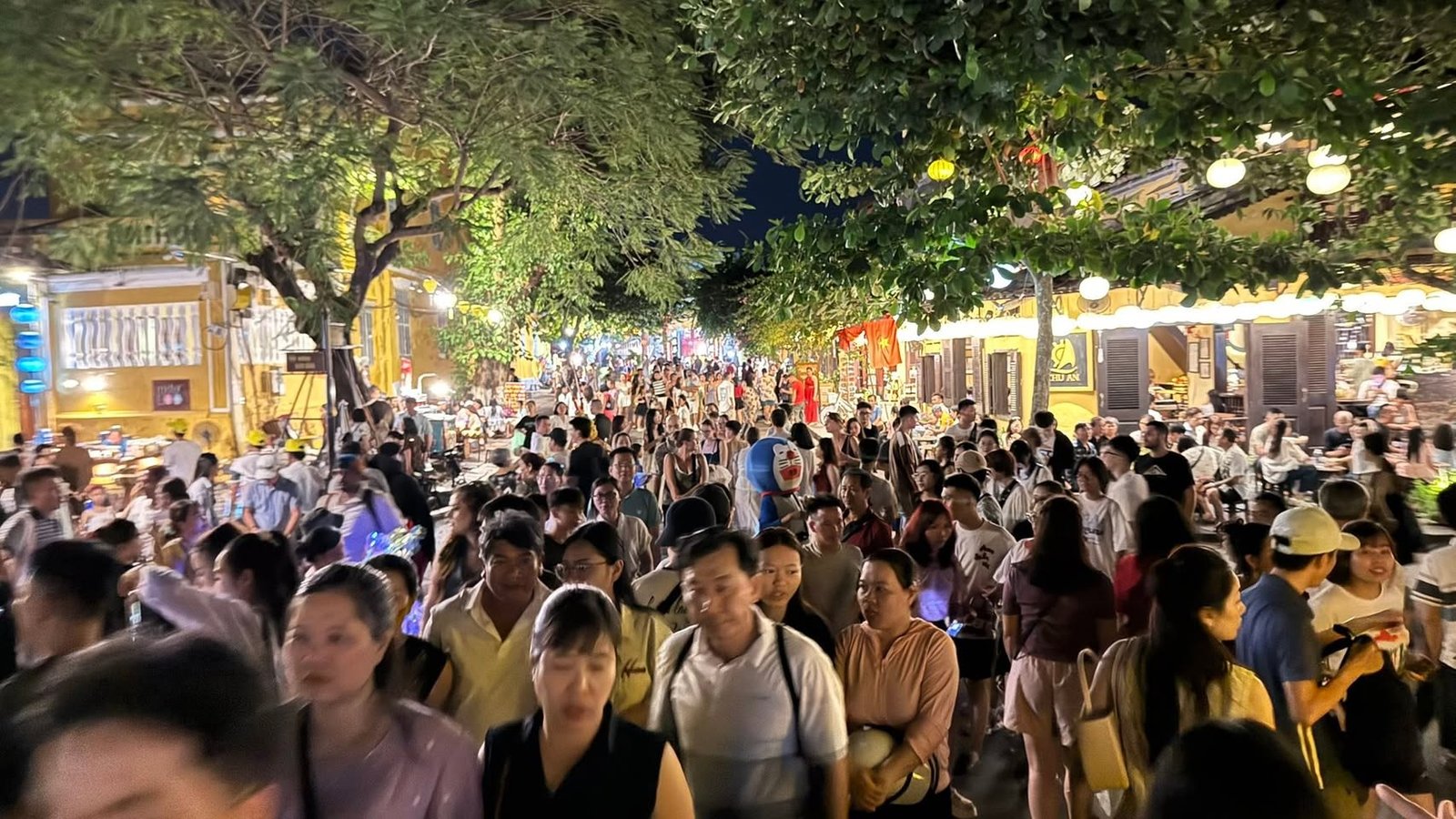
We walked into the old town as the sun was going down. The trees along the streets were hung with lanterns, yellow and red and green, and the crowds were already thick.
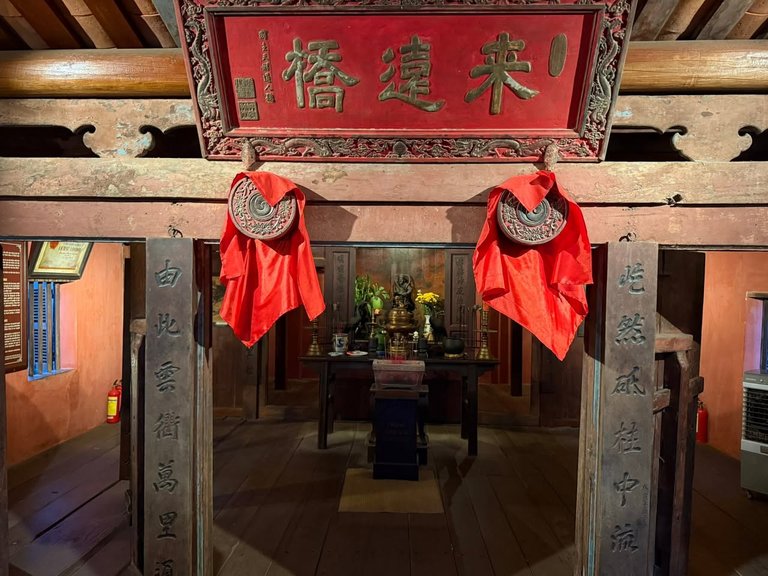
The Japanese Covered Bridge, Chùa Cầu, is Hội An's emblem. The Japanese community built it around the turn of the 17th century, by tradition in 1593, to link their quarter to the Chinese quarter across the creek. A small temple, added in the 1650s, is dedicated to Trấn Vũ Bắc Đế, the Taoist guardian against floods and storms. In 1719 the Nguyễn lord Nguyễn Phúc Chu visited and gave it a proper name, Lai Viễn Kiều, the bridge of friends from afar. The three gold characters still hang inside on a red lacquered board. A pair of monkeys guards one end and a pair of dogs the other. Locals say they mark the years of the Monkey and the Dog, when construction began and ended. There is also a legend of a great water monster whose body stretched from India to Japan, shaking the earth in Japan and flooding Hội An whenever it moved. The bridge, so the story goes, was driven into its back like a sword to hold it still.
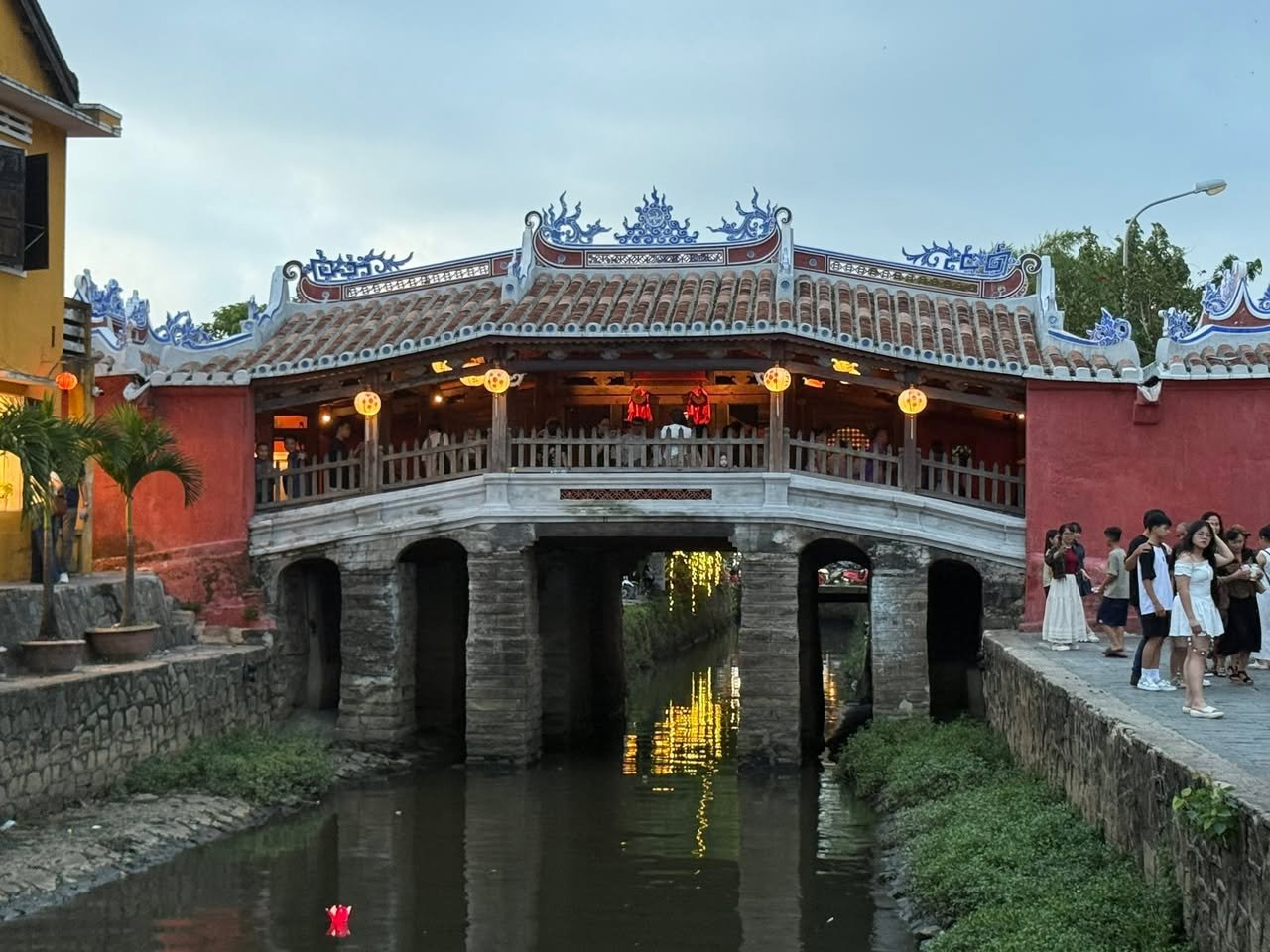
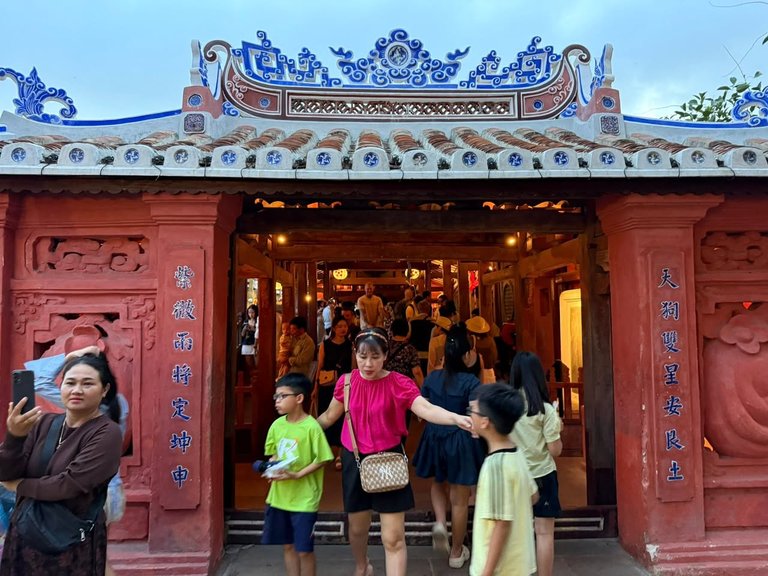
The bridge we walked through was freshly restored. It had been repaired at least seven times before, in 1763, 1817, 1875, 1915, 1962, 1986 and 1996, but never quite to the root of the problem. It closed on December 28, 2022, for a restoration advised by Japanese experts, and reopened with a ceremony on August 3, 2024, at a cost of about 20 billion dong, around $800,000. About sixty percent of the old wood was saved and reused. Plenty of people grumbled that it now looks too new, with its fresh paint. The restorers' answer is that new work should be honest about being new. I will leave that one to the experts.
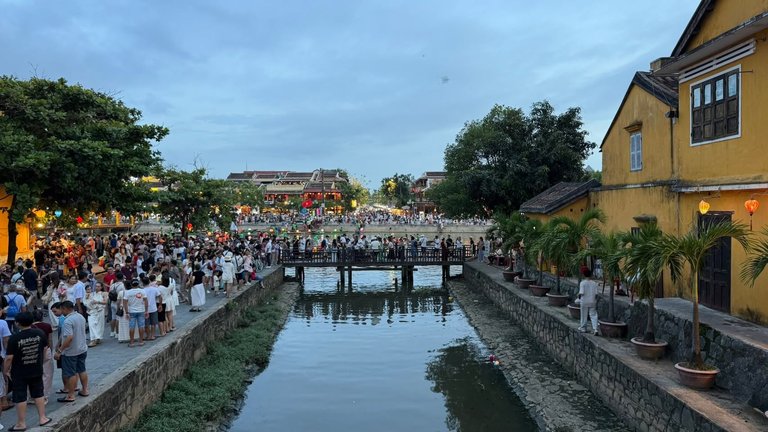
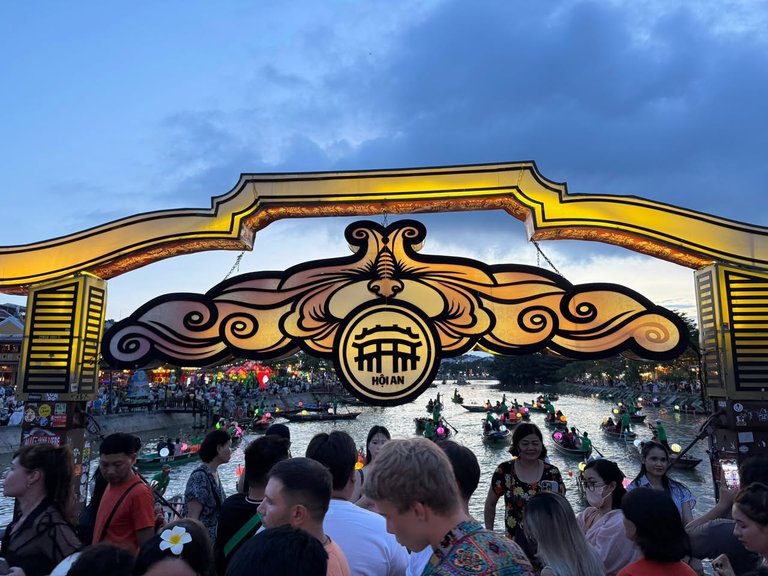
On the far side, the canal was lined with people from end to end, and down at the river a great yellow arch framed the water and the boats waiting for dark.
Lanterns
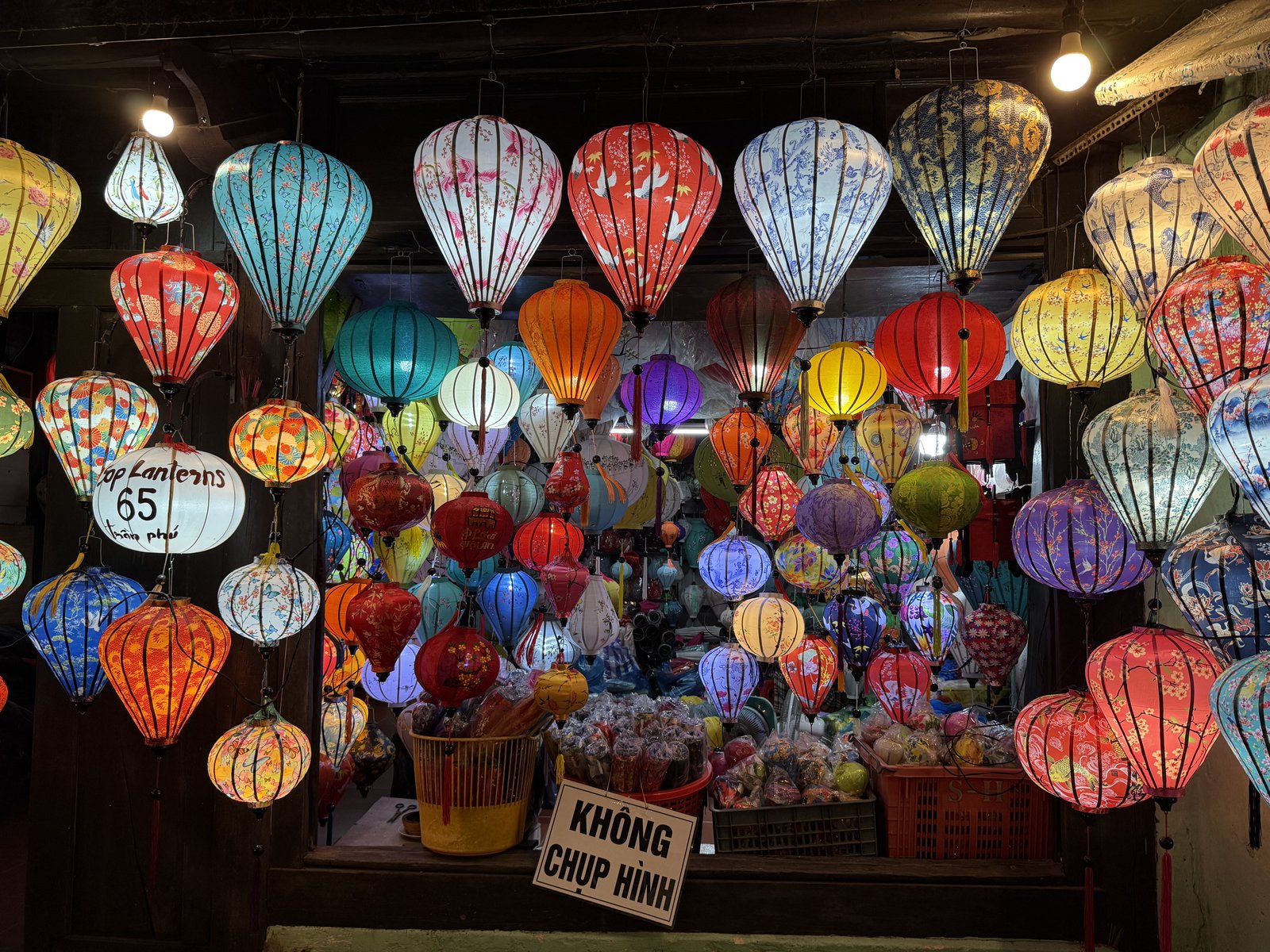
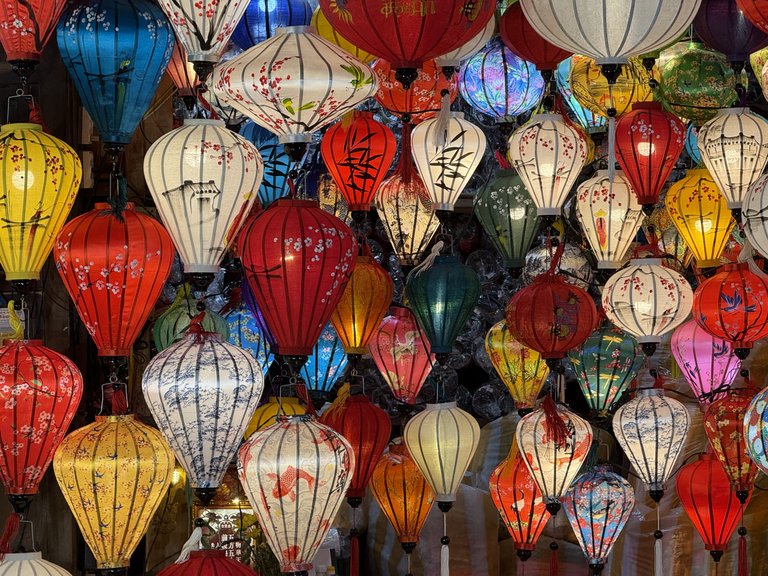
Hội An's nickname is the city of lanterns, and after dark it earns it. Lanterns came here with the Chinese and Japanese merchants who hung them in front of their shops and houses, and the town has been making them ever since, in every color there is. Once a month, on the 14th night of the lunar month, the old town switches off its electric lights and lets the lanterns do all the work. This was not that night. It hardly mattered.
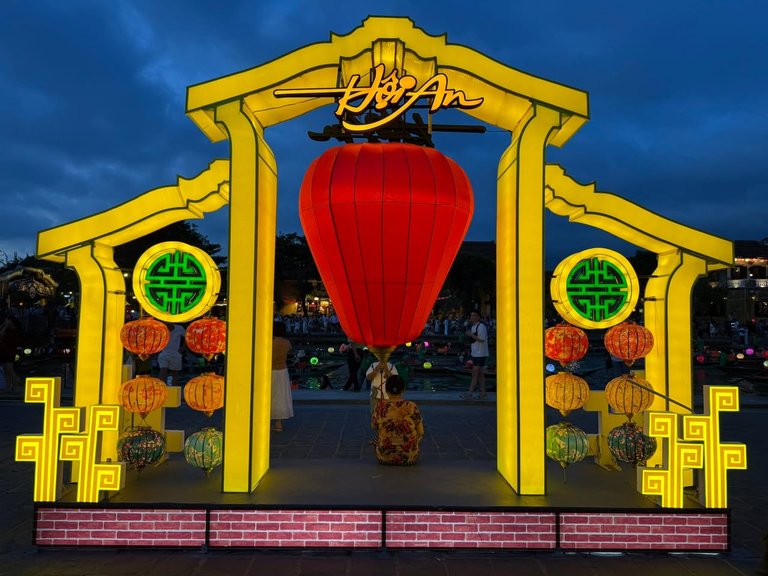
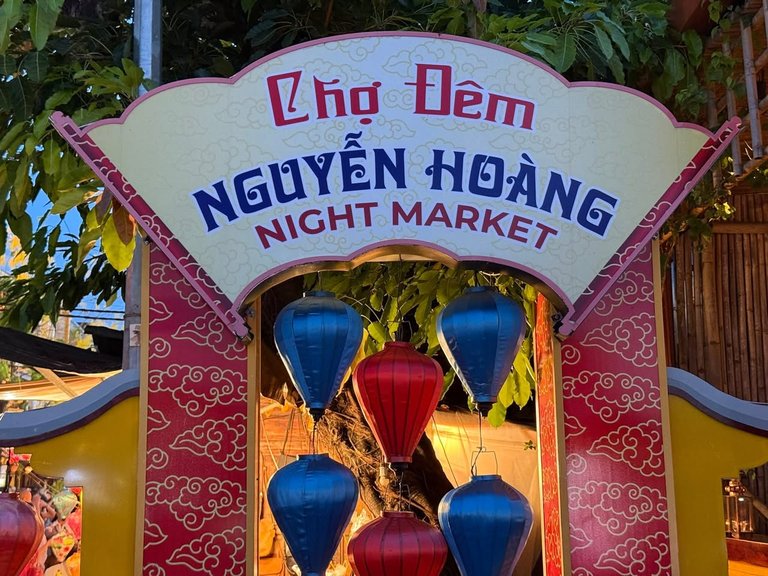
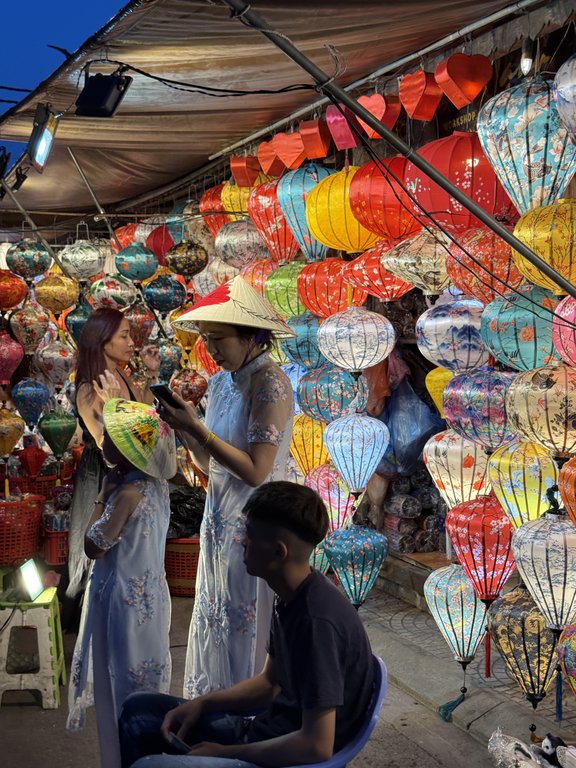
The night market rests on the island across the Hoài River from the old town, and it is a wall of lanterns from one end to the other. Every stall wants to sell you one, and every visitor wants a picture in front of them. Some stalls, judging by the little signs reading Không chụp hình, no photos, would prefer you did not. I may have taken a picture of one anyway.
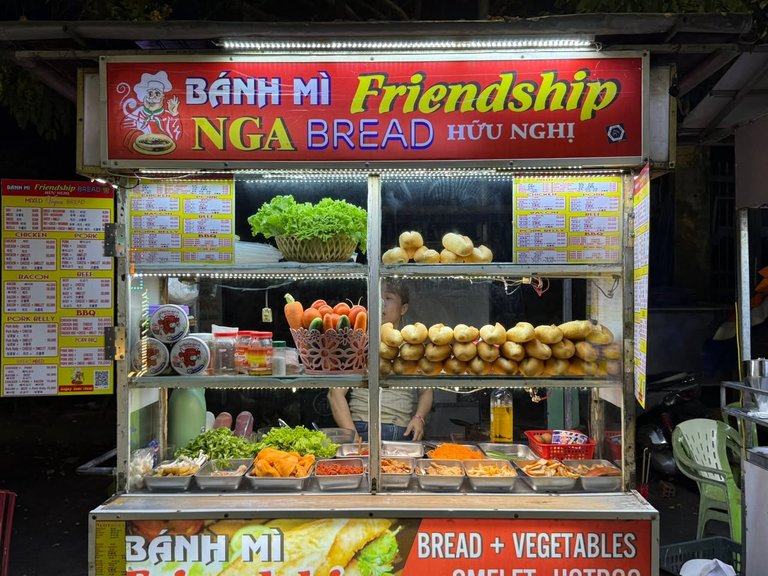
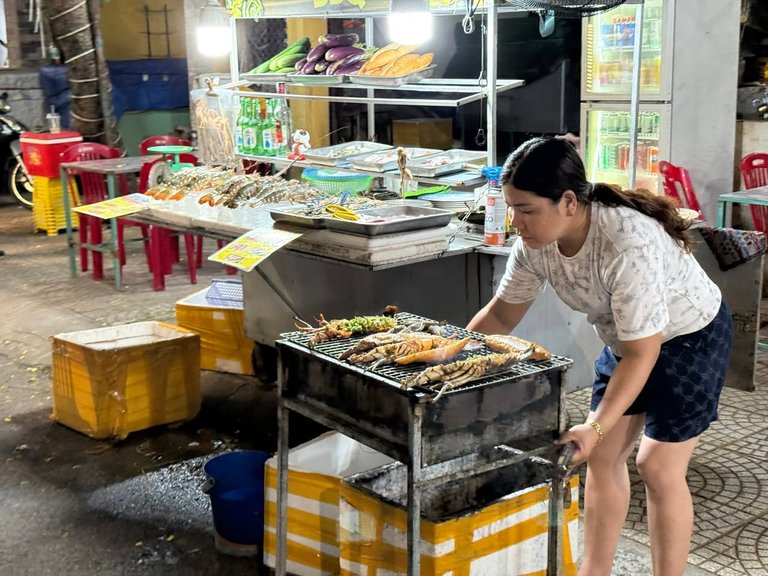
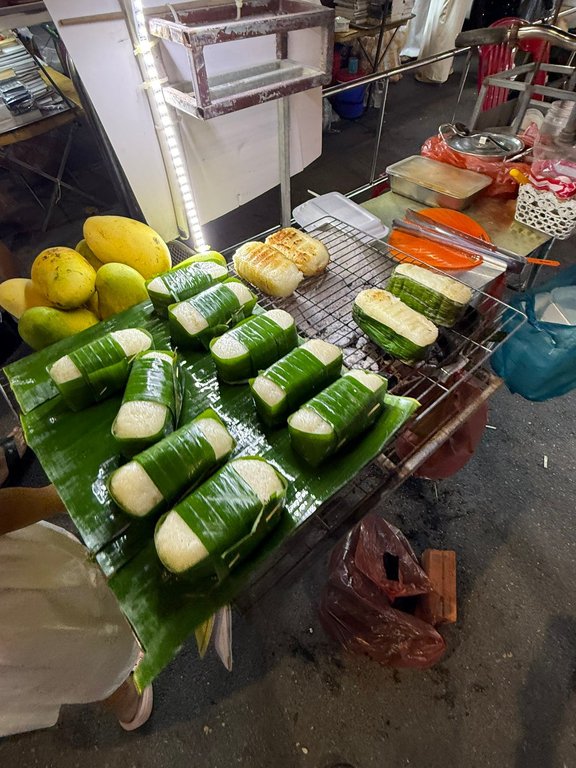
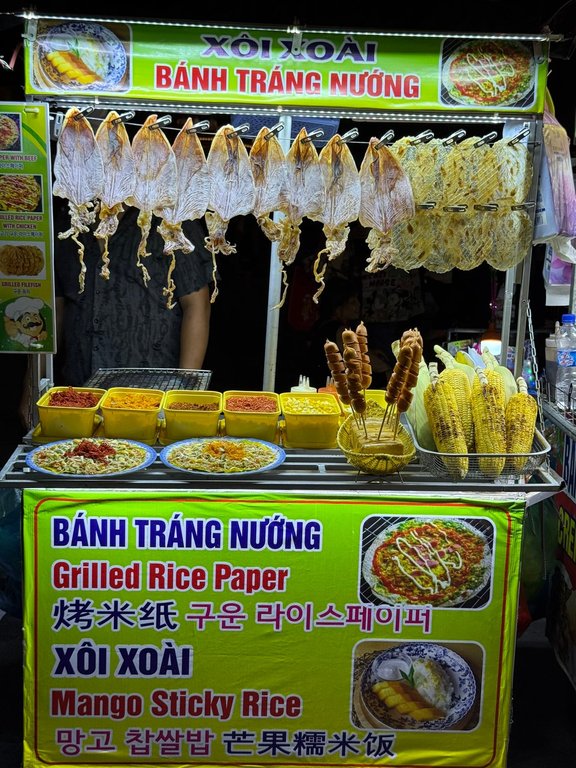
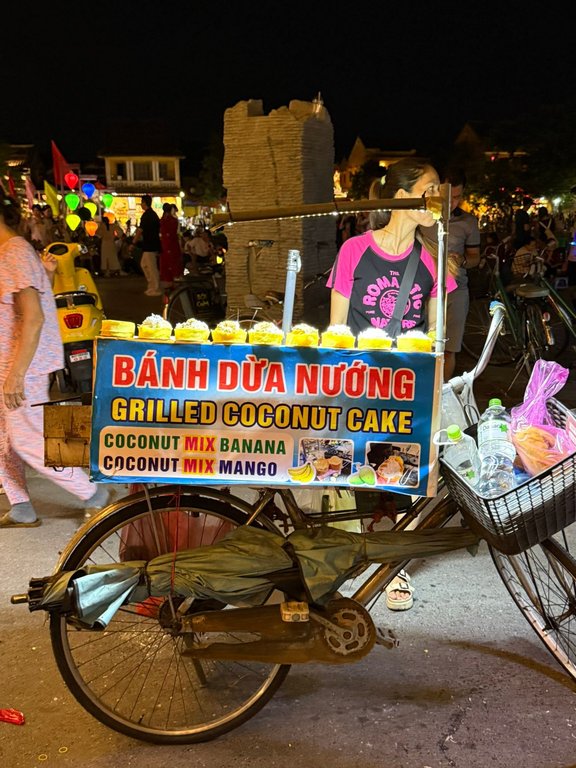
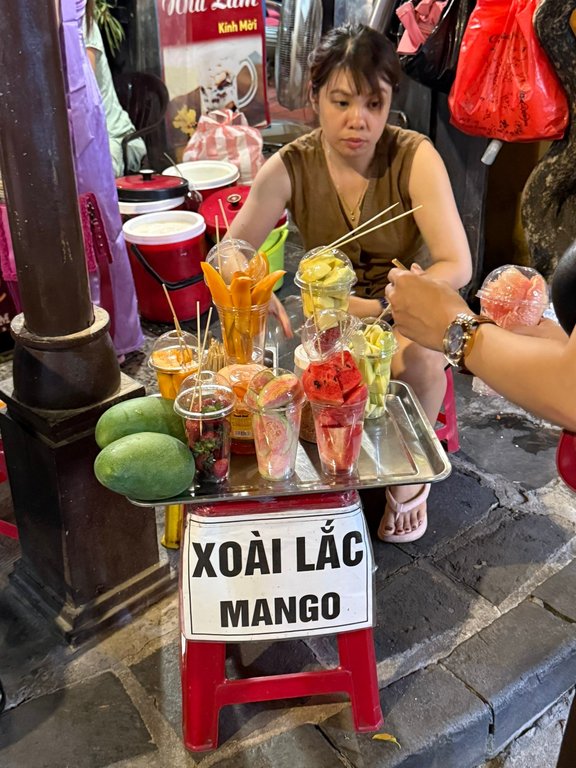
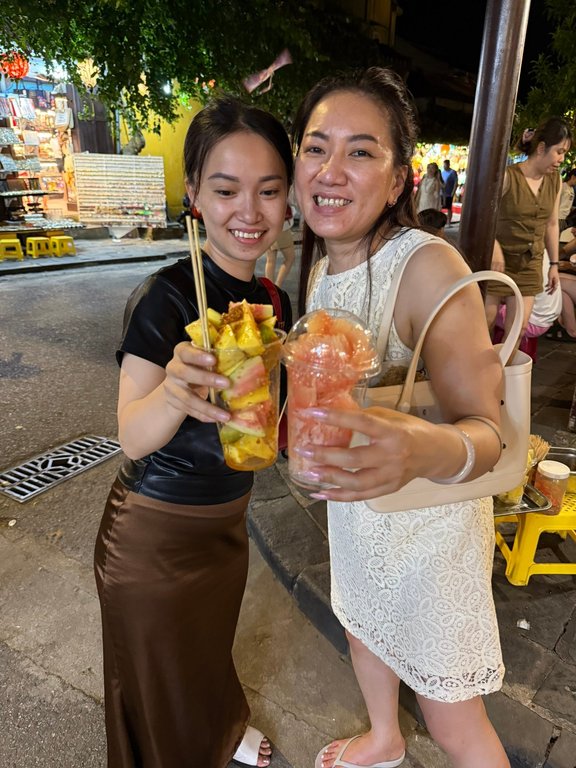
Between the lantern stalls, the carts were out. Bánh Mì Friendship, with its glass case of baguettes and vegetables. A woman bent over a charcoal grill, red plastic stools behind her. Banana leaf parcels on the coals, with a few mangoes at the edge of the grill. Bánh tráng nướng, grilled rice paper, the Vietnamese answer to a pizza, under a curtain of dried squid. Bánh dừa nướng, grilled coconut cake, sold off the back of a bicycle. And xoài lắc, shaken mango, sold by the cup.
The Tailor
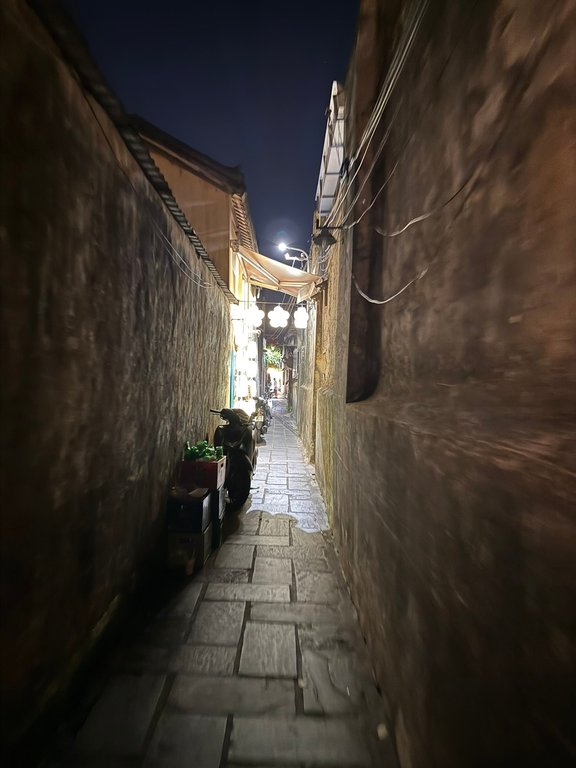
Away from the river the alleys go narrow and quiet in a hurry. Some are barely shoulder wide, stone underfoot and old plaster walls rising on both sides, a lantern or two glowing at the far end.
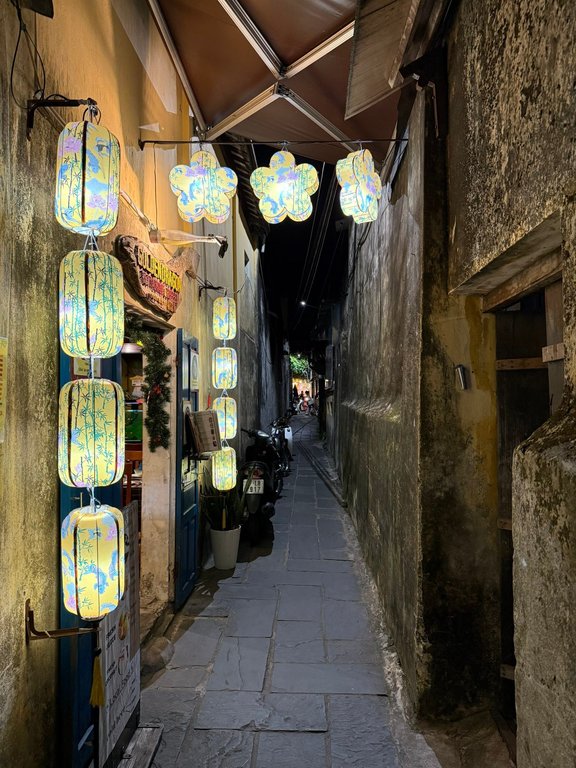
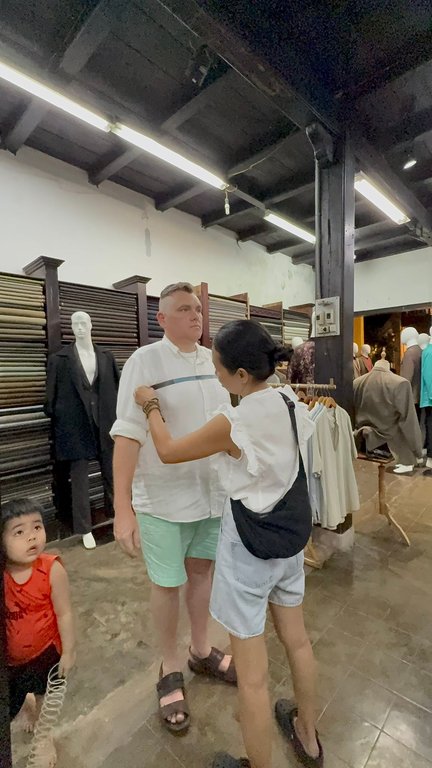
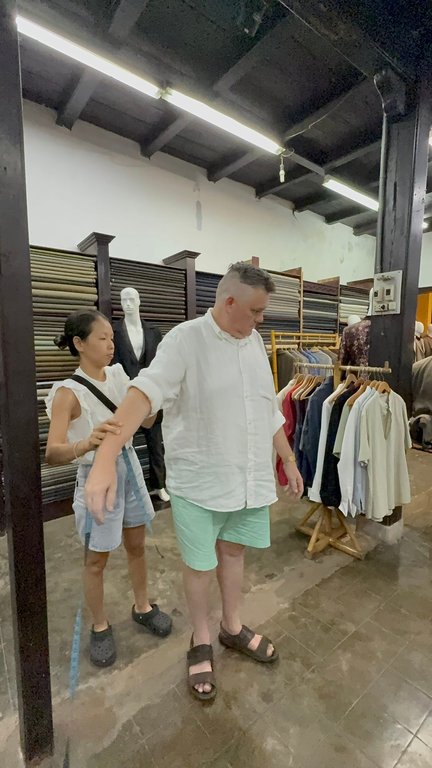
Hội An has a plethora of tailor shops. Some credit the town's old life as a silk port, though the custom clothing boom is mostly a modern one, built on visitors who want something made to measure and made quickly. Plenty of shops will turn out a blazer in under a day. You get what you pay for, and the better ones want an extra day or two and a second fitting. When I wrote about the tailor shops here before, you could get a custom, made from scratch, hand tailored silk suit for under $200.
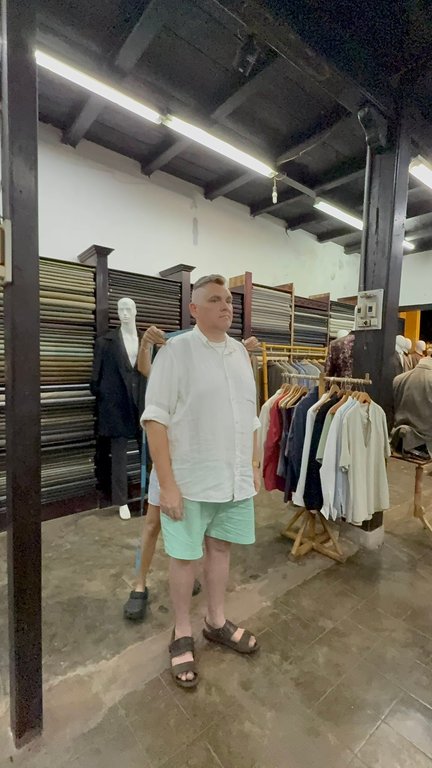
So I got measured, for three-piece suits. I stood in a shop full of fabric, mannequins and racks of shirts while a woman with a tape measure went over every inch of me. I will spare you the numbers.
Wishes on the River
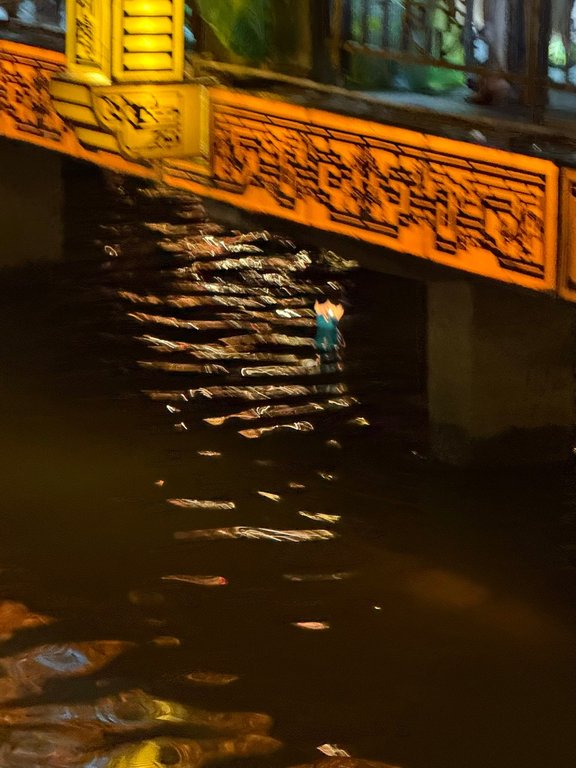
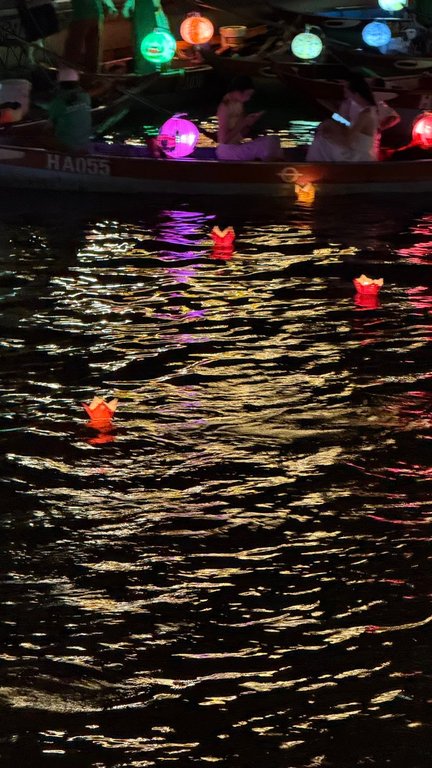
Later, down at the water, it was fully dark. The river was black and gold, the reflections of the lanterns broken up by the boats, and here and there a small flame drifting on the current.
Some things in Vietnam can be a bit shocking. One that has always been a constant point of curiosity to me is wages. When I lived here, from 2019 to 2021, the average worker in Vietnam, as I remember it, took home about $250 a month. Not enough for a family of four to buy a week of groceries in the US. Our rent in Da Nang, utilities included, rarely went over $450 a month, and the base was always $300 or $350. I was punished heavily for my addiction to air conditioning. The average Vietnamese could not afford to live in the apartments we rented, and those were nice, but not luxurious. Most don't have the luxury of air conditioning, an oven, a washing machine, or in some cases still, hot water. I am pleased to know that since we left, that monthly average has climbed to about $320, and it is still growing at a healthy clip. I say all of this to explain how much I appreciate the entrepreneurial spirit that most Vietnamese possess. And I am sometimes compelled to offer an unexpected bonus when the urge strikes.
That night, once darkness had fallen, an old woman came out to the river's edge to sell wishes. Candles, set in little carry-out style paper boxes folded into the shape of a lotus. You light the candle, set it on the water and make a wish, and when the candle is finally put out and consumed by the river, your wish is said to come true. The locals say each little light carries a prayer, for health, for good fortune, for the troubles to float away. When I wrote about the night market here years ago, they sold for a few cents.
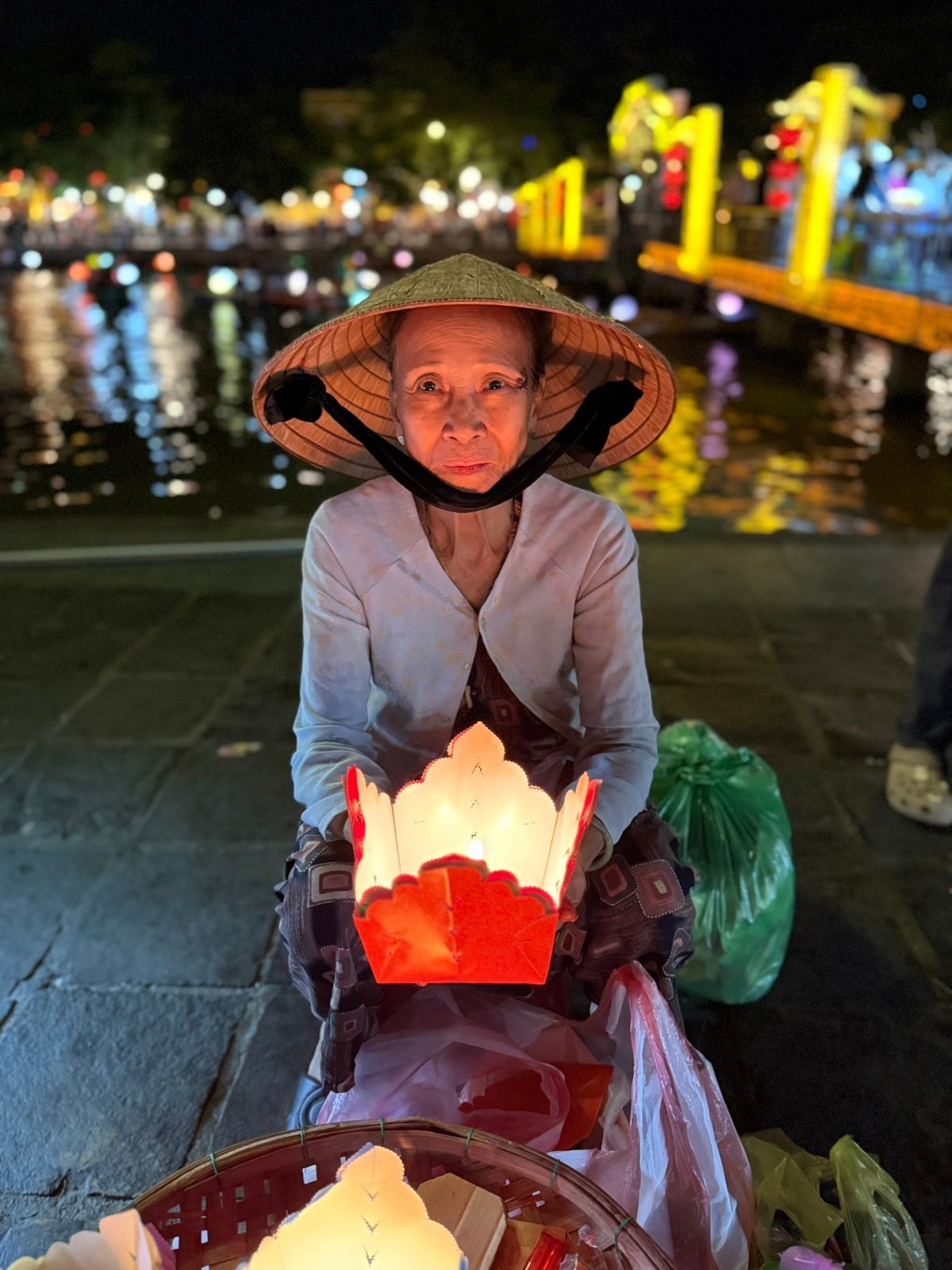
I find beauty in common scenes. I offered the old woman many times what she would get for one candle, simply to take her picture. A brief moment, in a complex world, of just her in all its simplicity. She didn't fully understand why I would offer this, and she didn't need to. I received something in the end far more valuable than she understood. And she would not have to worry that night about whether she would make enough for a good meal. There is something incredibly powerful and beautiful in finding people where they are, and meeting them in the place that belongs only to them.
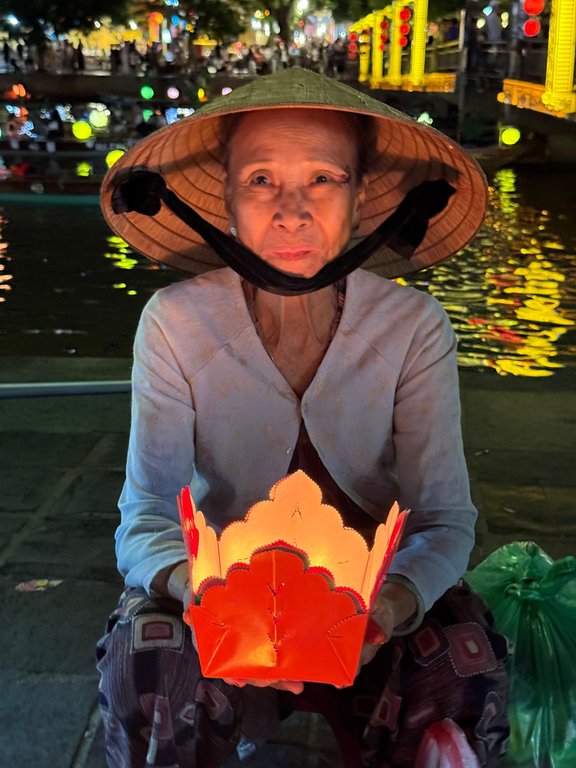
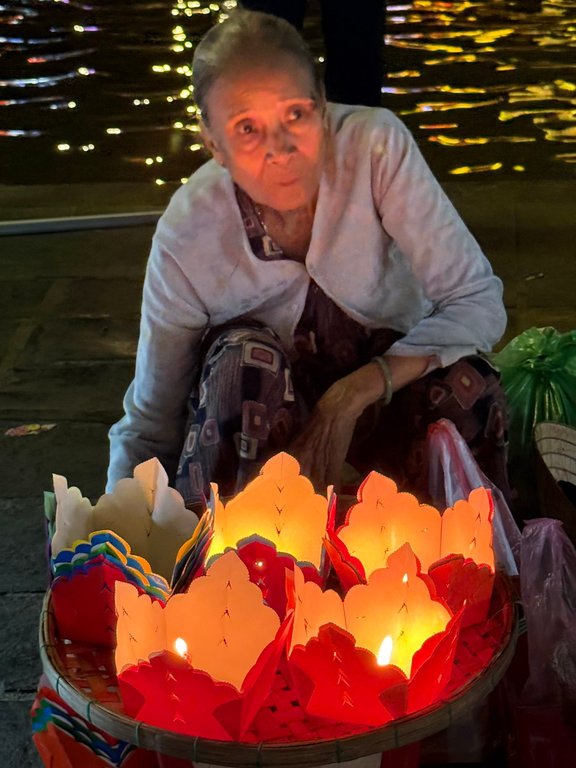
For the record, I didn't buy a wish. I let her keep it to sell to someone else. How would you make a wish for the man who has everything?
Tomorrow there would be a pagoda on the mountain and a table full of seafood by the river. Tonight belonged to the lanterns.
Previously: A Date Night in Dragon City
More from Hội An: The Village Of Lanterns - Sunset In Hoi An, The Night Markets and Returning To Hội An, The Hoi An Exodus and The Honeymoon