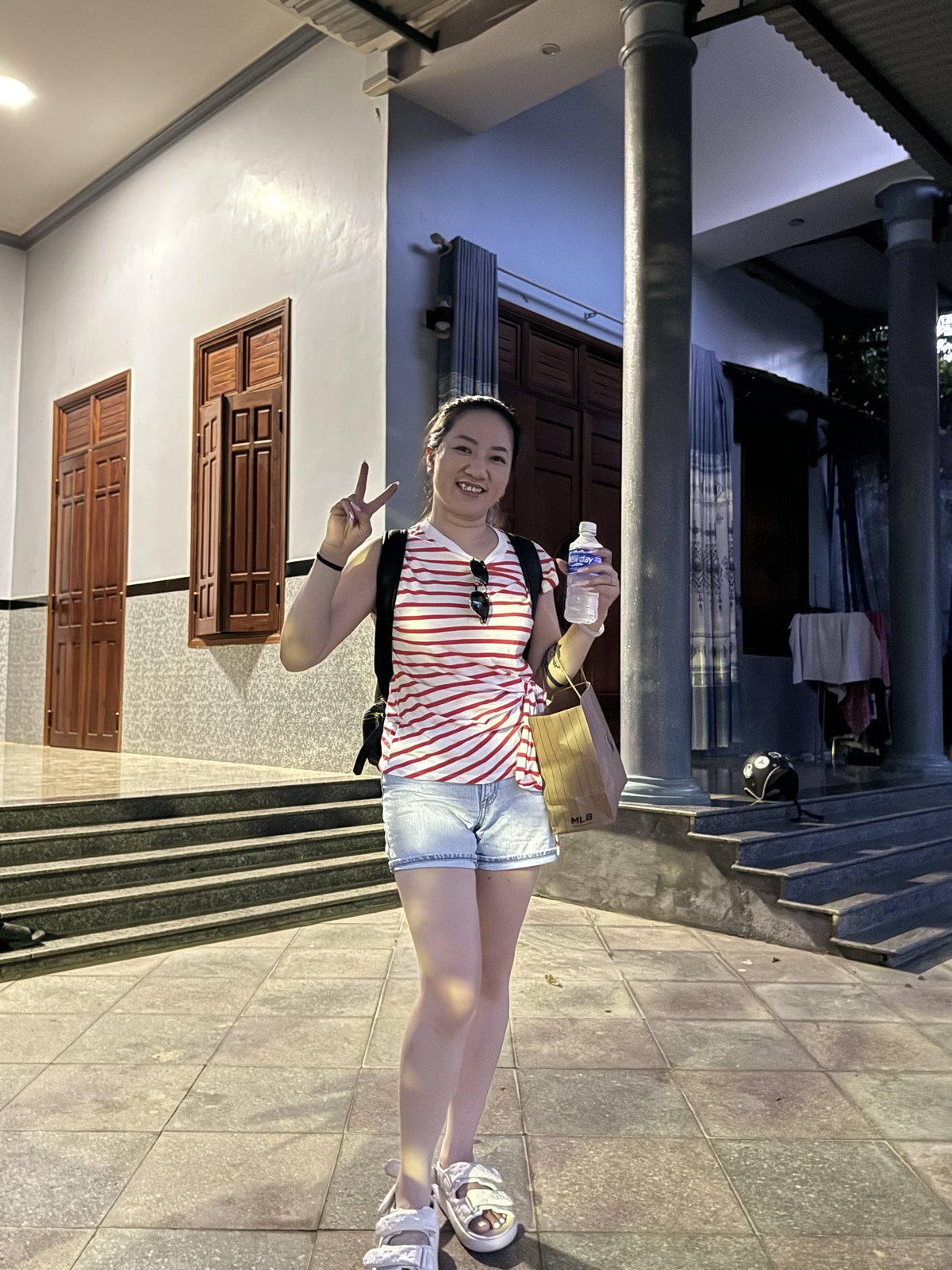
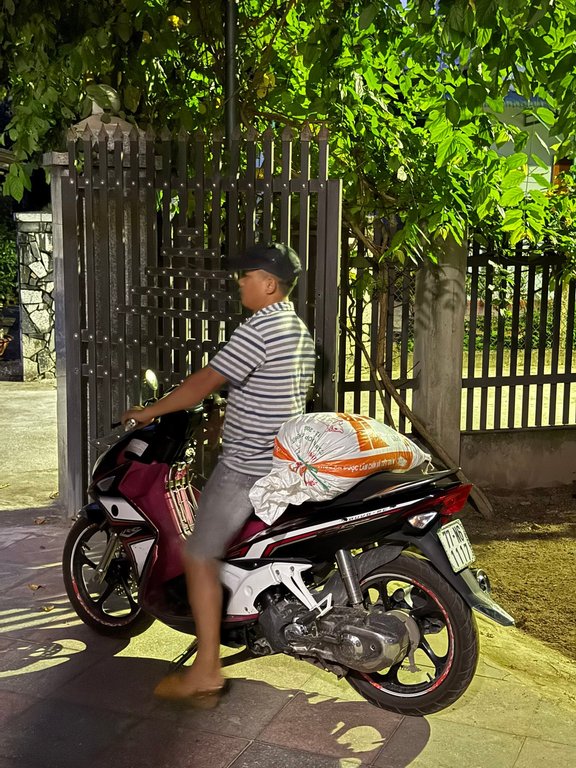
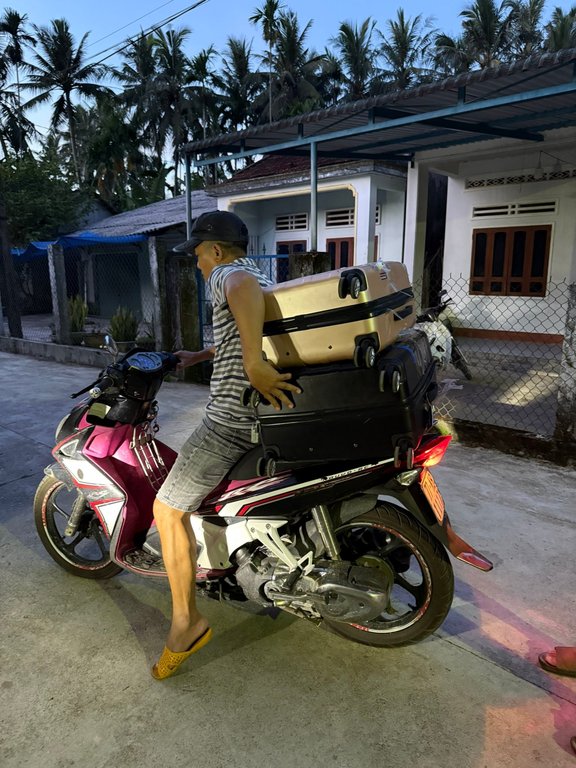
It is always an early morning when we leave An Lão. By five o'clock Diem was out front of the house in her red-striped top, water bottle in hand, flashing me a peace sign as if it were the middle of the afternoon. The bags went down to the van stop the way everything moves in the valley, on the back of a motorbike. A big suitcase rode out on a pink scooter. Another load went out on a red one, through the front gate.
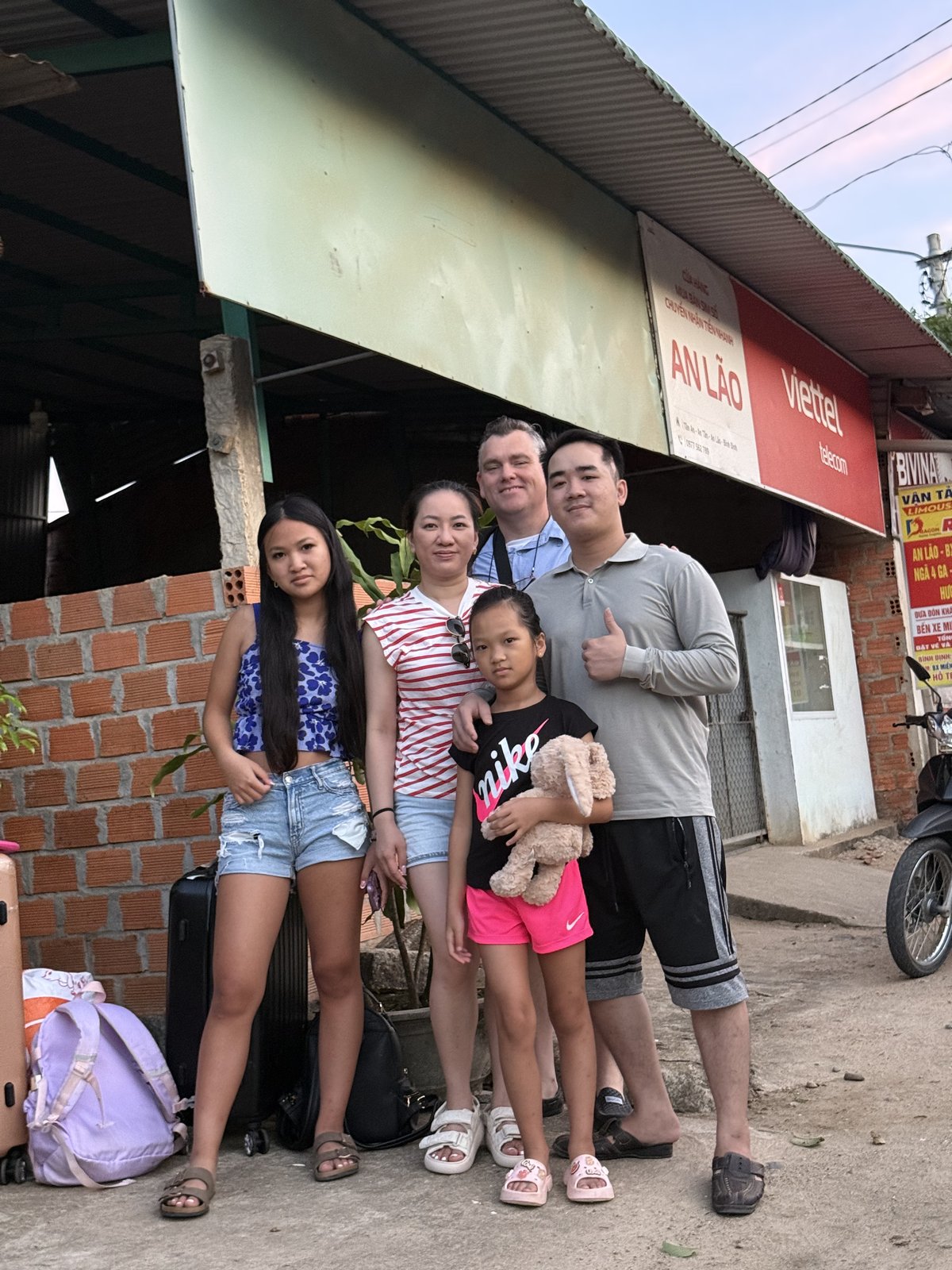
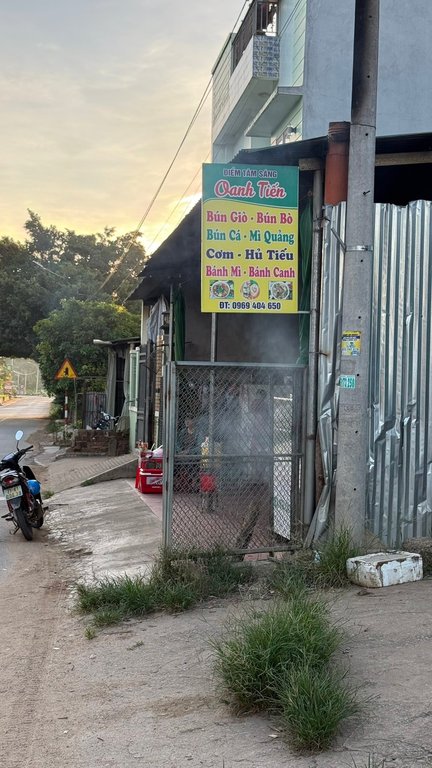
A few minutes after five we were all standing in front of a little shop under the An Lão and Viettel signs, with a small mountain of luggage at our feet, a purple bag in the pile. Jennie was hugging a stuffed animal.
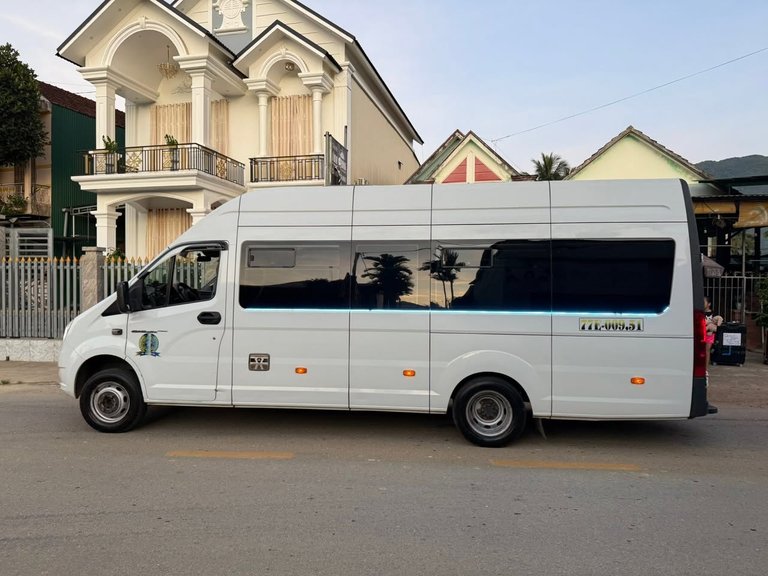
Trieu Vi's Van
Trieu Vi, the transport driver, has run the route from An Lão to Da Nang since Diem was a child. A familiar face, and one I am always happy to see. He leaves An Lão every day at 5:30 in the morning and makes the five hour or so drive to Da Nang. Through decades of honing his craft, he stops many times along the way to deliver packages or people, an orchestra-like dance of people and parcels moving up the coast. He arrives in Da Nang usually before noon, where he unloads, reloads, and makes the return trip to the valley. He runs seven days a week, except for a week during Tết and the big national holiday in September. He stops once on each leg to eat. He is a lifeline to An Lão, and how most people and packages move between the remote mountain district and the city.
I have written about Trieu Vi before. On one long ride out of the valley with him, back during the pandemic, his call came to Diem's phone just after four in the morning. His old transport had 17 seats, counting the driver, and at one point I counted 24 people aboard, not including the countless packages and parcels shoved into every possible place. Makeshift stools went in at the ends of the rows. Our three-seat row held five, and the girls basically sat on us. By the time we stopped for breakfast, my knees were aching to extend.
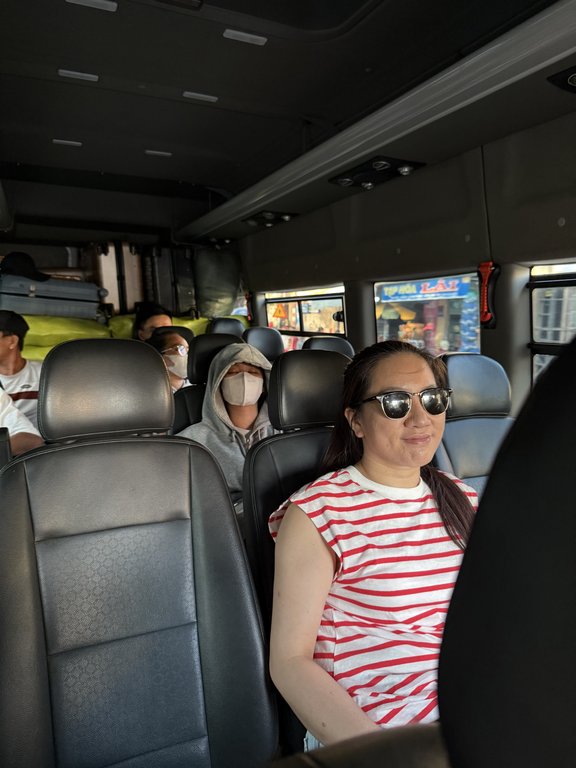
Since then he has upgraded to a very nice sprinter van, and the roads have mostly been paved, which has shortened his once 12 hour round trip. This time Diem, sunglasses on, had a proper seat with a proper headrest, and so did everyone else.
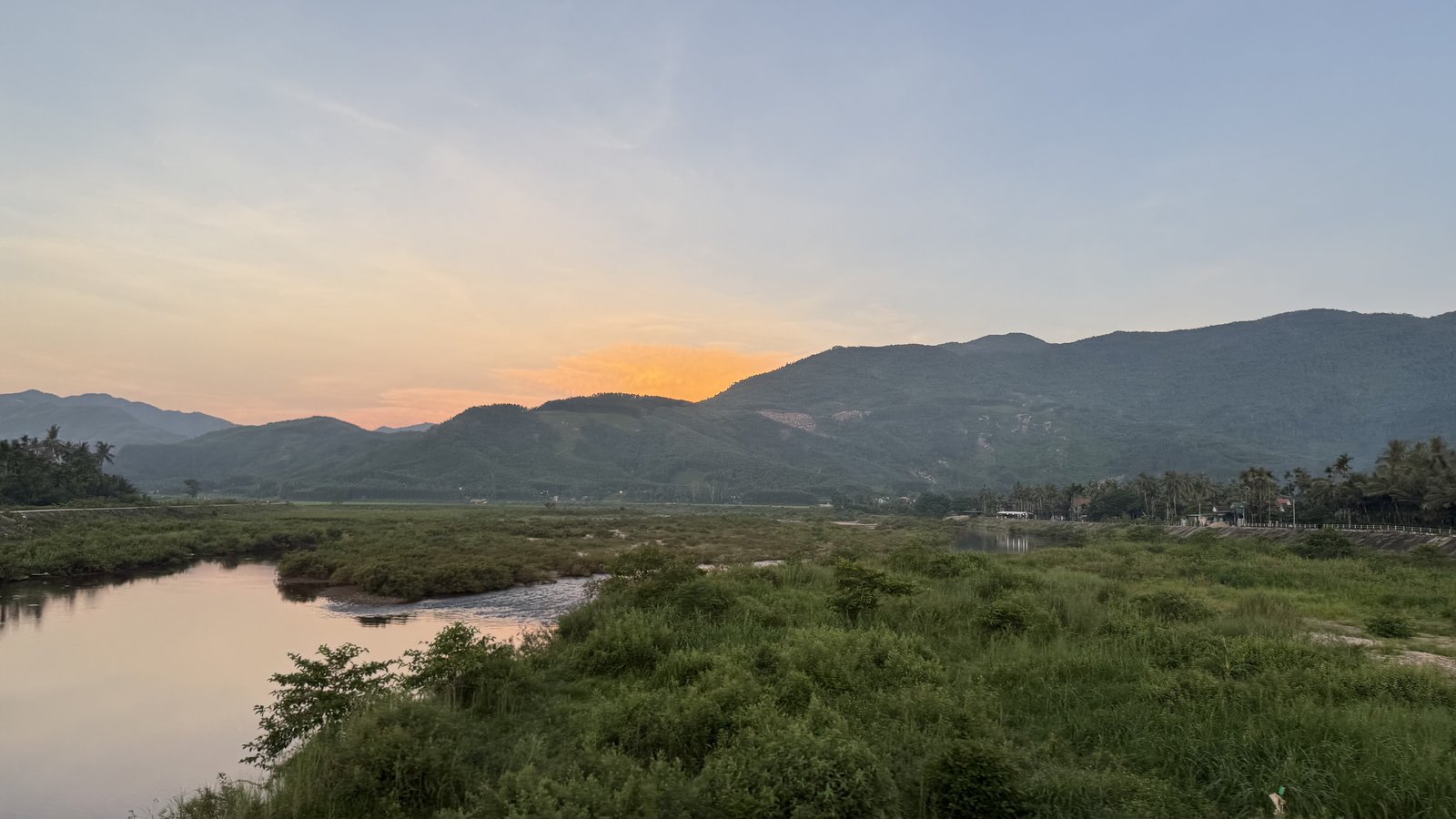
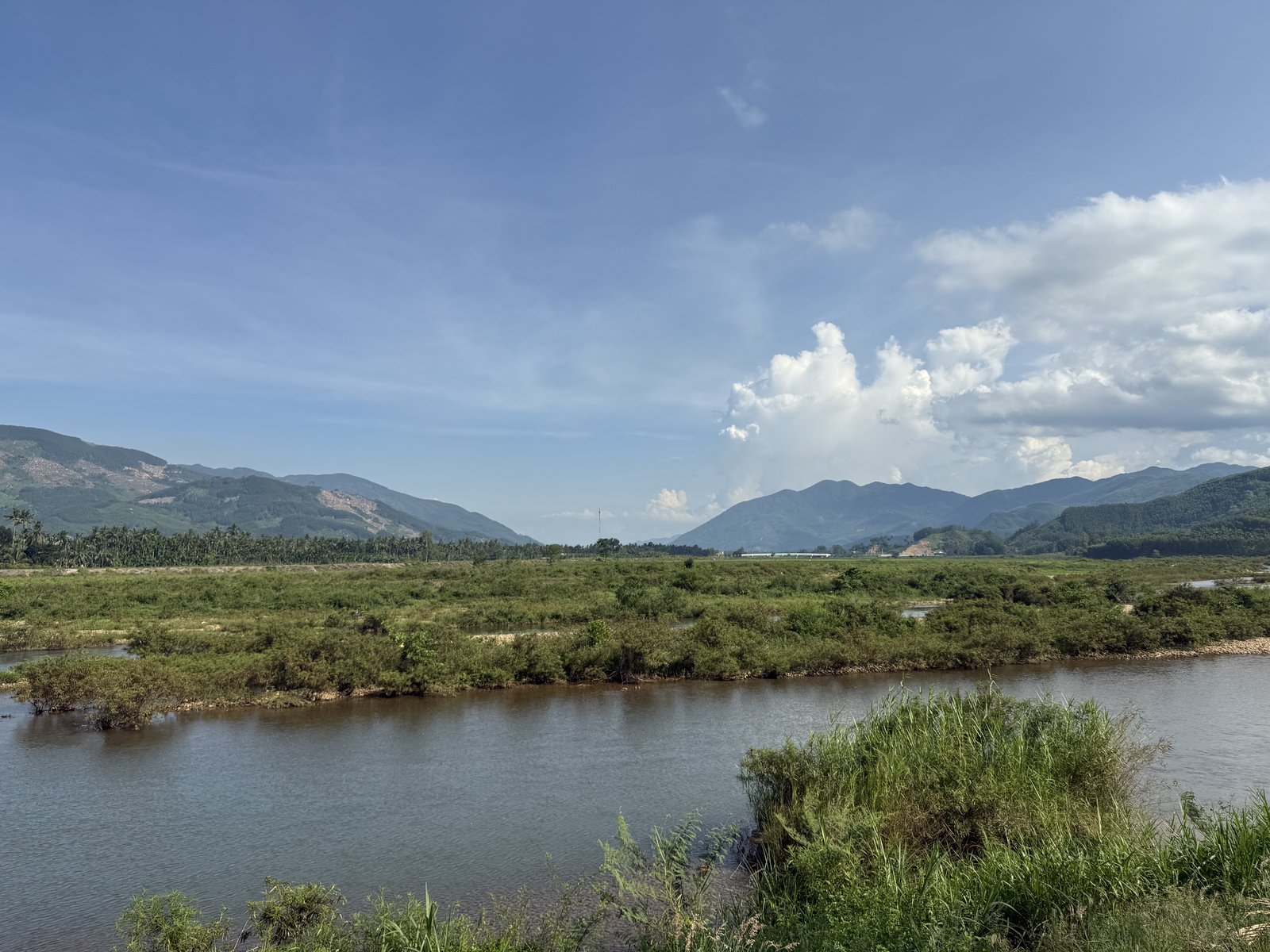
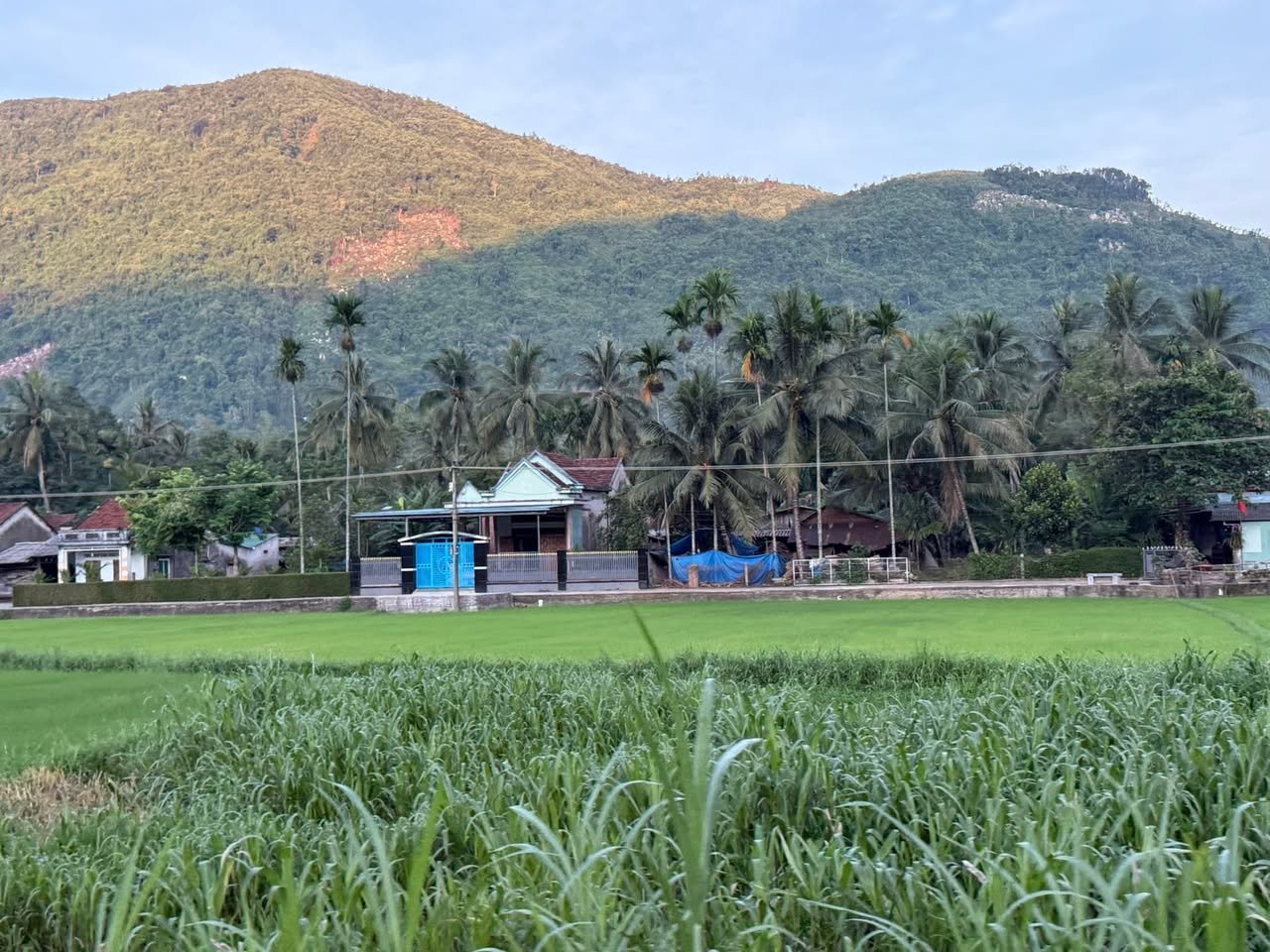
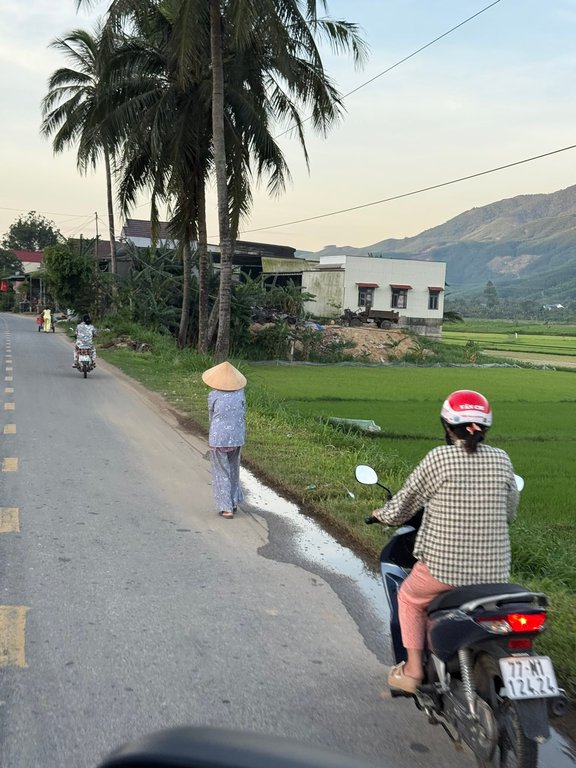
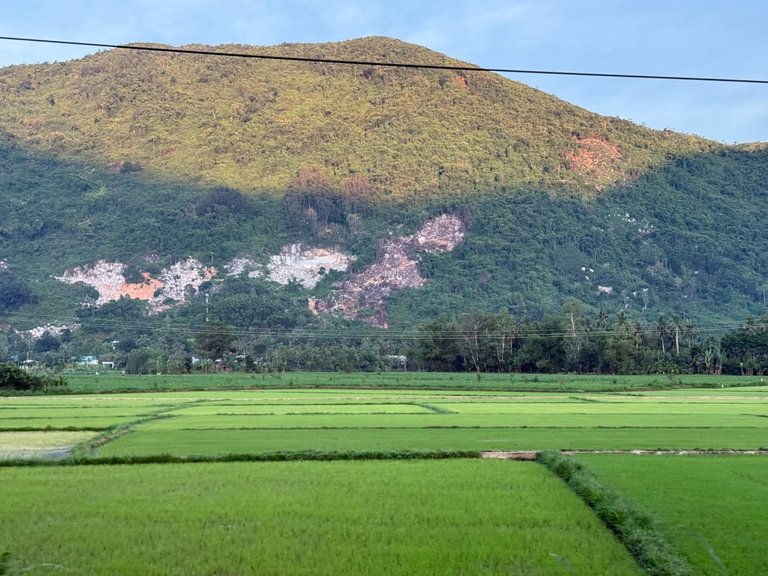
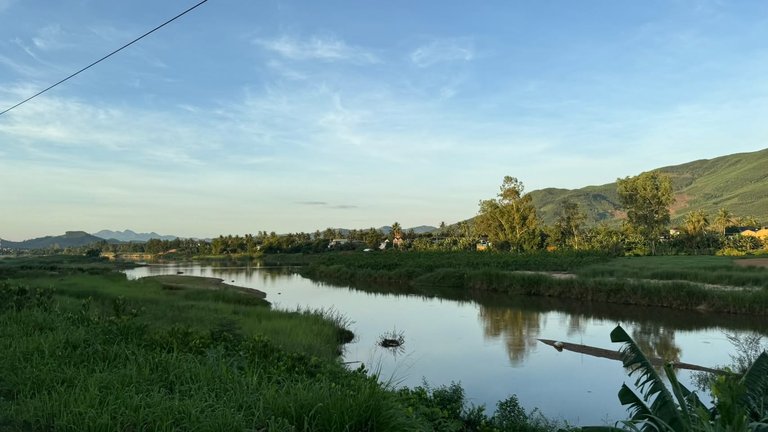
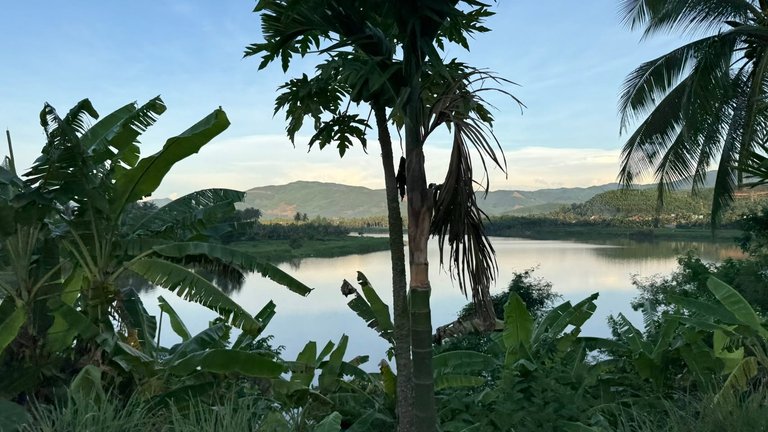
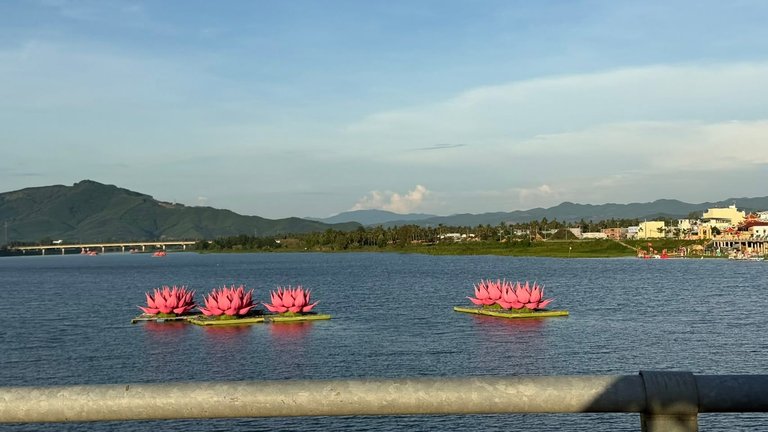
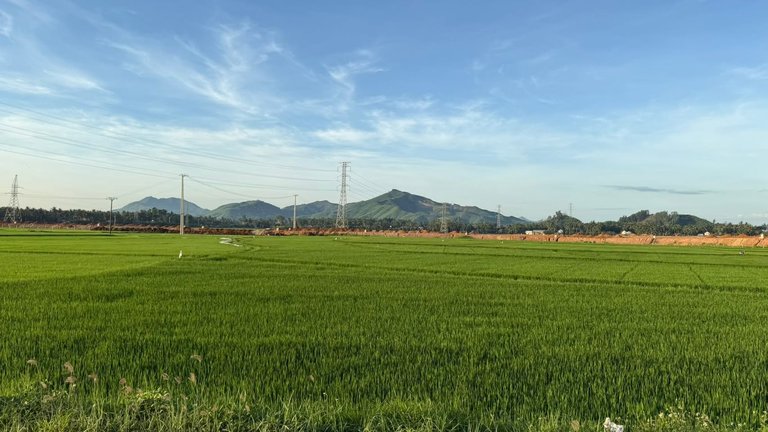
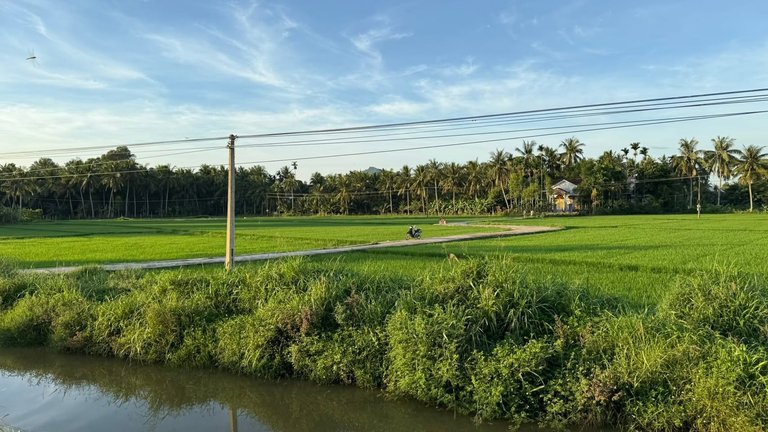
The sun came up at 5:17, a thin orange line behind the mountains, laid out twice in the still water of the marsh. Then the road ran out of the valley the way it always has, past little hamlets of tile roofs and palms. Someone in a nón lá, the conical hat, walked the edge of the road beside the rice. Someone else rode by on a motorbike. The fields went on and on, that impossible new green of young rice, with coconut palms along the far edges and the mountains standing over all of it. On one hillside, patches of bare red earth and rock showed through the forest. On one wide stretch of water, pink lotus sculptures floated in a row, with a bridge and the hills behind them.
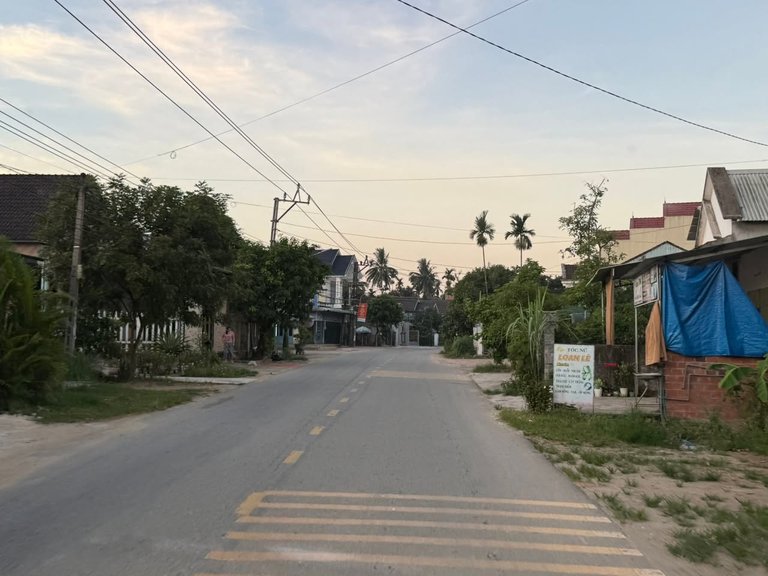
It is a very cool way to see the countryside of Vietnam. You are not a tourist on Trieu Vi's van. You are freight with opinions.
Breakfast at Quán 69
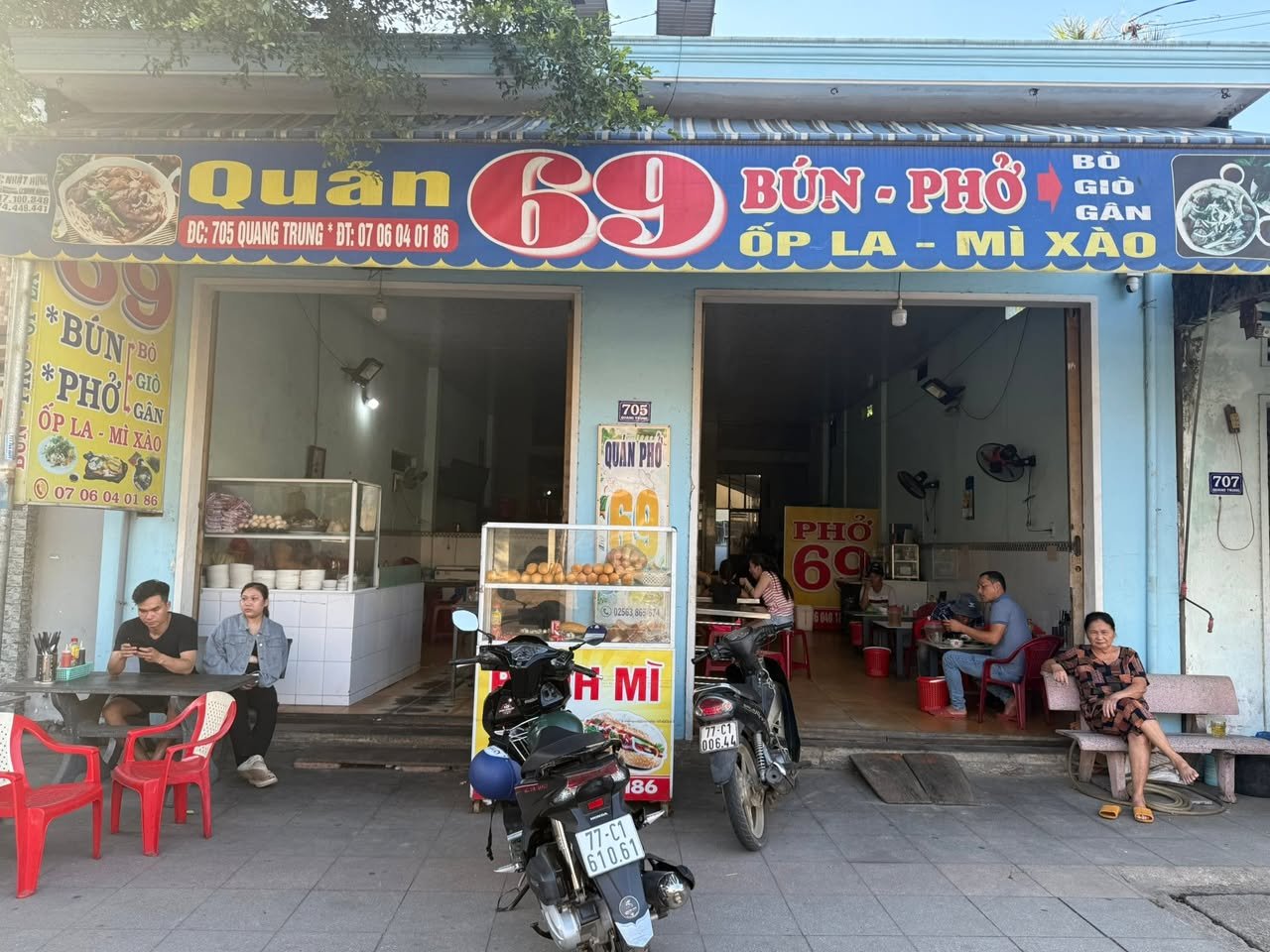
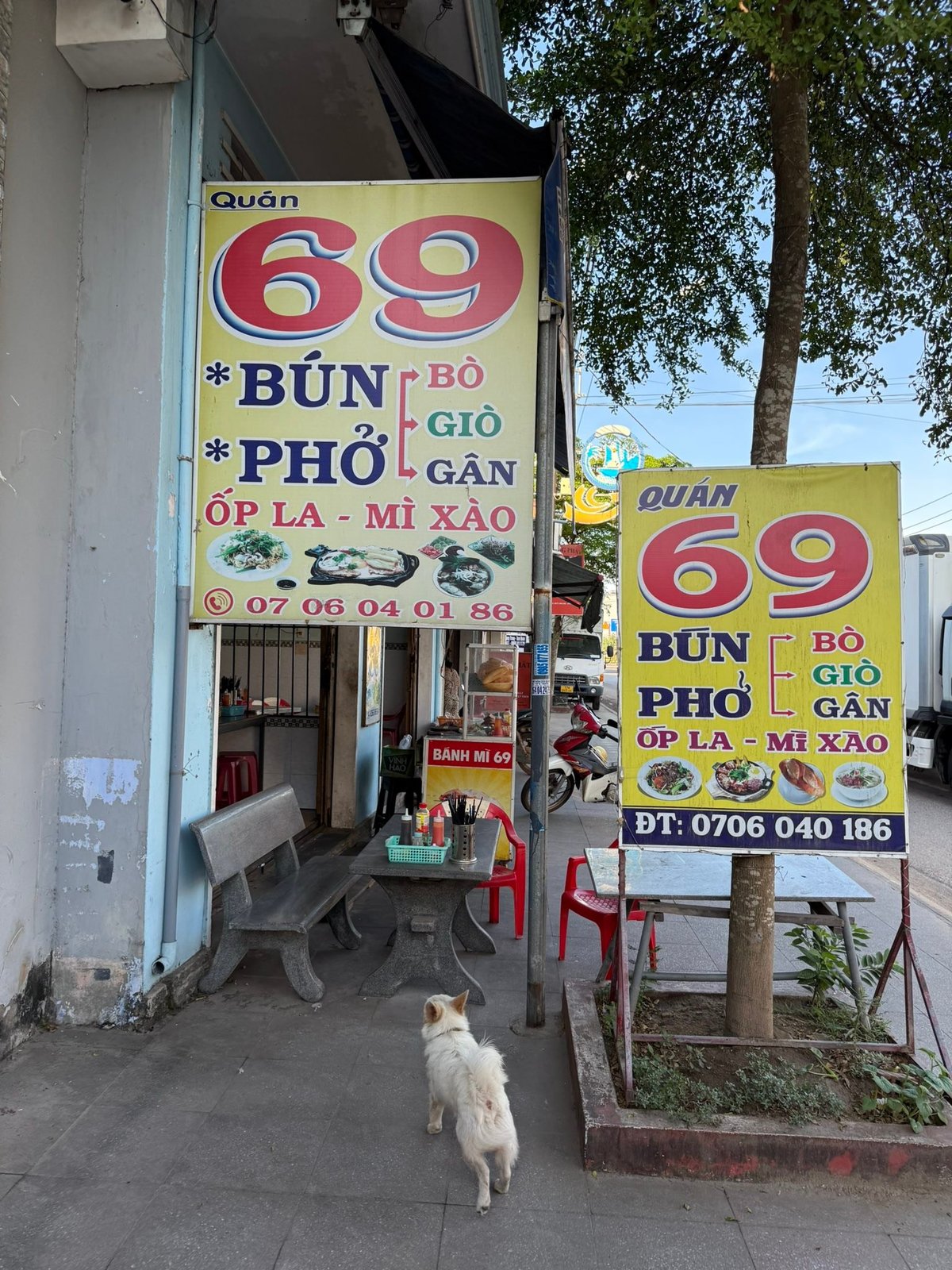
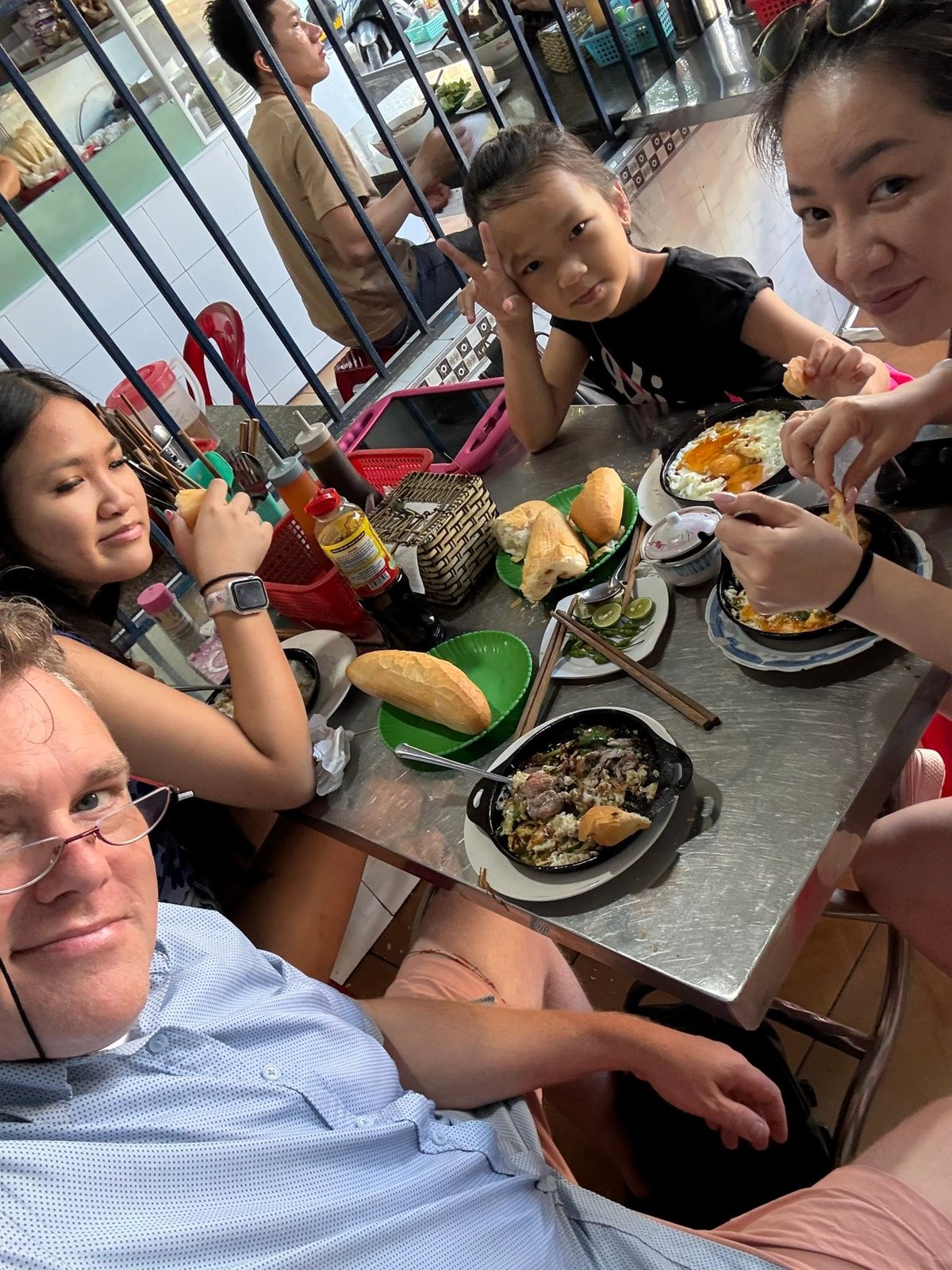
It was 6:30 when we stopped for breakfast, just north of Hoài Tân on Highway 1, at a spot named simply Quán Ăn 69. The sign across the front of the shop laid out the menu: bún, phở, bò, giò, gân, ốp la, mì xào. Rice noodles and phở, with beef, pork shank or tendon, fried eggs, and fried noodles. A second sign out by the curb said the same thing in yellow, and a small white dog trotted along the sidewalk in front of it, making the rounds.
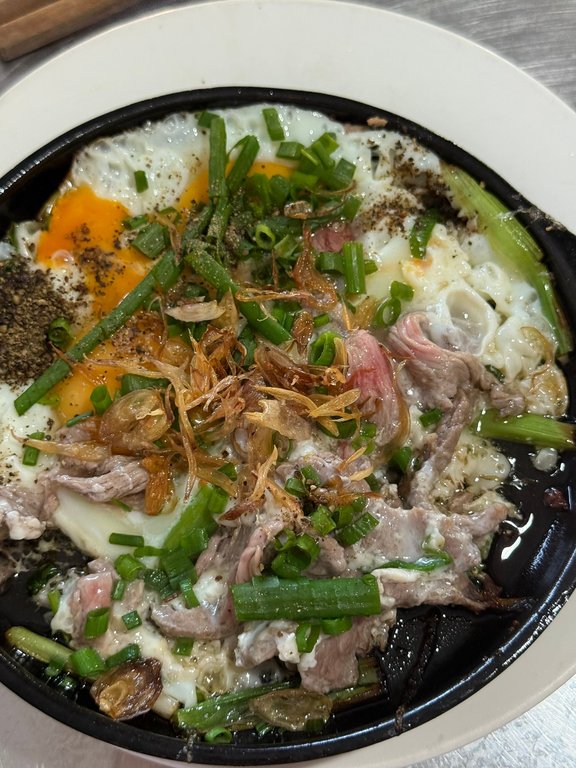
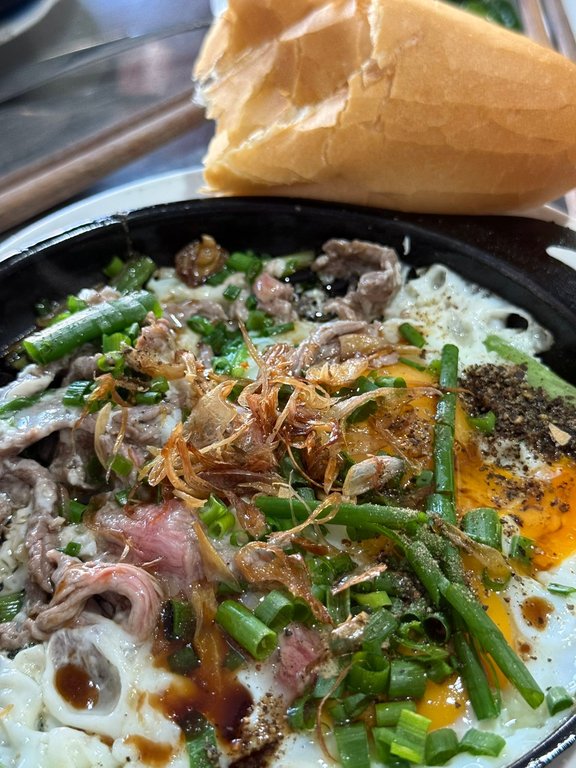
We all had sizzle plates of eggs with baguette. Mine and Diem's came piled with strips of beef and herbs. The plates are small black skillets, the eggs fried right in them. Over ours went thin slices of beef, cut green beans, scallions, a handful of fried shallots and a heavy hand of black pepper, with a few drops of dark sauce over the yolks. The baguettes came on the side, for tearing and dragging through the yolk. The girls kept theirs simple, eggs and bread, and Jennie went at hers one torn piece at a time.
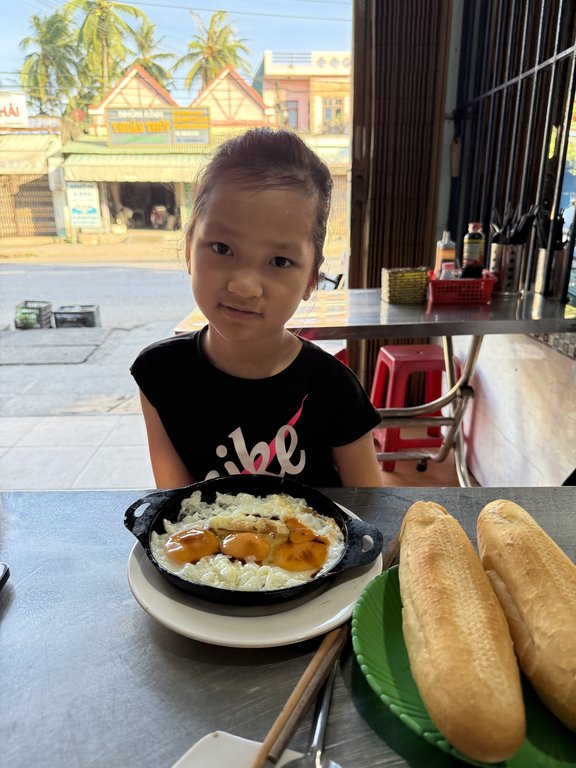
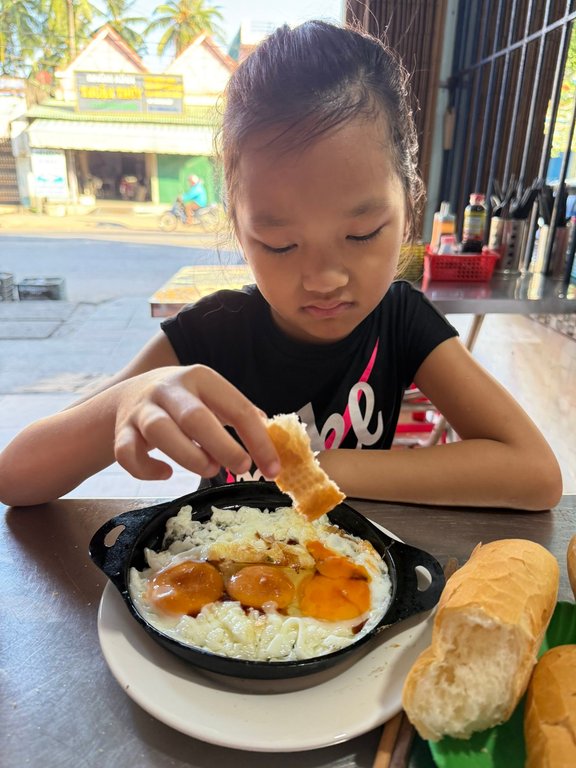
The Vietnamese call fried eggs ốp la, a word borrowed from the French, œufs au plat, eggs on the plate. The French brought the dish, along with the baguette, the butter and the pâté. Vietnamese cooks added the beef, the fish sauce and the black pepper. In Saigon and Da Nang, the beef and egg skillet goes by bò né, and né means to dodge, as in what you do when the hot plate hits the table and the oil starts to fly.
Highway 1
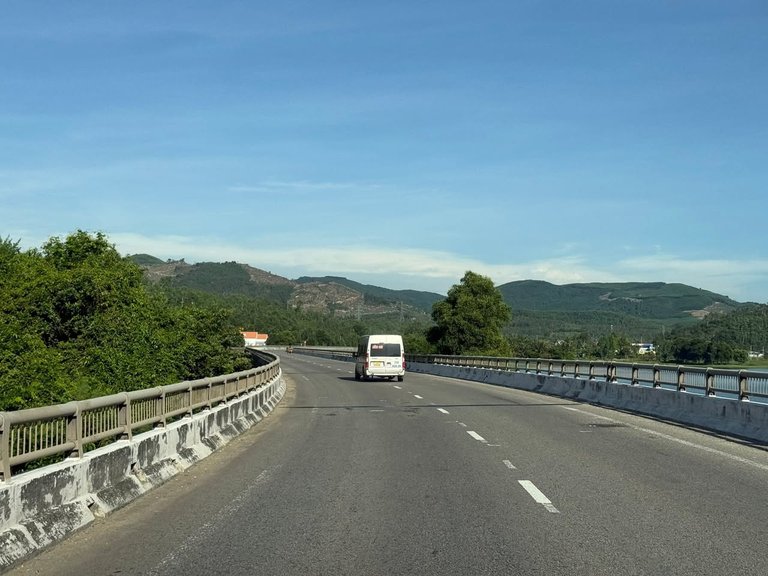
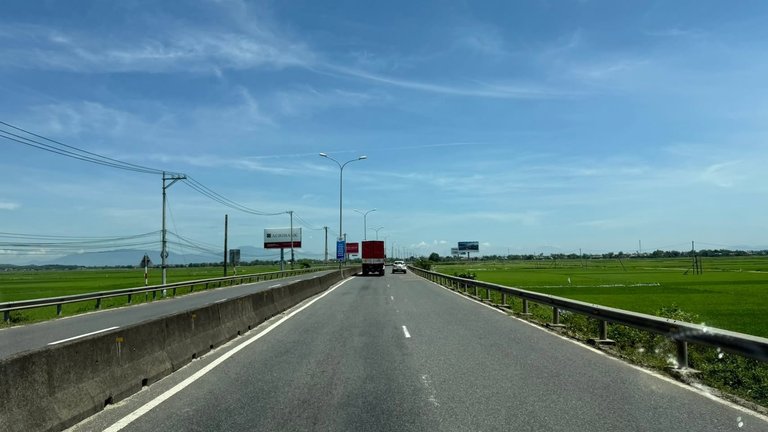
As we moved north along Highway 1 toward Da Nang, the rural scenes of rice fields and jungle-coated mountains slowly gave way to the unmistakable signs of suburbia. Wide highways, modern infrastructure, and a population density that slowly increased into packed streets and congested roadways. On our way up, highways were new, bridges had been rebuilt, and modern behemoth electrical towers marched across the expanses of endless rice fields. Vietnam is such a dynamic and growing economy. Don't blink, or you just might miss it.
Highway 1 is the spine of the country. It runs more than 2,300 kilometers, from the Hữu Nghị border gate in Lạng Sơn, on the Chinese border, all the way down to Năm Căn in Cà Mau, near the southern tip of the country. Its bones are old. Gia Long, the first emperor of the Nguyễn dynasty, repaired the existing highways, put the north-south road from Saigon to Lạng Sơn under restoration, and organized a postal service to run along it. The French called it the route mandarine, the Mandarin Road, because the mandarins and officials of the court traveled it between the capital and the provinces. Today it carries just about everything else.
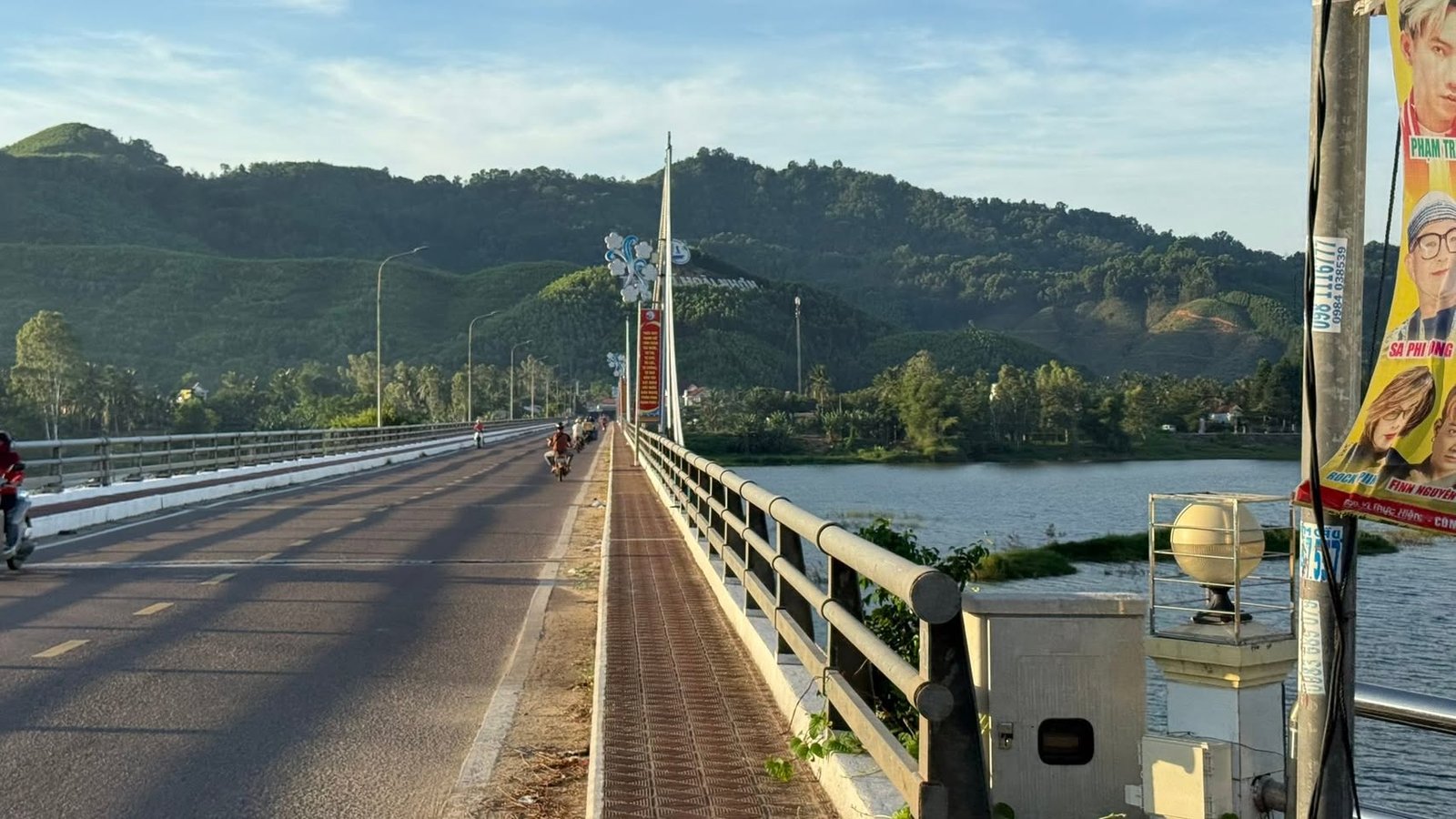
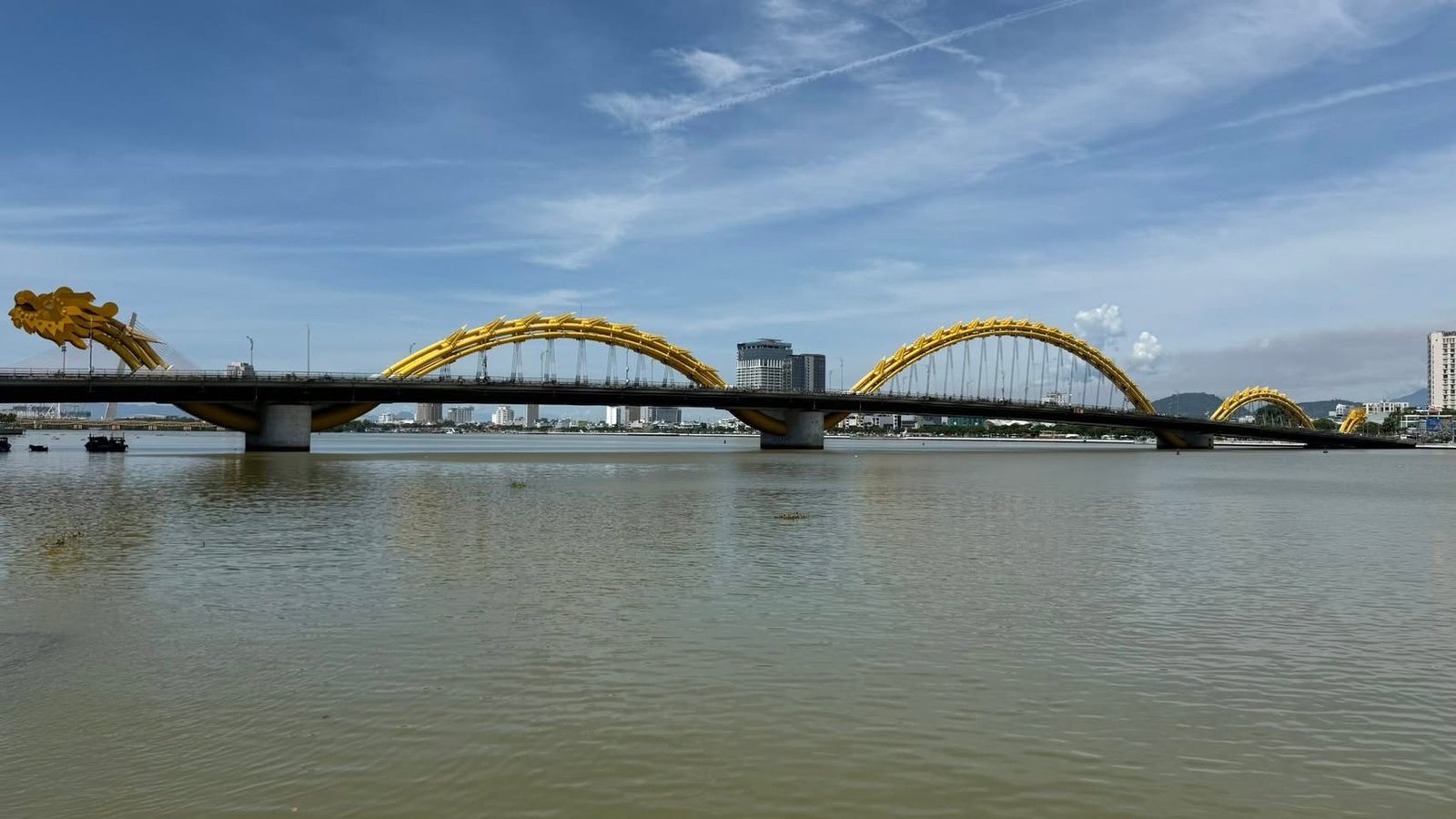
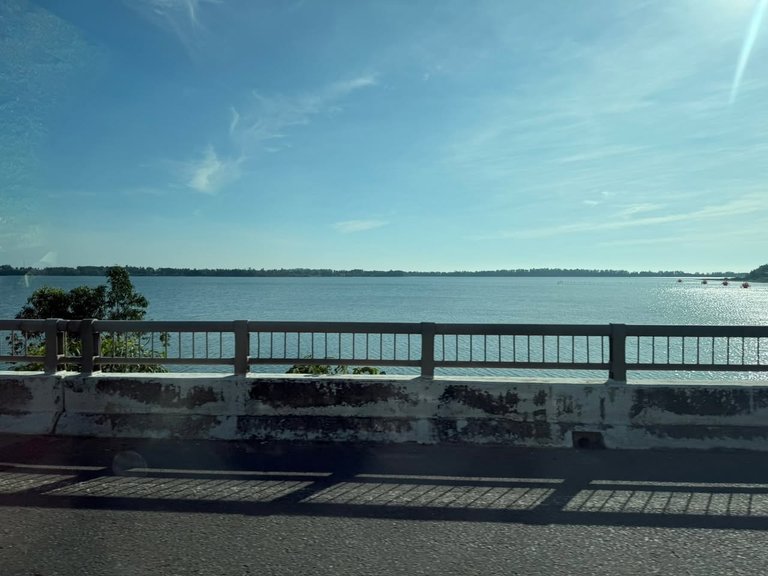
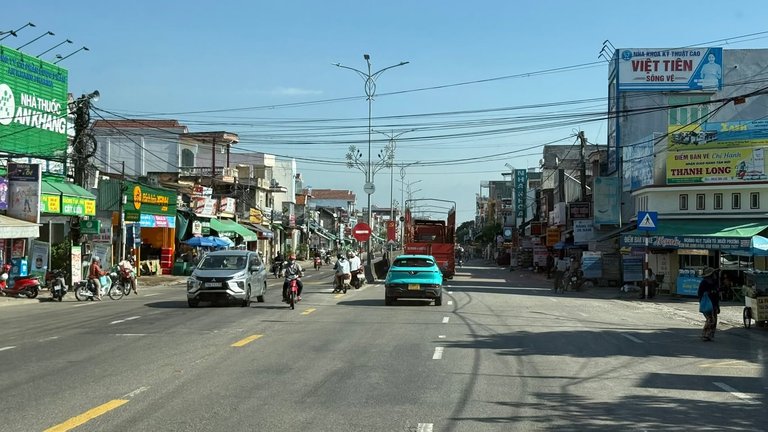
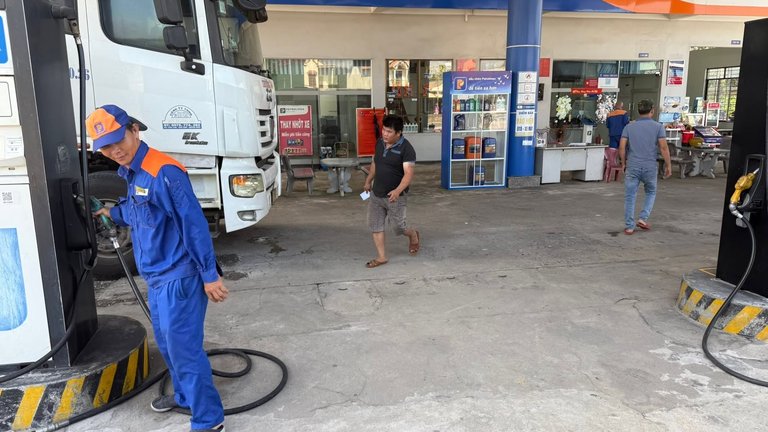
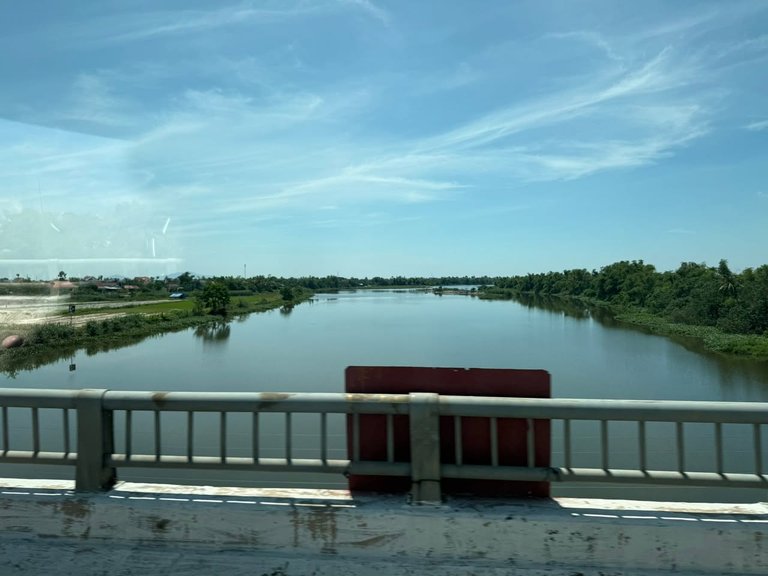
From An Lão, the old road runs up the central coast through three provinces, or did when we drove it. Out of Bình Định, across the line into Quảng Ngãi, then Quảng Nam, then Da Nang. In 2018 a modern expressway opened between Da Nang and Quảng Ngãi, about 139 kilometers of it, cutting the drive between the two cities to around 90 minutes from about three hours on Highway 1. A new stretch of expressway south from Quảng Ngãi toward Hoài Nhơn was still being built when we passed. We stayed on the old highway, through the towns, with Trieu Vi's stops along the way. A gas station attendant in blue coveralls filling a truck. Town after town of shopfronts and motorbikes. Long bridges over wide, slow rivers.
The Swiftlet Houses
Somewhere along the way, from a bridge, I pointed my camera at a tall gray building with hardly a window to speak of. This is an interesting sight. You see them dotted across the countryside. Any guess?
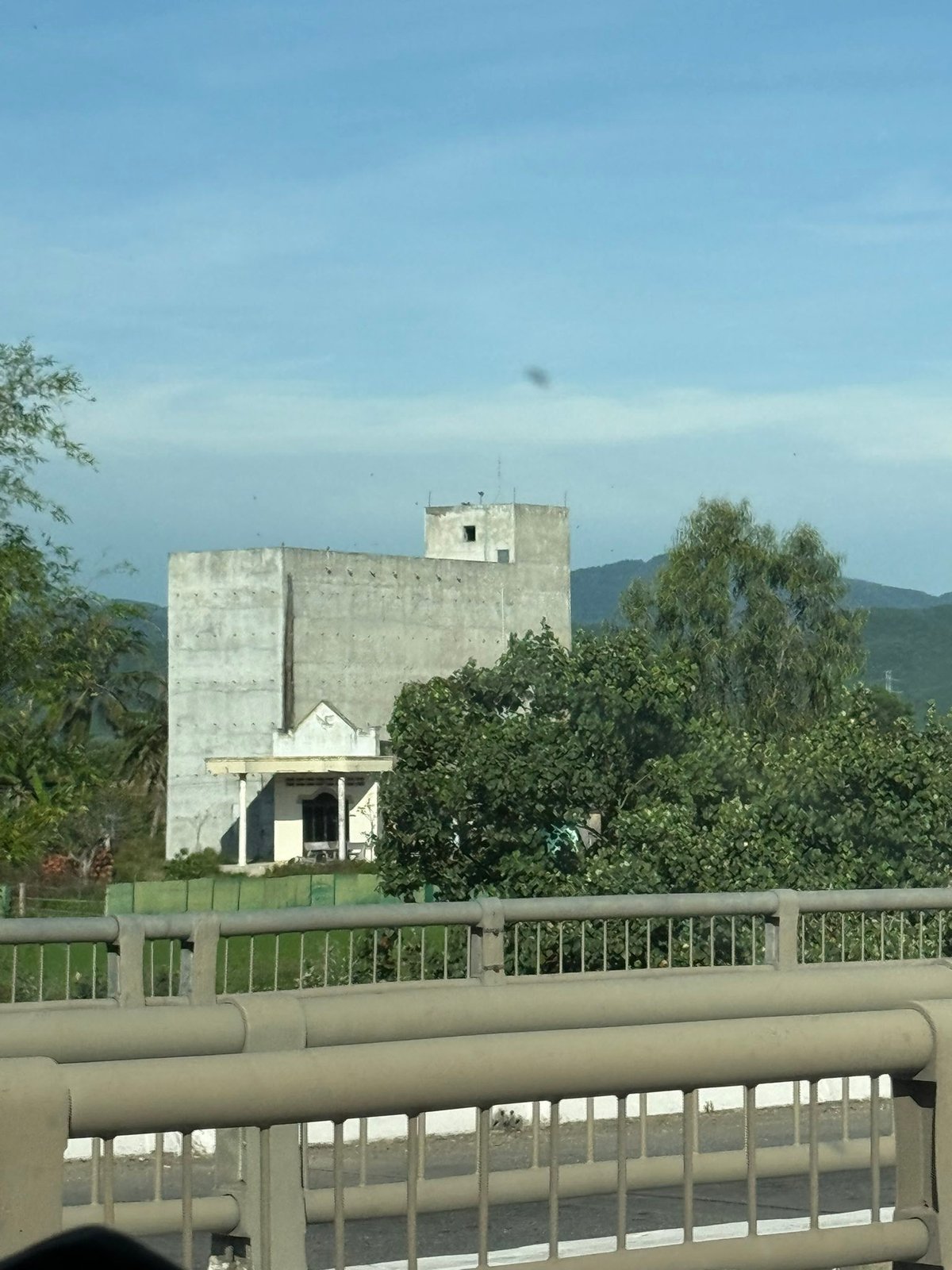
It is a swiftlet habitat, a house built to farm bird's nest, yến sào, for the countless bird's nest products Vietnam is known for. Bird's nest soups, drinks, holistic medicines. The swiftlets build their nests out of their own saliva, and those nests, cleaned of feathers and graded by color and smell, are serious money. A few years ago farmed nests were selling for upwards of $500 a pound in China, and wild nests from the island caves of the central coast for many times that. The houses are dark inside, with no lights or windows, the heat trapped and steamy, and a speaker system plays the birds' calls on a loop to lure the colonies in. The farmer waits until the young have grown and the birds have flown, then harvests the empty nests.
It is big business. By 2025 Vietnam had somewhere around 29,000 to 30,000 of these houses, and the industry is valued at about $600 million a year. This April, Vietnam and China signed a protocol governing bird's nest exports to China.
The farms are new. The trade is not. In Khánh Hòa, on the coast around Nha Trang, local tradition dates nest harvesting back to 1328, when a general named Lê Văn Đạt was blown onto Hòn Tre island by a storm and his men found the swiftlet colonies in the island caves. Under the Nguyễn lords the nests became one of the strategic exports of the south. Khánh Hòa counts 33 islands and 173 nesting caves. Closer to Da Nang, in the Cù Lao Chàm islands off Hội An, men from the village of Thanh Châu harvested nests from the island caves, an organized craft under the Nguyễn lords and the Nguyễn emperors, and in 1848 they built a shrine on the island to the founders of the trade. The craft is now listed as national intangible cultural heritage. We once visited an island off the coast that had a bird's nest harvesting site on some sketchy cliffs that dated back to the imperial age. Now the swiftlets come to the rice fields, to a concrete box with a speaker in it, and nobody has to climb anything.
Into Da Nang
The road ran long and straight between flat green fields, over river after river. Then a blue sign hung over the highway. To the left, the Đà Nẵng to Tam Kỳ expressway, 13 kilometers, and Vĩnh Điện, 5. Straight ahead, Đà Nẵng, 20 kilometers. Hà Nội, 790.
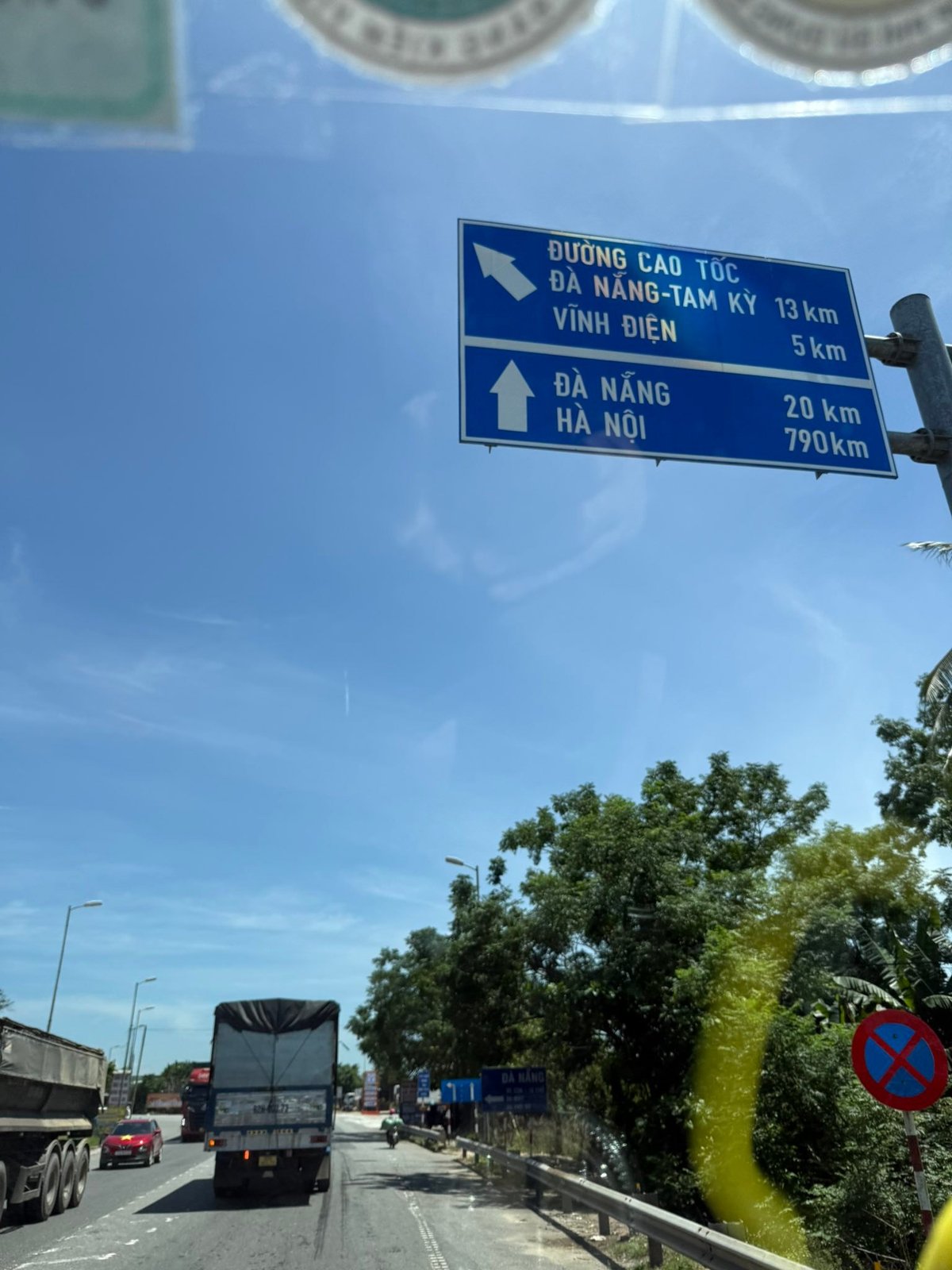
That sign will not mean quite the same thing for long. On June 12, a few days before we drove it, the National Assembly voted to cut Vietnam's 63 provinces and cities down to 34, and on July 1, Quảng Nam and Da Nang became one. The new Da Nang covers about 11,860 square kilometers and is home to a little over three million people, in 94 local units: 23 wards, 70 communes, and the special zone of Hoàng Sa. Everything we drove through after we left Quảng Ngãi that morning is now Da Nang. Quảng Ngãi itself was merged with Kon Tum, keeping the Quảng Ngãi name. Bình Định, as I wrote last week, is now Gia Lai. If you are keeping score at home, we left Gia Lai at dawn, drove through Quảng Ngãi, and spent the last long stretch of the morning in Da Nang without knowing it. Somewhere a cartographer is very tired.
If you are keeping score at home, we left Gia Lai at dawn, drove through Quảng Ngãi, and spent the last long stretch of the morning in Da Nang without knowing it.
A little after eleven that morning, I shared a memory that Facebook had handed me. This is Fozzie. We had to leave him behind when we moved to the States, as there is a dog import ban for Vietnam to the U.S. Today we will be reunited after four years.
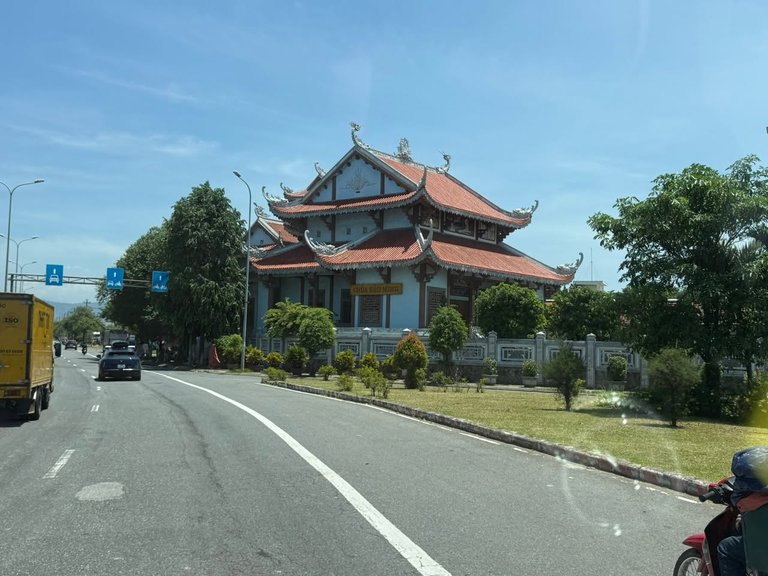
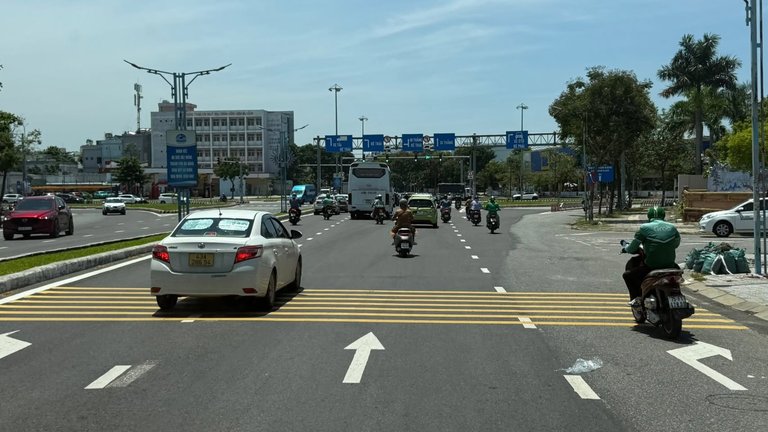
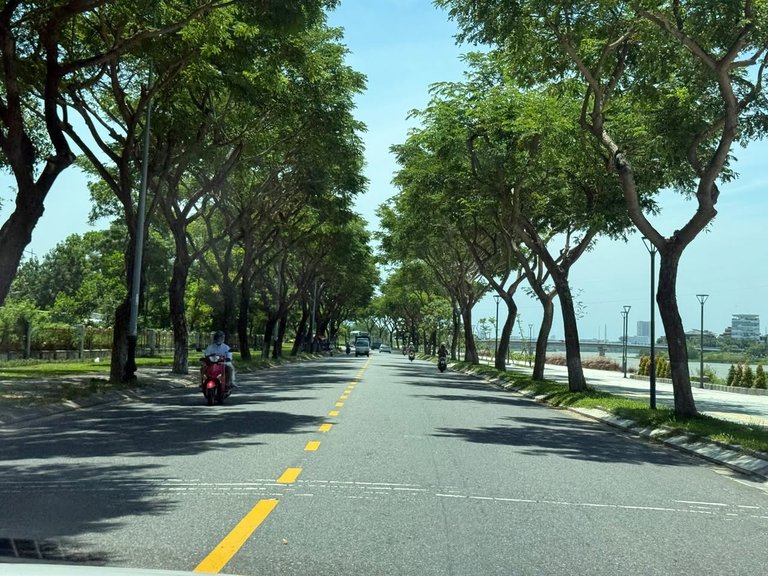
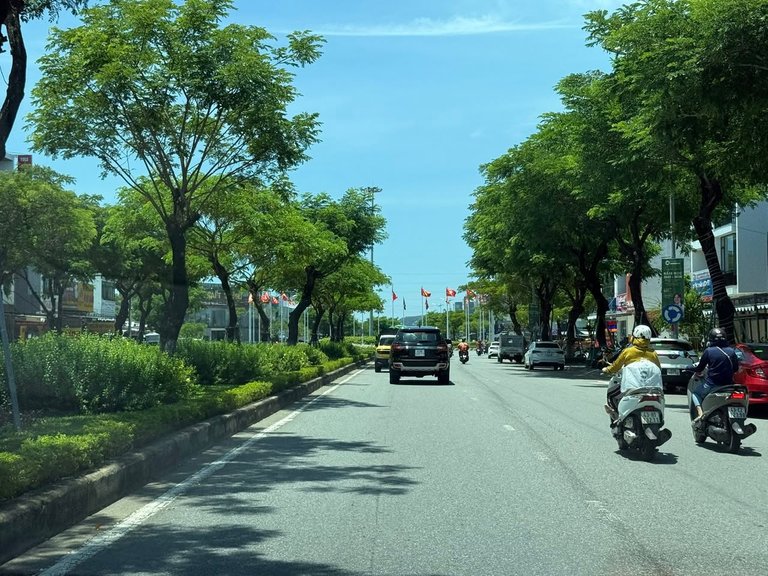
Da Nang was familiar in some ways, but new and unknown in others. Four years is a long time in an economy as explosive as Vietnam's. The boulevards were lined with leaning trees and planted medians. A whole street of new townhouses, three and four stories, glass and white paint. And then, across the water, the limestone hills of the Marble Mountains, Ngũ Hành Sơn, rising out of the flat city exactly where we left them. Some things they cannot build over.
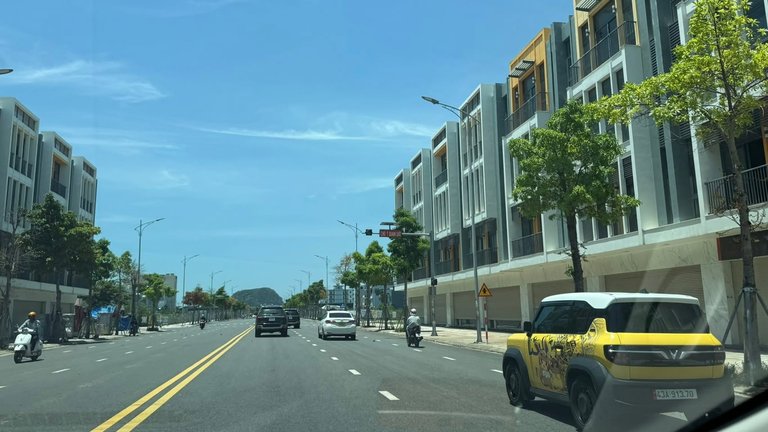
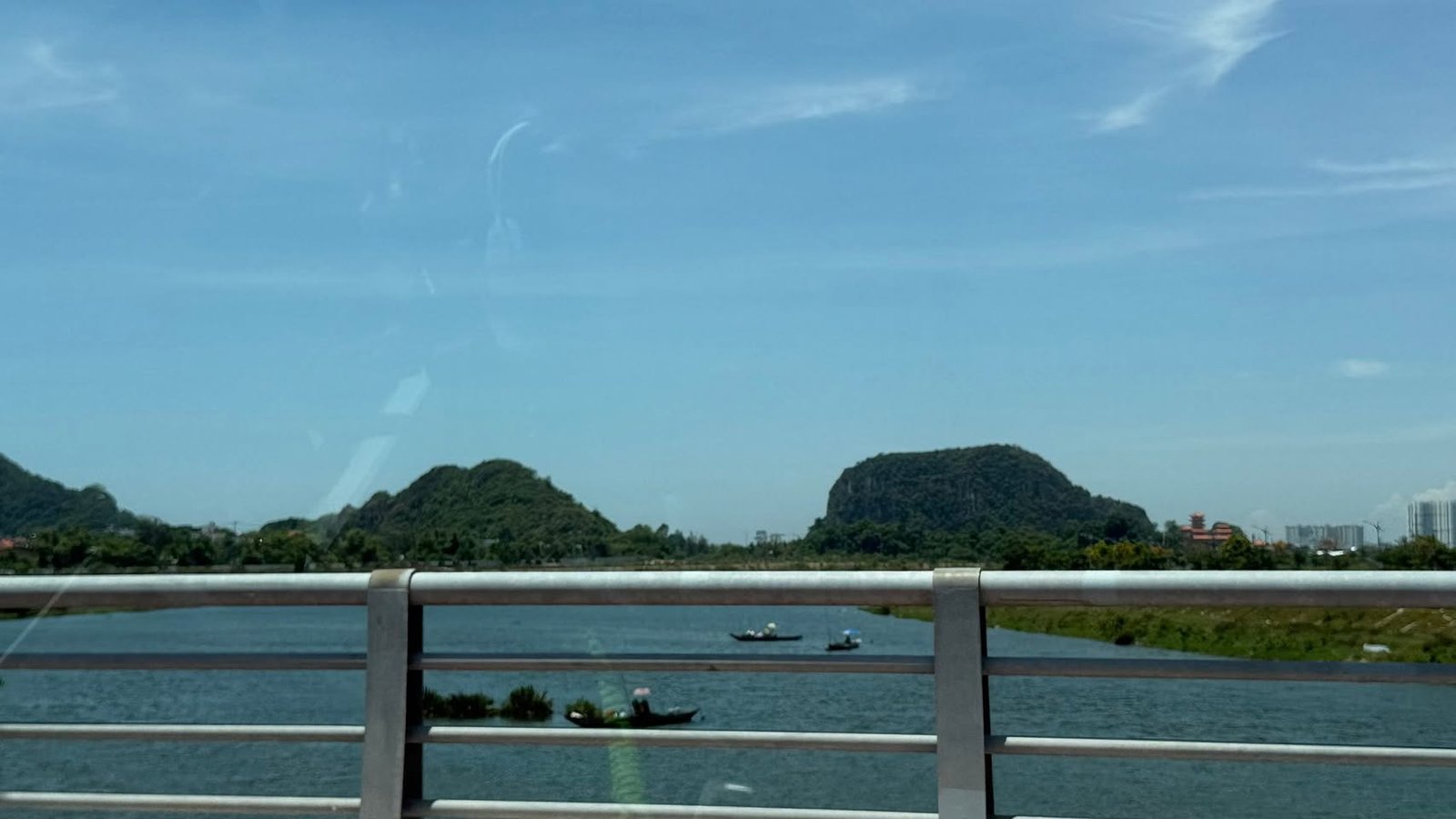
The Old Neighborhood
So much of our old neighborhood has changed. I almost didn't recognize where we were.
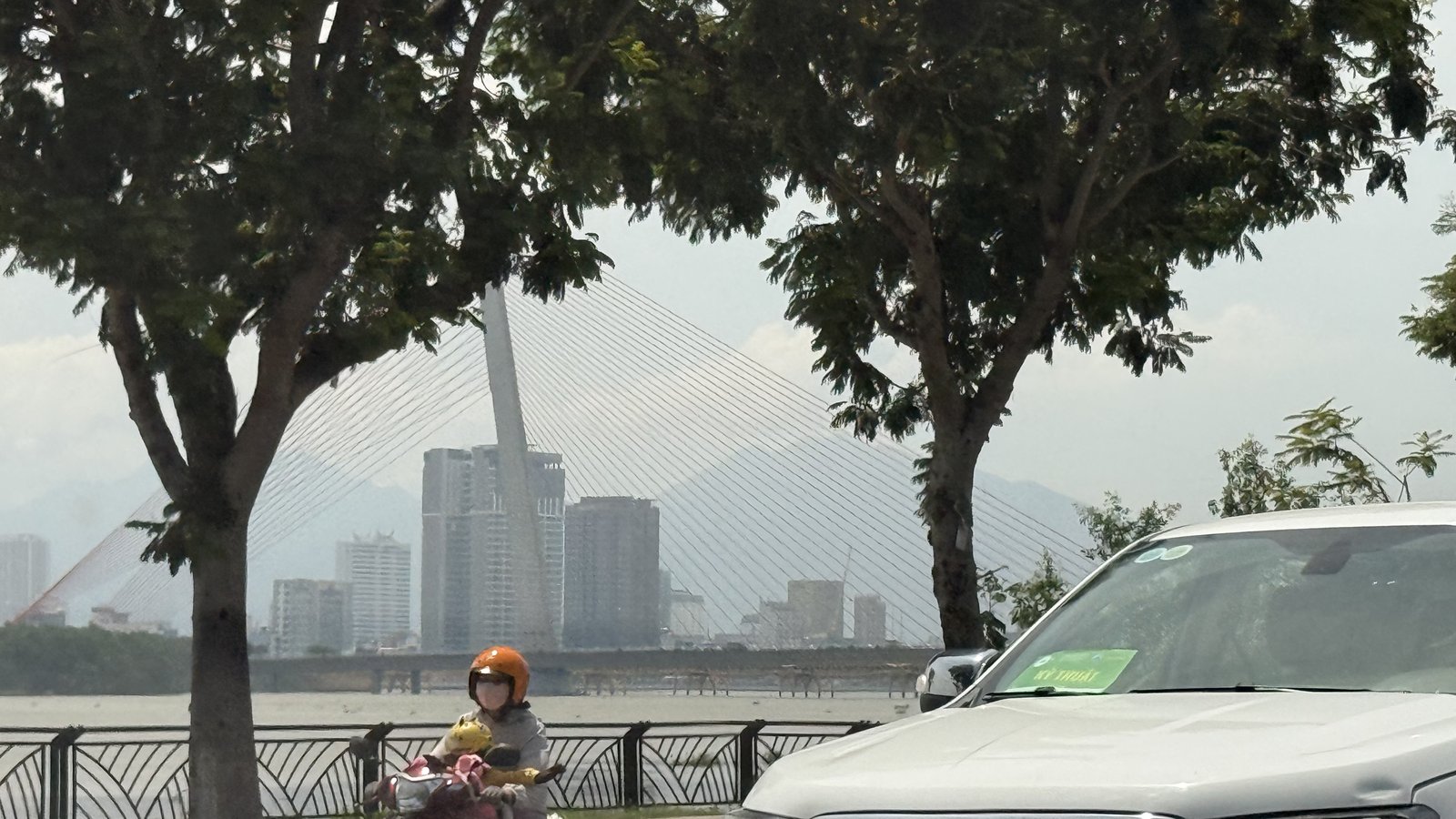
Back in 2020, in the Dragon Diaries, I wrote about opening a salon a block from the beach in an expat area, in the neighborhood Diem and I lived in when we were first married. Even then I wrote that the neighborhood had changed so much.
The address on Fozzie's portrait, which you will see below, is in An Thượng, in the Mỹ An ward on the east side of the city, where many of the streets are simply numbered, An Thượng 5, An Thượng 7, An Thượng 31, and the beach at Mỹ Khê is right next door. An Thượng has kept on changing. In April of 2022, a few months after we left, the district opened An Thượng as an official tourist street, and the first phase brought upgraded pedestrian streets, a night market, and a link to the night beach at Mỹ An. It is known as the Western Area. In May, just a few weeks before we arrived, the city announced more than 100 billion dong, about $3.8 million, for a second phase: a central square with a stage and a musical fountain, new sidewalks and green space, public Wi-Fi over the whole area, and wider lanes on An Thượng 5, 7 and 8. It is restaurants, hotels and nightlife now, and it draws visitors from all over the world.
The map has moved here, too. On June 16, the day before we arrived, the National Assembly's Standing Committee merged the wards of Mỹ An, Khuê Mỹ, Hòa Hải and Hòa Quý into one new ward, named Ngũ Hành Sơn after the mountains, to begin operating on July 1. An Thượng is now in a ward named after a view.
But there were a few signs that hadn't changed. The salon we sat in so many days. The streets we walked to and from work every day. The scent of the eastern sea a block away. Kevin, my brother-in-law, still cuts hair. The sign across the front of his shop says Hair Salon, Kevin K. I call him my brother. Back in the Dragon Diaries I said he was quite the hair stylist. He still is.
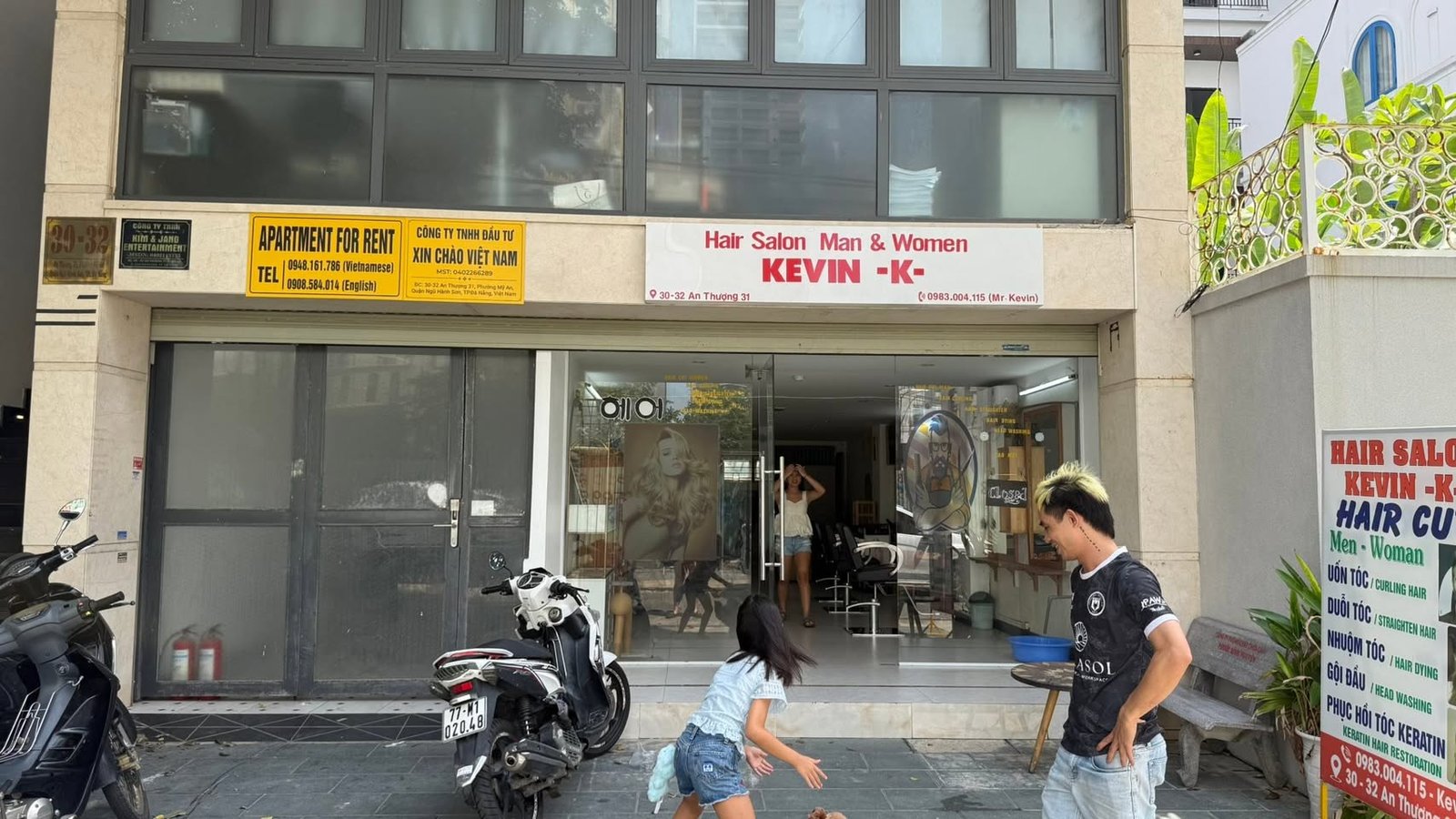
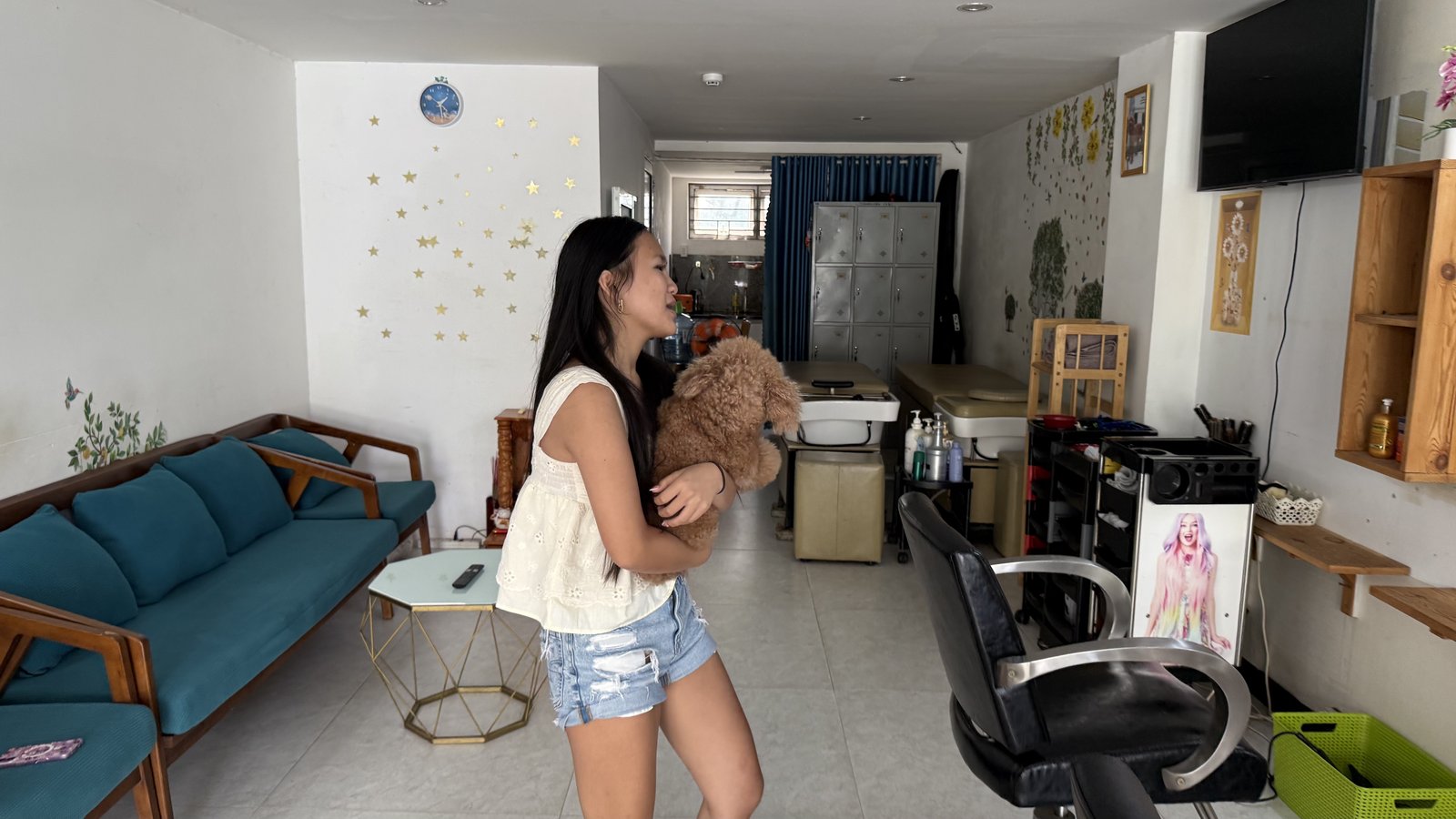
Ol' Fozzie
When we left Vietnam in the fall of 2021, the hardest part was leaving Fozzie behind. That July, the U.S. Centers for Disease Control had suspended the import of dogs from more than a hundred countries it considers high risk for dog rabies, and Vietnam was on the list. So Fozzie stayed with family. He lives with Kevin now.
Fozzie was excited to see everyone. Then he got back to his grumpy old self. Don't touch him when he's eating.
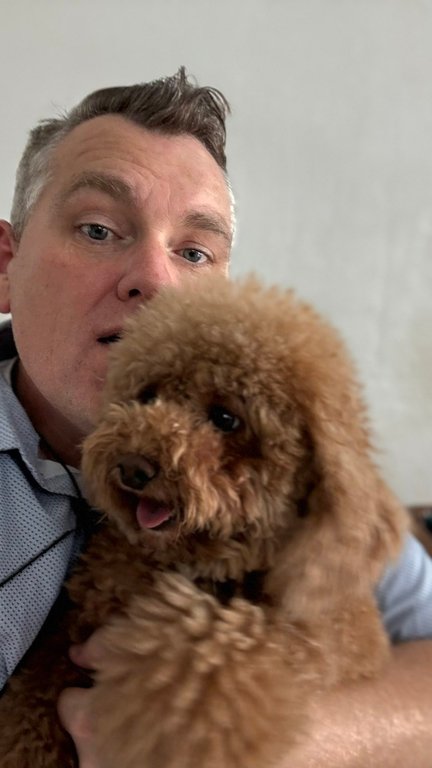
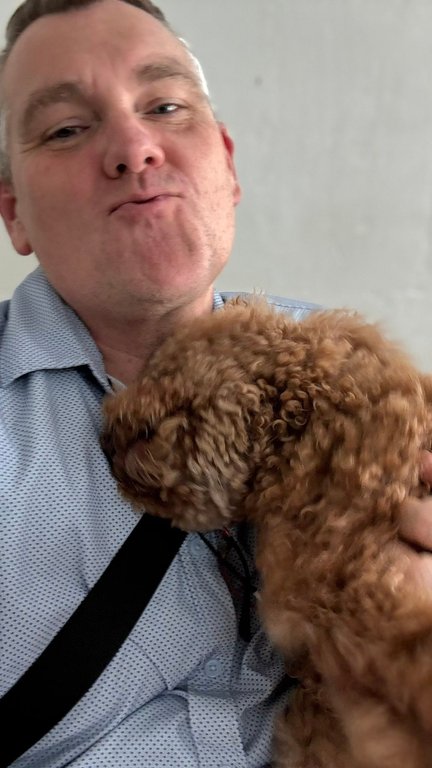
I named him Fozzie because he used to look like a Muppet. Waka waka waka! He even has his own portrait, in a gold frame, standing on a car, his name, the An Thượng address and a phone number printed in the corner.
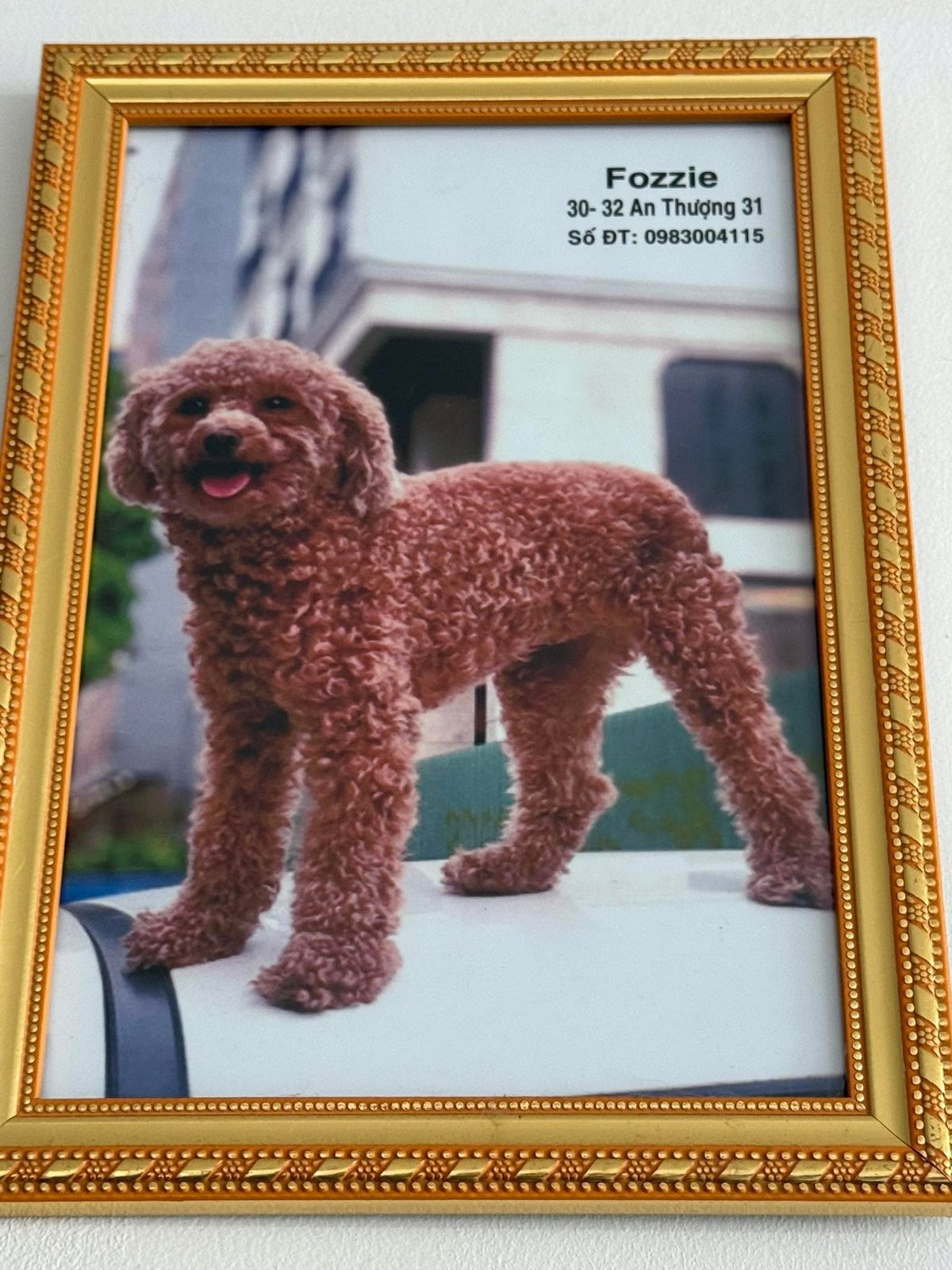
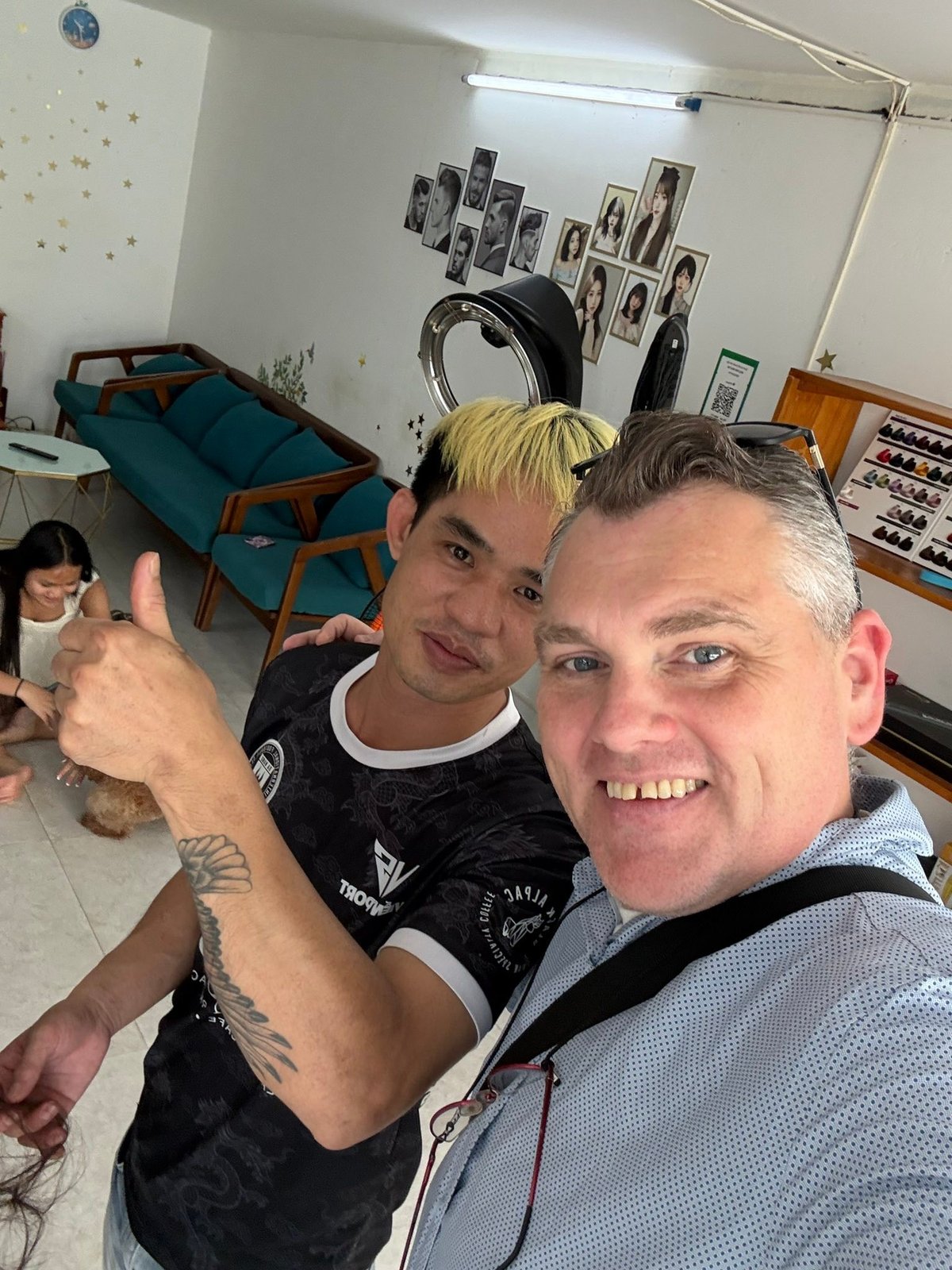
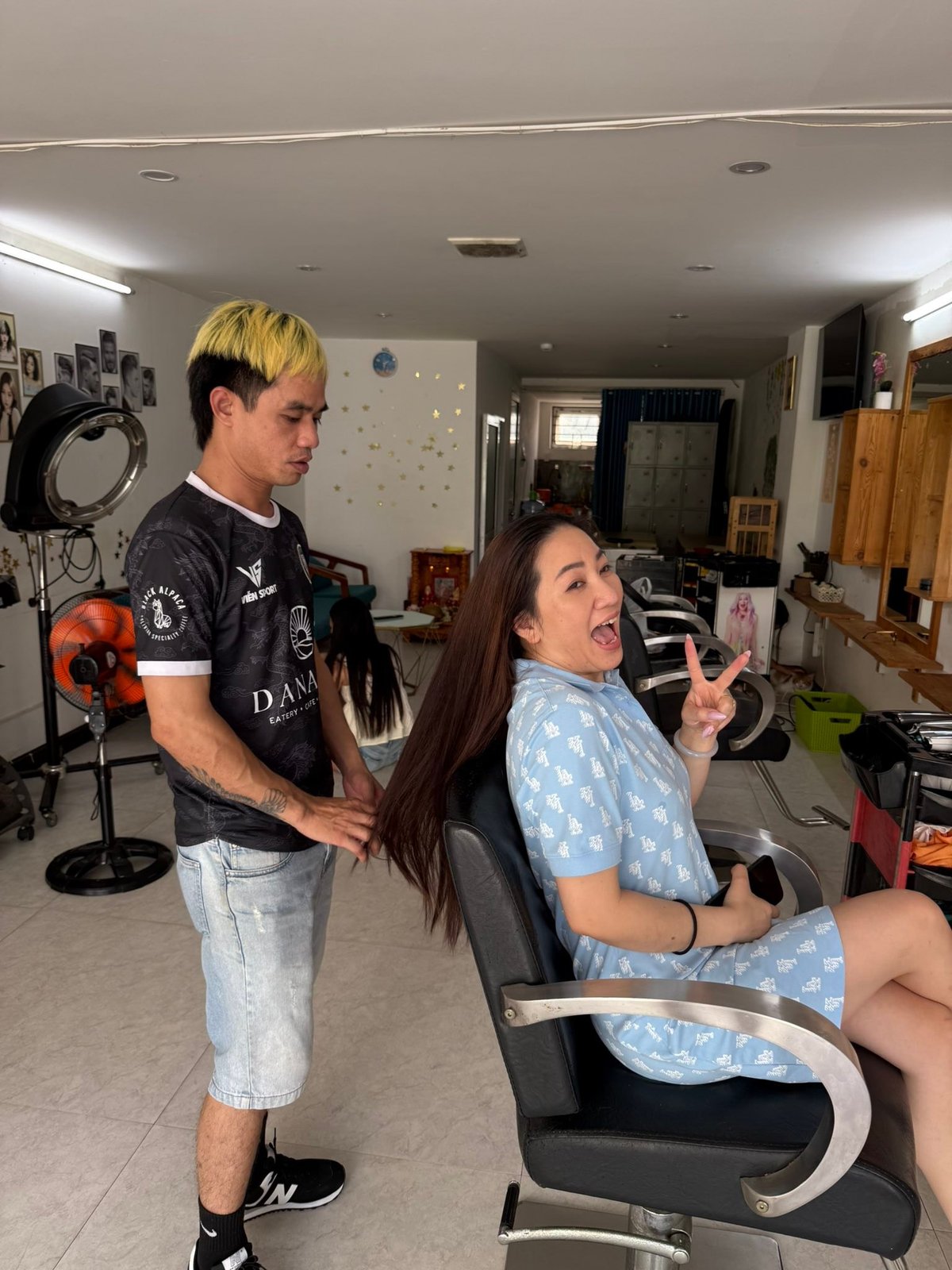
We spent most of the day with Fozzie.

I can't wait to see the Lady Buddha again. She stands on the slope of Sơn Trà mountain at Linh Ứng Pagoda, 67 meters tall, her back to the mountain and her face to the sea, guardian and protector of the city. It is so wonderful to be back in Da Nang.
Lunch at Bếp của Ngoại
By the time we sat down to eat it was going on three in the afternoon, and breakfast at Quán 69 felt like something that had happened in another province, which, technically, it had. My brother-in-law recommended a spot on Lê Quang Đạo called Bếp của Ngoại. Grandma's Kitchen. It was new to us, though he said it has been there about two years.
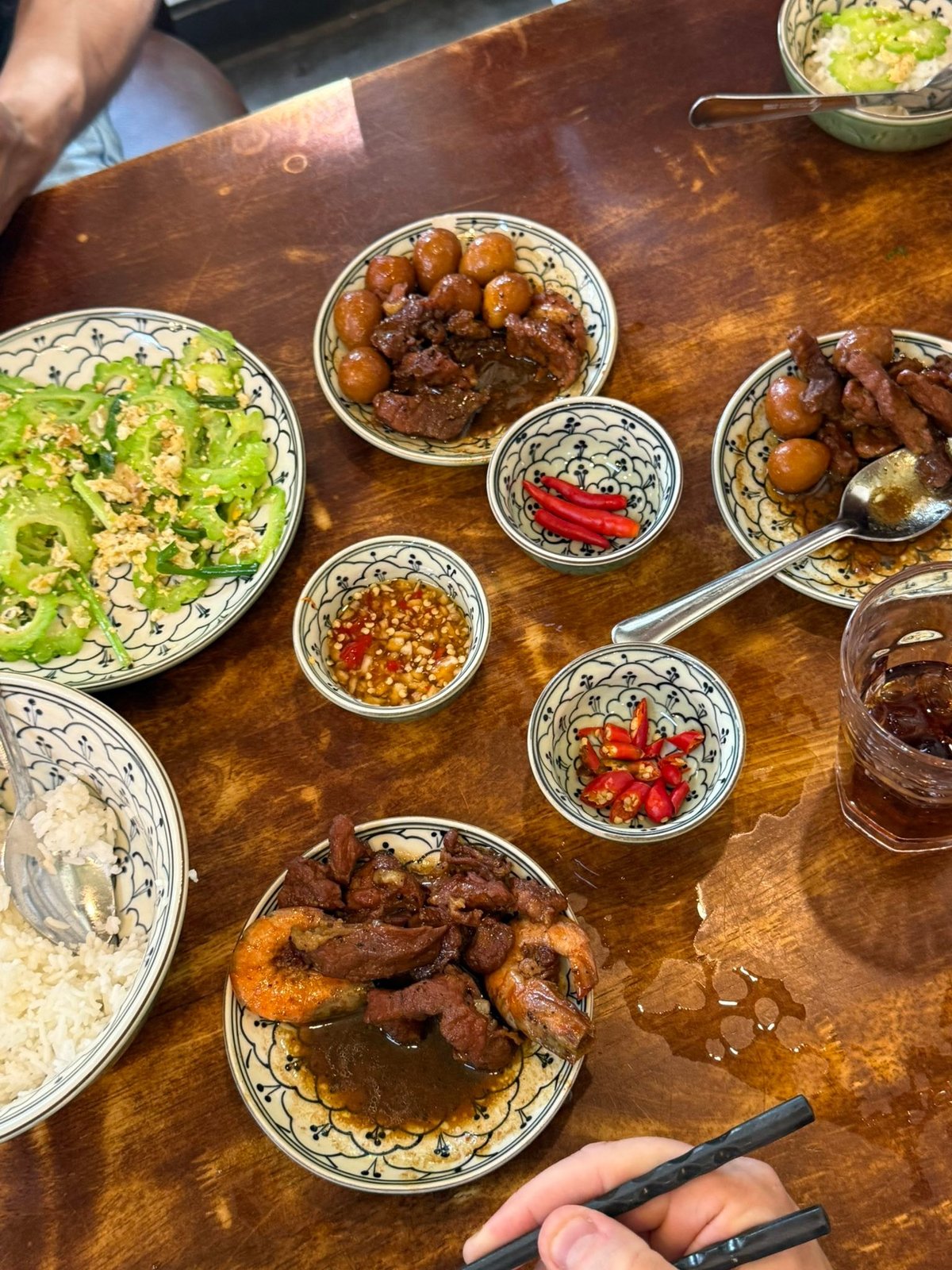
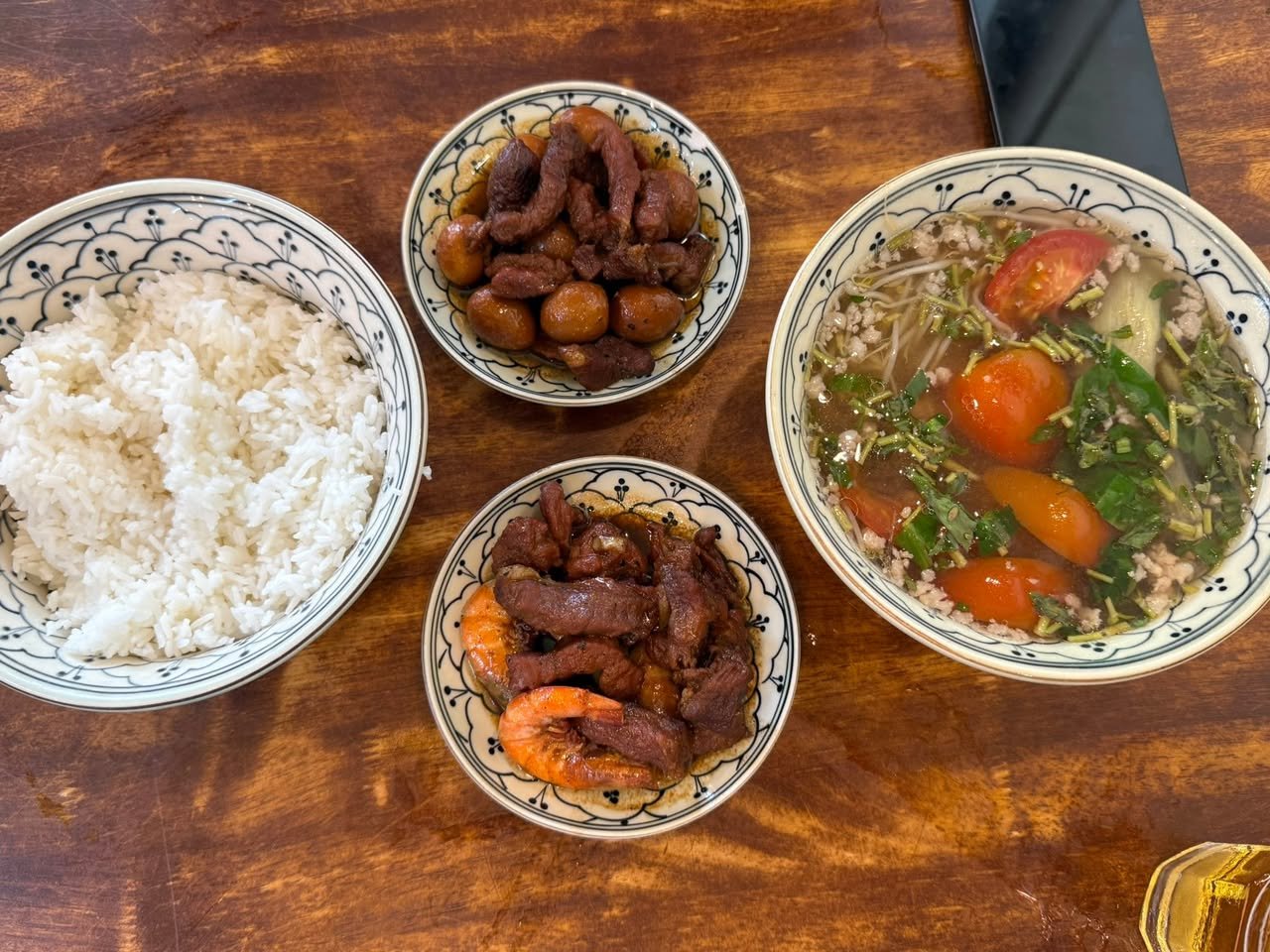
The table was a slab of polished wood, and the dishes came in blue and white bowls with little dot patterns. It was a fantastic late lunch, home cooking from start to finish.
Thịt kho trứng cút, caramelized pork belly with quail eggs. Thịt kho is pork braised in nước màu, a dark caramel, with fish sauce, until the pork goes deep amber and the sauce thickens, and it is one of the traditional dishes of Tết, the lunar new year. At Tết the eggs are left whole, a wish for a full and complete year for the household. Ours came with quail eggs, little brown marbles in the glaze.
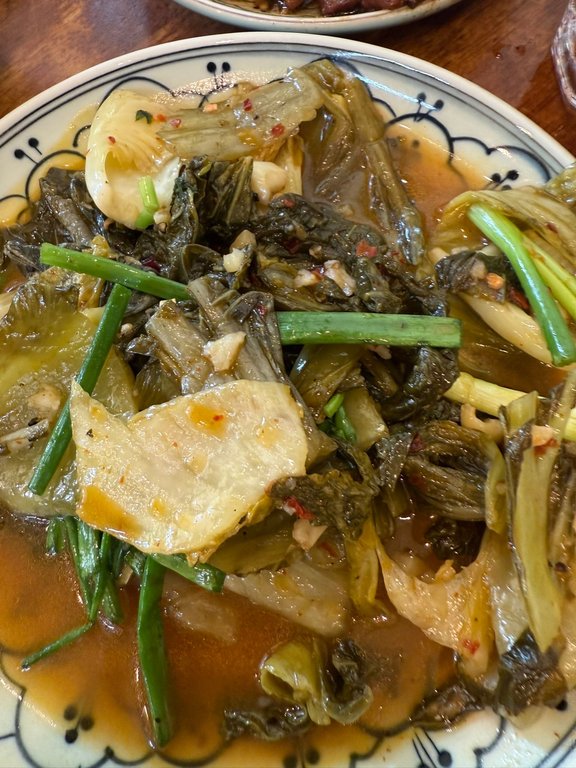
Dưa cải, pickled mustard greens, sautéed with garlic. Sour and salty, and made for rice.
A plate of sautéed shrimp with dark, glossy strips of meat. And bitter melon with egg, khổ qua xào trứng, a humble, homey dish. The bitter melon is sliced and stir-fried with garlic and fish sauce, and the eggs go in at the end, still soft. Khổ qua means bitter melon, but say it slowly and it sounds like "the hardship passes," and in the south a bitter melon soup goes on the Tết table for exactly that reason. The hard times will pass. I will take that wish any day of the year.
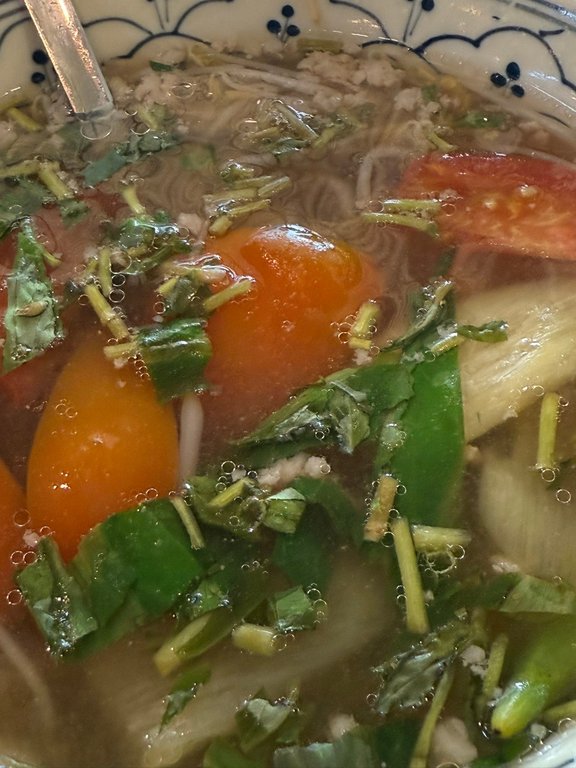
Then a variation of canh chua, the sour tamarind soup. Canh chua is sour from tamarind and sweet from pineapple, with tomato, and usually bạc hà, the spongy stem of the elephant ear plant, bean sprouts, and a fistful of ngò om, the rice paddy herb. Ours came full of tomato, pineapple, greens and herbs. And of course, rice.
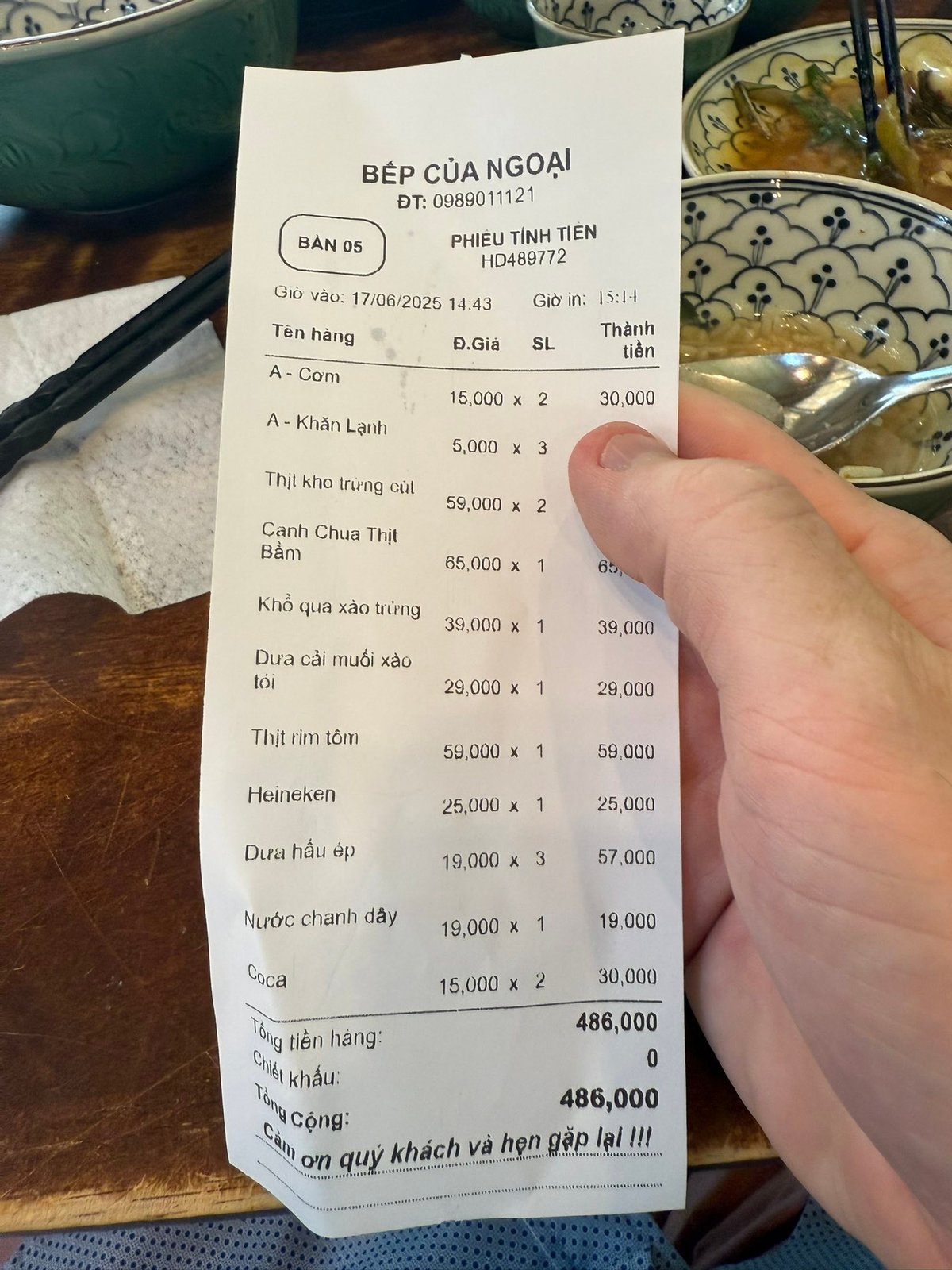
The bill came to 486,000 dong. Under $20.
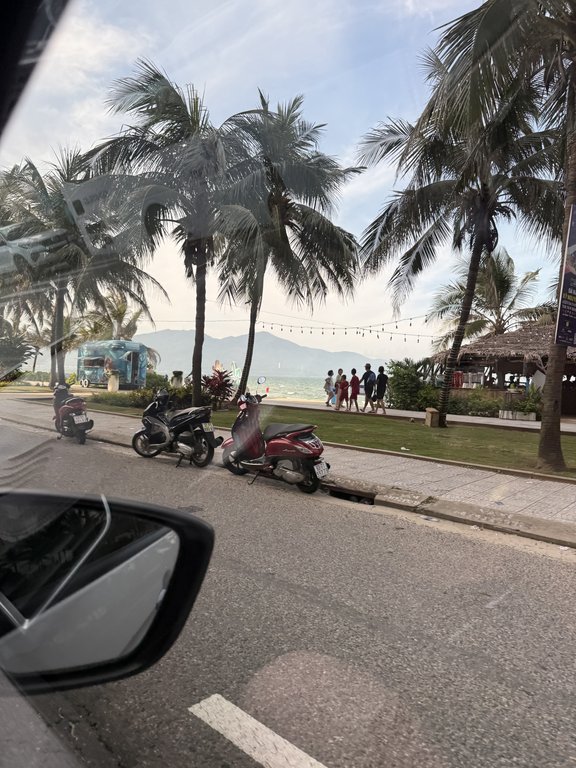
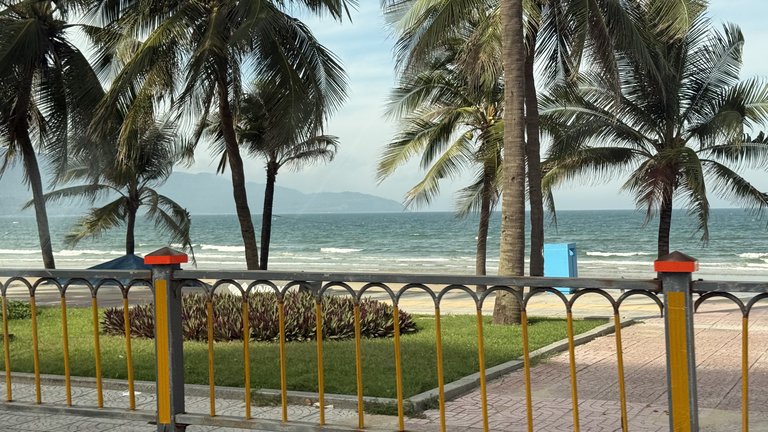
After lunch we went down to the beach road. It was lined with coconut palms and parked motorbikes, and beyond the railing the sea was calm and blue, with mountains blue-gray in the distance.
Thanks, Uncle Ho
Late in the afternoon, we were about to get some shopping in. I held up a single 500,000 dong note, Bác Hồ, Uncle Ho, on the front of it. Thanks, Uncle Ho. In my mind I always think of it as a $20.
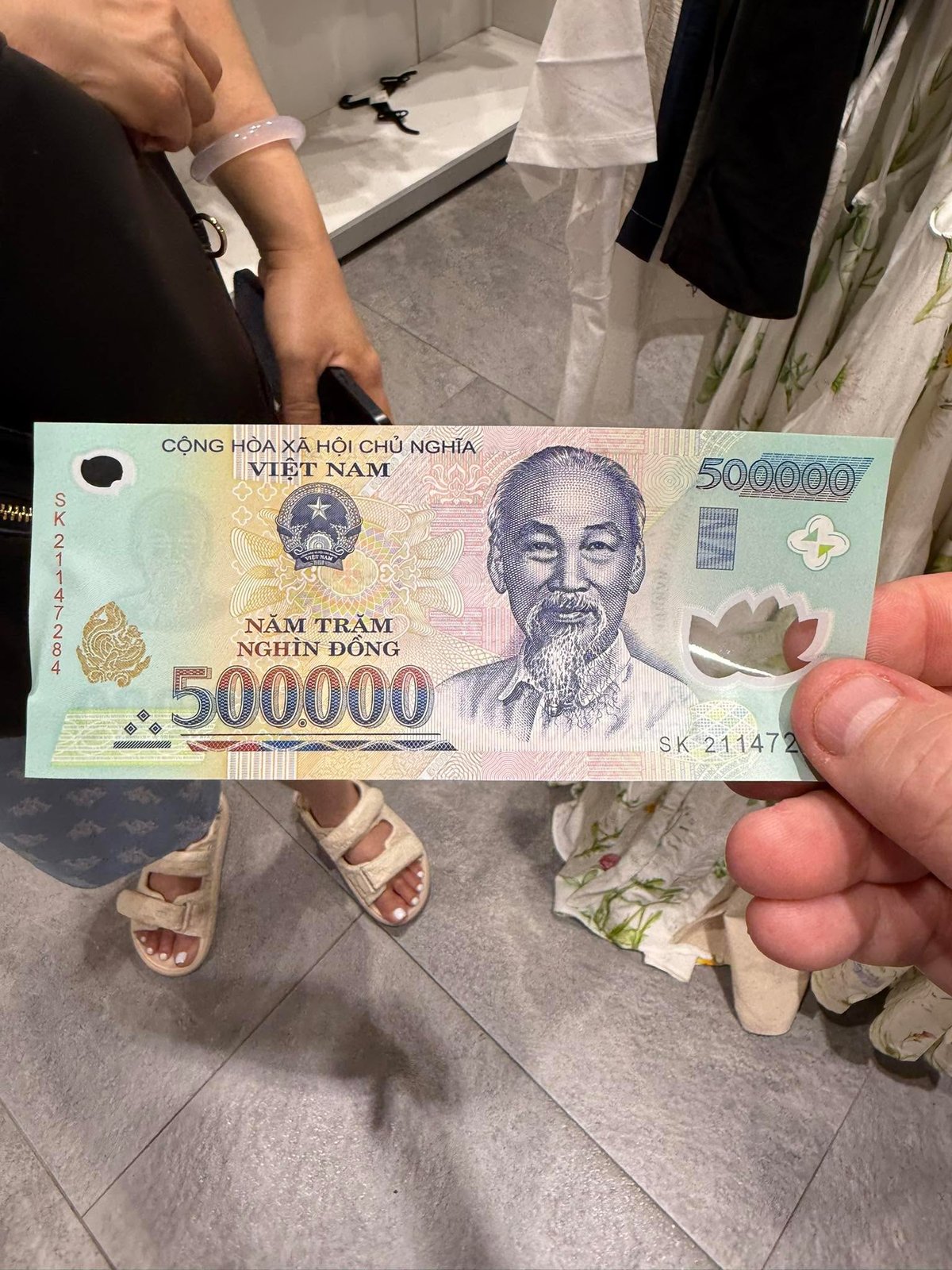
That evening, answering a comment on one of my posts, I put it this way: eating out, groceries and gas are about the same. Property and lodging have increased considerably, like everywhere else.
It had been a long day already, and we had been up since before five. You would think that was enough for one day. You would be wrong. Close to midnight, the family would gather around the table again for what I can only describe as third dinner, or first breakfast, or whatever that meal should be called. But that is a story for next week.
Previously: Feasting in the Valley Beyond Time
More from Da Nang: Dragon Diaries #9 - Monsoon Salon, Reflections In Paradise and our Return to Da Nang and Dragon Diaries #20 - The Long Journey Home