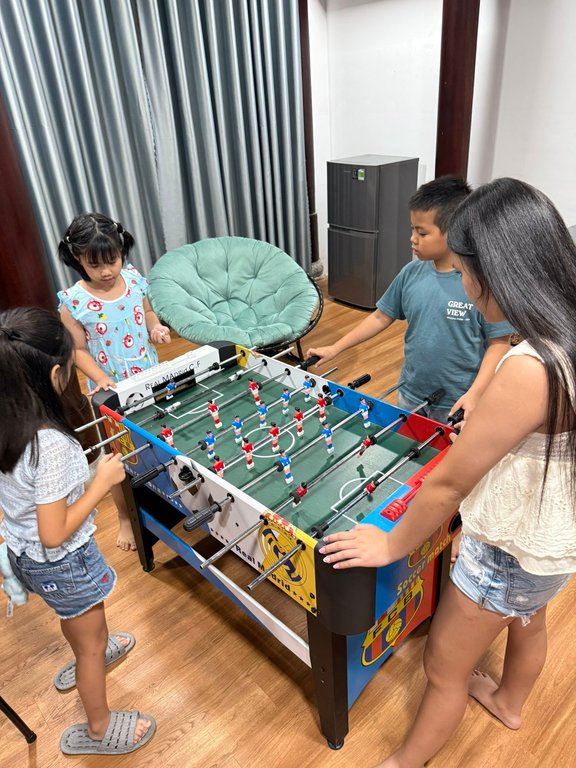
It was close to midnight when third dinner was served. Or first breakfast. Or whatever the meal should be identified as. The family gathered around the long wooden table at the house. I had to work, so I was only able to sneak in for a bite here and there. The cousins played foosball and the beer flowed heavily.
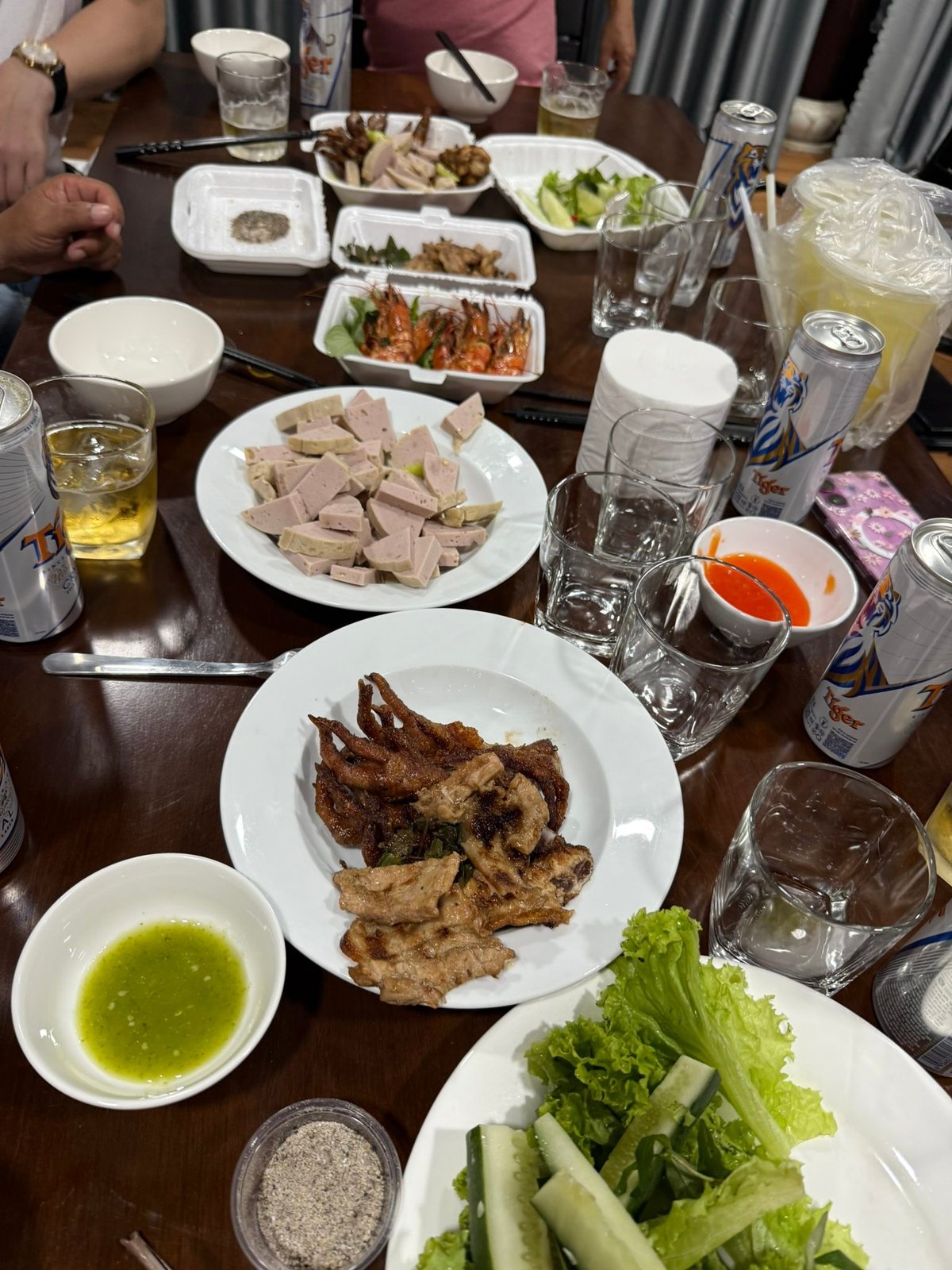
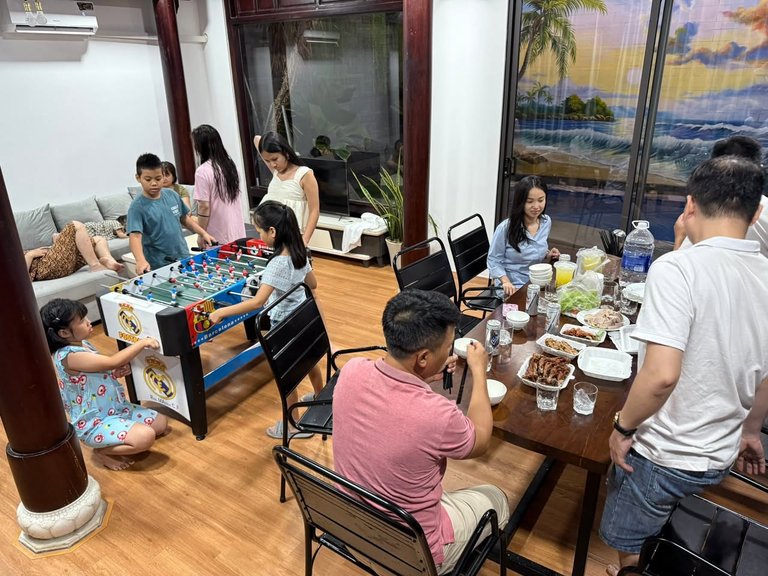
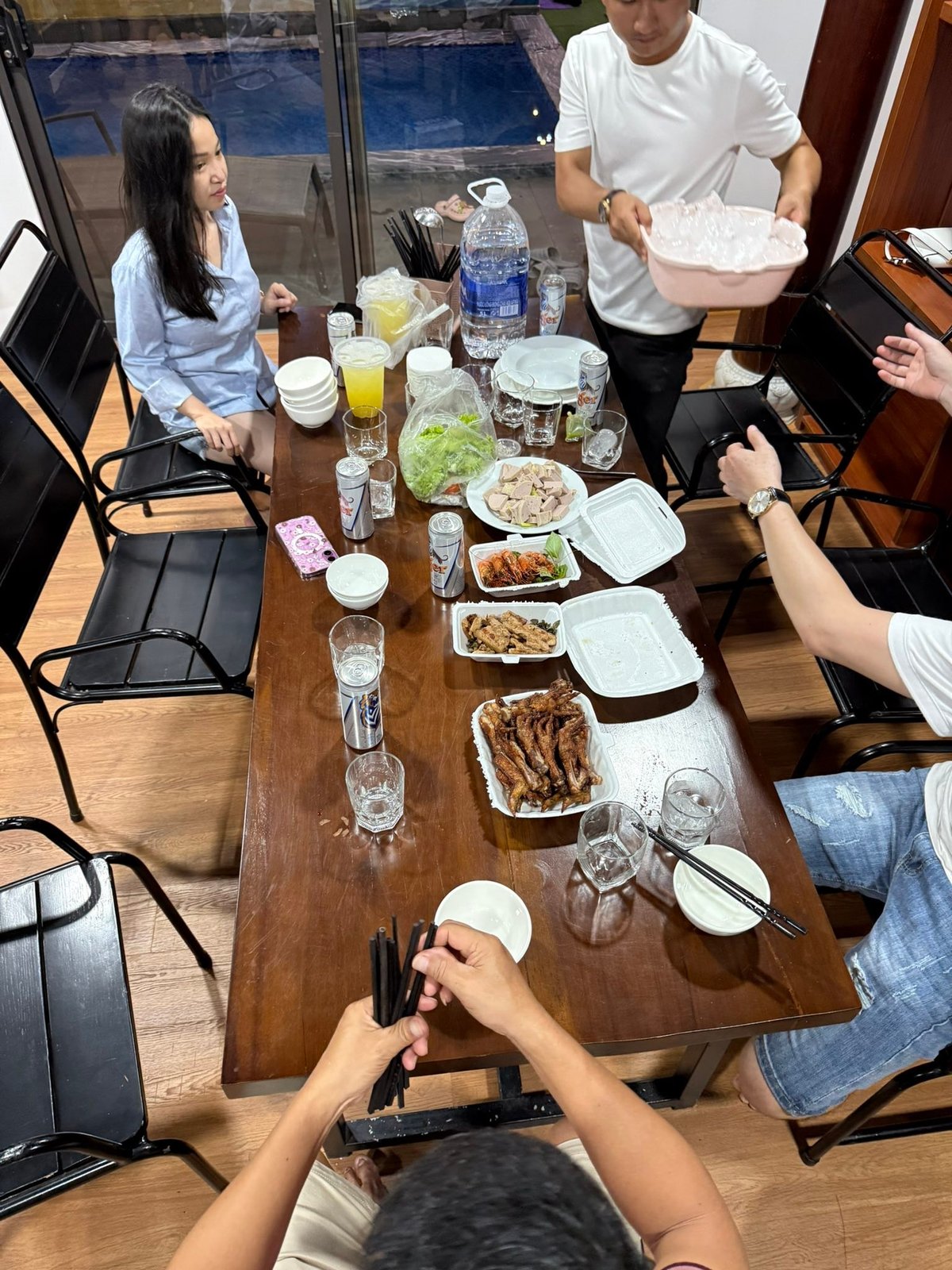
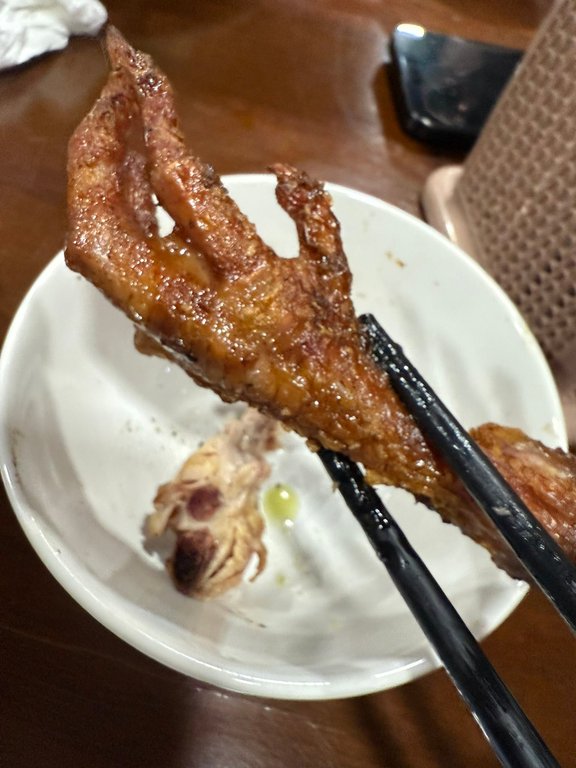
The menu was a clinic in the stranger side of the cuisine. Braised chicken feet, which I always like to think of as little gremlin hands. Then the quail version of balut, trứng cút lộn, and my favorite version. A little bite-sized burst of rich flavor best described as somewhere between quail meat and its egg. Around them came pork roll, caramelized grilled chicken wings, grilled shrimp, vịt lộn (the duck balut), strips of lemongrass grilled pork, and the classic garden of lettuce, herbs and cucumber that accompanies any respectable Vietnamese table. There were various cakes for the children and, of course, lots of fresh fruit in the form of durian and mangosteens.
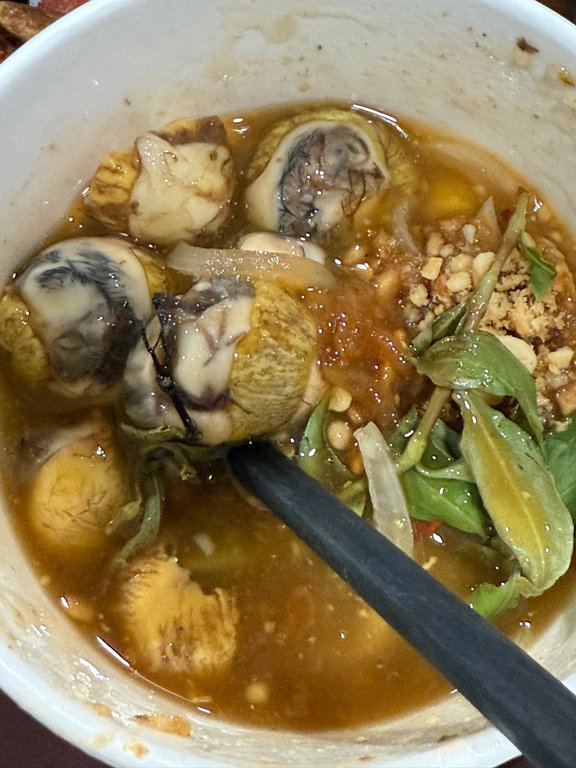
I explained the duck egg back in An Lão. The quail egg is the same idea in miniature, small enough to pop in one bite, and the street vendors also fry them up in a sticky tamarind sauce, trứng cút lộn xào me. I have been partial to the quail variety for years. Sometimes you can even find them in a bowl of noodles.
Laps and Cháo Gà
It was early morning when I wrapped up work, and the festivities were just winding down. Never one to waste a morning, I was swimming laps at 6:30, while much of the house was undisturbed until much later.
In an attempt, I'm sure, to aid some of my brother's rough mornings, my sister-in-law made a pot of simple but equally delicious cháo gà, chicken rice porridge. The rice is simmered in the stock from the chicken until it goes soft and loose, and the meat is pulled and folded back in. I've never much liked the translation to porridge. I feel it takes away from the more elevated nature the dish takes on when fresh herbs and that delicious and irresistible nước chấm are added.
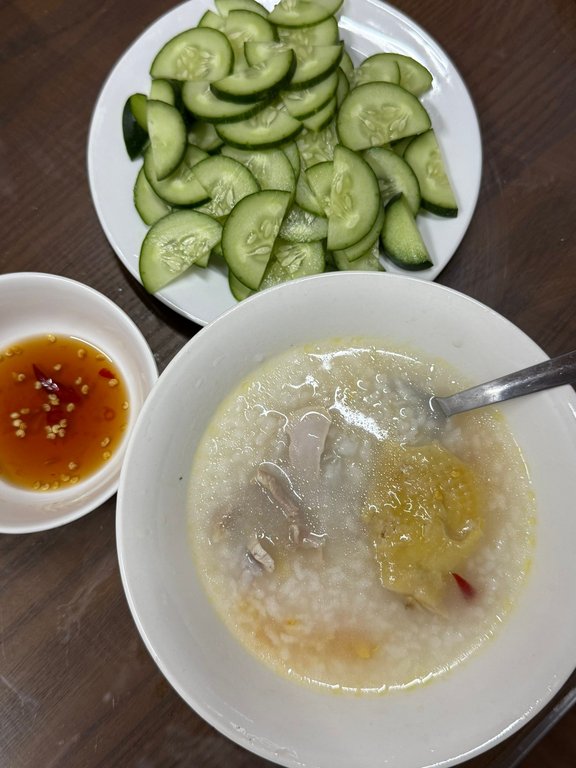
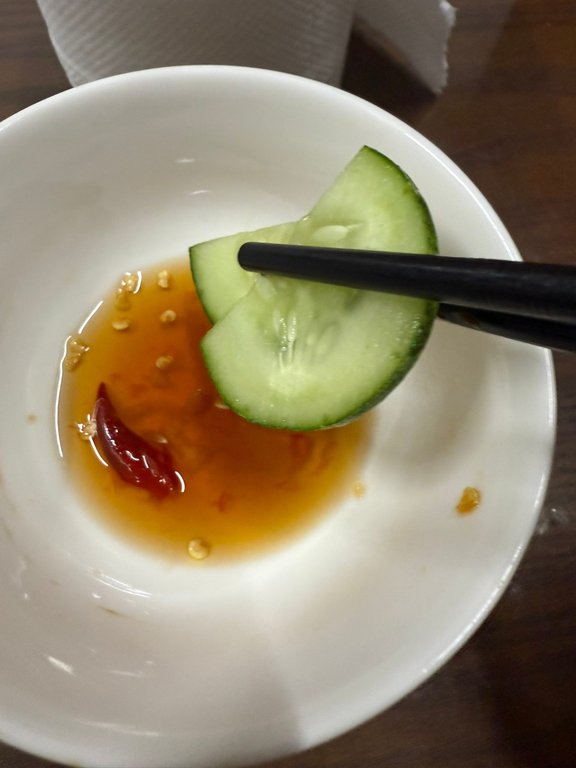
Nước chấm means, simply, dipping sauce. In our house it is fish sauce with a sweetener, fresh Thai chili and garlic, a condiment that has become as ubiquitous in our home as ketchup and mustard are in most other American homes. It is my personal Frank's hot sauce. I put that shit on everything. From a simple dip for fresh vegetables like cucumber and tomato, to the unexpected, like spaghetti. It works everywhere, adding an incredible umami pop to anything that needs that little something. We go through about a gallon a month, and that is no exaggeration. But that's a story for another day.
Now if you'll excuse me, I had some children to rouse.
Coffee in the Shadow of the Dragon
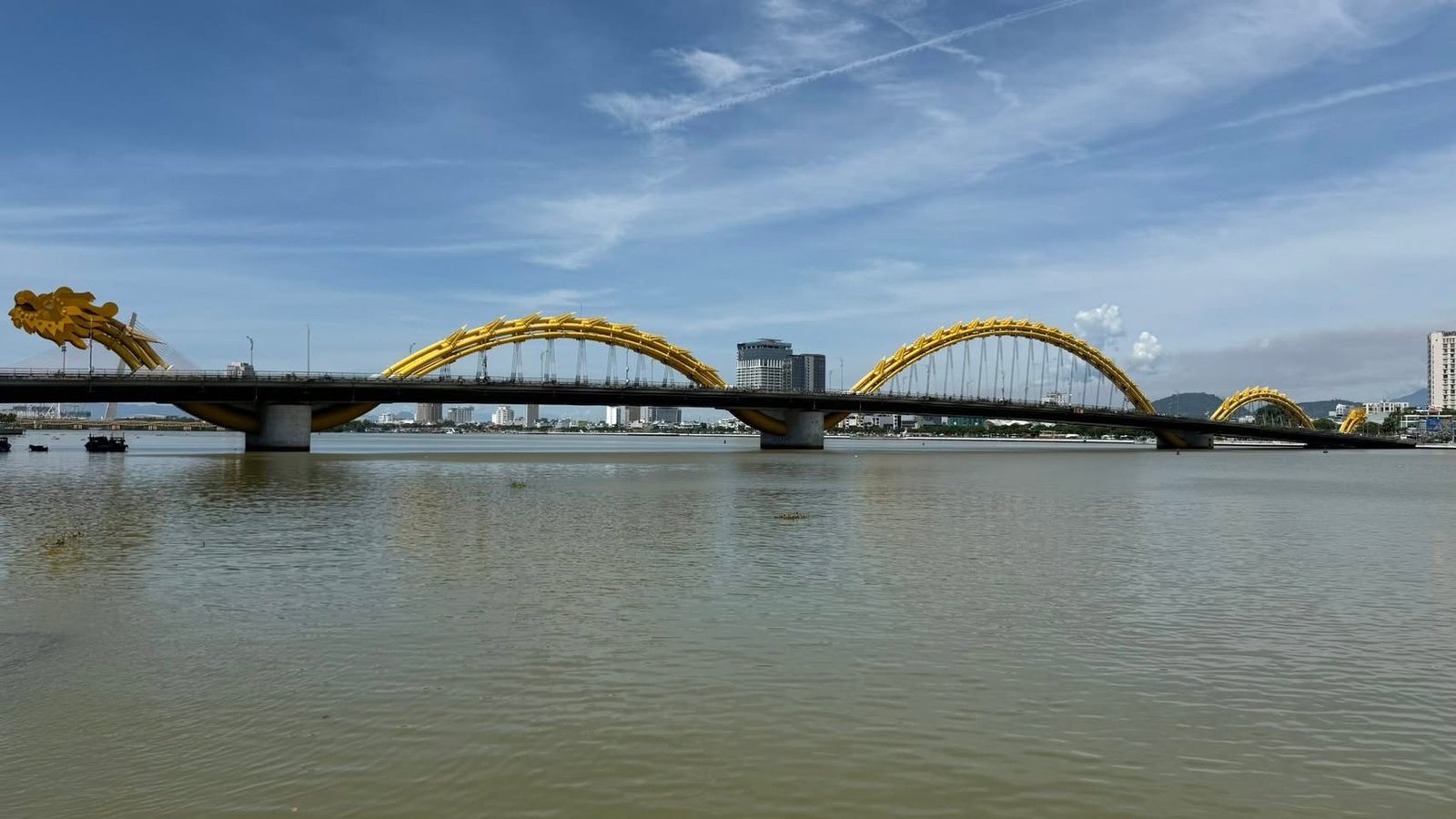
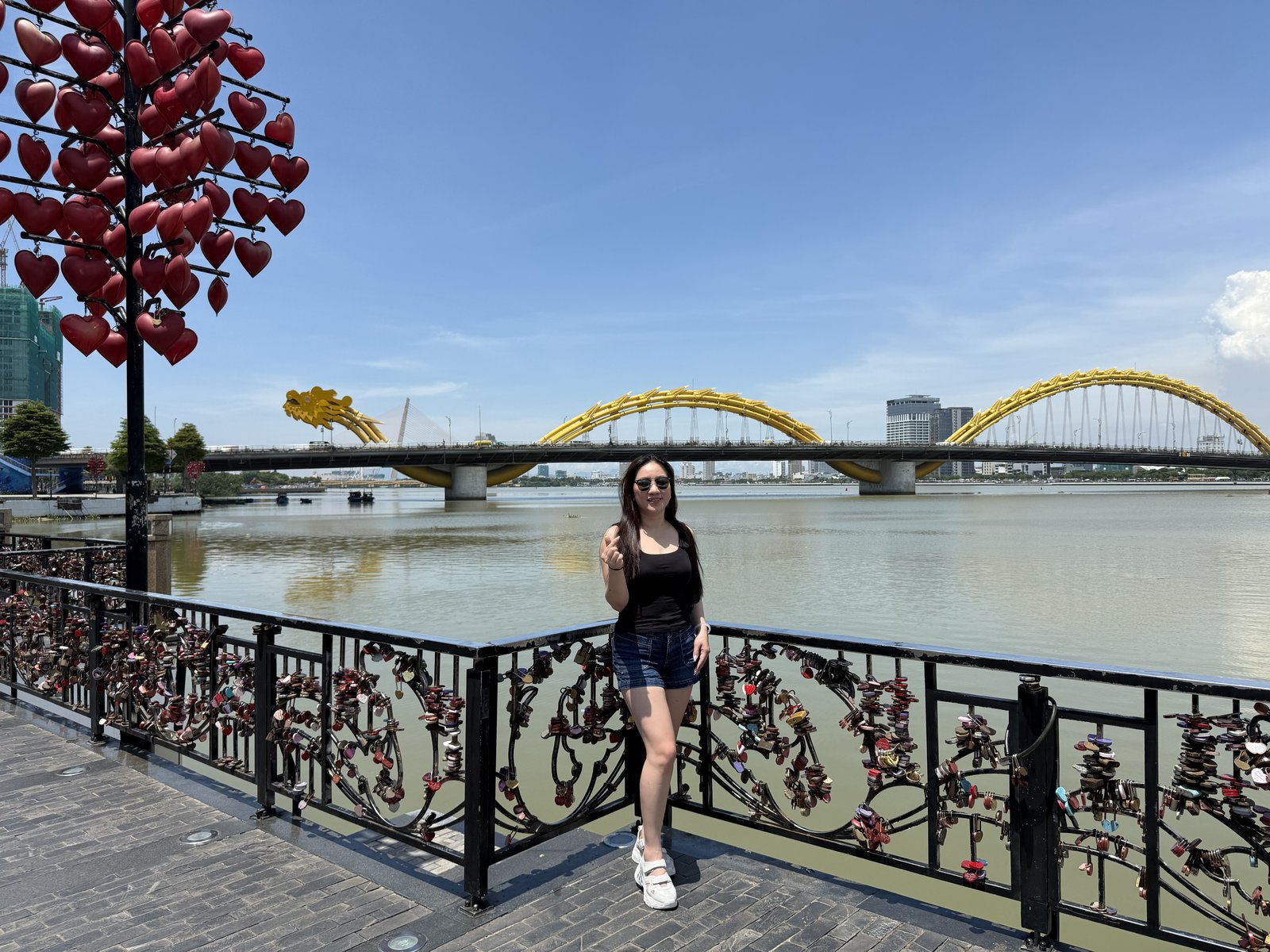
That morning we went for coffee in the shadow of the Dragon Bridge. Cầu Rồng is the icon of Da Nang, and the inspiration for the cover and title of Dragon Diaries, the book about our experience living in Vietnam through the pandemic. From the river road, the golden dragon shows itself between the trees.
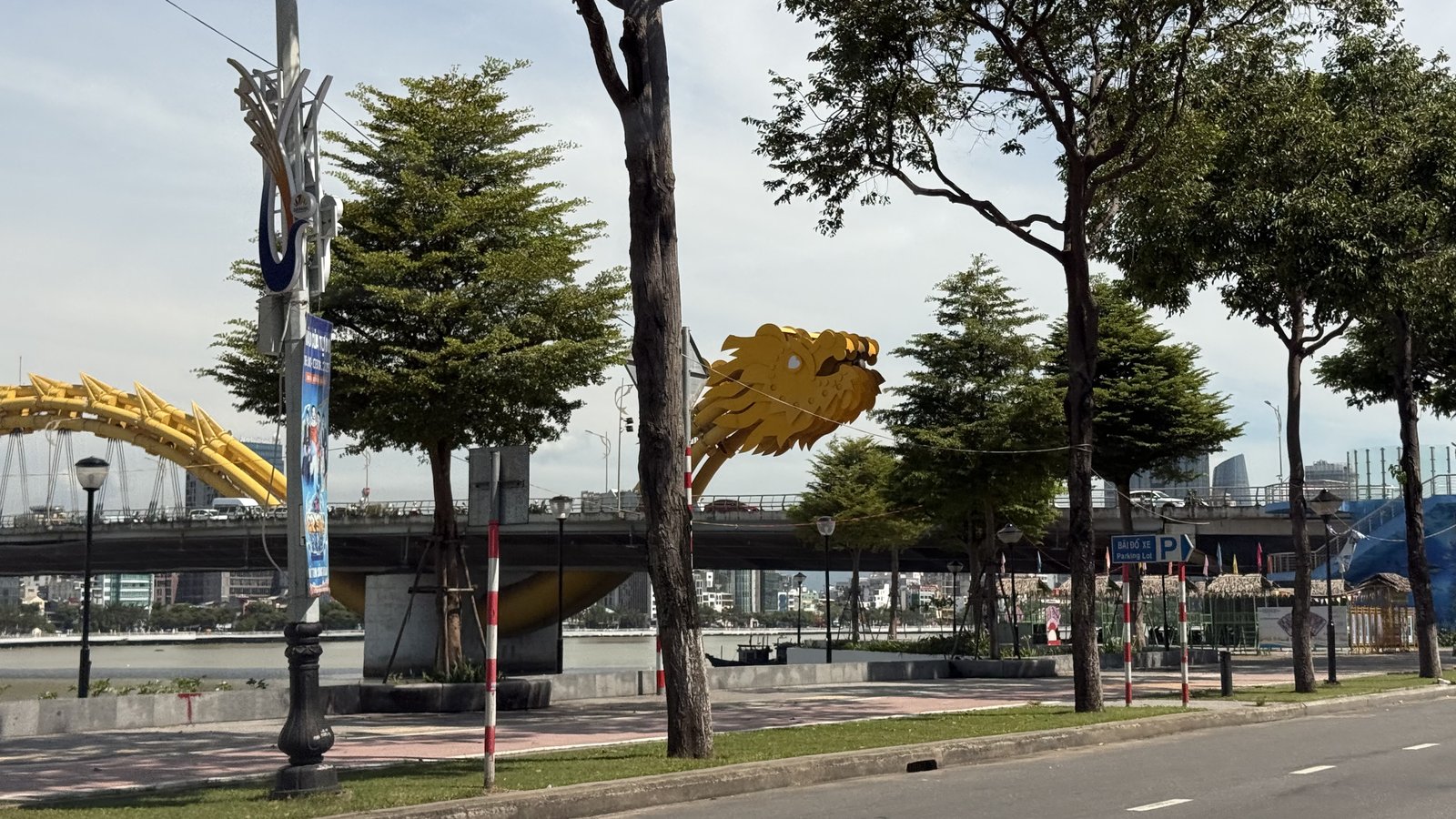
I wrote about the bridge years ago in Da Nang, City of Bridges. Construction began on July 19, 2009, and the bridge opened to traffic on March 29, 2013, the 38th anniversary of the day in 1975 that northern forces took the city, which Da Nang marks as its liberation. The symbolism, as I wrote then, was about the North winning the war, and about modern cooperation and renewed relationships. It was designed by two American firms, Ammann & Whitney with the Louis Berger Group. It is 666 meters long and 37.5 meters wide, six lanes of traffic carried across the Hàn River under a steel dragon whose body rises and falls in great yellow arches, and it cost nearly 1.5 trillion dong, about $88 million at the time. It is also the shortest road from the airport to the beaches, so for most visitors it is the first real sight of the city.
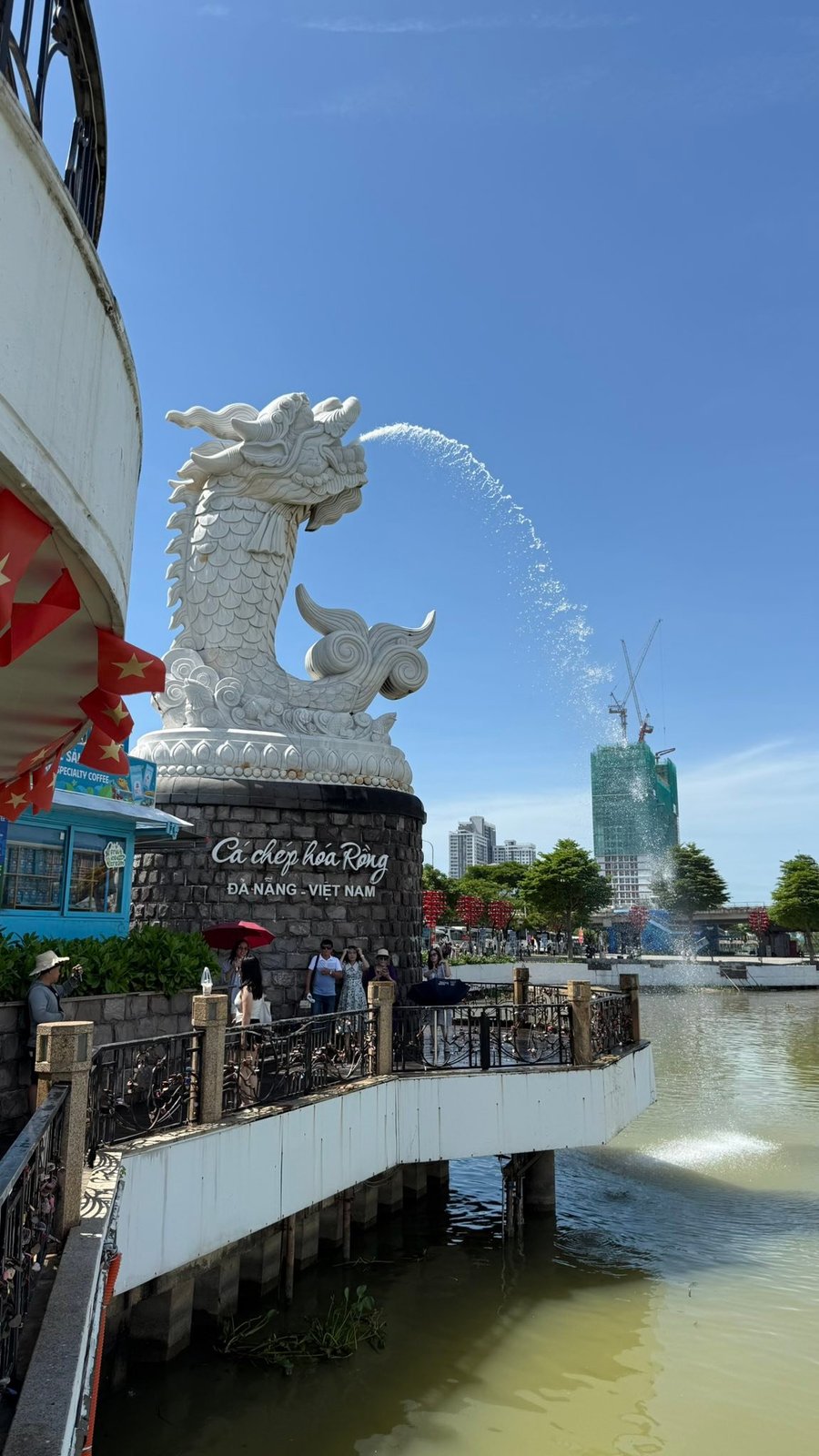
At the entrance to Lovers Bridge, by the east end of the dragon, stands its little cousin, a white marble carp with a dragon's head, spouting water toward the river. It is called Cá Chép Hóa Rồng, the carp that becomes a dragon. In the old legend, a carp that can fight its way upstream and leap the Dragon Gate is transformed into a dragon, and in Vietnam it stands for perseverance and the will to rise. Da Nang's version is 7.5 meters tall and weighs close to 200 tons, made from marble in the stone-carving village of Non Nước, down by the Marble Mountains. It is not hard to see why a city that has climbed as fast as this one wanted it on the riverbank.
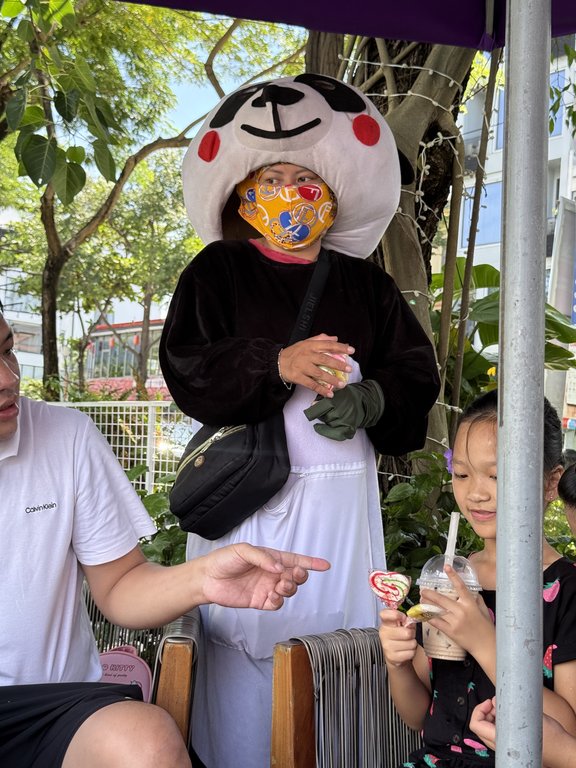
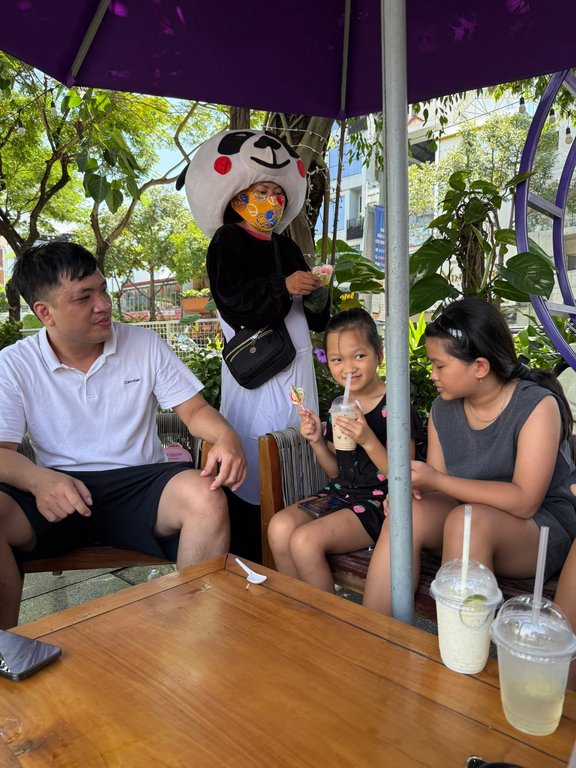
Our coffee came with a panda. A costumed mascot was making the rounds under the umbrellas and stopped to hand one of the girls a treat. The drinks were iced. Before ten in the morning, they already had to be.
On weekend nights the dragon comes to life and breathes fire and water over the gathered onlookers. These days the show runs on Friday, Saturday and Sunday nights and on major holidays, at nine o'clock: about two minutes of fire, then three of water. The third night was added in the summer of 2022. It's been many years since I've seen it. That first time, I wrote about it in The River Dragon Breathes Tonight. I hope to livestream it this weekend. Though, it's usually pretty packed streets for the iconic event.
Lovers Bridge
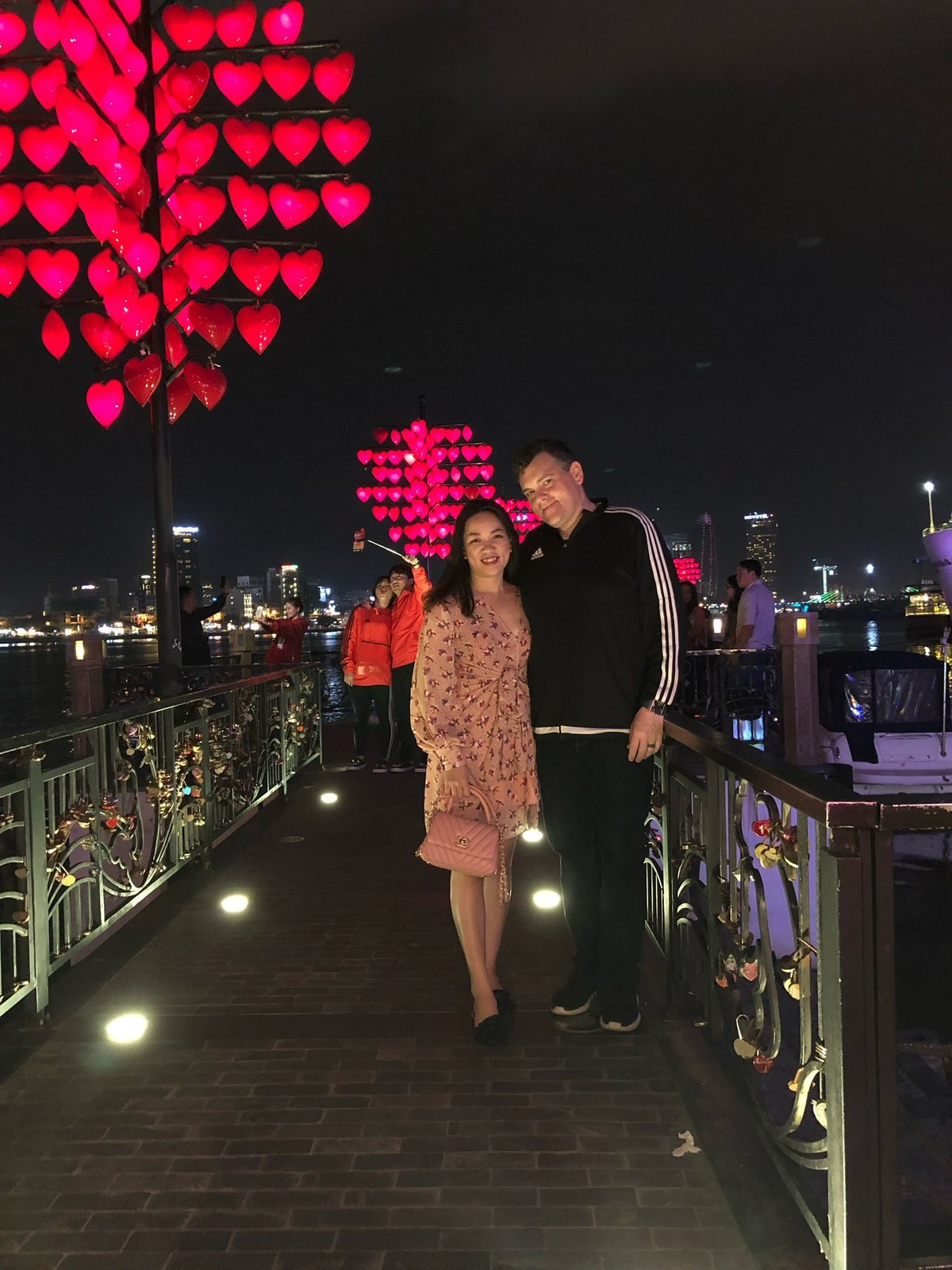
Dragon Bridge, and its adjacent Lovers Bridge, are a very special place to us. It is where Diem and I went on our first date and took our first picture together.
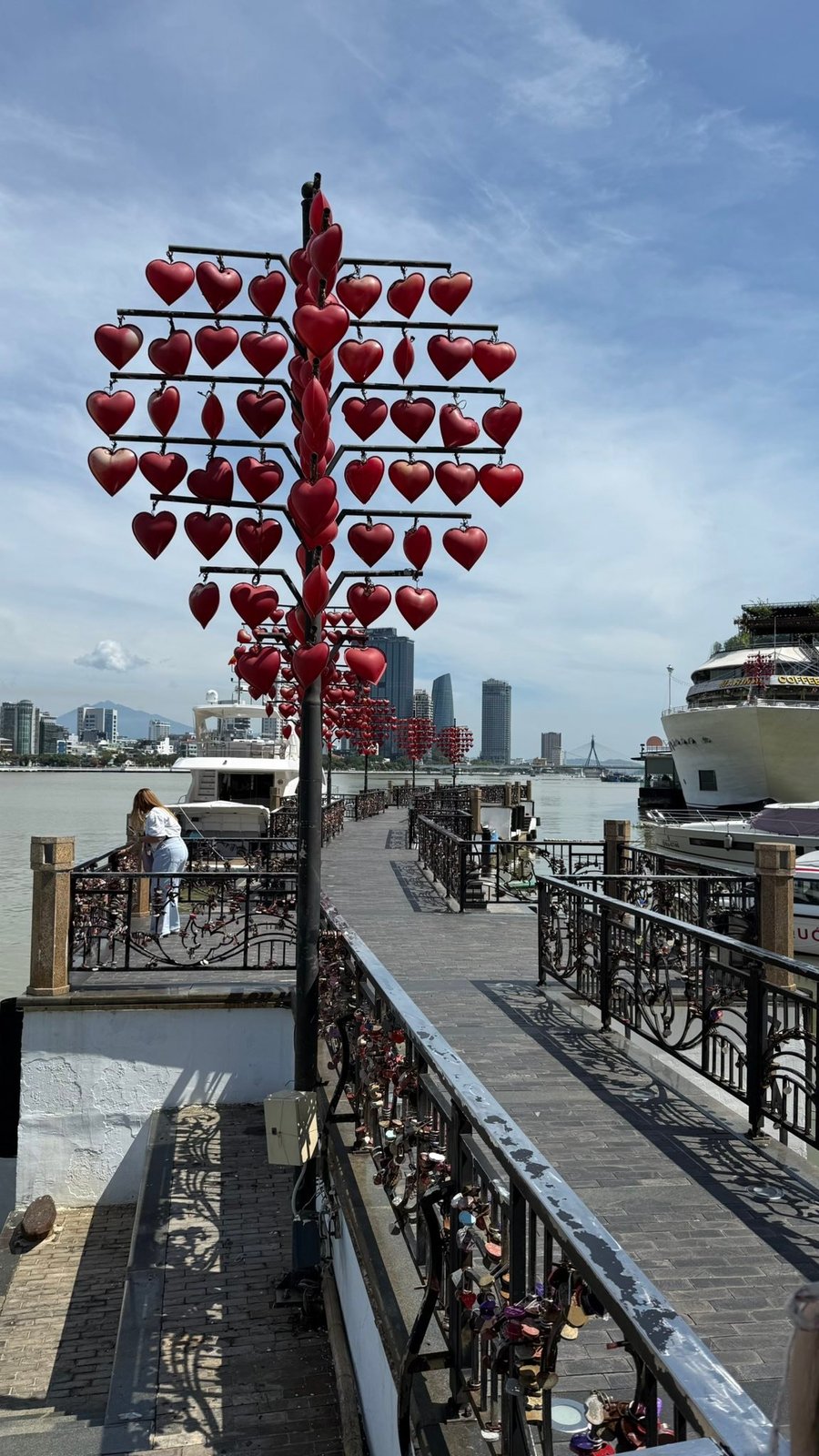
Cầu Tình Yêu, the Love Bridge, is a curving walkway that reaches out over the water from the east bank on Trần Hưng Đạo, right by the dragon. It opened in 2015 and was billed as the first love bridge in Vietnam. The arc is 68 meters long, with trees of red heart-shaped lamps that glow at night, and its railings are hung thick with padlocks. It is a local belief that if you have a lock engraved with your names, fasten it to the bridge and throw the key in the river, your love will endure forever. The stalls nearby will sell you a lock for somewhere between 30,000 and 100,000 dong. The keys, presumably, are still in the river.
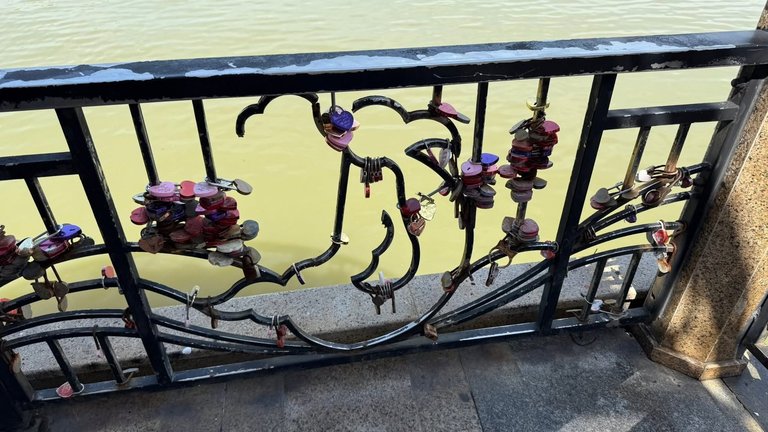
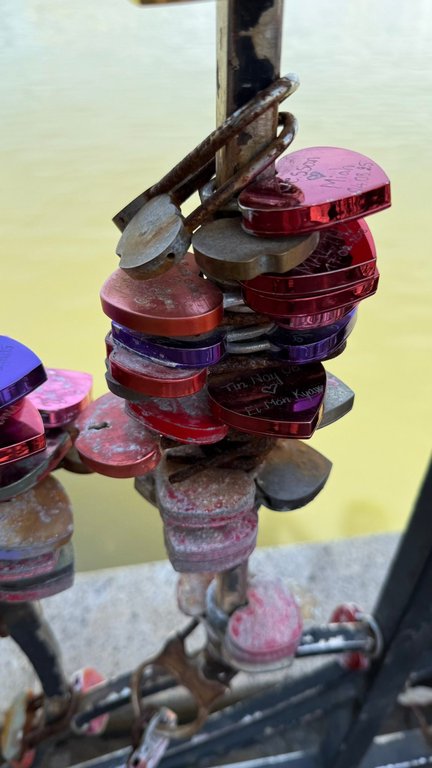
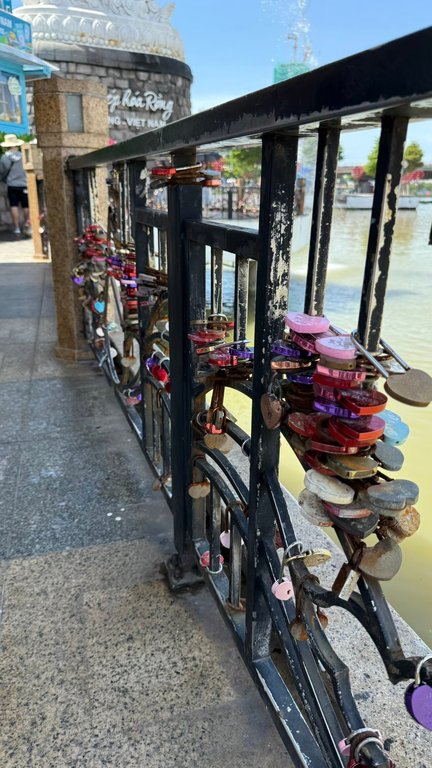
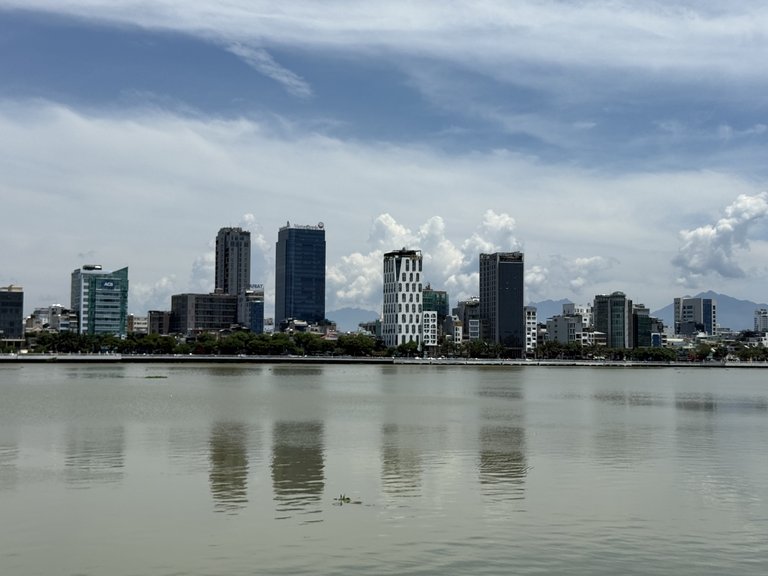
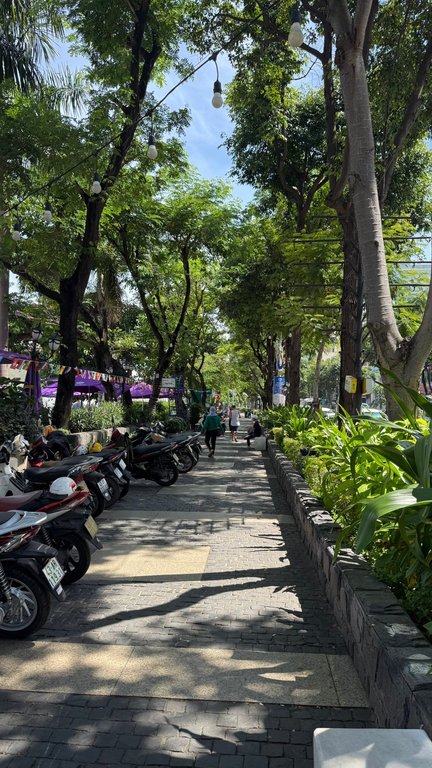
Across the river the towers of the city's older side stood in a line along the far bank. Nearby, the sidewalks were shaded by big trees and lined with parked motorbikes, which is where a motorbike in Da Nang most wants to be.
That morning I also shared an article I wrote here in 2020, 2020 The Year of the Dragon, about Vietnam and what has been going on here since the war years. The poverty and isolation after 1975, the invasion of Cambodia and the Chinese invasion of 1979, the Soviet aid drying up, then Đổi Mới in 1986 and the long climb that followed, to normalized relations with the United States and membership in ASEAN in 1995, and one of the fastest-growing economies in the world. There are so many good reasons we left Vietnam for the U.S. There are so many good reasons we could have stayed.
Chợ Cồn
There is nothing in the world like a massive, wonderfully chaotic Vietnamese wet market. If you can't find it here, you didn't need it to begin with. By eleven we were standing in front of Chợ Cồn, under its clock tower, at the corner of Hùng Vương and Ông Ích Khiêm.
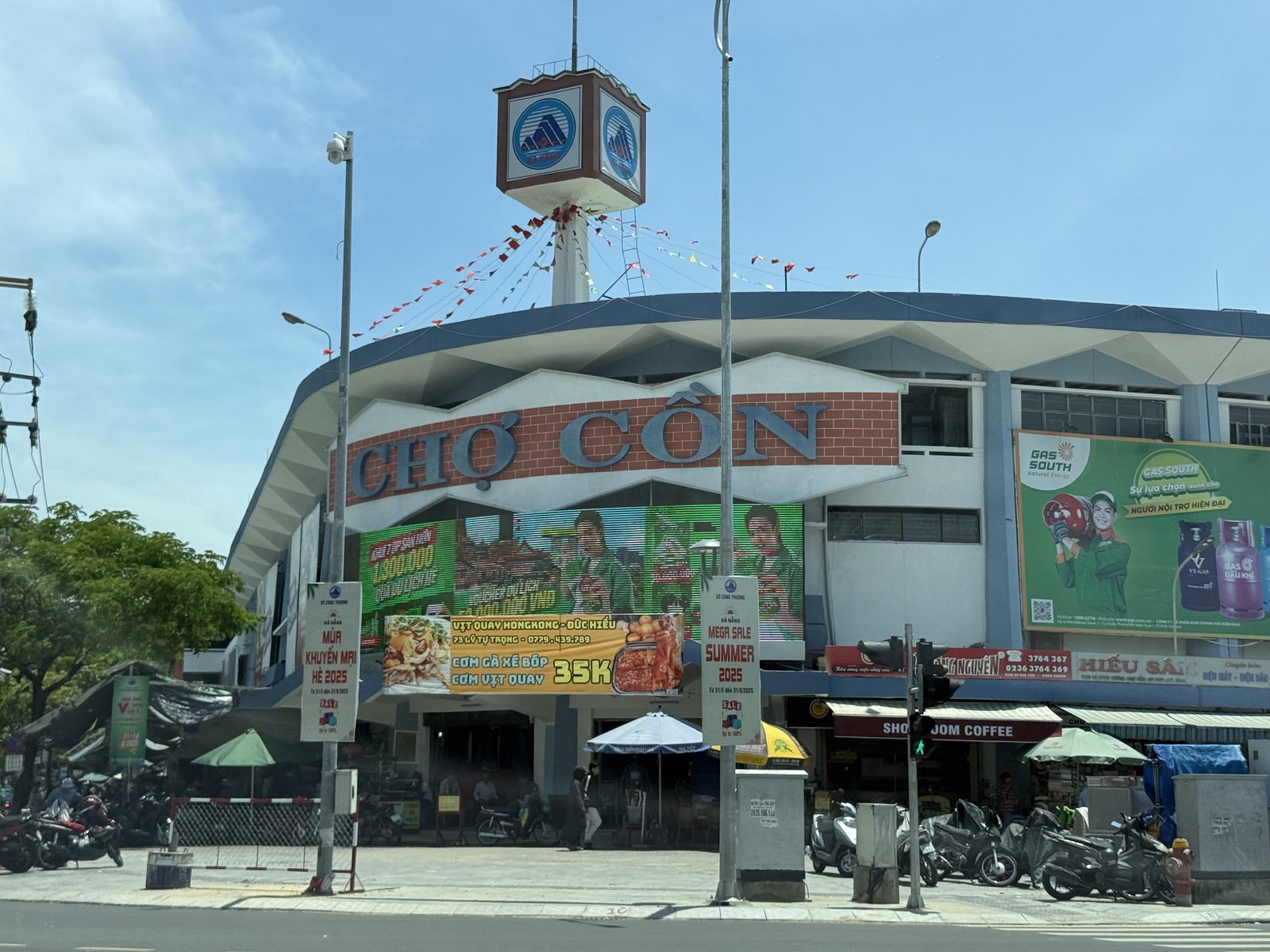
The market takes its name from where it began. In the 1940s it was a scatter of temporary bamboo and reed stalls on a cồn, a high mound of earth in the middle of the city. In 1958 the city decided to build a proper market there to take the pressure off the crowded Chợ Hàn, and through the 1960s it grew into one of the biggest markets in Da Nang. In 1984 it was torn down and rebuilt from scratch, and the new market was opened on March 29, 1985, for the tenth anniversary of the city's liberation, under the official name Trung tâm Thương nghiệp Đà Nẵng, the Da Nang Commercial Center. The people of Da Nang went right on calling it Chợ Cồn, and in 2012 the city gave up and changed the name back. Today it covers about 14,000 square meters, a three-story hall, two two-story halls and six single-story sections, with more than 2,000 stalls. It was built in a hurry to make that 1985 deadline, and by 2011 the papers were reporting cracked beams and slabs in the hall along Hùng Vương, after the market's managers had been asking the city since 2007 to rebuild. It is still standing, and still full. In March of this year, three months before we walked in, its traders paraded through the streets for the city's fiftieth liberation day and the market's fortieth year in the rebuilt halls.
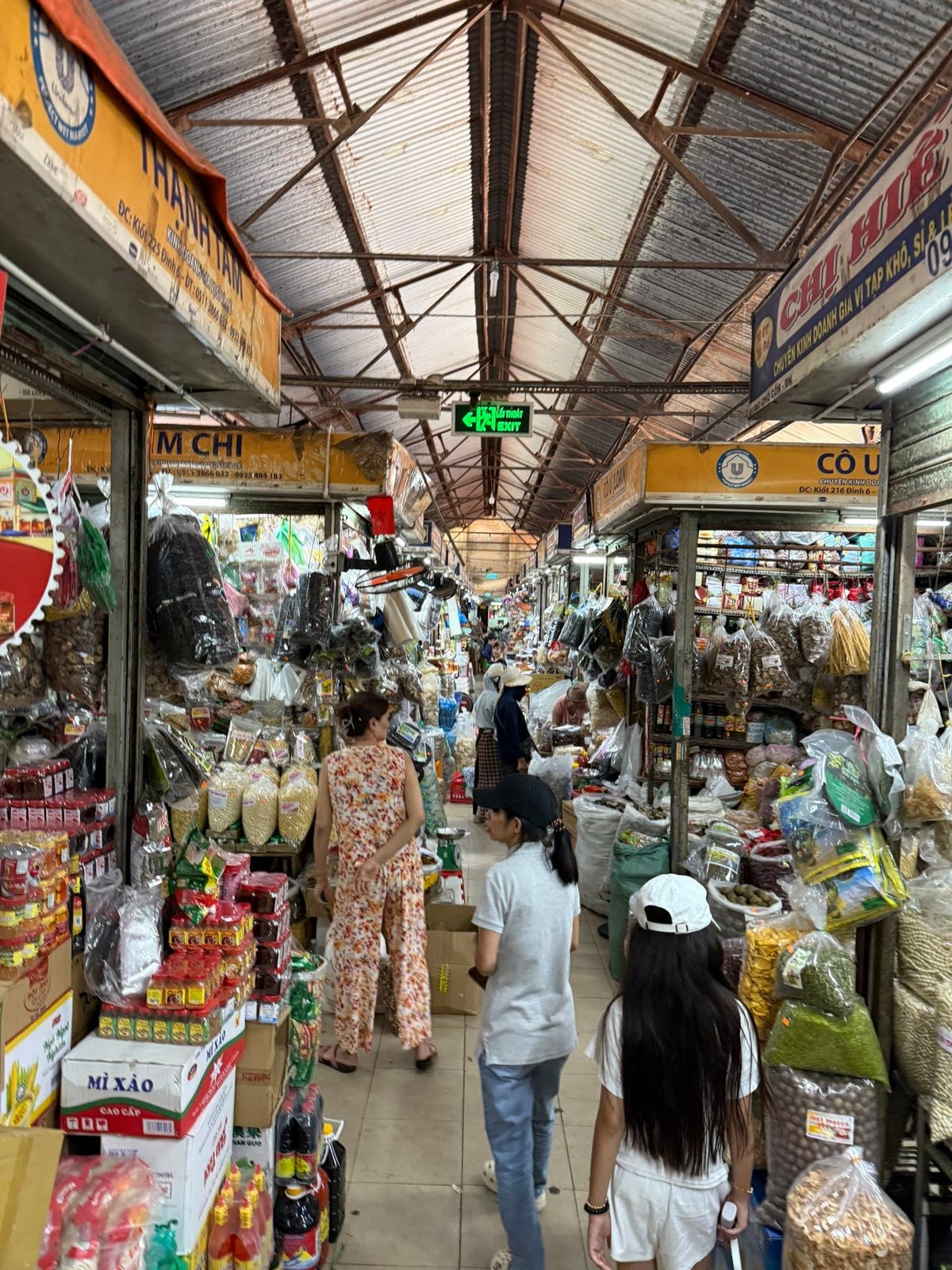
Inside, the smells shift from fish freshly plucked from the sea to the unmistakable aroma of mắm nêm, fermented anchovy paste. Mắm nêm is a Quảng Nam specialty, the sister of ordinary fish sauce, made only from anchovies. Where nước mắm is strained off as a clear liquid, mắm nêm keeps the whole fermented fish as a thick paste, and before it goes on the table it gets doctored with sugar, garlic, chili, lemongrass and crushed pineapple. It is the one partner that will do for bánh tráng cuốn thịt heo, Da Nang's rice paper rolls of poached pork belly and greens, and it lets you know it is in the room long before you see it.
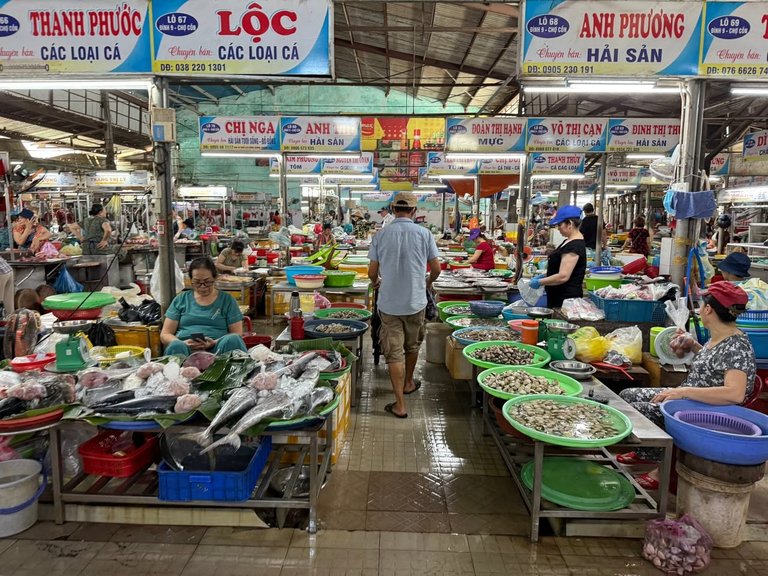
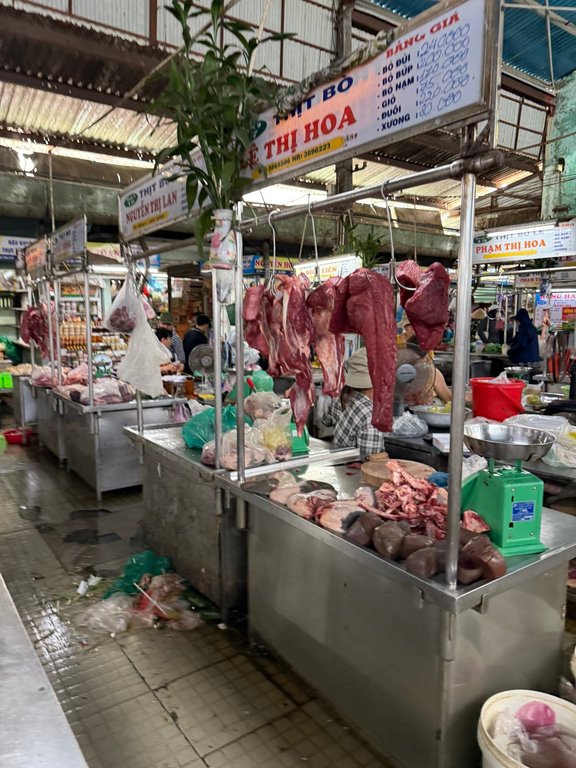
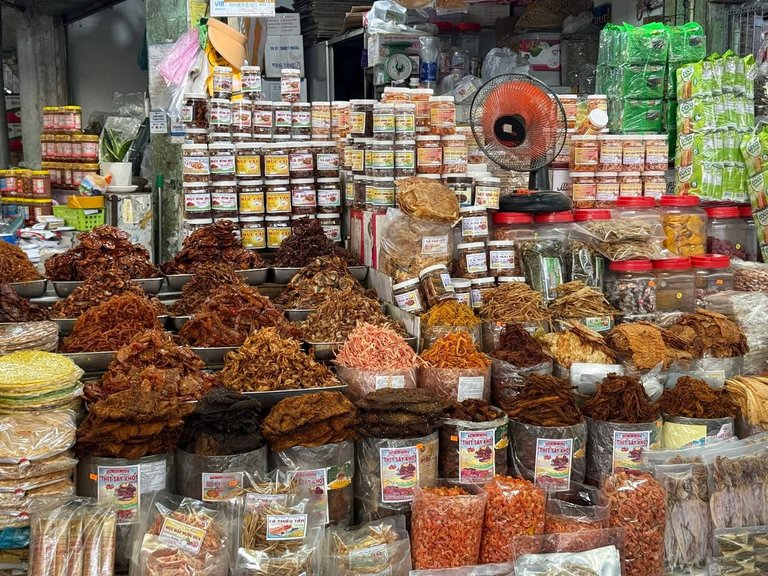
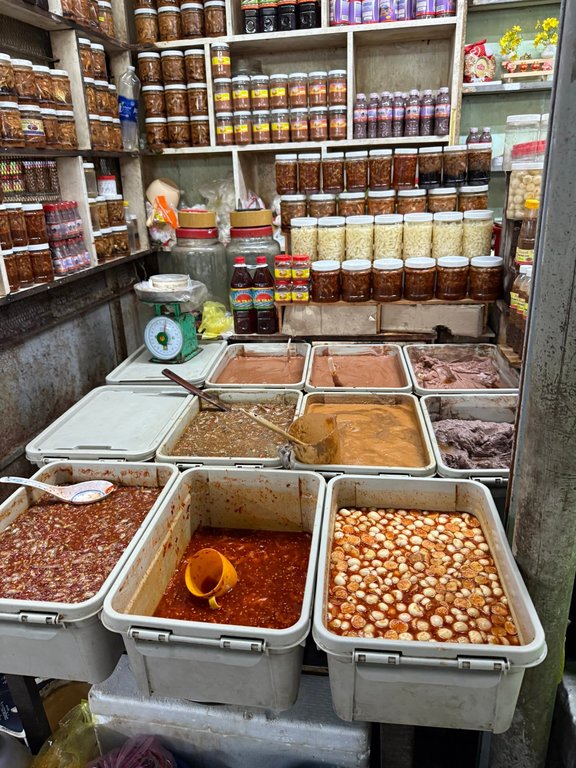
Everything is negotiable, except for the ready-to-eat stalls that have their prices posted. There's an understanding that westerners pay more than locals, known in slang as the skin tax. It's really remarkable that an item a local could get for five dollars may cost anyone else triple that amount. So I typically cruise the market alone, taking pictures of what I want and sending them to Diem, who swoops in some time later to negotiate a local and more reasonable price. We learned this trick long ago, and I have no problem implementing that tactic now. I never let on that Diem and I are together. Once we're marked, she'll never break loose of the tax.
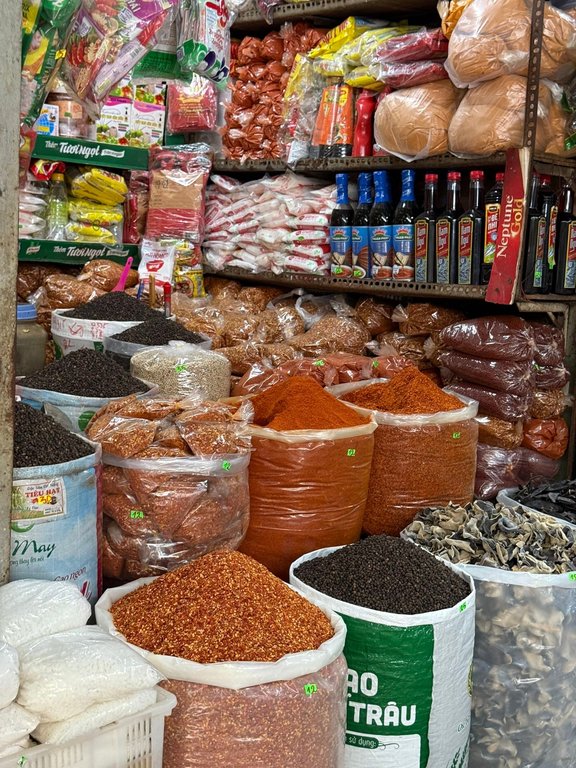
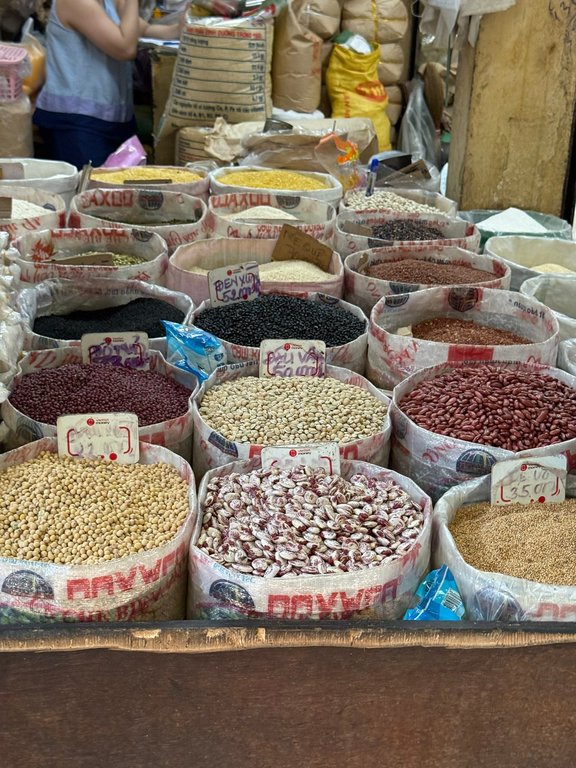
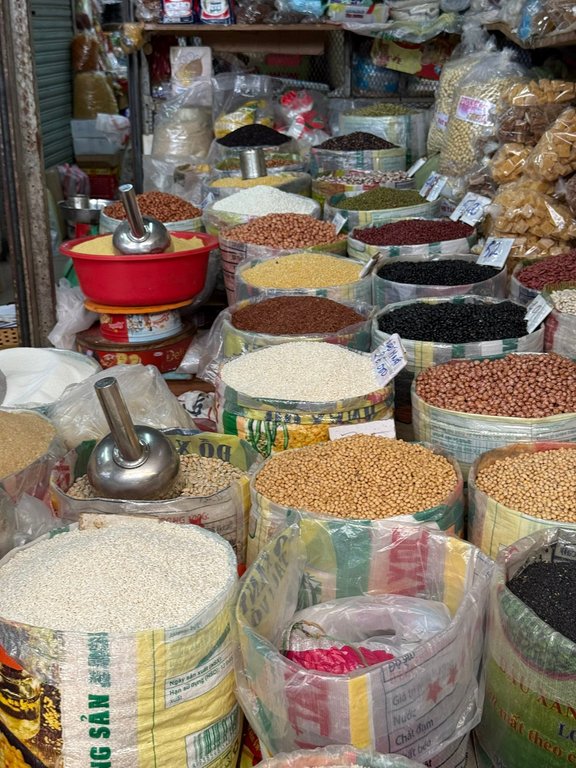
There was plenty to photograph. Chili powder heaped in open sacks. Peppercorns. Beans and rice and seeds in every color, a scoop stuck in each. Ceramic vases and gift baskets stacked to the ceiling under the signs of Sáu Inox and Minh Lộc. Woven baskets and red lanterns hung over a lane of wooden bowls. Spoons, cutting boards and carved kitchenware by the hundred.
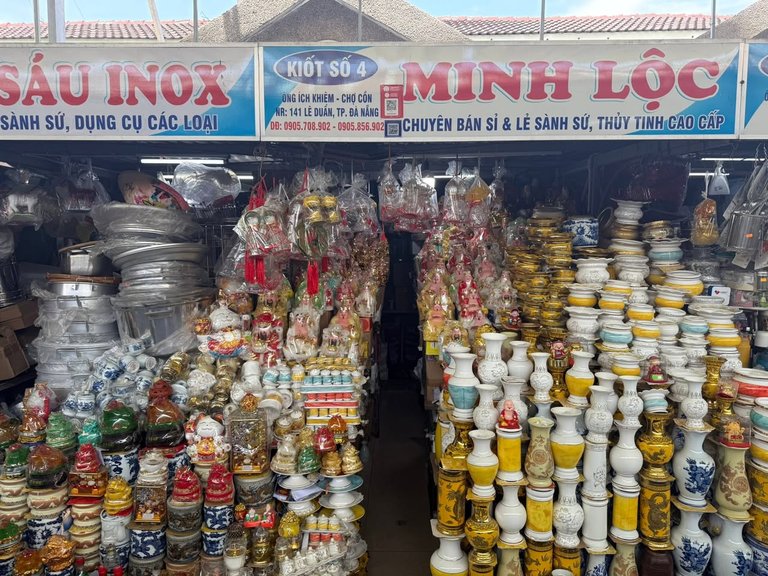
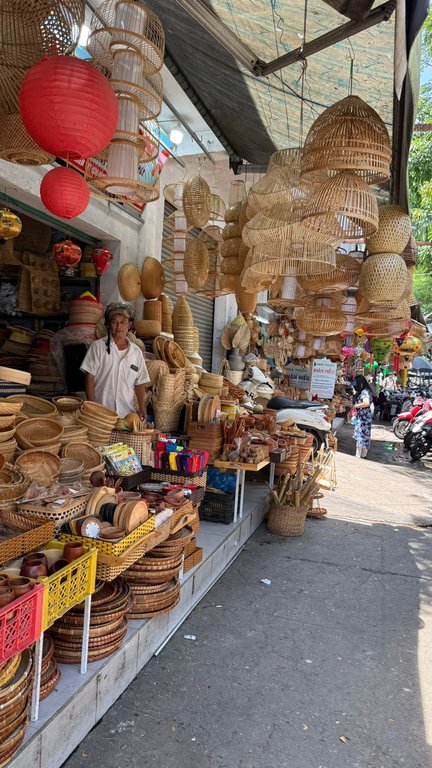
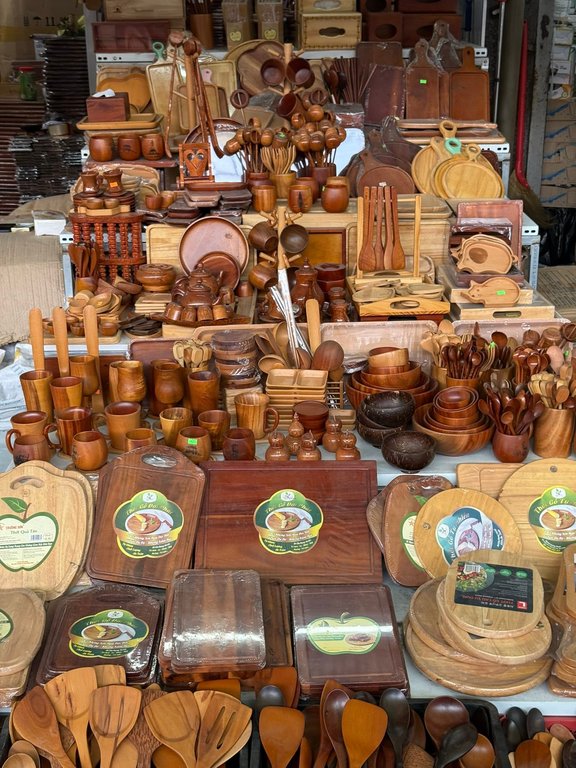
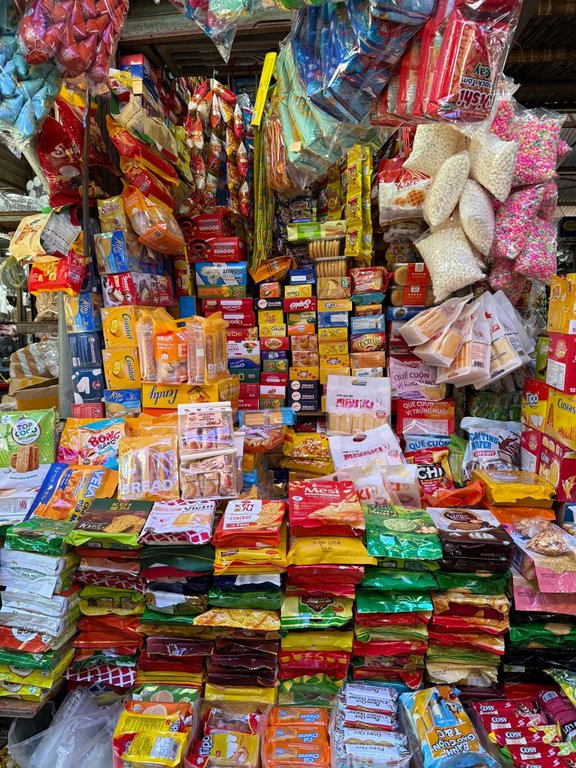
One stall was packed floor to ceiling with bagged candy and snacks. Women in nón lá sat behind a basket of leaf-wrapped parcels and a row of jars and buckets of drinks.
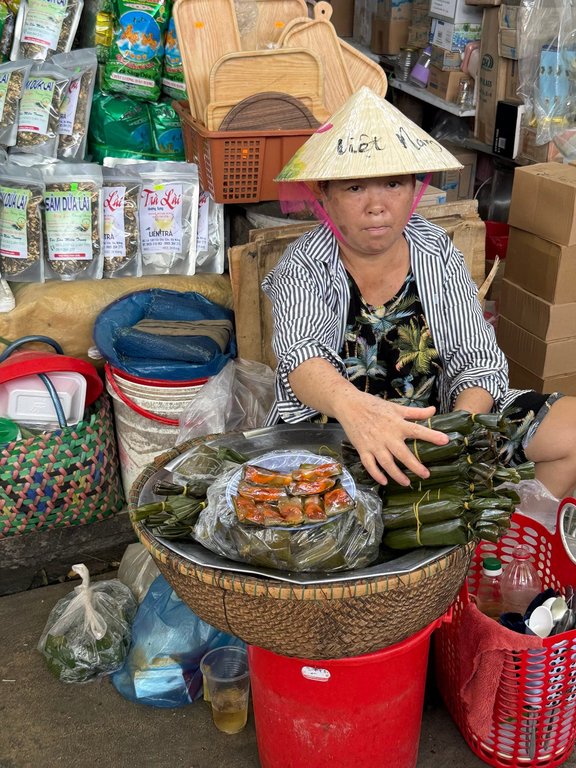
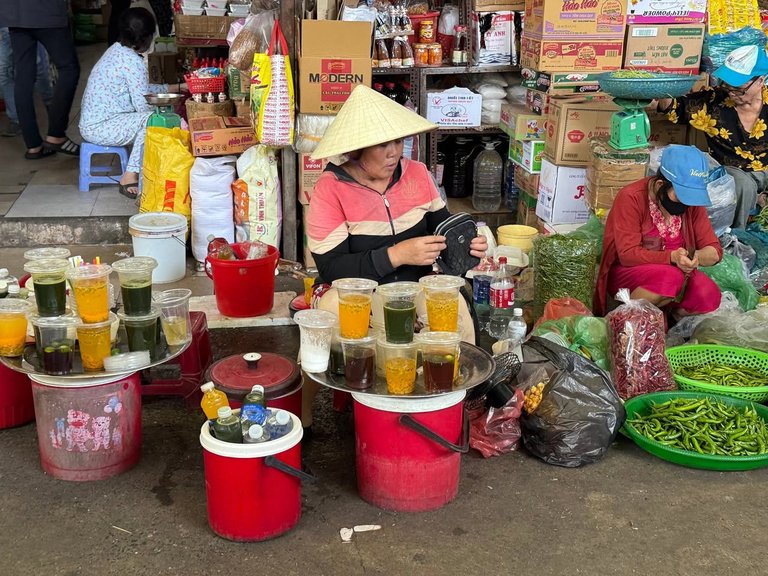
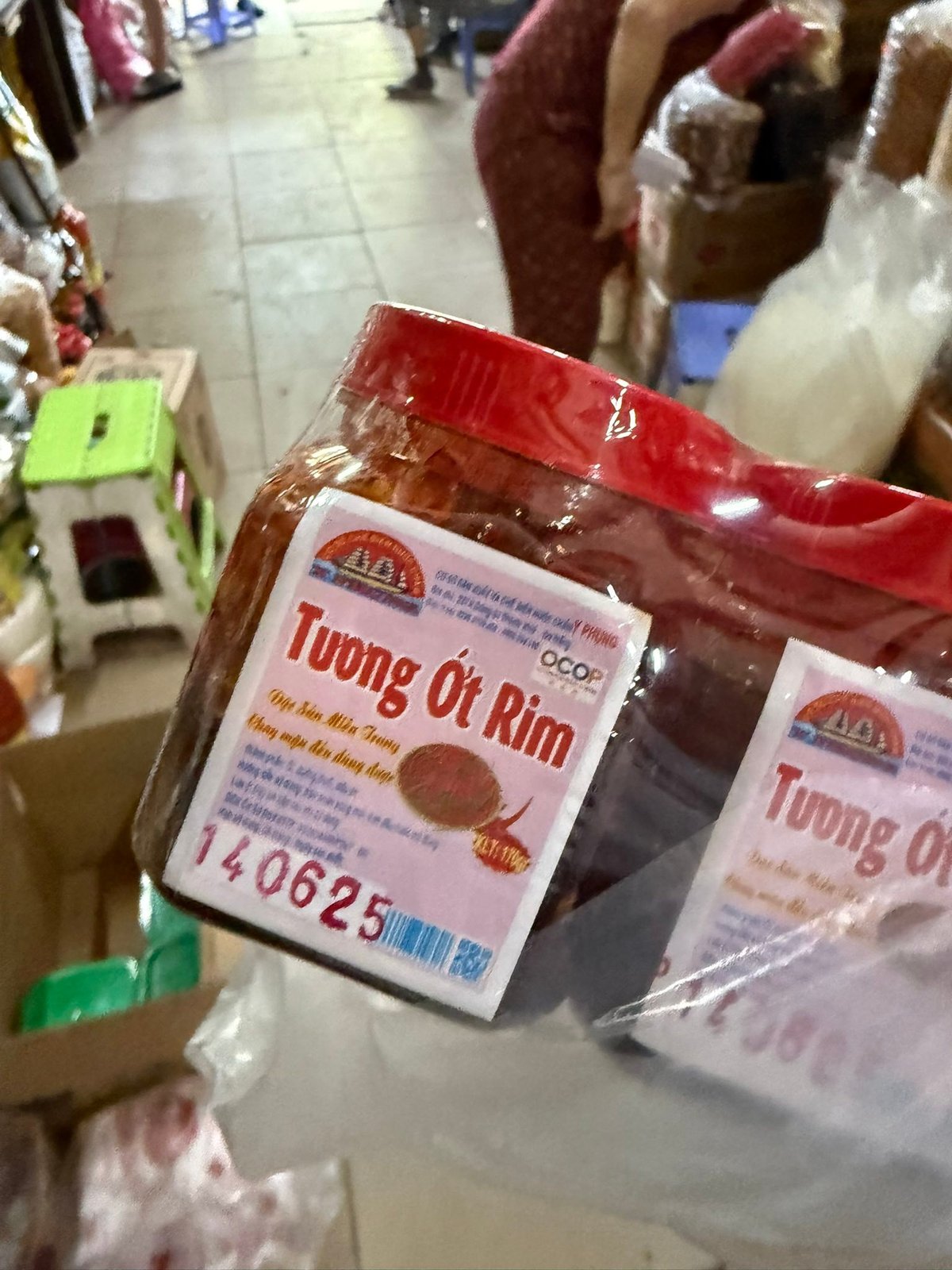
I was able to pick up some of my favorite Da Nang condiments. Tương ớt, a chili jam that makes sticky rice pop. The Da Nang version is tương ớt rim, chili and garlic cooked down in oil with sugar and fish sauce until it goes thick, hot and garlicky with a little sweetness behind it. Years ago I wrote about the chili jam sold by the lady next to our first shop, and about the bowl of mì Quảng from the stall next door that came with a dollop on top. It goes on everything. My jar's label appears to carry the OCOP mark, from the government's One Commune One Product program, which grades local specialties with stars. My chili jam, it turns out, has credentials.
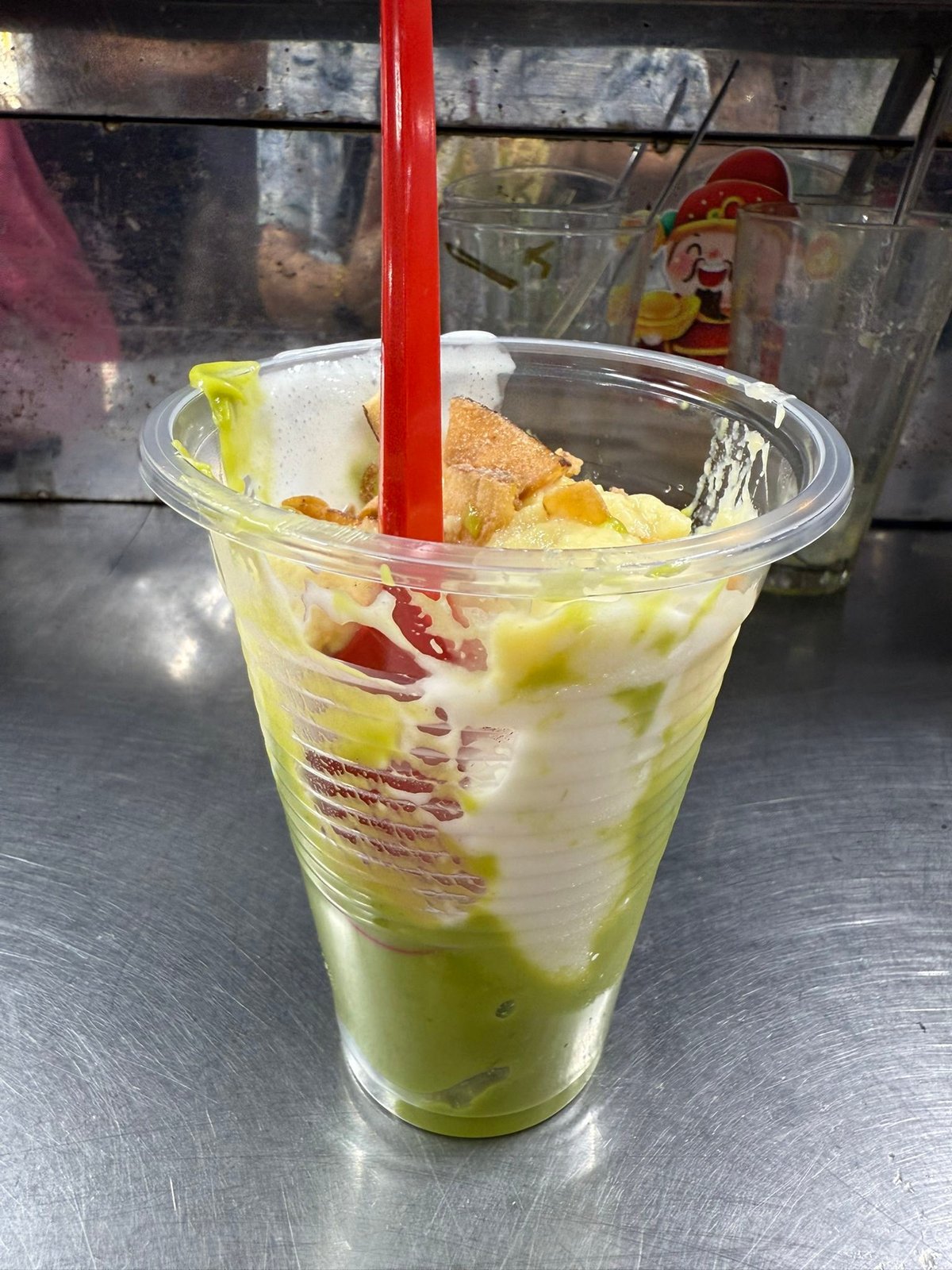
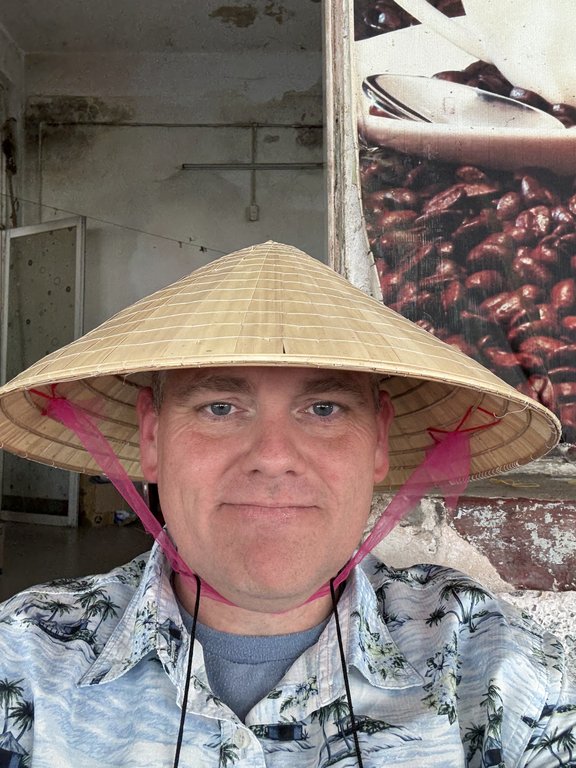
Diem also grabbed me a nice Panama-style fedora. I sat at a food vendor while she shopped and had a delicious cup of one of my favorite treats in the whole wide world, kem bơ, avocado with coconut ice cream, and the lady at the booth put a nice scoop of puréed durian on top.
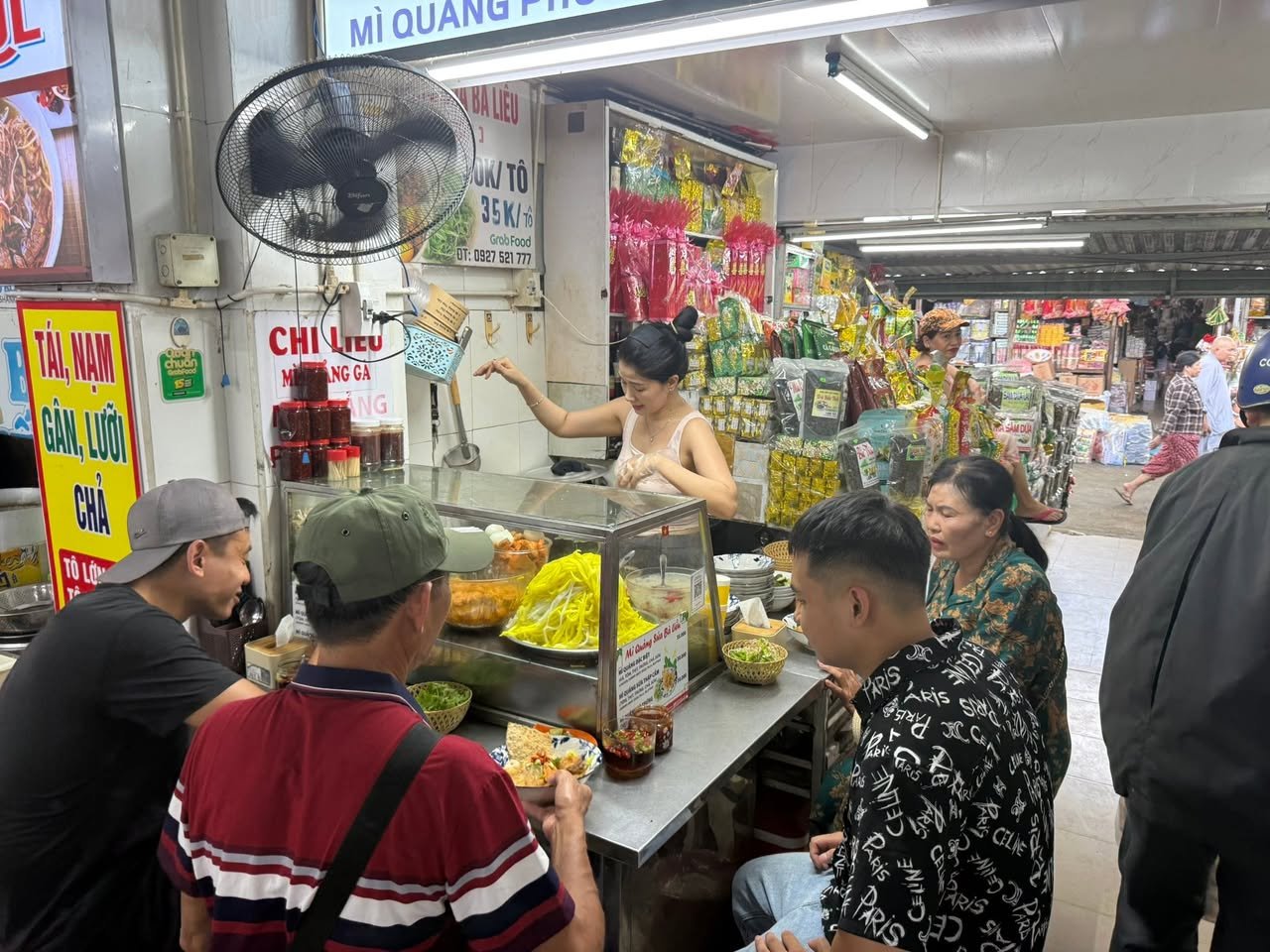
In Vietnamese cuisine, avocado is more often eaten as a dessert, and the rich, fatty fruit does magic when paired with something sweet. Most of the country's avocados come down from the Central Highlands, where Đắk Lắk has long been the biggest growing province. They turn up blended with condensed milk into sinh tố bơ, mashed with sugar and ice, and in Da Nang, layered under coconut ice cream. Da Lat, up in the mountains, claims kem bơ too, and they are welcome to it. The guides to Chợ Cồn list it right alongside the chè and bánh bèo. I first tried it years ago when Diem took me to Chợ Hàn. It was the first of many.
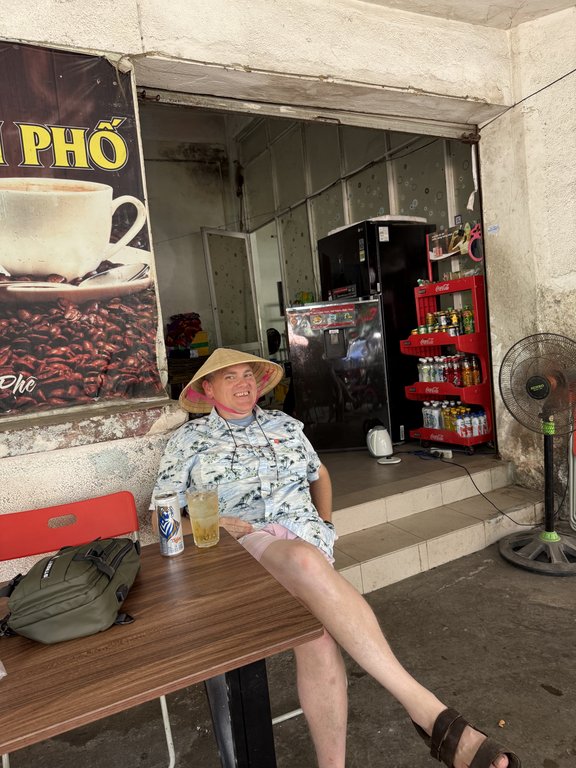
After a couple of hours at the market, the temperature was climbing well into the 90s, and I had to retreat to somewhere with air conditioning. At one point I found a chair in the shade outside a café and got off my feet.
A New McDonald's
Somewhere in the day I spotted something new. A McDonald's, with a McCafé. The only McDonald's I'd seen in Vietnam previously was in Saigon, and maybe Hà Nội. The airport in Da Nang did have a Burger King that sold fried chicken.
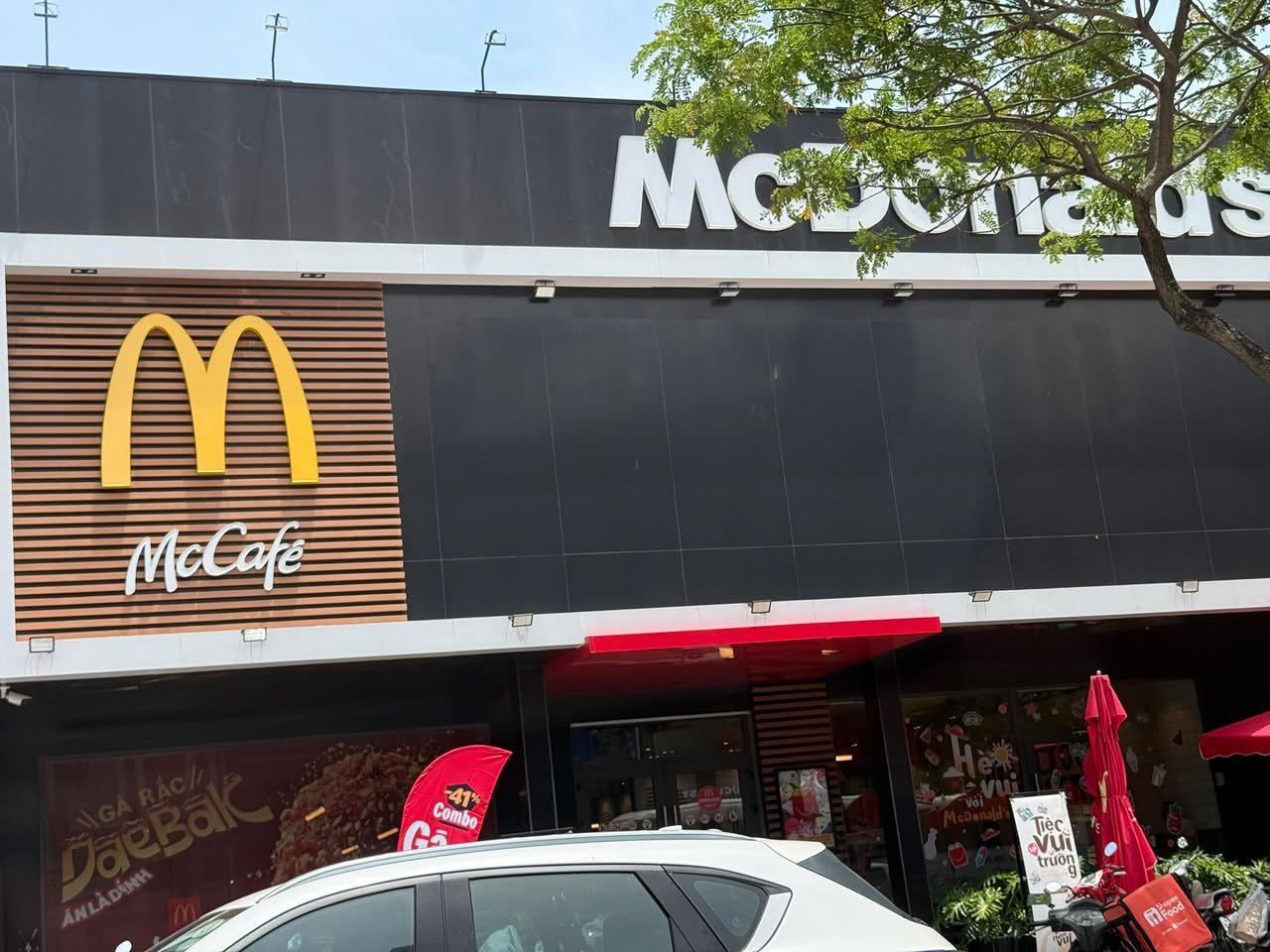
The golden arches came late to Vietnam, and they have spread slowly. The first McDonald's opened on February 10, 2014, at the corner where Điện Biên Phủ meets Nguyễn Bỉnh Khiêm in District 1 of Saigon, a 350-seat, 24-hour restaurant with the first drive-thru the country had ever seen. Nearly four years later there were still only sixteen, all of them in Saigon. Hà Nội got its first in December 2017. Da Nang had to wait until July 21, 2023, nearly two years after we left, when one opened on 2 Tháng 9 street. Another has since gone up on Nguyễn Văn Linh, a short walk from the Dragon Bridge. The company once talked about a hundred restaurants in Vietnam. In 2024 it had 35. The first time I ate at one here, across from the cathedral in Saigon, I ordered a number 2 and learned the difference between a value meal and a combo. A number 2 combo is French fries, two Cokes, three pieces of fried chicken and four random chicken nuggets. The chicken was surprisingly delicious.
Is it expensive? Of course it is. Fast food is some of the most expensive food here, because everything needed to get it to company spec must be imported. They're not using Vietnamese chickens for the nuggets.
Everything else is a different story. To put it into perspective, a 500,000 dong note is just under $20. With one I bought a case of Coke Zero, two packs of milk cartons for the girls, and a much-needed deodorant antiperspirant, and I got about $5 in change back. The heat is just brutal, and with the room temperature in air-conditioned spaces still in the upper 70s, I'm struggling to cope. Let's just say I'm averaging three showers a day. The deodorant was not a luxury.
The Salon and Fozzie
Part of the afternoon we spent back at Kevin's salon, where the blow dryers were going, and where Fozzie held still long enough for a selfie.
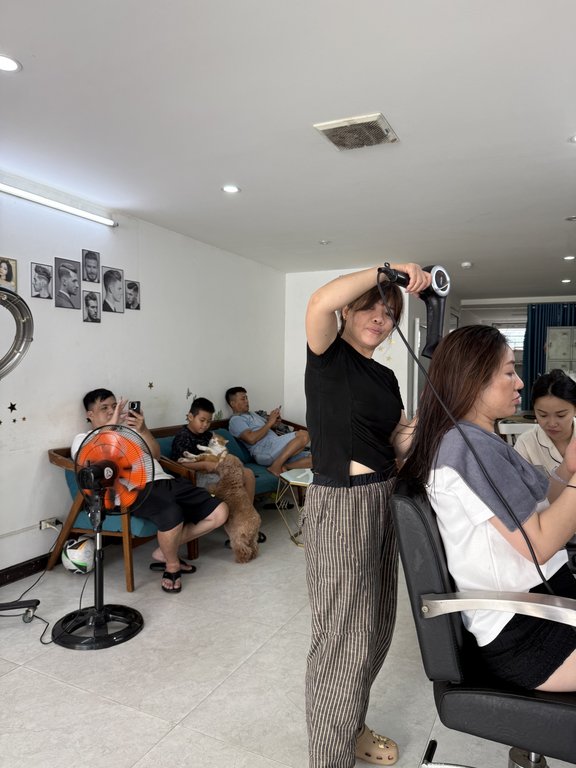
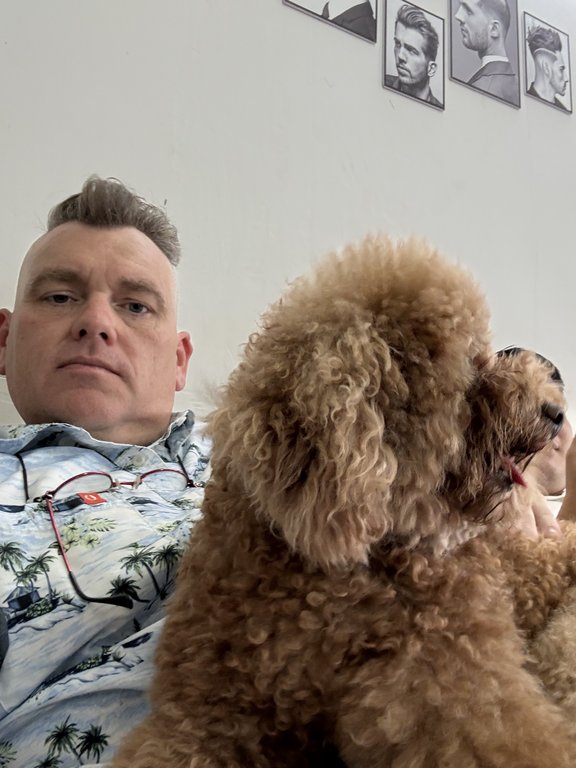
The Little Frenchman
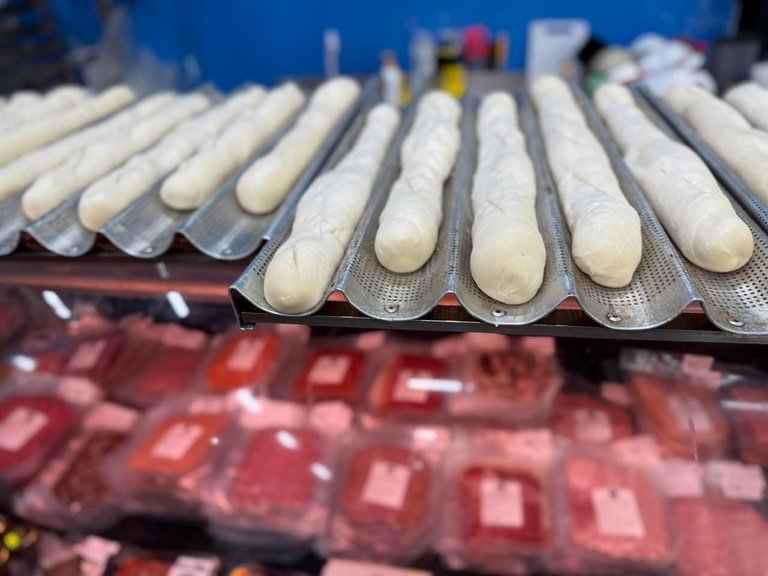
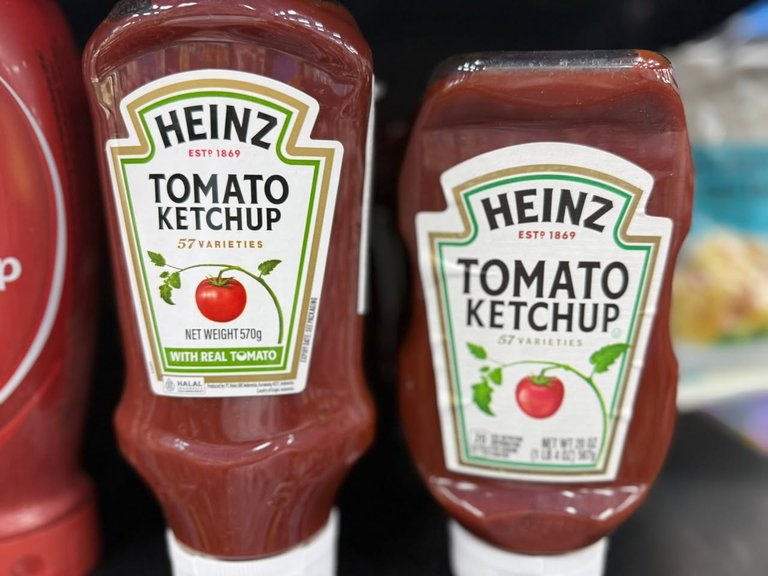
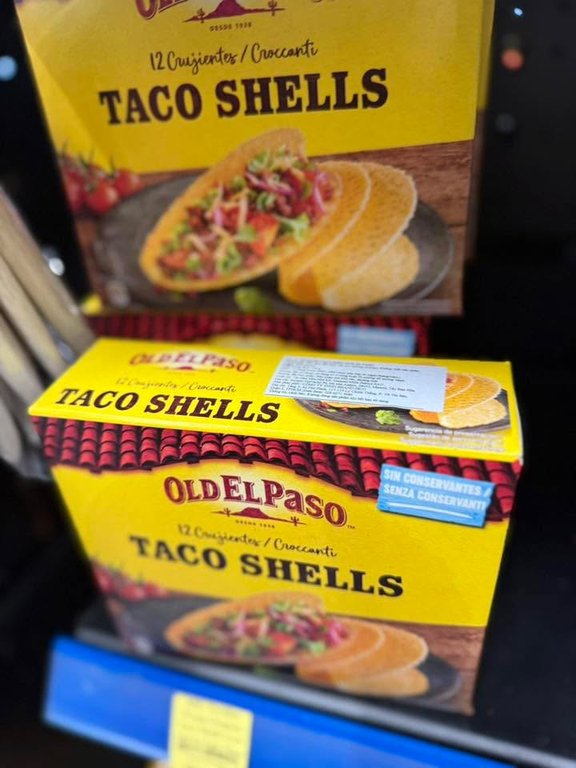
I stumbled across a new-to-me Moonmilk that day. Moonmilk was my go-to for western groceries when we lived in Da Nang. It is the type of place you can get canned and jarred imported American products, as well as nice cheeses, bread, cold cuts and western-cut steaks. Mutti pizza sauce and Prego. Heinz ketchup. Old El Paso taco shells. Unbaked baguettes lined up on trays over a case of packaged meats.
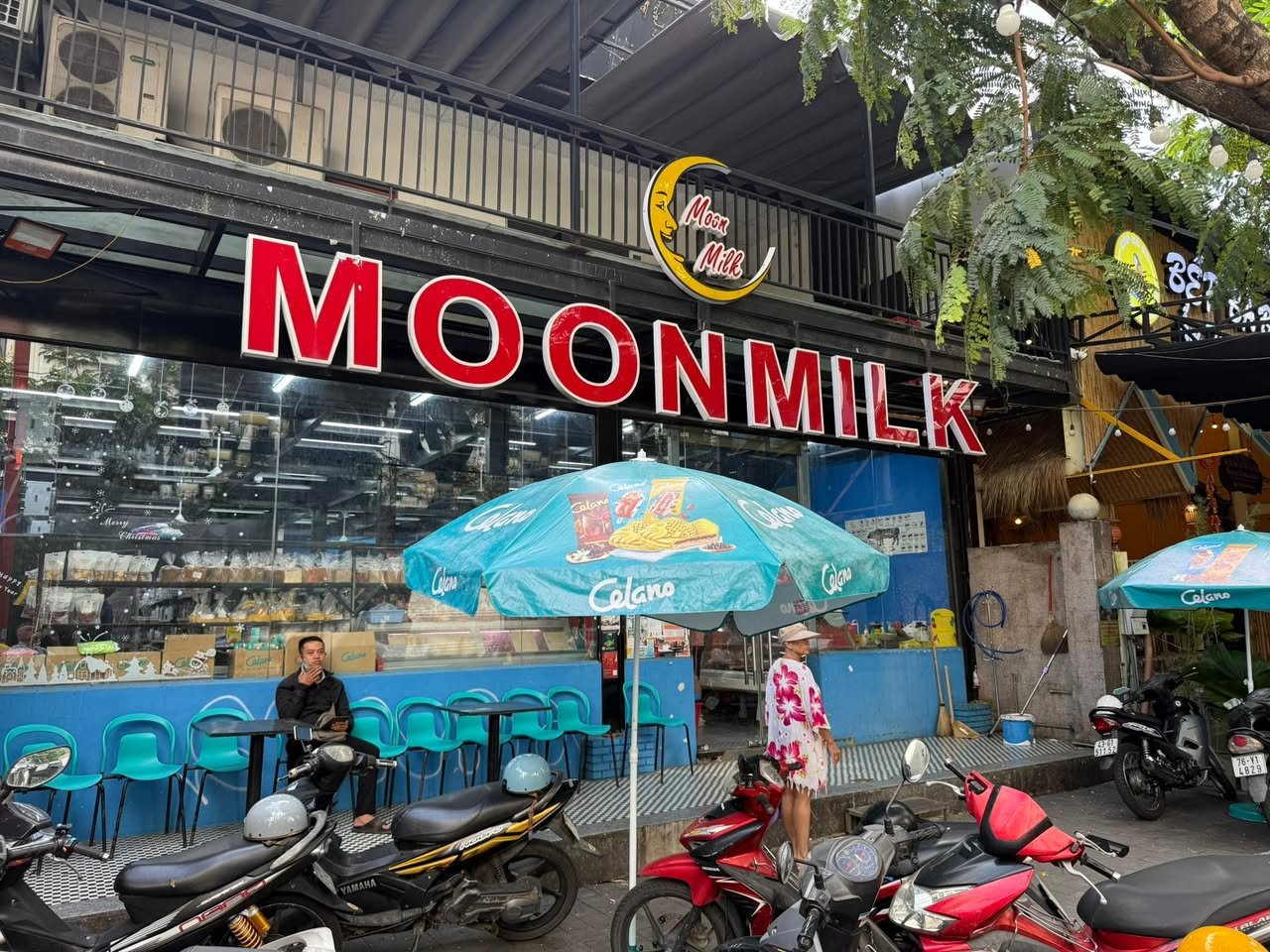
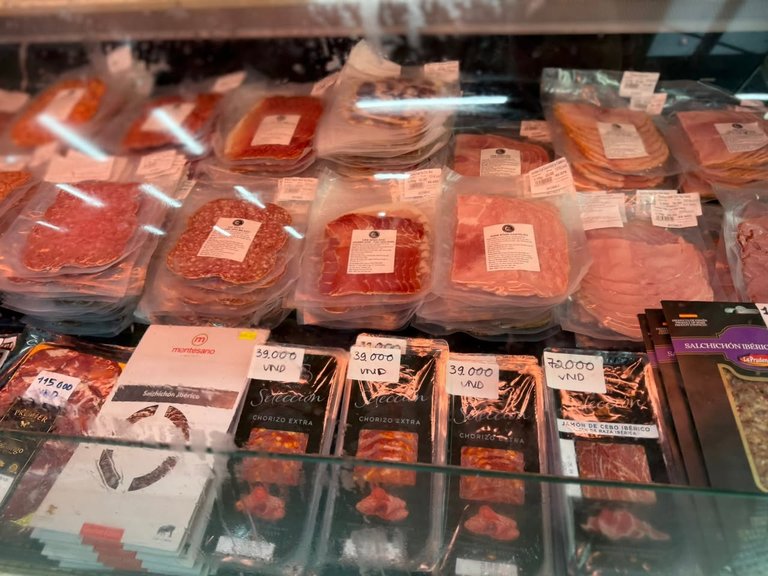
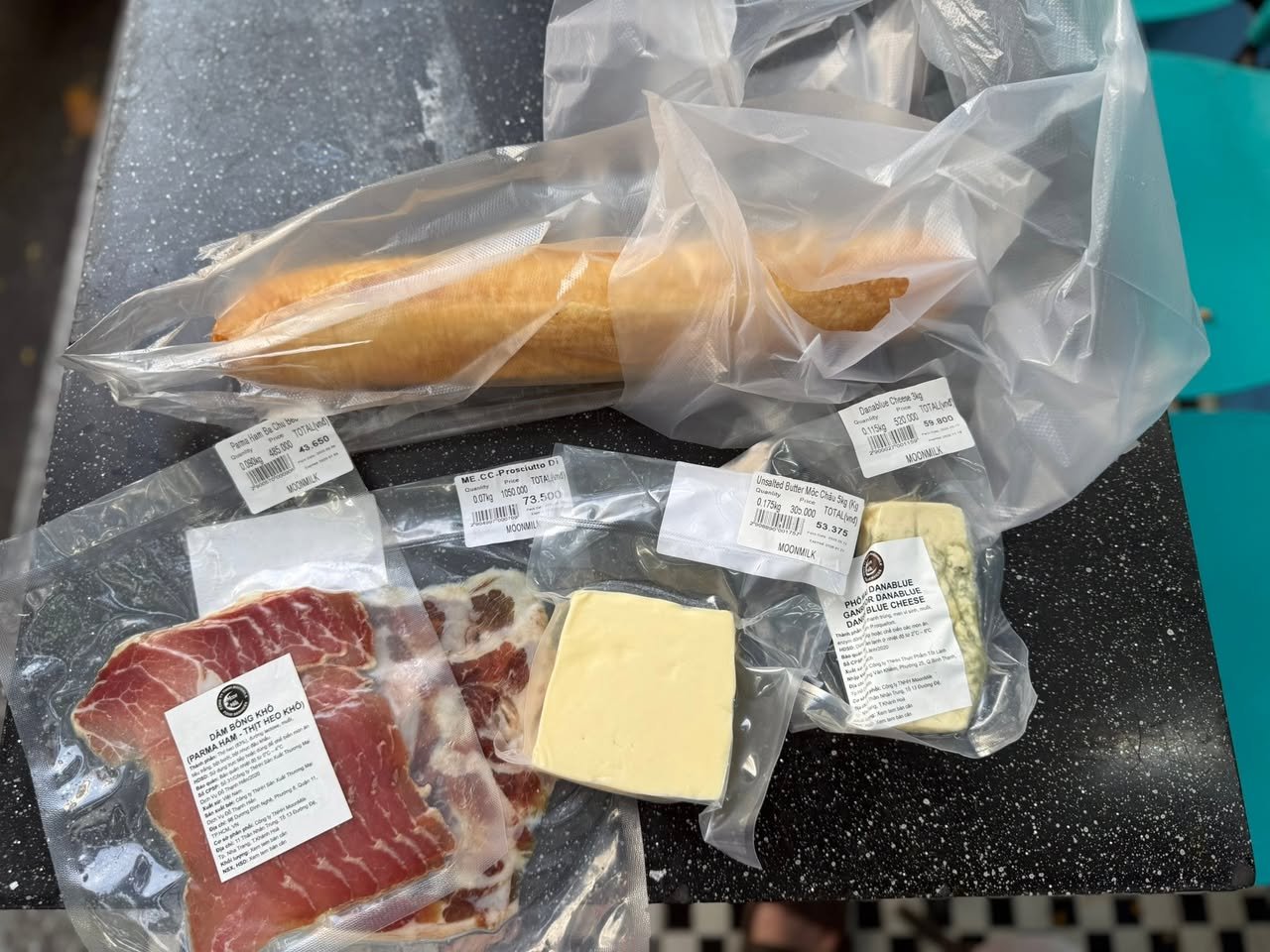
The little Frenchman that lives in the corner of my stomach forced me inside. I purchased a fresh baguette, unsalted butter, prosciutto, Parma ham, and a knot of bleu cheese. Snack time. Bánh mì is the Vietnamese name for the French baguette, though over the years it has come to mean the sandwich made from one, which gets very confusing at a bakery when you only want the bread. Hai bánh mì. Không gà, không, không, không. Hai bánh mì. Moonmilk spares me that conversation.
Seafood Night
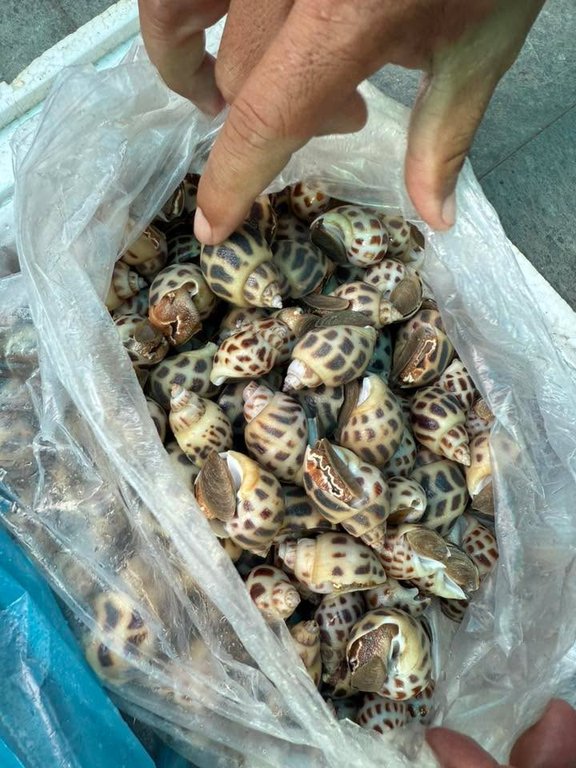
We were about to throw down and do some cooking that night. My brothers had picked up some fresh seafood from one of the local wet markets, and it came home the way everything comes home from a Vietnamese market, in plastic bags. Whole squid in a foam cooler. Oysters, one held up opened. A bag of gray prawns. Fish steaks. And a bag of spotted sea snails.
My brothers had picked up some fresh seafood from one of the local wet markets, and it came home the way everything comes home from a Vietnamese market, in plastic bags.
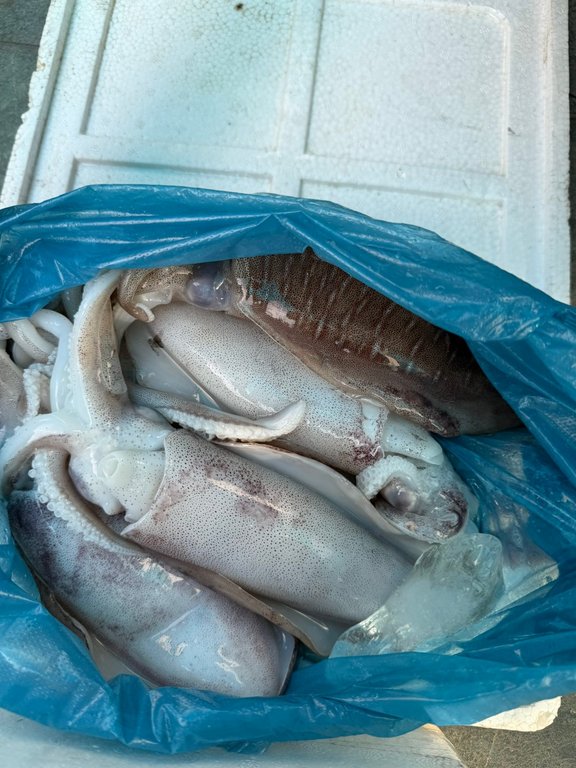
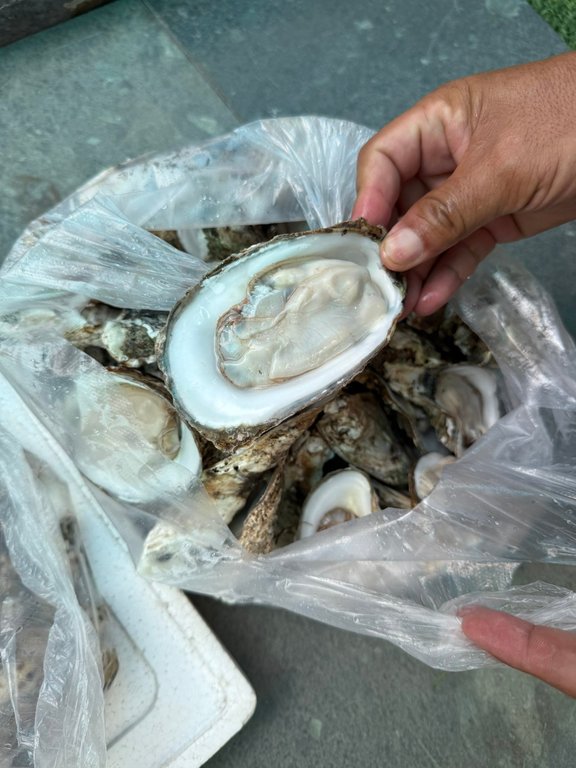
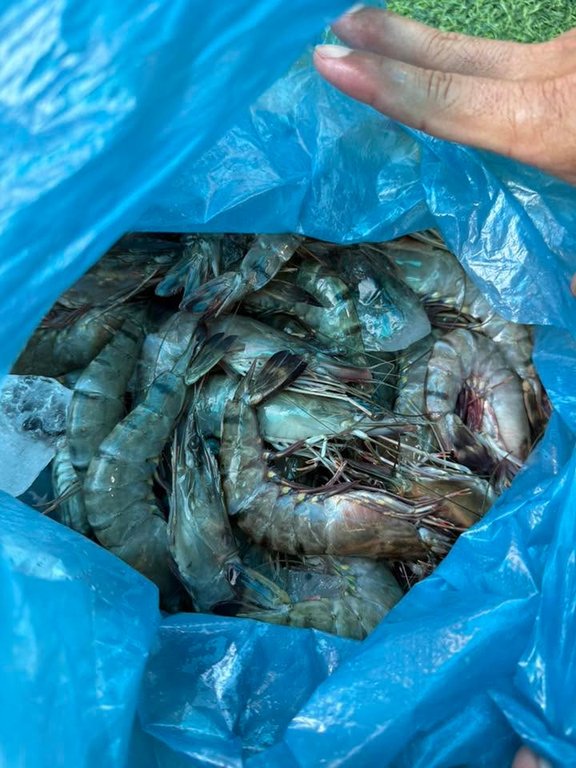
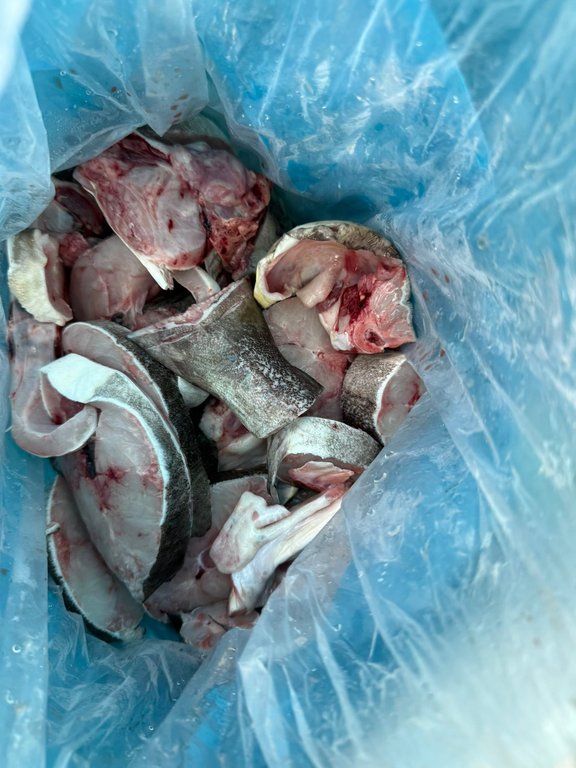
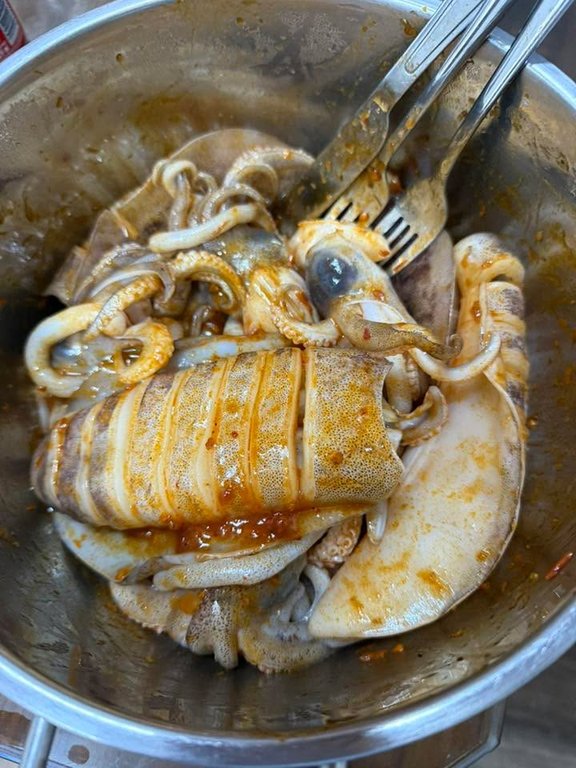
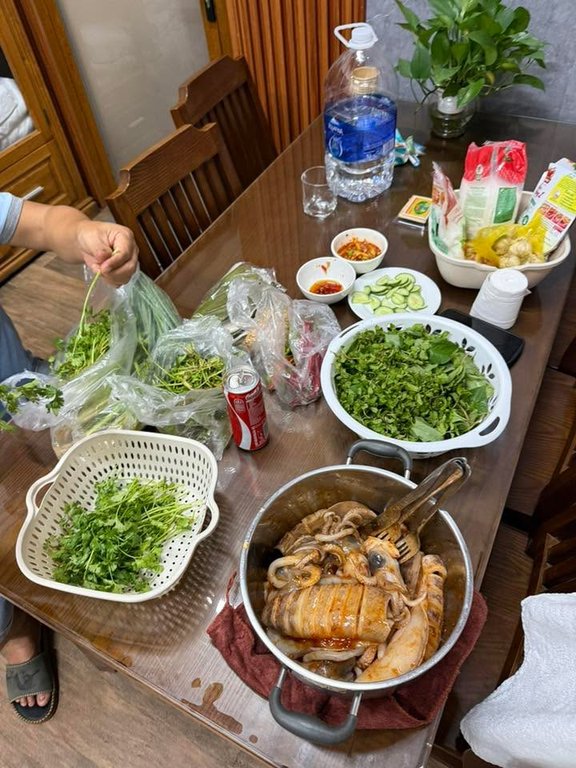
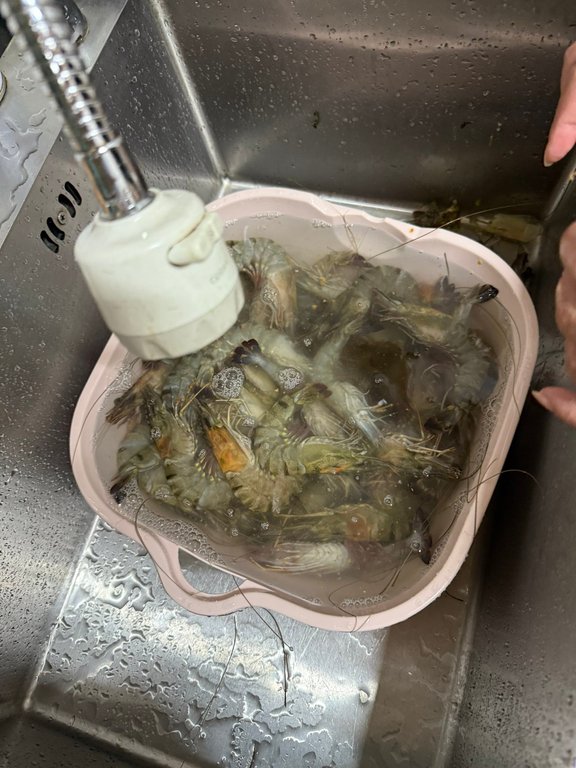
The squid went into a steel bowl and a red marinade. The table filled with bowls of herbs and sauces, and someone sorted greens into a colander. The prawns got a rinse in the sink.
Two days in Da Nang, and I had eaten my way from midnight to midnight. The city has changed, McDonald's and all. The dragon has not. On Friday night it would breathe fire again, and if the crowds allowed it, I intended to be standing under it with my phone up.
Previously: The Road to Da Nang
More from Da Nang: Da Nang - City of Bridges, The River Dragon Breathes Tonight and 2020 - The Year of the Dragon