Lots of swimming, lots of flying. Something had to give, and on Monday morning it was my ear. I had developed an ear infection, and a ringing in the ear had come along with it for the ride.
So, off to the pharmacist.
Twenty Dollars at the Pharmacy
One thing I am always impressed with in Vietnam is the cost of medical care. Pharmacists here are the first line of defense against anything that isn't life threatening. A pharmacist in Vietnam is more like a nurse practitioner in the States, and can diagnose and treat most issues. There's a pharmacy on every corner, sometimes five, and the competition is fierce. The consultation is free, as you are buying the medicine from them, and the entire exchange came to about $20 US.

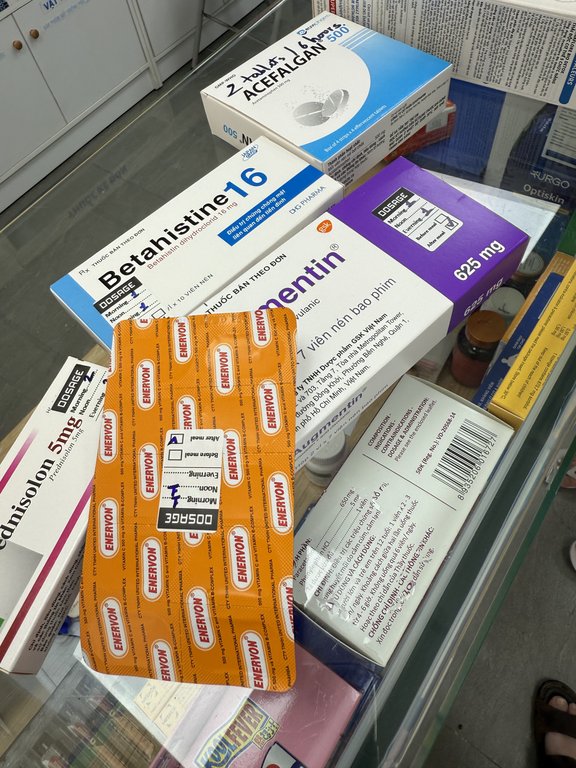
For that I walked out with a full course of amoxicillin, a steroid for the inflammation, acetaminophen, Betahistine for the tinnitus, and the very Vietnamese holistic pack of vitamins, meant to aid the healing and counter any adverse effects of the medication. All of it went home in a black plastic bag.

The corner count is not much of an exaggeration. The head of Long Châu, the country's largest pharmacy chain, put the number of pharmacies in Vietnam at about 45,000 in 2024. For many Vietnamese, the drugstore and not the clinic is where a minor illness starts. Asked why, people in one study said it was quicker, cheaper and more convenient than the public health service. On paper, antibiotics have needed a prescription here for more than twenty years, under a 2003 Health Ministry decision and then the 2005 Drug Law. In practice, one study, carried out in 2010, found that about nine in ten antibiotics in the pharmacies it surveyed were sold without one, and researchers are still studying that gap.
When we lived here from 2019 to 2021, our average annual medical expenses never exceeded $350. That included one hospitalization, standard medical care for small children, and some dental work. Annual. Not monthly.
An Thượng, Then and Now
I've stated it countless times. The economic growth and prosperity in Vietnam can be mind boggling. When you are in it every day it is far less noticeable, but when you distance yourself for almost five years, it can feel like it isn't even the same place. In An Lão much had changed. The roads were vastly improved, and there was new construction everywhere. But our old neighborhood in Da Nang, An Thượng, was almost unrecognizable.
So I spent the late morning walking it, from about half past eleven until one in the afternoon, and then dug through some old photos to see just how much things had changed.
An Thượng sits on the peninsula side of the Hàn River, in Mỹ An ward, a few blocks back from Mỹ Khê Beach. It is a grid of numbered lanes, An Thượng 1, An Thượng 2, and on up past thirty, laid out between the beach road and the streets behind it. Foreign visitors had already made An Thượng and Mỹ An a familiar stop. In 2022, the year after we left, it became official. On the evening of April 28, the Ngũ Hành Sơn district opened the An Thượng tourist street, part of a plan that ran from 2019 to 2025. The idea went back further. As early as 2018 the city proposed walking streets on An Thượng 1 through 4 and on Trần Bạch Đằng, and talked of round-the-clock entertainment and shopping.
The crowds have followed. In 2024 Da Nang counted nearly 10.9 million overnight guests, up 32.8 percent over the year before, and tourism revenue of more than 31 trillion dong, about 146 percent of what the city earned in 2019, before the pandemic. In the first five months of 2025, before we even landed, some 2.2 million foreign visitors had come through, up 36 percent.
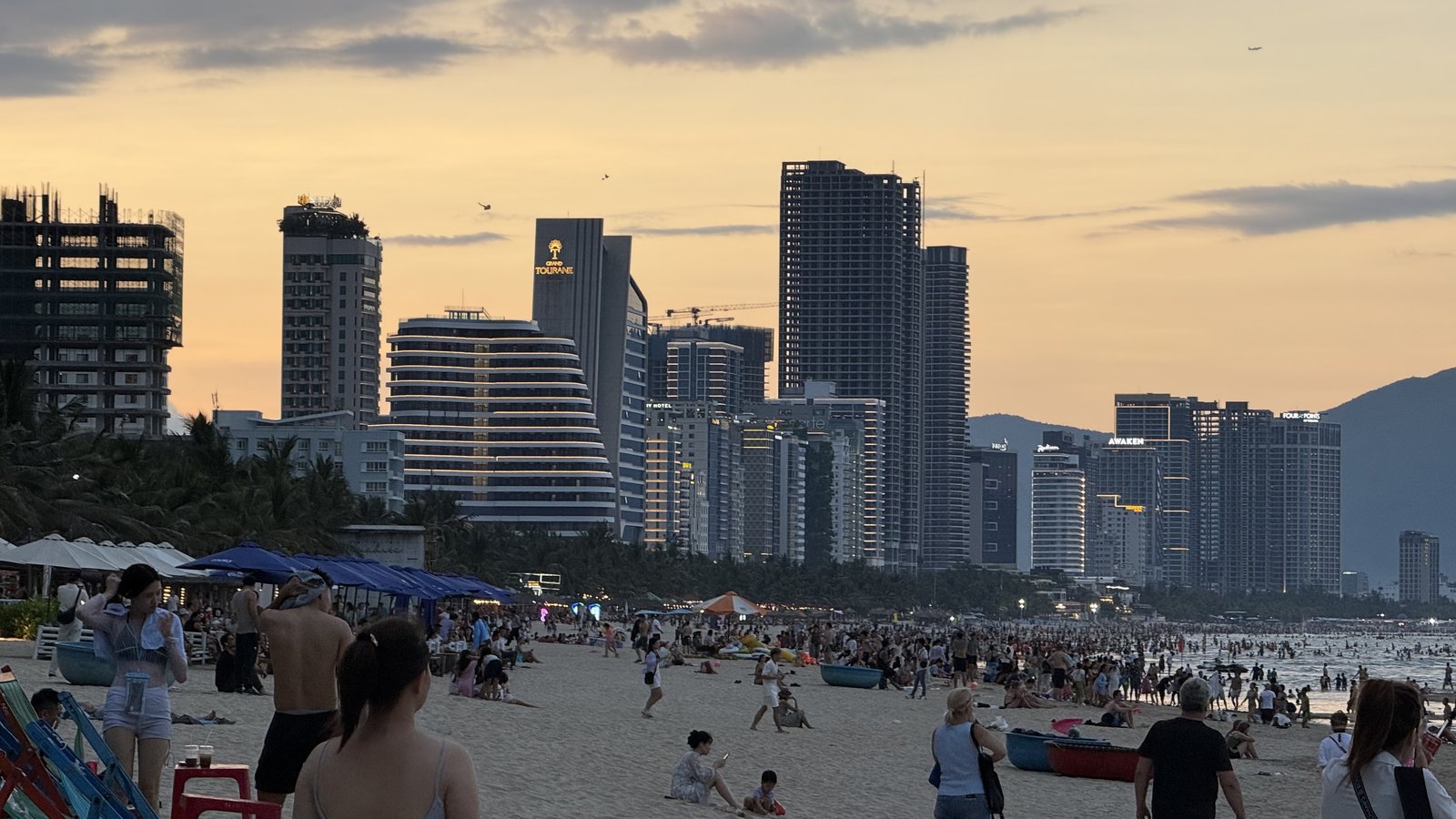
You can see it in the skyline.
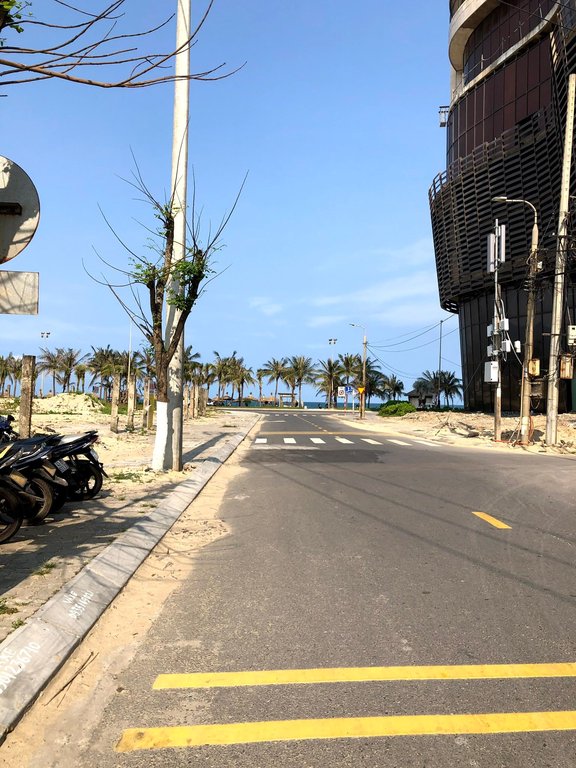
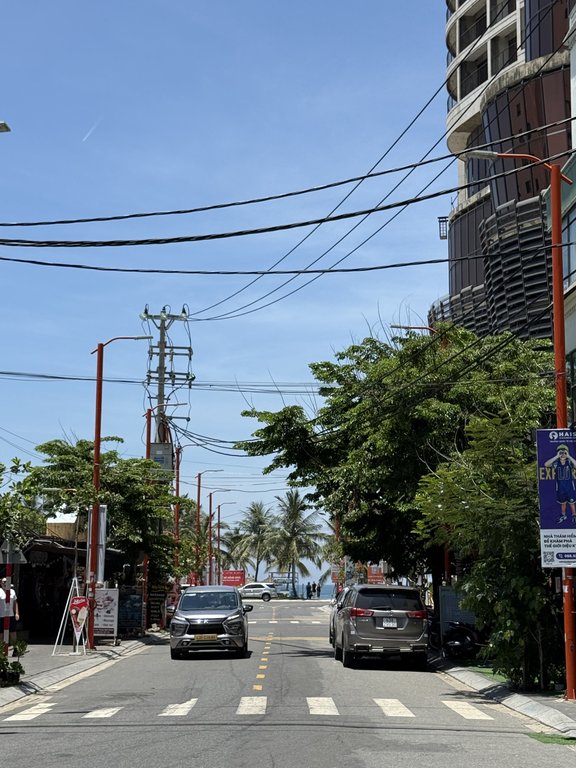
The road to the beach was the first comparison. In 2020 it ran down between young palms toward the sand, a tall building at the right. Today there are power lines overhead and parked cars along it, with the palms and the sea still at the end.
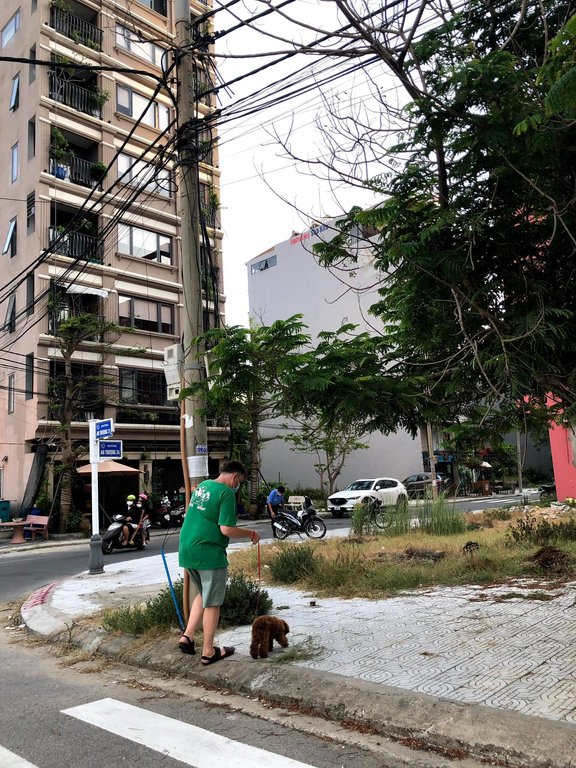
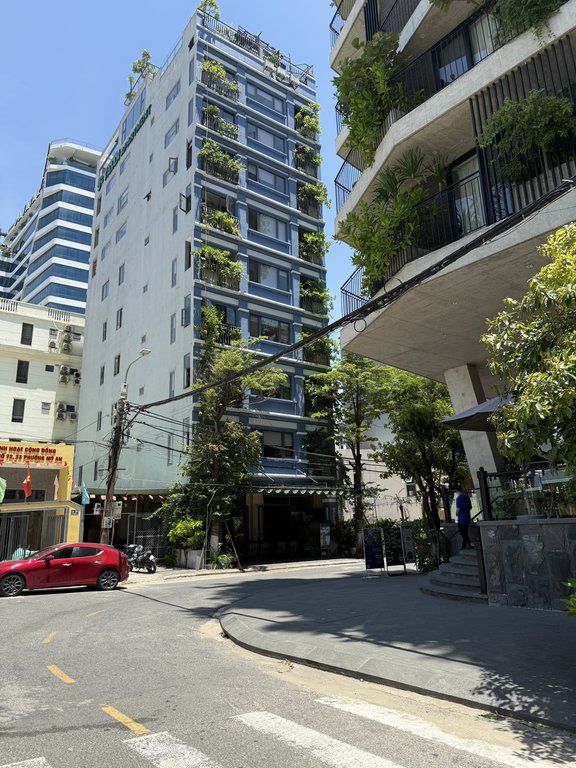
That is me walking Fozzie in 2020, on a corner lot of grass and weeds, high-rises behind it. Fozzie stayed behind with family when we left in 2021, when a twelve-month ban on bringing dogs into the US went into effect. Today the corner looks like this: a tall glass building, plants spilling off its balconies.
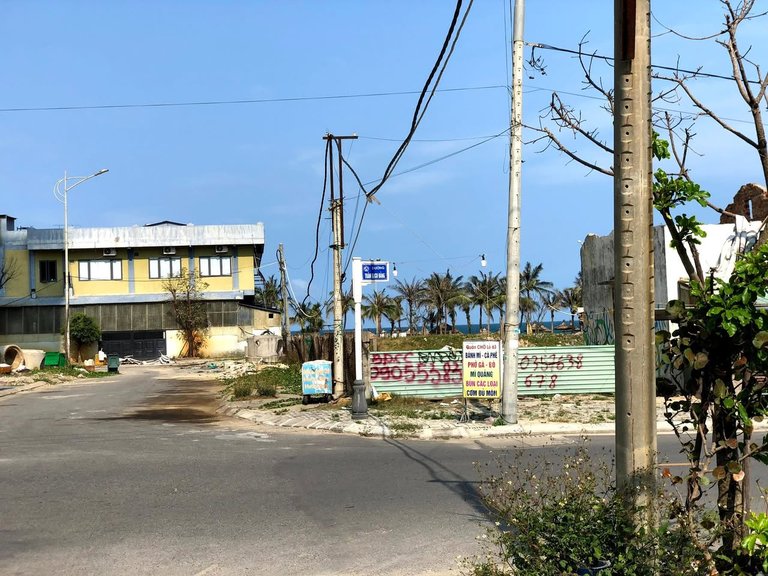
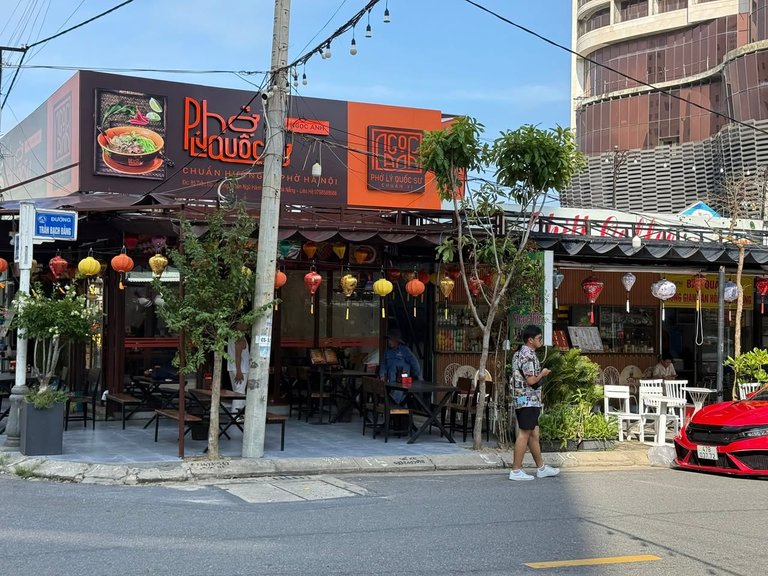
A vacant lot with a few signs and utility poles in 2020. Today a corner restaurant with a big Phở sign and red lanterns hung along the front.
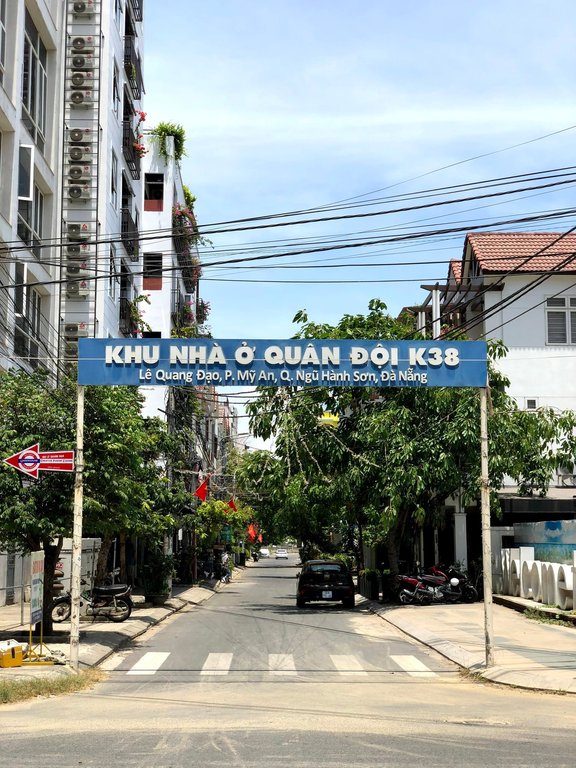
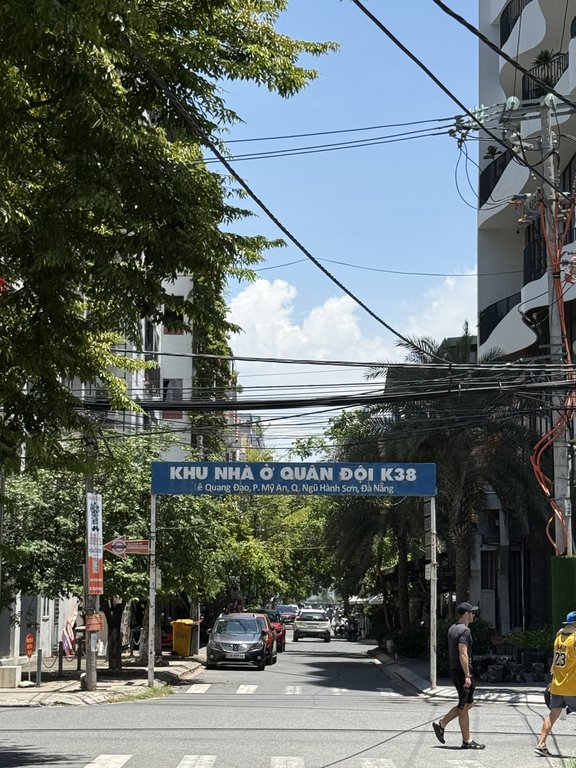
The blue arch over one lane still reads Khu Nhà Ở Quân Đội K38, the K38 military housing area. Underneath, the arch gives the address, Mỹ An ward, Ngũ Hành Sơn district. That is about to change, which I'll get to.
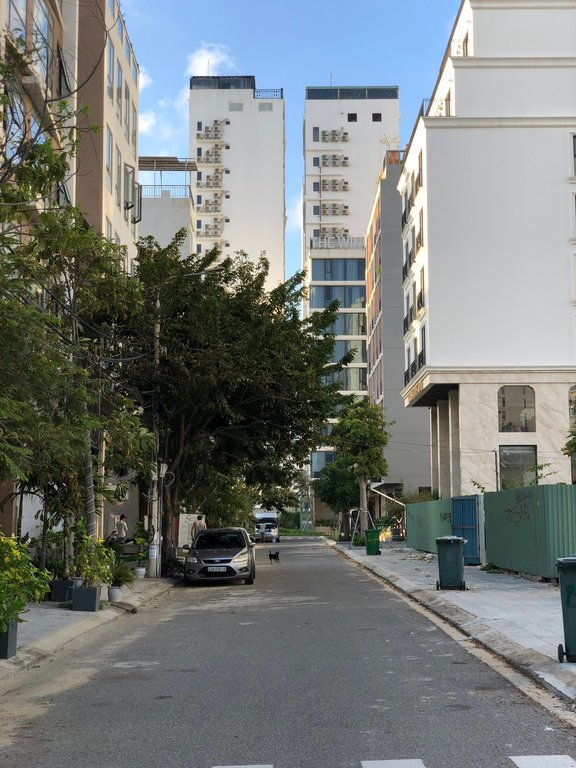
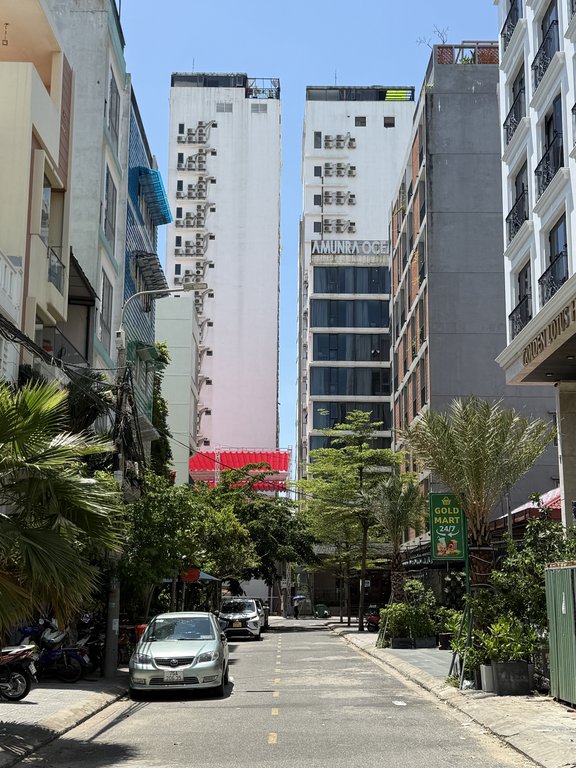
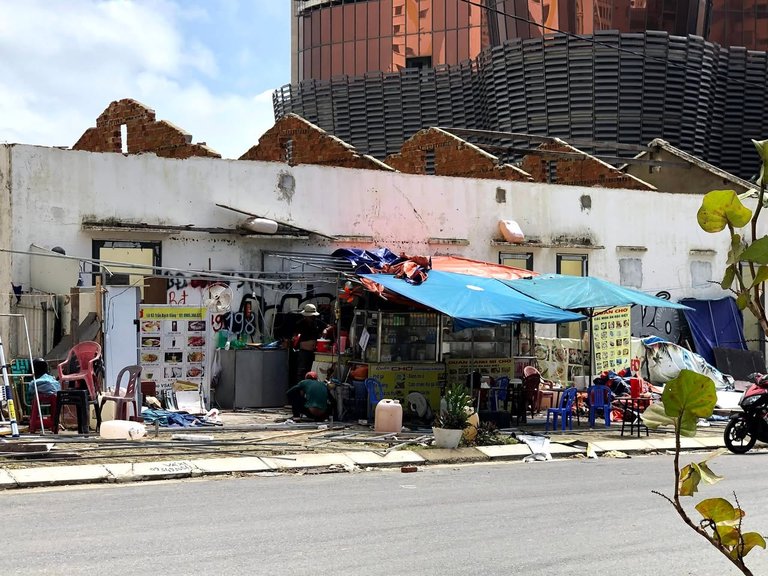
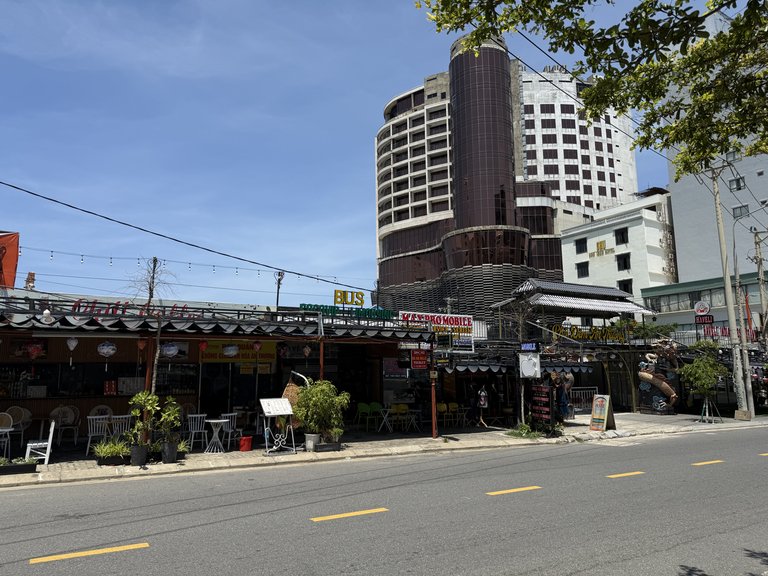
In 2020 a row of single-story shops sat under blue tarps, their goods out on the sidewalk. Today the stretch is a neat line of storefronts under the high-rises.
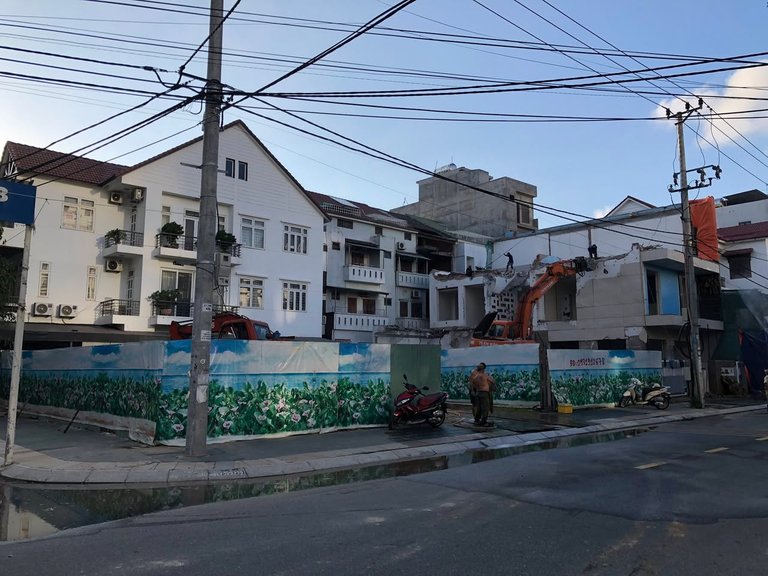
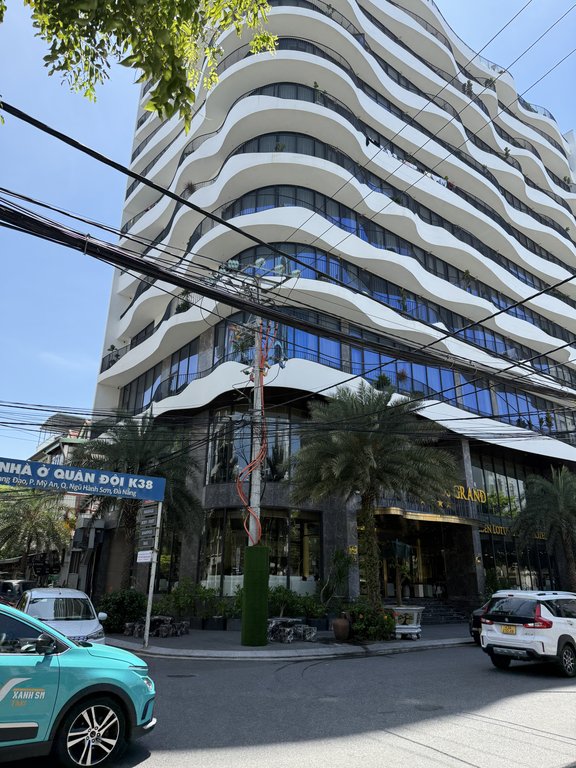
In 2020 an excavator was working behind a fence, a few white houses on the corner. Today a tall white building with curving balconies stands there, the K38 sign at its feet.
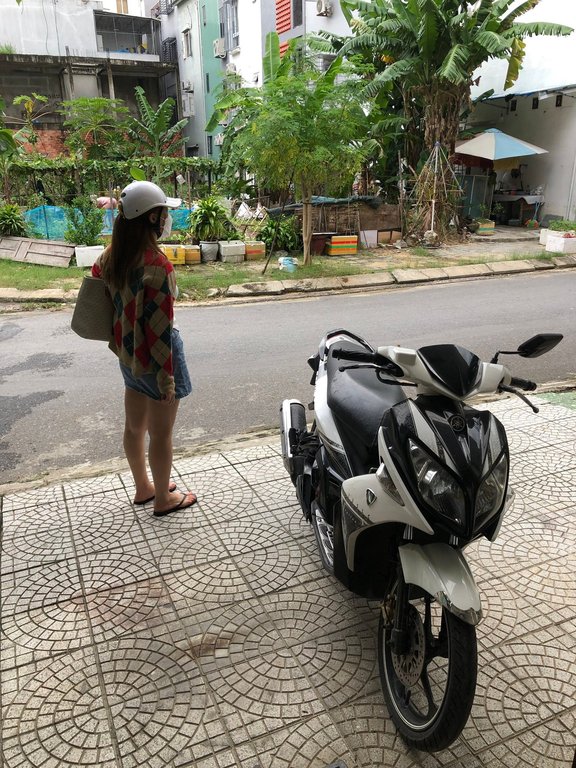
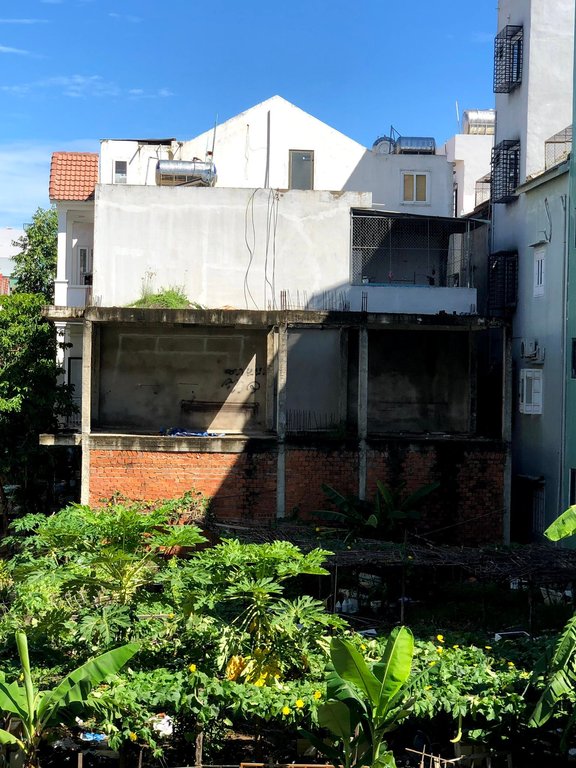
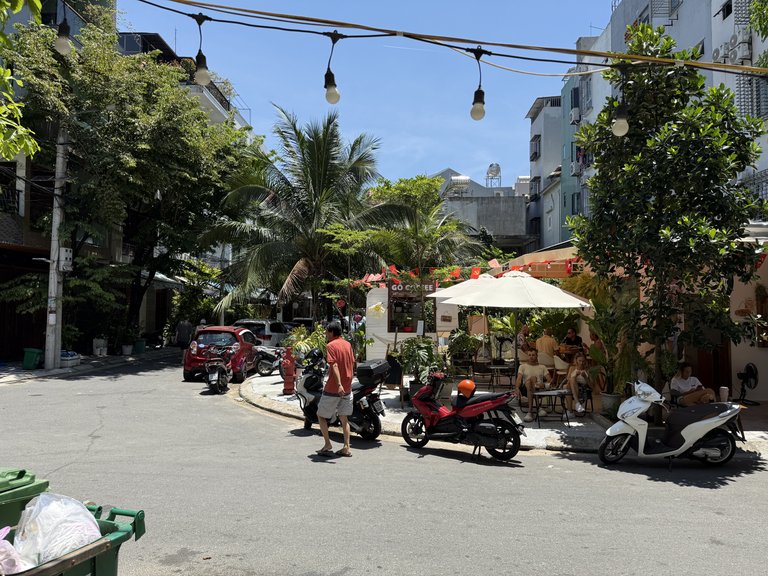
The view from our old front door, in 2020. There was a community garden at the time, banana plants and greens growing in front of an unfinished concrete building. Today it's been gobbled up by coffee shops and restaurants, white umbrellas, palms and strings of lights hung across the street.
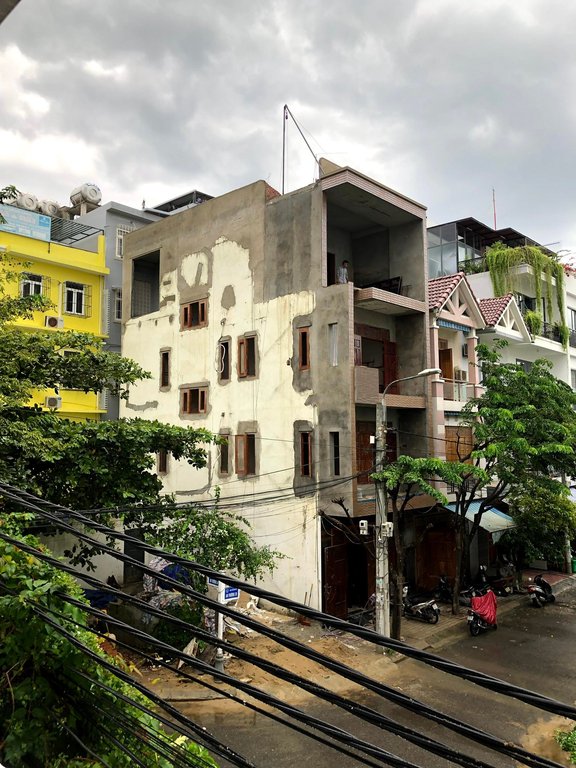
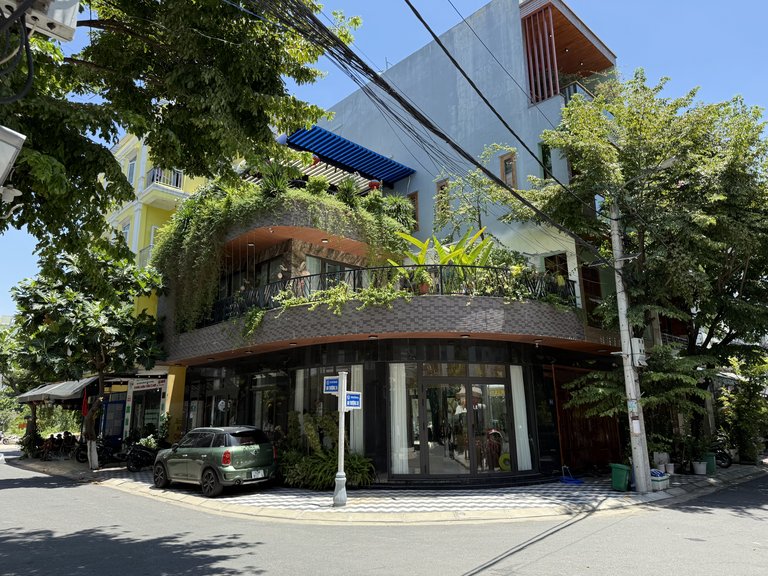
From our old balcony in 2020 you looked out over a tangle of power lines at a weathered beige townhouse with shuttered windows. Today the corner has a building with a curved front, covered in hanging plants.
Even the address is on its way out. On July 1, eight days after this walk, Vietnam's new map took effect. Da Nang absorbed Quảng Nam province and grew to about 12,000 square kilometers and some three million people, organized into 94 local units, wards, communes and one special zone, with the districts done away with altogether. Mỹ An ward was folded together with Khuê Mỹ, Hòa Hải and Hòa Quý into a single new ward named Ngũ Hành Sơn. On the day I walked by, the K38 arch still said Mỹ An.
Moon Beer and BBQ
I fasted most of the day, expecting another long dinner. I was not disappointed.
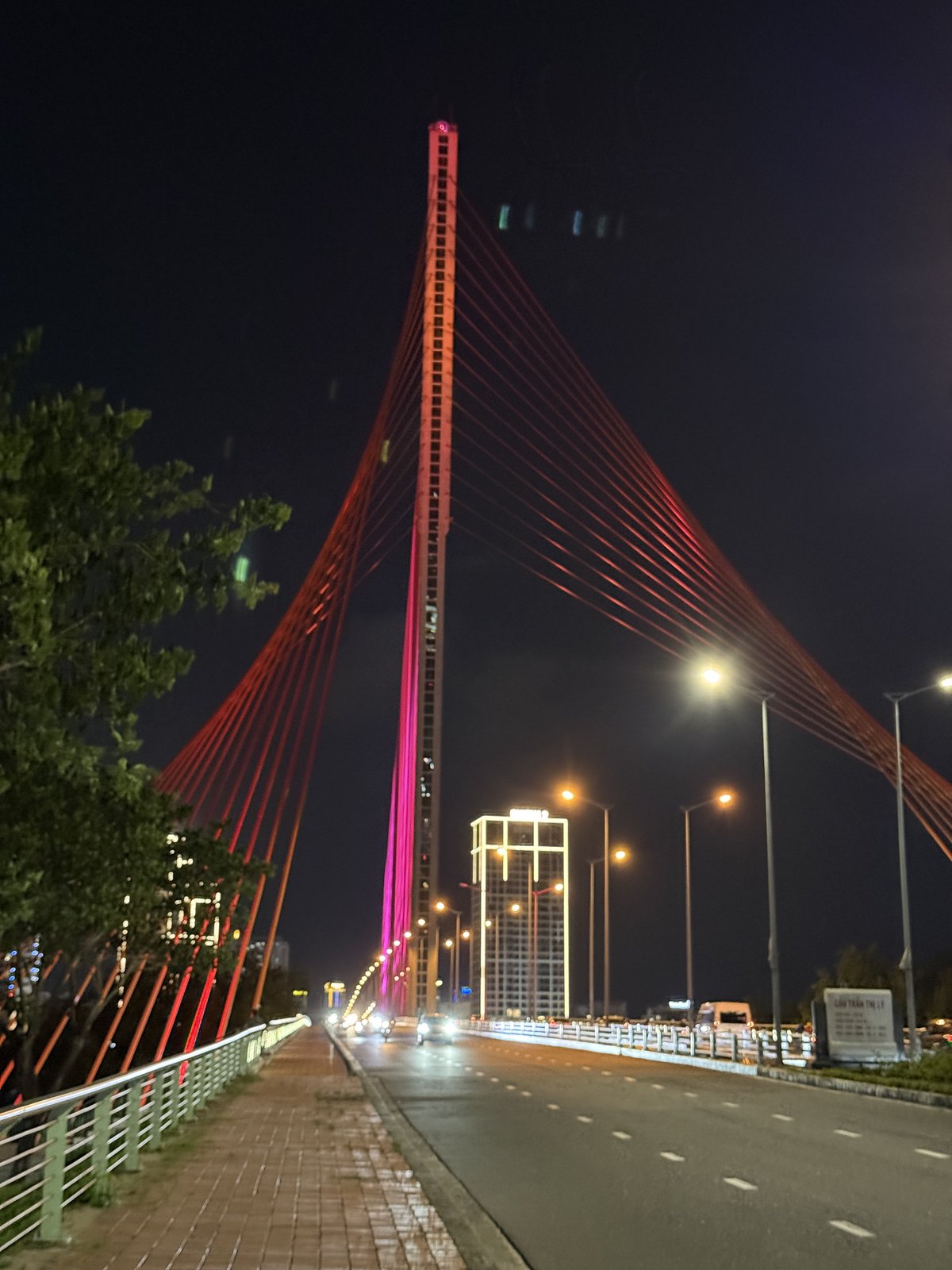
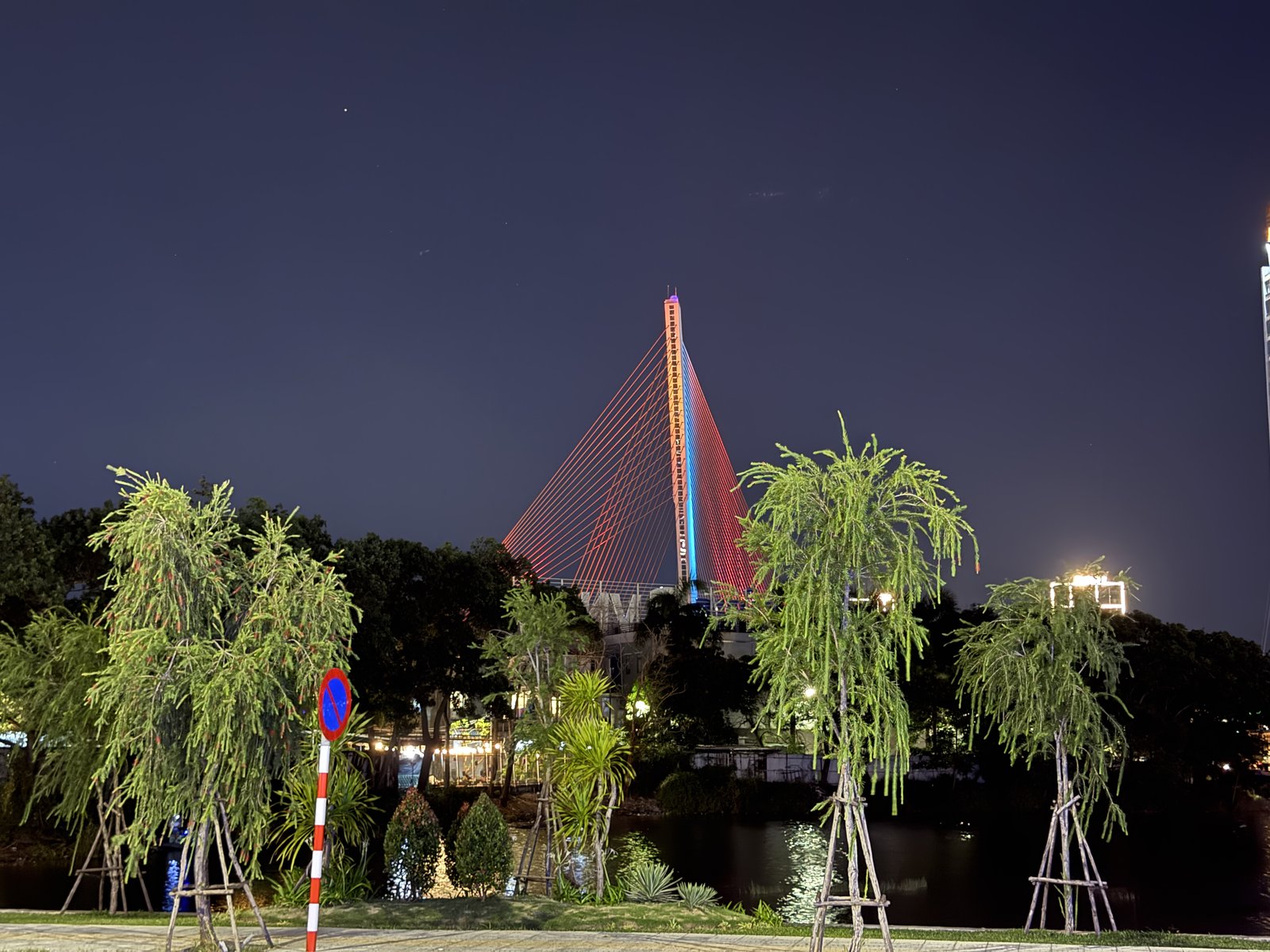
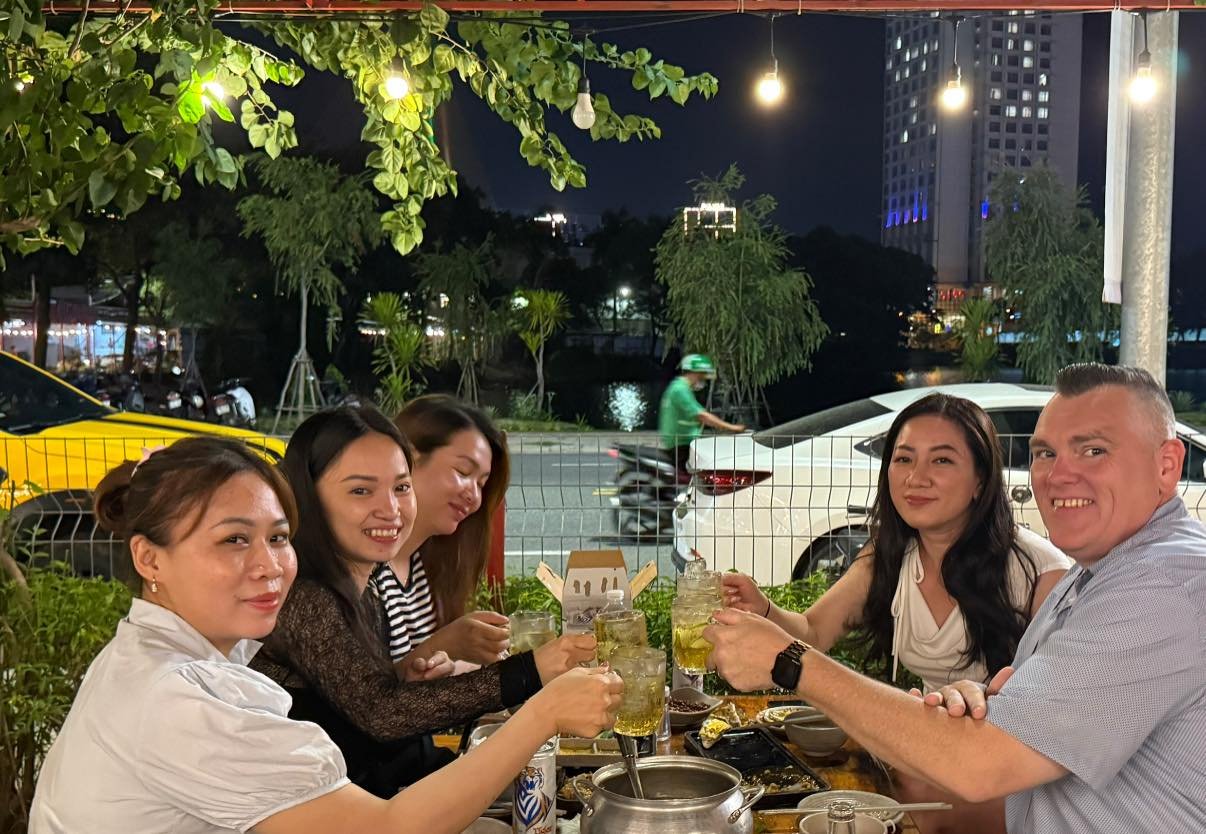
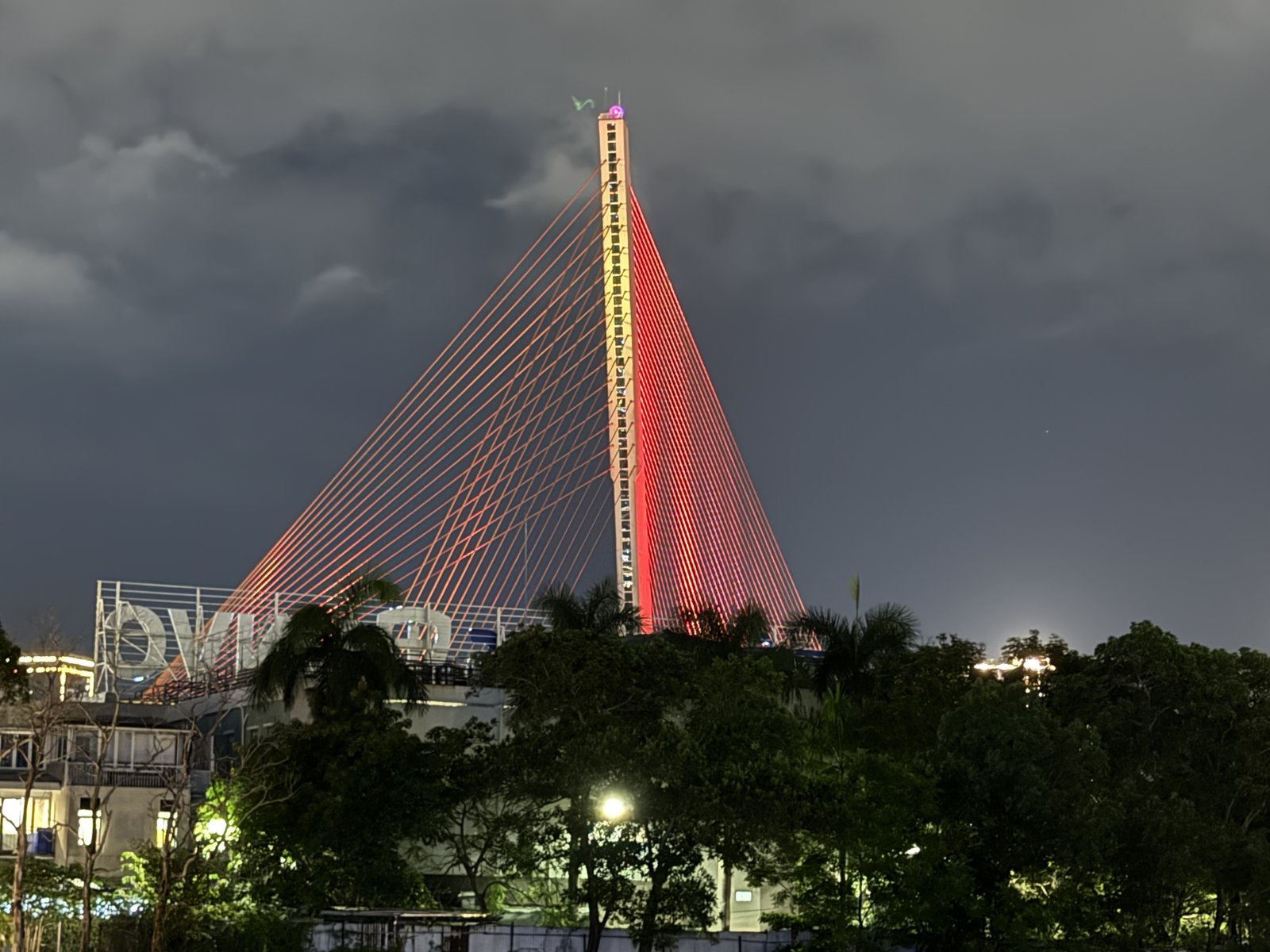
That evening we met Diem's girlfriends at a local spot called Moon Beer and BBQ, a seafood restaurant on Bạch Đằng street, next to the Hàn River in the shadow of the Trần Thị Lý cable-stayed bridge. We arrived a little after seven, with the bridge tower lit up red behind a row of young weeping trees.

A brick archway opens onto a brick path lined with long wooden tables, rows of red flags strung overhead, string lights and standing fans everywhere. There are tanks of live seafood, each with its handwritten price: large tiger prawns at 1,350,000 dong a kilo, octopus at 550,000.
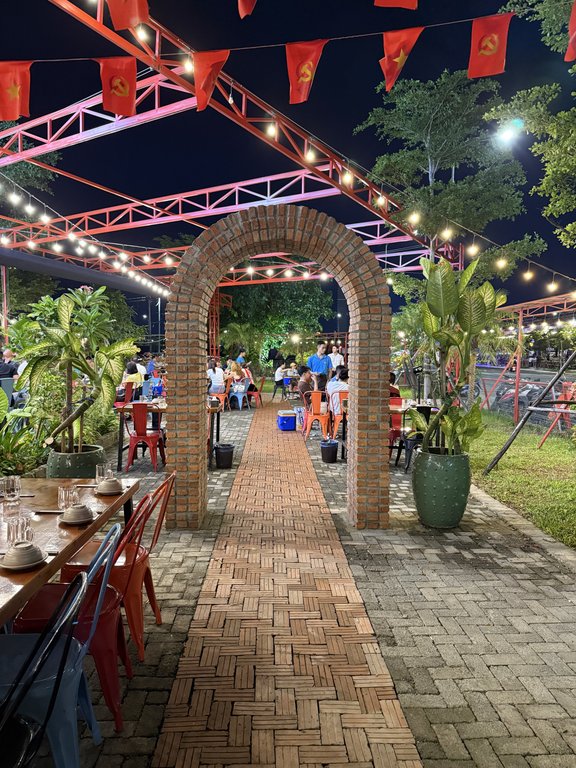
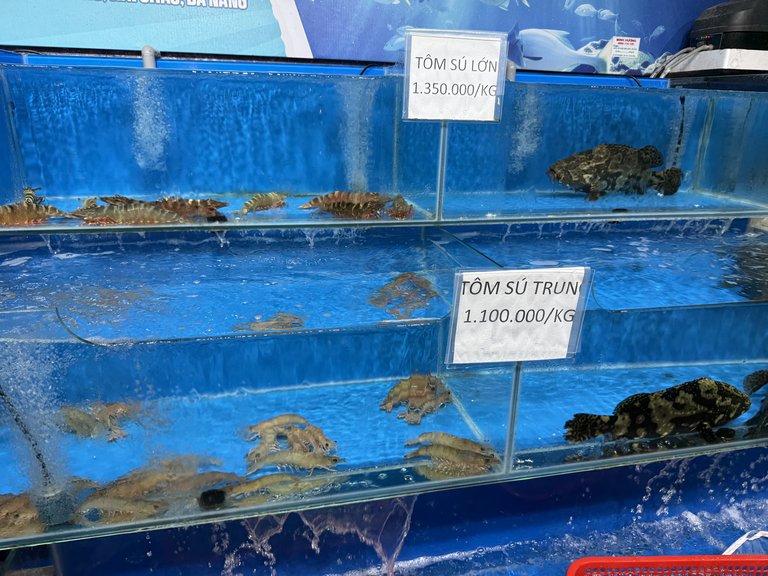
A word on seating. That morning, in a reply to a friend, I had laid out my policy. I learned my lesson a long time ago. I don't sit on fewer than two stacked stools, sometimes three. It depends on which type they are. Though the bigger restaurants seem to have switched to sturdier wooden chairs, particularly in the city. Moon Beer's long tables had wooden benches.
It was another whirlwind dinner. We sat in the warm summer night enjoying the dishes as they were brought out one by one.
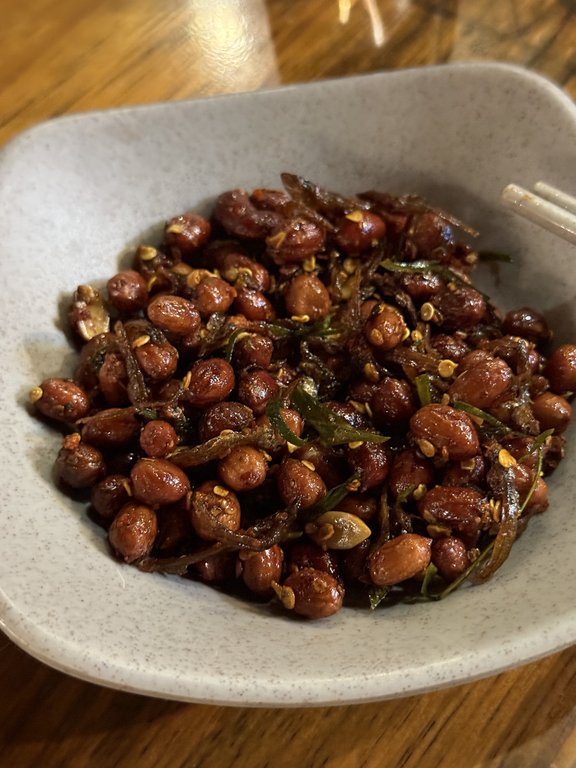
First came a bowl of fried peanuts tossed with tiny dried fish and herbs. Which brings me to chopsticks. I admire the dexterity with which a lifelong chopstick wielder navigates a table, and I am even more impressed with anyone's ability to eat snacks like peanuts with chopsticks. So much so that I'm proud to say I too can now grab single peanuts with a good pair of chopsticks. Wax on, wax off.
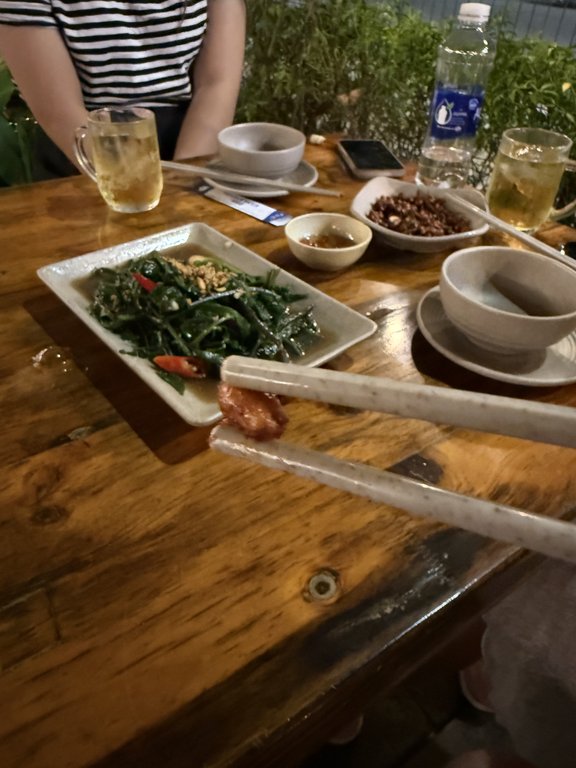
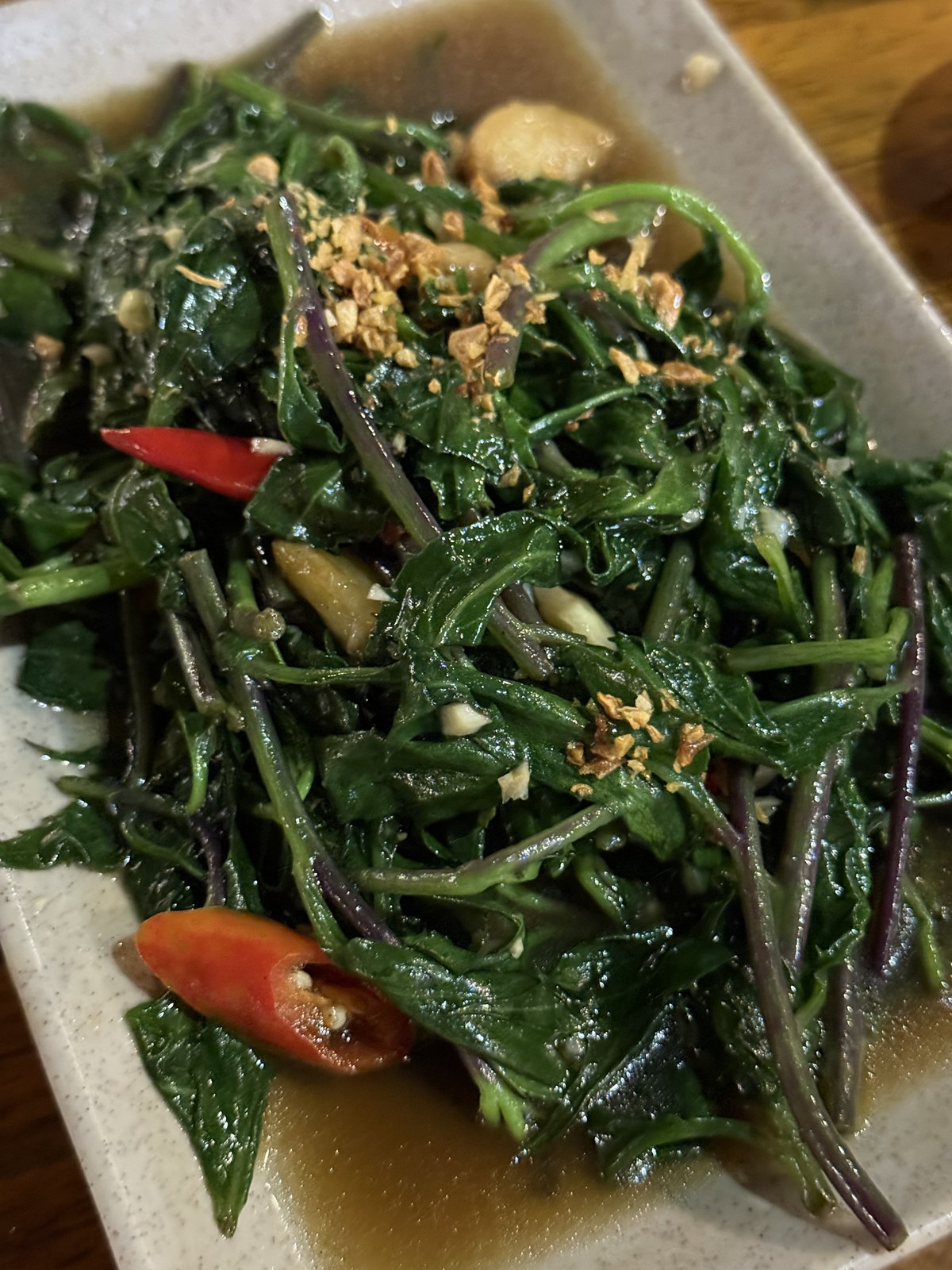
Then sautéed water spinach, rau muống, with fried garlic and a couple of red chilies.
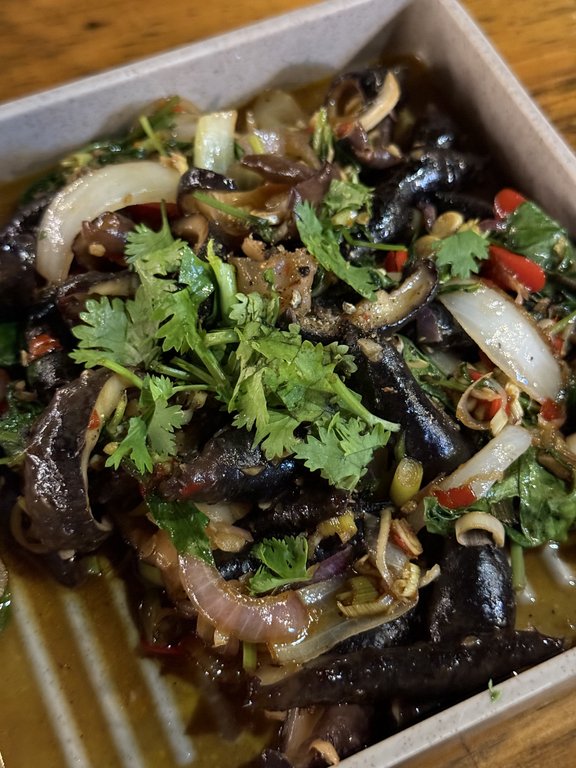
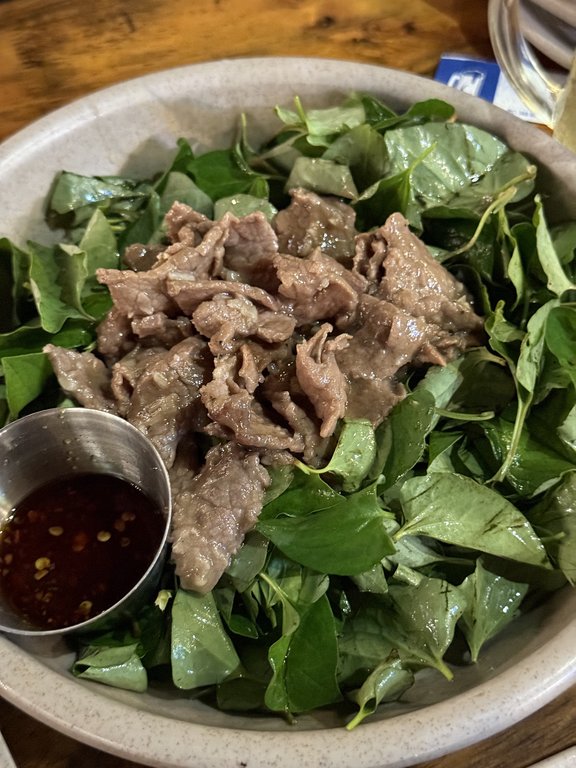
Sautéed sea mushrooms with lemongrass, shallots and cilantro. Then steamed beef and betel leaf salad with a soy nước mắm dressing, the beef sliced and laid over a bed of the fresh leaves.
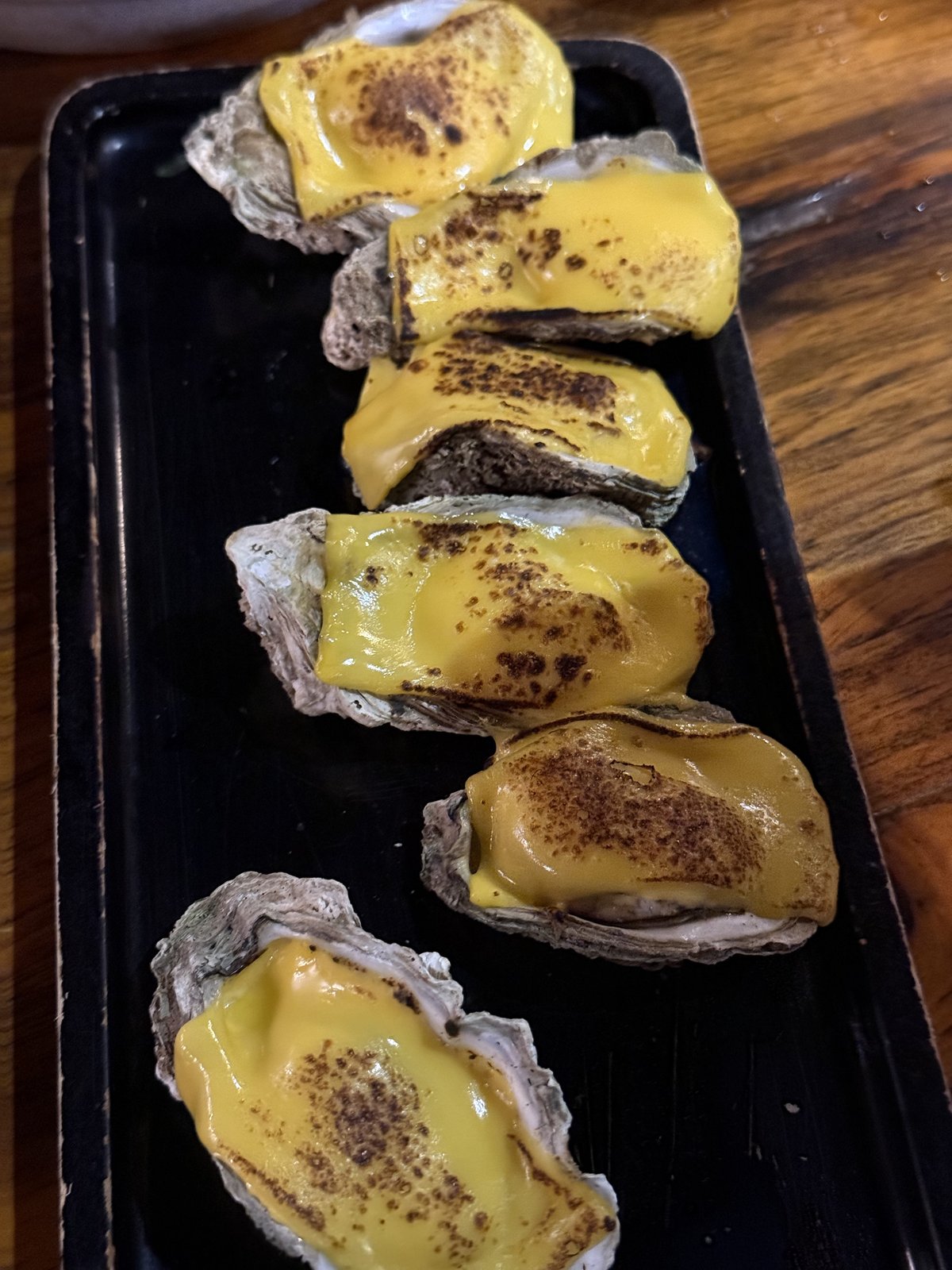
Broiled oysters with American-style cheese. The Vietnamese have an odd fascination with American cheese, and here it was, melted and browned over the half shell.
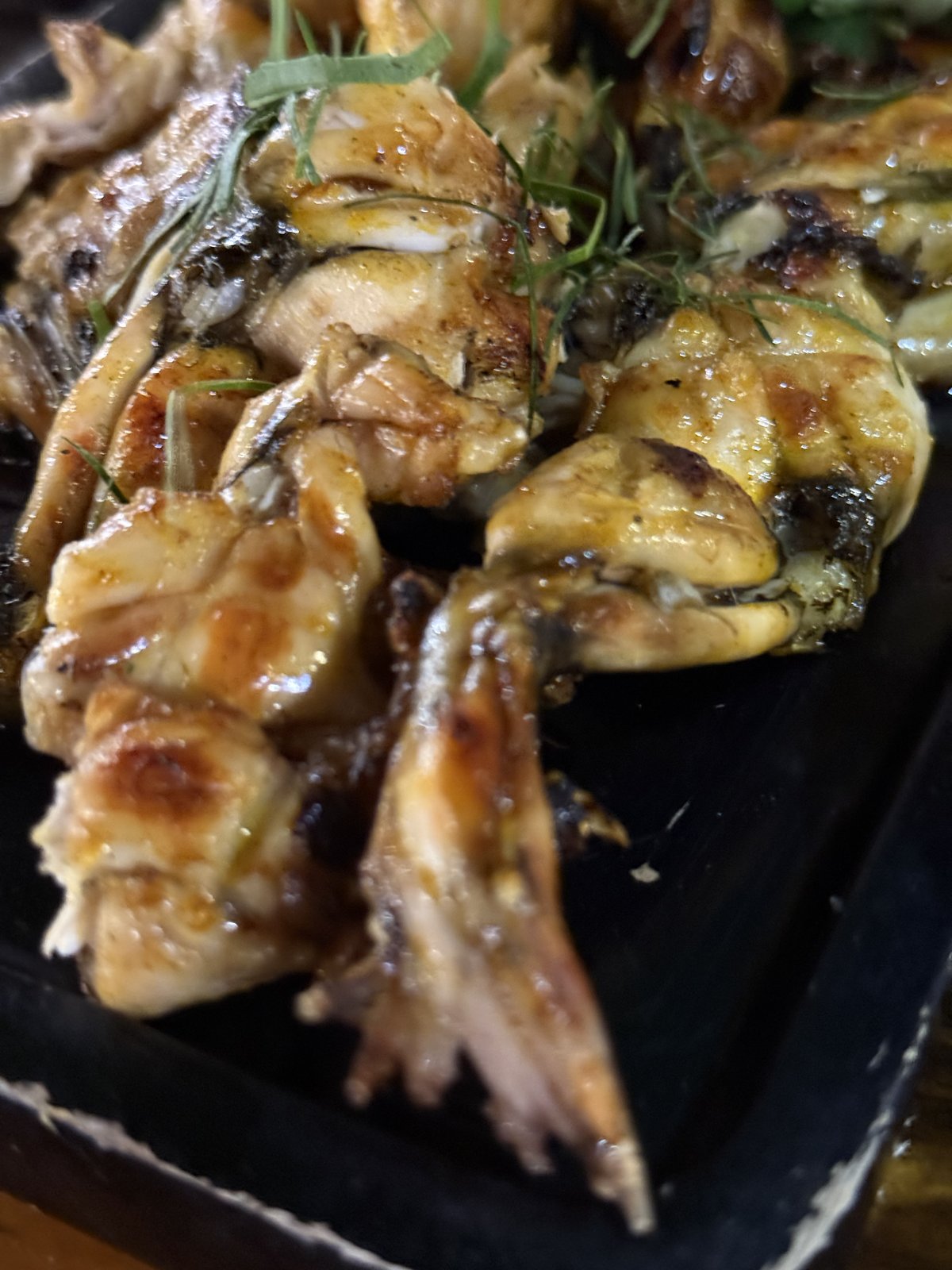
Then whole frogs. A shock at first, I must say. I remember the first time I ladled a frog from a hotpot and it looked like a small person was staring at me. I had eaten barbecued frog at the night market in Hội An years ago, but a whole one is a different matter. These came glazed and piled on a black plate with two dipping sauces.
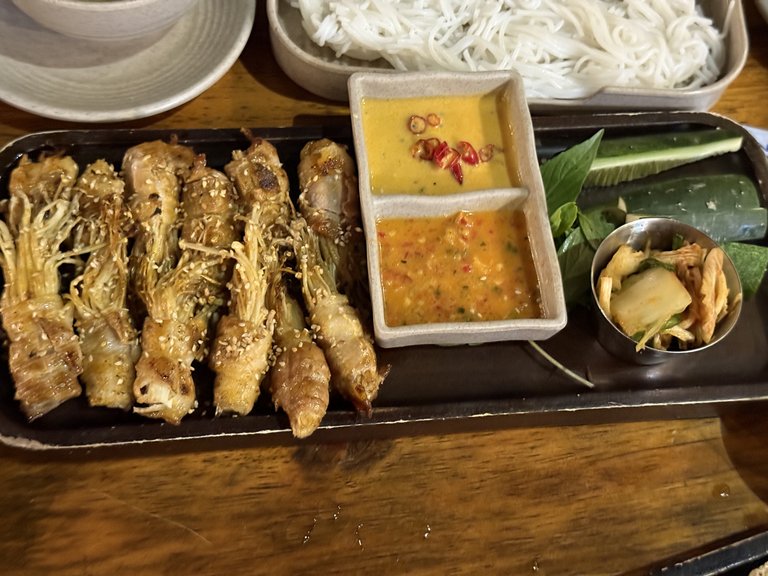
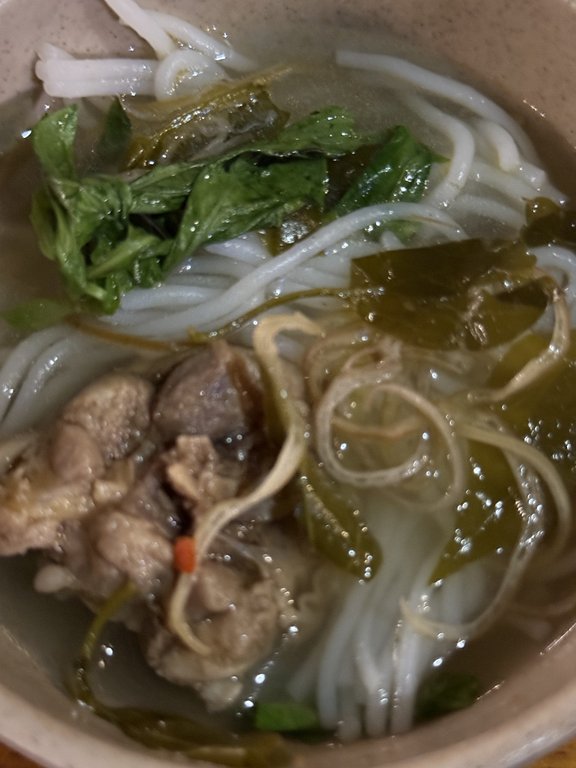
Grilled enoki mushrooms wrapped in pork belly, with pickled vegetables. Then a chicken hotpot with greens and fresh mint, ladled out over rice noodles.
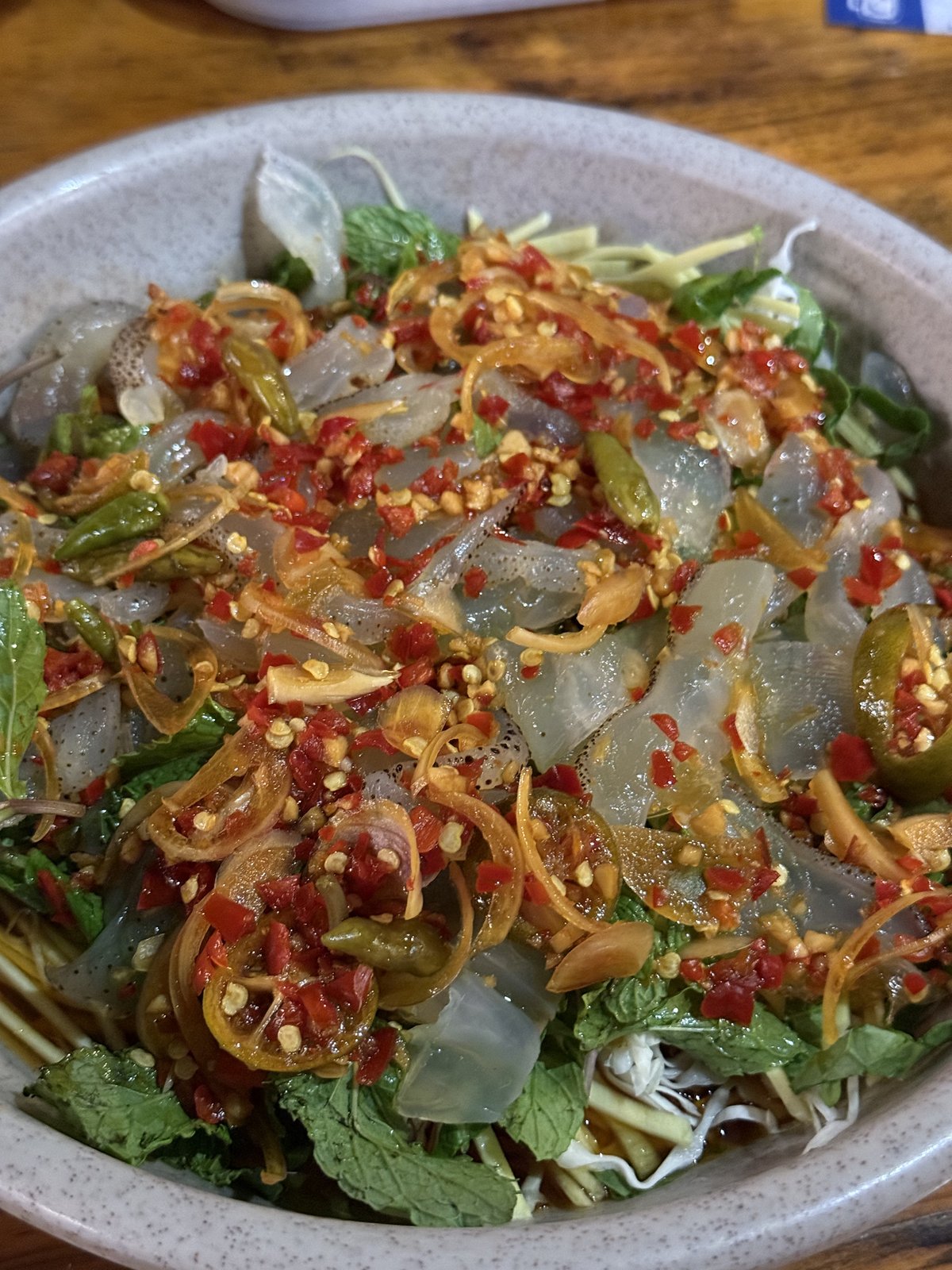
And an unusual first for me: jellyfish, in the form of a rather delicious jellyfish salad with fresh mint, Thai chili, green mango and a fish sauce based vinaigrette. In Vietnamese it is gỏi sứa. Jellyfish is a coastal food here, especially down the coast around Quy Nhơn, in Bình Định, Diem's home province, which was folded into Gia Lai on July 1. The catch is most abundant from late spring into early summer. Since a jellyfish is mostly water, it is preserved in salt and alum, which firms it up, and what you get on the plate is something between crunchy and rubbery, with a mild, briny taste of the sea that soaks up the dressing. It is usually served as a starter or with drinks.
The Vietnamese are naturally communal eaters, a habit I have adopted at home back in the States. Everything goes on the table and you grab what you want. Dish after dish, glass after glass, for the better part of three hours.
A Tale of Two Bridges
Dinner was several hours, and I needed to stretch my legs. While Diem enjoyed the company of her girlfriends, I took a stroll around the bridge. The city was in full swing. The big Ferris wheel was lit up and reflected in the black water. Along the way I came across young lovers feeding each other chè, the sweet dessert soups, and groups of friends snacking and playing games in the warm tropical night.
Back in 2020 I wrote a long piece on the history and culture of Da Nang, Da Nang - City of Bridges, and these two bridges were in it. It is a story of two bridges side by side, one for people and one for traffic.
The first bridge on this spot went up in 1951, under the French, named for General de Lattre de Tassigny. After the French left in 1955 it was renamed Trịnh Minh Thế, and after 1975 it became the Trần Thị Lý. In 1965 the American contractor RMK-BRJ built the bridge beside it, the one now called Nguyễn Văn Trỗi. It is 513 meters of steel truss spans, built to carry military equipment from the port at Tiên Sa into the city. It was reinforced in 1978 and again in 1996 so it could be raised to let boats pass beneath. For thirty-five years, until the Hàn River Bridge opened in 2000, the crossings here were the peninsula's lifeline to the city. The bridge was relatively small, and with so little access, the Sơn Trà side was an unattractive place to grow. But as Vietnam opened up to the world in the '90s, the peninsula quickly became a hotspot for foreign investment and interest. Everything I walked through that morning in An Thượng is a part of that story.
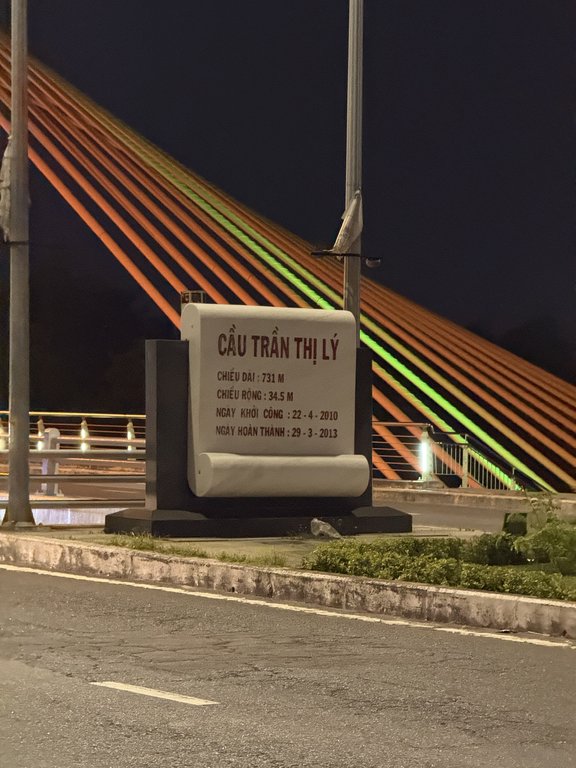
As Da Nang grew, and it has been outpacing most of Vietnam's other metropolitan areas for years, the old crossing was clearly outdated. Construction on a new Trần Thị Lý began in 2009, on the site of the old one and parallel to the Nguyễn Văn Trỗi. It opened on March 29, 2013, the anniversary of Da Nang's liberation, the same day as the Dragon Bridge. The city did not want to let the old Nguyễn Văn Trỗi go. Instead, it was renovated for about a million dollars, closed to traffic, and turned into the only pedestrian bridge across the Hàn. It is now a check-in hot spot for the youth of Da Nang, and a great place to walk out and admire its neighbor.
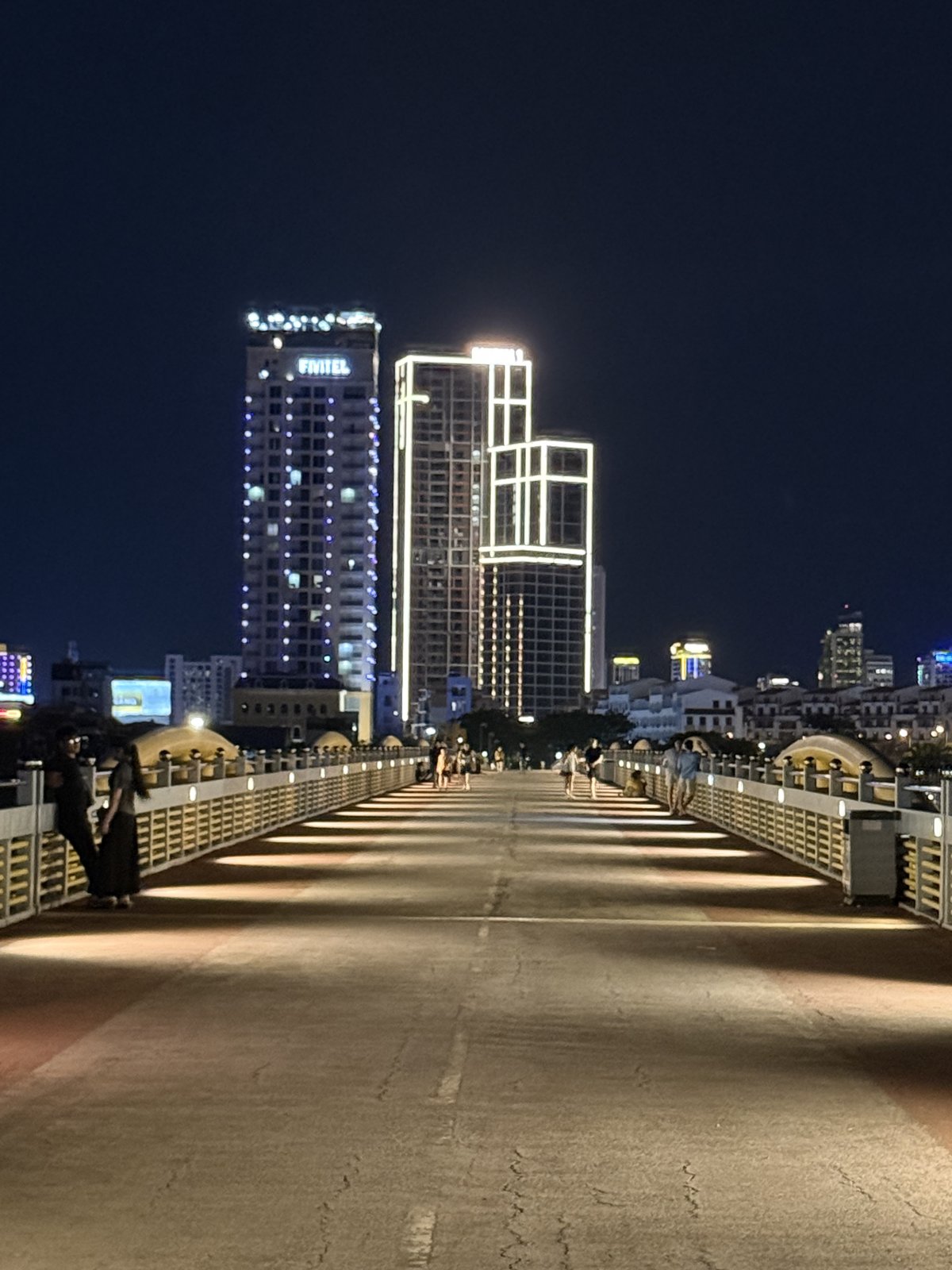
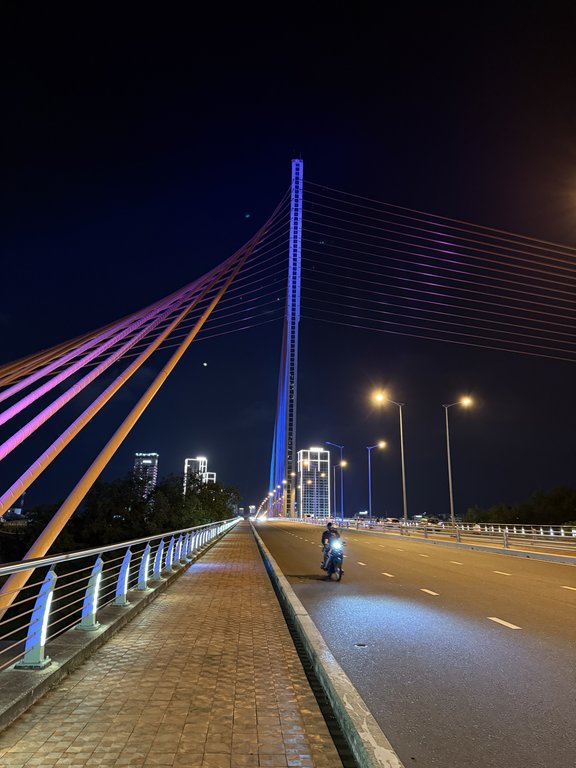
The new bridge is probably Da Nang's most interesting from a structural and architectural standpoint. It is a cable-stayed bridge, 731 meters long and 34.5 meters wide, with six lanes for traffic and a walkway on each side. A single pylon, 145 meters tall, leans to the west. On one side its cables splay out in a complete fan, on the other they twist into a partial one. At night the pylon and cables change color, red, pink, blue and more. It is just an eye-catching sight.
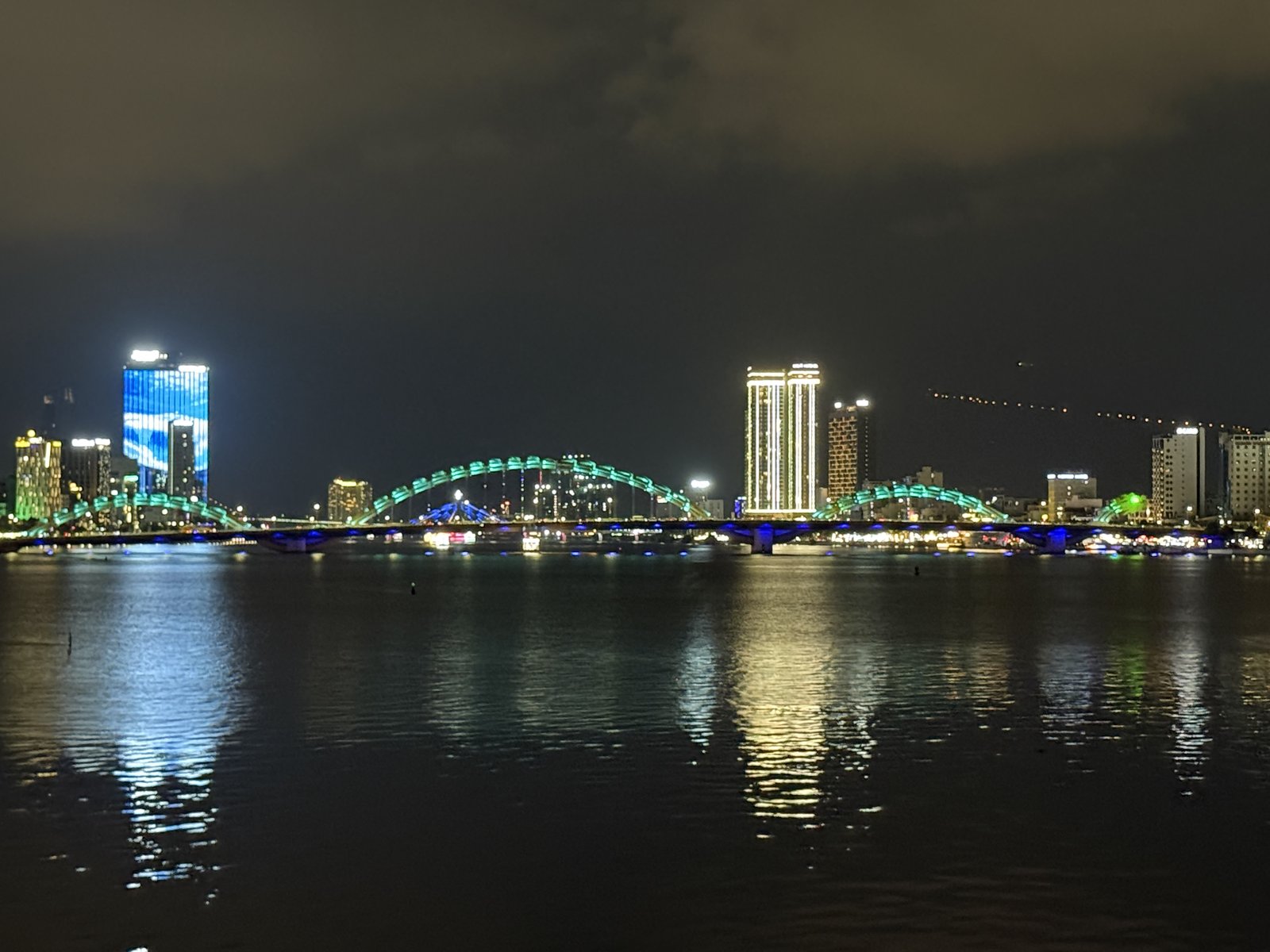
Then there are the names. Nguyễn Văn Trỗi was an electrician from Điện Bàn, in Quảng Nam, and a member of the National Liberation Front. In May of 1964 he was caught in a plot to blow up the motorcade of US Defense Secretary Robert McNamara at the Công Lý Bridge in Saigon. He was executed by firing squad at Chí Hòa Prison on October 15, 1964, and in the decades since his name has gone on streets, schools and bridges across the country. Trần Thị Lý was born in 1933, also in Điện Bàn, a granddaughter of the scholar Trần Cao Vân. From 1956 she worked as a liaison for the People's Army. She was arrested that same year and tortured for about two years, then left for dead. Her comrades got her out, and she was flown to Hanoi for treatment. She died in Da Nang in 1992, the same year she was named a Hero of the People's Armed Forces. So two people from the same district just south of the city stand side by side over the Hàn River, one bridge built by Americans, the other built nearly half a century later for the city that grew up around it. There is a lot of history in a short walk.
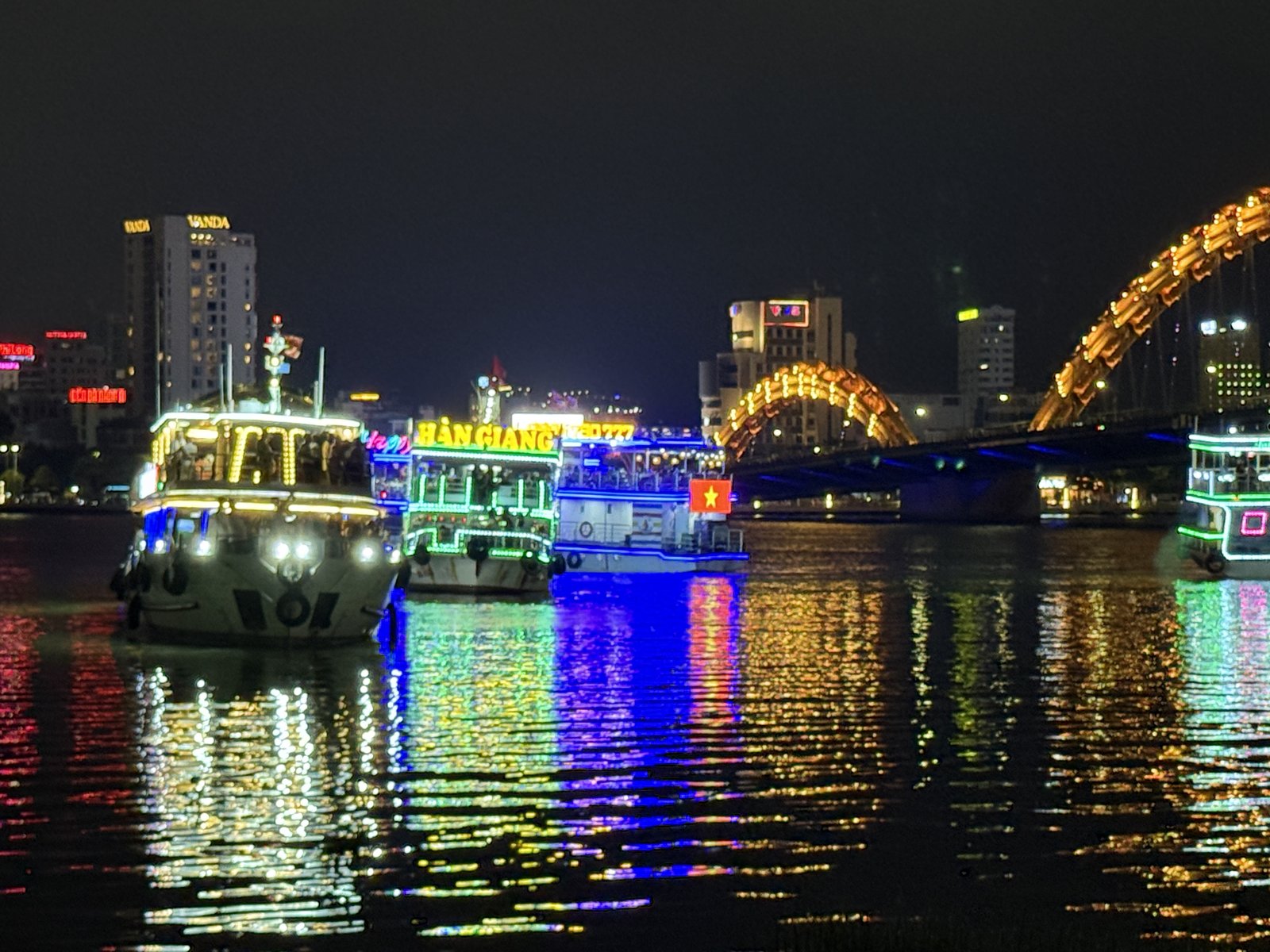
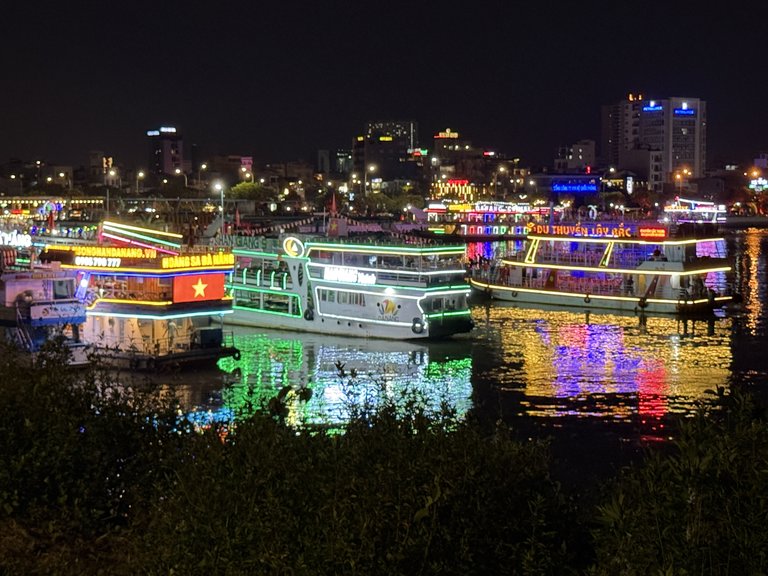
I came down off the bridge and back along the river. The tour boats were tied up along the bank, lit up like carnival rides, one flying the red flag with the yellow star. On the Bạch Đằng promenade, colorful cutout figures of walking people glowed along the railing. A vendor rolled by on a motorbike buried under balloons and stuffed toys, and the sidewalks were lined with people eating at little tables under the trees.
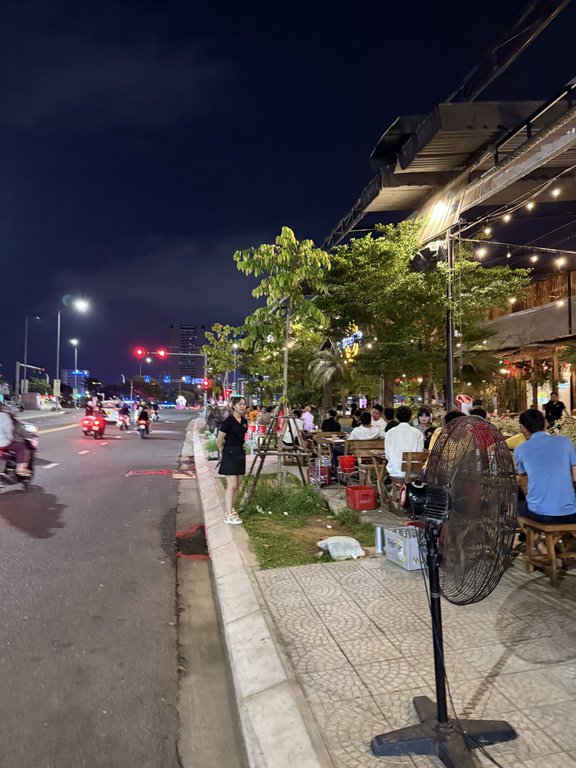
By the time I got back to the table, the bill had arrived. 1,566,000 dong, for an evening's worth of dishes and drinks for the table.
Lunch at Umi Izakaya
I don't know how much more I can take. I'm tapping out.
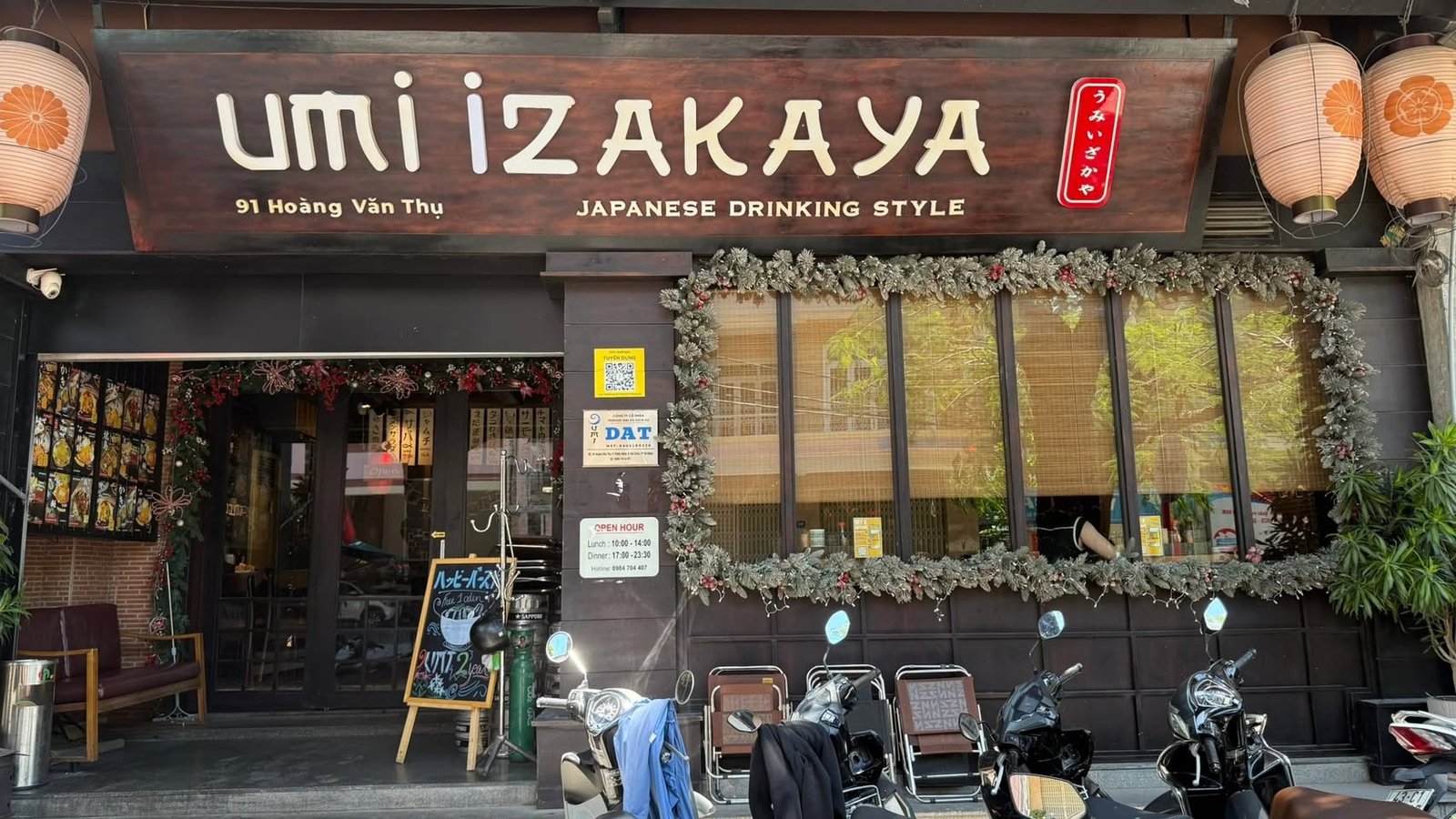
On Tuesday we visited a cute little Japanese restaurant in the Hải Châu district called Umi Izakaya, for lunch with more of Diem's old friends. Da Nang is a very popular place for the Japanese to vacation, and this promotes a robust Japanese dining scene. The numbers back that up. About 179,000 Japanese visitors came to Da Nang in 2024, and in the first half of 2025 the count passed 108,000, nearly double the same stretch the year before. By that summer there were eleven direct flights a week from Japan, seven from Narita and four from Osaka. It is not a new relationship, either. Down the coast in Hội An, Japanese traders built the famous covered bridge some 400 years ago to link their neighborhood to the rest of the town.
As we pulled up to the restaurant, it had the feel of a small family establishment you might find in Tokyo or Kyoto. Paper lanterns out front, dark wood, a sign that read Japanese Drinking Style. Inside there were only twelve tables and a bar not meant for seating, with calligraphy banners hung across the ceiling, red lanterns, shelves of bottles, and young cooks working behind the glass of an open kitchen. The word izakaya puts together iru, to stay, and sakaya, a sake shop. It started as a sake shop where you could sit down and drink, and in the Edo period, which began about 400 years ago, the shops started putting out simple snacks to go with it.
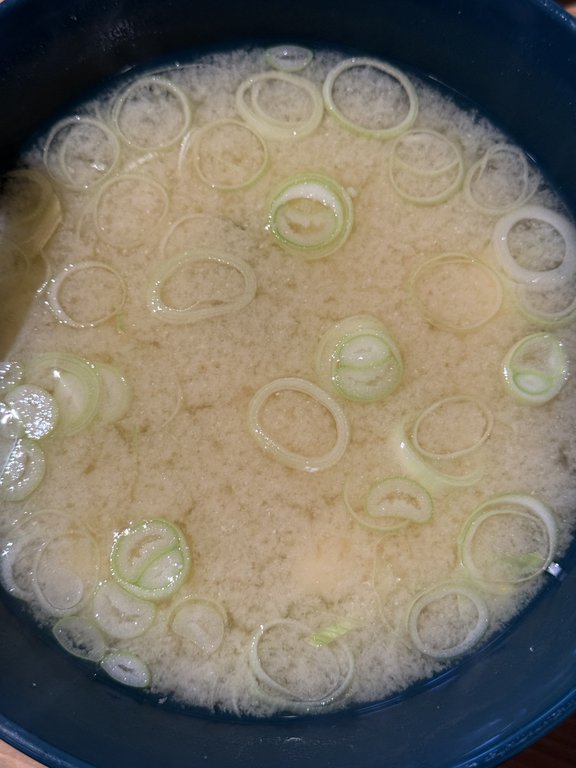
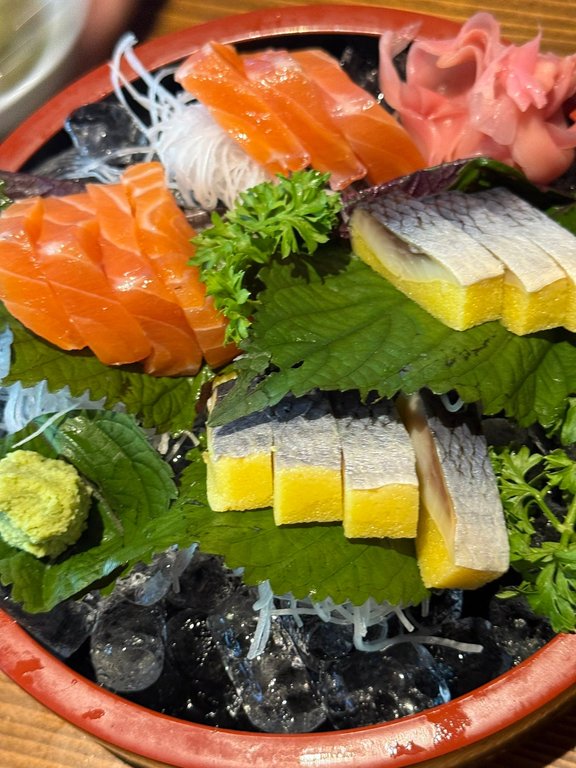
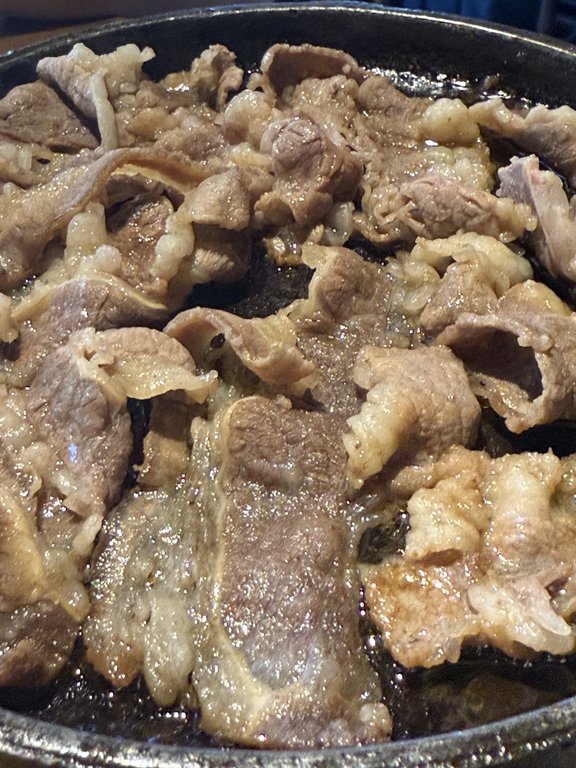
It was, again, a multi-course, two-hour lunch. Miso soup. Sashimi of salmon and butterfish with roe. Chilled raw octopus with wasabi. A sizzle plate of thinly sliced short ribs.
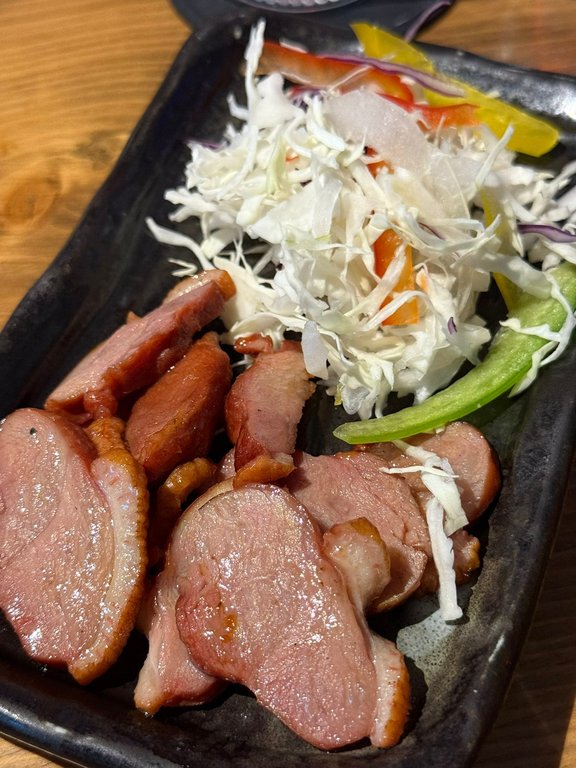
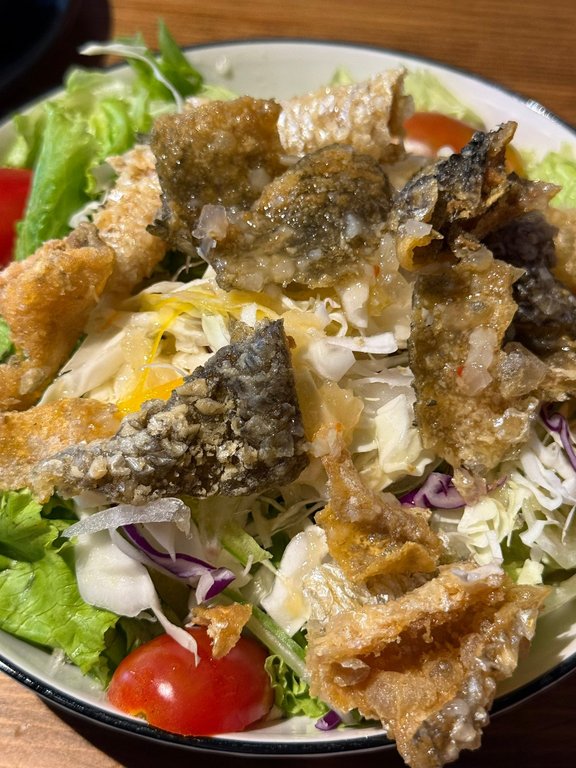
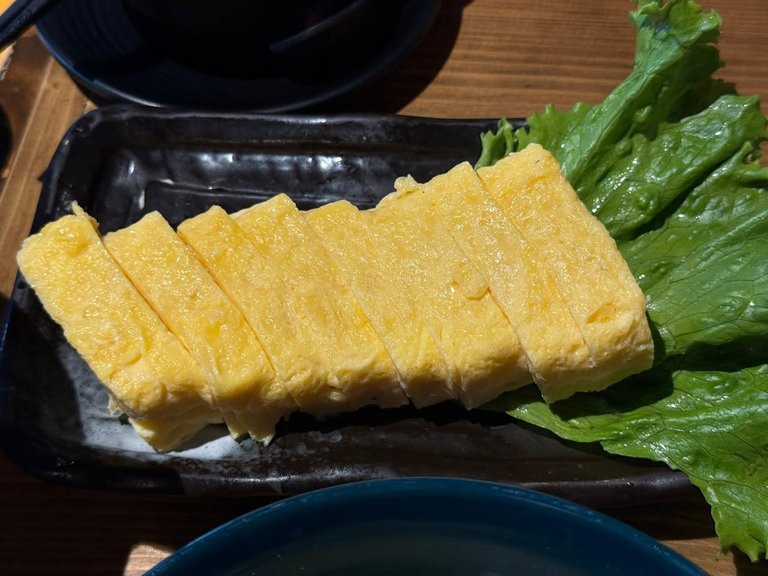
Smoked goose breast. A fried fish skin salad with a delicious sweet citrus vinaigrette. Tamagoyaki, the Japanese rolled omelet. An eel roll.
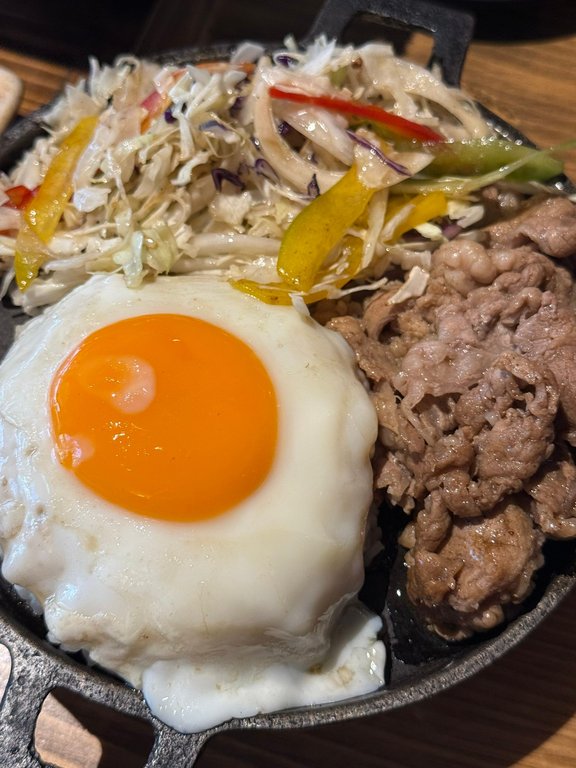
A hot plate of rice, a sunny side egg, sizzled beef and sautéed cabbage. And the yakitori: pork liver, pork belly, Japanese sausage, chicken keel bone and skate wing. The keel bone is nankotsu, the cartilage from the front of the breastbone, which you chew rather than bite. Plenty of Western diners find it hard to get used to.
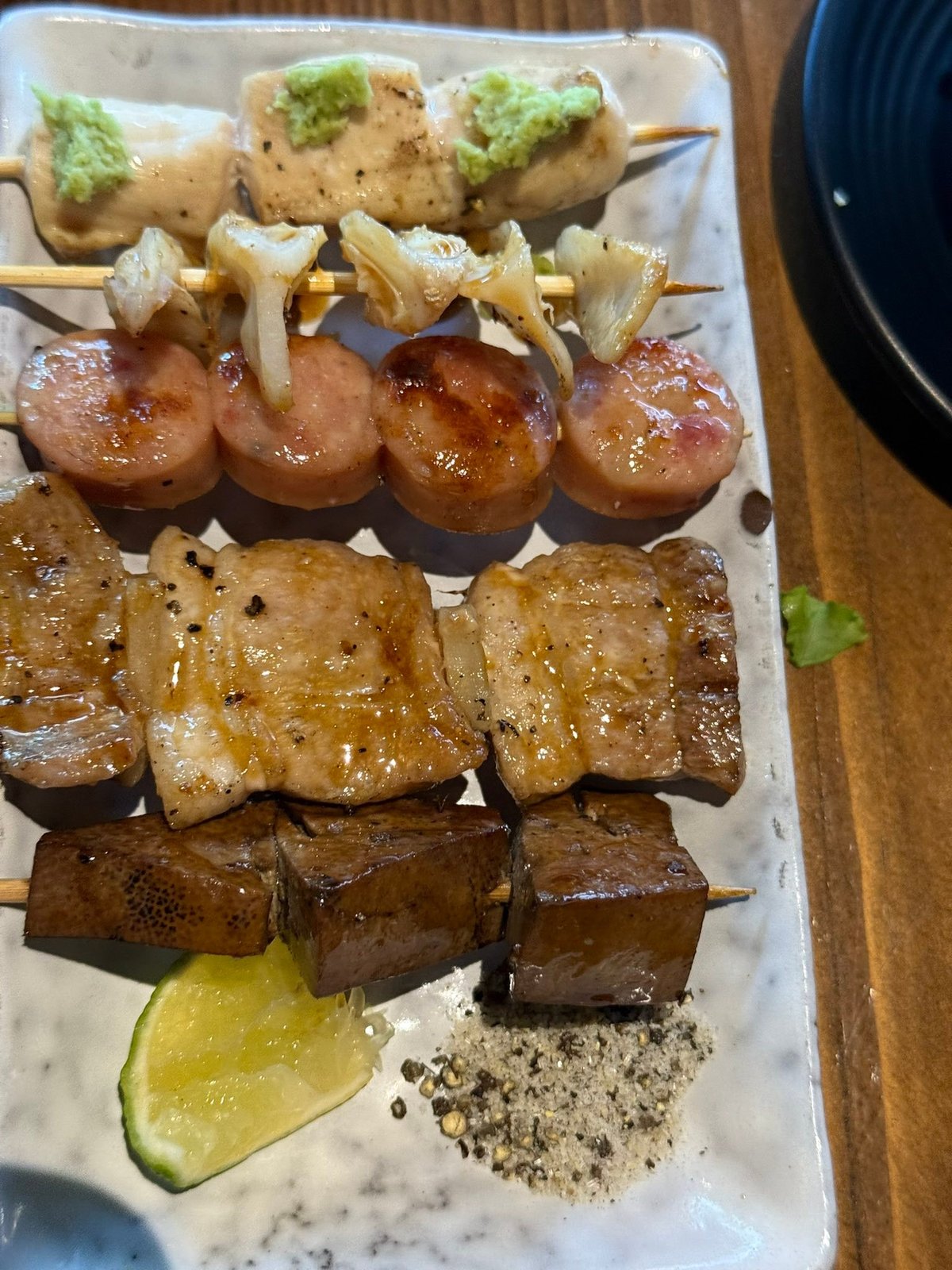
And done! Time for a nap.
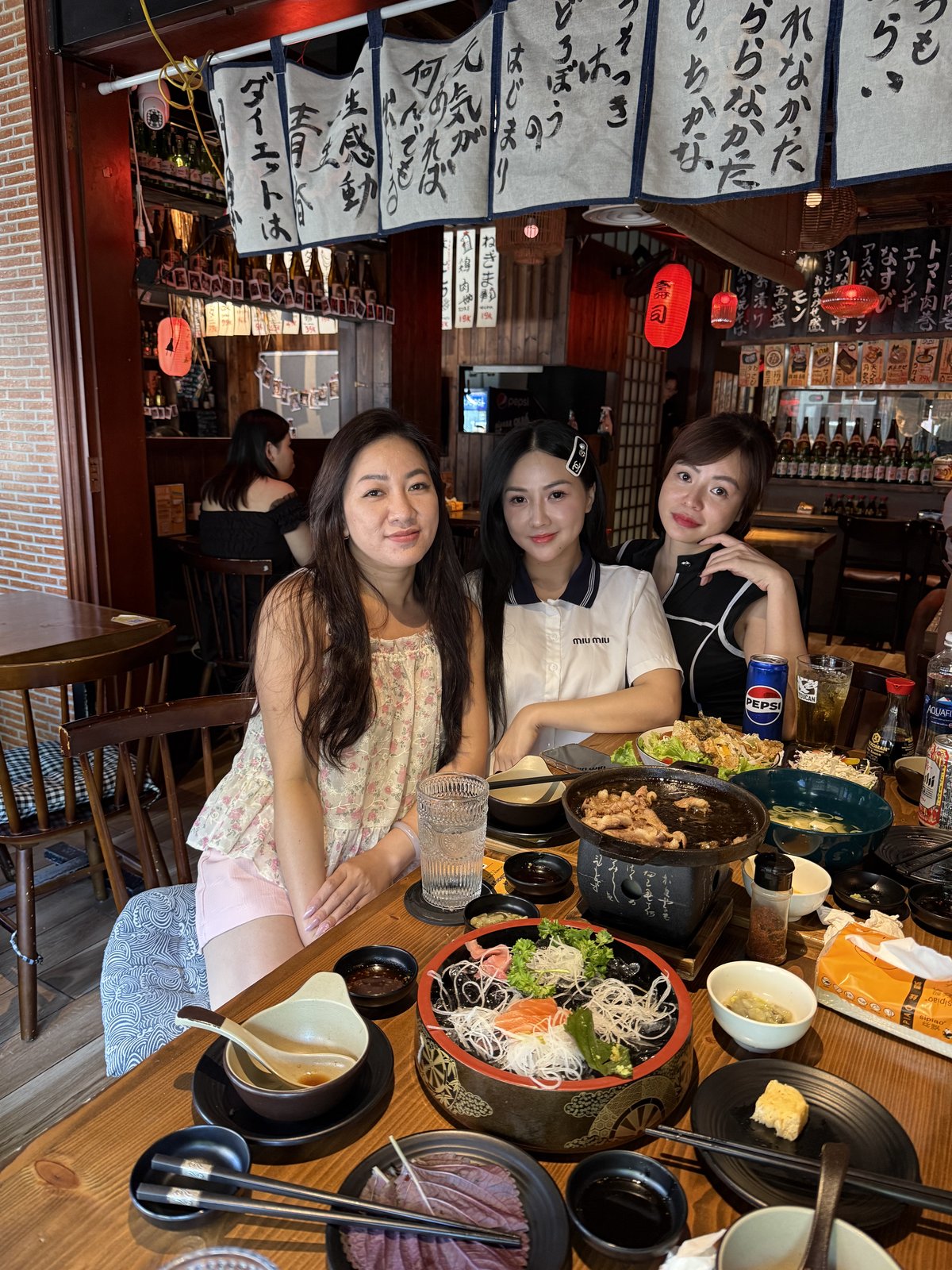
As I explained to a friend, I try to only have one large meal a day. I'm rarely eating something alone as a meal, and when there are multiple courses spread among five or more people, I can graze and not overdo it. That's the theory, anyway.
And for anyone wondering how we can be gone this long: I'm still working. It's the only way we can be gone for that long. The hardest part is not the expense of getting here, it's not working the entire time. I'm just thankful I can Zoom in and still get paid. Though the 1 am conference calls are tough.
An Evening on Mỹ Khê
After our delicious Japanese lunch, we gathered the family for an afternoon on Mỹ Khê Beach. By the time we got there the sun had dropped behind the massive hotels that line her shore, casting a welcome shadow over the water. The heat had been intense all week, and the view hazily nonexistent. But today you could see the Cham Islands, and the Lady Buddha stood in graceful watch over the mass of gathered bathers.
By the time we got there the sun had dropped behind the massive hotels that line her shore, casting a welcome shadow over the water.
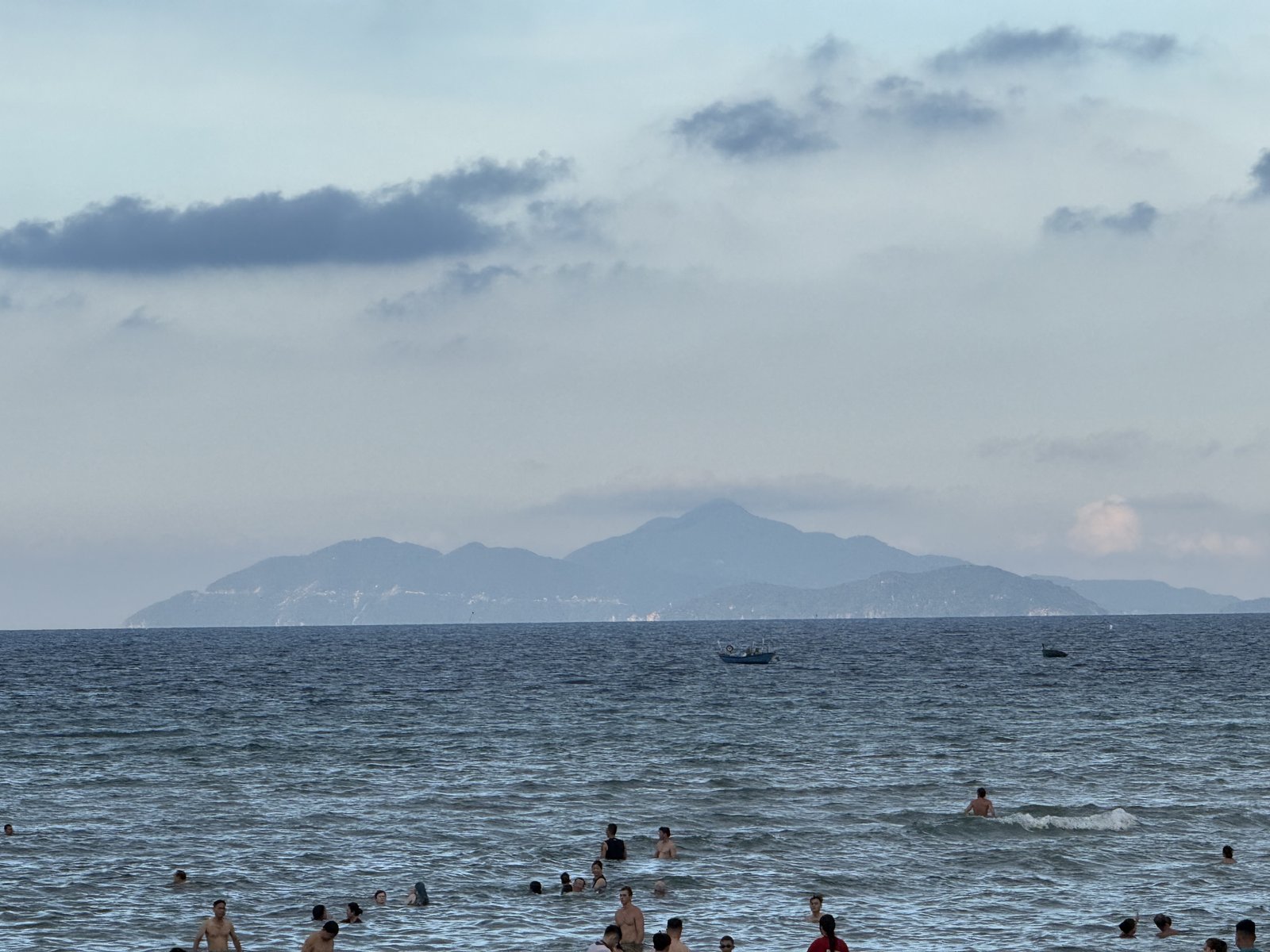
Cù Lao Chàm is a cluster of eight islands about 20 kilometers off the coast at Hội An. The largest is Hòn Lao, home to about 3,000 people, most of them in fishing families, and in 2009 UNESCO named the islands a world biosphere reserve. Diem and I spent a few days out there while we lived here, snorkeling the reefs off Hòn Dài and eating grilled sea urchins in the rain. Earlier in the week, in the haze, you would never have known they were there.
The Lady Buddha is easier to spot. She stands 67 meters tall on the slope of Sơn Trà, at the Linh Ứng Pagoda at Bãi Bụt, her back to the mountain and her face to the sea. The pagoda was inaugurated in 2010.
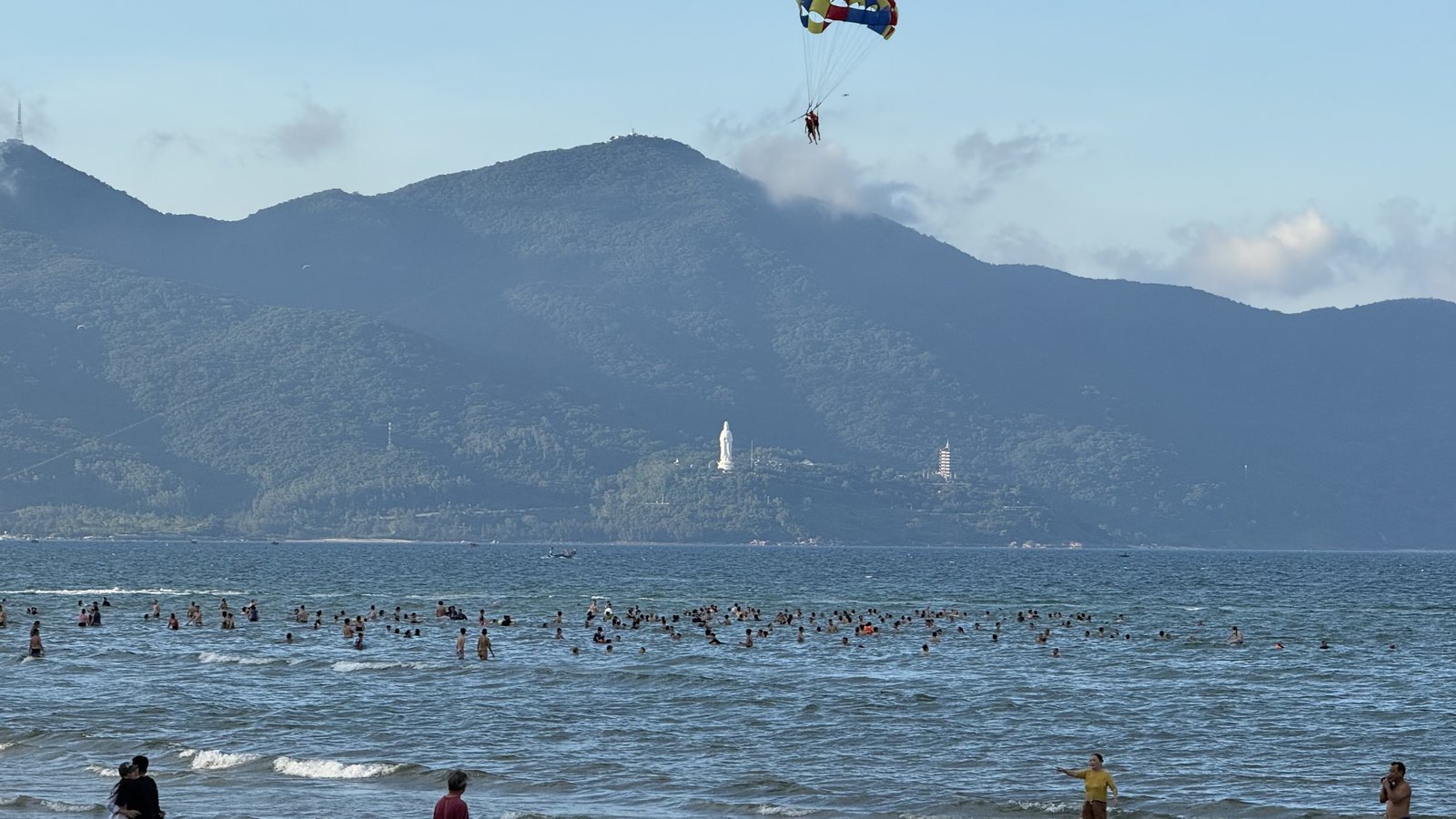
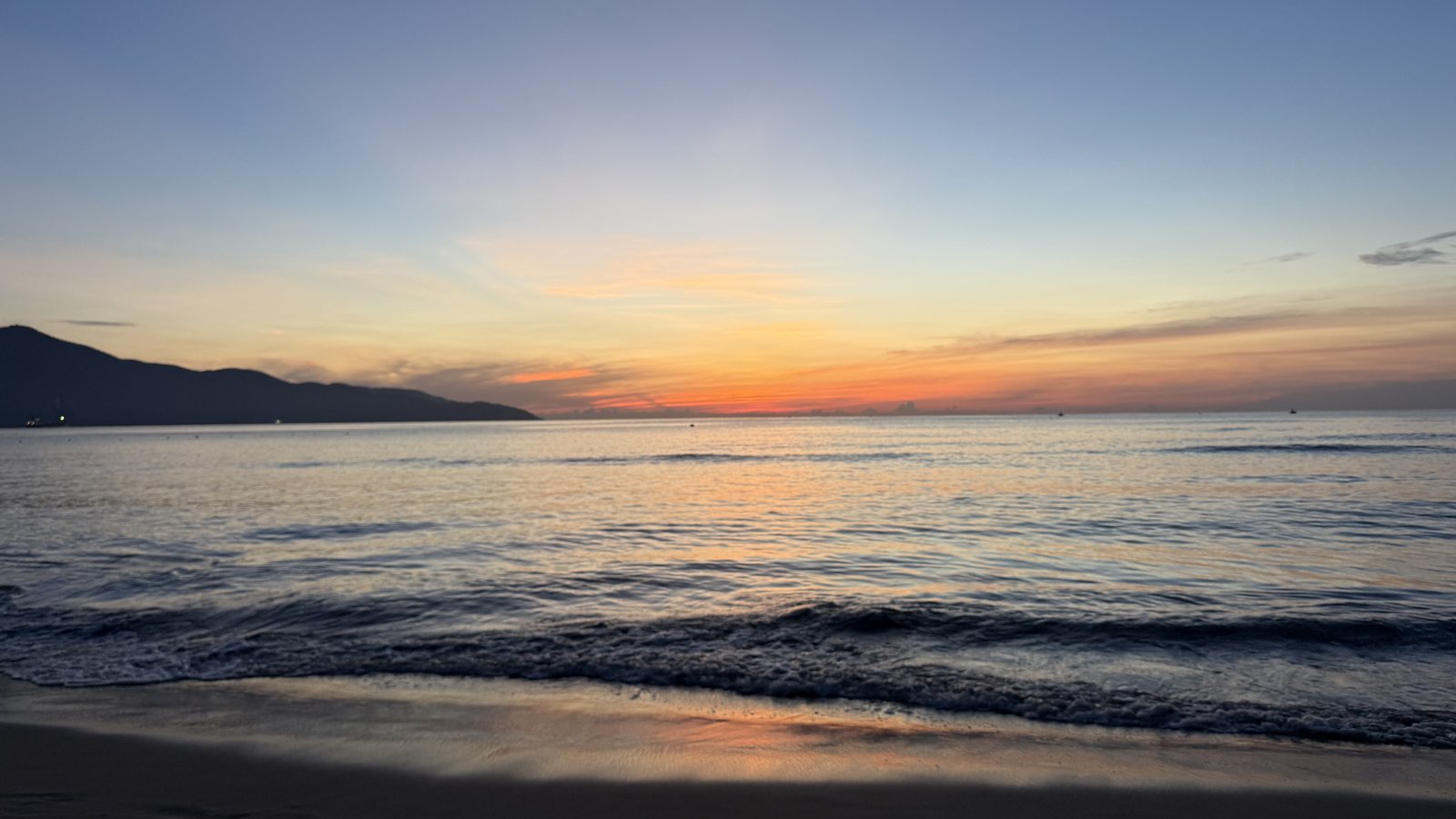
It's summer in Da Nang, and a hundred countries were probably represented on her shores. It was a Tuesday, but it was as packed as a weekend. American servicemen knew this stretch as China Beach. We swam and bobbed in the warm, clear, calm waters of the South China Sea, or as it is known here, the Eastern Sea. Eventually the lifeguards blew their whistles to clear the water. The sky went to a pastel print of lavender and orange, the bright lights of the neon hotels filled the view, and soon darkness took the day.
On the way off the sand we stopped at a beachside bar for fresh coconut water, to replace an afternoon's worth of electrolytes from a day in the heat.
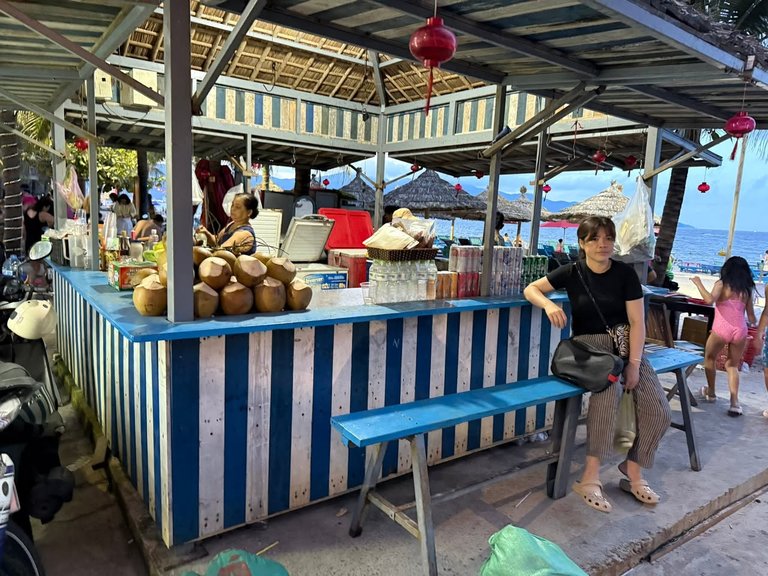
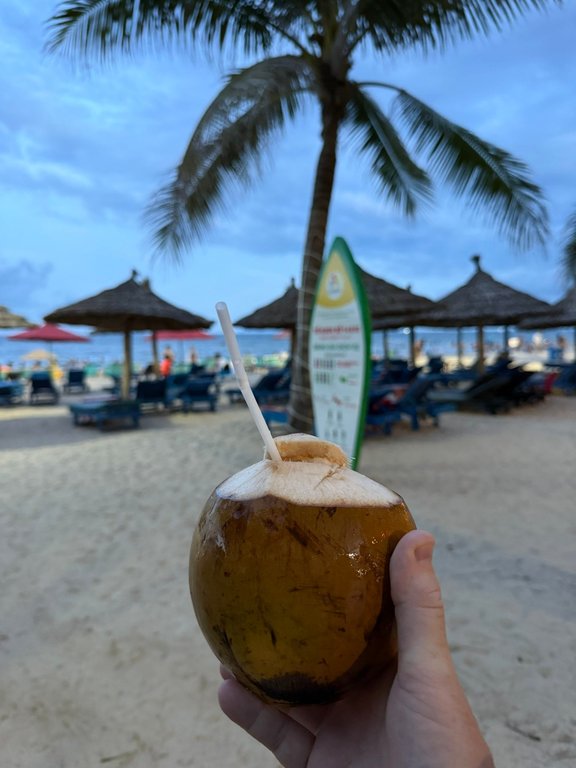
We had one more day left in Da Nang, and I could sense the emotional weight of that moment beginning to build. On Thursday we would fly to Saigon. Our flight out of the country wasn't until the 30th, so we would have all weekend there. We were going back to Saigon several days early specifically to see James Jolokia, and I planned on several visits. I wanted to eat at all of the restaurants he has going now.
It had been almost five years since we left. Why had it taken so long to return? The excuses are many. It won't be five years again. That I am sure.
Previously: Fire, Water and Fireworks
More from Da Nang: Da Nang - City of Bridges and Cù Lao Chàm - Hòn Dài Island