One Family's 28-day Wild Odyssey Across the Western U.S.
Chapter 3: Across the Great Plains, Chamberlain, SD to Palmer Gulch, SD
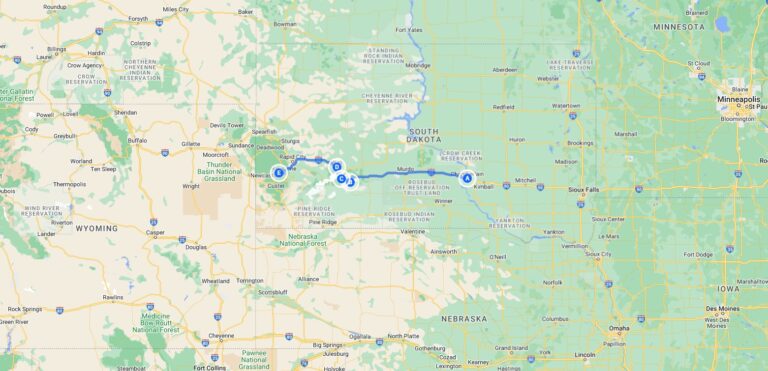
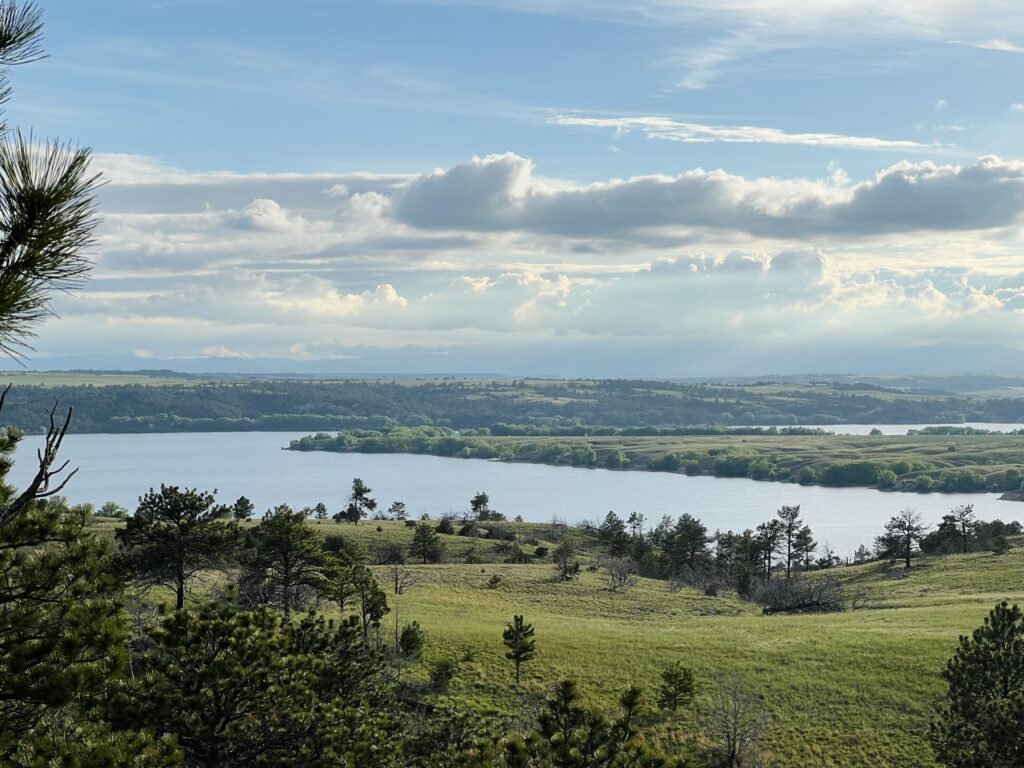
As the morning sun climbed into the Chamberlain sky over the vast Missouri River, we enjoyed a less-than-inspiring breakfast at the hotel. Overlooking the river, we were served a lackluster display of dusty cereals, sad brown bananas, sugar-free yogurt and boiled bagels. I must admit, I have never been a fan of bagels, for there is something about boiled bread that fails to tantalize my taste buds. Nevertheless, we embraced the morning with a sense of adventure, eager to traverse the historical paths of those who had trekked before us.
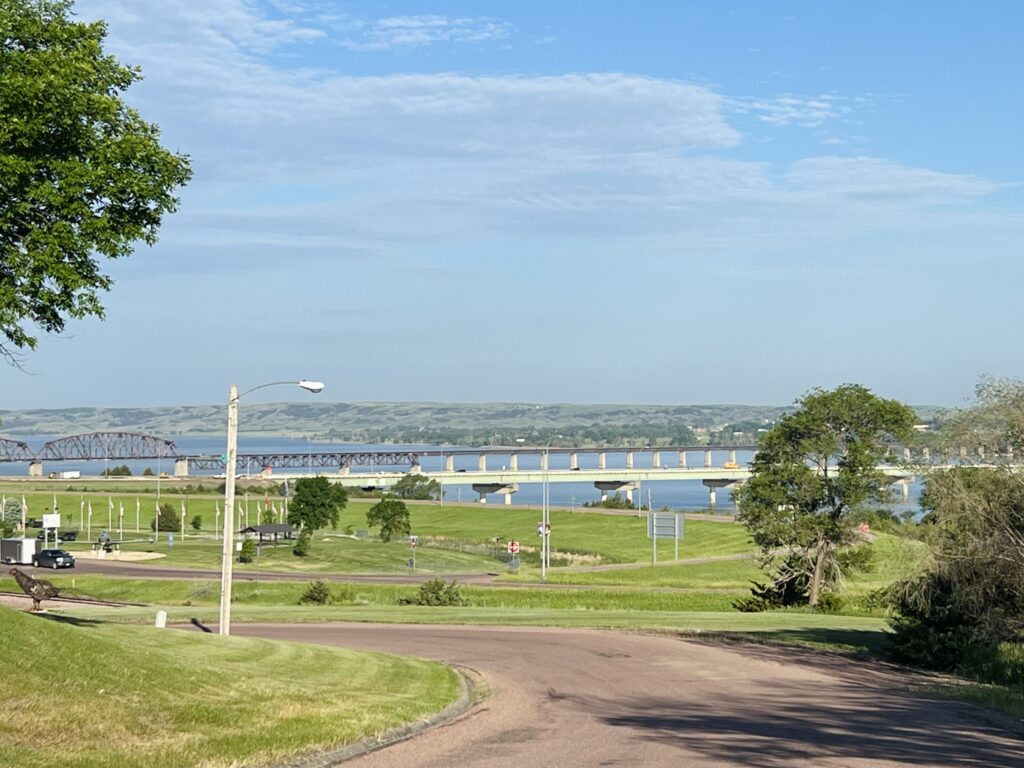
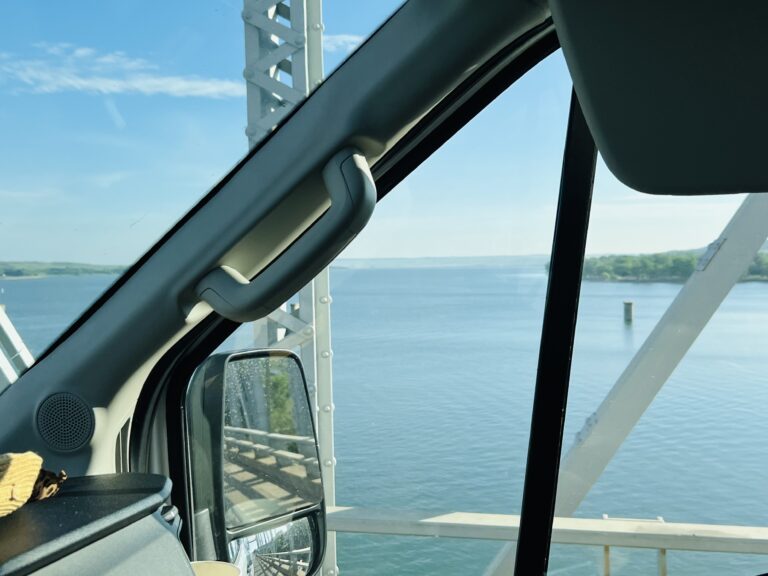
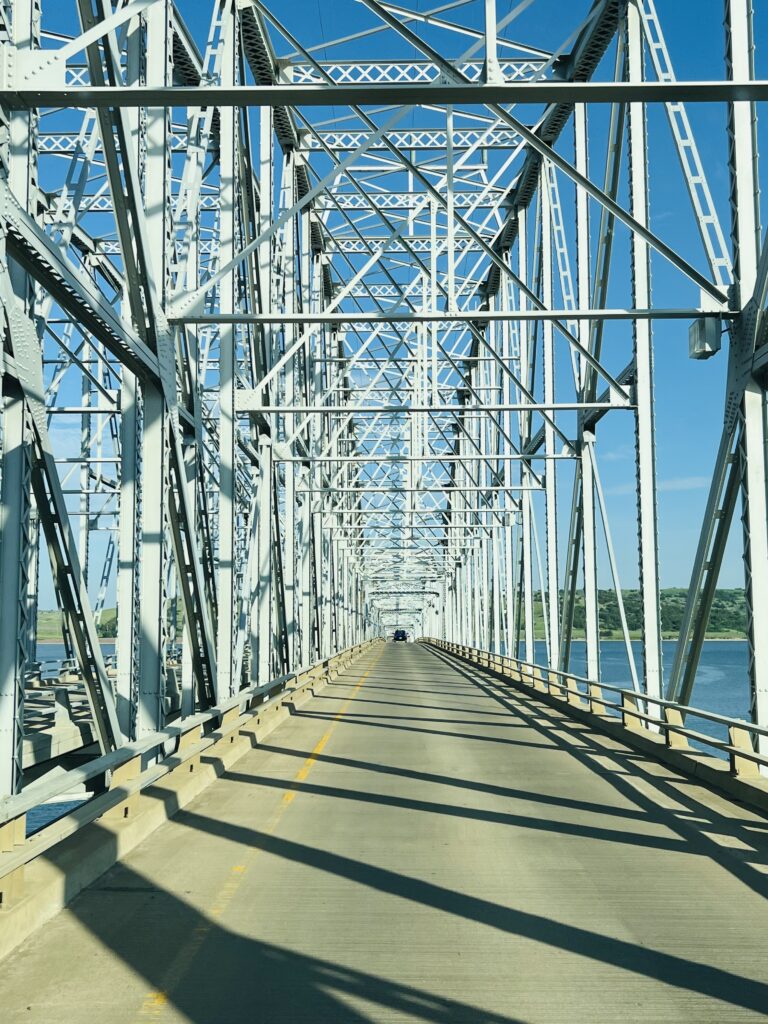
Having packed before breakfast, we loaded up and continued west. As we left the small town of Chamberlain behind, we came to the Lewis and Clark Memorial Bridge, where we crossed the Missouri River at Lake Francis Case. Imagining Lewis and Clark's determination and the unknown ahead, I couldn't help but feel a connection to the past as we left the Missouri River behind for the last time. We were officially in the West.
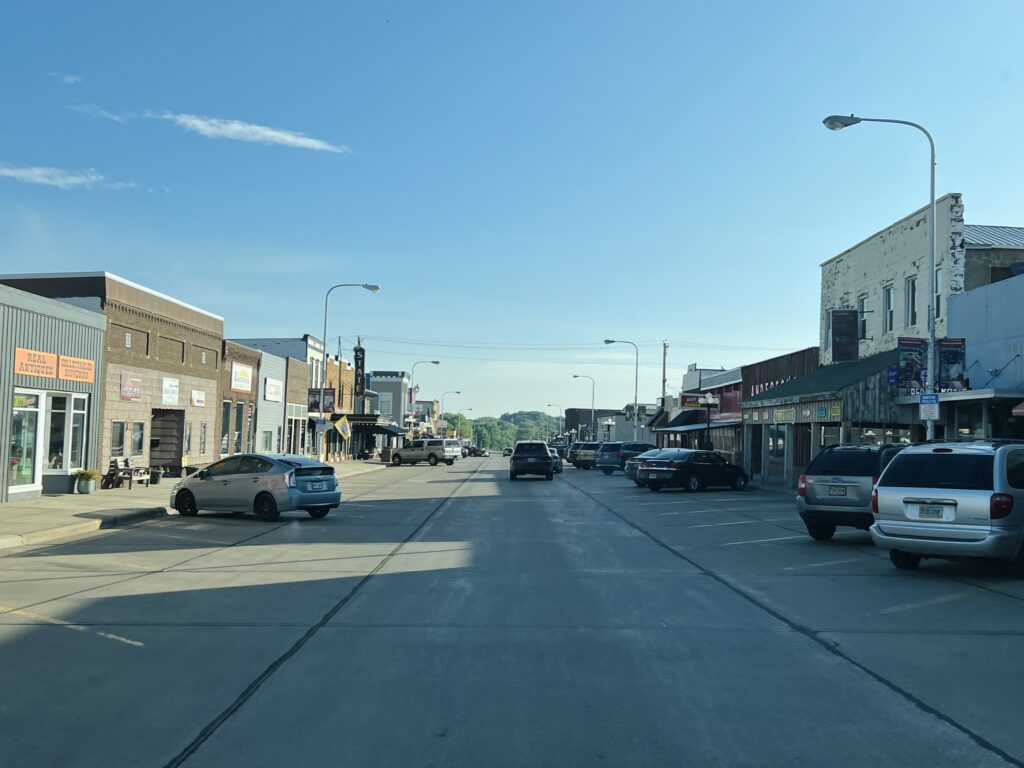
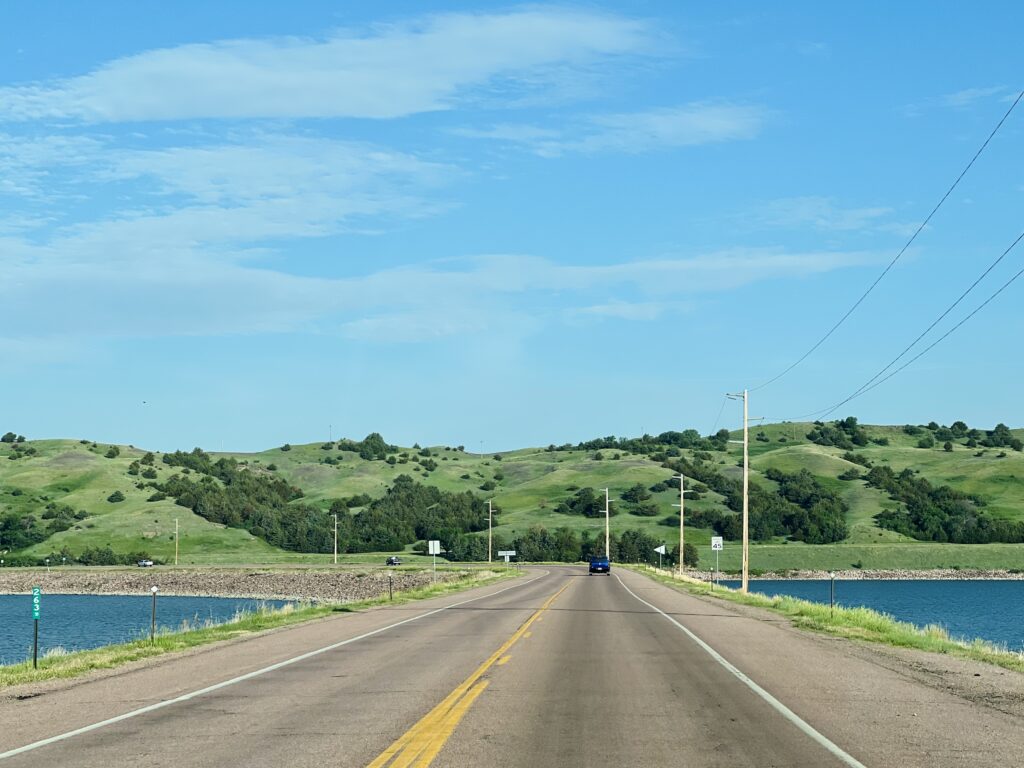
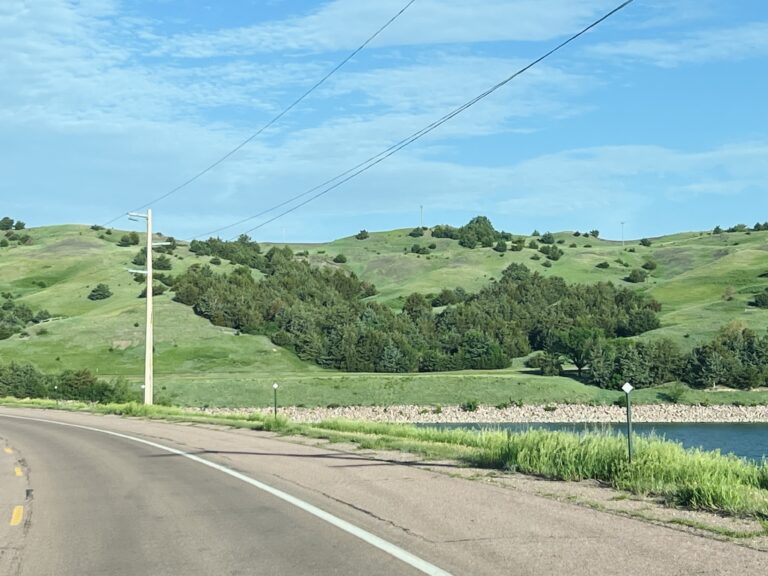
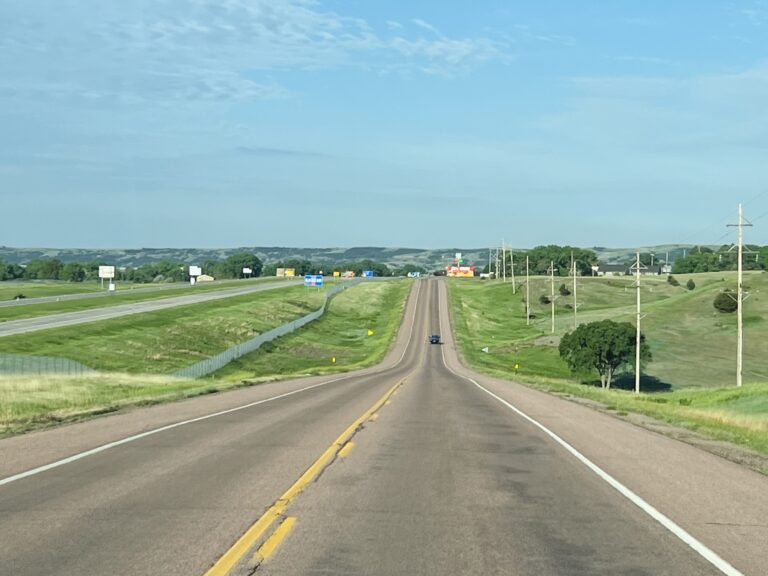
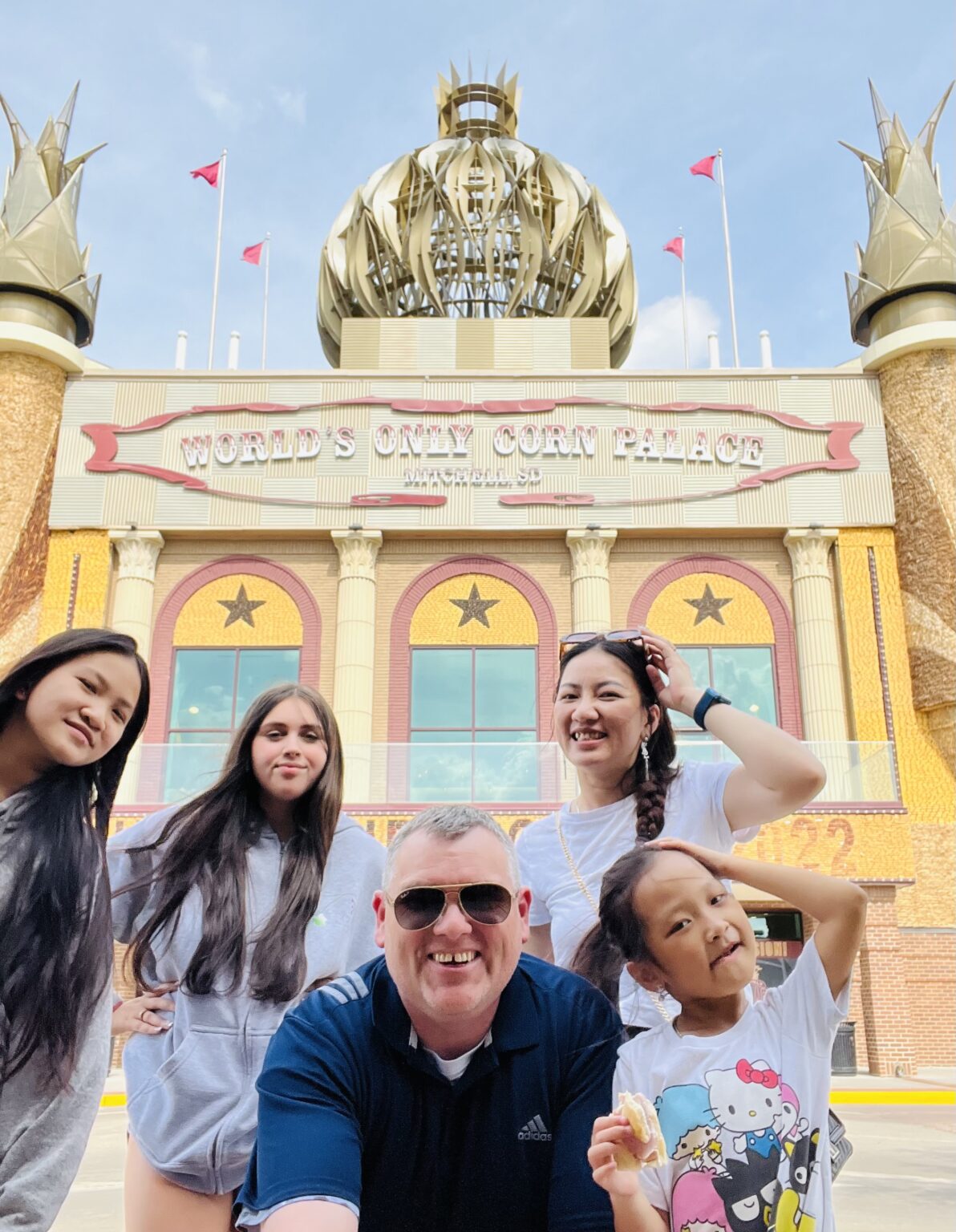
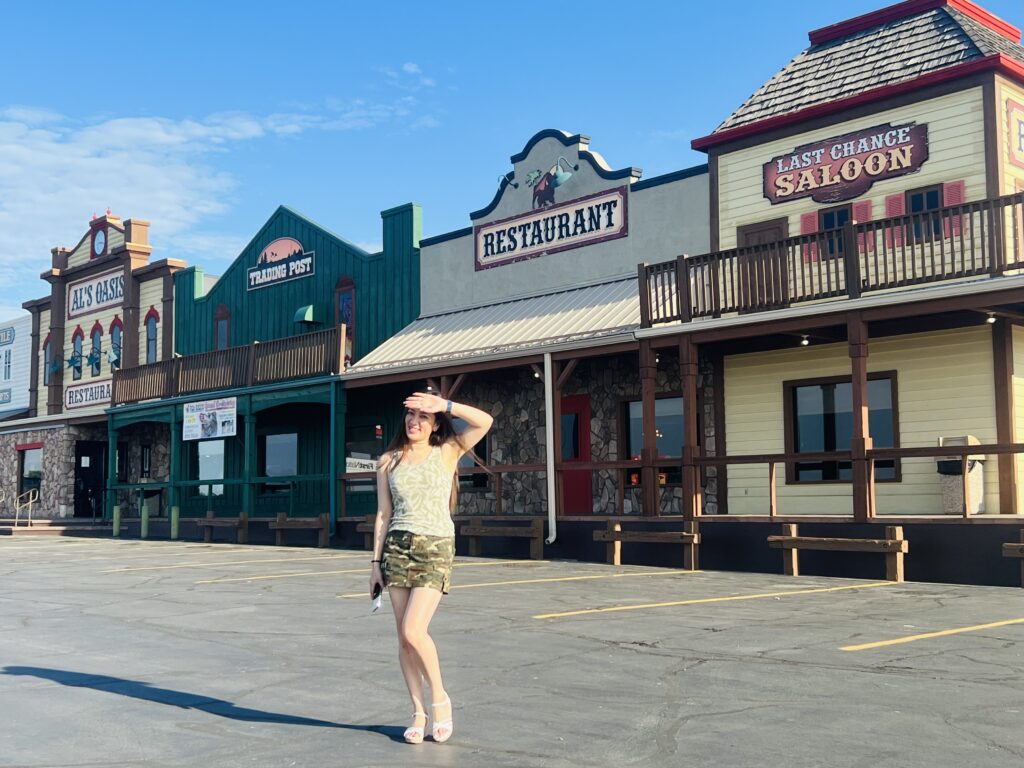
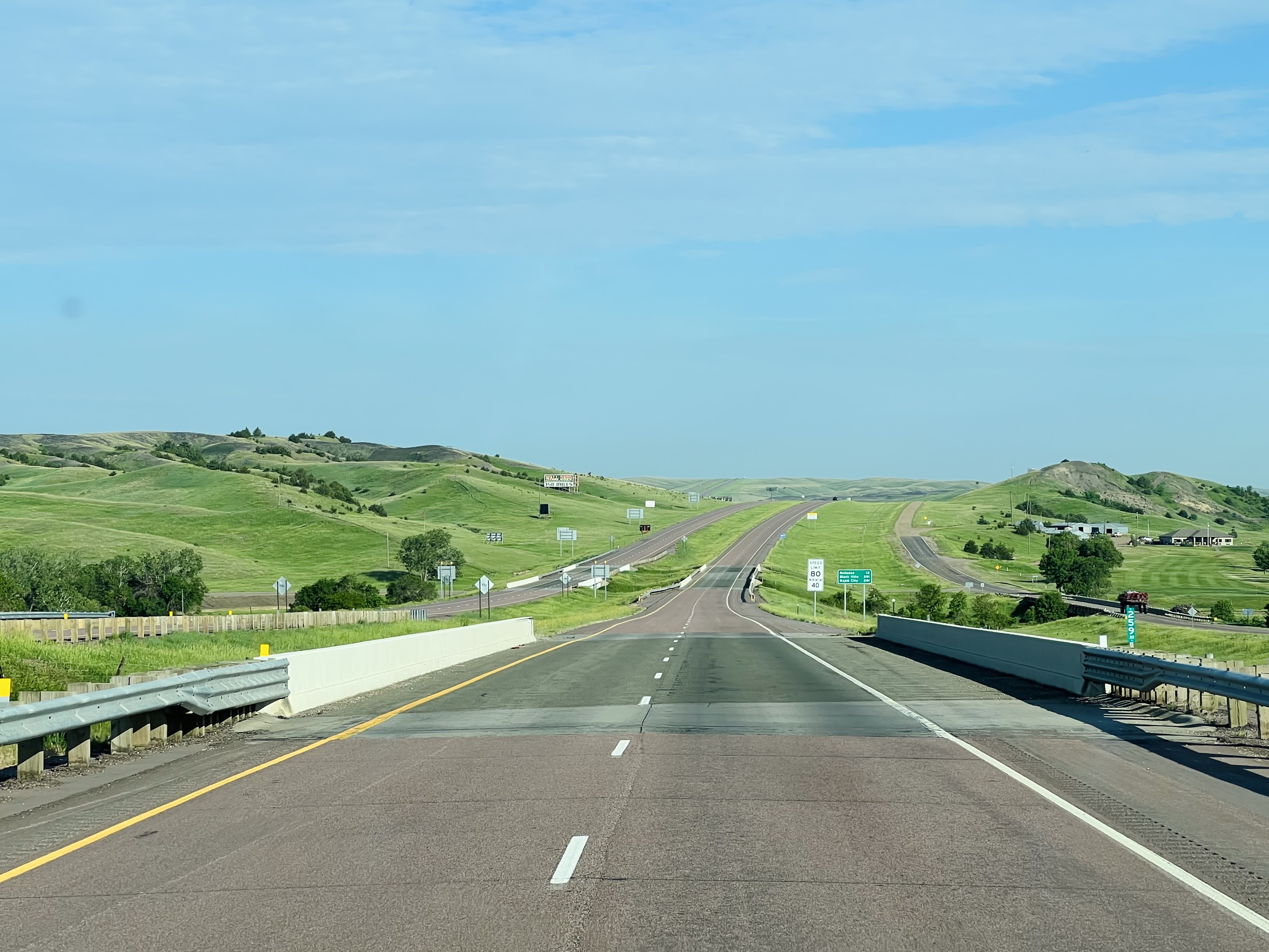
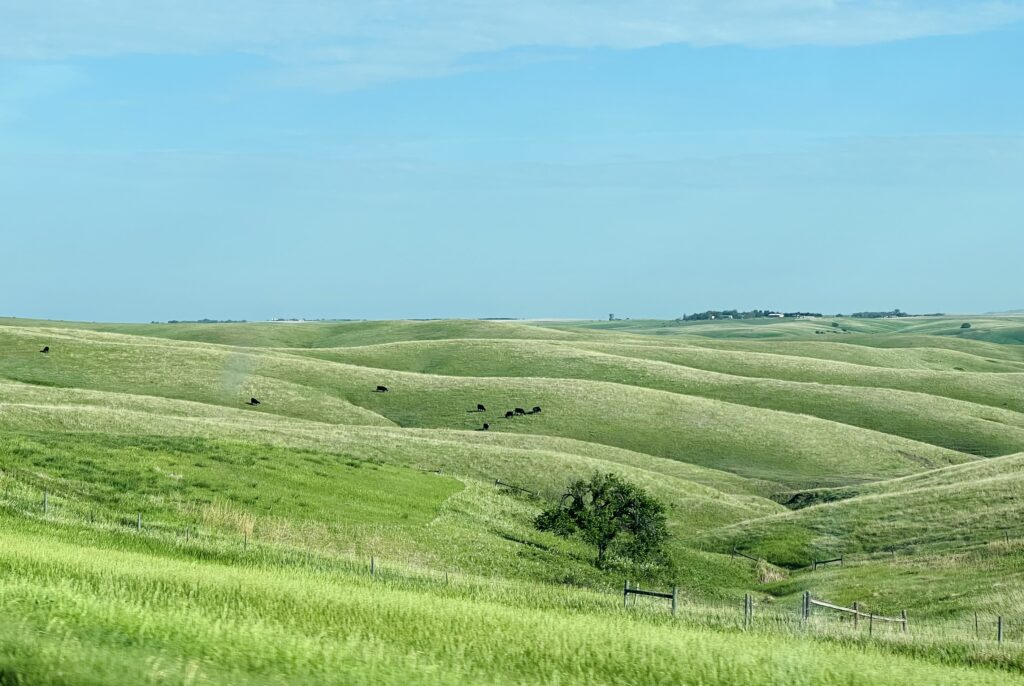
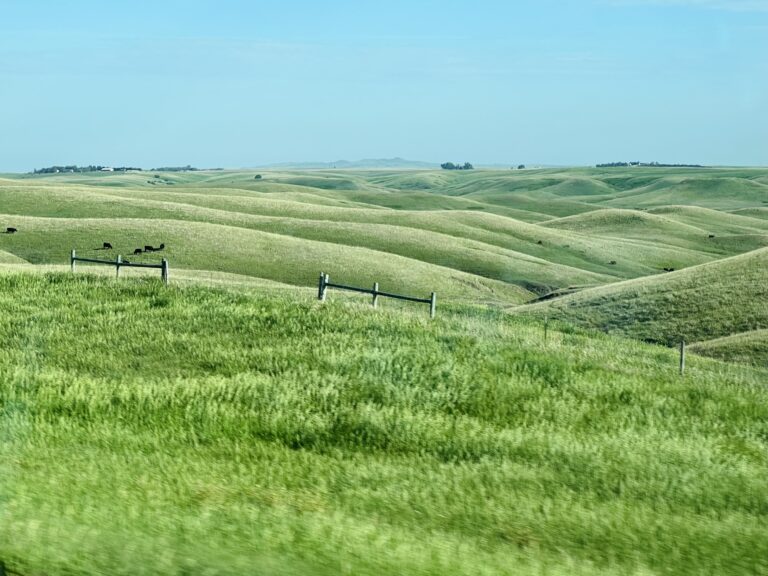
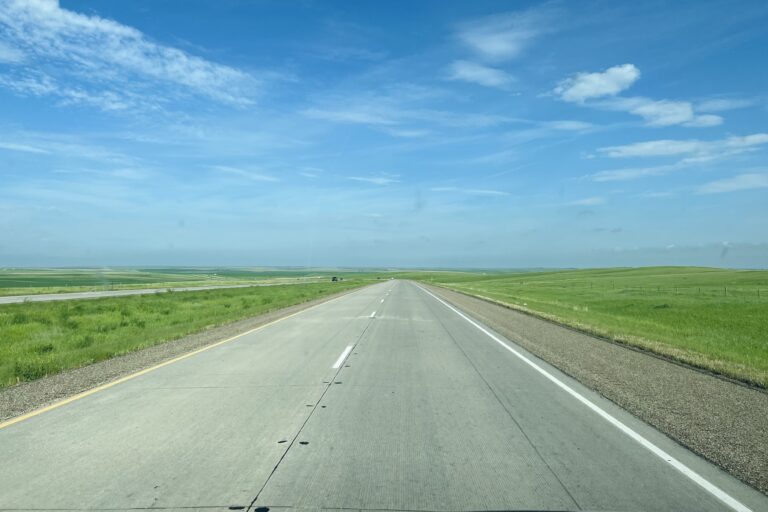
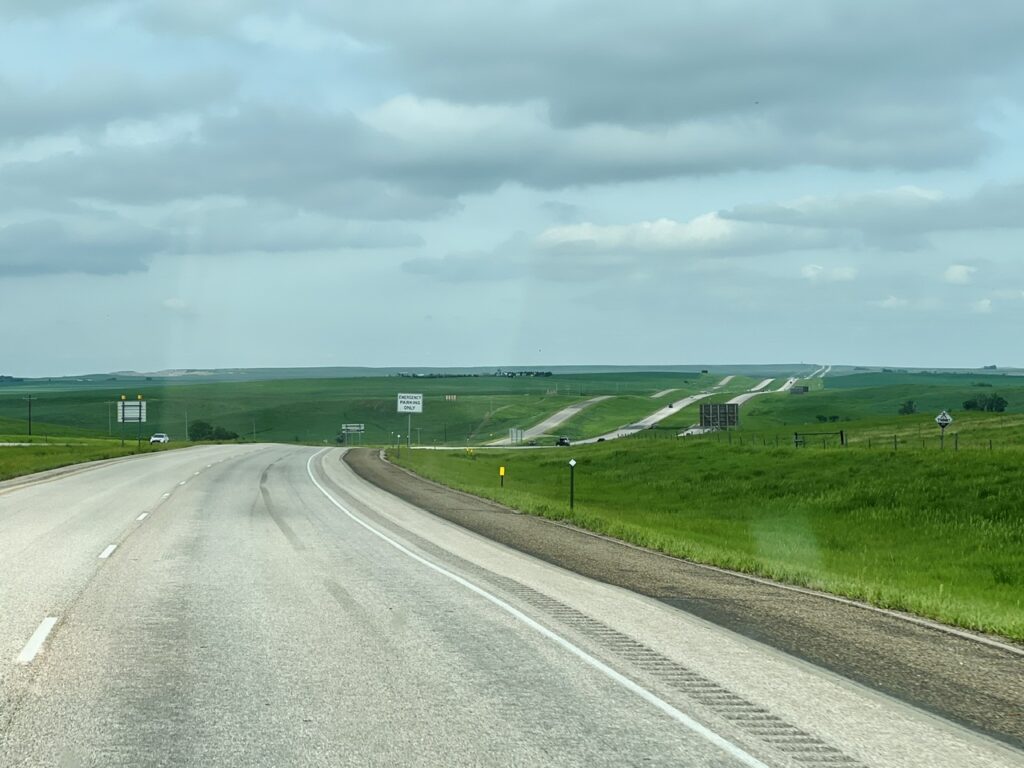
Across the bridge, we made a brief stop at Al's Oasis, a strip mall fashioned in the architecture of the Wild West and complete with a saloon and casino. The early morning sun had barely risen, and the souvenir shops and eateries lay silent. It was an intriguing sight, reminiscent of bygone days when cowboys and pioneers roamed these lands, only beset upon a foundation of blacktop and concrete. Ever eager for a picture of her in front of something cool, Diem requested we pause for a few photos. We made great time across the prairies thanks to an 80 MPH speed limit that kept us moving westward. The vast openness of the plains seemed to stretch on forever, and the verdant tall grasses waved in the often intense winds.
The first few days of our journey were a study in controlled chaos, the kind that ensues when trying to find a rhythm between road-trip adventures and the unpredictable needs of four women. How often can you play 'I Spy with my little eye' before the highway becomes a blurry mirage of indistinguishable objects? I had no idea, but I was determined to find out. Yet as the miles rolled on and the landscape morphed from the comfortingly familiar to the thrillingly unknown, a sense of harmony began to assert itself.
We were no longer just a family in a van. We had become nomadic adventurers, traversing the vast expanse of America one mile at a time. It's a peculiar feeling, a blend of exhilaration, trepidation and a strange sense of peace that only an open road can provide. And somehow, within this grand scheme, the pesky little seed that audaciously claimed residency in my brain all those months ago began to bloom into something marvelous. The long stretches of road were behind us. It was time to slow down and enjoy the moment, one sight at a time.
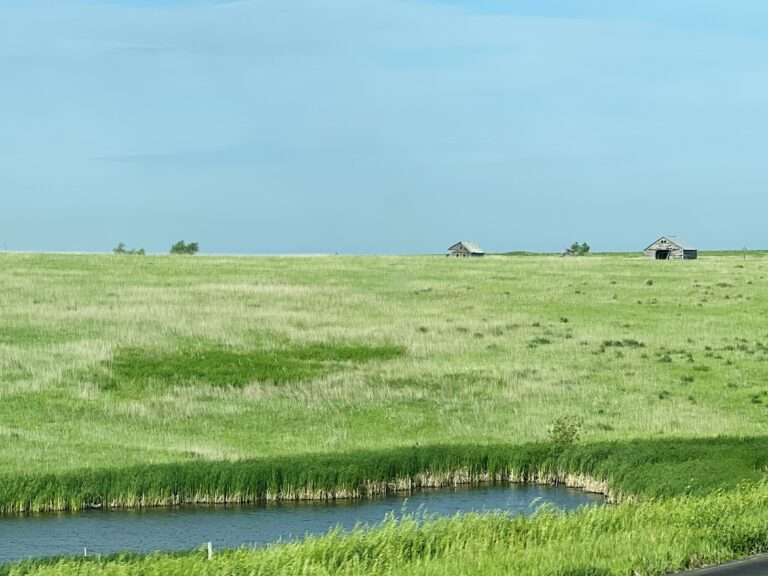
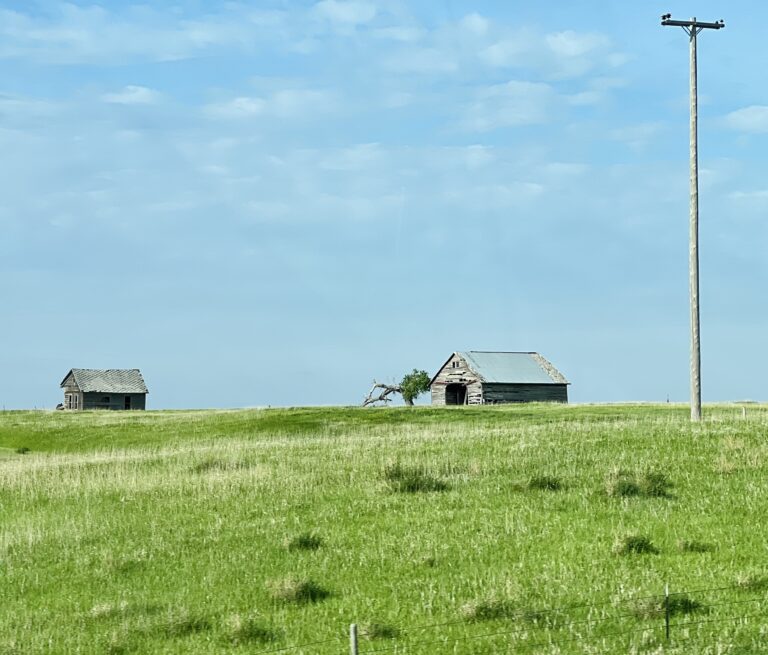
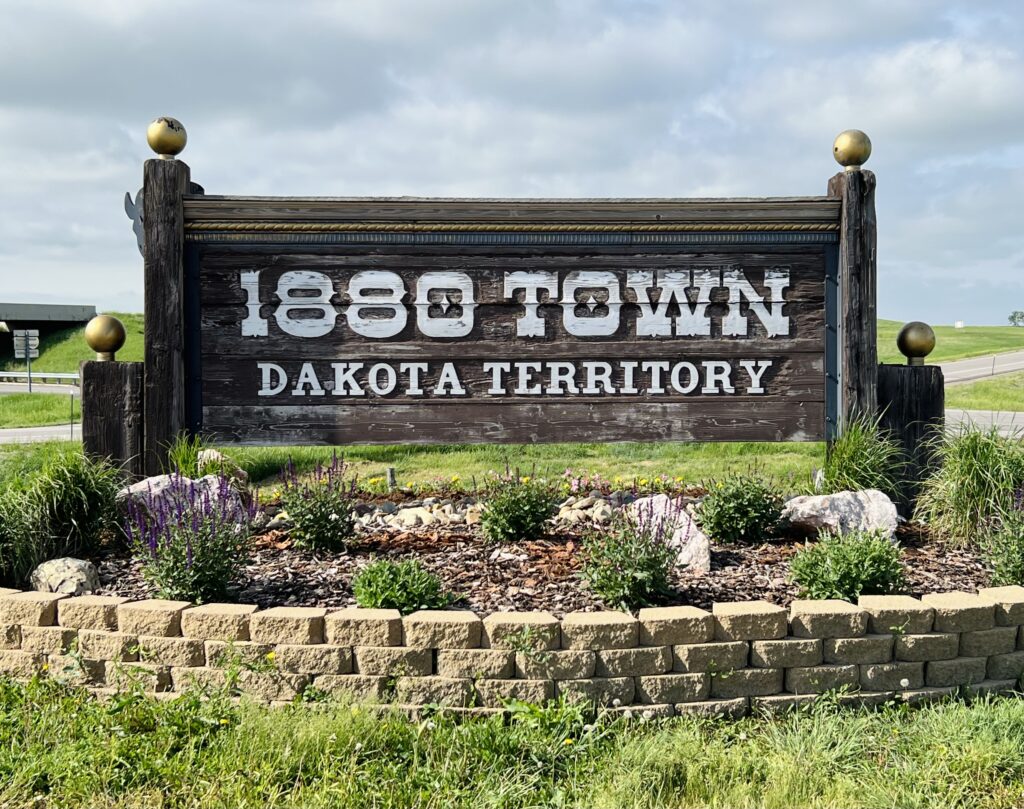
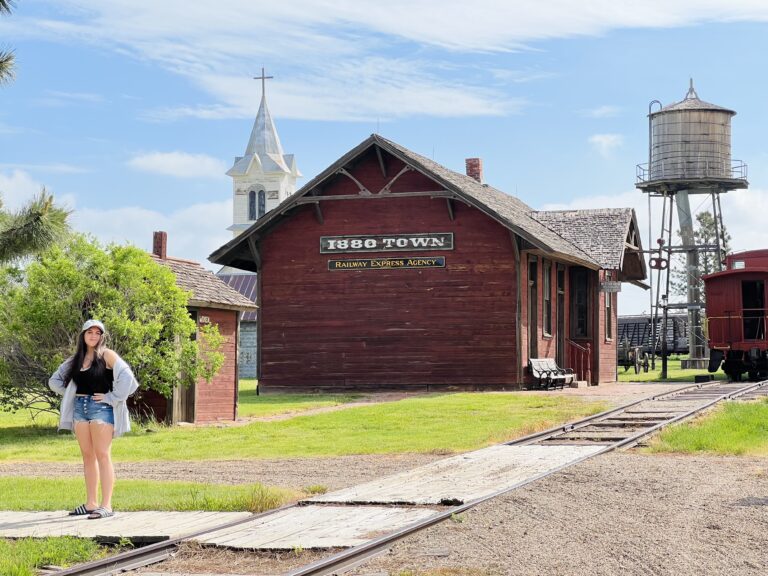
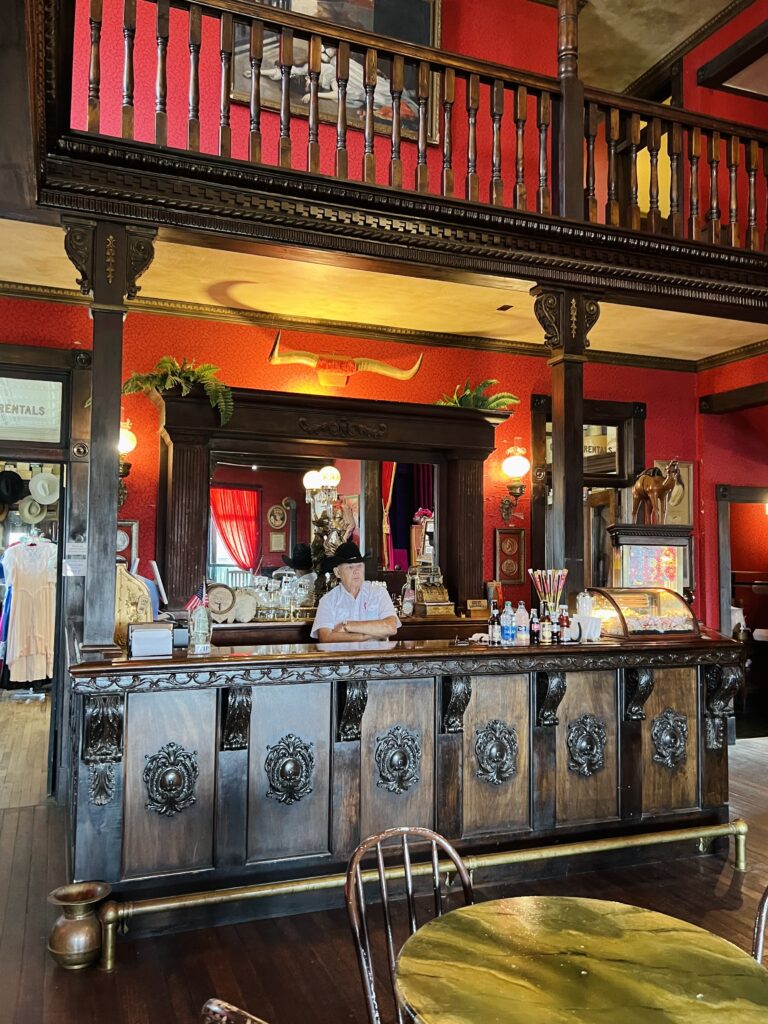
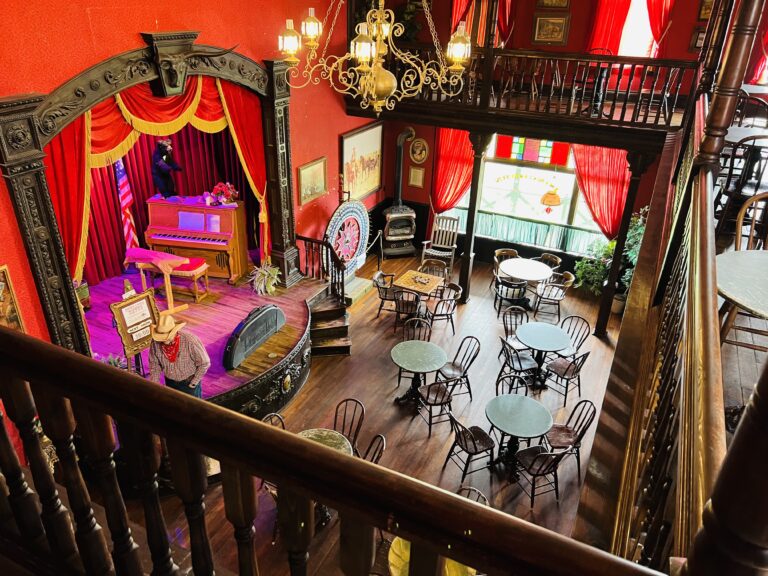
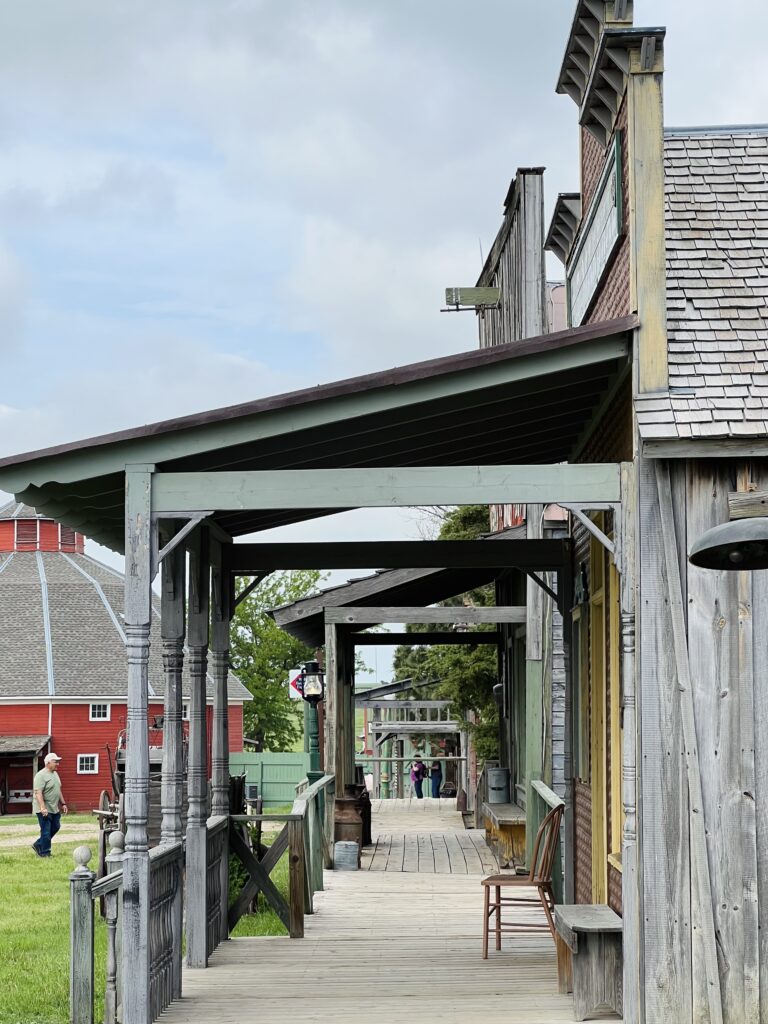
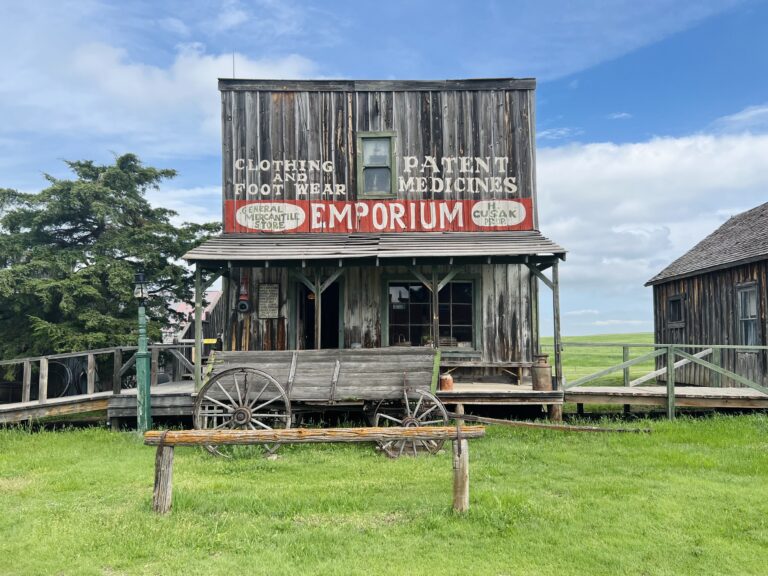
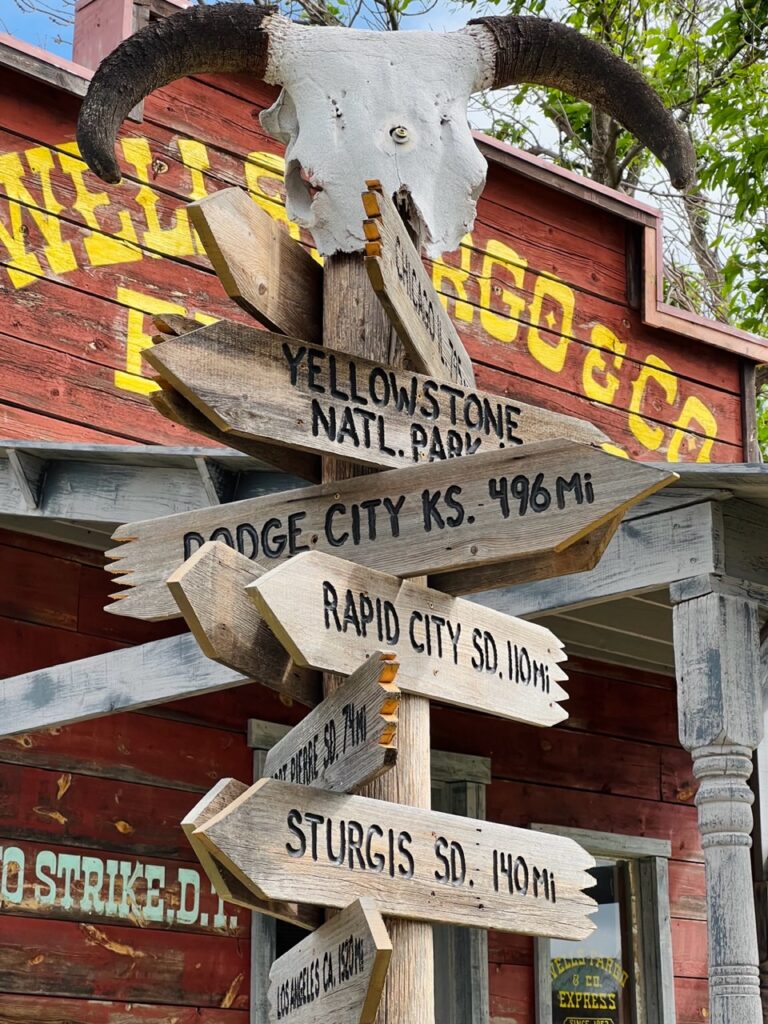
Our first destination took us back to the days of the Dakota Territory, in a rustic sprawl known as 1880 Town. Frozen in time, this genuine frontier town held a certain charm. It was like stepping onto the set of a classic Western film. Having been used in movies like "Dances With Wolves" and television shows like "Gunsmoke," the town was now preserved as a tourist destination. We found a place to park in the dusty lot, the entire camp surrounded by open plains. The museum and gift shop stood tall, an interesting round red building at the entrance to the park.
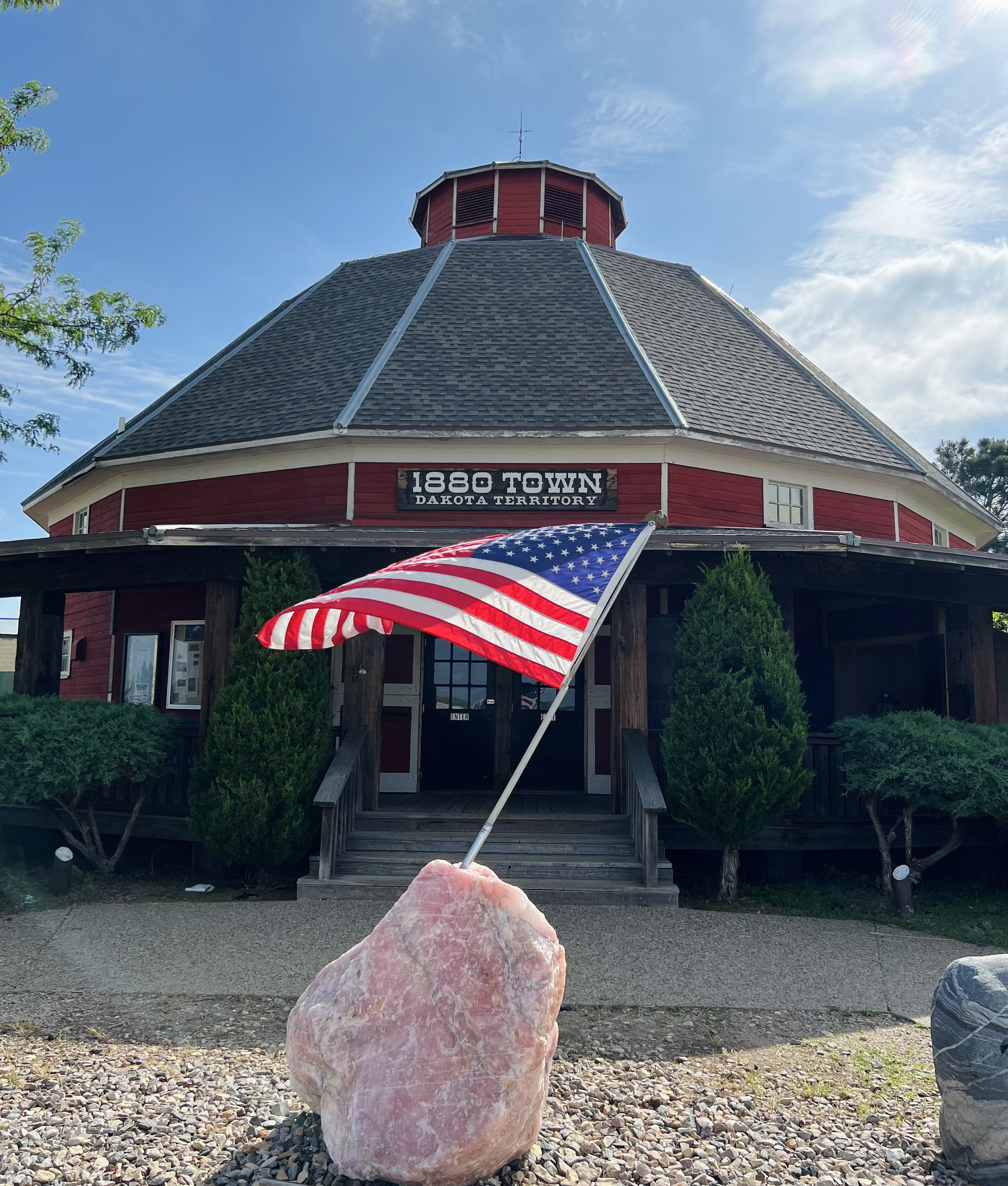
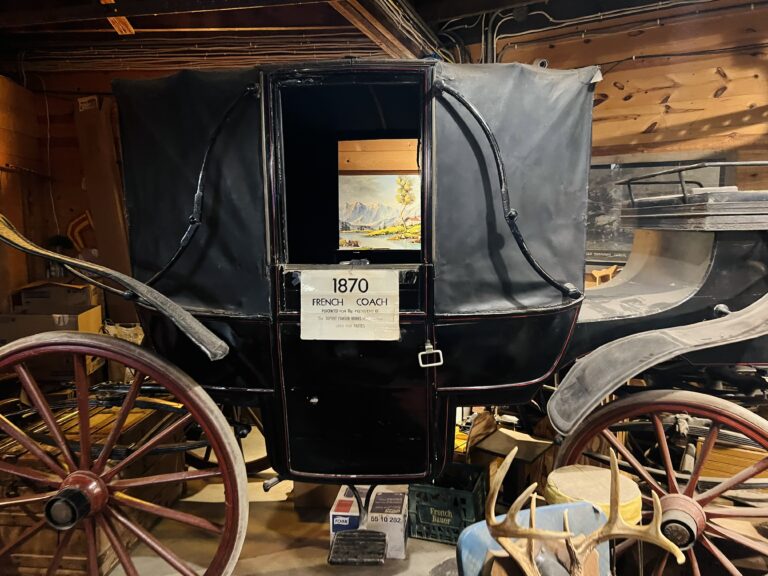
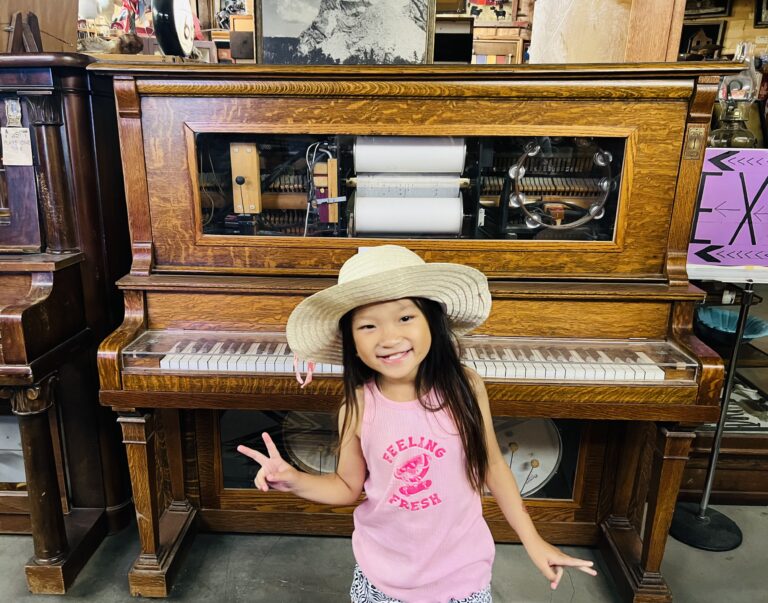
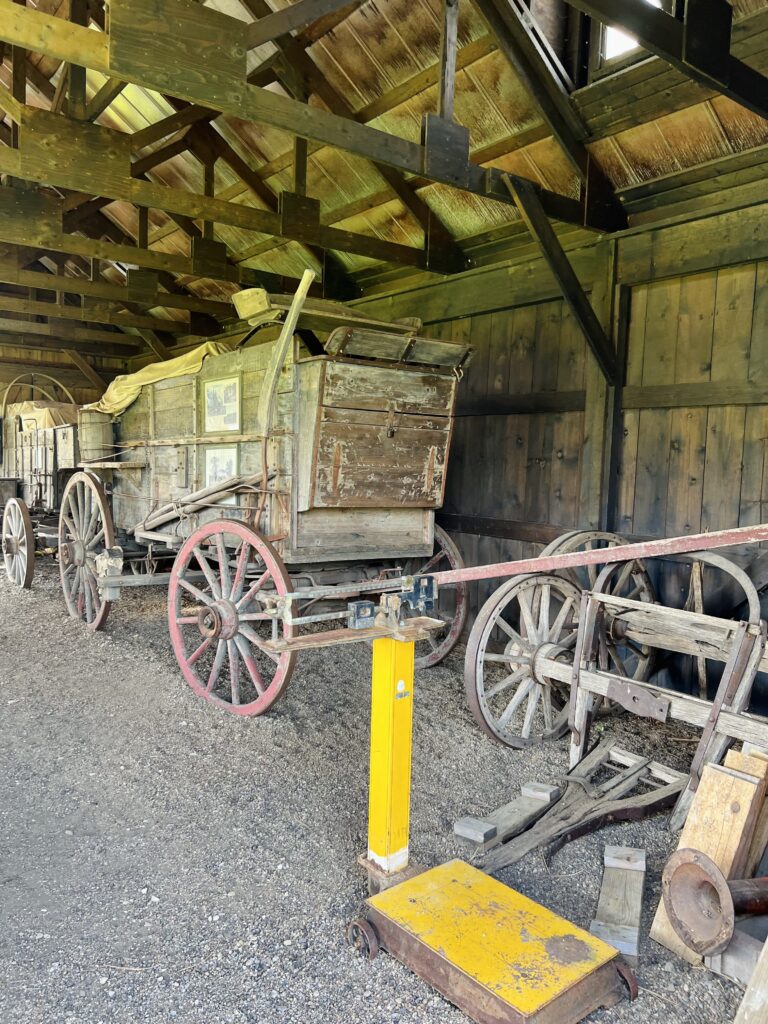
As we explored the museum, we encountered relics of the past such as a French Coach, Player Pianos, saddles and other artifacts from the age of the Cowboy. We perused the souvenirs and checked out the museum for a time, and I headed to the ticket booth to purchase entrance to the town. I struck up a conversation with the retired couple who were running the museum and ticket booth. They hailed from Texas and set out on a fascinating post-retirement journey. They sold their home, bought an RV and have been wandering the country, taking seasonal jobs along the way. From Wyoming ranches to this authentic frontier town, they embraced the lifestyle of septuagenarian gypsies. Their adventurous spirit was inspiring. As we talked to each other in that friendly, known-you-forever way that only Americans can, I pointed out on their map of visitors that some of our party were from Vietnam. Only three had ever been here from Vietnam, and we placed a pin for our crew, the second to-ever visit from Da Nang.
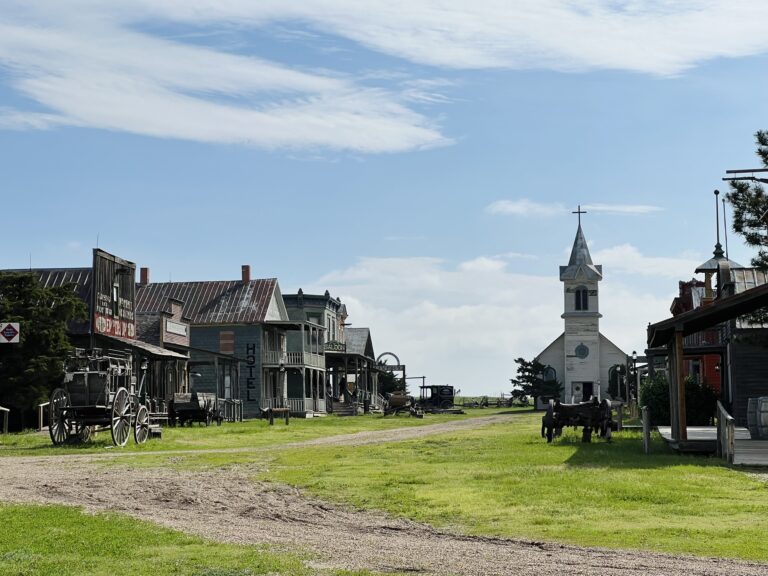
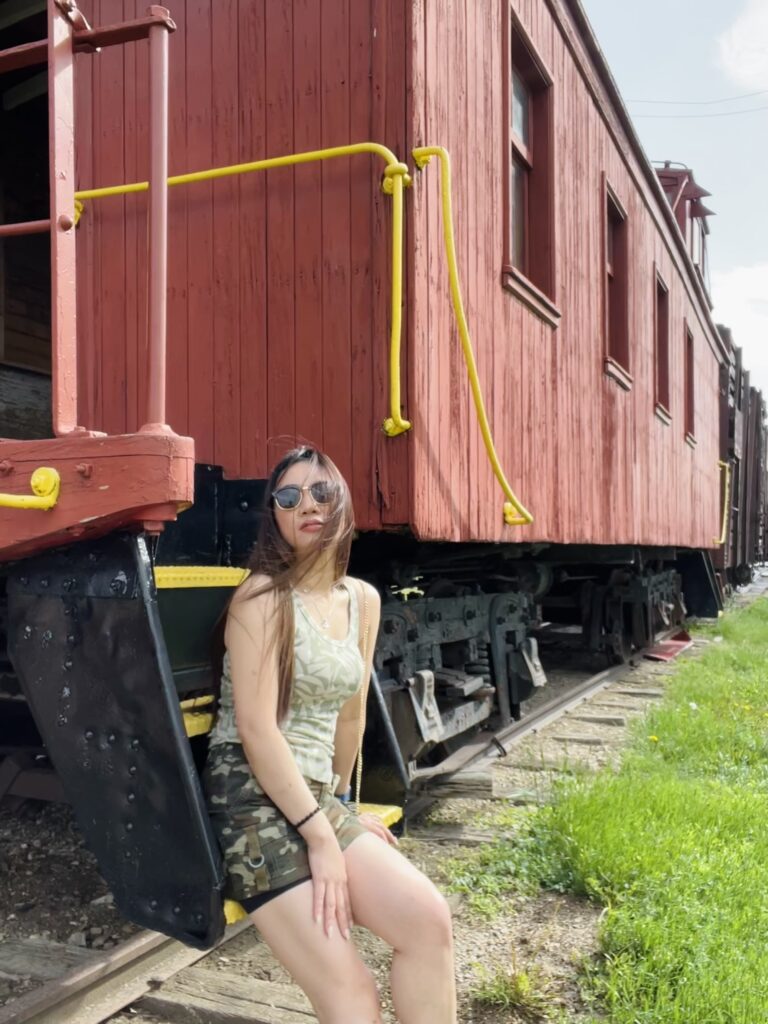
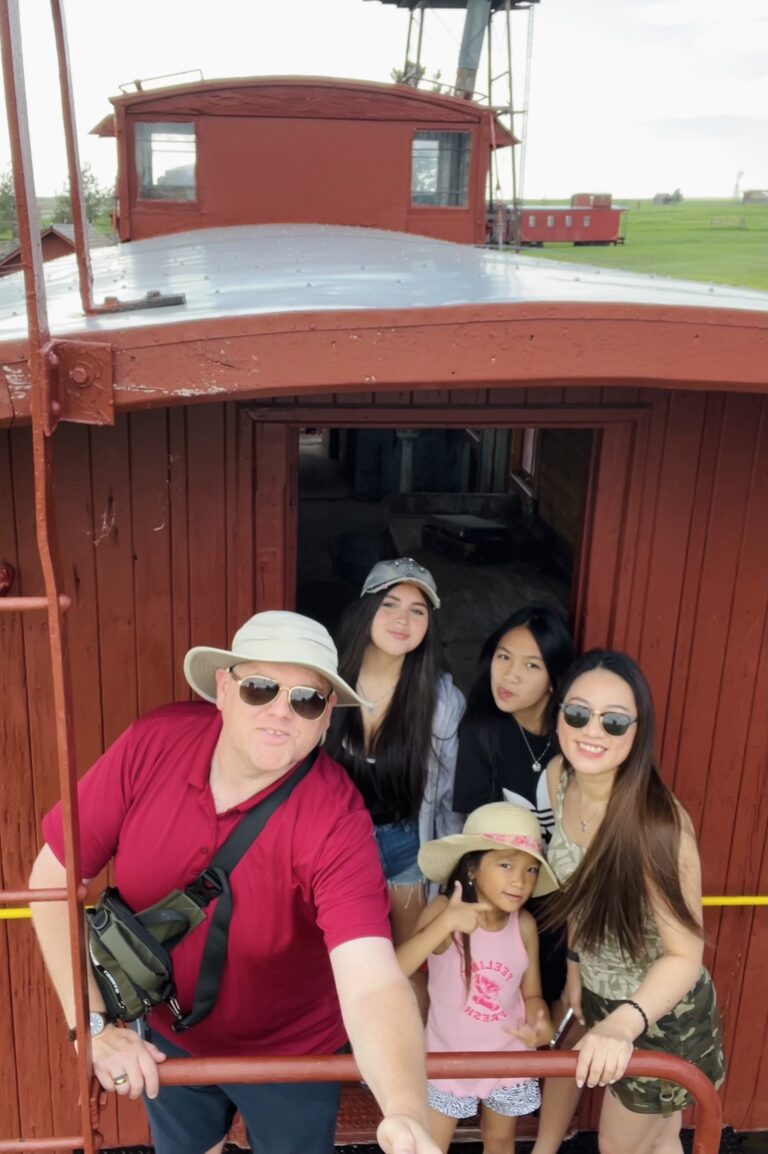
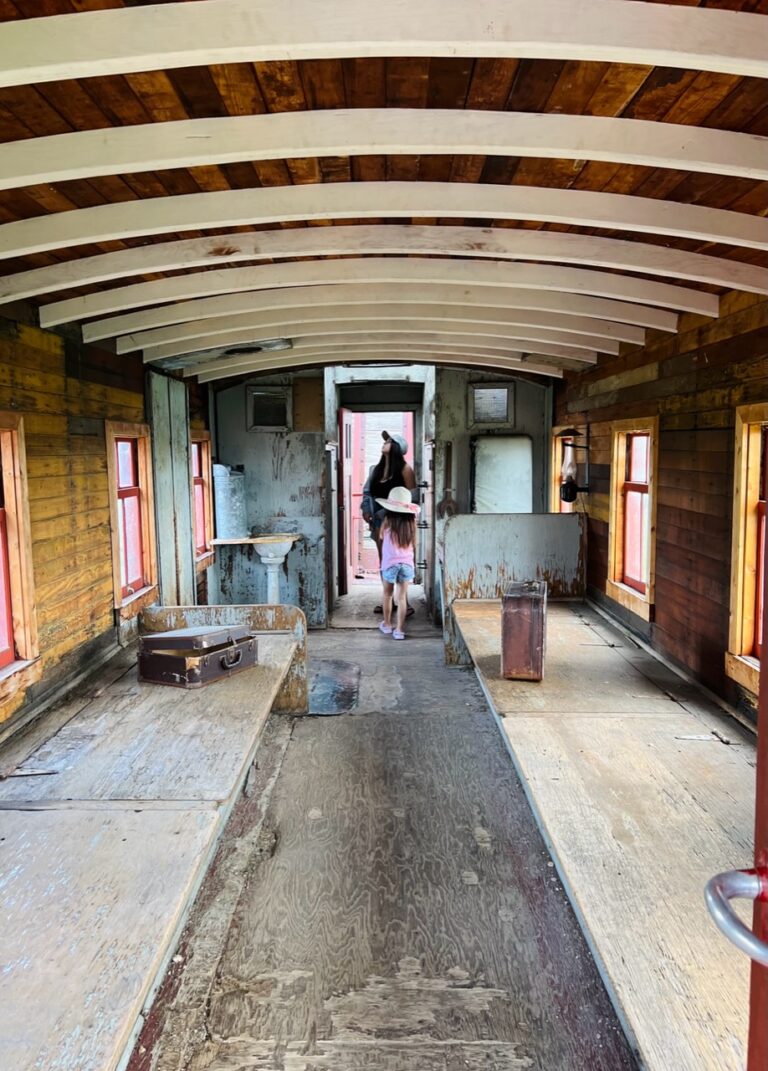
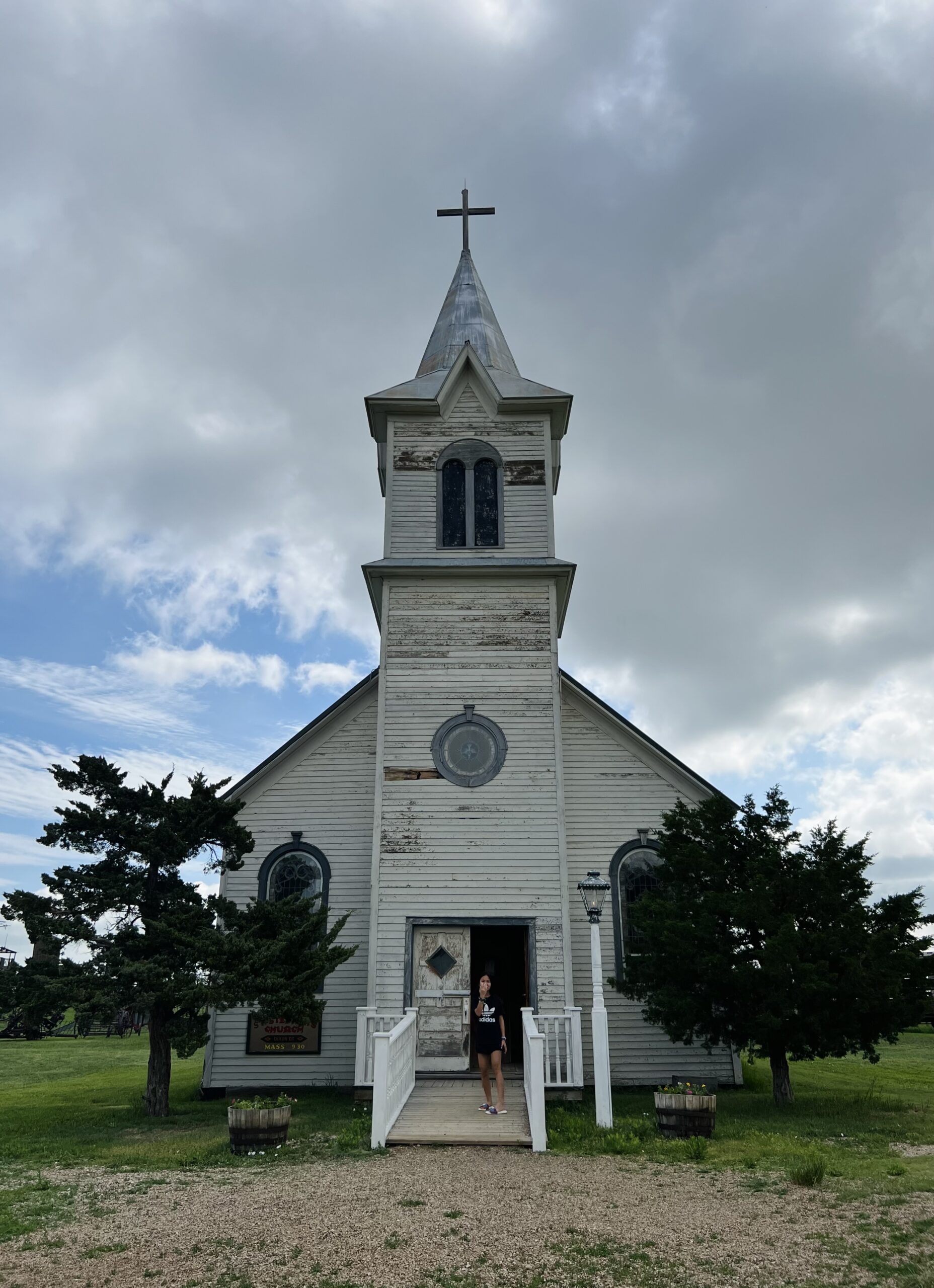
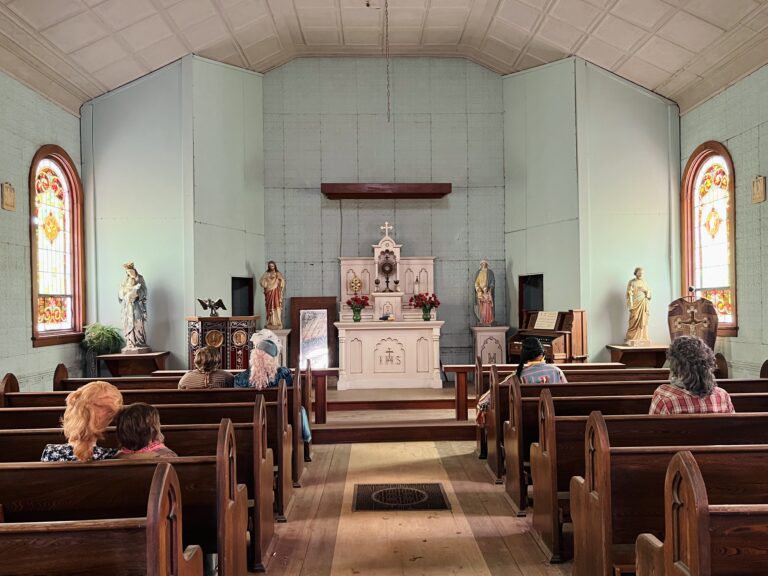
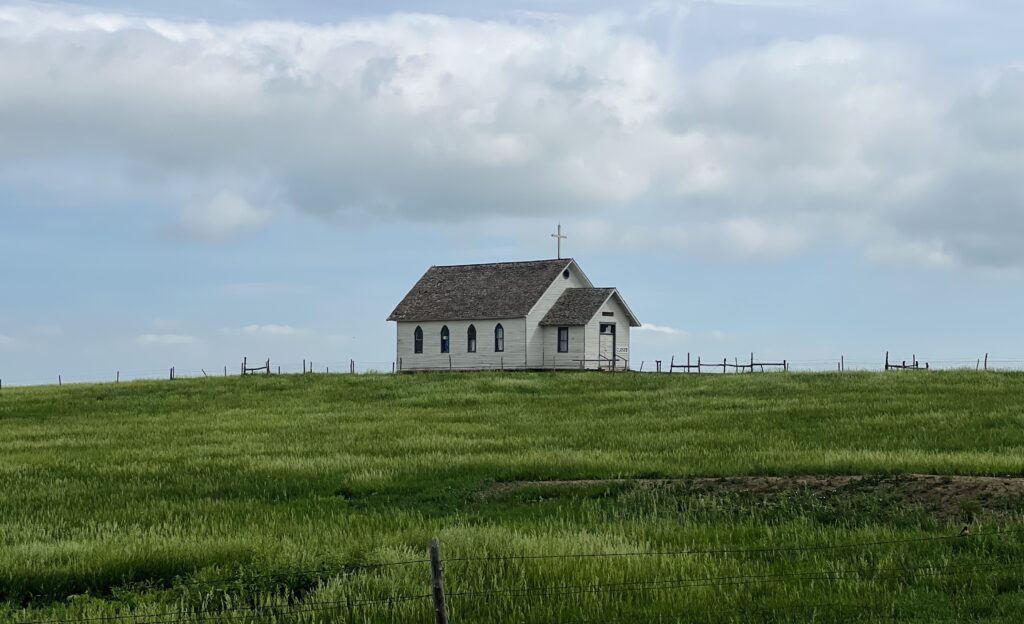
After purchasing our tickets, we went through the door and into the bright prairie town from the dark museum. As the bright light's initial blindness abated, the scene was filled with a weathered train, a couple of rustic churches, a lively saloon and a rugged jailhouse. One church particularly caught my eye as it sat amongst the tall grasses on the hill. I was instantly transported to a hundred scenes from a thousand movies. You could film an entire series here and never run out of fresh scenes. There was so much imagination and stories around every corner. We spent much of the morning exploring this wonderful capsule of a former era.
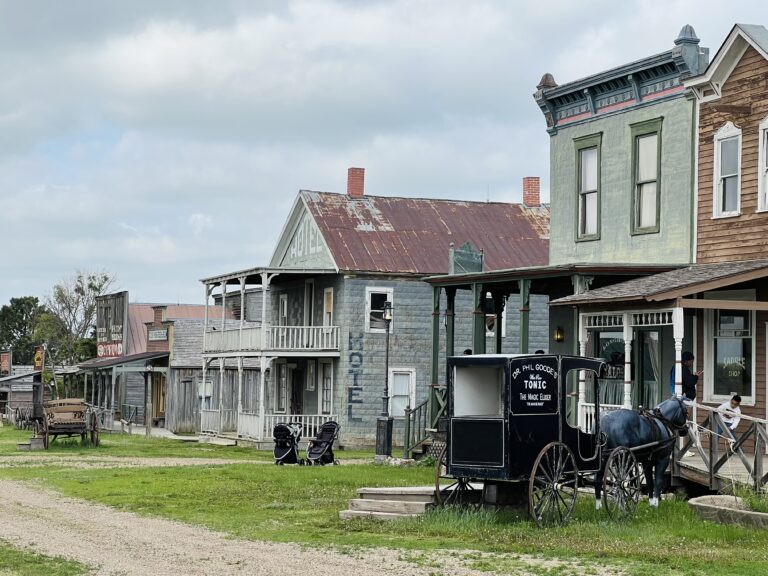
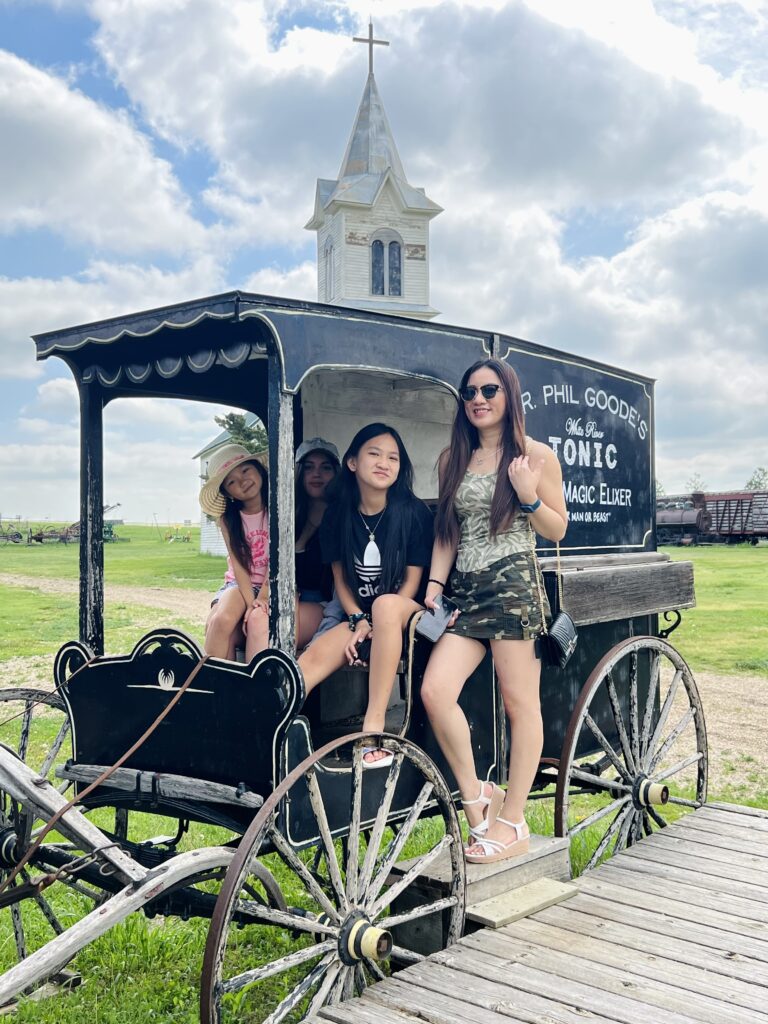
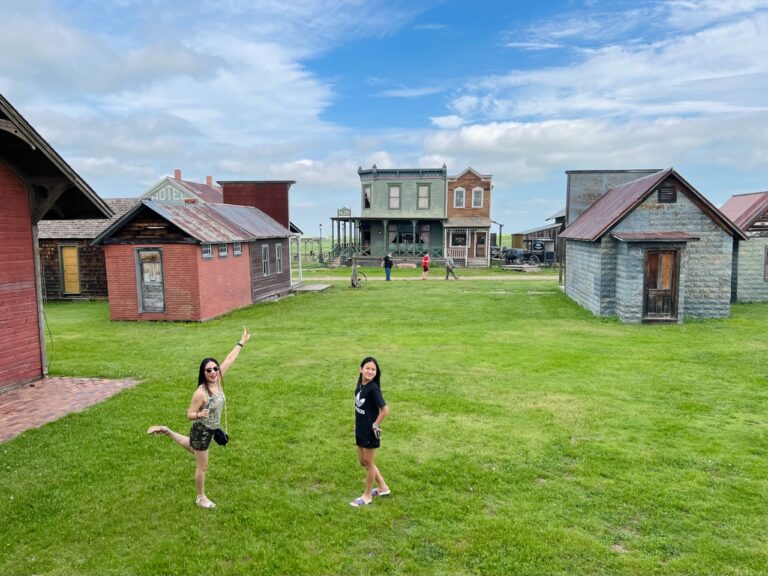
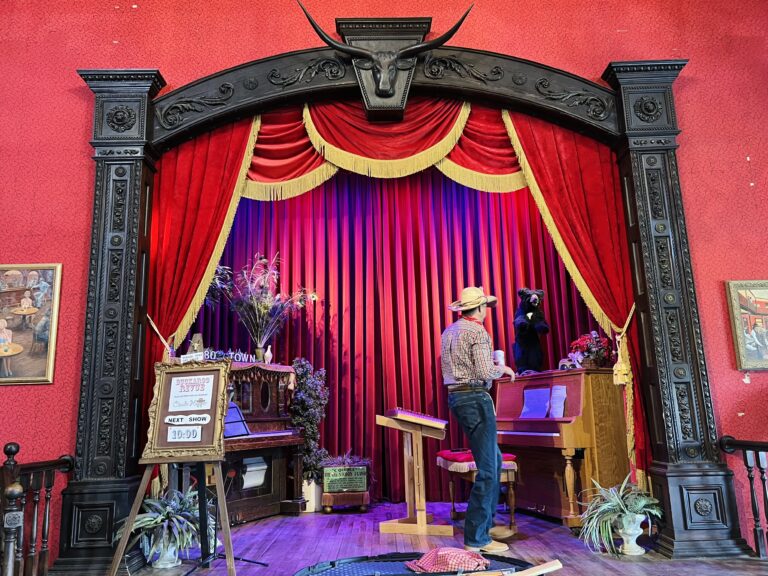
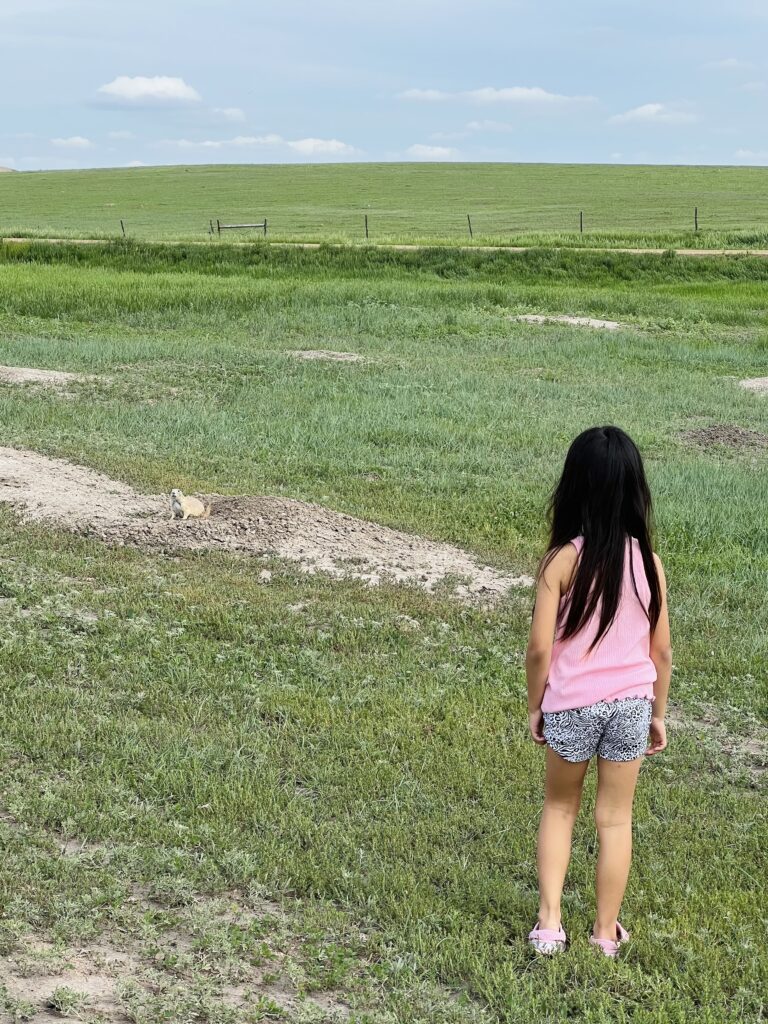
Continuing our westward march, we reached the western border of the Great Plains. Here we spotted a charming creature of prairie lore, the playful Prairie Dogs. I had read about these cute little fellas for years, and finally I could witness them in their natural habitat. We pulled off at a small trading post on the prairie to look closer. Jennie, our youngest adventurer, couldn't resist the temptation to coax one out for a playful interaction. Alas, the shy creatures kept their distance, just out of reach. The prairie was dotted with their burrows amidst the lush green landscape.
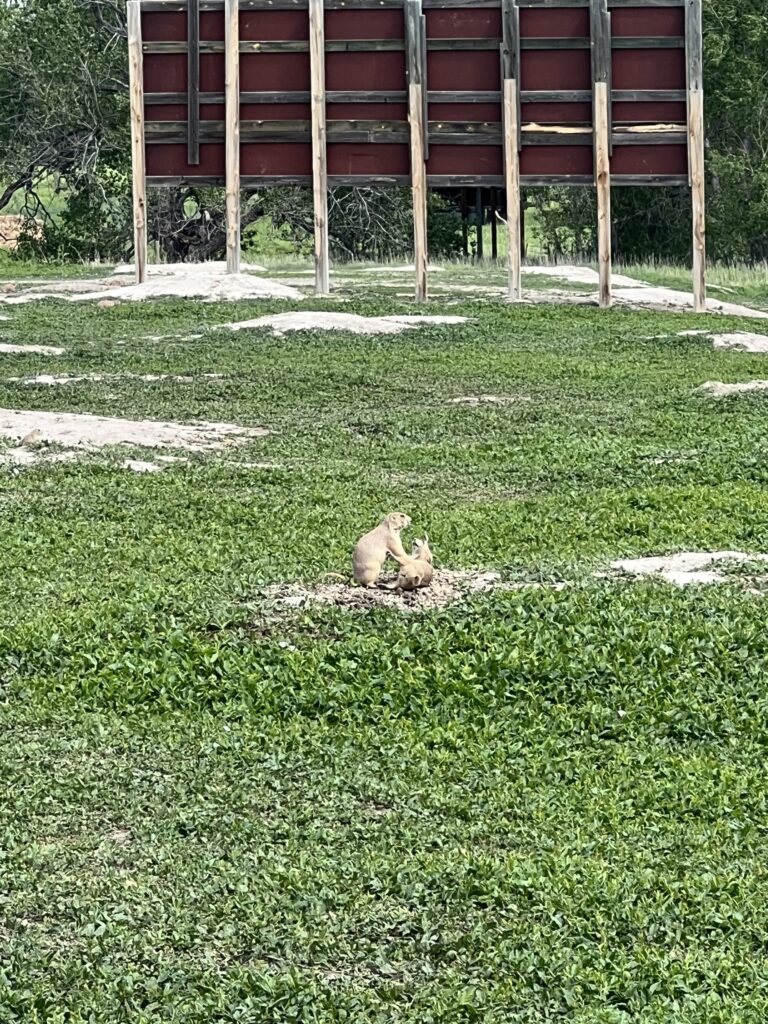
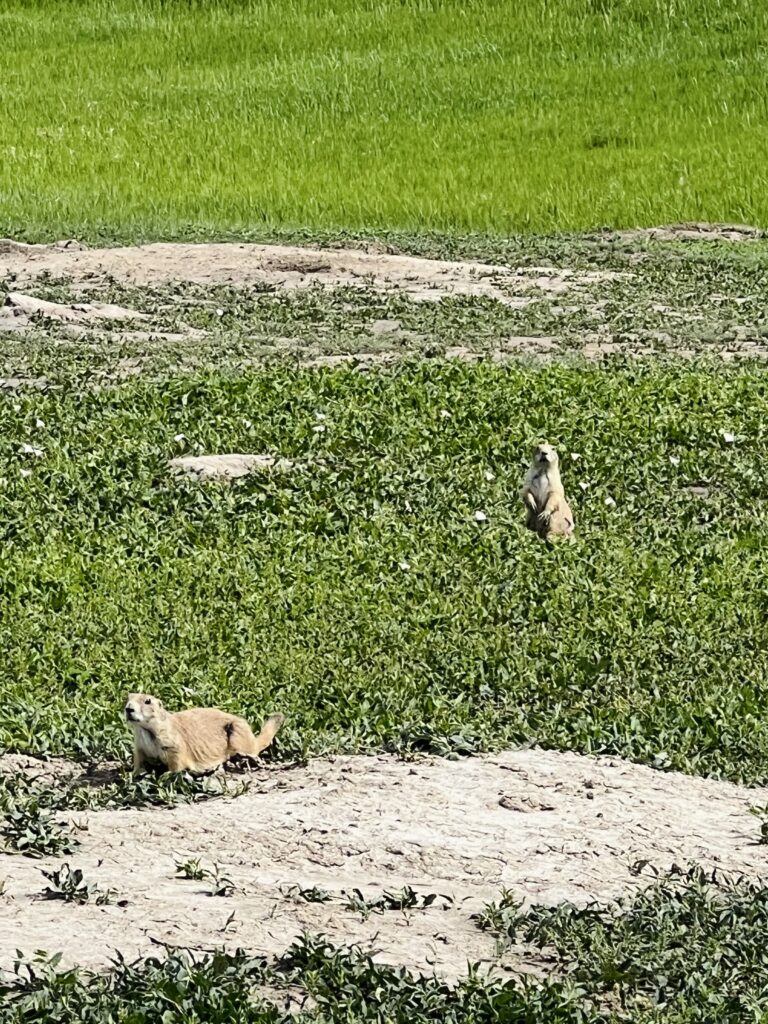
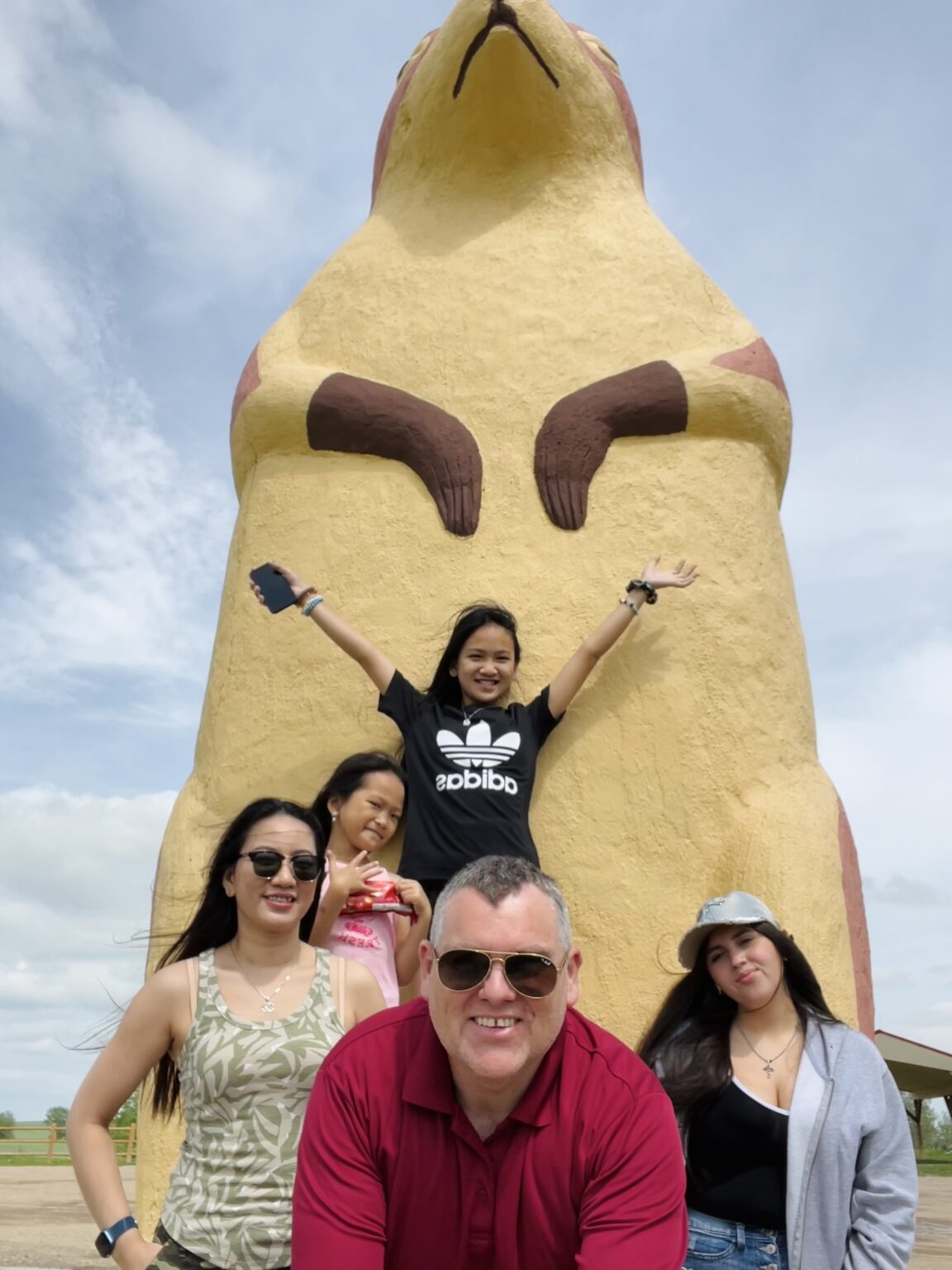
I recalled reading about the expedition of Lewis and Clark in "Undaunted Courage" and was intrigued to discover that prairie dogs were a favorite delicacy of their party. How times have changed. These little creatures, once viewed as a potential source of sustenance, now brought joy and amusement to travelers crossing the Great Plains. The sight was complete with the world's largest prairie dog, and we mustered under his little arms and took a family selfie.
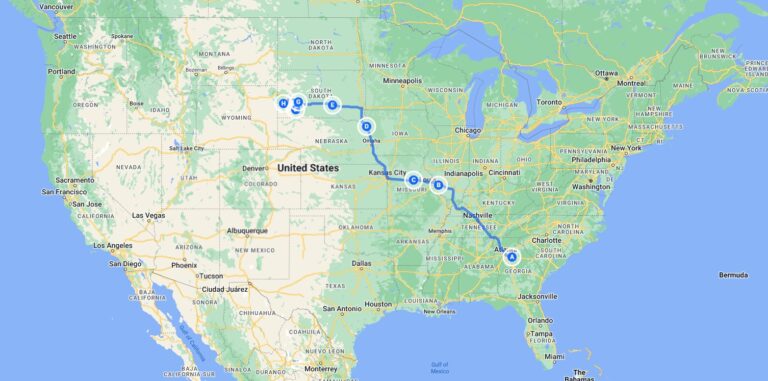
After crossing over three-fourths of South Dakota, we now set out on an adventure underpinned by State Highways. They, not interstates, would be our most dominant route from here to the heartland of Southern California, save for a couple of Interstate runs to cover large distances. Our first state highway would be 240, a highway that plunged us into the heart of South Dakota’s rugged wilderness.
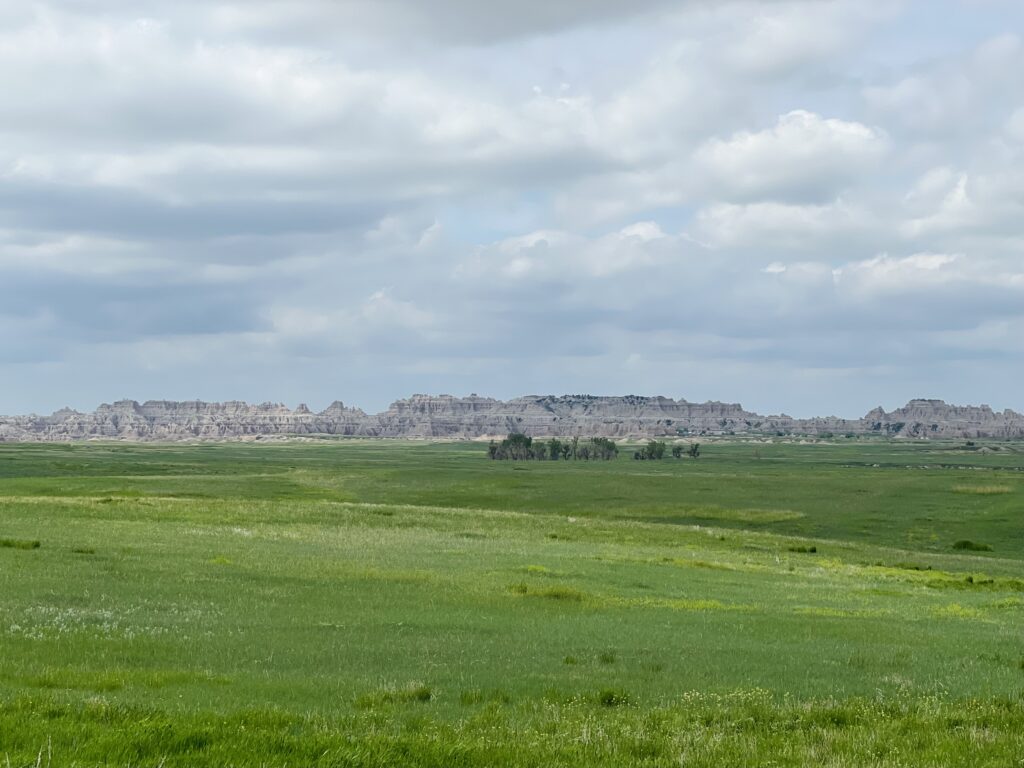
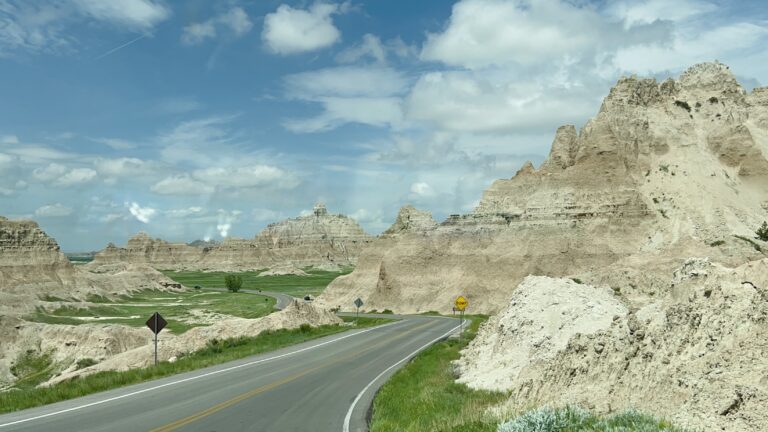
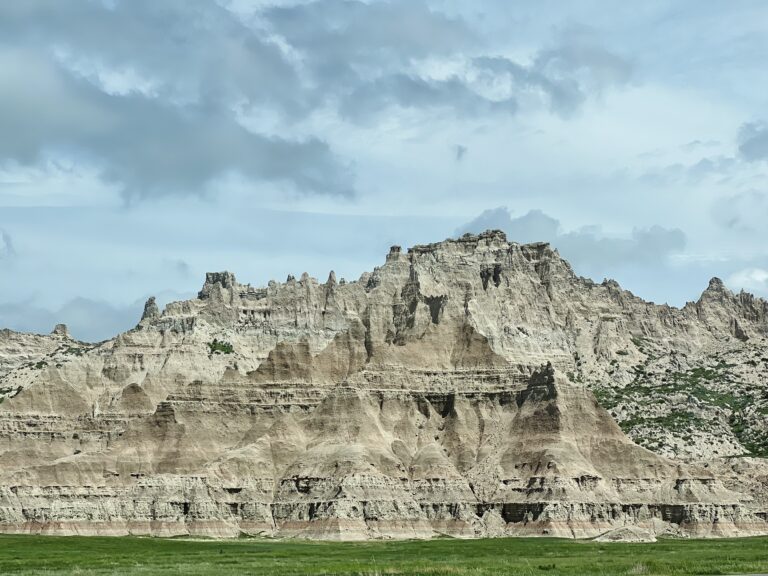
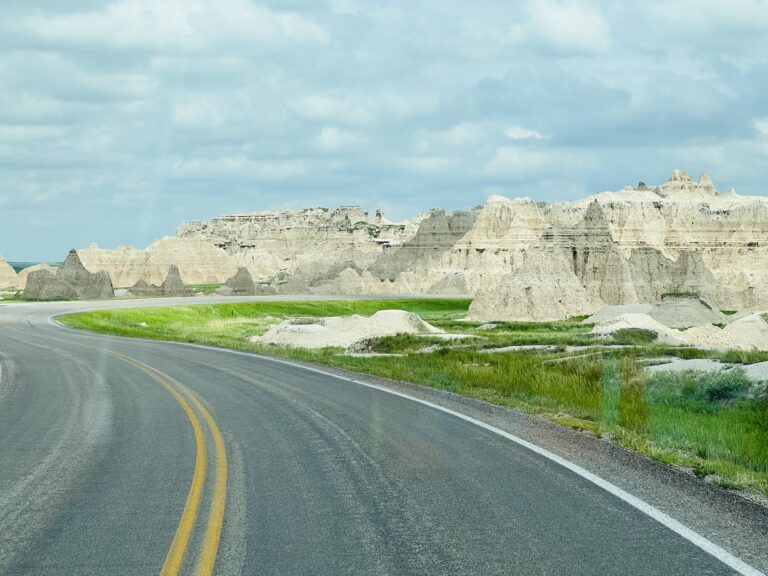
The emerald carpet of rolling prairies seemed endless, but as we motored along, it gave way to a landscape that felt like it had been formed on an alien world, a terra incognita where the pastoral prairies crashed into a landscape of formidable terrain. The Lakota called this ancient place 'Maco Sica', and French fur traders dubbed the region 'les mauvaises terres à traverser,' but no matter who named it, they eerily all translated the same, "Bad Lands." We had reached Badlands National Park.
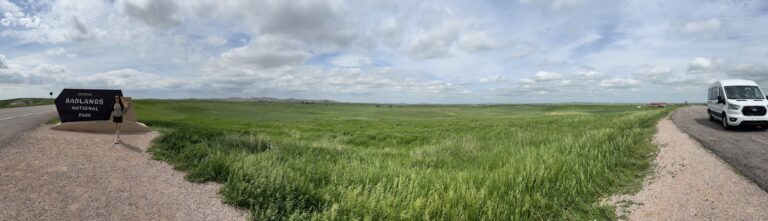
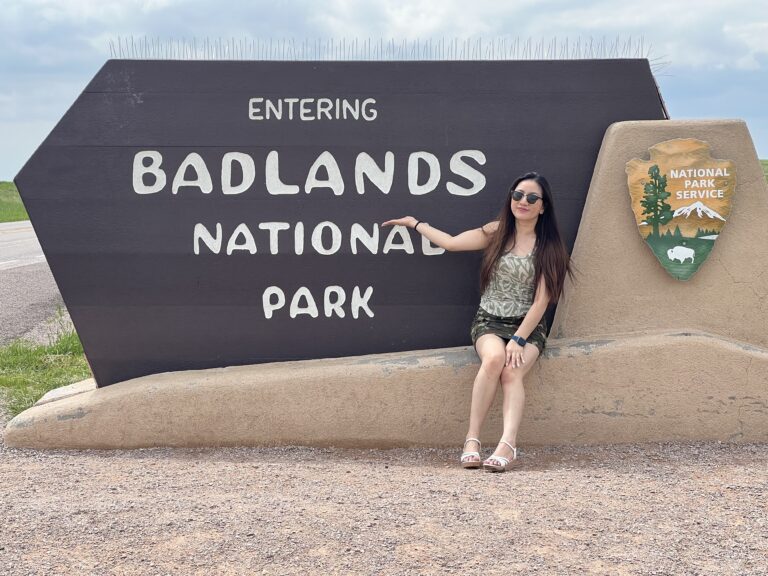
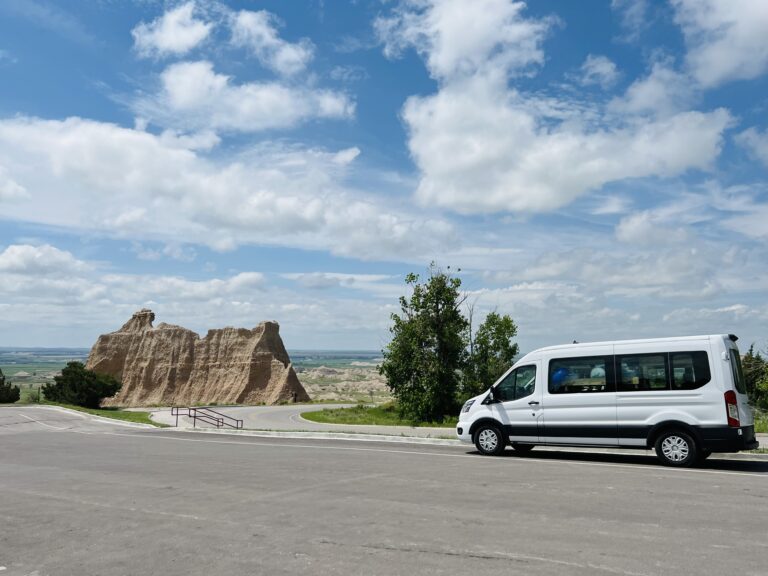
The girls, still satisfied for the moment to rest, stayed in the cool van as Diem and I explored a particularly abundant formation near the entrance sign. It included about a quarter-mile elevated walkway to the prairie's edge. We were in the high prairie, and from here we could see the massive and otherworldly formations separating us from the lower plains in the distance. Like a jigsaw puzzle, the upper prairie jutted in and out of the badlands formations.
These intriguing geological creations we marvel at today have been in the making for millions of years. When you picture the Badlands, those formidable rocky outcrops, remember they weren't always part of the scene. The tale of the Badlands unfurls over tens of millions of years, in which this land transmuted from a vast sea to a lush subtropical forest and eventually into the open savanna we see today.
This dramatic transformation didn't end with the deposit of sedimentary rock layers. Waters streaming from the nearby Black Hills began etching into this sedimentary canvas, chiseling valleys and molding other forms into the landscape. This stage commenced about half a million years ago, shaping the Badlands into the form we witness today. However, it isn't over. The erosion process is still going, consuming the upper prairie at a rate of about an inch per year. Geologists wager that given another 500,000 years, the Badlands will vanish, succumbing entirely to the persistency of erosion, and will ultimately be consumed by the lower prairie.
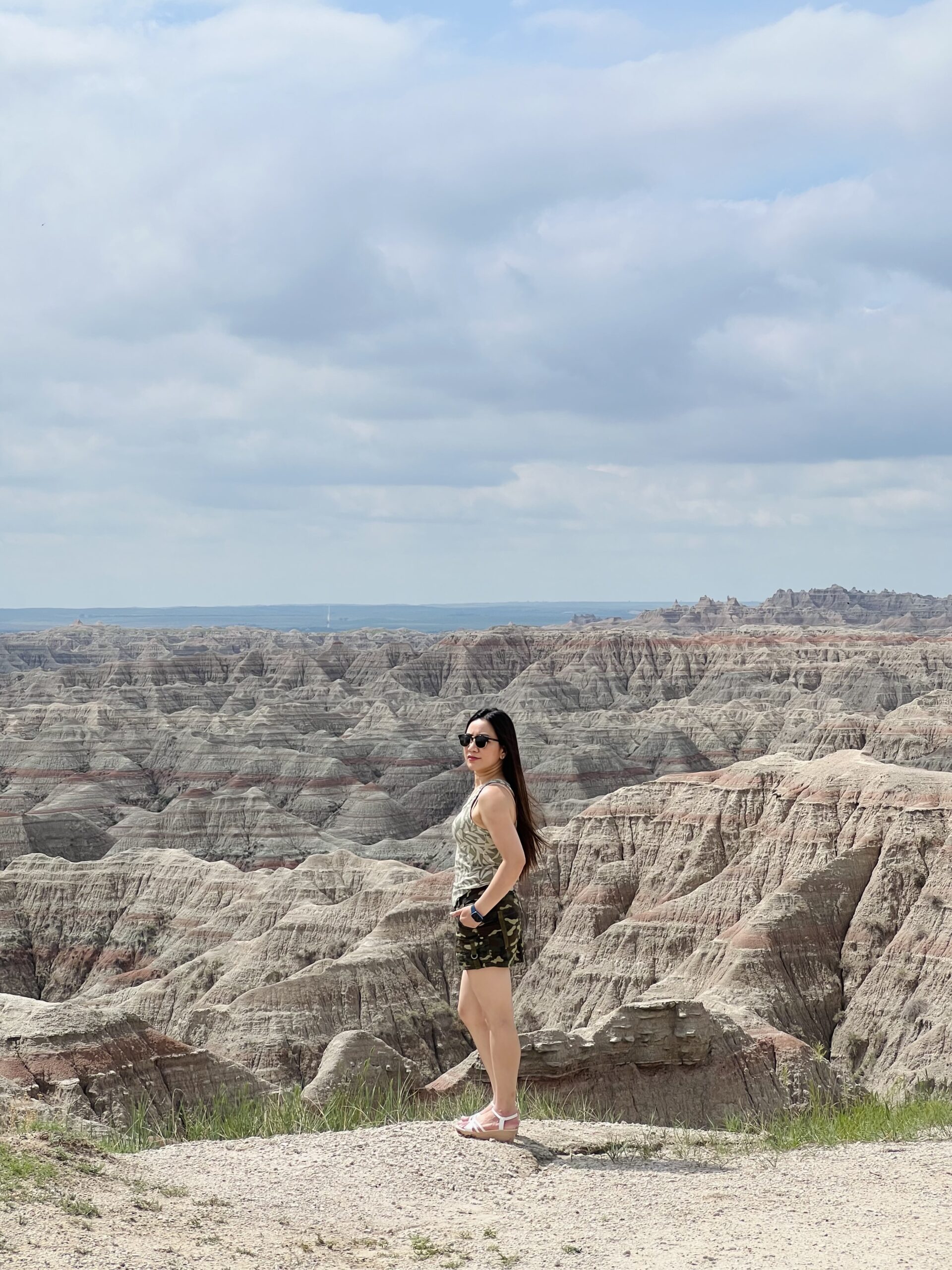
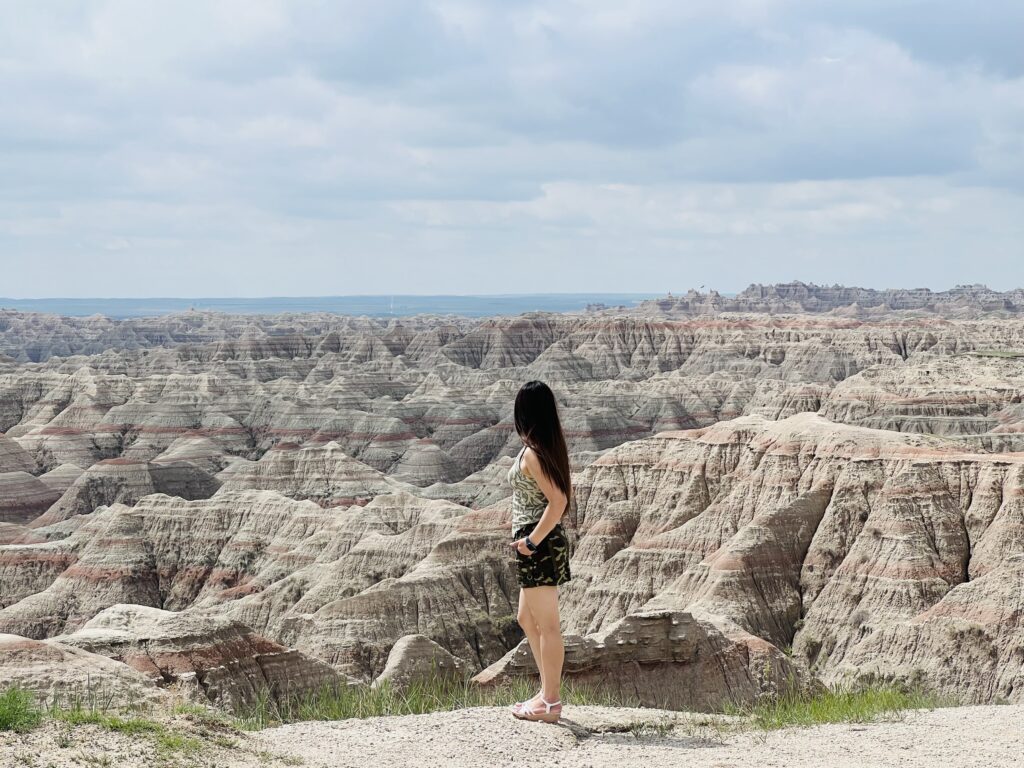
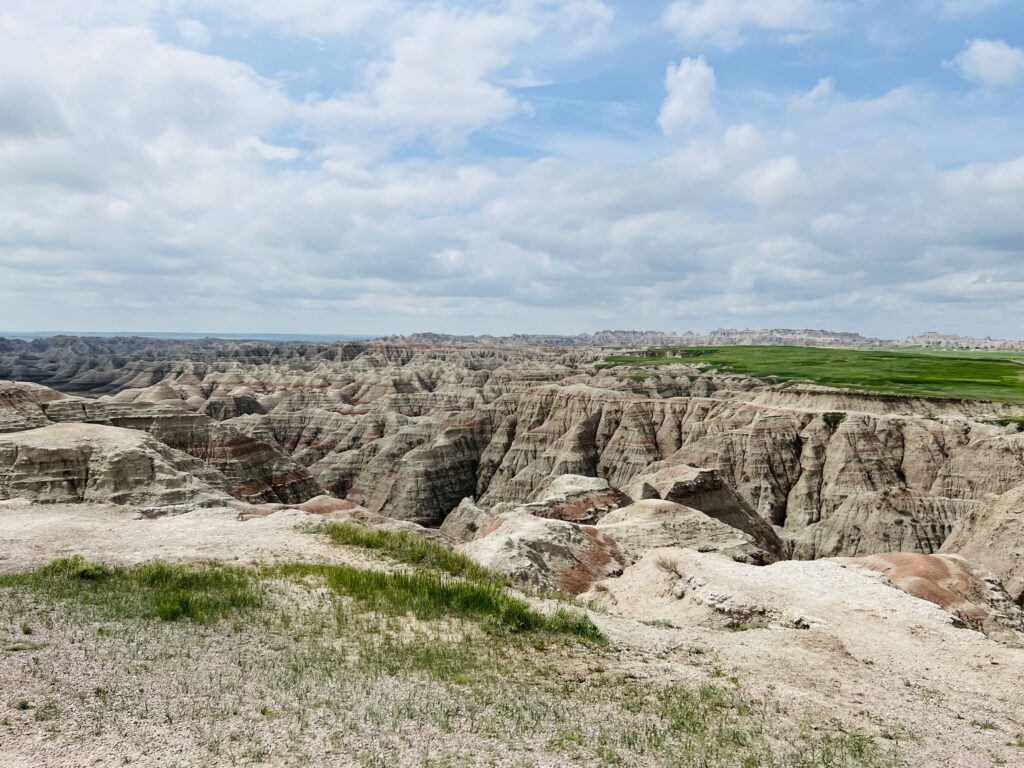
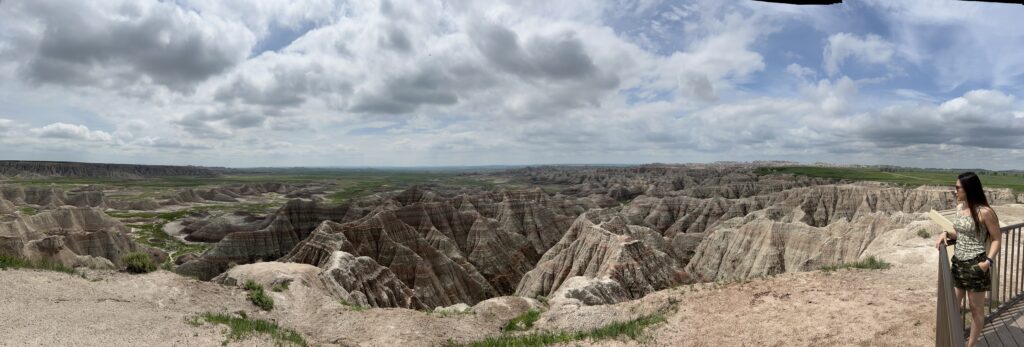
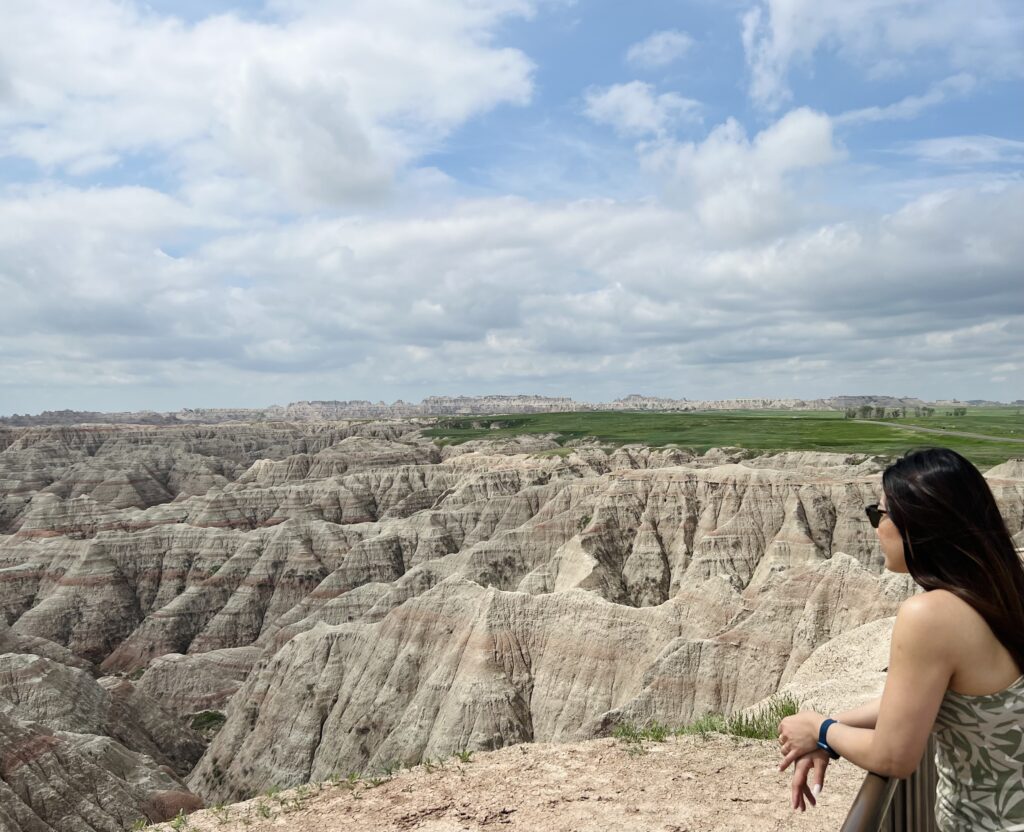
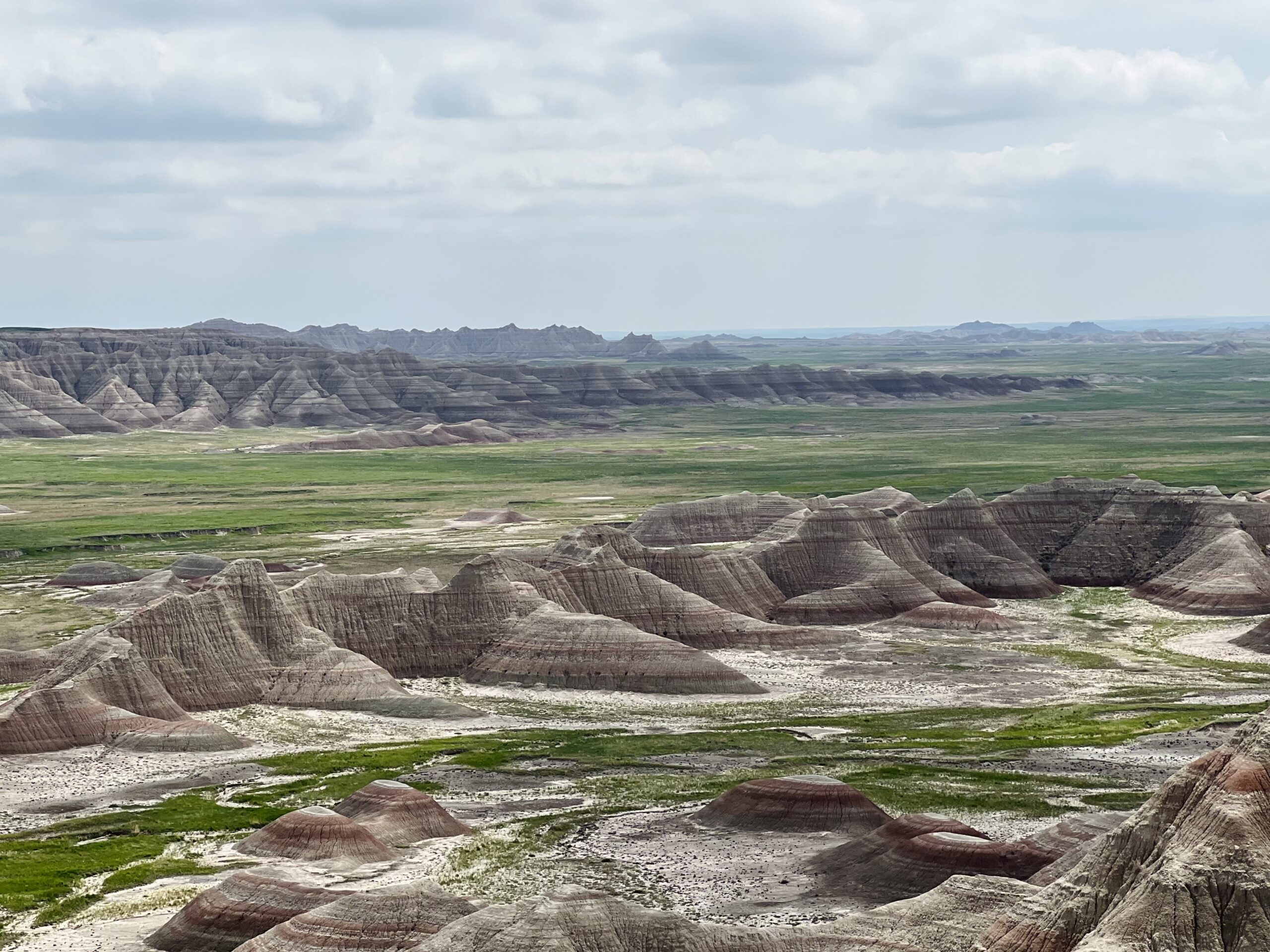
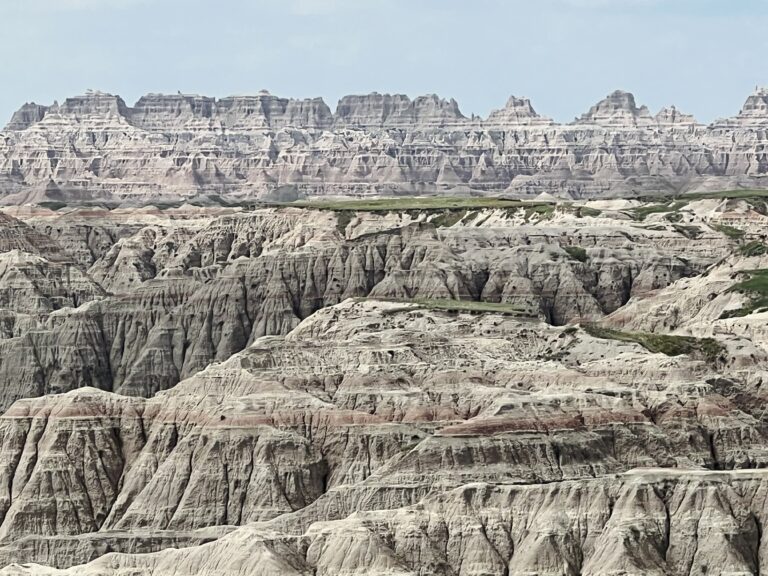
There's something bewitching about the Badlands. Made a national park by an act of Congress in 1978, Badlands is a veritable otherworldly panorama that has inspired awe and bewilderment in equal measure for centuries. We admired the undulating plains punctuated by sharp spires and craggy buttes, and the stark warning signs for resident rattlesnakes. I must inform you that my wife, Diem, is petrified of snakes. When one came up in the yard one summer day, a harmless rat snake, she said in her heavily accented English, "If I see a snake, I will die." Let's hope we don't.
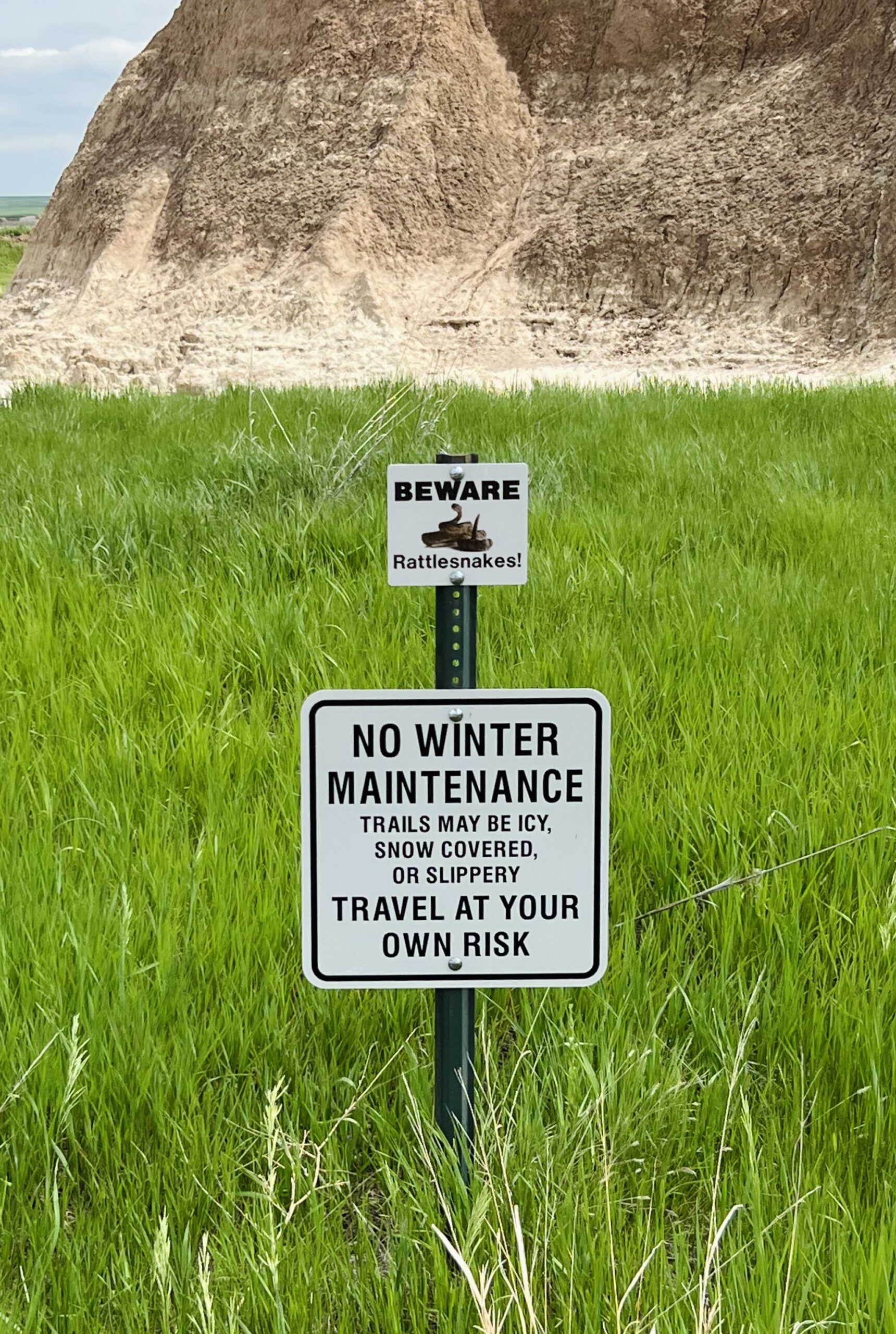
Making our way deeper into the park, we stepped out of the comfort of our vehicle to explore the Badlands up close, posing for photos in front of the endless layers of buttes and spires. The trails invited us into the strange embrace of this alien world. We climbed and marched along the craggy rocks until it was time to continue down the highway. As we continued beyond the trails, snaking our way through the park, we took some time to explore the Ben Reifel Visitor Center. Here we scored some souvenirs. I had begun at Gateway Arch to purchase die-cut stickers, and I intended to continue this trend across all the Parks and Monuments we would visit. I had started brainstorming on a wall map in a wooden frame with the map marked with stickers from each location we visited.
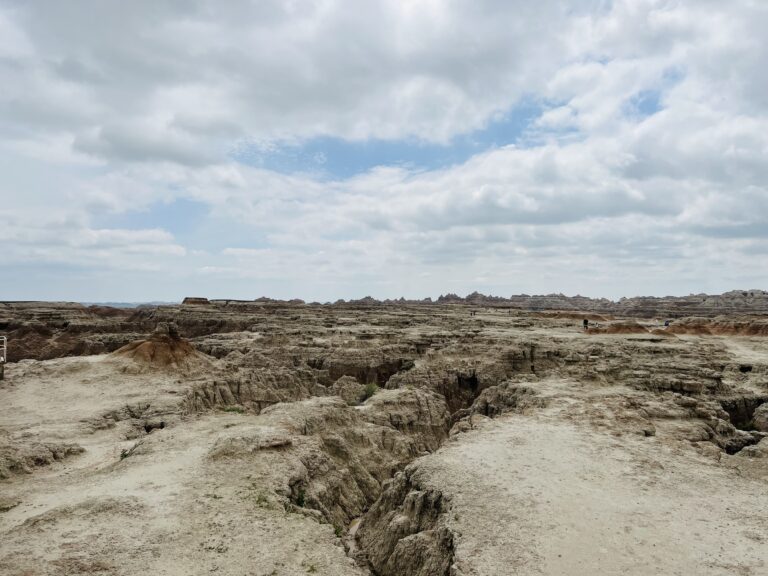
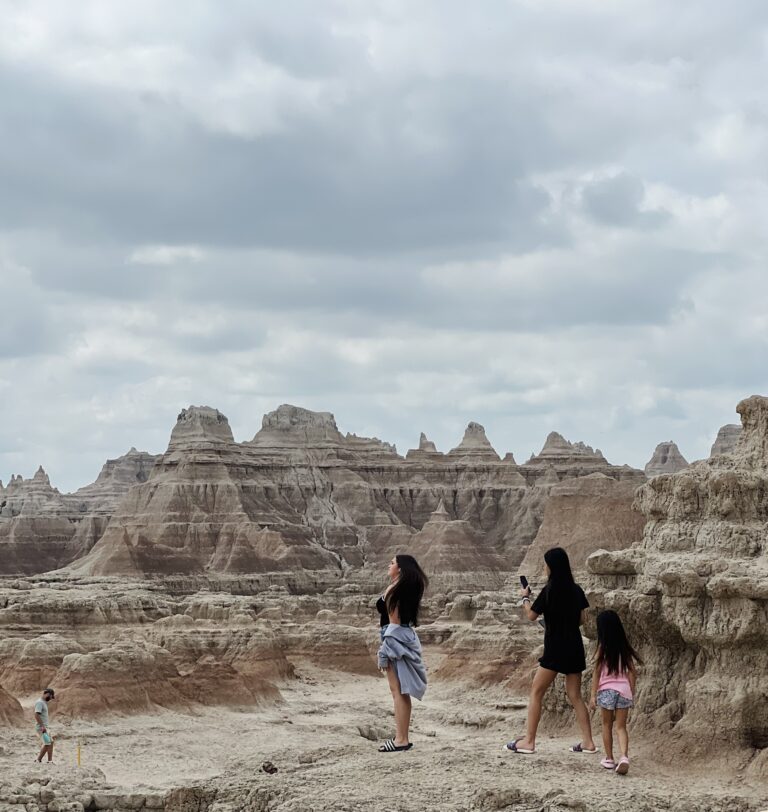
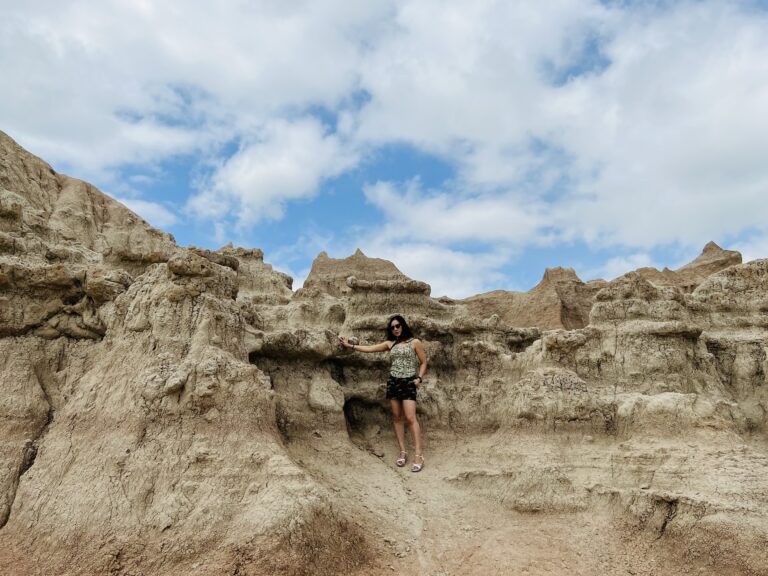
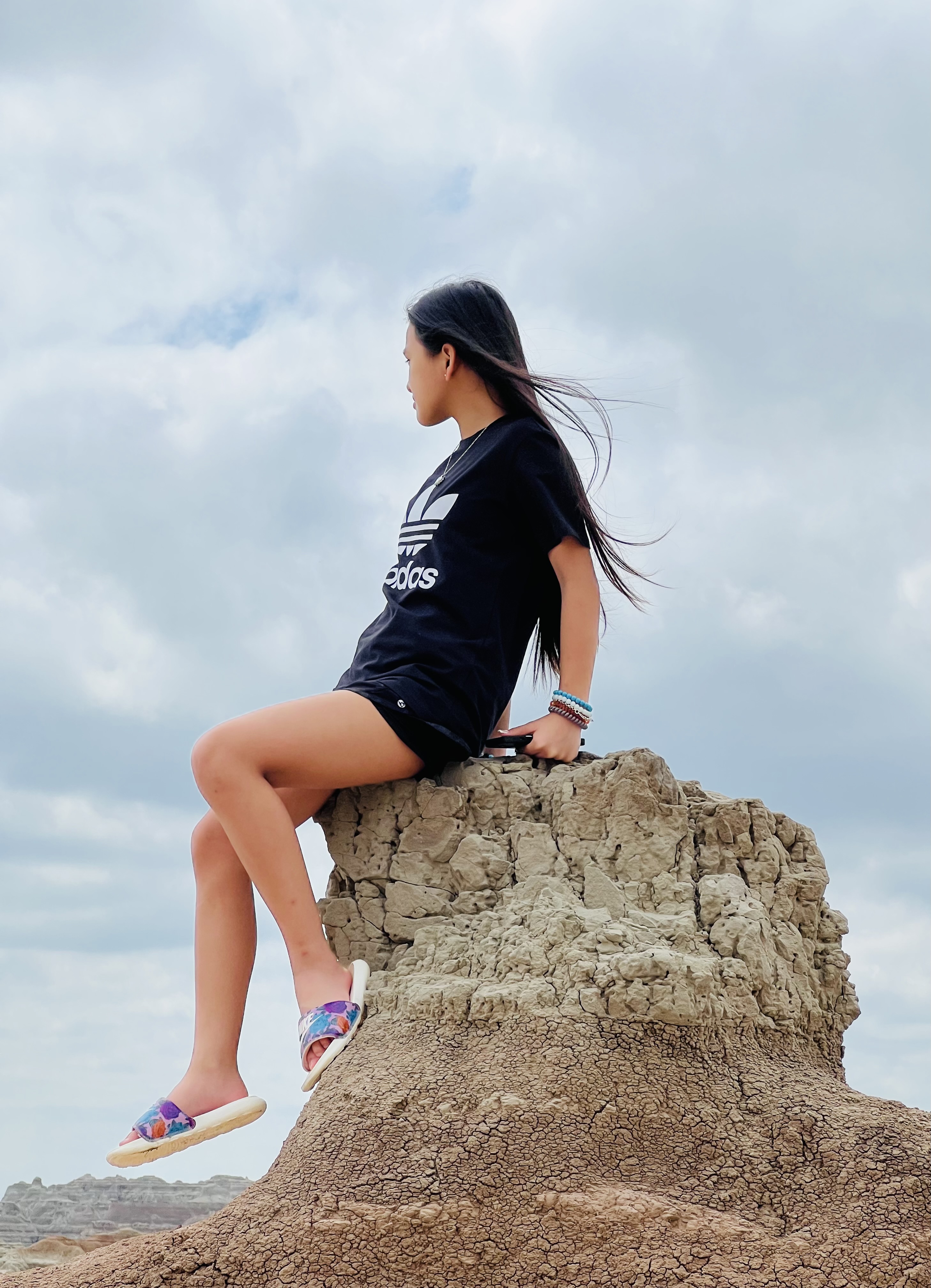
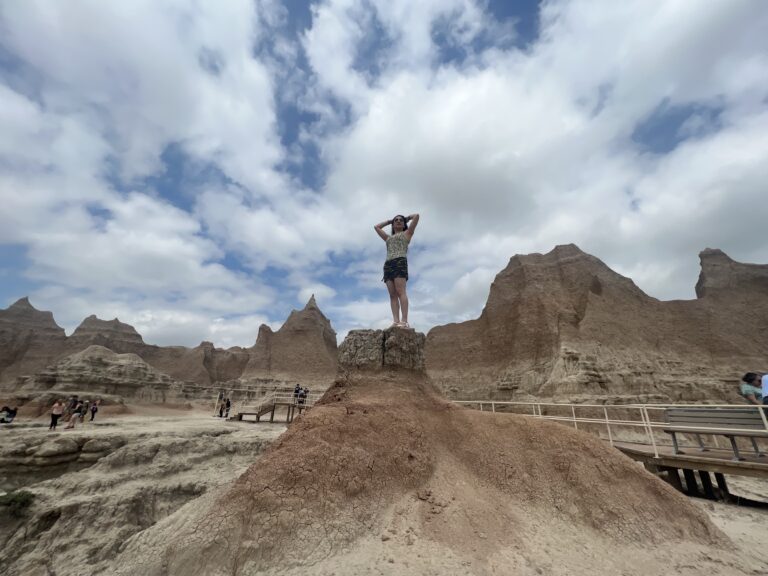
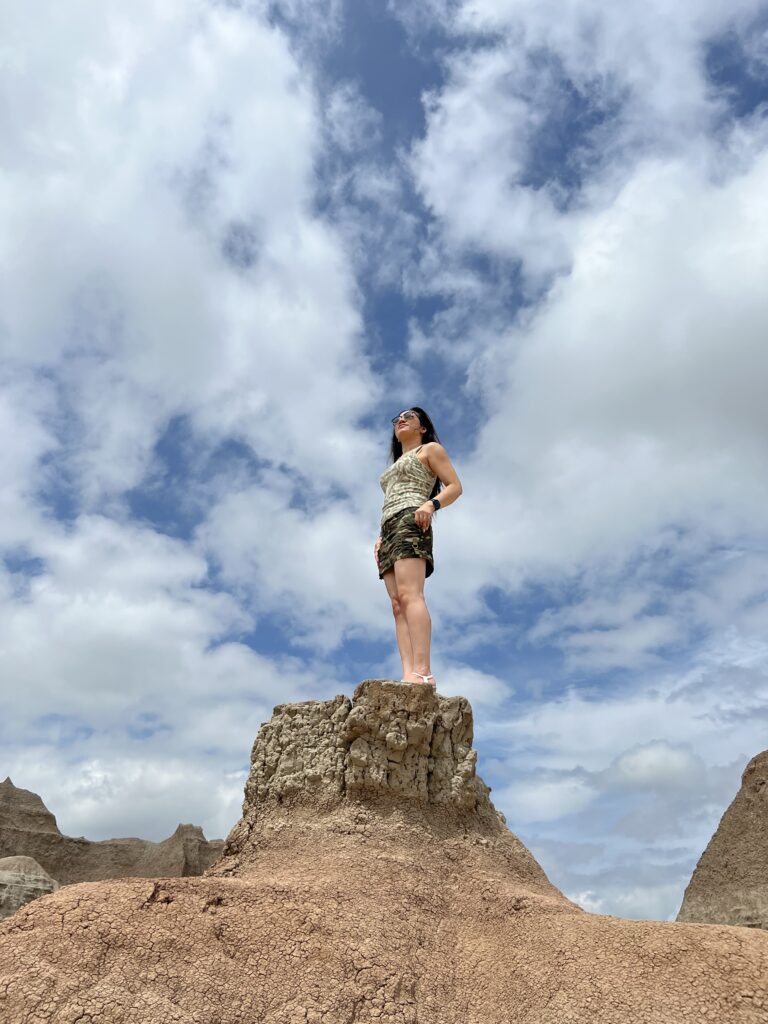
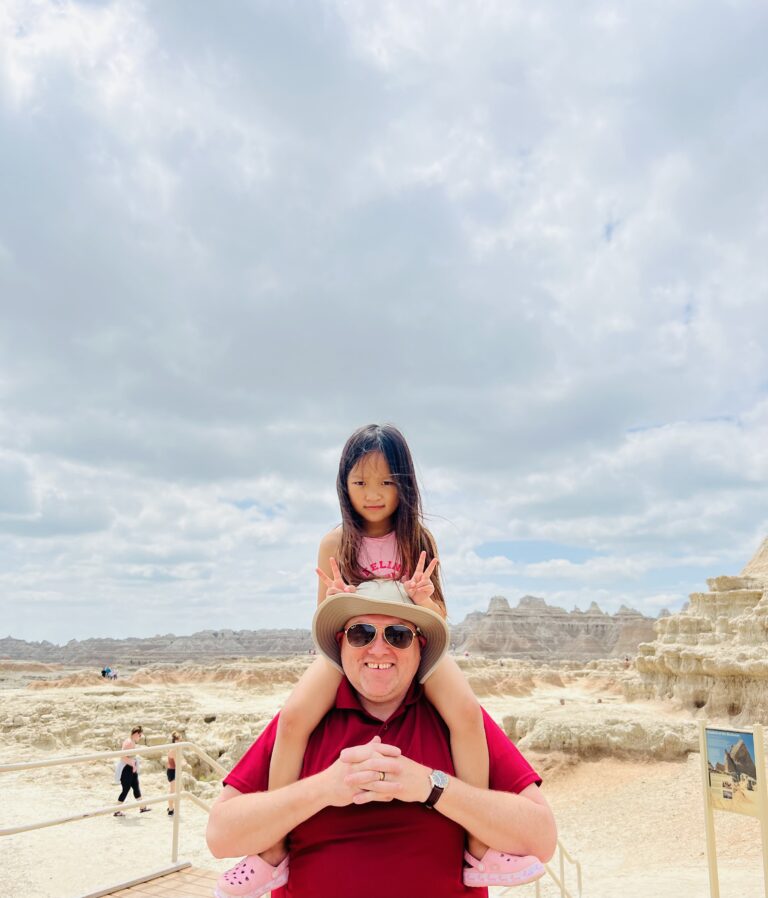
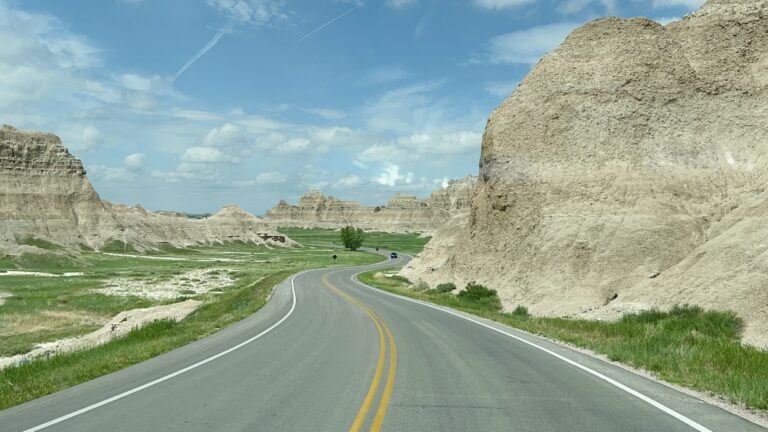
After we explored the visitor's center, our journey led us back onto Highway 240. The road was as much an adventure as the destination, flawlessly integrated into the "wall," a formidable natural fortress of geological marvels that cut through the park, dividing the higher prairies from the lower ones. It was a winding road that gracefully snaked through the expansive prairies along the ridge and wall. As we journeyed down this serpentine road, the park's spine provided panoramic views of the rolling terrain and its diverse landforms.
Emerging from the intoxicating Badlands, we stumbled upon a relic of modern humanity, aptly named Wall Drug. A sprawling labyrinth of kitschy shops, saloons and restaurants, it embodied the quintessential American roadside tourist trap. Before we ventured into this commercial wonderland, we paused to capture the grand welcoming sign, its vintage allure making it a perfect photo opportunity. With the classic “Wall Drug” lettering proudly emblazoned against the backdrop of the South Dakota sky, it was a picture that screamed, "We were here!"
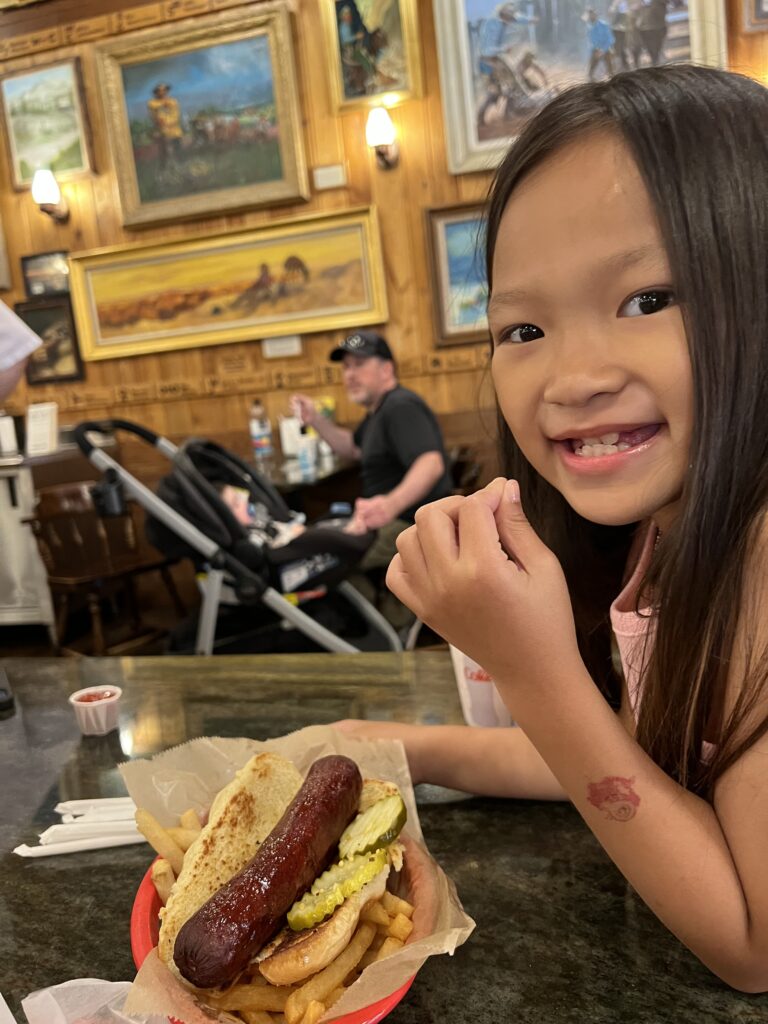
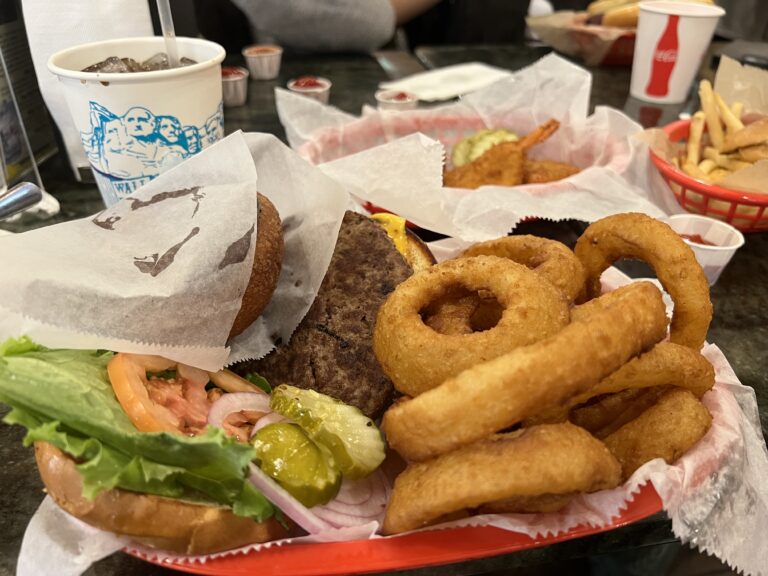
As we ventured into the shops, we immersed ourselves in an eclectic mix of the whimsical and the historical. We partook in the tradition of eating buffalo burgers and beef dogs, while Jennie, always the purist, added the sugary delight of a cake donut. The lunch hour hummed with clattering plates, merry chatter and occasional laughter. The patrons packed from wall to wall, pun intended, clambering for orders of fries and blended malts.
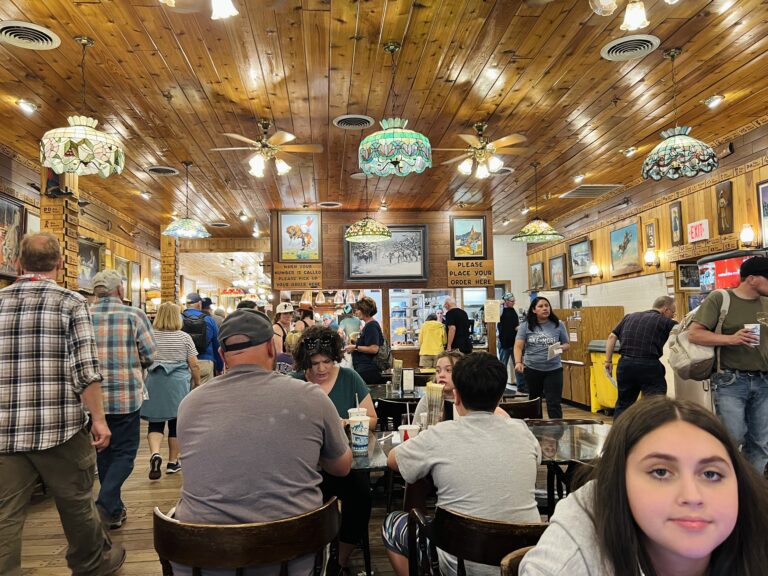
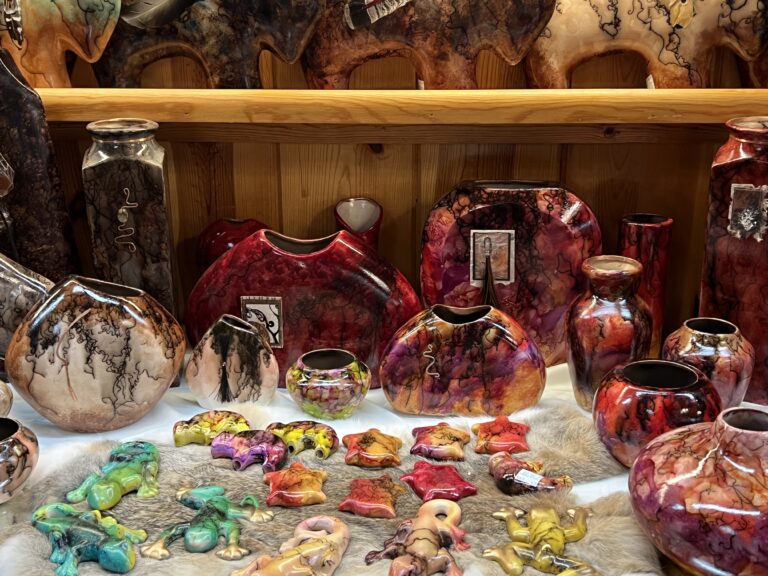
Yet the experience didn’t end with culinary indulgence. The labyrinthine collection of shops was akin to an informal museum, a trove of trinkets and treasures. From Black Hills gold jewelry to intricate Native American art, every item carried a trace of the region’s rich history and culture. We took the time to admire the interesting displays of native art, especially the hand-woven dream catchers and vibrant beadwork.
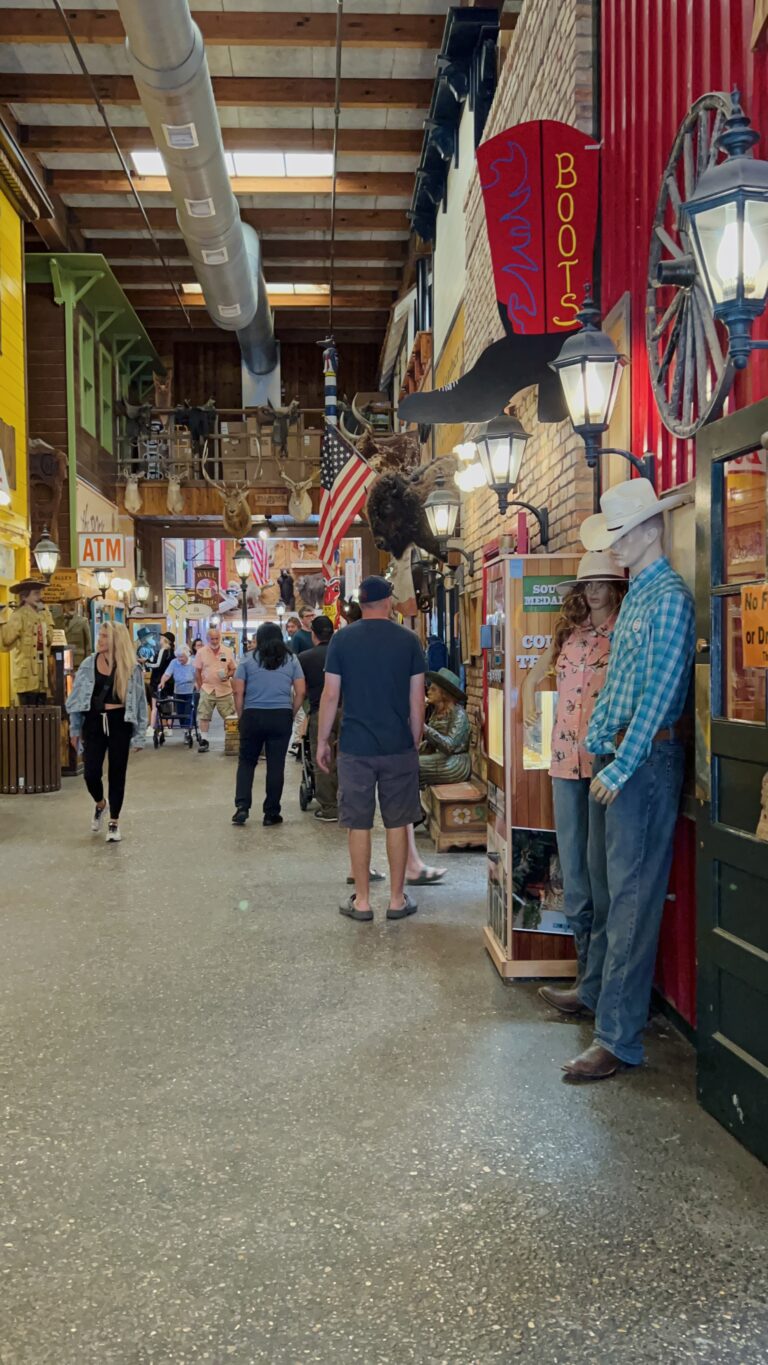
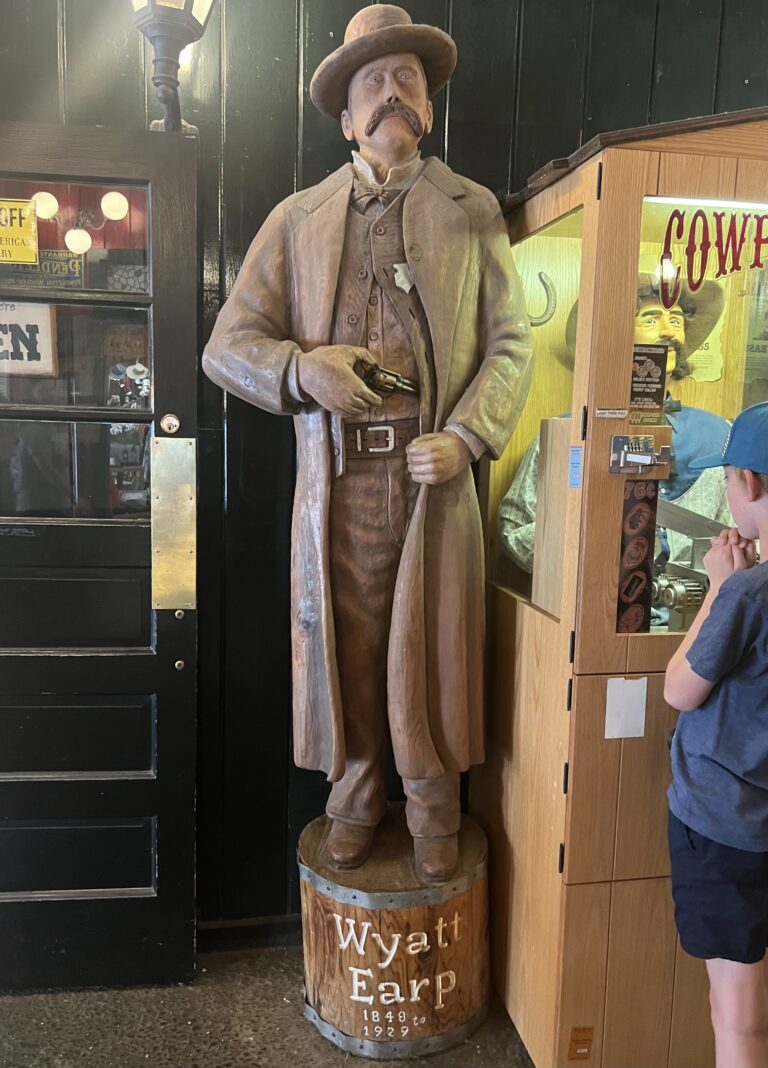
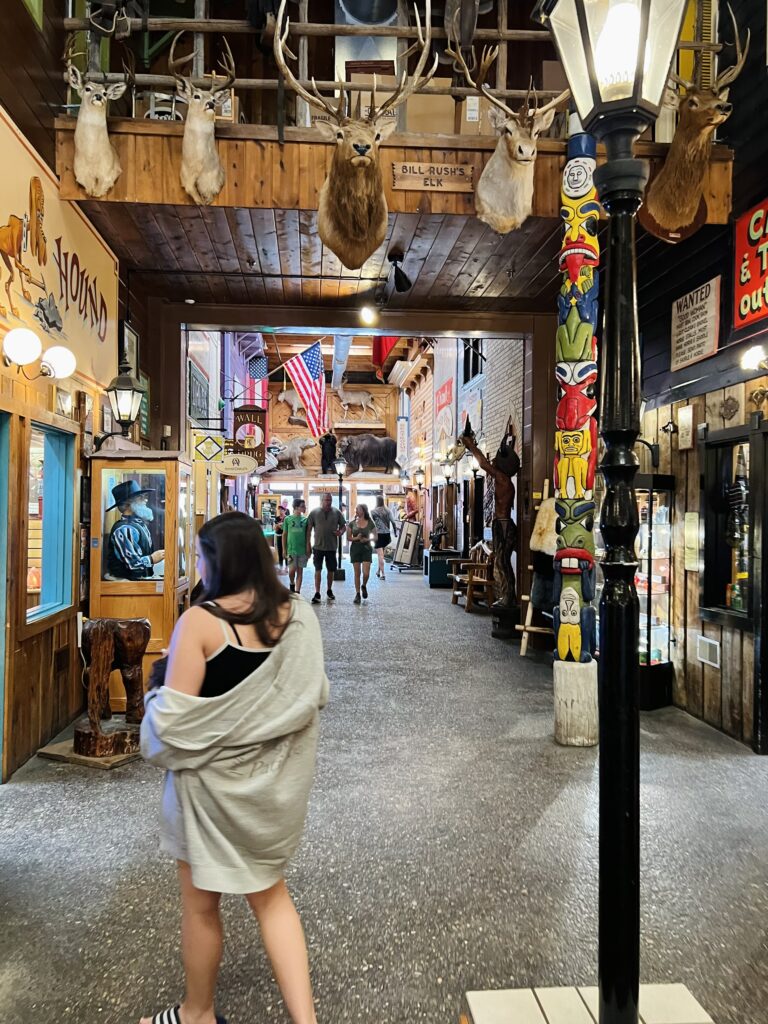
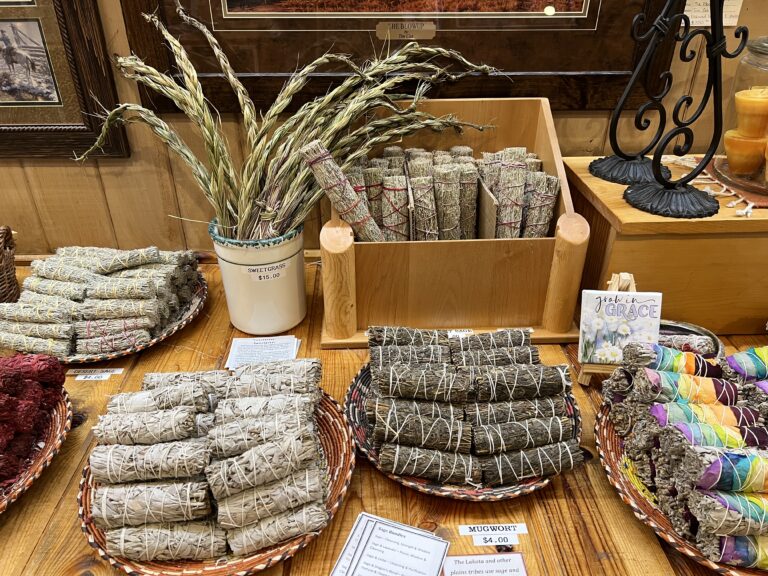
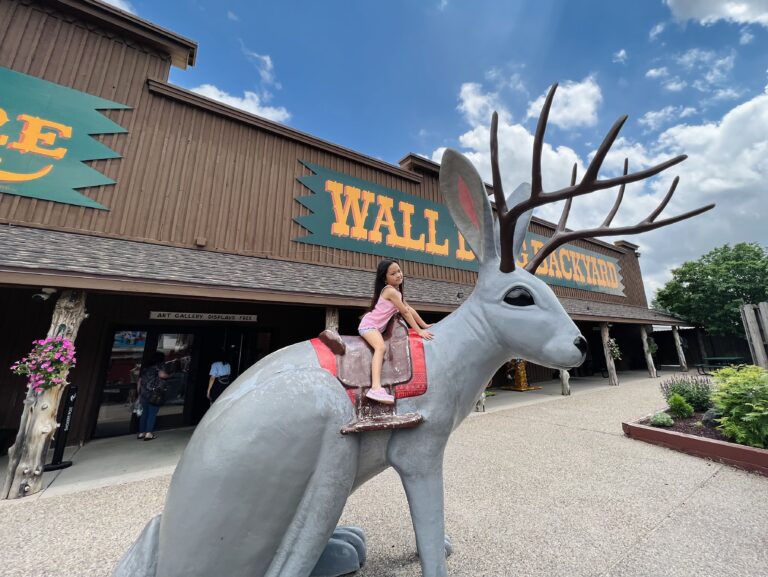
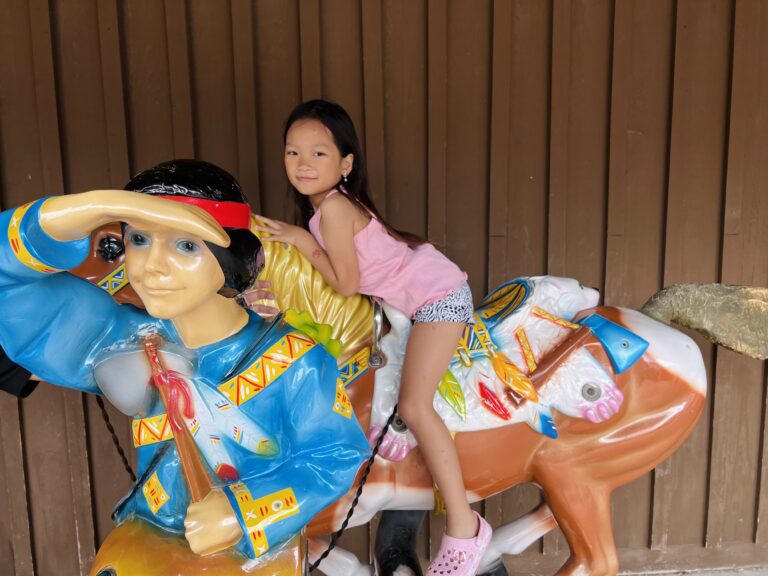
Eventually, we wandered out of the Wall "Mall" and into a courtyard-type area out back. Here there were things for children to play on, places to pose for pictures and benches to take a break. We took a moment to appreciate the giant Jackalope statue, another iconic photo op. The kids sat on this massive rabbit-antelope hybrid, and their laughter filled the air as we captured them framed by the uniquely American, quirky charm of Wall Drug. Even as we left, Wall Drug continued to impress. The imposing dinosaur on the edge of town, seemingly breaking through the drugstore wall, provided a final, memorable image as we continued west.
As the undulating South Dakota prairies receded, we journeyed westward out of Wall towards the Black Hills and Rapid City. Founded in 1876, Rapid City was built during the Black Hills Gold Rush and has always been a hub of activity. Its very name, coined by early settlers for the 'rapid' pace of its creek, echoes the gold prospectors who were lured to the region by tales of opportunity and fortune.
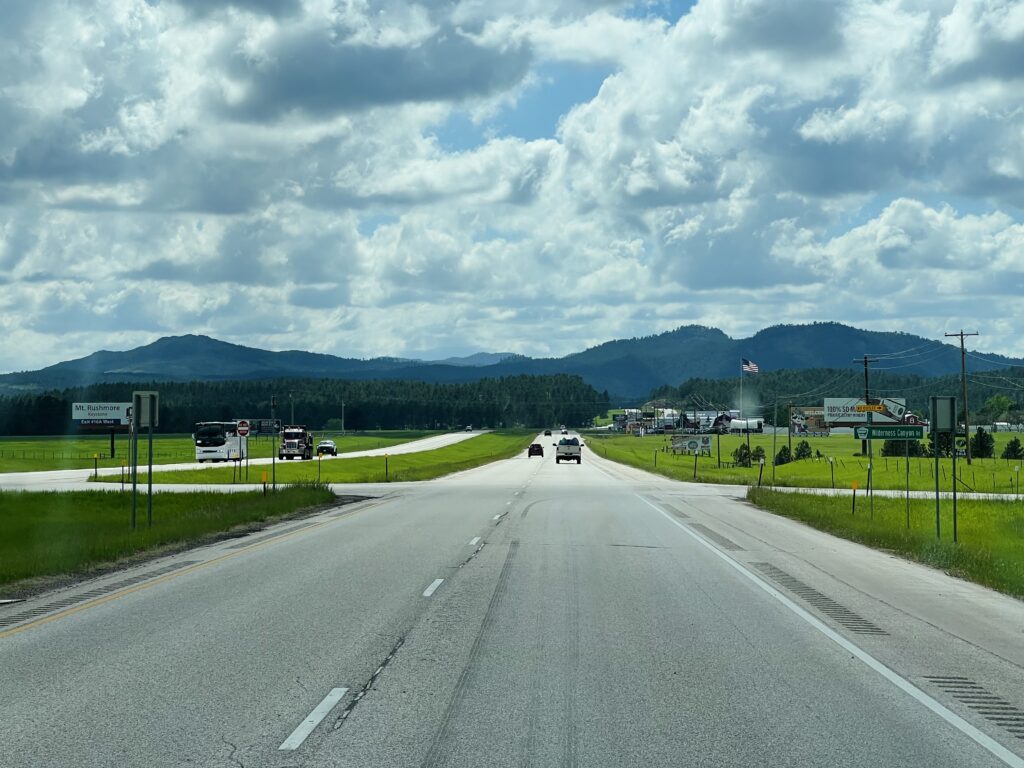
As we neared the city, modern development started to rise from the rolling landscape. The dichotomy was striking, a busy city set within nature's grand amphitheater. Rapid City truly lived up to its moniker, with a certain vibrancy and spirit of the West. The city was expanding, and there was a tangible buzz of growth and prosperity in the air. An eruption of new constructions spread before us, a surge of downtown apartment blocks and luxury homes sprouting on the hills. The city's spirit of innovation wasn't new. It had been a key player in World War II with the Rapid City Army Air Base, later renamed Ellsworth Air Force Base, serving as a training location for B-17 Flying Fortress crews. This strong military presence further fueled its growth and transition into a modern city that felt like it was a thousand miles from anywhere.
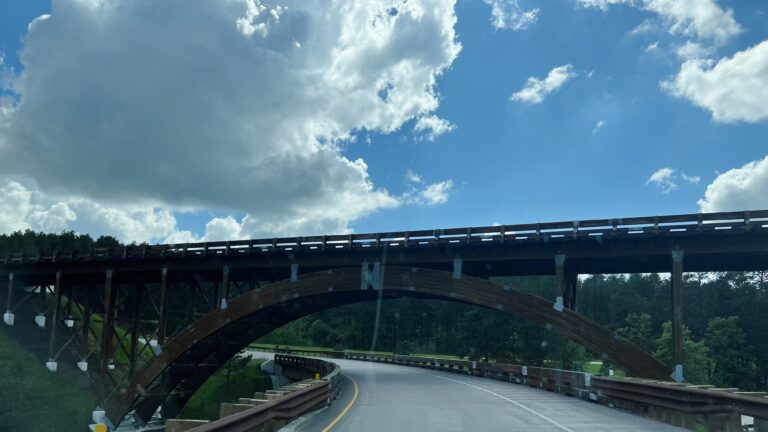
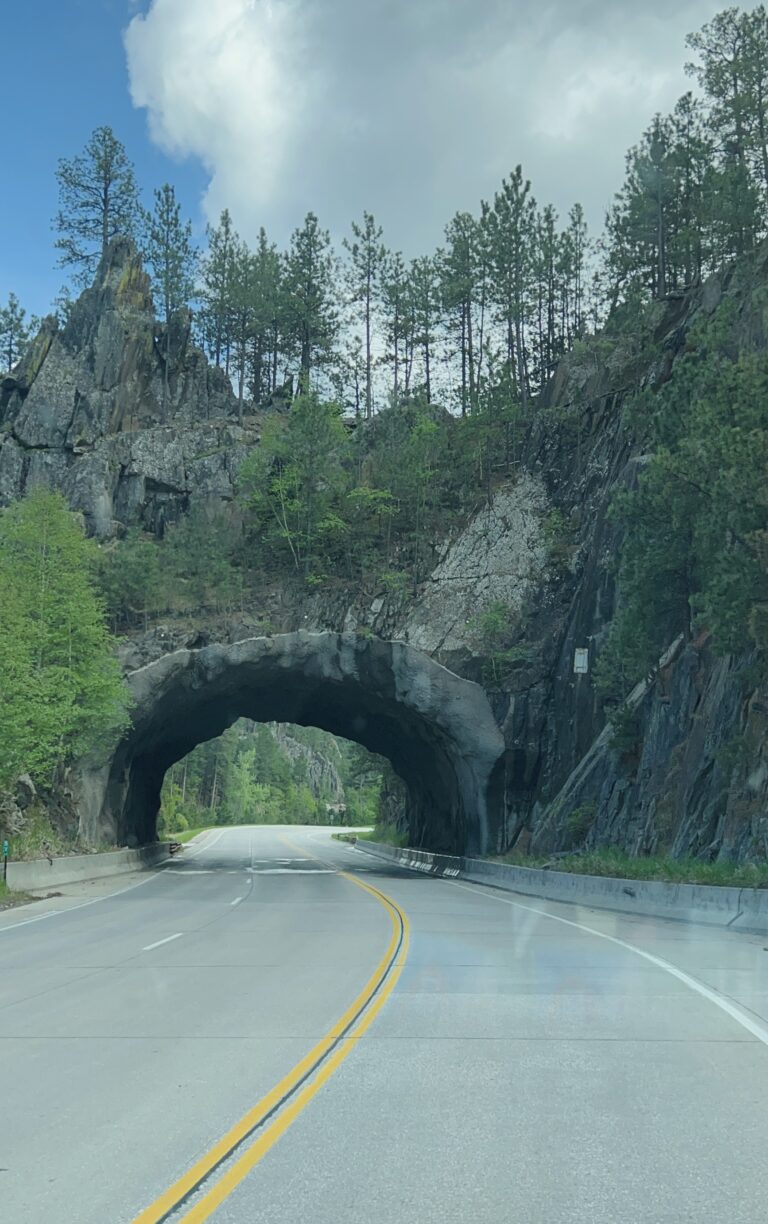
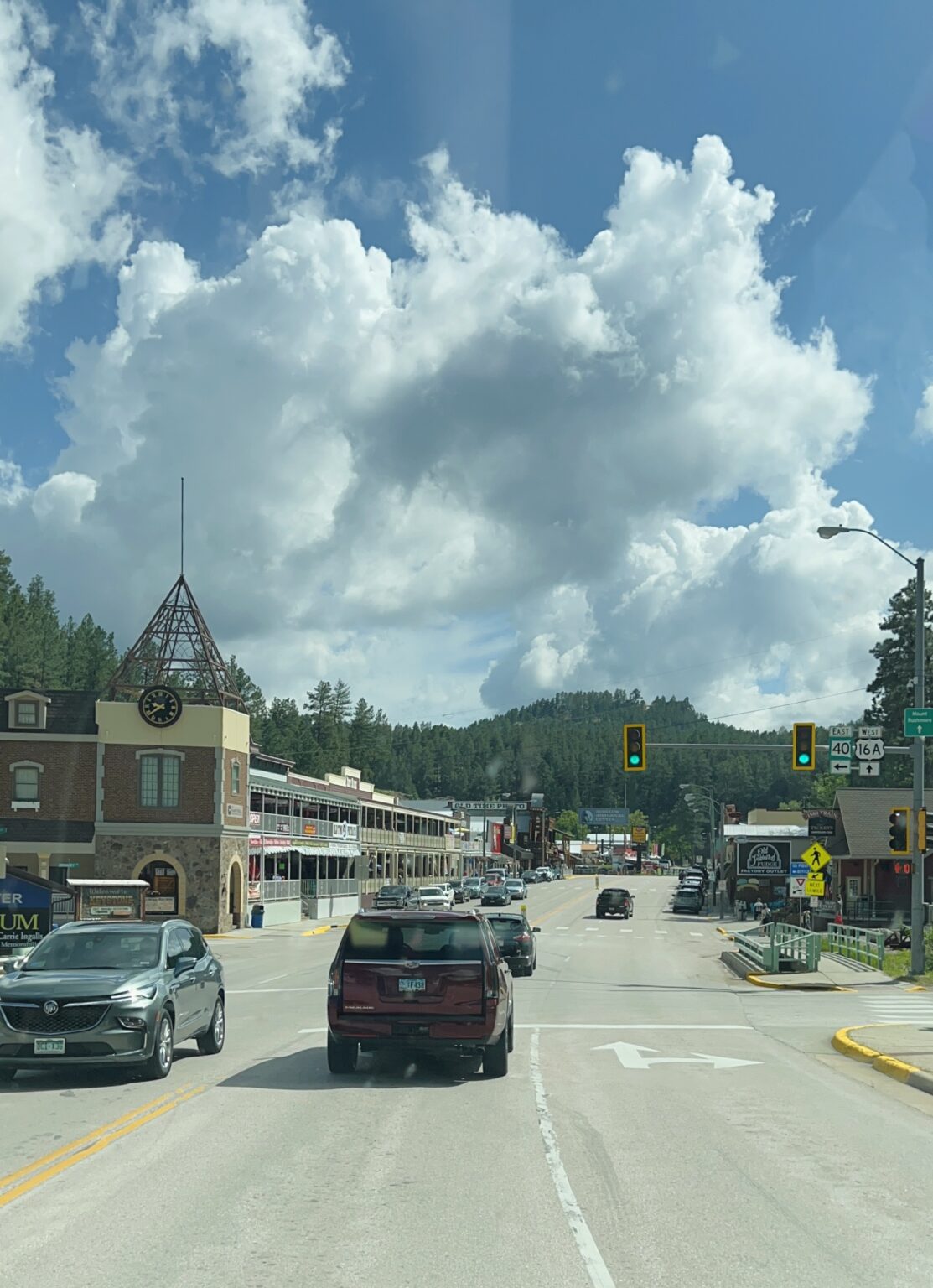
Amidst this juxtaposition of history and progress, we stopped at the local Walmart, an emblem of contemporary American life. We busied ourselves stocking up on supplies, particularly delighting in the local produce. Here we were, in a place that blended the rustic charm of its Wild West roots with the conveniences of a modern city in a way that was uniquely "Rapid City." Leaving the busy city behind, our van followed a serpentine ribbon of highway winding towards Mount Rushmore. We gradually submerged into the quintessential American wilderness. With beautifully crafted wooden bridges, tunnels carved into the mountains and cute little western towns, it was a magical drive.
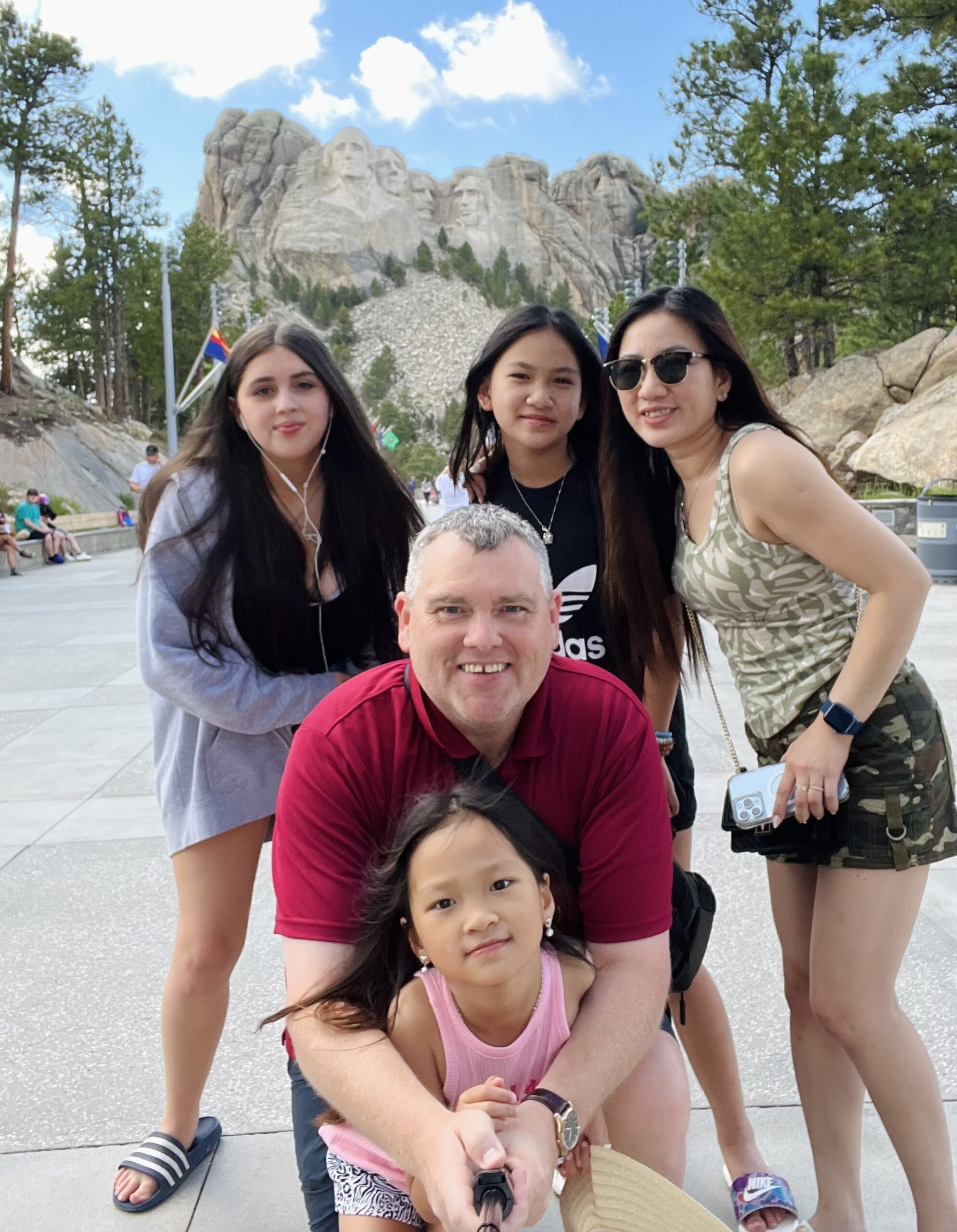
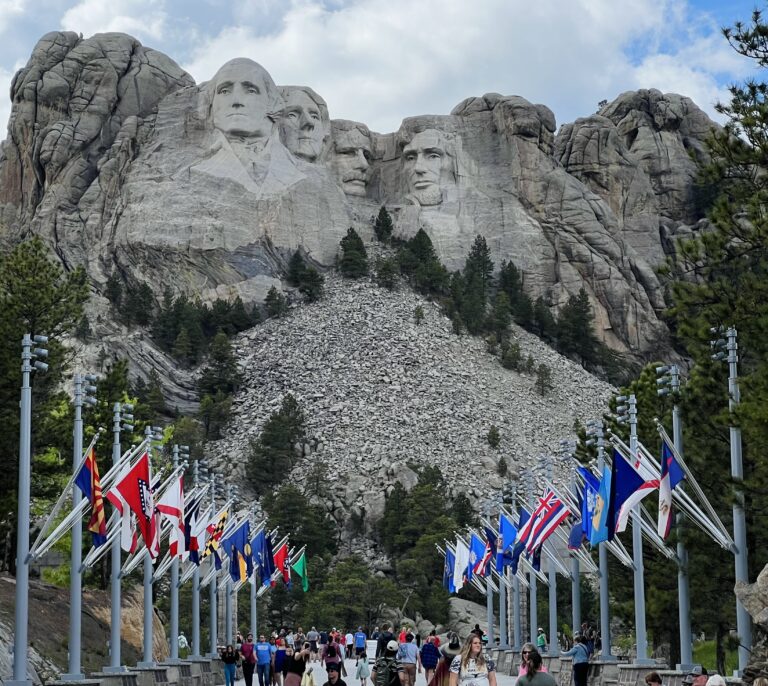
The monument, I had always been told, was a trifle underwhelming. Yet, as we approached, it was hard to shake the giddiness that crept over me. Maybe it was the stoic grandeur of the Presidential busts or the stunning backdrop of the hills. Either way, it was far from disappointing. As I stood in the shadow of some of America's greatest Presidents, I couldn't help but feel a deep sense of respect and even, dare I say, a little spiritual tingle.
Inspired by the historical tales of exploration and discovery, the idea sprang from the creative mind of South Dakota state historian Doane Robinson, who sought to lure travelers to this rugged corner of the country. A master of sculpting marvels, Gutzon Borglum, the artist who once left his mark on Stone Mountain in Georgia, was summoned to breathe life into this audacious endeavor.
The herculean task commenced in 1927, setting the stage for a grueling 14-year odyssey. A team of passionate souls took up the artistry of chiseling granite to forge the colossal faces of four revered American leaders, George Washington, Thomas Jefferson, Theodore Roosevelt and Abraham Lincoln. Dynamite blasts and meticulous drilling shaped the rock face inch by inch. Perched high above the ground, braving unpredictable weather and overcoming adversities, these artisans labored with fervor to craft a monument that would echo through the annals of time. In 1941, Mount Rushmore stood tall, a symbol of pride and a homage to the pioneering spirit that forged a nation.
As we gazed ahead down the parade ground, the monument standing tall, I couldn't help being consumed by the moment. We were on the road. This was a big deal, and we were doing it. This would be the kind of trip that we will never forget, a trip that may even become legendary. I was so proud to gaze upon those who came before, some of the greatest of us, our fellow Americans. I hoped to instill a deep admiration, understanding, and appreciation of our history to our girls. For Maggie, the land of her birth. For Diem, Jennie, and Lisa, their adoptive land, which has embraced them with open arms. When the time comes for their citizen process, I want them to know the material well because they've experienced, felt, and believed in it.
When the time comes for their citizen process, I want them to know the material well because they've experienced, felt, and believed in it.
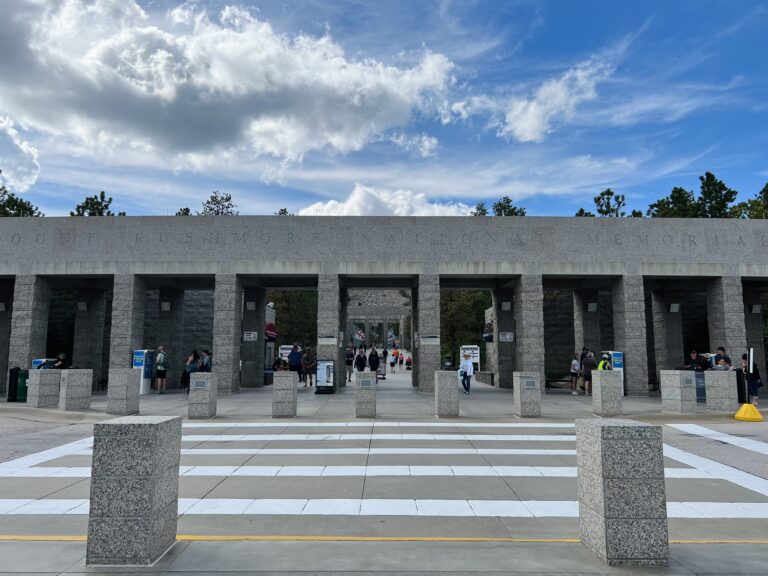
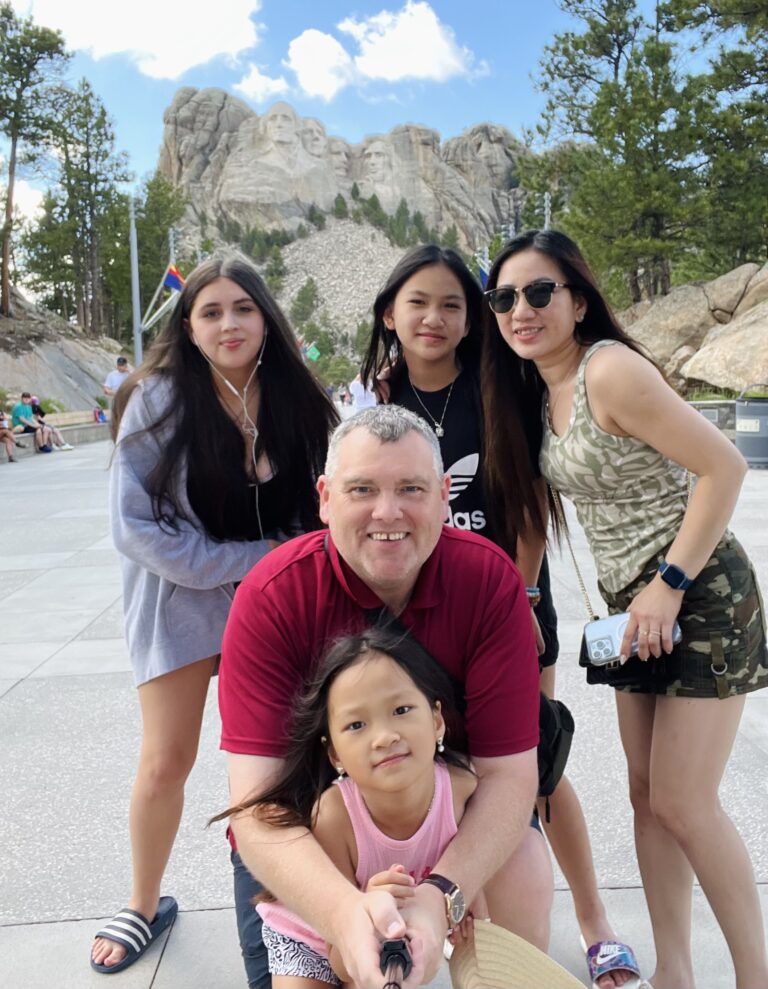
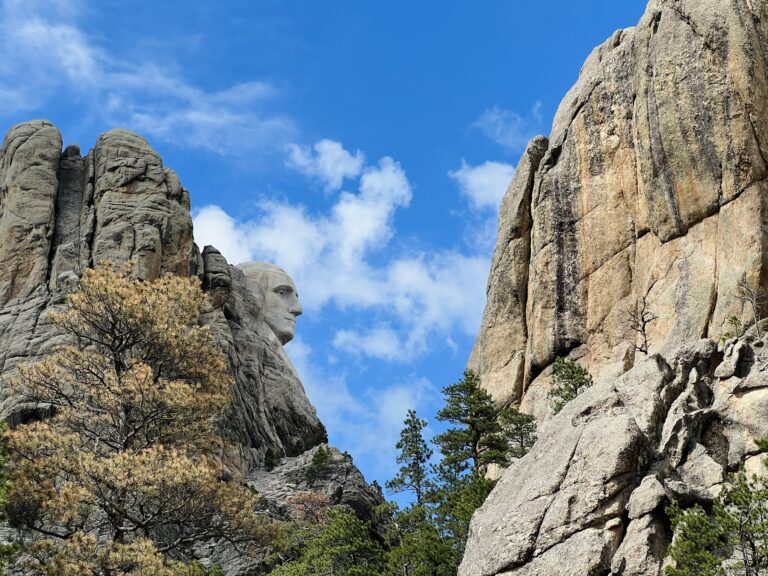
After sifting through the curiosities of the gift shop, our journey took us next to the Mount Rushmore KOA at Palmer Gulch, our night's resting place beneath the stately ponderosa pines. The drive to the campground was absolutely incredible. The granite "needles," rising sharply from the ponderosas, gave the scene a Wonderful World of Disney vibe, that Sunday evening specialty where the wild beauty of America was often displayed for your viewing pleasure across American televisions in the 80s and 90s. Only here, it was live and in HD. At one point, as we were driving along, I spotted the profile of Washington. I knew somewhere around these granite mountains on this winding road was such a view. Eagerly we pulled into a turnout for one last glimpse at our first president.
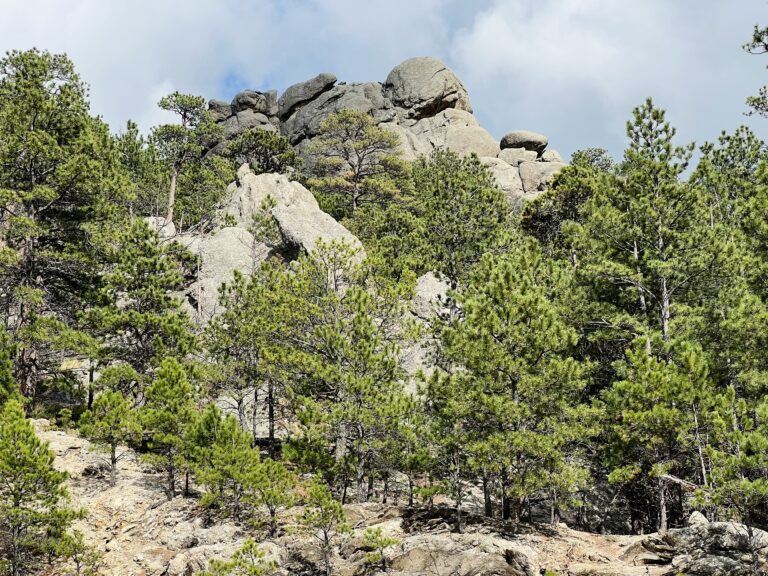
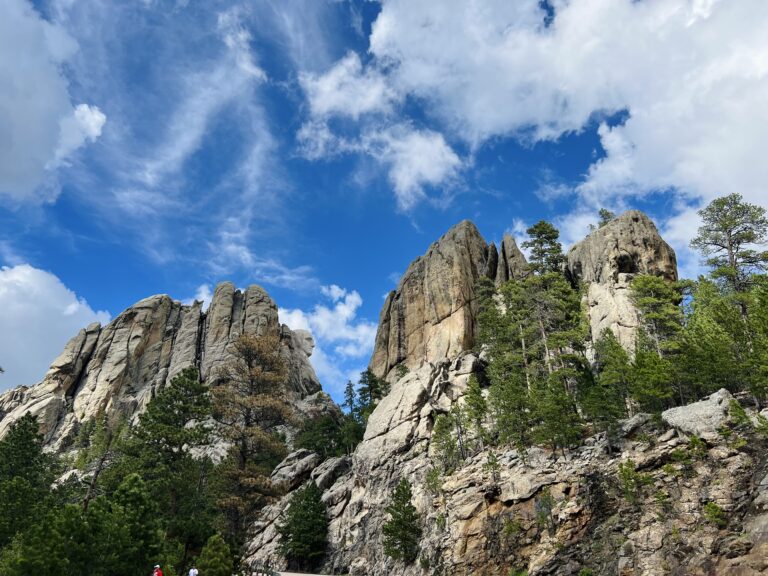
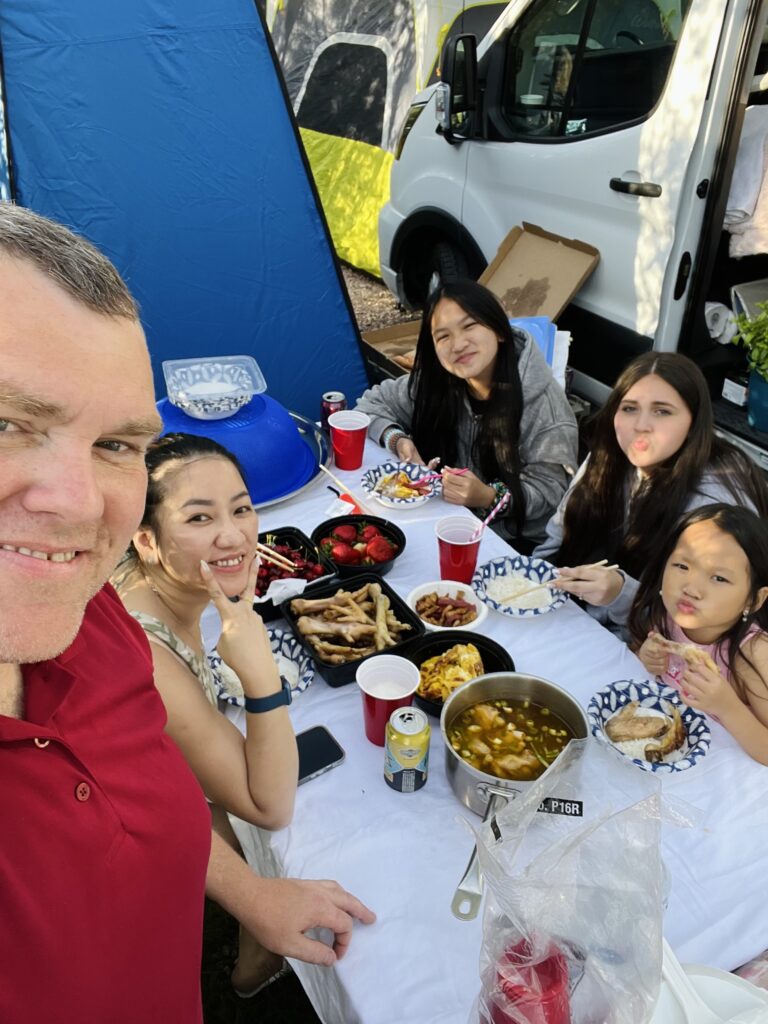
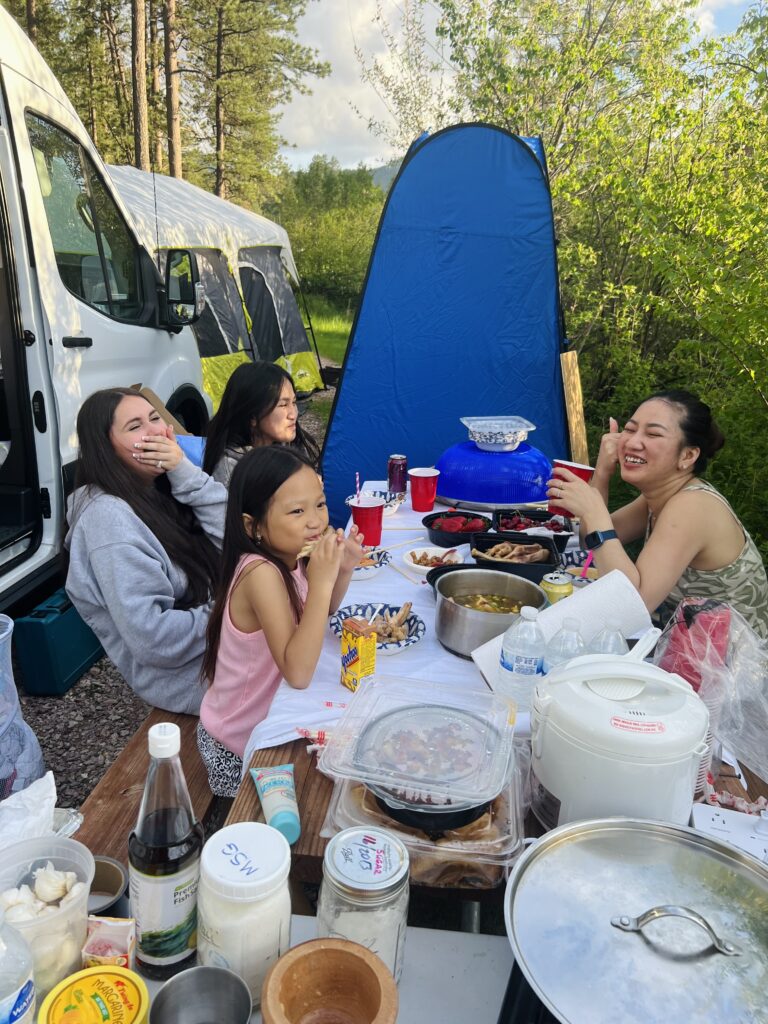
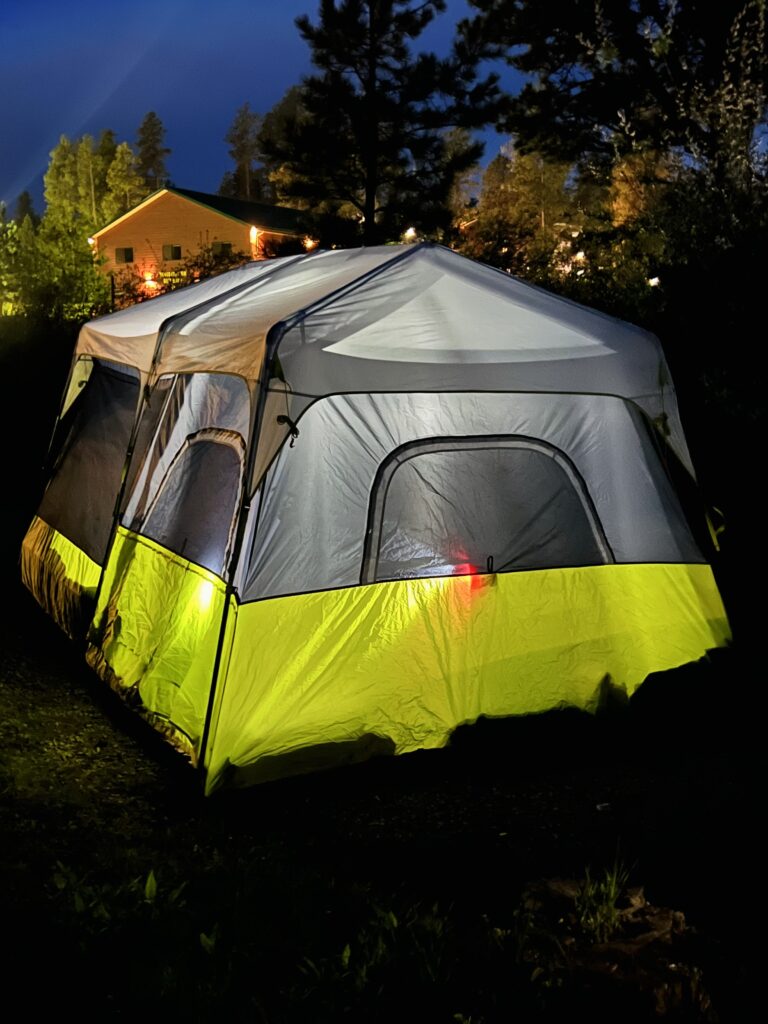
Arriving at the campground early in the evening, we checked in and were escorted to our campsite. There was a mix-up with our site, and we were given a small RV van site that only had gravel to pitch our tent. It was peak season, and the campground was full, so we couldn't move. We did our best to set up in the tight site, pitching our portable bathroom and tent. The site at least had a picnic table, no matter how on top of the creek it was. Though space was proving tight and the ground under our tent was coarse and rough, we got a functional camp in the narrow site, butting up to the babbling brook. Difficulties were bound to occur, but I had no intention of allowing them to spoil the adventure.
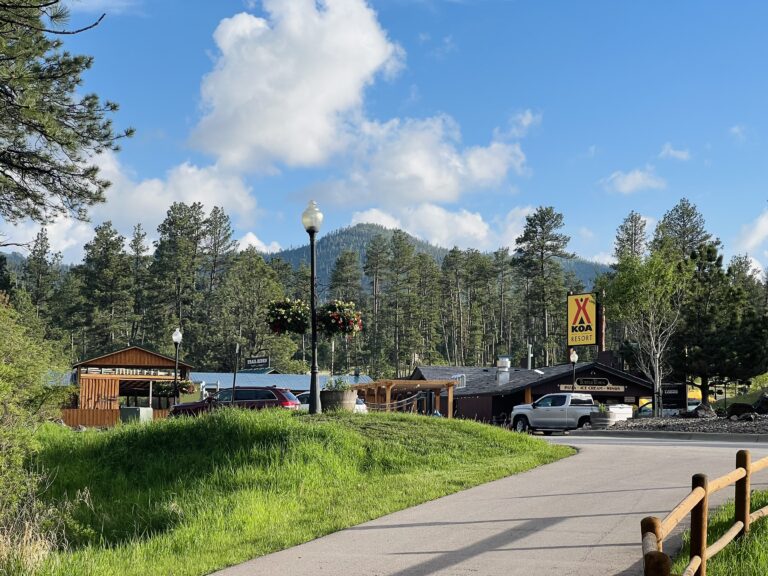
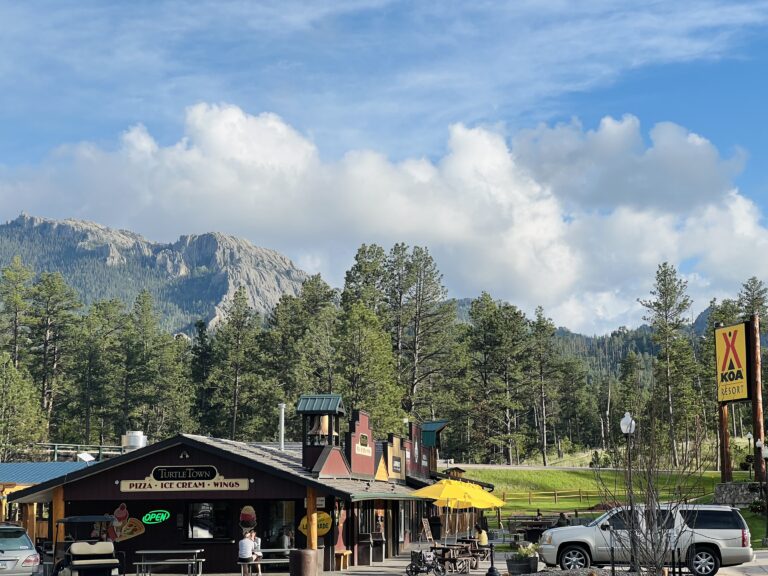
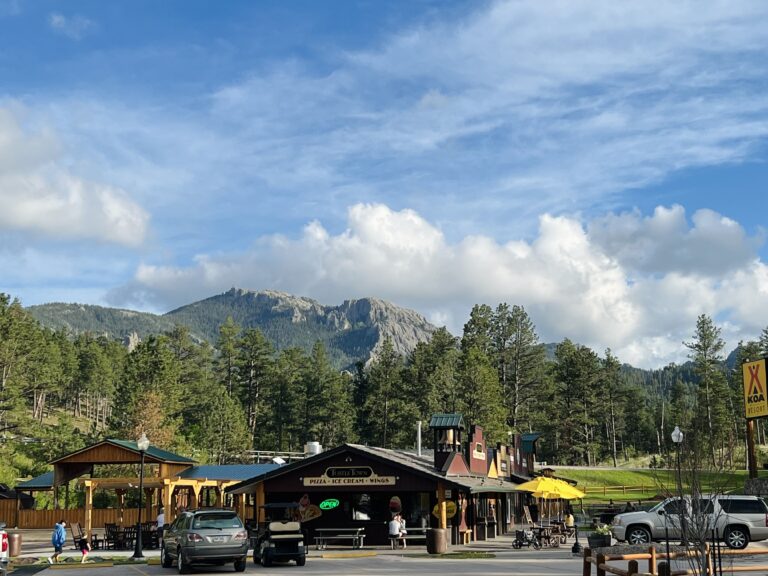
The evening brought our dinner, a hearty feast of bún bò Huế, fried chicken feet, pork belly, lap Xiong and noodles. Dessert was a simple yet delicious bounty of fresh cherries and strawberries. As twilight deepened, Maggie and Lisa found laughter and competition on the clubhouse volleyball court. Meanwhile, Jennie and I, swathed in the cooling mountain air, sought solace in the warm waters of a hot tub. The pool, it turned out, was a touch too chilly for Jennie's liking.
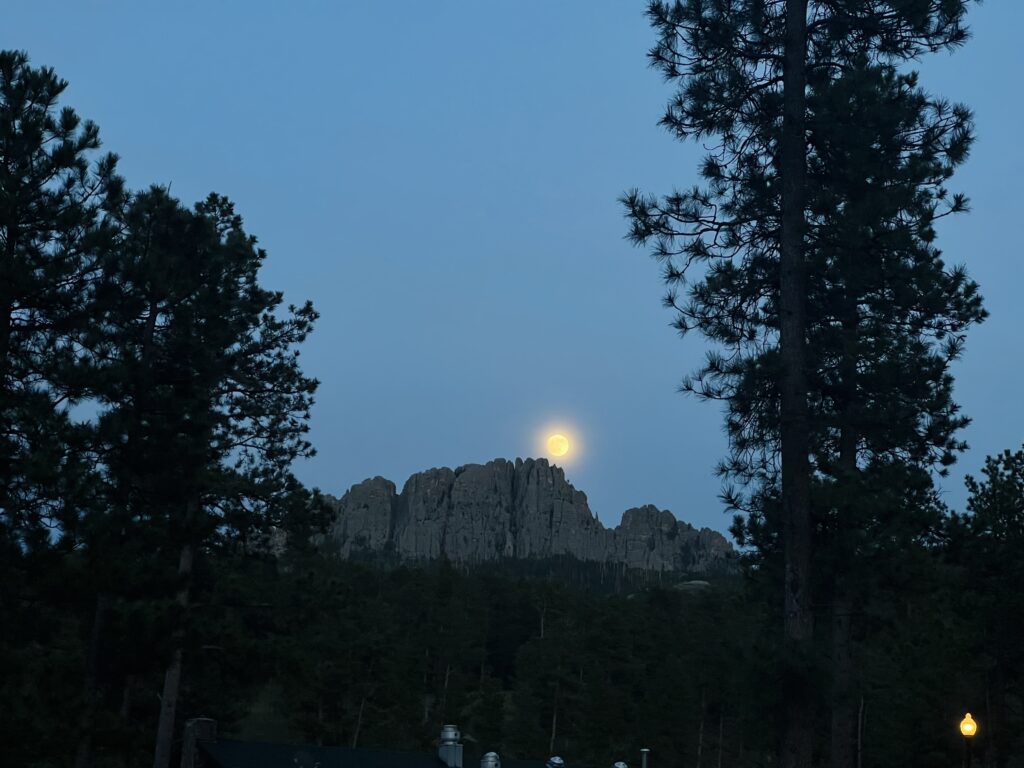
As darkness draped the campsite, the near-full moon emerged, casting shadows on the spire-like mountains. The only thing that could have set a greater scene would have been a lone wolf, shadowed by the moon, howling on the summit of the mountain. As everyone concluded their showers and readied for sleep, it was clear that three days of dirty clothes for five people was more than could be ignored. I found the laundry house at the KOA and spent the late evening washing clothes. I took the time to take writing notes, organize the day's photos, and post our day's adventure to social media.
Sometime after 11, clothes fresh from the dryer, I retreated to our tent. Everyone was still awake, laughing, talking about our day, and sleeping under the stars. I calmed them down with the reassurance that the morning was coming early. It took little quiet before everyone surrendered to the lull of the cool mountain night, our eyelids heavy with the day's adventure.
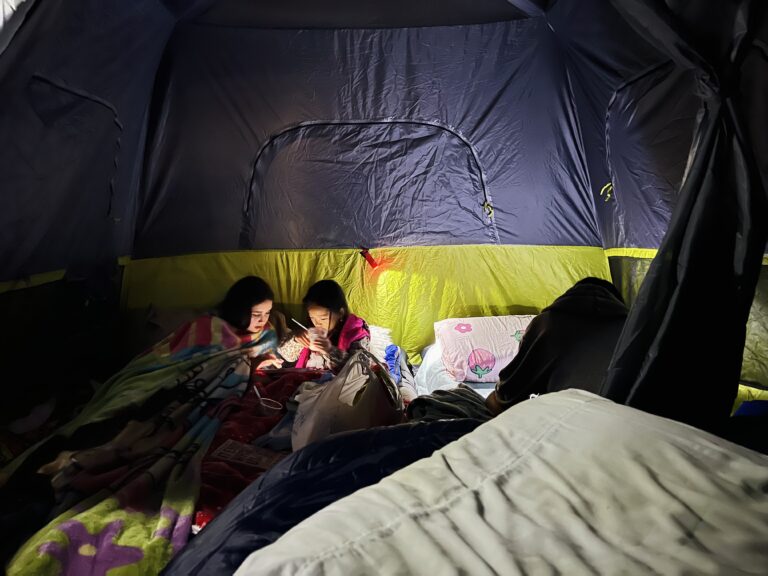
As the day ended, I relished in the coming historical and personal shared experiences that would color our journey across the western United States. The spirit of Lewis and Clark's expedition seemed to echo through the ages. Our encounters with the retired couple running the museum, the Gateway Arch, the playful prairie dogs, the striking Badlands and Ponderosa Pines were but glimpses of the many stories that waited to unfold before us. I thought of each of us tucked in our sleeping bags. As I thought of this and other things, I fell into a deep slumber. As I drifted away, I did so under a canopy speckled with a billion stars. Each twinkle was a silent story, and each constellation an interstellar map guiding us through our adventure, reminding me of our vast and boundless journey beneath an endless sky.
To explore some of the Parks and Monuments we've explored and more, click here for the National Park Services.
Click here for part 2 of "Beneath an Endless Sky."