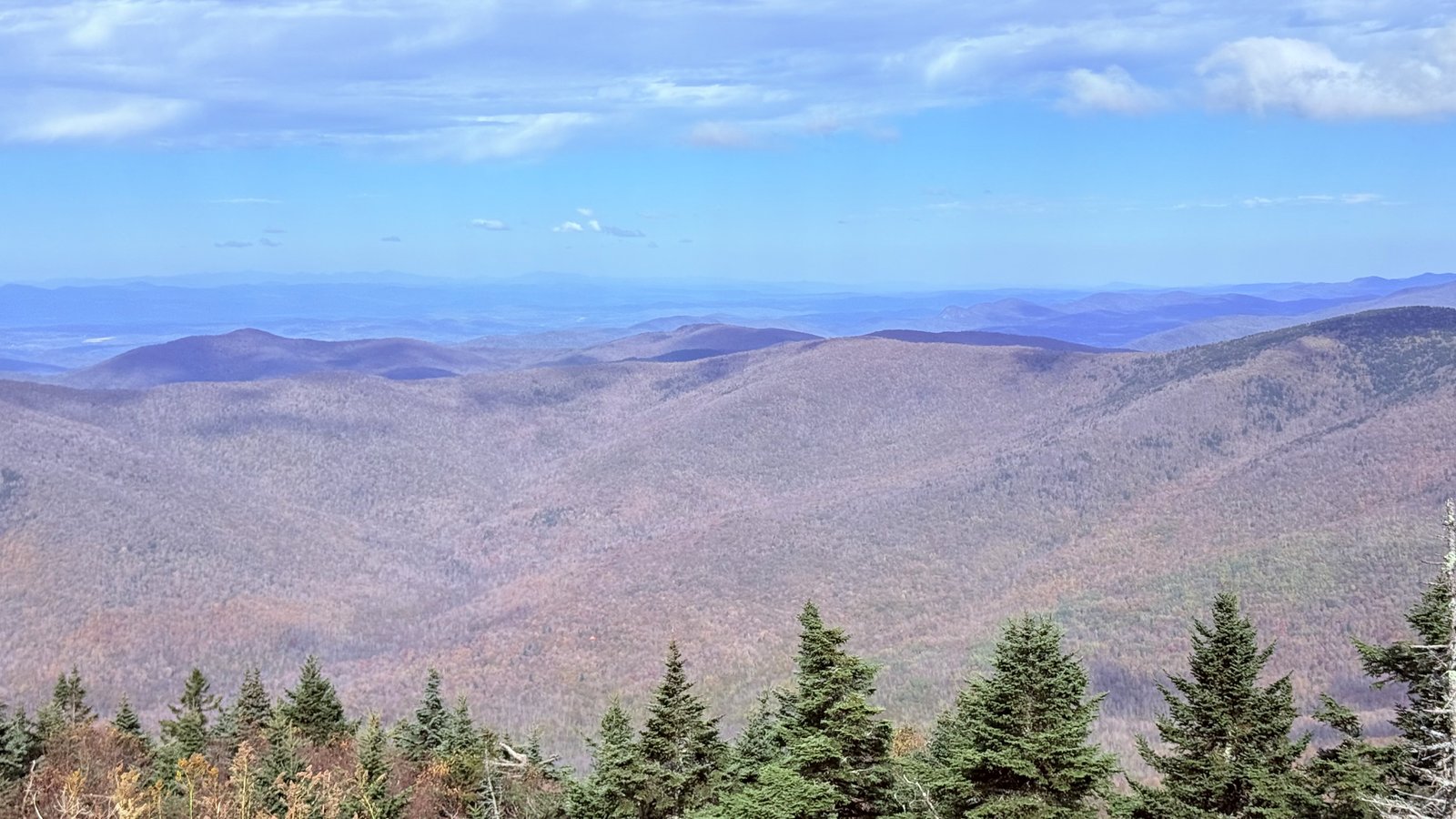
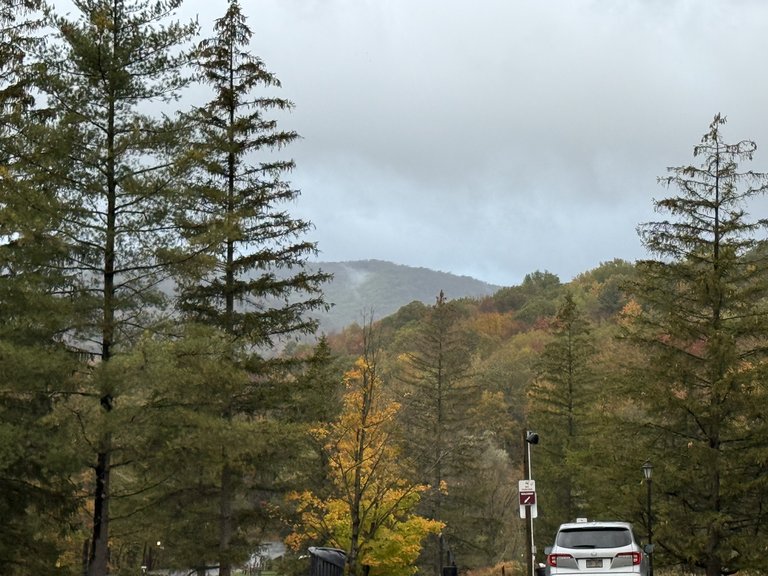
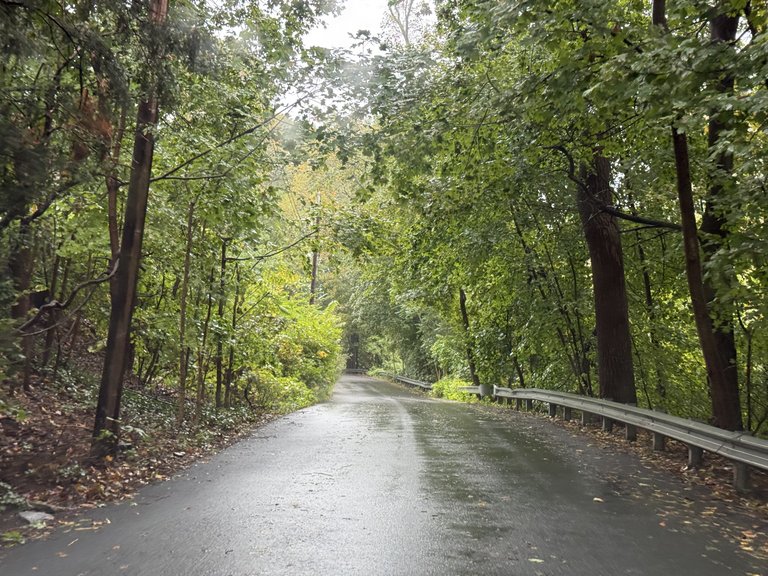
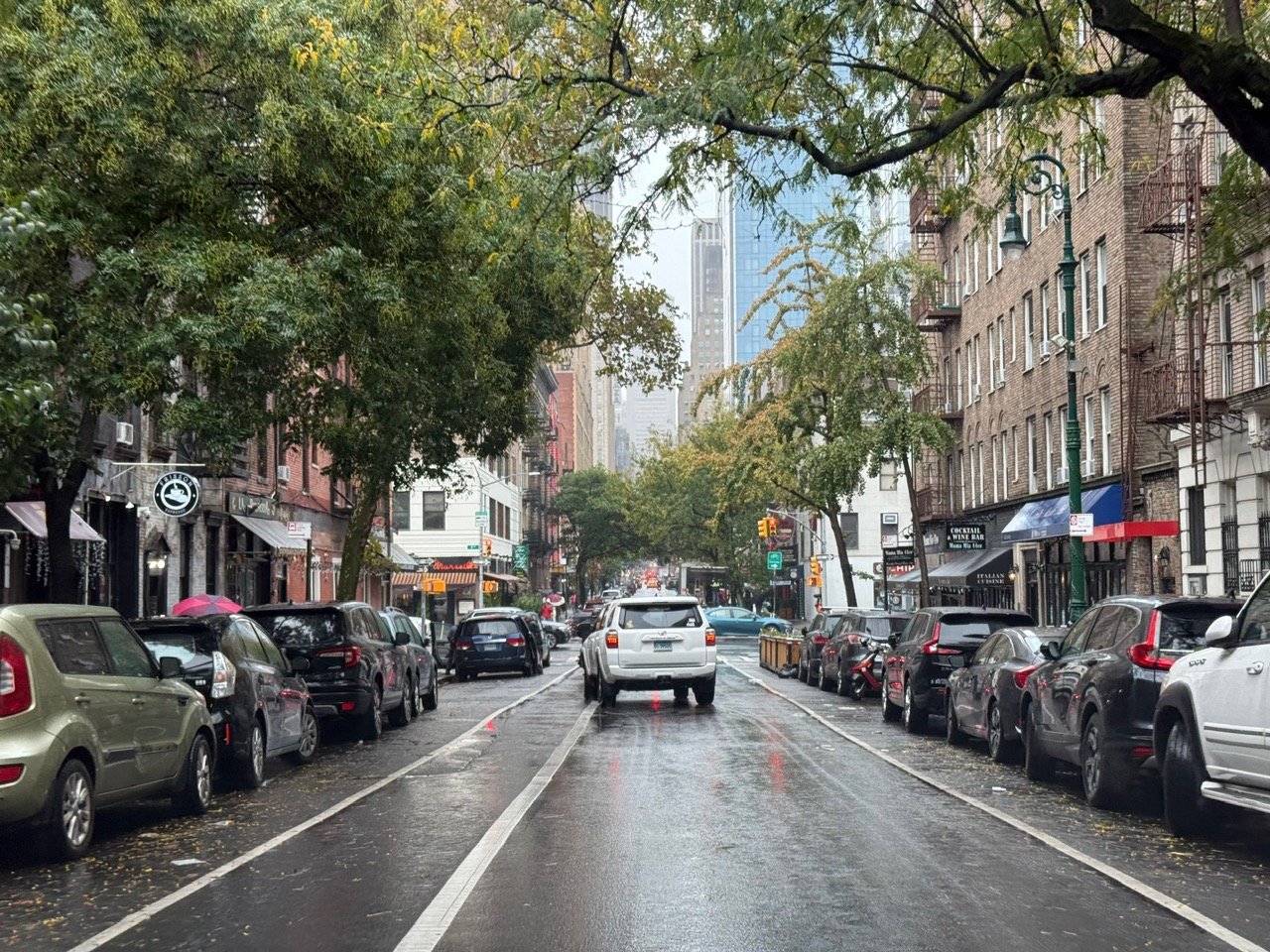
We came down out of the mountains on a wet morning. After two days in the mountains, the hills gave us one last gray, misty morning, and then the roads got wider, the traffic got thicker, and the trees gave way to buildings. Then more buildings. Then nothing but buildings.
Our hotel was on Times Square. We would only be in the city for thirty-six hours, and we walked eight miles in about fifteen of them. I'm a sucker for beautiful architecture, and I guess it's no surprise that New York has some impressive structures. So this one is mostly buildings. Sorry for the dump.
Times Square
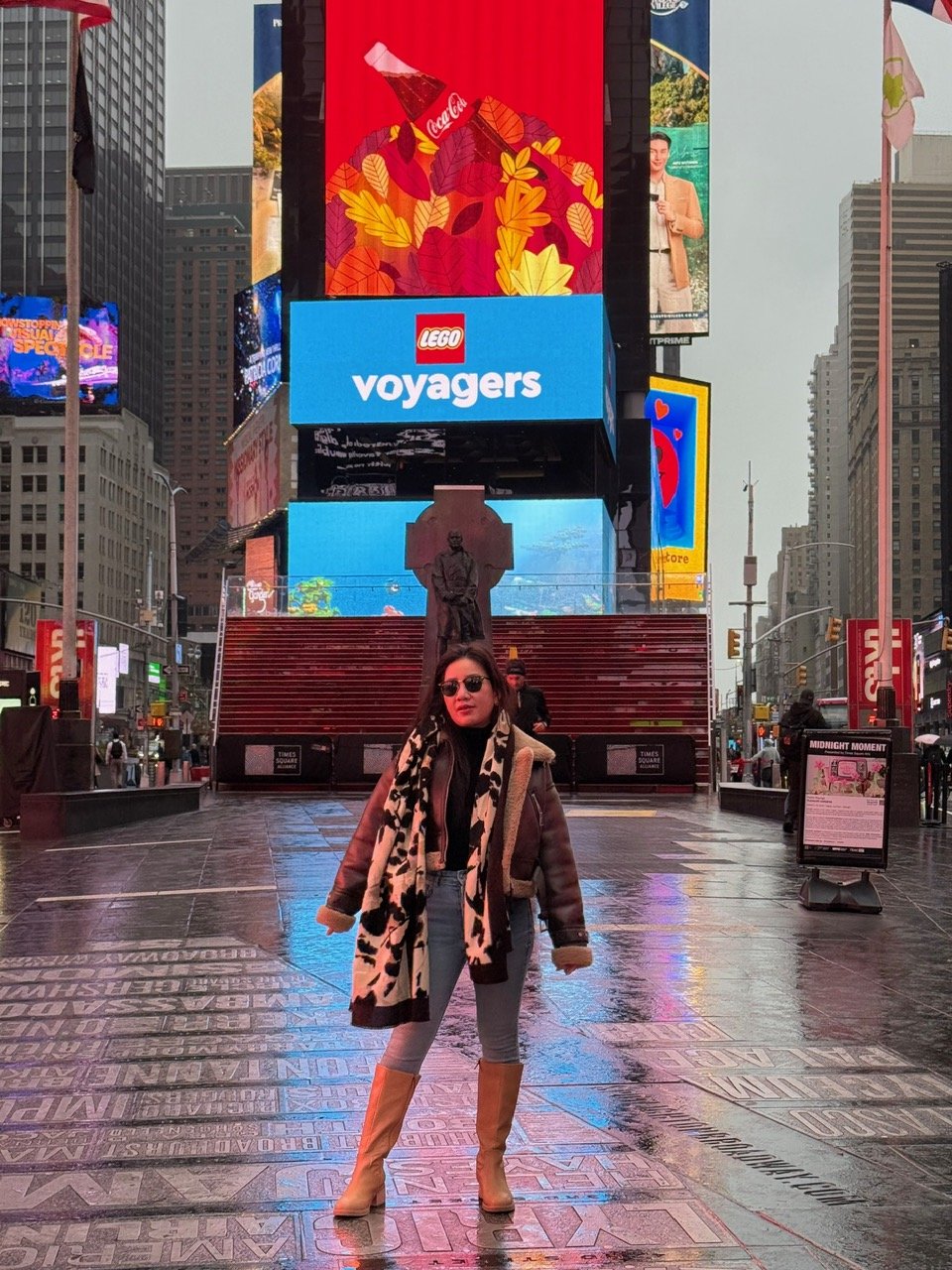
Here's the wife's perspective. Diem told me that before she came to America, the one thing people who aren't from the U.S. seem to know about it, universally, is Times Square. And there it was, right outside our hotel.
Her post said it all: "Finally made it to Times Square. Dreams do come true."
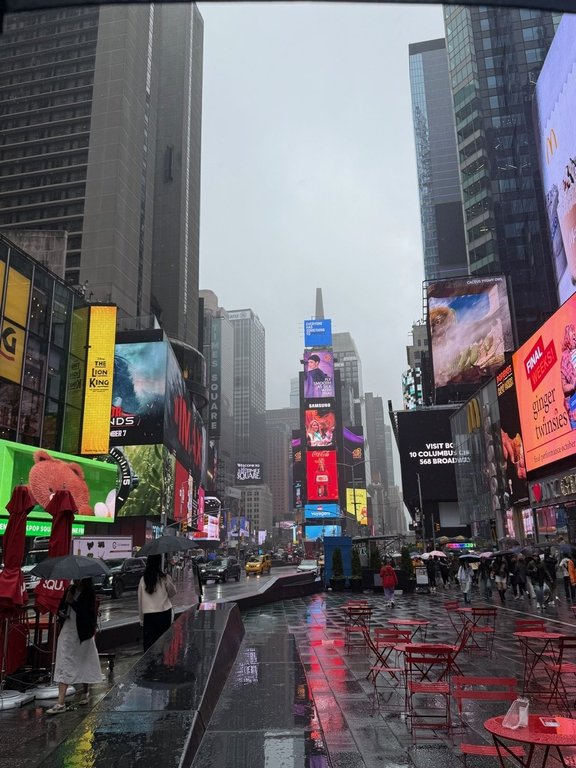
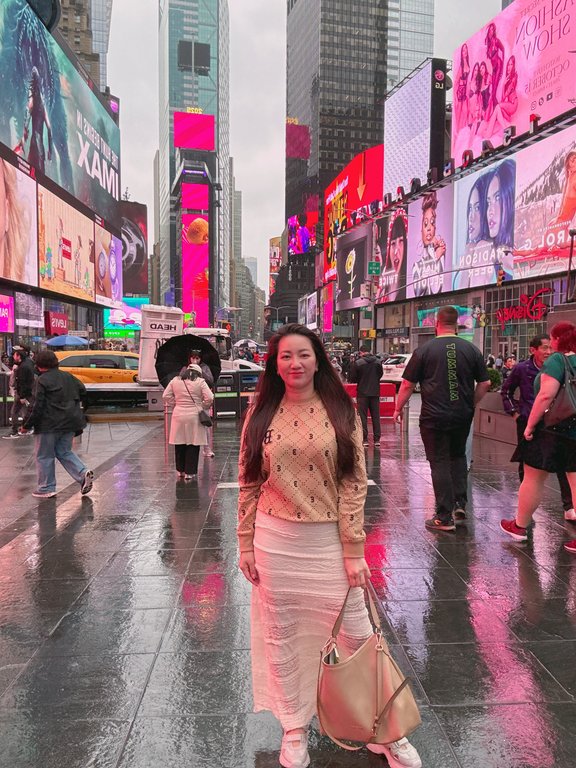
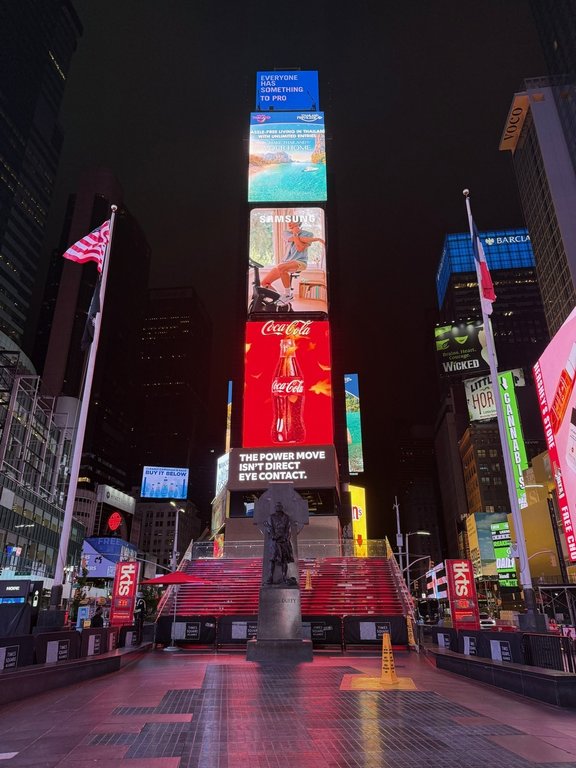
It wasn't always the crossroads of the world. Until 1904 it was Longacre Square, a district of horse traders and carriage makers. Then The New York Times built its new tower at the south end of the square, and the city renamed the whole place after the paper. The Times threw a New Year's Eve party on its roof to celebrate, and a few years later, at the end of 1907, it dropped a lighted ball from the flagpole at midnight. They've dropped one almost every year since.
The lights came with the theaters. By the 1920s, Broadway's theaters and their electric signs had made it the Great White Way, and the signs got bigger every decade. The square went through a long, rough stretch in the 1970s and '80s, and then got cleaned up in the '90s. In 2009 the city closed parts of Broadway to cars and turned them into pedestrian plazas, which is why you can stand in the middle of it all now and take a picture without getting hit by a cab.
Rockefeller Center
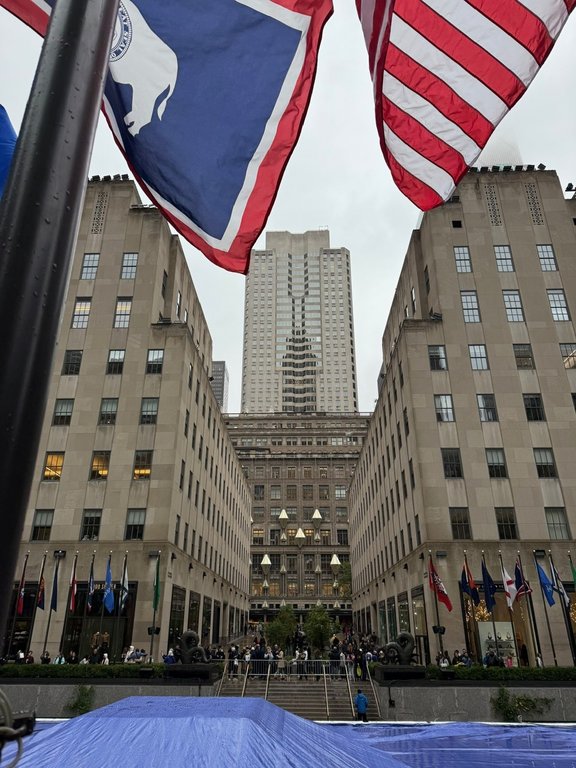
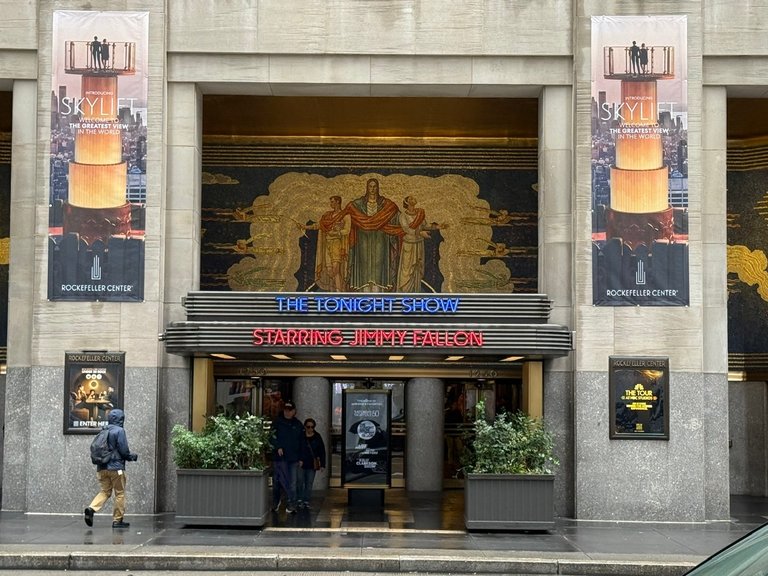
That afternoon we walked up to Rockefeller Center. Here's a funny thing. John D. Rockefeller Jr., who paid for the Cloisters on the first day of our trip, also built this. He signed the lease on the land in 1928, planning a new home for the Metropolitan Opera. Then the stock market crashed, the Opera pulled out, and he went ahead and built it anyway, in the middle of the Great Depression. Fourteen buildings went up between 1931 and 1939, and they put tens of thousands of people to work when work was hard to find.
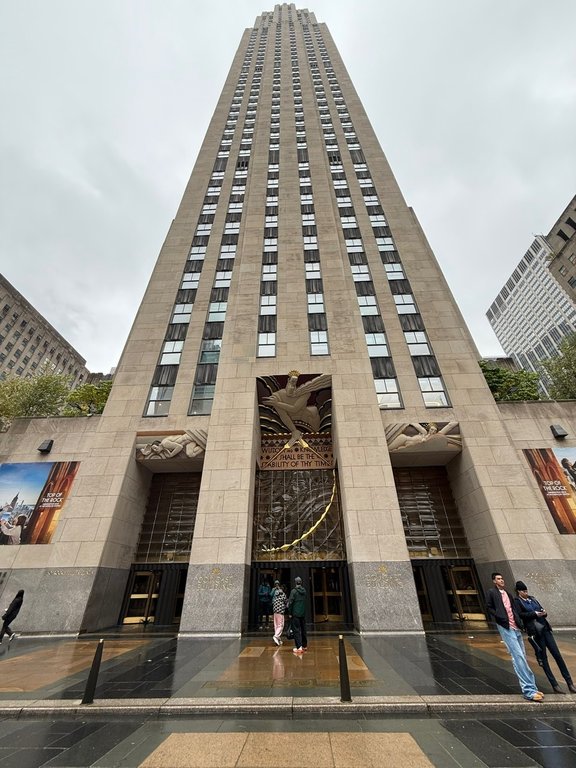
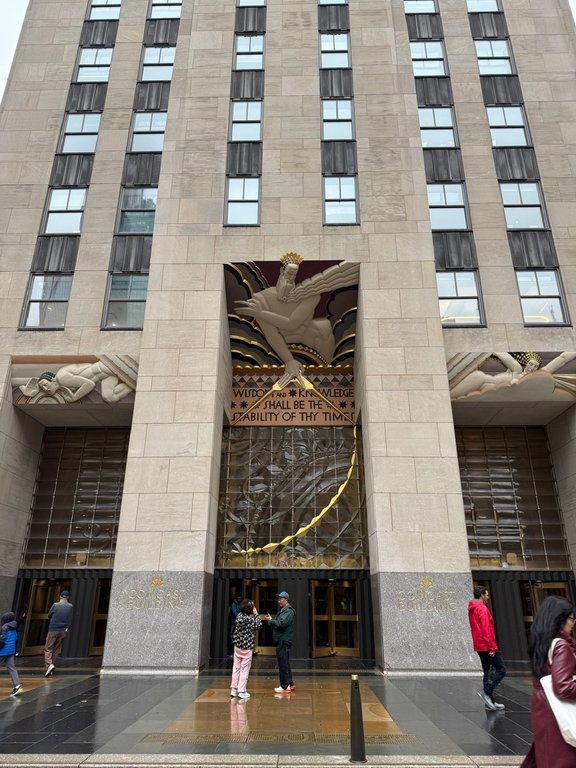
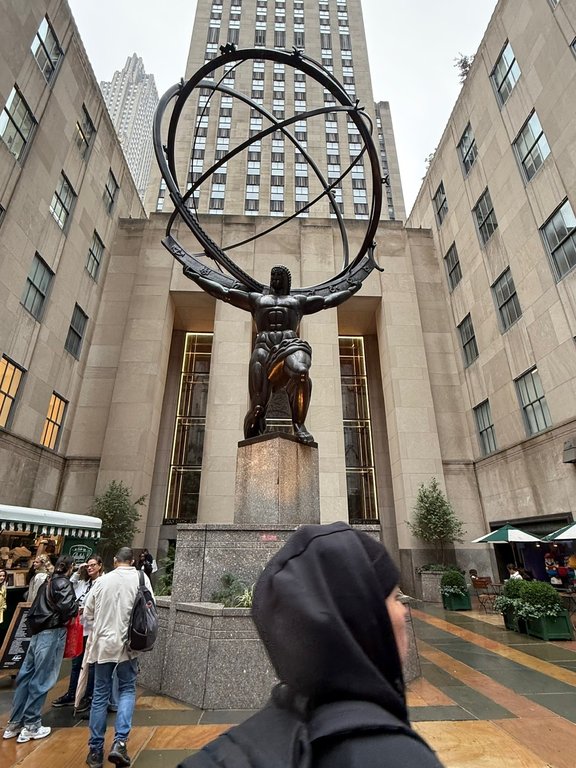
The centerpiece is 30 Rockefeller Plaza, about seventy stories of Art Deco limestone. Over the main entrance there's a carved and painted figure called Wisdom, by the sculptor Lee Lawrie, leaning over a compass with a line from Isaiah beneath it. Lawrie also did the bronze Atlas out on Fifth Avenue, holding the heavens on his shoulders, right across from St. Patrick's.
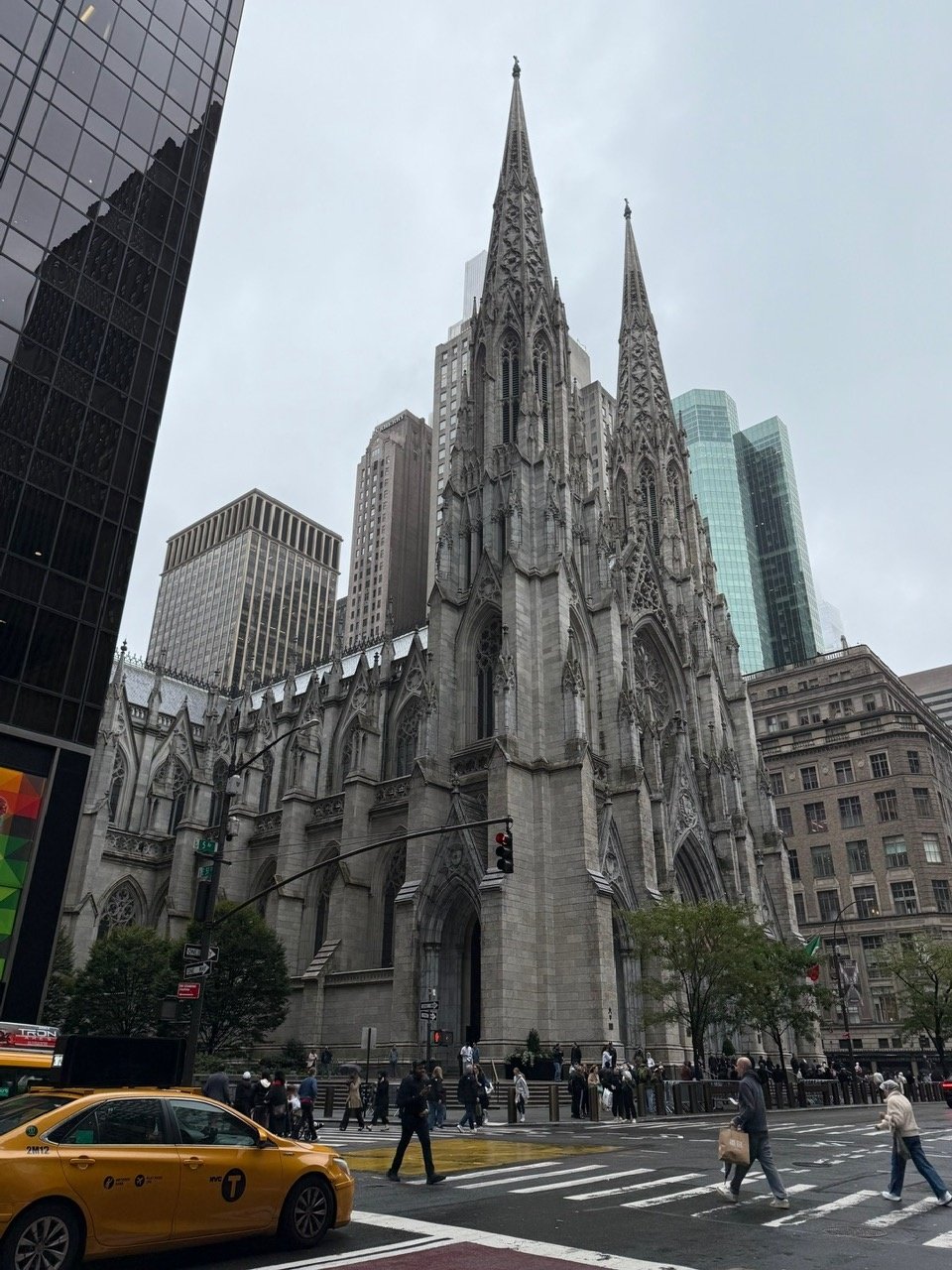
St. Patrick's Cathedral
Across Fifth Avenue from Atlas is St. Patrick's Cathedral, the big Gothic Revival church that looks like it was dropped into Midtown from medieval Europe. It was designed by James Renwick Jr. Work started in 1858, stalled when the money ran out, and the Civil War held it up for years. It opened in 1879. The twin spires were finished in 1888. For a while they were the tallest thing in the neighborhood. Now they're wedged between glass towers, which somehow makes them look even taller.
The Night
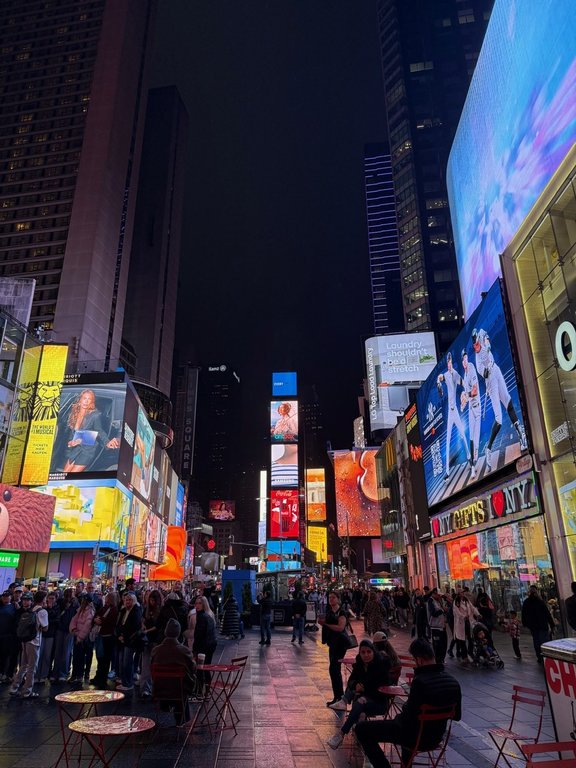
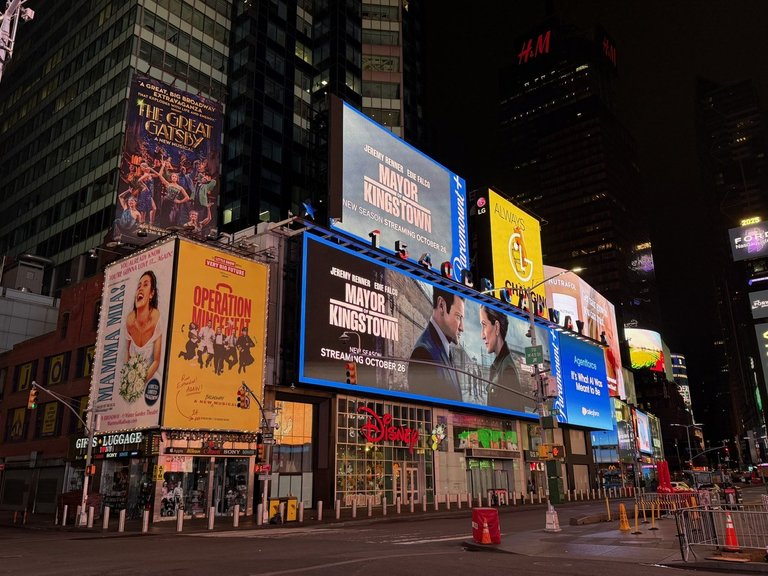
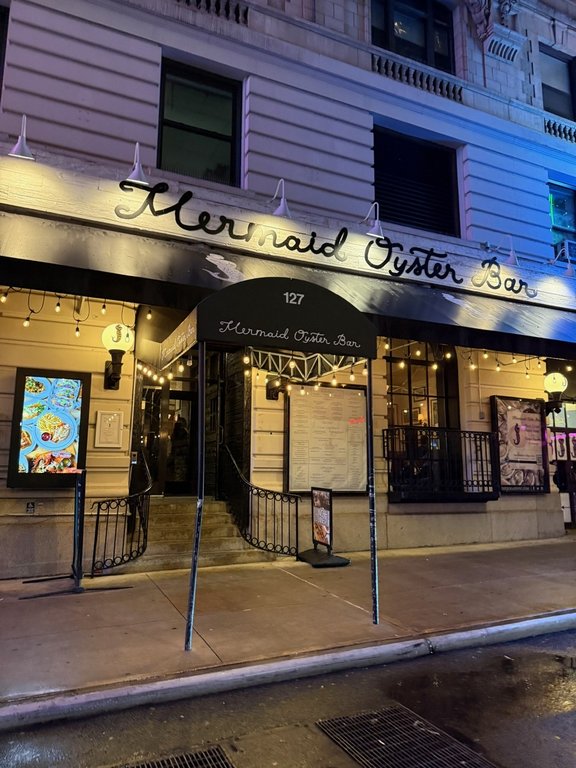
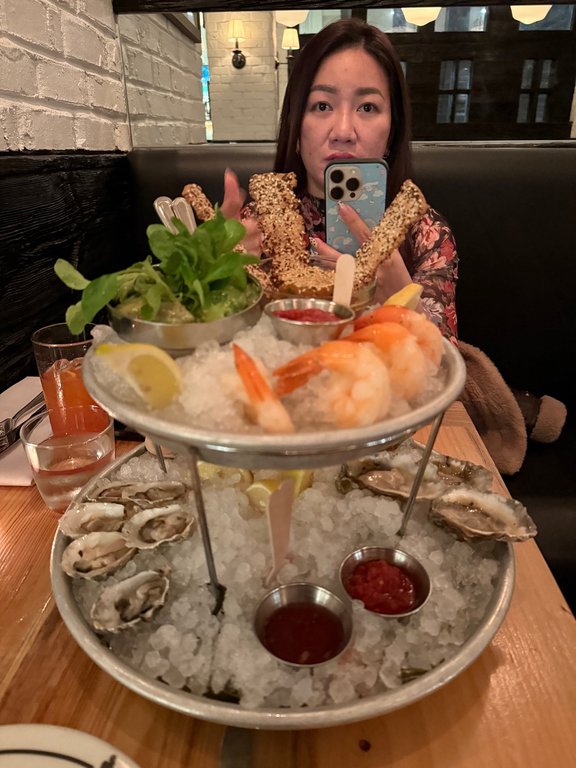
At night, Times Square is another planet. Wet streets throw the light back up at you twice. That night we ended up at the Mermaid Oyster Bar on West 43rd Street, just off Times Square, where Diem went to work on a seafood tower. Oysters, shrimp and lemons on a mountain of ice, cocktail sauce on the side. After two days of mountain food it was a good way to remember we were back on the coast.
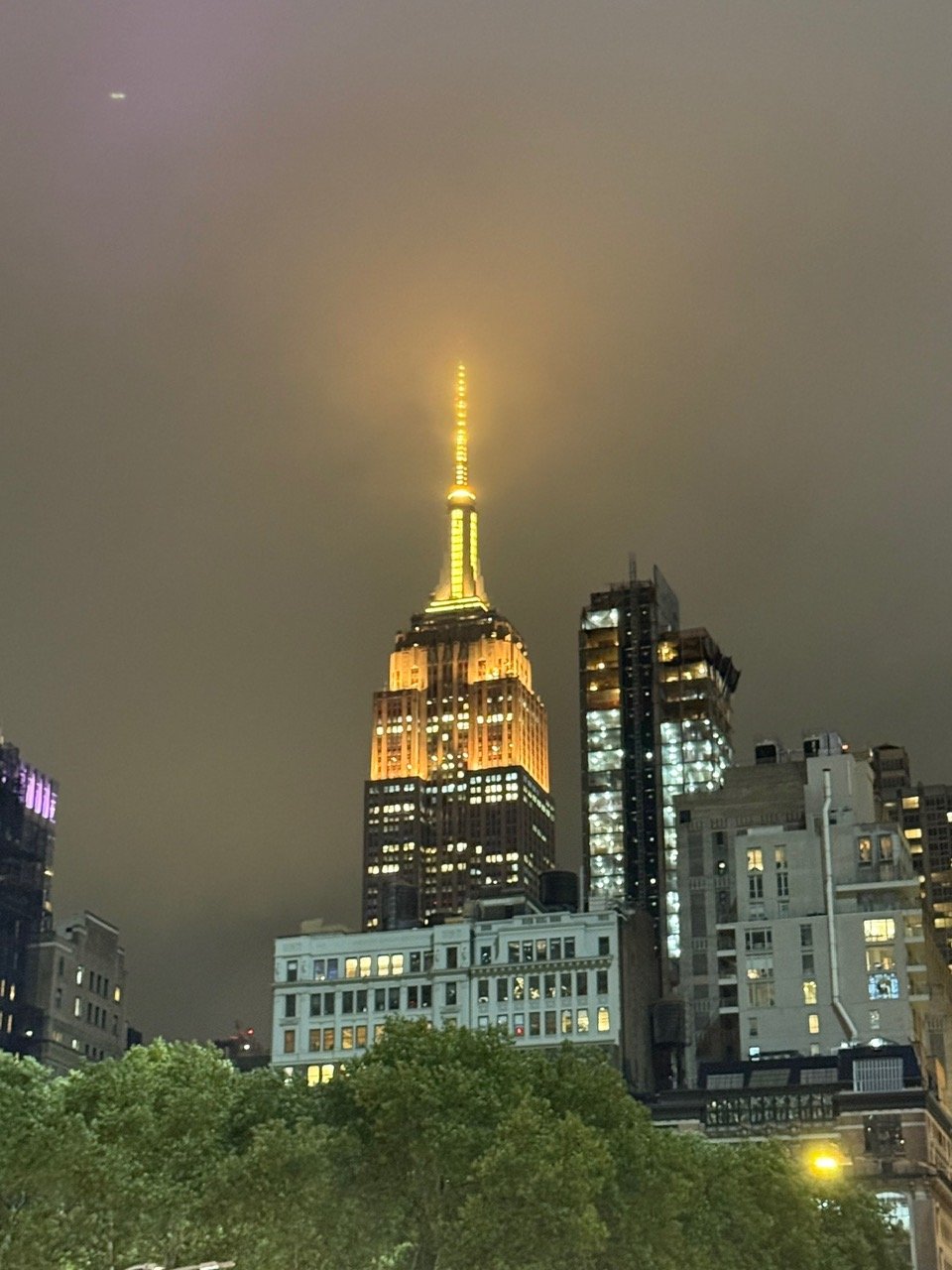
Later, the Empire State Building was lit gold against the fog. It went up in about thirteen months and opened in 1931, at the start of the Depression, and for nearly forty years it was the tallest building in the world.
Downtown
The next morning we went downtown. Lower Manhattan is where New York started, and it's where the old and the new stand right on top of each other.
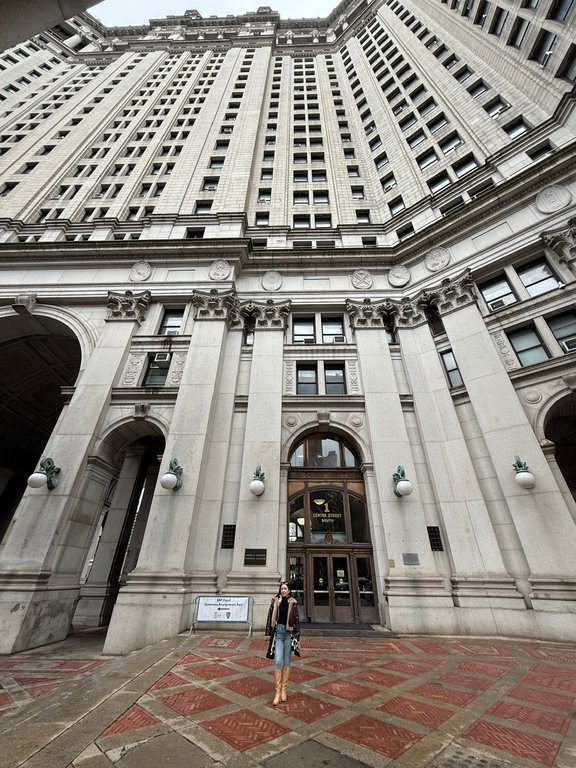
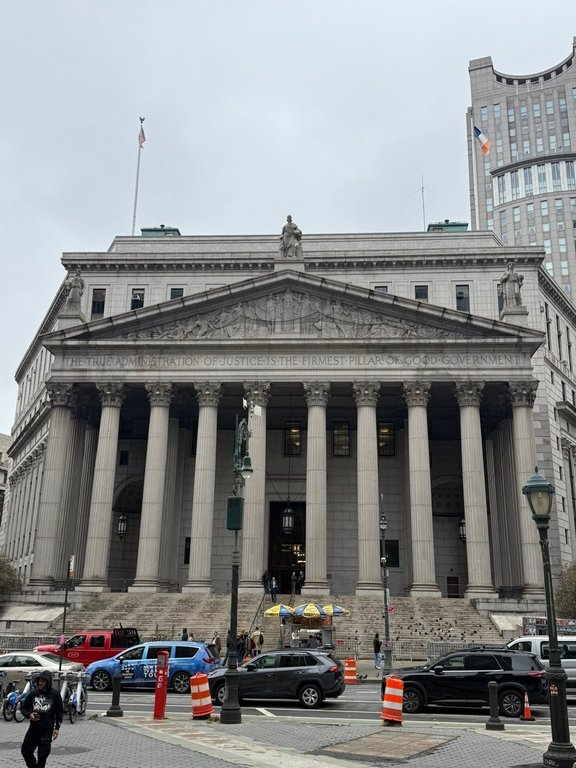
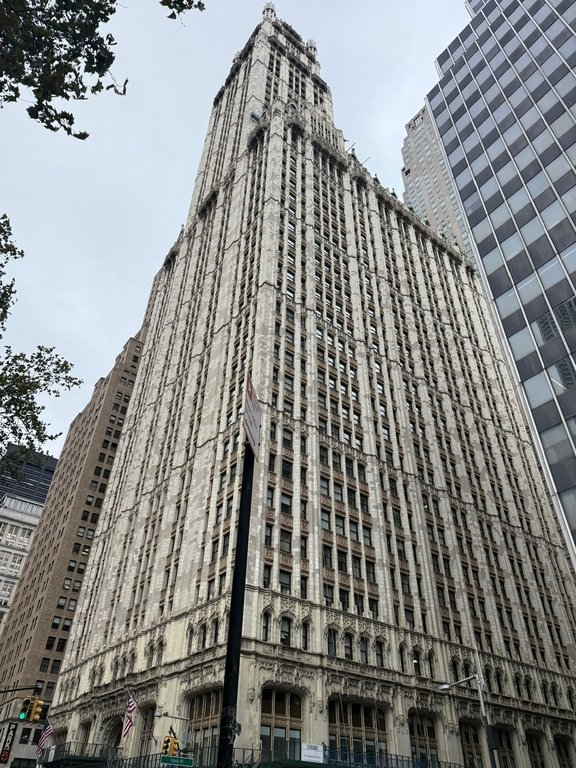
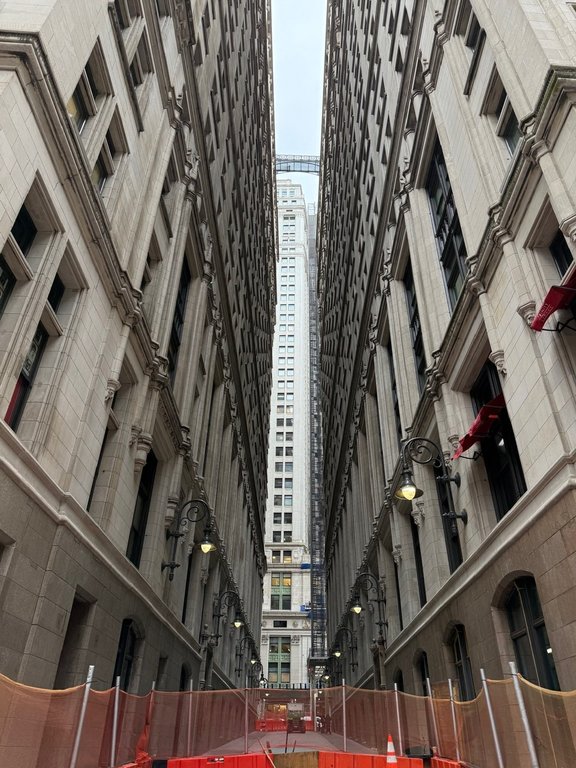
Around City Hall the buildings are from the age when New York was building monuments to itself. Columns, arches, carved stone, the works. The New York County Courthouse at 60 Centre Street, with its Corinthian columns and its wide steps, opened in 1927. If those steps look familiar, it's because they've been in about every courtroom drama ever filmed in this city.
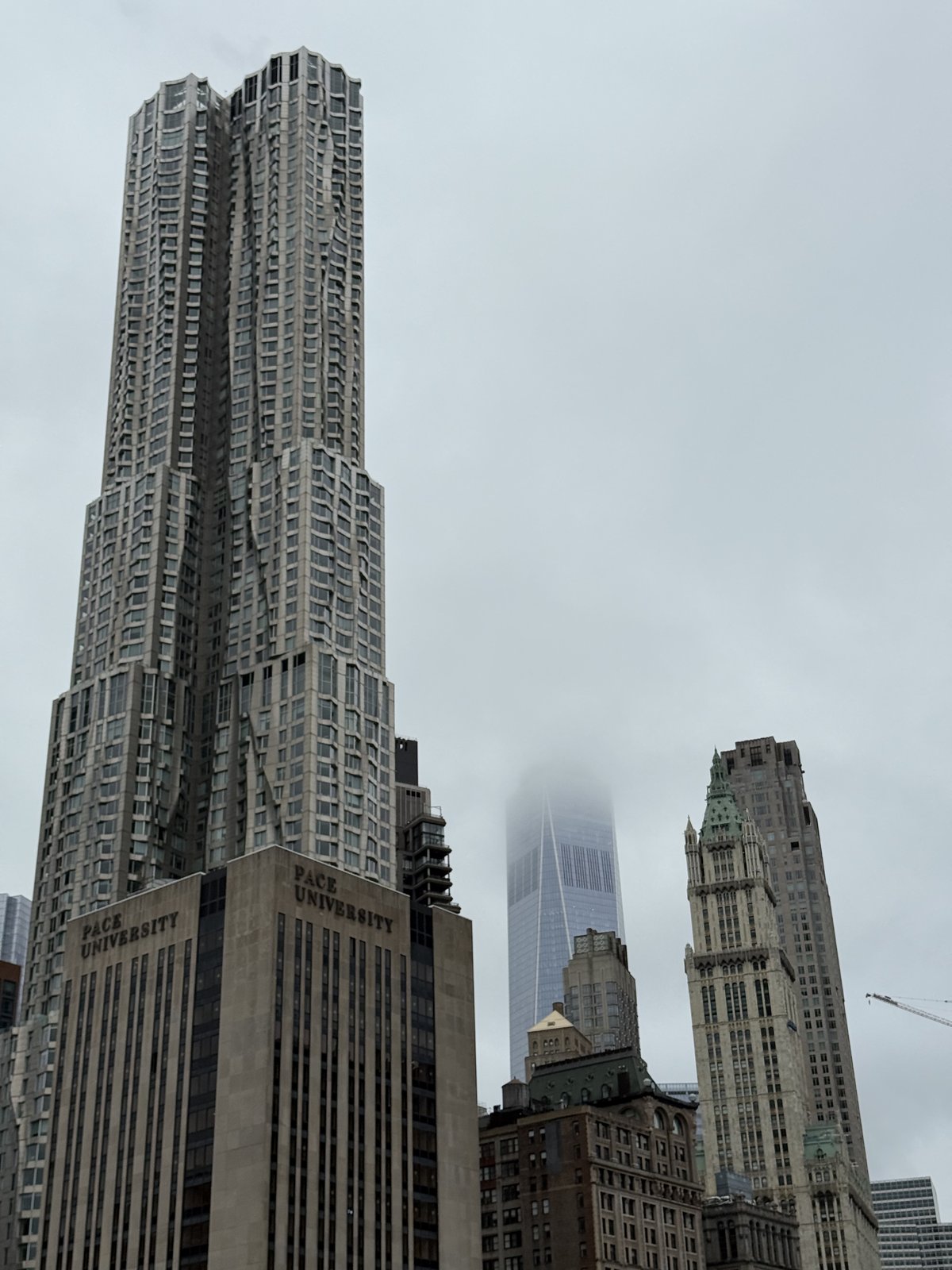
A few blocks away, Frank Gehry's 8 Spruce Street looks like a tower made of melted steel, its skin rippling in the light. It opened in 2011 and was the tallest residential building in the western hemisphere for a little while.
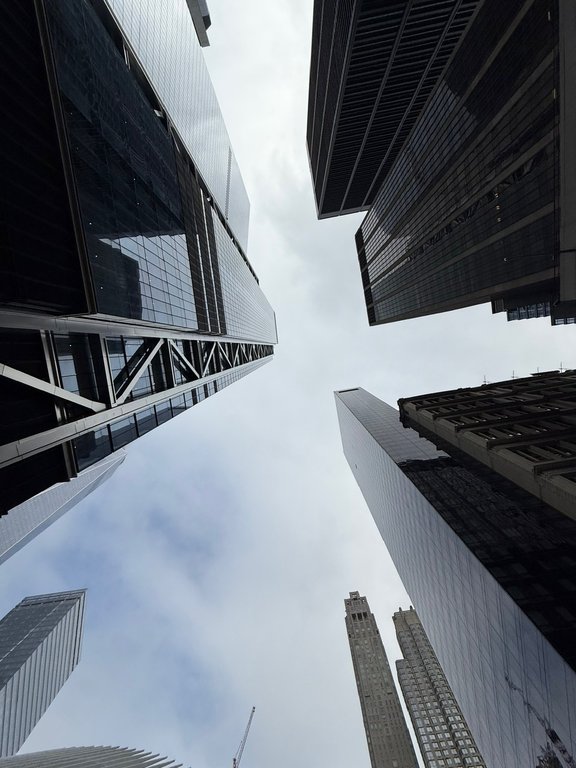
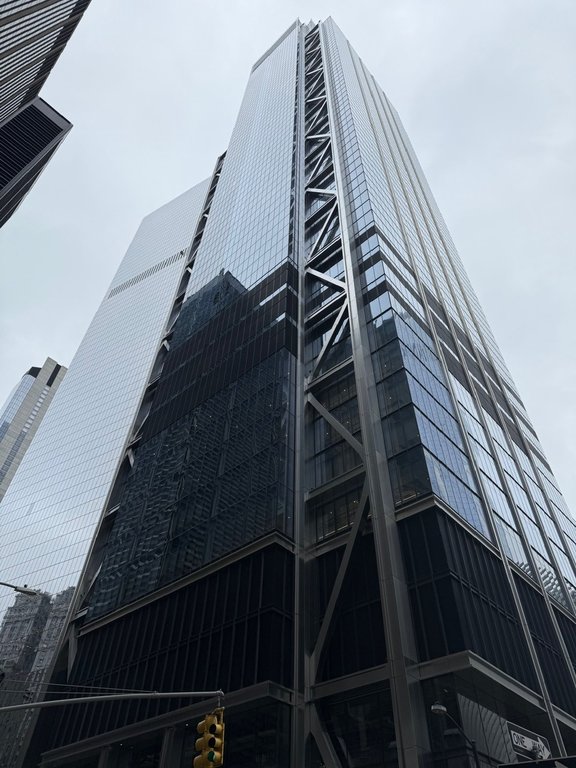
And then there's the World Trade Center. One World Trade Center rises 1,776 feet, a number chosen for the year of the Declaration of Independence. It opened in 2014 at the World Trade Center site, just north of where the towers we lost on September 11 stood. Next to it is the Oculus, the transit hub designed by Santiago Calatrava, white steel ribs reaching up like the wings of a bird being released from a child's hands. That was Calatrava's idea. It opened in 2016. Inside, it's all white and light, a cathedral built for commuters.
Next to it is the Oculus, the transit hub designed by Santiago Calatrava, white steel ribs reaching up like the wings of a bird being released from a child's hands.
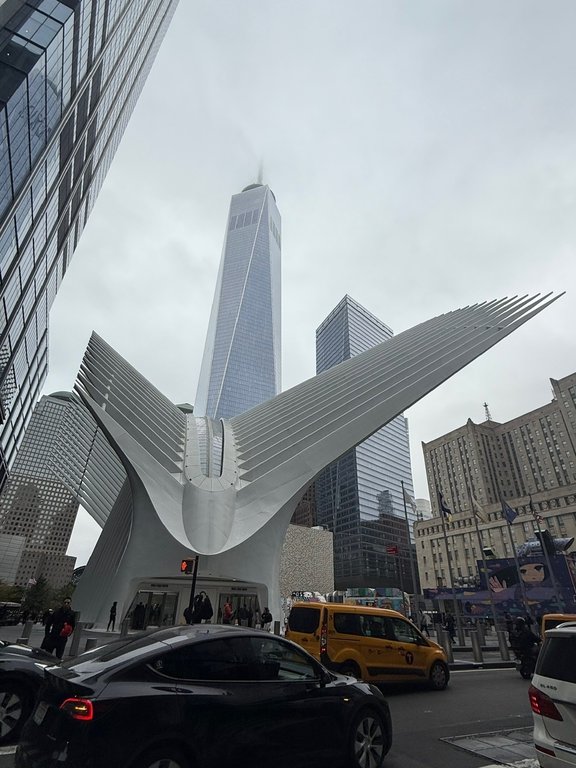
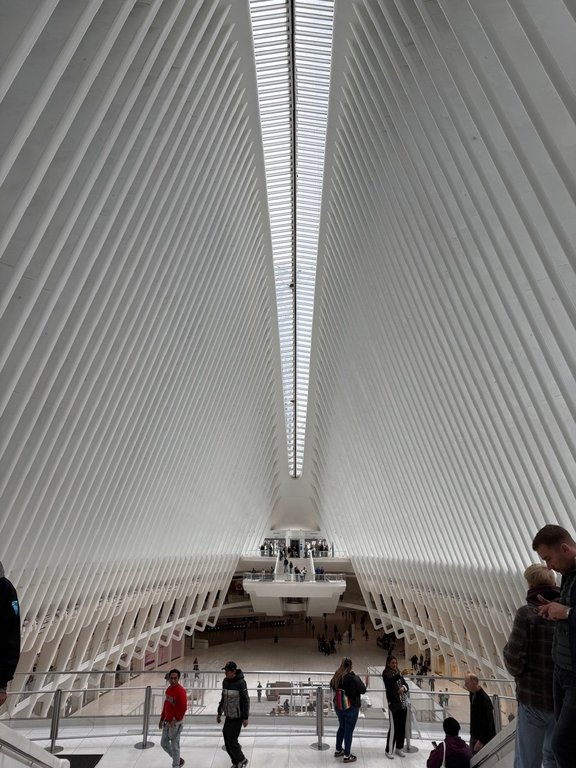
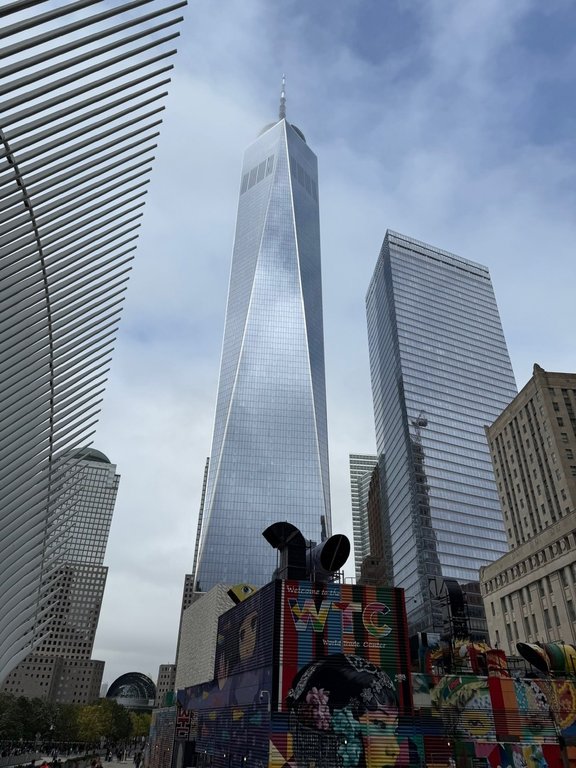
I was in San Francisco on the morning of September 11, 2001, staying at the Prescott Hotel. A waiter at Postrio told us to check the news. We went back to our room. Everyone knows what we saw. Standing at the foot of One World Trade, it's hard not to think about that morning, and about what grew back.
Hudson Yards
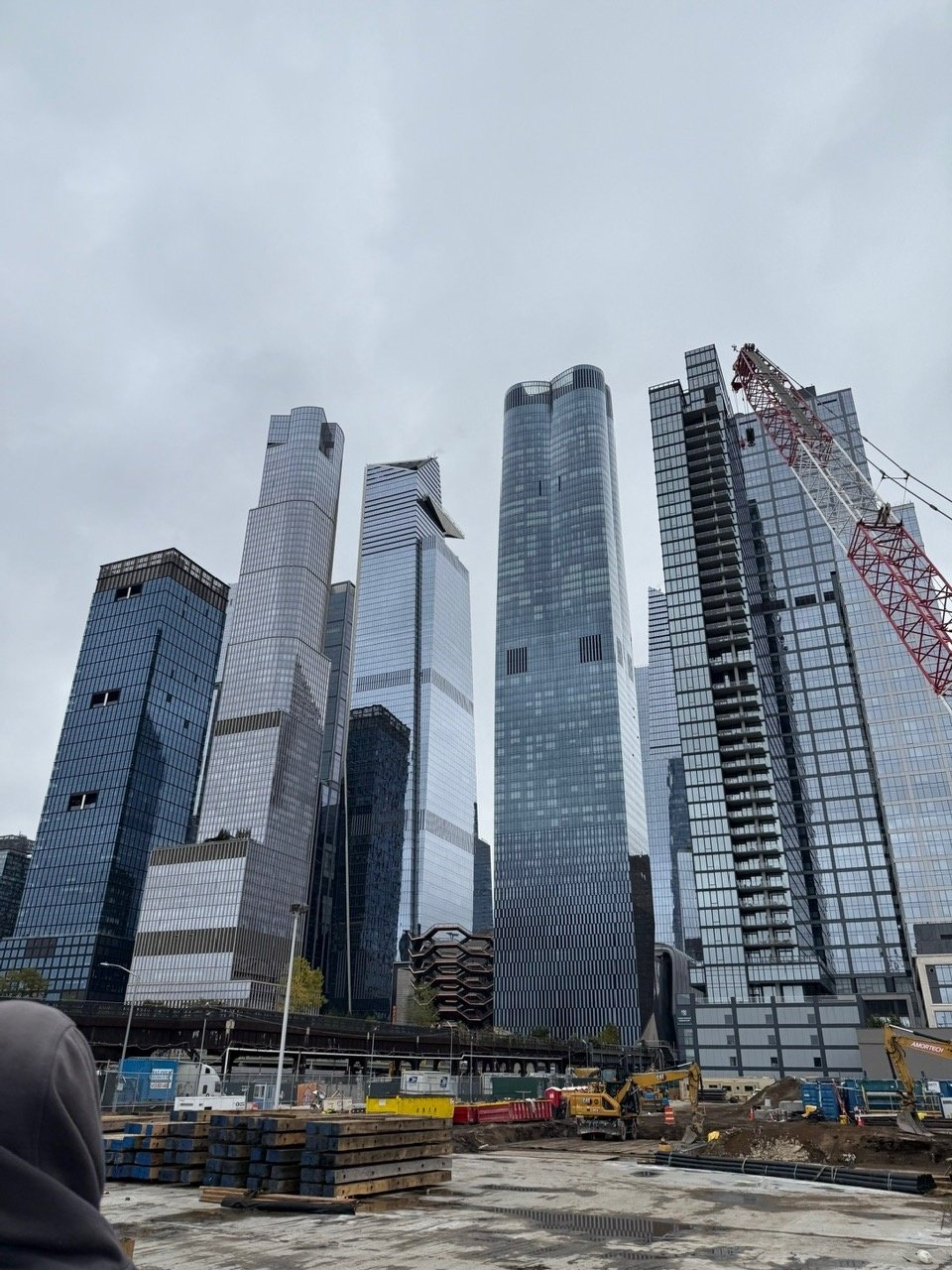
We finished on the West Side at Hudson Yards, a forest of glass towers built over the old rail yards where the trains still sleep underneath. It's the largest private real estate development in American history, and most of it opened in 2019. Brand new New York, about eight miles from the Cloisters, which was built from stones that are five to nine hundred years old.
Home
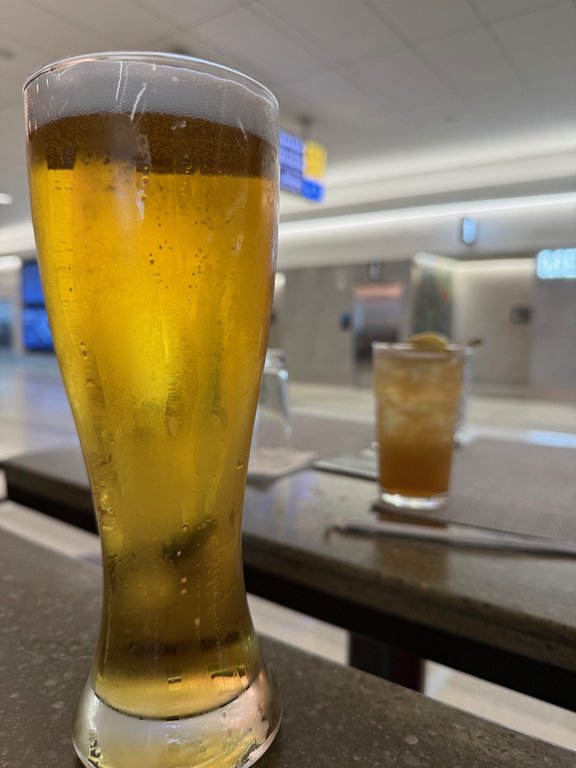
And then it was over. A last look at the skyline, a cold beer at the airport, and back to Georgia.
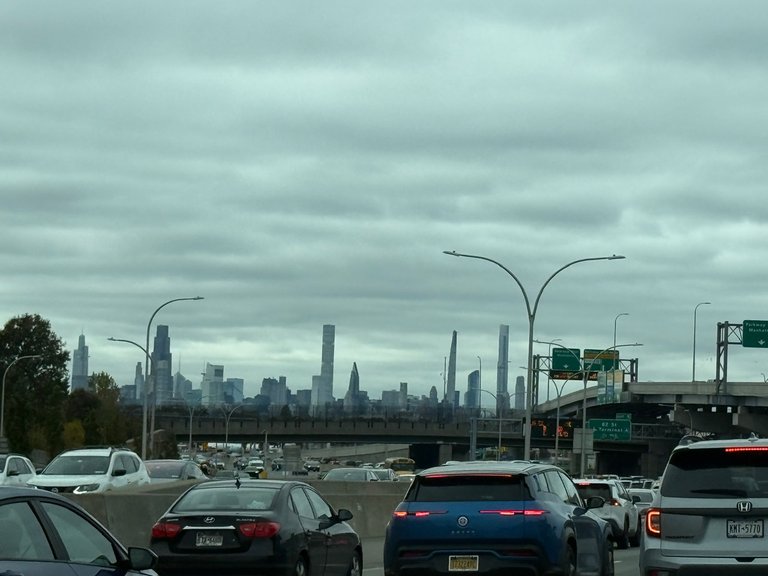
Four days. A museum built from medieval monasteries on the Hudson, a racetrack of a parkway, a ski resort in the Berkshires, a battle monument, a mountain owned by monks, and the crossroads of the world. One of our favorite things to do is go on road trips. This one was short, but it was a good one.
Previously: Williamstown to the Top of Equinox